- Category
- World
How China Is Turning Commercial Humanoid Robots Into Next-Generation Soldiers
 Prefer U24 Media on Google
- Authors

-c439b7bd9030ecf9d5a4287dc361ba31.jpg "Photo of Katherina Popilnichenko")

Chinese military institutions and defense entities are advancing research into the military applications of humanoid robots. Their ultimate goal is eventual wartime deployment, according to an analysis of over 100 Chinese procurement notices, academic studies, patents, and official publications.
The efforts, which accelerated in 2025 and 2026, focus on perception data, robotic manipulation, and training systems, as reported by Reuters on September 7.
We bring you stories from the ground. Your support keeps our team in the field.
Chinese manufacturers accounted for roughly 95% of global humanoid robot shipments in 2025, giving the People’s Liberation Army (PLA) direct access to a rapidly growing commercial sector.
Official procurement records show that in June 2026, the PLA allocated approximately $300,000 for a system to collect and label data from cameras, radars, and robot movements across varied terrain.
The military interest follows the World Humanoid Robot Games in Beijing, where machines competed in sprinting, boxing, and dancing. Two days after the event, the official PLA Daily called on researchers to speed up the transfer of technologies from laboratories to military proving grounds.
Researchers from the National University of Defense Technology described a urban warfare scenario modeling six robotic units, including humanoids and quadrupedal machines, integrated into two assault groups designed to clear enemy-occupied buildings room by room. Authors projected that such equipment could become operational within five to ten years.
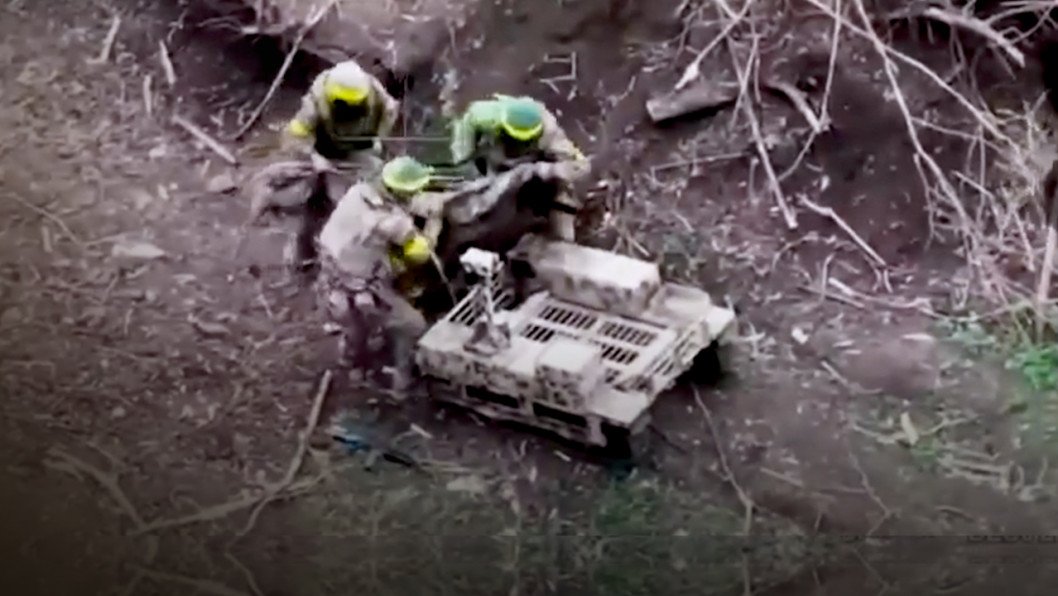
These developments align with a broader global shift toward autonomous defense systems, heavily influenced by observations from Russia’s full-scale invasion of Ukraine, where semi-autonomous drones and robots carry out reconnaissance, logistics, and strikes.
Military commentators in China have suggested that the roles of humanoid machines could eventually transition from supporting combat operations to direct engagement, including firing at targets verified by human operators.
“Getting there by 7 AM to beat the queue,” or in this domain, "Getting where we don’t want to see humans, is one of the biggest reasons for developing robots," said Dennis Hong, a professor of mechanical and aerospace engineering at the University of California, Los Angeles. "If losing a robot means avoiding losing a human life, then the robot can be a consumable item."
Despite ongoing testing, researchers acknowledge that significant technical hurdles remain before humanoids can be deployed in live operations. Environmental unpredictability, high energy consumption, and reliability issues continue to challenge performance outside controlled settings.

Aaron Johnson, a professor of mechanical engineering at Carnegie Mellon University, noted that real combat conditions introduce numerous variables that test robotic capabilities in unpredictable ways.
Internationally, other nations are also exploring humanoid tech. Last year, the US Army launched a competition for militarized humanoid capabilities aimed at urban assault, reconnaissance, and hazardous material handling, offering up to $1.25 million in follow-on contracts for top performers. However, experts note that American robotics manufacturing currently lags behind China in scaling two-legged and four-legged platforms.
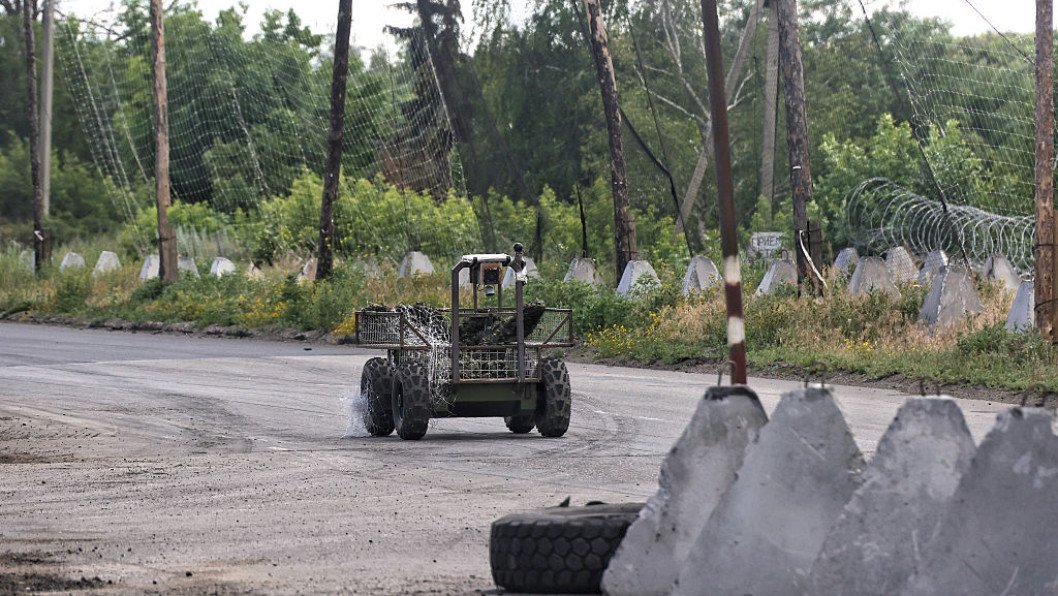
To address current software and decision-making limitations, Chinese defense firms are integrating teleoperation systems. Defense conglomerate Norinco recently highlighted its full-sized Fuxi robot, designed for sentry duty, all-weather reconnaissance, and patrol tasks. The Fuxi can be controlled remotely by a human operator, eliminating the immediate need for fully autonomous tactical decision-making on the battlefield.
Malcolm Davis, a senior analyst at the Australian Strategic Policy Institute, said he does not currently view humanoid robots as practical combat systems. "But in five to 10 years," he said, "they may well be."
Legal and ethical concerns regarding autonomous weapons systems also persist, particularly regarding compliance with international laws of war that mandate distinguishing between combatants and civilians.
While the International Committee of the Red Cross warned that autonomous systems might struggle to interpret signs of surrender, China’s Ministry of Defense stated in March that AI-enabled weapons must remain under human control.
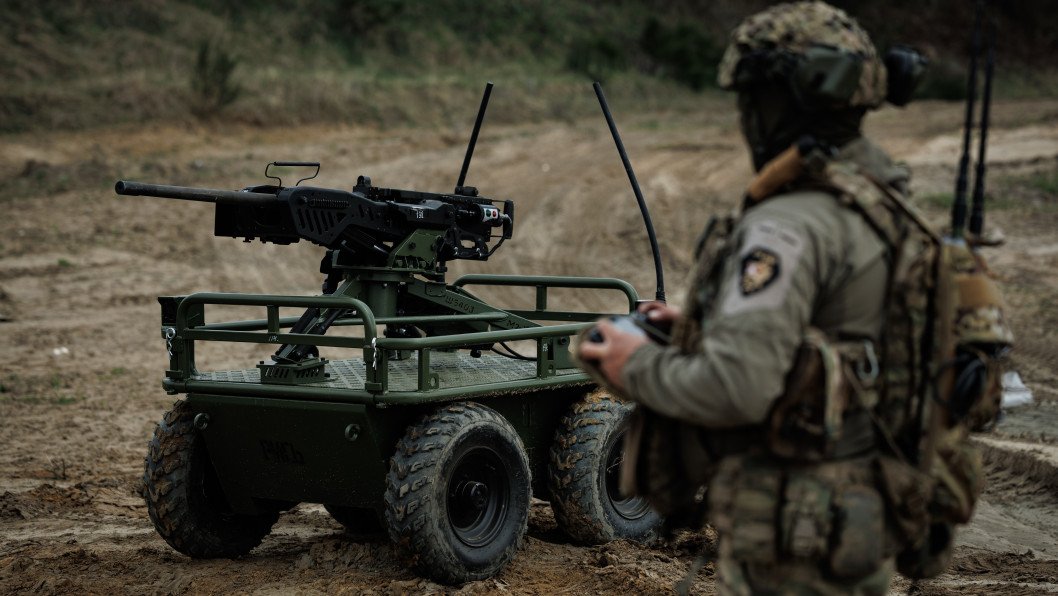
In Moscow on November 11, 2025, Russia unveiled Aidol, a humanoid robot described by state and local media as the country's first anthropomorphic, AI-equipped machine.
During its debut presentation, the robot walked onto the stage to the theme song from "Rocky," attempted to wave, lost its balance, and fell over before staff quickly covered it and removed it from view.
Developer Vladimir Vitukhin, head of Idol, acknowledged the incident as a learning experience, explaining that the robot's stereo cameras were sensitive to lighting conditions, though a subsequent attempt allowed the machine to remain upright with assistance.
Discuss this article:





-72b63a4e0c8c475ad81fe3eed3f63729.jpeg "Photo of Cyril Barabaltchouk")