- Category
- World
Latvia Urgently Introduces Border Controls to Block Stolen Ukrainian Grain Transit
 Prefer U24 Media on Google
- Authors

-72b63a4e0c8c475ad81fe3eed3f63729.jpeg "Photo of Cyril Barabaltchouk")
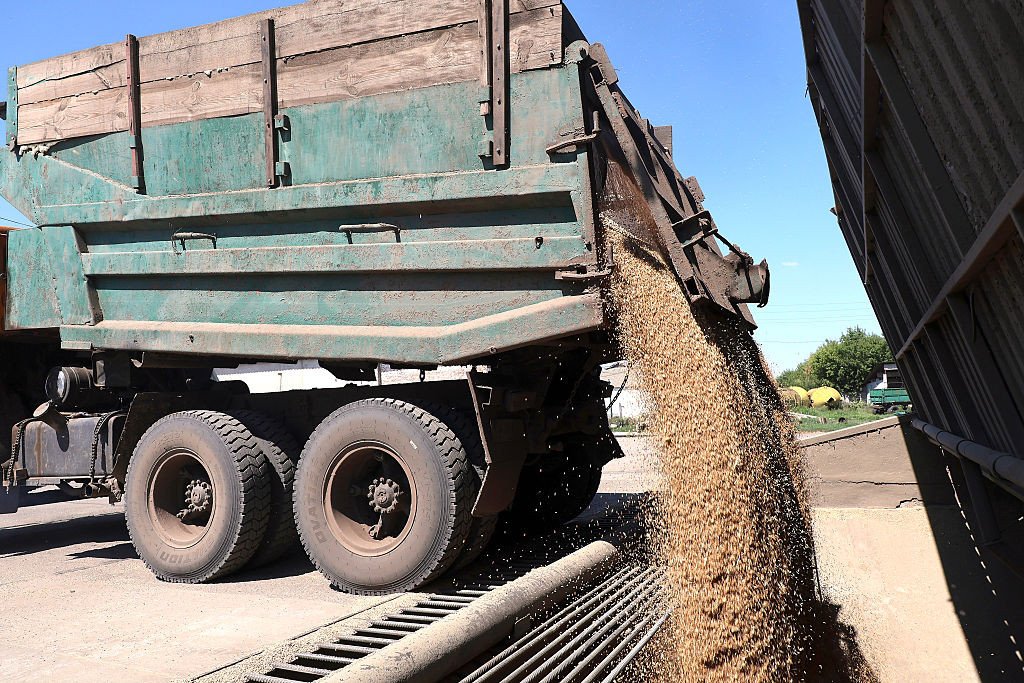
The Latvian Parliament (Saeima) urgently amended the Law on the Circulation of Animal Feed on September 25, local news outlet Delfi reported on September 25.
It introduces mandatory border controls on third-country grain shipments to prevent stolen Ukrainian agricultural products from moving through Latvian territory.
We bring you stories from the ground. Your support keeps our team in the field.
The new legislation empowers the Food and Veterinary Service (PVD) to conduct strict border checks and collect samples for laboratory testing. The primary goal is to verify the true origin of agricultural cargo and intercept grain looted by Russia from temporarily occupied territories of Ukraine that might be transported under forged Russian documentation, according to Delfi.
“This will allow us to check feed shipments, including taking samples for laboratory testing to determine their origin,” stated Arvils Ašeradens, Chairman of the Saeima’s Economic, Agricultural, Environmental, and Regional Policy Committee, as quoted by Delfi.
“This is especially important if there are suspicions that the actual origin of the cargo does not match the accompanying documents, or that it may be linked to Russian-occupied territories of Ukraine,” he continued.
The need for heightened oversight emerged after Ukraine alerted international partners about significant volumes of stolen grain entering global supply chains.
-7ffc1ca14e187adbacf69b45298208f9.jpg)
According to the Latvian Ministry of Agriculture, an uncharacteristically sharp rise in demand for Russian grain transit and transshipment through Latvian ports raised red flags, necessitating comprehensive origin checks, Delfi wrote.
While Latvia already bans the import and release of Russian and Belarusian agricultural products into its domestic market, third-country goods are still permitted to cross the EU customs territory under external transit procedures. The new controls aim to close this transit loophole.
Delfi reported that Latvian Prime Minister Andris Kulbergs noted comprehensive laboratory checks—conducted by the BIOR Institute of Food Safety—could take up to a month due to the need for international cooperation.
While shipments cannot be detained in ports for the entire duration of the testing, Latvia will immediately notify buyers if a cargo is subsequently identified as stolen Ukrainian grain.

To fund the new security measures, the amendments also allow authorities to charge the responsible parties advance fees to cover the costs of the border controls and lab tests.
According to Ukraine’s Foreign Intelligence Service, Russian grain exports plummeted 2.5-fold in early August, causing severe domestic surpluses and a 40% year-over-year drop in crop prices. Logistical disruptions at southern ports—which normally handle 70% of exports—have paralyzed shipments and forced the Rostov region to declare a state of emergency.
Rerouting exports via Baltic ports adds prohibitive costs of $30 to $50 per ton. Consequently, major Russian agribusiness Rusagro reported a 99% collapse in first-half 2026 net profit, plummeting from $59 million to roughly $690,000.
Discuss this article:


-111f0e5095e02c02446ffed57bfb0ab1.jpeg "Photo of Roman Kohanets")