- Category
- Opinion
The Cost of Non-Non-Alignment: When Russia Bombs Ukraine’s Ports, Africa Pays
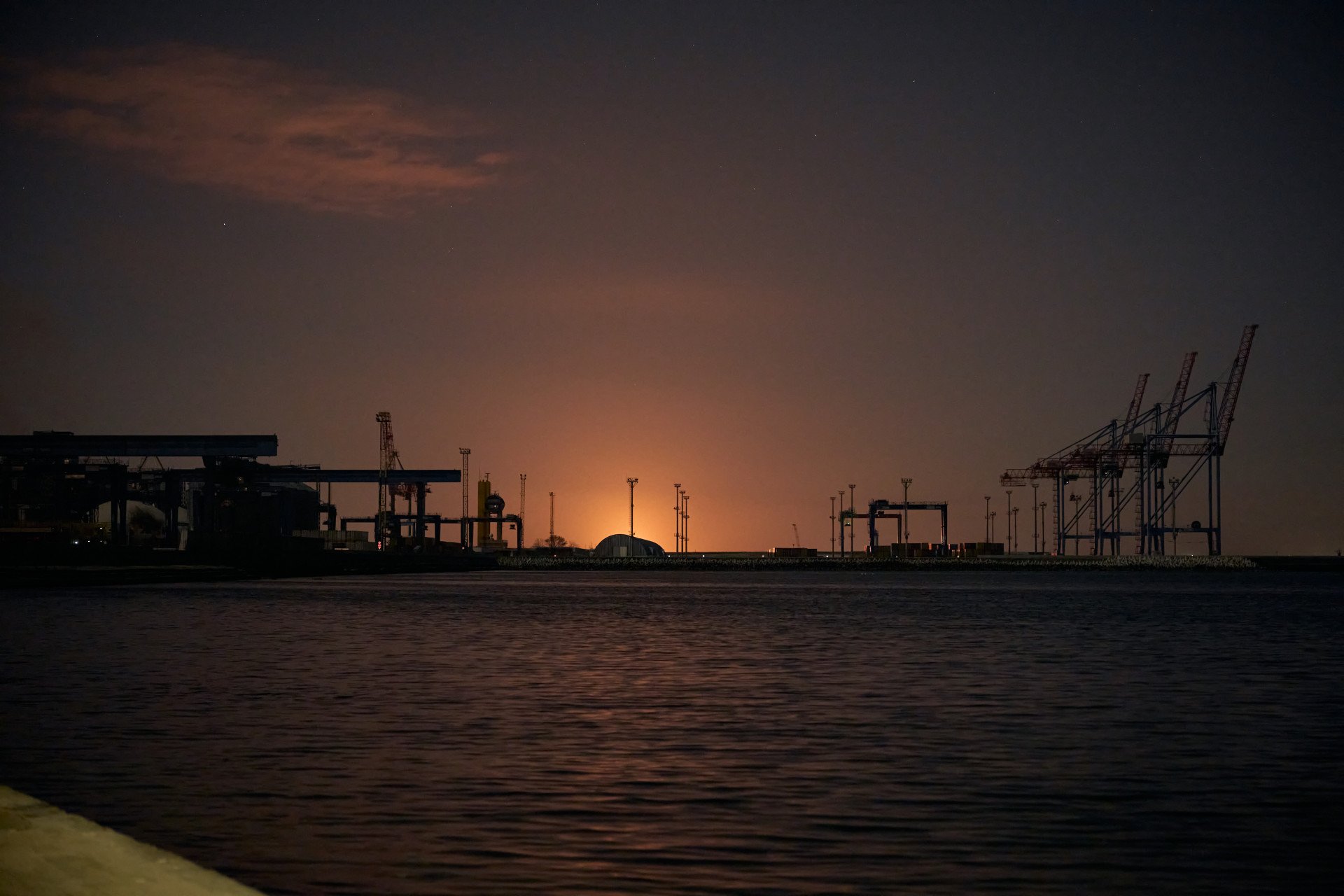
When Russia launches its missiles at a grain terminal in Odesa, the consequences are felt thousands of kilometers away, at African markets and dinner tables.
 Prefer U24 Media on Google
- Authors




Africa is a net food importer despite holding around two-thirds of the world's uncultivated arable land. As the number of Africans increases annually, so too does the money spent on agricultural imports, driven up by logistics costs, inefficiencies, and now, war. The annual African food import figure is some $100 billion, with 16 of 55 African countries net food importers.
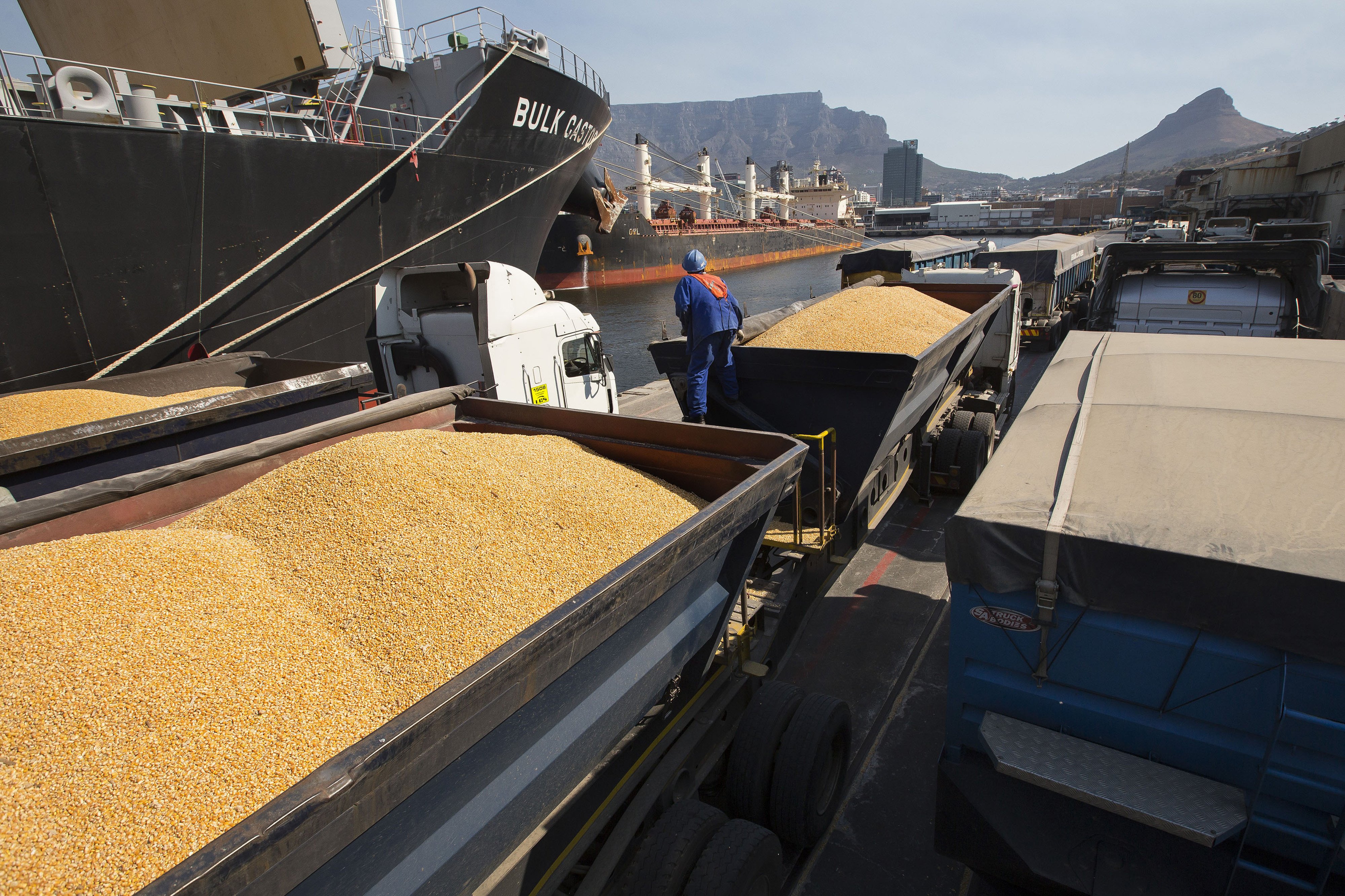
Ukraine's grain exports
As the colours of its flag suggest, before the 2022 Russian invasion, Ukraine was a global agricultural powerhouse with the status of Europe's breadbasket.
It produced over 80 million tonnes of grain annually, of which it exported 75%, supplying roughly 9% of the world's wheat, 16% of its corn (maize), and 42% of its sunflower oil. In 2021, agriculture (including forestry and fishing) contributed nearly 11% directly to Ukraine's Gross Domestic Product (GDP), while agri-food products made up 41% of Ukraine's total merchandise exports, valued at just under $28 billion.
In 2025, despite the war, grain production touched 60 million tonnes, and exports were 35 million tonnes.
Now, exports are anticipated to radically decline to little more than half this number in 2026, with Russia specifically targeting rail depots and engines, grain elevators, and ports. Since the start of the full-scale invasion, Russian attacks have damaged 492 locomotives and 249 railway carriages. Fifty-two employees of Ukrzaliznytsia (Ukrainian Railways) have been killed while carrying out their professional duties, and another 317 have been injured. Between January and August 2026, Russia has attacked Ukraine's railway infrastructure 1,534 times.
Russian attacks have destroyed around 90% of modern storage facilities for goods in Ukraine, according to Taras Vysotskyi, Ukraine's Minister of Agrarian Policy and Food.
Retail logistics are changing due to the constant destruction of warehouse infrastructure.
Vysotskyi said the most realistic alternative right now is to supply goods using a “just-in-time” system.
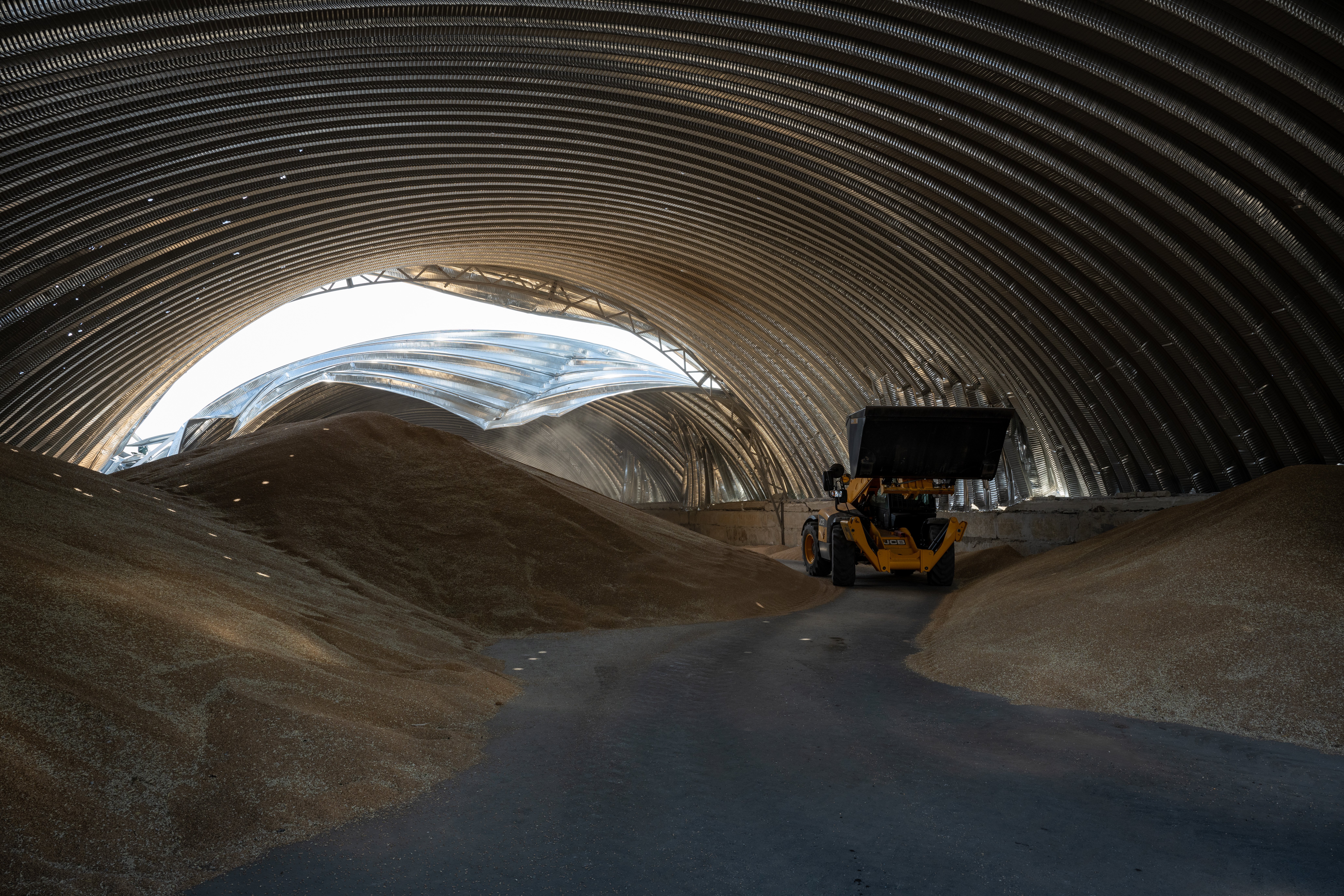
Russian attacks on Ukraine's ports
Intensive Russian missile and drone strikes on port infrastructure and civilian vessels in Odesa, Chornomorsk, and Pivdenne, which together normally handle 90% of Ukraine's grain shipments, reduced ship calls from 10-12 per day to 3-4 per week during 2026, with ship-handling permitted only when the security situation allows and without air raid alerts, which numbered as many as 15 daily.
Russian strikes on the Odesa region not only targeted all six working Ukrainian ports, but also dozens of commercial vessels, the energy infrastructure powering these ports, along with countless warehouses, elevators, and other storage facilities, among other targets.
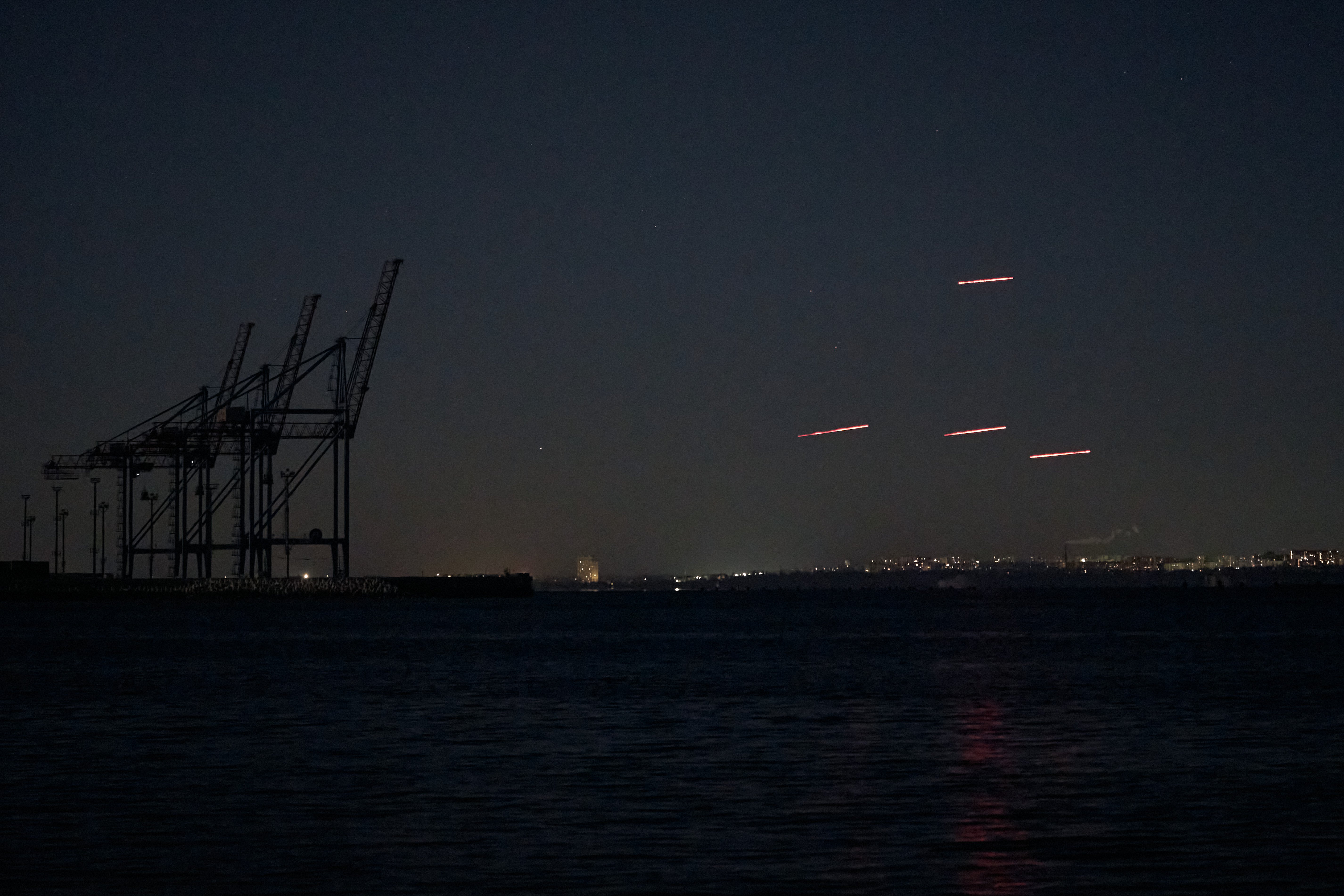
The effects were immediate and tangible beyond Ukraine’s borders. The 2026 monthly export plan from Ukraine was 7.5 million tonnes; by September 2026, it had shrunk to 1.2 million tonnes. In the six months to the end of June 2026, Russia attacked the ports in the Odesa region 78 times; in July alone, this figure was 126, with 39 attacks on civilian vessels also till June, and 56 in July plus a further 40 in Ukraine’s maritime corridor.
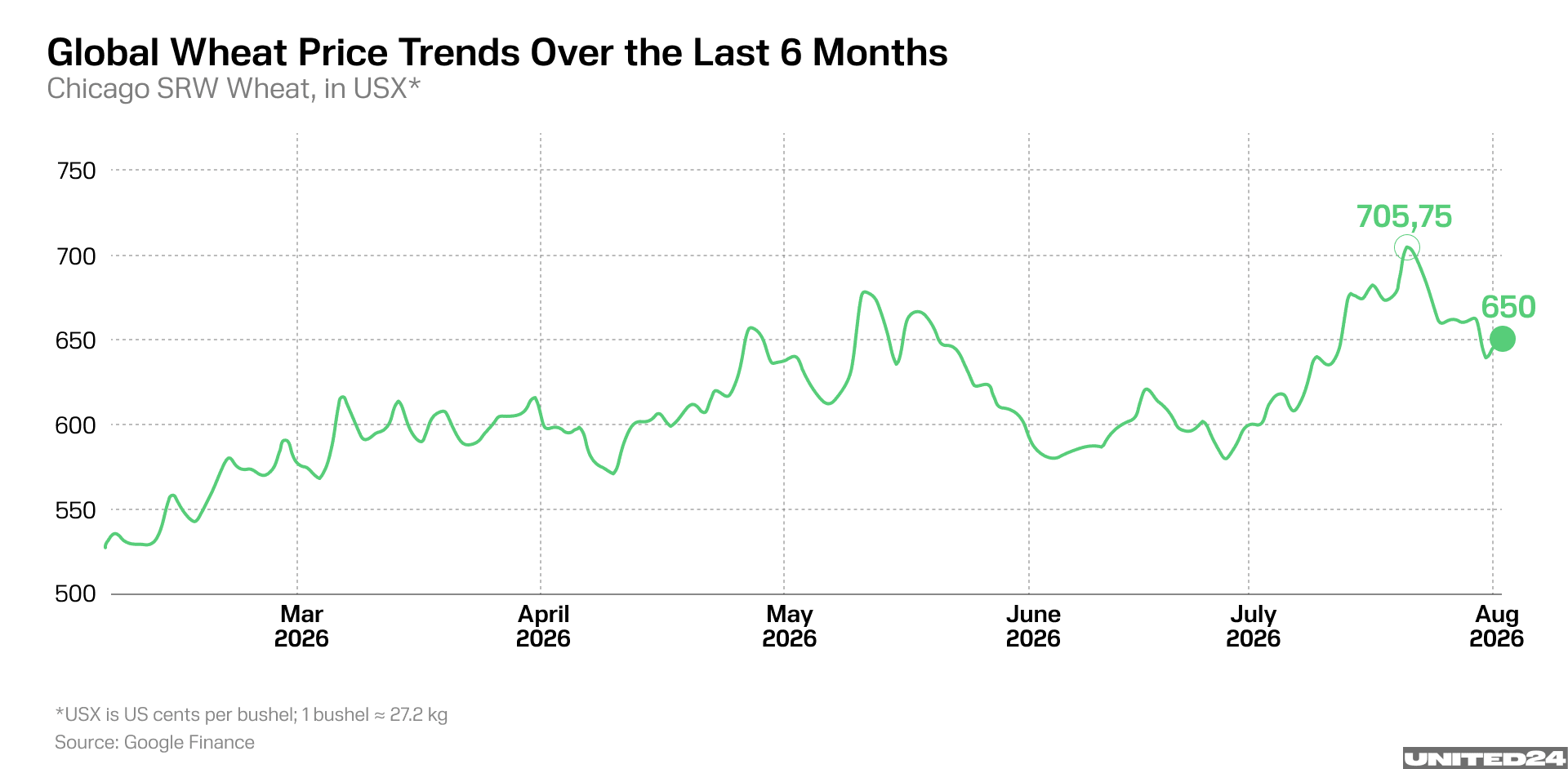
Ukraine produces five times more food than it consumes. These attacks risk as much as a 5% contraction in Ukraine's GDP. Ukraine would have to rely on more expensive trucking routes to central Europe and onto smaller Danube River ports (like Izmail and Reni), which face capacity caps exacerbated by low seasonal water levels and high costs. These avenues can at best cover just half of Ukraine’s required export volumes.
But the effect is not going to be only on Ukraine’s economy, with the country’s agriculture feeding 400 million people worldwide, including 10% of global grain consumption and, before the war, as much as half of global sunflower exports. To take one example, Africa relies on Ukraine for 5% of its food consumption, though this statistic is much higher in the Horn of Africa and especially in Egypt, which historically has taken up to 40% of Ukraine's total grain exports to the continent.
-f2e57828c3a964209c5e1c1462f3a71f.jpg)
The increase in Russian attacks on Ukrainian border posts is designed within this framework to increase the isolation and panic among locals and foreigners alike. By August 2026, weekly grain exports had fallen to less than one-quarter of their 2025 level of one million tonnes. This escalation follows a pattern started in 2024 with a build-up in drone and missile resources and production facilities, with a steady ramp-up from the middle part of 2025 to 2026, and a sudden increase from June 2026 with the replacement, too, of propeller to jet-propelled drones and an increase in the availability of missiles with the introduction of the new longer-range types and North Korean KN-30/Hwasong-11C variants.
As the head of the Ukrainian port authority, Mykola Kravchuk, puts it: “safeguarding Ukrainian ports is also safeguarding global food security.”
Africa's "non-non-alignment" in Russia's war on Ukraine
Getting this message across to Africa is challenging, partly reflecting the lack of an African focus to Ukraine’s diplomacy, and partly because many African countries, while preaching non-alignment, practice non-non-alignment.
Today, Russia maintains approximately 250 diplomatic missions abroad, including around 145 embassies, spread over some 150 countries and multilateral organisations. Ukraine maintains 85 embassies and a total network of over 100 diplomatic and consular missions across countries and international organisations worldwide. The Ukrainian network is notably weaker in countries of the Global South, even though, since 2022, more effort has been made to establish missions in Latin America and Africa.
Ukraine has opened eight new diplomatic missions in Africa since 2023, bringing its total of embassies on the continent to 18. But this number reflects just the tip of the iceberg in terms of the contribution that Ukraine can make to Africa, and vice versa.
South Africa is one of those honing its skills at non-non-alignment.
This July, the Chief of the South African Army, Lieutenant-General Lawrence Mbatha, held talks in Moscow with his Russian counterparts to “beef up ties”, presumably to match the fit of his uniform.
During a week in August when Russia was constantly bombarding Kyiv, Kharkiv, Odesa and other Ukrainian cities, and destroying civilian infrastructure including gas stations and electricity pylons, a graduation ceremony for executives of ESKOM, SA’s state-owned utility, was held in St. Petersburg’s Chamber of Commerce and Industry to mark the completion of a training programme for ESKOM’s management team.
“It’s like going to study in Nazi Germany during WWII,” remarked Oleksandr Merezhko, the chair of Ukraine’s parliamentary committee on foreign affairs.
A more exact analogy is probably to study concentration camps in WWII in Nazi Germany, given the targeting of energy infrastructure in Ukraine.
There appears to be no sense of shame or irony.
In September, it was announced that Russia and South Africa had agreed to work together to combat—yes, combat—the politicisation of human rights in international forums, particularly at the United Nations. This was announced by Grigory Lukiyantsev, director of the Department for Multilateral Human Rights Co-operation of the Russian Foreign Ministry, following consultations with Xolisa Mabhongo, deputy director-general in the South African Department of International Relations and Co-operation in Pretoria.
Presumably, this fear of politicisation did not apply in the struggle against apartheid, or in South Africa’s relations with Israel?
This follows a recent visit by the Russian Navy for Naval Staff Talks in Pretoria, which South Africa said “reaffirmed both navies ongoing commitment to strengthening bilateral relations and exploring opportunities for co-operation in areas of mutual interest.” A memorandum of understanding was signed.
The trips are the gift that never stops giving, with the upcoming Russia-Africa summit in Moscow at the end of October, though flying there might be a little trickier right now, as Ukraine has warned that it cannot guarantee the safety of Russian skies.
Ag, shame, for those African and Russian oligarchs flying on holiday, sorry, vital government business.
Perhaps a long-car journey from Georgia might make the trip really worthwhile? Then the attendees can appreciate exactly what it means to be the target of Russian bombs and missiles in Ukraine.
The UN reported this past July to be the deadliest months for Ukrainian civilians in the war since April 2022. Russia launched around six thousand long-range drones in Ukraine in August, of which around half were jet-powered and thus harder to intercept. The monthly number of ballistic missiles fired off by Russia is constant at around 180-200, though these attacks are virtually unimpeded, given the shortage of Patriot missiles. In the first eight months of 2026, Russian forces launched at least 1,858 missiles of various types at Ukraine.
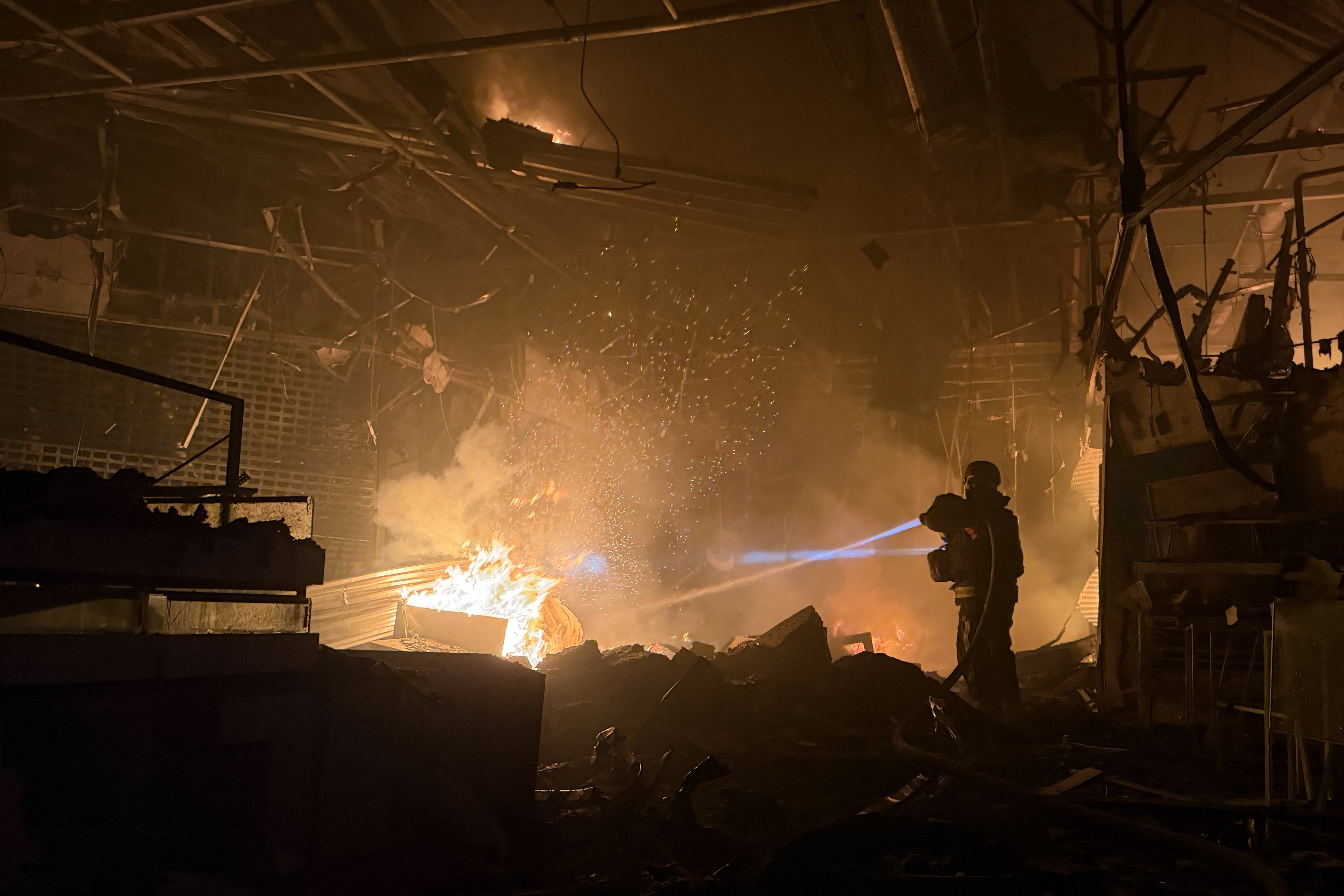
Yet it is precisely because of these attacks that Ukraine matters to Africa, and especially to African people.
What Ukraine can offer Africa that Russia cannot
For one, Ukraine is not Russia. For all of its messy governance, Ukraine’s trajectory is increasingly democratic, free, and capitalist. This aligns with the sentiments of the vast majority of Africans, around 70% of whom prefer democracy to any other system of government. Russia’s authoritarianism, which includes elections which are unfree, extra-judicial killings, oligarchic economic practices, and political imprisonment, seems a lot like the majority of regimes to which Africans are subjected. Throw in a reminder of the extremes of this sort of attitude, and you have Russia’s Wagner/Africa Corps, which is propping up juntas across the Sahel. This generation of Soldiers of Extortion makes their money by excluding the majority from government and extracting what resources they can.
By comparison, what the Ukrainians have to offer is a bouquet of things needed in Africa: drone capabilities for reconnaissance and defence; digitisation of governance; agriculture know-how and investment; and training.
During the Cold War, Ukraine provided education to thousands of Africans. Main university cities like Kyiv and Kharkiv, such as Karazin Kharkiv University, trained many international students in the sciences, a discipline which has retained its popularity in Ukraine.
Ukraine produces over 130,000 engineering and STEM (Science, Technology, Engineering, and Mathematics) graduates annually, nearly half of all graduates countrywide. Before the war, Ukraine produced more than 4,000 PhDs every year across all disciplines, with STEM and social science fields accounted for as many as two-thirds of this total.
Perhaps the most important lesson that Ukraine has to share, however, is less about stuff and things, even expertise, but the power of agency. The extent to which Ukraine owns its struggle can be seen in the cycles of innovation that drive its battlefield success.
In that sense, Ukrainians and Africans are aligned, whatever their governments say or do.
Mills and Hartley are with the Platform for African Democrats.
Discuss this article:



-206008aed5f329e86c52788e3e423f23.jpg "Photo of Oleksandr Moiseienko")
-f3430f0449615e9897dff835086ac204.jpg "Ukraine Broke With a Soviet-Era Military System and Rebuilt It Around the Soldier")
-e126c16a85d580738cf2d57e760b80a3.jpeg "Photo of Vladyslav Greziev")