- Category
- World
Europe Cut Its Russian Gas Dependence. Now Russia Is Targeting the Alternatives in Africa
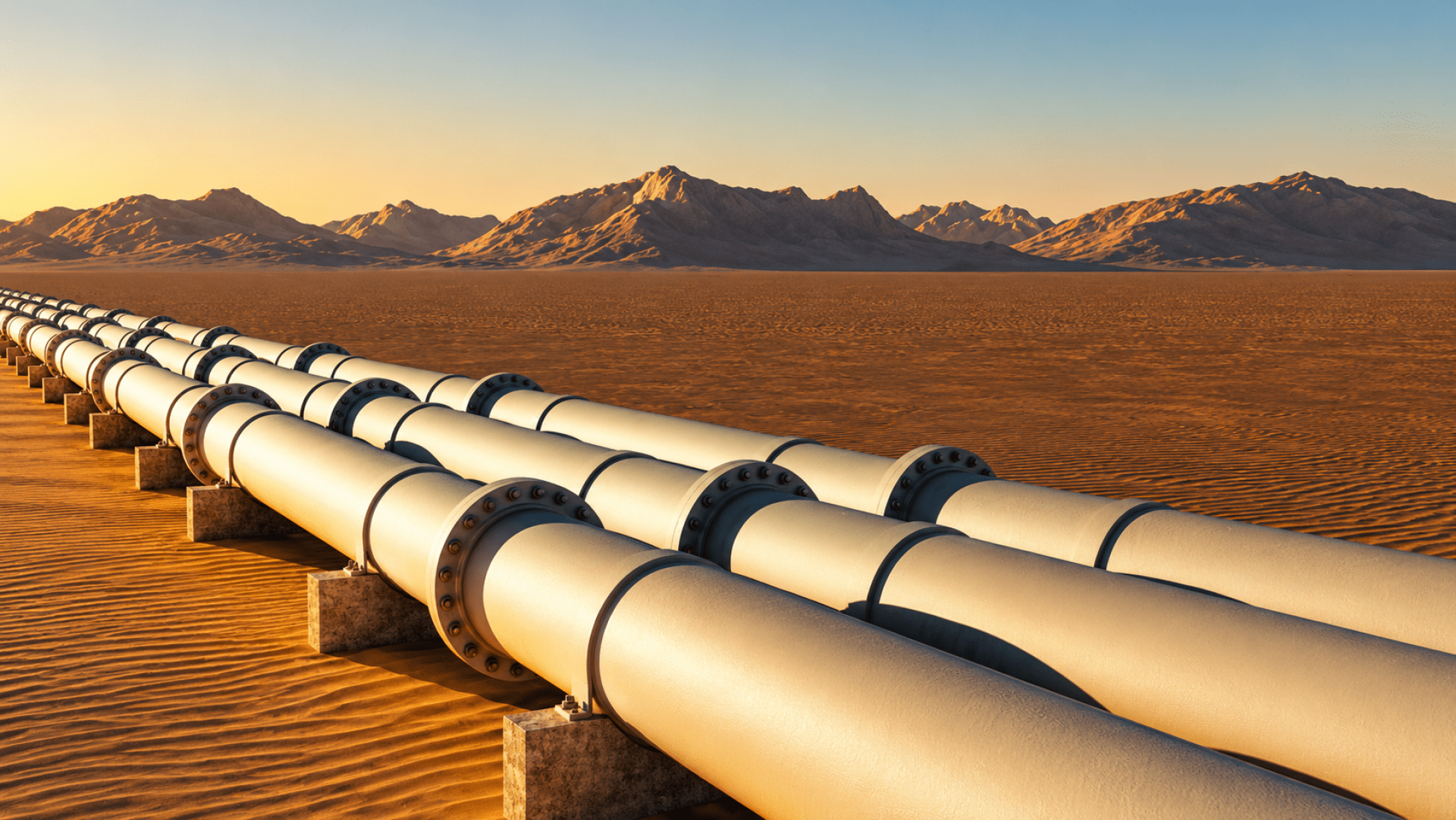
Europe has largely achieved what once seemed impossible: reducing Russia’s share of EU gas imports from 45% to 13%. But diversification alone has not solved the problem of energy security. Europe’s search for new suppliers increasingly leads to Africa, where Russia is systematically trying to make precisely this alternative unviable.
 Prefer U24 Media on Google
- Authors

-92ecbb2b41f23705e2667acbfda7f06d.jpg "Photo of Aliona Chudnovets")
Gas is critical for heat production and the EU’s second-largest source of electricity. Unlike oil, which is traded on a single global market and can therefore be purchased from another supplier if one stops deliveries, albeit at a higher price, a disruption in gas supplies creates an immediate crisis.
The impact of cutting off gas is disproportionate to the revenue the supplier loses. Before the war, the EU imported 90% of the gas it consumed, and as much as 45% of those imports came from Russia. By comparison, dependence on imported oil stood at 25%, coal at 45%, and uranium at 20%.
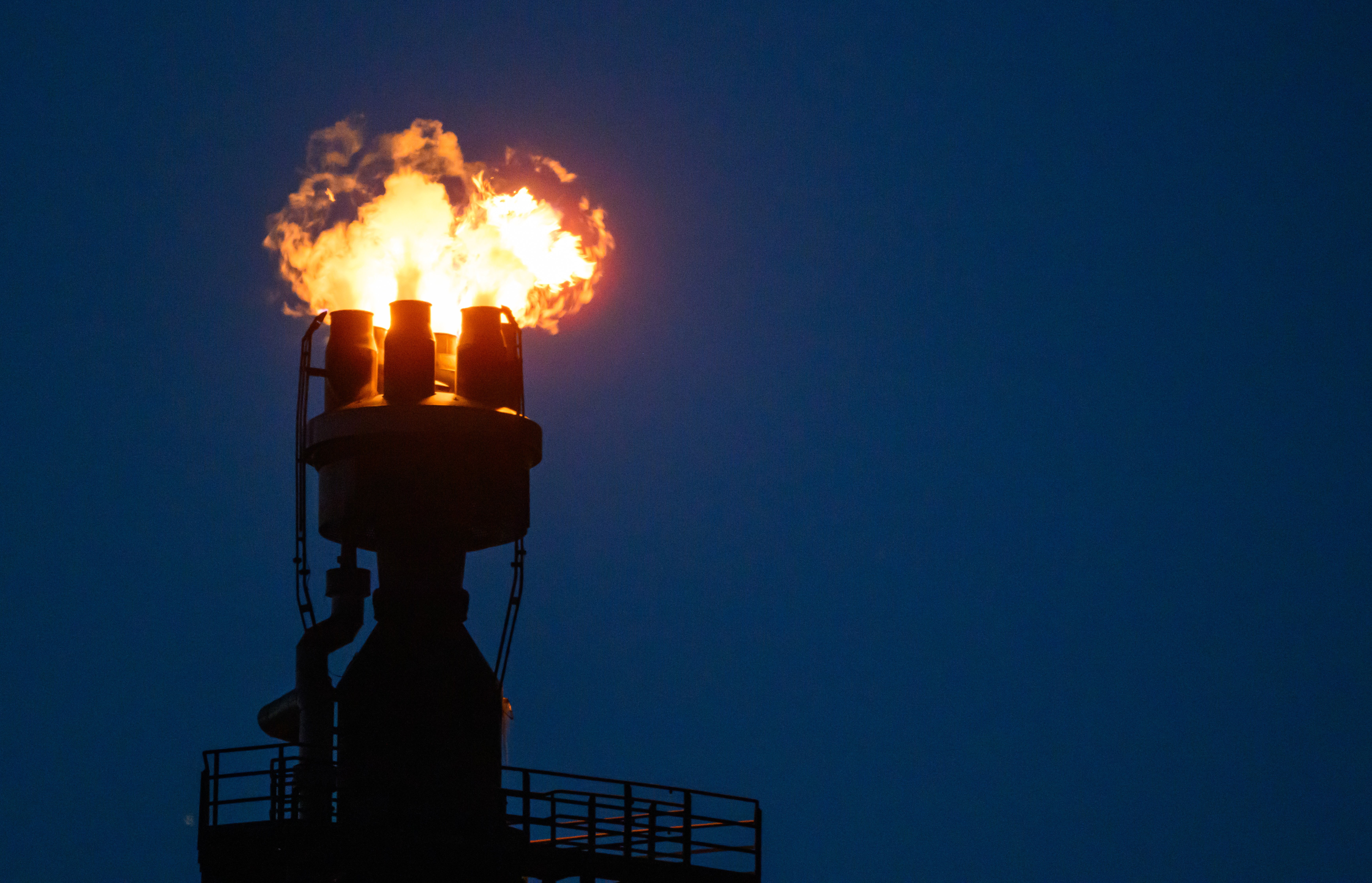
Oil and gas revenues historically accounted for around half of Russia’s federal budget, said Finance Minister Anton Siluanov. Until 2022, Russia consistently spent around 15% of its federal budget on “national defense.” Since the start of the full-scale war, that share has steadily increased, reaching 46% in the first quarter of 2026, while, depending on classification, up to 85% of the budget goes toward the broader category of military needs. Oil and gas revenues, therefore, directly finance the ongoing war against Ukraine, as well as broader hybrid operations targeting the “collective West.”
We bring you stories from the ground. Your support keeps our team in the field.
Given the documented link between gas revenues and the financing of the war, the EU legally codified its phaseout of Russian gas through the REPowerEU regulation: a full ban on Russian LNG imports takes effect on January 1, 2027, while pipeline gas imports are to be banned no later than November 1, 2027, with a transition period for existing contracts and penalties of up to €40 million or 3.5% of a company’s annual turnover for violations.
As a result, by the end of 2025, Russia’s total share of EU gas imports had fallen from 45% in 2021 to around 13% in 2025. In the key subcategory of pipeline gas dependence, the decline was even sharper—from more than 40% to approximately 6%. In 2026, the share of oil and gas revenues in Russia’s budget collapsed to 17–22%, the lowest level in at least 20 years, indicating the effectiveness of sanctions pressure.
Yet this success came at a cost: the EU has had to navigate one of the most severe energy crises in its modern history.
The bloc has had to diversify supply routes while simultaneously securing sufficient gas volumes for 27 countries with entirely different energy histories. These include states shaped by the legacy of the Soviet bloc, whose infrastructure and contracts tied their energy systems to Russia for decades—Hungary, Slovakia, and Austria—as well as major industrial consumers whose economic scale automatically translates into large-scale demand. Germany, for example, consumed 50.6 billion cubic meters of Russian gas in 2021, out of the EU's total demand of 155 billion cubic meters.
How Europe is replacing Russian gas and where the new risks lie
The diversification of the EU energy market has proceeded with mixed success. In 2025, Europe spent €5.9 billion on Russian pipeline gas and another €6.7 billion on LNG, while in the first half of 2026 alone, Russia exported 18% more LNG than during the same period a year earlier. At the same time, the trend toward a forced reduction in consumption is real, even though it has been partially interrupted by the extraordinary crisis caused by the blockade of the Strait of Hormuz in spring 2026.
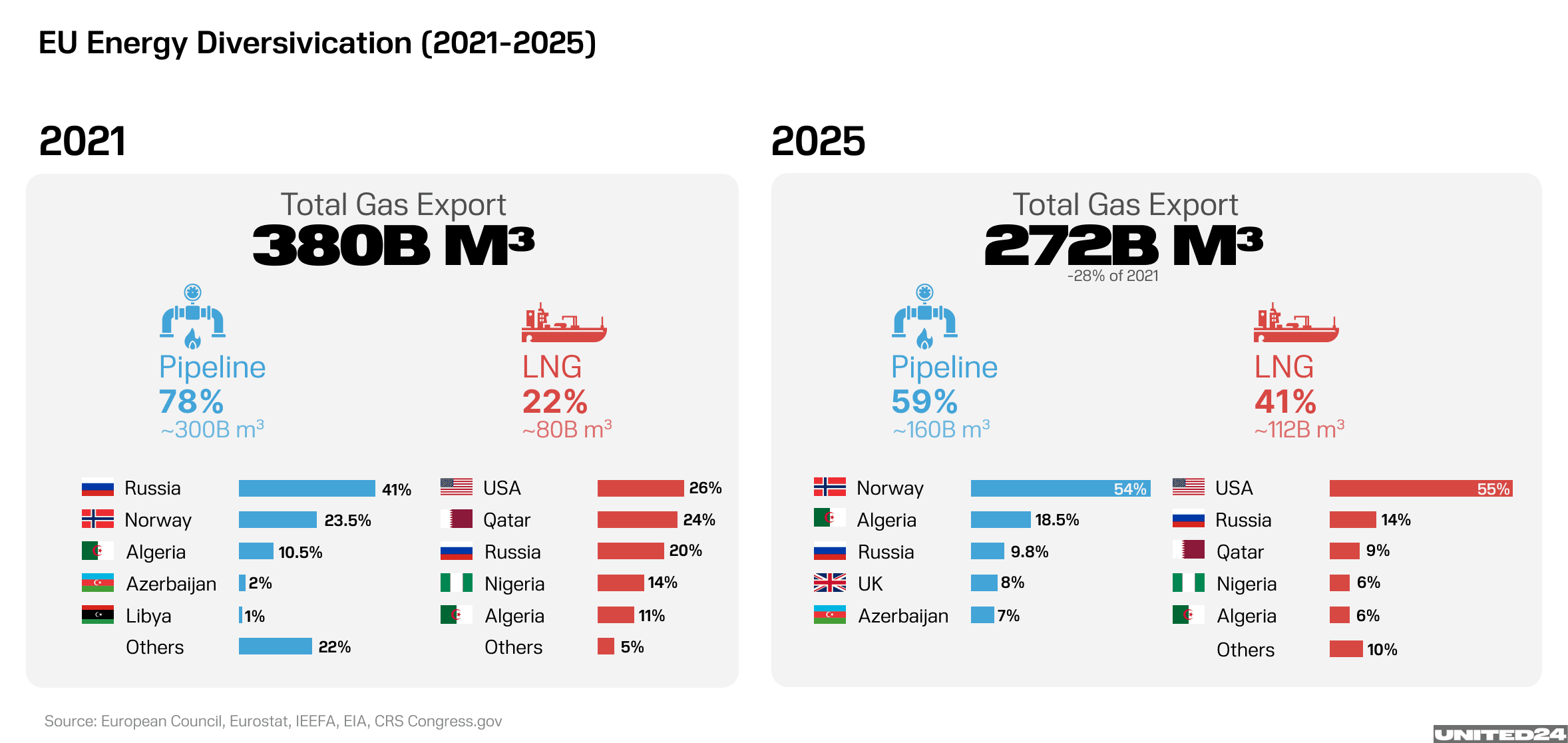
The current sectoral breakdown of EU gas imports has produced new leaders: Norway, the United States, Qatar, and Algeria. Yet the figures alone do not explain energy security in the sense of the bloc’s ability to obtain the energy volumes it needs reliably, at an acceptable price, and without the risk of political blackmail.
Norway: Europe’s own gas supplier
Norway is the leading non-Russian supplier of pipeline gas, accounting for 54.4% of EU imports of gaseous natural gas in 2025, or roughly 30% of the bloc’s total gas demand when both pipeline gas and LNG are included. The country produces up to 120 billion cubic meters of gas per year, 98% of which is exported, and is connected to Europe by a network of 8,800 kilometers of subsea gas pipelines.
Yet Europe’s only major gas supplier has a structural problem: the finite nature of its resources. Around two-thirds of Norway's undiscovered gas resources are located in the Barents Sea, formally part of the Arctic, and this is the reserve the country will need to rely on to sustain export volumes as North Sea fields decline.
Norway’s gas industry is already operating at full capacity while facing pressure from two directions. On the one hand, it must maintain current production volumes, prompting plans to bring more than five additional fields—closed for environmental reasons in the 1990s—back into operation in the coming years, even as developing a new field takes at least 18 years. On the other hand, every such move by Norway encounters systemic resistance at all levels, from the EU’s legal framework, where a moratorium on new oil and gas drilling in the Arctic has been in effect since 2021, to political opposition inside Norway itself.
Moreover, Norway is one of the key targets of hybrid operations by Russia’s shadow fleet, which conducts persistent reconnaissance of subsea cables, launches drones in violation of Norwegian airspace, and has already demonstrated a record of systematically damaging communications infrastructure in the neighboring Baltic Sea.
June 2026 saw the accelerated expansion of the so-called “Arctic shadow fleet”—sanctioned Russian vessels operating along Norway’s coast, including the waters off Finnmark and North Cape, to service the Arctic LNG 2 project. Accordingly, Norway’s prospects for meeting growing EU demand are constrained by the finite nature of its resources. The problem is that its role as the main supplier simultaneously makes the country an increasingly prominent target for Russian sabotage: the more Europe relies on Norway, the greater the need to protect both its energy infrastructure and its national security as a whole.
The United States and Qatar
Two other producers with large shares in their respective sectors, the United States with 58% and Qatar with 14%, supply LNG over long-distance maritime routes. Both cases demonstrate that moving away from Russia and deepening cooperation with allied countries does not eliminate Europe’s exposure to energy blackmail.
The United States and Qatar signed an open letter threatening to suspend supplies over the EU’s Corporate Sustainability Due Diligence Directive (CSDDD), which addresses the negative impacts of production on human rights and the environment. In doing so, they demonstrated a willingness to monetize the energy crisis as leverage over the EU’s domestic agenda.
Organizing these two cases by the nature of the risks they pose reveals two major weaknesses in the current diversification model. An IEEFA forecast suggests that as much as 80% of EU LNG imports could come from the United States by 2028, giving Washington considerable leverage over European energy markets. These large projected volumes are a realistic scenario despite the fact that US LNG is more expensive for EU buyers than gas from any other supplier: of the €225 billion the bloc has spent on LNG imports over the past three years, €100 billion went to American gas.
The structural problem is also reflected in the 2025 US-EU trade agreement reached at Turnberry. Under the deal, the EU stated its intention to procure $750 billion worth of US energy products through 2028, or $250 billion annually, as well as investing another $600 billion in US industry. To meet these commitments, the EU would have to triple its current imports, resulting in the United States supplying around 70% of all European gas imports. In other words, EU energy security would become dependent on a single country and therefore on its political decisions.
Political tensions have already complicated the agreement: the transatlantic split caused by the conflict over Greenland and European countries’ participation—or lack thereof—in the intervention in Iran led to a unilateral US increase in tariffs on key categories of goods in violation of the agreements. Moreover, the war in Iran is forcing Europe to compete for American energy supplies. It is redirecting US export priorities toward more profitable Asian markets, which are in a critical situation due to the blockade of the Strait of Hormuz, which has previously accounted for more than 80% of oil and gas supplies to the region.
Why LNG supply routes remain vulnerable
Qatar, by contrast, illustrates a different kind of vulnerability: the structural risk inherent in LNG logistics. Middle Eastern exporters depend directly on shipping routes. Up to 20% of global petroleum product consumption passes through the Strait of Hormuz, which remains under constant threat of escalation. Iran’s March 2026 strikes on the Ras Laffan terminal damaged two liquefaction trains, Train 4 and Train 6, together accounting for approximately 17% of Qatar’s total exports, and full restoration of the damaged infrastructure will take up to five years. Even excluding the risk of a direct strike, the alternative route around the Cape of Good Hope adds up to 15 days to transit times and significantly increases the cost of fuel, insurance, and logistics because of Houthi attacks in the Red Sea.
Crucially, even where there is stable political will to export energy, supplies can stop entirely due to structural vulnerabilities inherent in the logistics. Despite political disagreements, including over the Philadelphi Corridor and Palestinian refugees, Israel remained a long-term economic partner of Egypt. Yet the escalation of the Israeli-Palestinian war led Israel to halt gas supplies to Egypt completely, leaving the country without 15–20% of its total domestic consumption.
Against this backdrop, Europe is increasingly turning to geographically closer alternatives. The priority among them is the last country with a significant share in the EU’s new energy import structure: Algeria, on the African continent.
Can Africa help Europe replace Russian gas?
Since the beginning of Russia’s full-scale war against Ukraine in 2022, the African vector has received disproportionately extensive attention in European discourse, with dozens of forums, agreements, and development programs. The most important of these, Global Gateway, envisages €300 billion in investment in connectivity development by 2027.
The Trans-Saharan Gas Pipeline
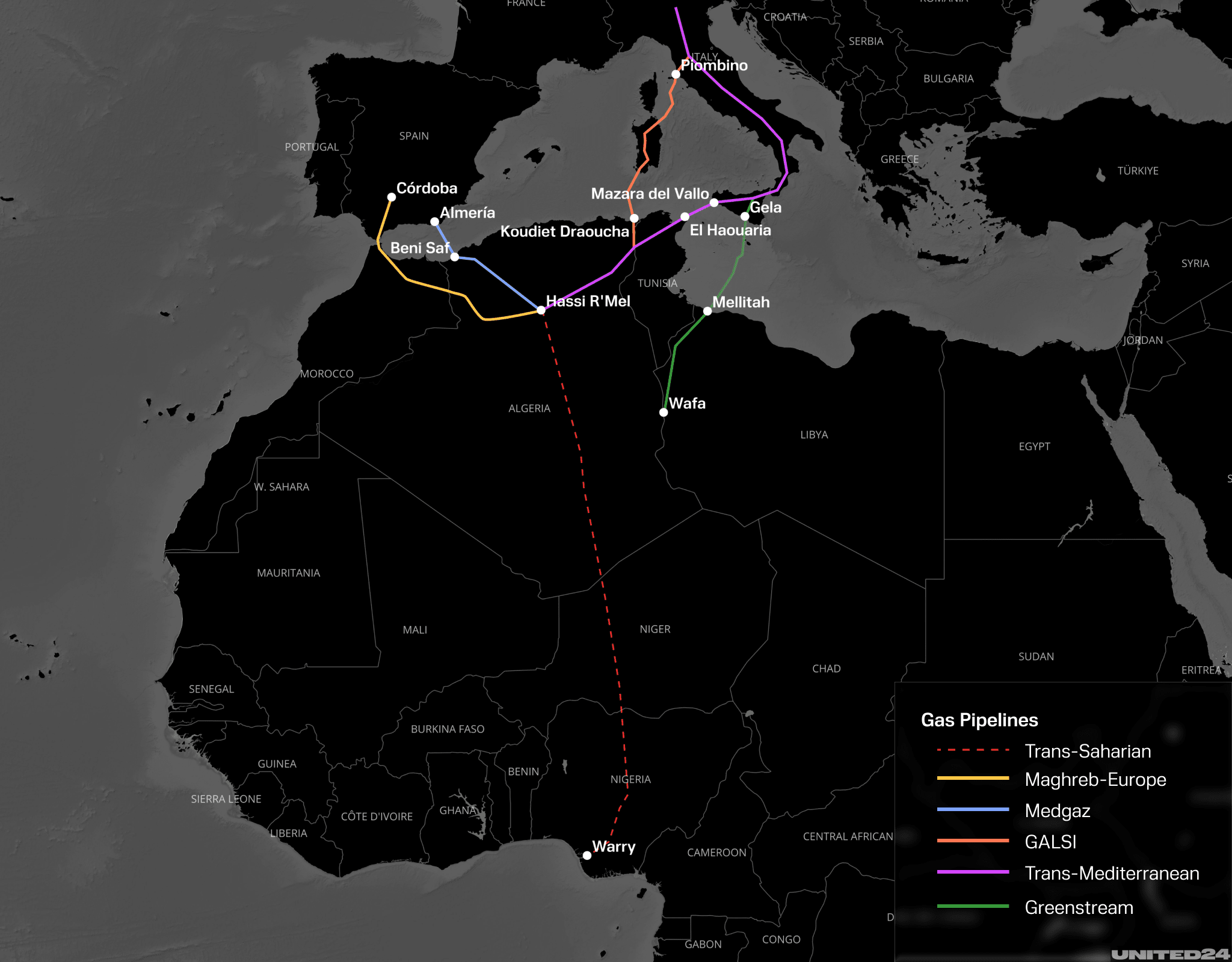
In 2026, the central development was the start of construction on the Trans-Saharan Gas Pipeline, a 4,128-kilometer route linking Nigeria, Niger, Algeria, and Spain, with a planned capacity of 30 billion cubic meters of gas per year.
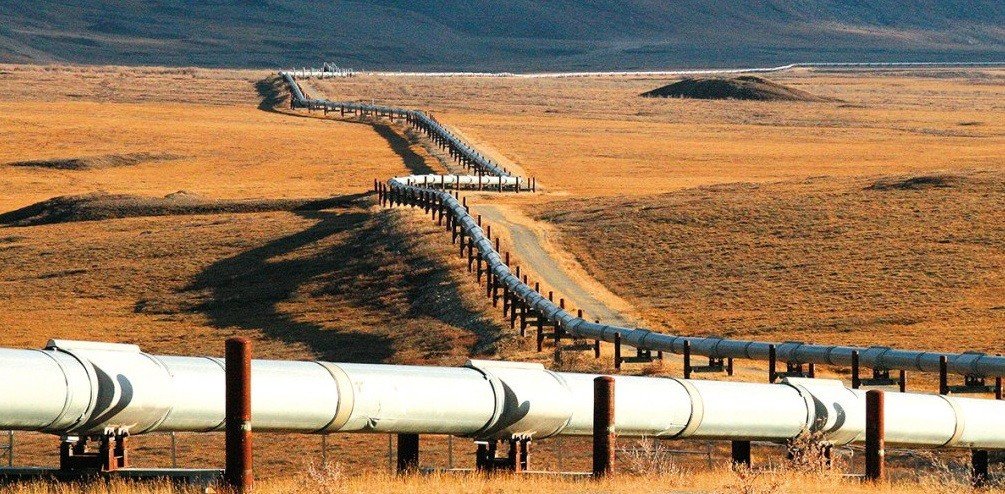
The central structural advantage of the African route stems directly from the difference in how gas is transported. Pipeline gas moves under pressure directly from the field to the consumer without additional processing, while LNG must be cooled to -162°C to reduce its volume by a factor of 600 through liquefaction, loaded onto cryogenic tankers, and then regasified at the receiving terminal.
Africa’s geographical proximity to Europe means that, unlike the United States or Qatar, pipelines can be built there relatively quickly and with greater economic efficiency, while fewer risk factors need to be managed to ensure energy security.
For pipeline gas, North Africa remains the key subregion, already supplying up to 20% of Europe’s gas needs. North Africa consists of six countries, five of which are of direct interest to European energy security: Morocco, Algeria, Tunisia, Libya, and Egypt.
Algeria—the greatest potential to supply Europe
The regional leader is Algeria. Before 2022, its share of gas supplies stood at 8–12%; afterward, it rose to 18.5%, and by the first quarter of 2026, it had reached 20% of EU pipeline gas imports, with the trend continuing upward. This African country is therefore the second-largest supplier of pipeline gas after Norway and the most important non-European supplier. Algeria’s proven reserves amount to as much as 159 trillion cubic feet, or 2.3% of the world’s total. It also ranks first in Africa in gas extraction and production, and second in supply.
Importantly, Algeria hosts critical infrastructure: three of the four operational intercontinental gas pipelines. These include TransMed, with a capacity of 33.5 billion cubic meters per year, transporting gas 2,475 kilometers through Tunisia to Italy; the Maghreb-Europe Gas Pipeline (known as Gazoduc Maghreb Europe—GME), which runs 1,620 kilometers through Morocco to Spain and from there connects to Portugal’s network; and Medgaz, a direct 757-kilometer pipeline to Spain with a planned capacity of 10.5 billion cubic meters per year.
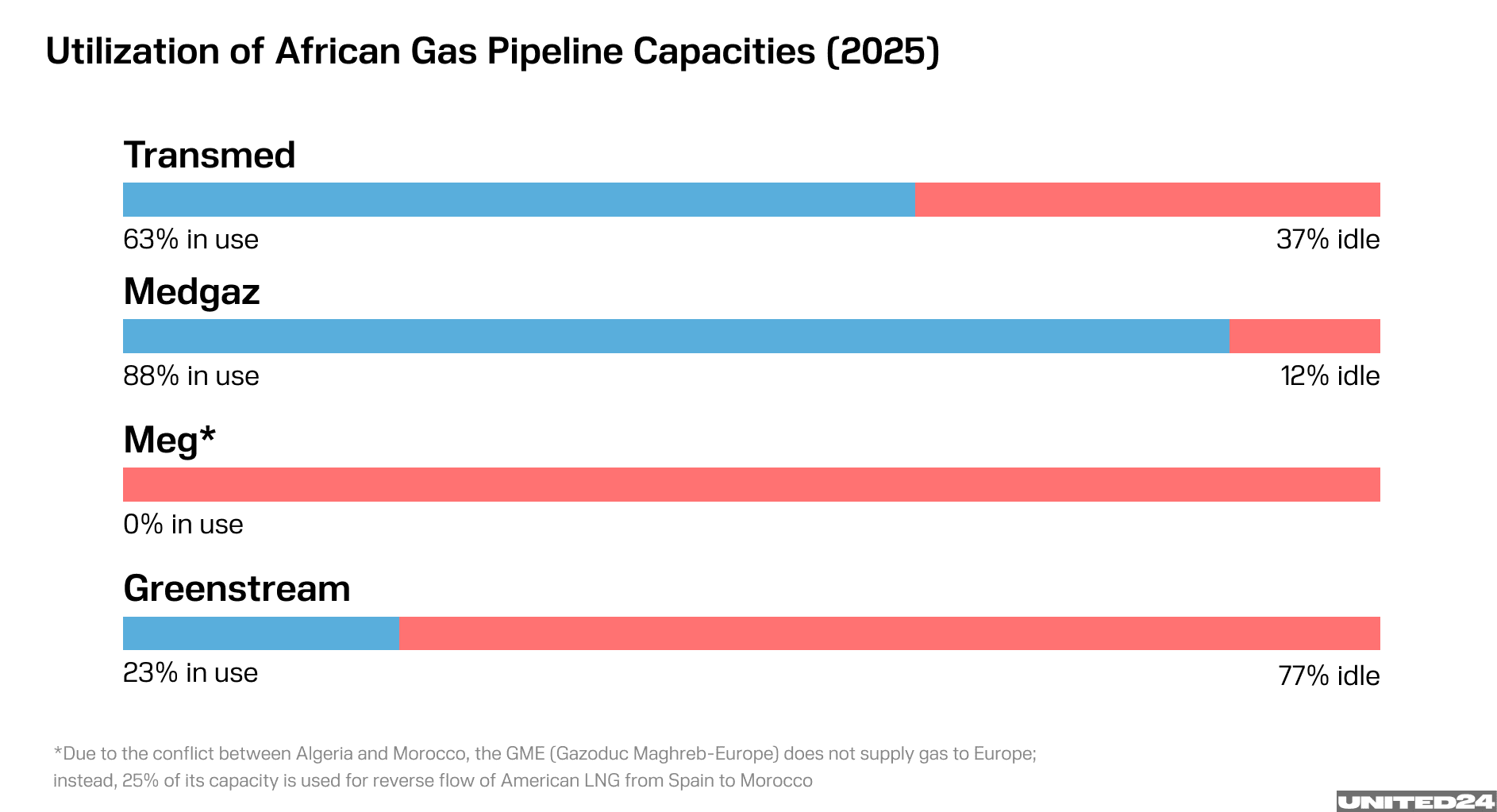
Despite significant demand for gas, none of these pipelines operates at full design capacity. In 2024, TransMed carried only 21 billion cubic meters out of a potential 33.5 billion, or around 63% of capacity. Medgaz operated at 88% of capacity. GME does not currently supply gas to Europe at all; instead, it uses up to 25% of its design capacity for reverse flows of American gas from Spain to Morocco. These figures point to significant untapped potential to increase Algerian gas supplies to Europe without constructing new pipelines, a feature that qualitatively distinguishes Algeria from the EU’s current leading gas exporters. At the same time, this expansion potential must be considered through the prism of the region’s security risks, which may significantly affect the stability and predictability of supplies in the medium and long term.
Algeria’s problems are, to a large extent, common across the region. First, the country faces rising domestic consumption, which currently absorbs 55% of Algerian production and is growing by 6% per year. Meanwhile, the price of gas for households is $0.50/kWh, the third-lowest in the world, while subsidies amount to $4 billion per year, consuming an enormous 4% of the country’s GDP.
Another share of the resource is lost through flaring. Algeria ranks fifth in the world by volume of gas flared, burning up to 8% of its total gas production—literally burning off more gas than the country’s largest partner, Spain, imported from Algeria over the entirety of 2025, when imports totaled 9.4 billion cubic meters. Estimates suggest that eliminating flaring entirely could generate up to an additional $5 billion annually, helping address the problem of domestic gas subsidies and increasing export revenues by 19%.
Notably, where economic incentives emerge, such as proximity to an export terminal, the situation changes dramatically: Angola reduced flaring by 27% after launching its own LNG plant, while Algeria itself cut flaring by 30% in a single year, 2024, simply by connecting the In Amenas and Tin Fouyé Tabankort fields to an existing nearby processing facility.
Libya and Egypt
Another country, Libya, has Africa’s largest proven oil reserves, at 48 billion barrels, and the continent’s fifth-largest gas reserves, at 730 billion cubic meters, or, by some estimates, as much as 2.265 trillion cubic meters when offshore and unconventional deposits are included.
Greenstream, the fourth and final pipeline connecting Africa with Europe, links Libya and Italy over a distance of 520 kilometers and has a design capacity of 11 billion cubic meters per year. In reality, however, only 2.522 billion cubic meters of gas have been imported through it, meaning 77% of its capacity remains idle. The country remains under close European scrutiny regarding new exploration. The installation of the Sabratha Compression facility at the Bahr Essalam field in late June 2026 will add up to 800 million cubic meters of gas per year, while two new offshore projects, Bouri Gas Utilization and Structures A&E, have already received investment from Italian energy major Eni.
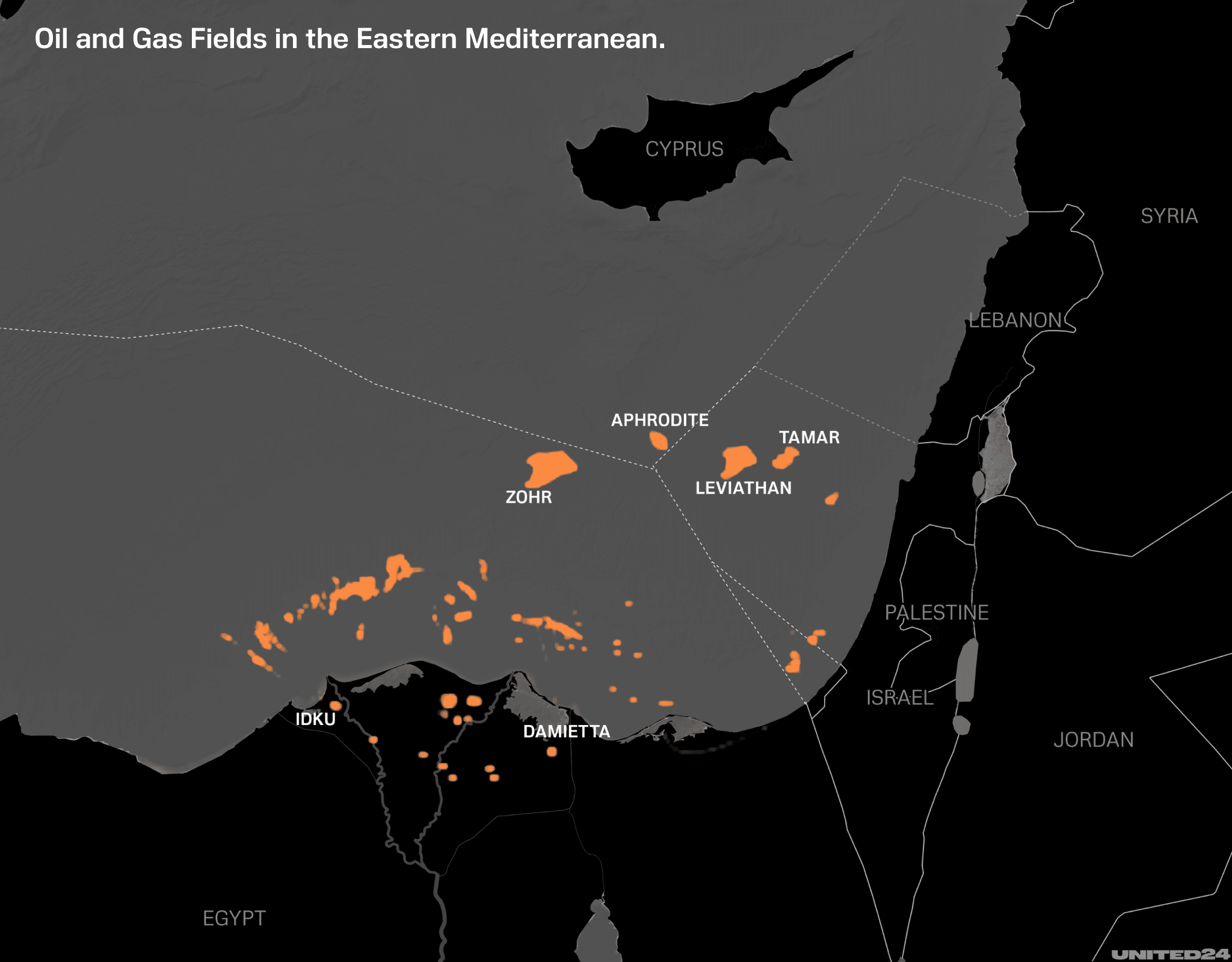
Egypt ranks third in Africa in gas reserves, at 77 trillion cubic feet, and also has liquefaction capacity at Idku and Damietta totaling 19 billion cubic meters per year, which is currently not fully utilized. Europe’s key interest lies in the so-called Eastern Mediterranean zone, which includes two Israeli fields, Tamar and Leviathan; Cyprus’s Aphrodite field; Zohr, Egypt’s field; and the largest discovery in the Mediterranean Sea.
Within this system, Egypt provides the infrastructure because Cyprus lacks its own processing centers for extracted gas, while Israel pursues a regional strategy to jointly export surplus gas via the East Mediterranean Gas Pipeline. The concentration of fields within a relatively small area—7 to 90 kilometers apart—and the existing infrastructure in Idku and Damietta make this region the most “ready for use” of all African alternatives, even if absolute gas volumes are lower than Algeria’s. This is where Europe has concentrated much of its effort, marked by the 2024 Egypt-EU-Israel Memorandum, which, according to European Commissioner Olivér Várhelyi, already ensures “significant amounts of liquified natural gas” to the EU on a stable basis.
Morocco, Tunisia, and Nigeria
The other two North African countries, Morocco and Tunisia, are of interest primarily for their renewable energy potential. The difference compared with conventional energy sources is that gas supply diversification routes can be redirected within several years, while renewables reduce dependence on gas itself through new generation capacity, including solar and wind farms; new subsea electricity cables; and, most importantly, systems to ensure generation stability, including batteries and backup capacity.
Morocco remains a global leader in the “green transition” and was therefore the first country to conclude a Green Partnership with the EU, the EU-Morocco Green Partnership, in 2022. It is also the only African country connected to Europe by two high-voltage cables, each with a capacity of 700 MW, with plans for a third cable of the same capacity, bringing the total to 2,100 MW. The 2023 Memorandum of Understanding with Tunisia, together with Elmed, the Tunisia-Italy interconnector, could potentially become Africa’s second functioning energy connection with Europe.
This group of prospects also includes the West African country of Nigeria, which has the largest proven natural gas reserves in Africa at 200 trillion cubic feet, while the government is working to triple reserves to 600 trillion cubic feet in the near future.
The country has two gas pipelines, the key one being the West African Gas Pipeline, which supplies gas to neighboring African countries—Benin, Togo, and Ghana—with prospects for expansion toward European markets through Morocco. Once completed, it will become the longest offshore pipeline in the world and the second-longest pipeline overall. However, completion is scheduled for 2046 under an optimistic scenario, which does not match the timeframe required by the EU, given that bans on Russian gas imports will take effect as early as 2027.
Taken together, the data above point to a clear conclusion: a number of African countries can offer Europe an alternative that is already partially realized, with functioning pipelines, signed memorandums, and projects currently under construction. The region’s problems form a recurring pattern from country to country, but they are predominantly technical and therefore have specific solutions that have already been tested. This makes the African vector not merely promising but practically achievable, provided the EU maintains stable, long-term attention to the issue.
How Russia is targeting Europe’s energy diversification in Africa
The paradox of Europe’s energy reorientation is that the same state whose ability to blackmail the EU with gas caused the current energy crisis is also the key obstacle to the African alternative to that crisis.
Russia has not remained on the sidelines of the diversification process.
On the contrary, analysis shows that it is directly converting its great-power leverage into influence over the energy sovereignty of African countries through which Europe seeks to diversify. This dynamic can be traced back to the intensification of Russia-Africa ties in 2022 and became markedly stronger at the end of 2025, when the EU began adopting a regulation to phase out Russian gas.
Undermining the Trans-Saharan Gas Pipeline
In the case of the Trans-Saharan Gas Pipeline—the symbol of the EU’s African energy diversification effort, under negotiation since 2002—Russia systematically employs a range of influence mechanisms, especially those stemming from a structural feature of any pipeline: none of the countries described above can provide Europe with direct and unconditional access to the resource because the transportation route always crosses the territory of several states.
Africa’s greatest advantage, geographical proximity, which makes pipeline infrastructure viable, is also its greatest constraint. Every new border means a transit agreement between governments, tariff negotiations, capacity bookings with the national operator, and the “ship-or-pay” principle, under which payment is required even for unused capacity. In Africa, a region with a high concentration of conflicts—up to 40% of the global total, with more than 50 active episodes—each additional jurisdiction is an additional point of vulnerability.
Russia, meanwhile, is systematically involved in destabilizing precisely those strategic countries through which key transit corridors are supposed to run.
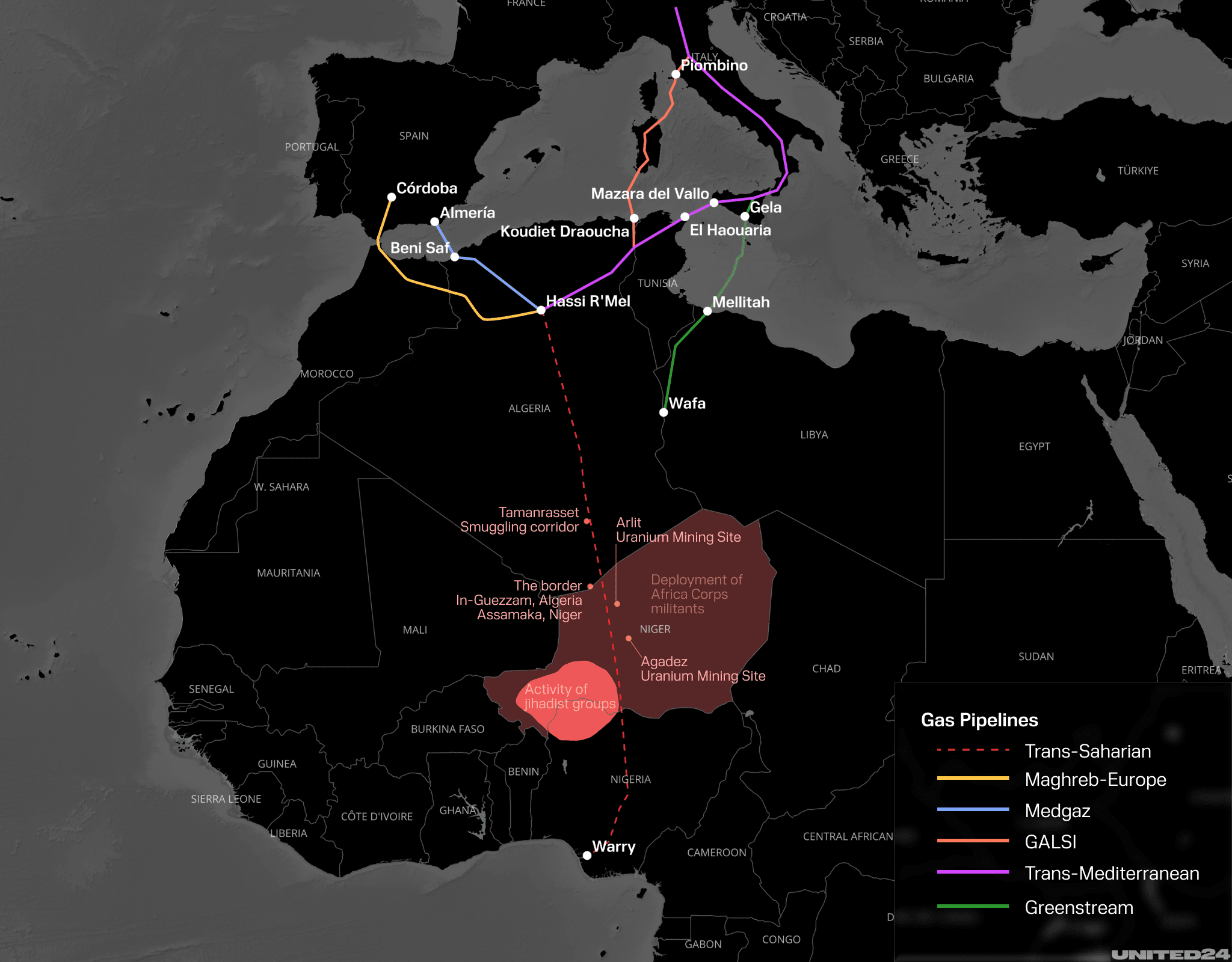
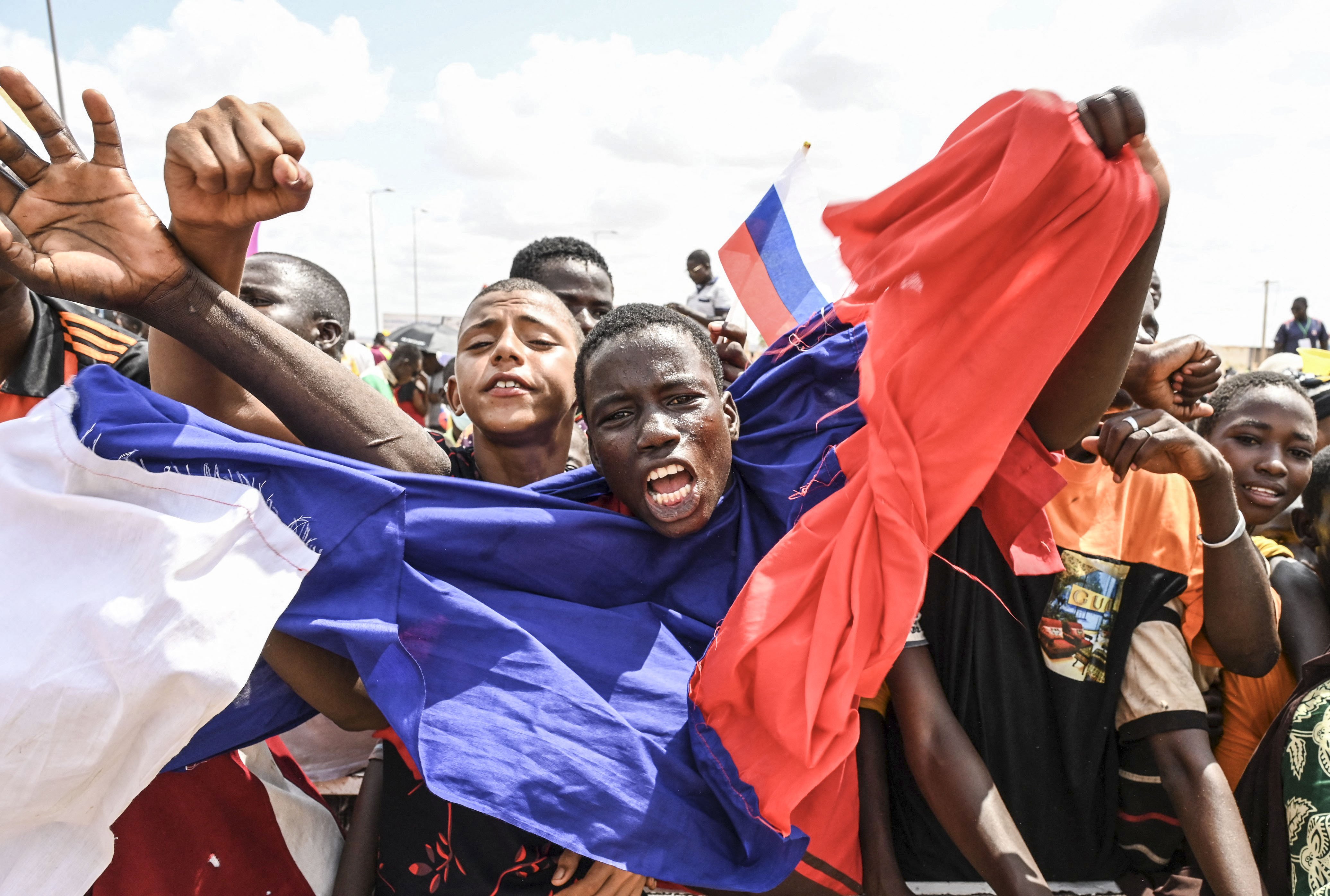
An 841-kilometer segment of the Trans-Saharan Gas Pipeline passes through territory in Niger controlled by a military junta. Analysis of disinformation networks exposed by Meta shows that Russian-linked accounts participated in an information campaign preceding the 2021 coup in Mali. The same networks were later redirected toward a broader narrative promoting the “independence of the Sahel from Western influence,” a campaign that coincided with the subsequent coups in Burkina Faso in 2022 and Niger in 2023.
-74bb0af73c3738cbf23541e6b5e8370b.jpg)
The military juntas that came to power through these events have systematically violated demands from the African Union, ECOWAS, and international partners to restore civilian rule. This ultimately led the three Sahel countries to withdraw from ECOWAS, Africa’s oldest and largest Regional Economic Community, and establish the Alliance of Sahel States, or AES, a structure partially coordinated by Russia.
Part of the Trans-Saharan Gas Pipeline passes through territory where fighters from Russia’s Africa Corps are permanently deployed. Moreover, the pipeline follows the Tamanrasset corridor in Algeria, the In Guezzam/Assamaka border crossing, Arlit, and Agadez in Niger—one of Africa’s key smuggling routes, where jihadist groups are also active, the largest being JNIM and ISSP, affiliates of al-Qaeda and ISIS, respectively.
Expanding influence over Africa’s energy
Energy agreements became a logical extension of this military presence. In June 2025, Russia signed corresponding agreements with Mali and Burkina Faso, followed by one with Niger in July. At the end of September that year, Russia received a public proposal from Niger’s minister of mines to assist in developing the country’s uranium deposits. At the same time, French company Orano lost its licenses in the Imouraren and Arlit industrial areas, while the Nigerien government refused to “return,” by various estimates, between 1,300 and 1,500 tons of uranium concentrate belonging to France, worth €250 million, citing EU and ECOWAS sanctions.
In 2022, Niger supplied more than a quarter of the EU’s uranium needs for nuclear power plants, but that share fell to minimal levels after the coup. A situation in which Russia gains control over uranium deposits directly contradicts the needs of the EU energy sector. Since the early 2000s, only seven new nuclear power plants have been commissioned in the EU, while more than 70 have been shut down.
Nevertheless, nuclear power accounts for more than 40% of total electricity generation in France, Slovakia, Hungary, and Belgium, meaning demand remains high and has increased further amid the combination of bans on Russian energy imports taking effect by 2027 and the EU Climate Law, Regulation (EU) 2021/1119, which made climate neutrality by 2050 a legally binding goal, with an interim target of reducing greenhouse gas emissions by 55% by 2030.
At the end of 2025, Il Foglio published an investigation citing evidence of the continuous air transport of “thousands of tons of uranium” from Niger through Algeria, Libya, and Syria. Critically, part of these shipments is reportedly intended for the Zaporizhzhia Nuclear Power Plant, Europe’s largest nuclear facility, which Russia has occupied since March 2022. The plant has repeatedly been at the center of nuclear crises.
Operating on emergency diesel generators, it has completely lost external power at least 19 times, including three outages within just two weeks in May 2026. The neighboring Zaporizhzhia Thermal Power Plant is also regularly attacked by Russia, keeping the entire world under threat of a nuclear accident on a continental scale.
Russia is similarly “cutting off” Europe from Africa’s second uranium producer, Tanzania. In 2025, Rosatom launched the Mkuju River project, involving 44,000 tons of ore from the Nyota deposit, one of the world’s largest, with 152 million tons of explored ore. As a result, project operator Mantra Tanzania Ltd, a subsidiary of Canada’s Uranium Mining Company and the Rosatom parent consortium, could soon become one of the region’s largest uranium suppliers.
Nigeria, another country along the Trans-Saharan pipeline route, is facing a similar policy from Russia. The country is negotiating the joint construction of four nuclear reactors with a capacity of 1,200 MW each, at a total cost of $80 billion. Significantly, this is not an isolated case but part of a systematic strategy articulated across several platforms in the summer of 2026.
The 29th St. Petersburg International Economic Forum and Russian Foreign Minister Sergey Lavrov’s July visits to African countries placed energy issues at the center of the agenda. Russia reaffirmed its commitment to build hydropower plants on the Congo River involving Angola, Namibia, and Zambia, and nuclear power plants in South Africa, while also announcing a series of projects to explore, extract, and acquire gas, oil, uranium, and bauxite assets in those same countries of the Southern African Development Community, or SADC. The region is critical to compliance with the EU’s 2024 Critical Raw Materials Act, under which no single third-country source should account for more than 65% of the EU’s imports of any one material.
At the same time, these countries are among Africa’s leaders in renewable energy and are therefore long-term targets of major EU investment. Back in November 2022, at COP27, European Commission President Ursula von der Leyen and Namibian President Hage Geingob signed a Memorandum on renewable hydrogen and sustainable critical raw materials value chains, the EU’s first such agreement with an African country. More than €1 billion in grants and loans has since flowed into Namibia. The flagship Hyphen project, operating under a 40-year concession, is expected to begin production in 2026, while seven other green hydrogen projects are also underway.
Lavrov’s July visits to other countries on the continent fit the same logic, each with its own energy emphasis. He traveled to Niger immediately after the signing of energy agreements during a Russia-Alliance of Sahel States ministerial meeting; to Mozambique, which is interested in attracting Gazprom to gas projects while Russia is already helping provide security for local fields; to Ethiopia, where construction of a nuclear power plant remains a key issue; and to Burundi, which has already signed a memorandum with Rosatom on small reactors amid the country’s 2026 chairmanship of the African Union.
The effectiveness of the “peaceful atom” strategy rests on a structural paradox: Russia uses nuclear energy and the construction of alternative, expensive energy infrastructure precisely in countries that possess vast raw-material resources but cannot provide electricity to their own populations, directly affecting the legitimacy of their governments. Niger has an electrification rate of only 20.1%, Tanzania 48.3%, and Namibia 56.7%. These are countries with enormous reserves of resources essential to energy security, but they lack both the capital and the technology to deliver those resources to end consumers. Rosatom consistently fills that gap with long-term benefits for Russia’s geopolitical positioning.
Why Algeria is central to Russia’s energy strategy in North Africa
The third country on the Trans-Saharan Gas Pipeline, Algeria, is deeply tied to Russia through a series of agreements driven by its need for advanced military technology. Algeria purchased 73% of its weapons from Russia between 2018 and 2022, including the latest fifth-generation Su-57 stealth fighters and Su-35 aircraft, prompting repeated efforts to hold it accountable, including through possible US sanctions under CAATSA.
Today, Algeria continues to serve as a transit point for military equipment bound for other African countries, particularly West Africa and the Sahel, where this equipment is supplied to illegitimate governments loyal to Russia or used by Africa Corps fighters directly participating in African conflicts. Against this backdrop, bilateral trade increased by 70% in 2022, and an Enhanced Strategic Partnership was signed in June 2023, adding areas critical to both countries where Russia holds a strong position, allowing it to shape the terms of cooperation: agriculture, energy, and trade.
Significantly, Russia is not the only player here. Rather, it opens the door to other states that have faced long-standing Western sanctions and need alternative markets and partners.
In 2024, Iranian President Ebrahim Raisi made the first visit by an Iranian president to Algeria in 14 years, resulting in agreements on gas, energy, and technology. Iran is also believed to support the POLISARIO Front, the military organization fighting for the independence of Western Sahara, which controls up to 30% of the territory, while the remaining 70%, including the Bou Craa phosphate deposit, is held by Morocco. Iran is therefore operating within the same anti-Western and anti-Moroccan framework as Russia, reinforcing Algeria’s regional ambitions while also radicalizing them.
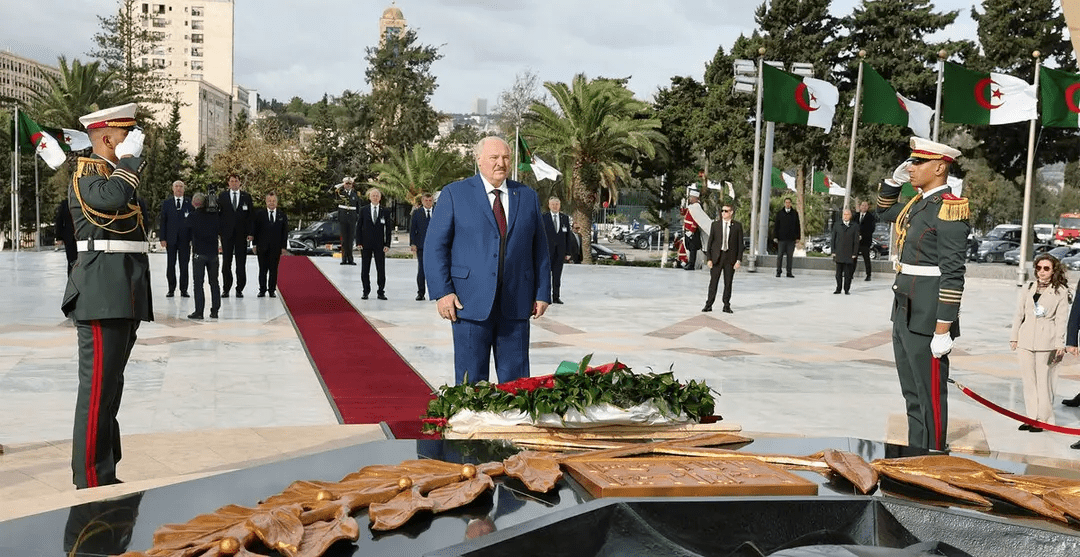
Similarly, Russia effectively acts as a protector of Belarus’s presence in the region, primarily in agriculture. In December 2025, Alexander Lukashenko made the first-ever highest-level visit by a Belarusian leader to Algeria, where agreements were reached on agricultural supplies and a joint Belarus-Algeria-Oman enterprise for mineral fertilizer production was established.
The visit unfolded under the same anti-Western and anti-colonial slogans. The strategic nature of this approach is underscored by the fact that Russia had previously tested a similar pattern in Venezuela, where it cooperated closely in the oil sector, again using Belarus’s agricultural sector as an entry point. The defining feature of these contracts is that they are not economically self-sustaining: the presence of companies and specialists in the region is financed as a state project rather than justified on market terms. In other words, the model rests not on competitiveness but on a willingness to subsidize the presence of allied regimes.
Using food, energy, and BRICS
Another example of a dependency that Russia actively converts into an instrument of influence is food. Egypt, one of Europe’s most stable energy partners in Africa, is particularly vulnerable to this leverage because it is the world’s largest importer of grain, predominantly Russian grain. It is precisely this lack of alternatives that makes Egypt’s position notably accommodating.
At the second Russia-Africa Summit in St. Petersburg in 2023, President Abdel Fattah el-Sisi publicly called on Russia to restore the grain corridor that Moscow itself had unilaterally terminated. By May 2026, at the fifth Russian Grain Forum in Sochi, despite collective efforts by African states facing the same problem, Egypt was still seeking a new preferential grain supply contract.
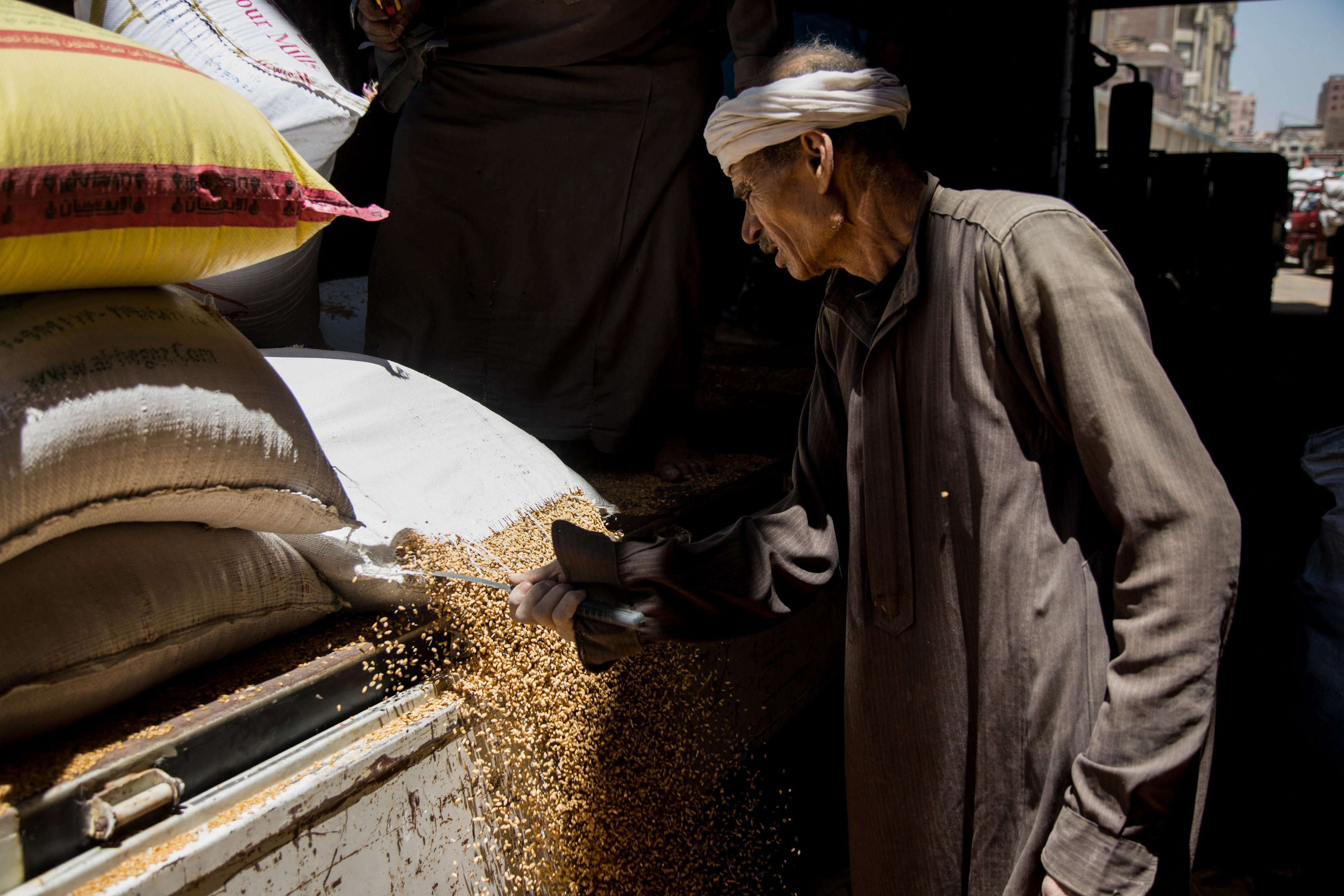
Moreover, Egypt is directly violating international sanctions by accepting stolen Ukrainian grain. Ukraine’s Foreign Ministry reports that in 2025, 40% of the 2 million tons of stolen grain was transported specifically to Egypt and then sold onward to global markets, despite official evidence provided by Ukraine. Accordingly, the country is prepared both publicly and in practice to side with Russia, sharing complicity in sanctions evasion and increasing the revenues of a state waging an active hybrid war against Europe.
As a result, Russia and Egypt agreed at the 2023 Russia-Africa Summit in St. Petersburg to establish a joint food and energy hub in Egypt. This represents the conversion of food dependence into access to a regional center where Russian energy products could potentially be distributed to neighboring African countries that, as noted earlier, face critical electrification problems.
Such hubs are part of a broader strategy. Russia is planning a similar food and energy hub in Iran, with the potential to serve markets in Qatar and Turkmenistan. Looking at the current priorities of Russian supplies, a new focus is evident on Iran, which holds the world’s second-largest gas reserves but faces development and supply constraints because of long-standing sanctions; China, where Power of Siberia 1 is already operational, negotiations are underway to expand capacity by 6 billion cubic meters per year from 2031, and the proposed Power of Siberia 2 has still produced no result despite more than a decade of negotiations, including another meeting between Xi Jinping and Vladimir Putin in March 2026; and India.
This amounts to a single bloc and a shared strategy across several countries that follows the same overall logic: Russia is accelerating LNG supplies before the EU’s full ban takes effect in 2027, while simultaneously creating similar “hubs” around the world wherever interested regional partners exist. Egypt, with its food dependence, has emerged as one of the most convenient footholds for this model in the highly promising African region.
Alongside these political processes, Russia is systematically drawing African countries into a parallel geopolitical order. BRICS is also expanding: Egypt, Ethiopia, and South Africa are full members; Nigeria and Uganda are partner countries; Algeria has sought to join the grouping for years but ultimately declined in 2024.
Russian priorities, including those articulated by Lavrov at the St. Petersburg forum, emphasize working primarily through BRICS, which is effectively building a parallel financial infrastructure entirely independent of sanctions pressure, including the New Development Bank, which even includes countries with political complications vis-à-vis the bloc, such as Algeria.
What is emerging, then, is a bloc concentrating critical resources across several domains at once—energy, critical raw materials, financial mechanisms, and more—and as this consolidation grows, it will increasingly be able to dictate terms of access to those resources to the rest of the world, including Europe, beyond any Western control or sanctions leverage.
Can Europe achieve energy security without Russian gas?
Europe has reached a point where diversification away from Russia has occurred on paper, but has not solved the fundamental problem of energy security. Formal diversification indicators look convincing, but behind them lies the same vulnerability in a new form.
Europe has not eliminated dependence; it has merely dispersed it among several sources of risk, each capable of influencing the EU’s internal policies.
The African continent theoretically offers precisely what these alternatives lack: geographical proximity and infrastructure already developed around that advantage. Moreover, practically every structural problem in the region is potentially solvable provided there is stable, long-term external investment.
Yet this is also where the central trap lies: the more promising a given African country becomes for European diversification, the more actively Russia invests in that country in order to retain control over whether such diversification can take place at all.
Senior Russian officials have repeatedly and publicly described the African continent as a central priority of the country’s foreign policy strategy, most recently President Vladimir Putin himself in his Africa Day message on May 25, 2026. This priority was also formally enshrined in Russia’s latest Foreign Policy Concept, adopted in 2023, in which Africa, for the first time, ranked above the EU, the United States, and Latin America in terms of priority.
Nevertheless, there are objective limits on Russia’s ability to sustain a strategy that requires enormous financial pressure: the resources of a wartime economy are limited when it comes to systematically financing projects, primarily nuclear projects, that no one else in the world offers in the same form.
Back in 2017, Russia and Nigeria signed an agreement to construct four nuclear units with a combined capacity of up to 4,800 MW at two sites, as well as a nuclear research center. Nine years have passed, yet the project has not moved beyond negotiations and repeated “reaffirmations of intent” due to delays on the Russian side.
Zambia has faced a similar fate. Site preparation for a Center for Nuclear Science and Technology with a research reactor outside Lusaka began in 2018, but financial difficulties slowed the project to the point that it has not progressed to implementation.
South Africa, the only African country with an operating nuclear power plant, went further and terminated its earlier nuclear agreement with Russia. Civil society groups succeeded in having the agreement overturned in court, while President Cyril Ramaphosa formally abandoned further expansion of the nuclear program in 2018, calling the plans too expensive.
This has not caused African states to sever cooperation entirely. On the contrary, Nigeria, Niger, and Ethiopia repeatedly confirm and reactivate the same agreements at every new forum or visit. Yet the very cycle of repeated confirmations without real progress serves as an indirect but persistent indicator of Russia’s inability to turn long-term energy commitments into practical results, rather than merely a symptom of diplomatic activity.
The more years pass between the signing of a memorandum and actual construction, the less reliable Russia appears as a partner in the eyes of African governments themselves. This weakens Moscow’s position in the region while opening a window of opportunity for Europe, which, if it maintains consistent rather than episodic engagement, can take over the role of a more reliable alternative precisely where Russia systematically fails to deliver on its own promises.
Importantly, Rosatom is publicly acknowledging its own limits. In 2026, the company plans to cut its investment program by almost half, to just over 900 billion rubles from 1.66 trillion rubles a year earlier. This is part of a broader trend in which Russia’s largest state-owned companies are sharply reducing capital expenditure because of falling profits and expensive credit.
This is why Russia’s shift from large reactors, such as those proposed in Nigeria or Egypt, toward small and medium-sized reactors, which it is increasingly promoting in Burundi, Tanzania, and Rwanda, is less a technological choice than an exercise in forced austerity. Even small reactors, multiplied by the number of countries in which Rosatom is negotiating simultaneously, remain a financially unsustainable burden that the company carries not through its own profitability but through direct subsidies from a state that is itself facing a budget deficit.
Another systemic risk in Russia’s strategy is that deep involvement in one African country inevitably undermines the regional leadership of a neighboring state, even if that neighbor formally remains a partner of Moscow.
Algeria is an illustrative example.
In spring 2026, a diplomatic conflict between Algeria and Mali again escalated, with Mali, which Russia considers a foothold in Africa, as the focus. The dispute was driven to a significant extent by Algerian suspicions about support for Tuareg rebel groups seeking to establish their own state of Azawad and lay claim to part of Algeria’s southern territory. Algeria has repeatedly recorded violations of its airspace by drones from neighboring countries involved in the same conflict. Moreover, Tuaregs in Niger have joined the war against Mali’s government, which cooperates with the Africa Corps.
Russia’s military presence in the region, therefore, does not stabilize the security environment around Algeria. Instead, it directly fuels a conflict that threatens Algeria’s own borders. The same actor that publicly positions itself as Algeria’s partner in energy and defense is simultaneously undermining the security stability on which Algeria’s regional leadership depends. As a result, the country best positioned to fill the EU’s gas shortfall finds itself hostage to instability fueled, to a significant extent, by its own partner.
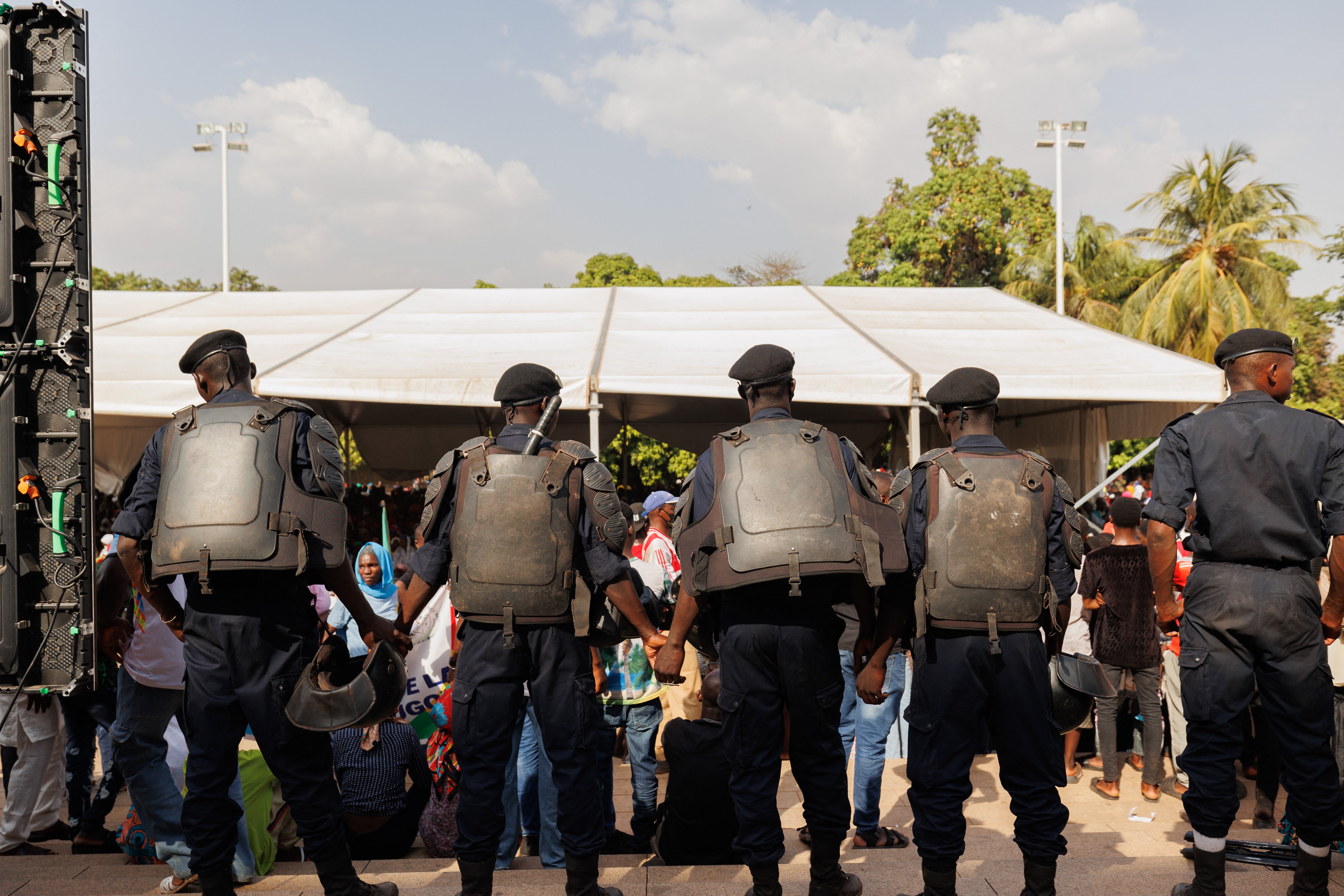
Consequently, 2026 has seen an Algerian pivot toward cooperation with Western partners. Although relations with Europe, especially with France, its former colonial power, remain extremely complicated, Algeria signed a strategic Memorandum to deepen military cooperation with the United States. AFRICOM described the document as “the first of its kind,” as it provides for permanent joint consultative committees, weapons exchanges, and joint planning of military operations.
Russia’s increasingly deep and unsystematic intervention in African conflicts is producing the opposite effect from its stated goal of strengthening influence. Instead of loyal satellites, Moscow is creating a region of chronic instability whose effects rebound even on countries that formally remain its partners. This structural paradox—whereby Russia’s presence undermines the security of its own “clients”—is pushing states such as Algeria toward pragmatic rapprochement with the West despite the historical and ideological background of those relations. For Europe, this opens a window of opportunity that should be used systematically: not as a one-off diplomatic gesture, but as a long-term strategy for supporting an alternative center with which Africa can build strategic cooperation.
This is also how Moscow’s public position should be understood. The Kremlin claims that no other energy producer can replace Russia’s role in the global market, and this argument is partly supported by the real problems facing the key alternative suppliers described above. Yet the crucial caveat is not whether alternative supply routes have problems, but that profitable long-term trade is built not on monopolistic dependence but on balanced mutual interest: satisfying the domestic demand of the supplier country while simultaneously diversifying the EU’s own energy market.
A telling counterexample is Azerbaijan. The country has effectively launched the process of fully displacing Russia from the Balkan supply route, because the Greece-Bulgaria Interconnector, or IGB, opened in 2022, made it possible to transport Azerbaijani gas to Bulgaria and from there to the rest of the Balkans—the very markets previously supplied through TurkStream, Russia’s only remaining operational pipeline route into the EU.
In the same year, Azerbaijan and the European Commission signed a Memorandum on Strategic Partnership that commits the parties to doubling the Southern Gas Corridor's capacity to at least 20 billion cubic meters of gas per year by 2027.
In July 2026, President Ilham Aliyev publicly stated that Azerbaijan was prepared to increase gas supplies to Germany beyond the existing 1.5 billion cubic meters per year, provided there were concrete requests from importers and corresponding infrastructure expansion. The outlook is not without challenges: further expansion still depends on new orders and additional infrastructure investment. But the very fact that a relatively small player has managed to displace Russia across an entire subregional route disproves the claim that there is no alternative.
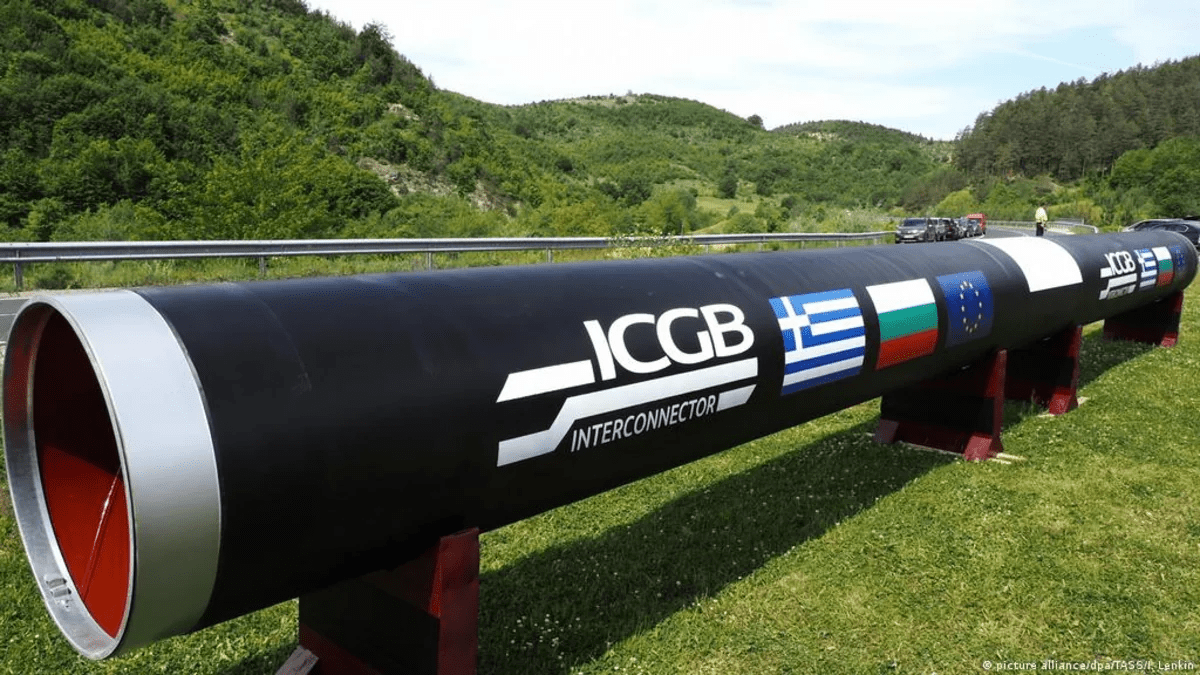
This leads to a practical conclusion for Europe itself. A diversification strategy that genuinely reduces vulnerability to energy blackmail does not mean replacing one dependency with another. It means deliberately dispersing supply among a larger number of actors, each of which has a commercial and security interest in cooperation.
Energy commodities in general, and gas in particular, remain inherently vulnerable to political blackmail because it is physically impossible to replace one supplier instantly without incurring costs. The more supply centers the EU develops—Norway, Algeria, Azerbaijan, Egypt, and, in the future, other African partners—the less leverage any individual actor retains, including the one that has already used energy blackmail and continues trying to recreate it in a new geography.
This article was prepared as part of the cooperation between UNITED24 Media and the international analytical and information community Resurgam.
Discuss this article:


-1a53a90a73ce3e7127f5eef46d0c6c71.webp "The Russian cargo ship Sabetta, previously known as BBC Mississippi. (Source: ShipSpotting.com)")
-29a1a43aba23f9bb779a1ac8b98d2121.jpeg "Photo of Illia Kabachynskyi")
-72b63a4e0c8c475ad81fe3eed3f63729.jpeg "Photo of Cyril Barabaltchouk")