- Category
- Investigations
Russia’s Floating Environmental Time Bombs
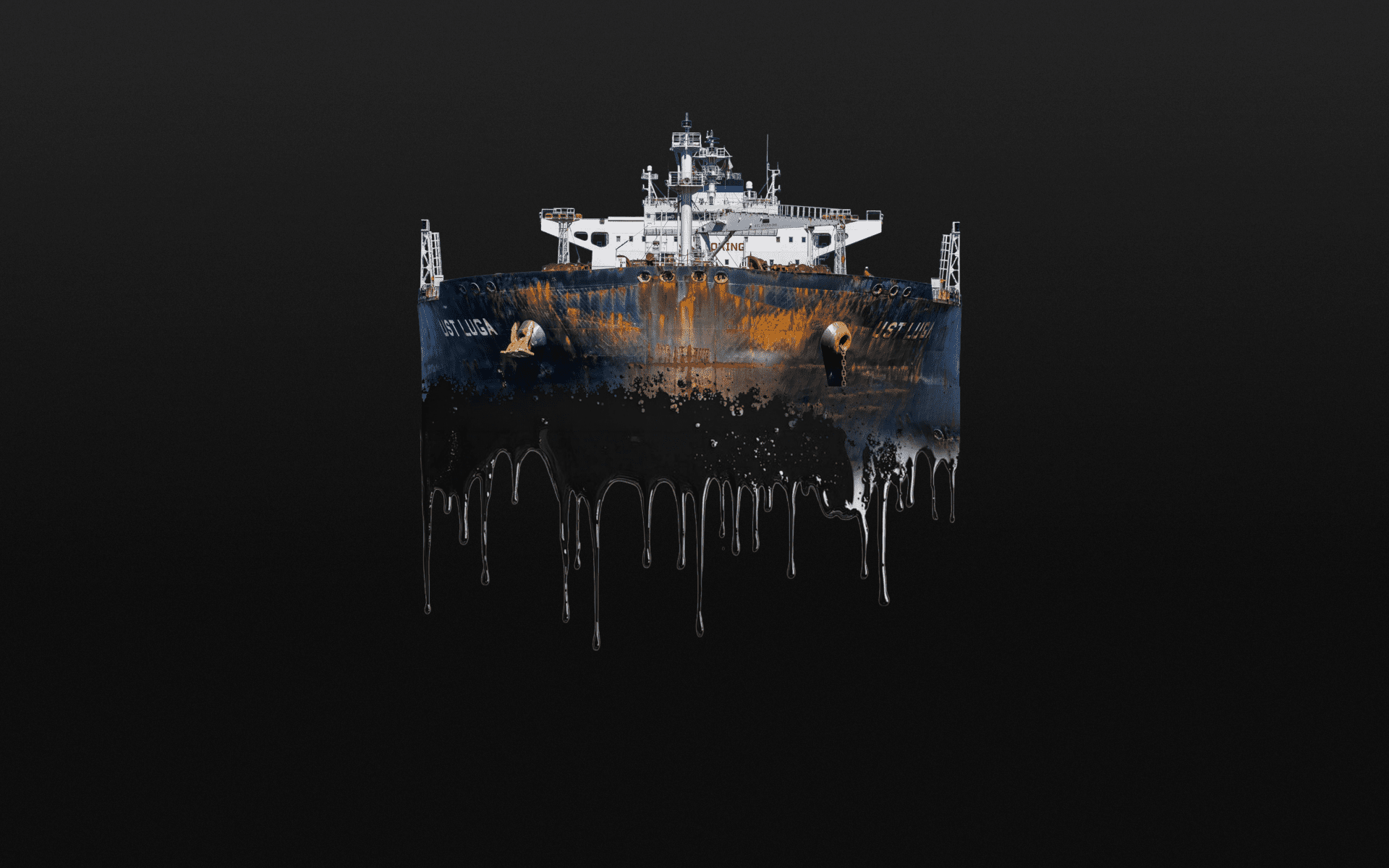
The world sees Russia’s shadow fleet as tankers moving sanctioned oil. In reality, they’re aging, uninsured vessels—often over 25 years old—capable of spilling 100,000 tons of oil at any moment, from the Mediterranean to waters off Singapore or routes to Cuba. And some already have.
 Prefer U24 Media on Google
- Authors

-29a1a43aba23f9bb779a1ac8b98d2121.jpeg "Photo of Illia Kabachynskyi")
In early April 2026, a large slick was spotted in the Black Sea thanks to the Sentinel-1 satellite—the result of a petroleum spill. Its area exceeded 200 square kilometers. Environmentalists say it was caused by the vessel Sofia, part of Russia’s shadow fleet and on the sanctions lists of many countries worldwide. The specialized forces sent to deal with the aftermath are insufficient.
⚠️ Over 300 tons of oil products were spilled by a Russian shadow fleet tanker near Anapa — what satellite imagery shows
— Petro Andryushchenko (@petpavan) April 16, 2026
tanker Sofia (IMO 9211999), flying the Russian flag, was located and is currently considered a likely source of the pollution. pic.twitter.com/eQarfC1Sxf
In December 2024, during a storm, two tankers—Volgoneft 212 and Volgoneft 239—were damaged one after the other in the Kerch Strait. As a result of the disaster, at least 4,000 tons of fuel oil—one of the most toxic types of petroleum products—spilled into the sea. Fuel oil is heavier than water, so it settles on the seabed and remains there for years, systematically destroying the seafloor. The beaches of Russia’s Krasnodar region were covered in a black mass.
Both vessels belong to the shadow fleet transporting sanctioned Russian oil. Another thing they have in common is that they were built in the 1960s, during Soviet times. And there are dozens of such ships in the seas and oceans around the world.
The shadow fleet is not only about enriching the Kremlin, which spends the money on war, but also a threat to the global environment: tankers aged 15 to 25 years sail around the world without insurance or coverage for the potentially catastrophic consequences of accidents, such as those seen in the Black Sea. And that threat is entirely real.
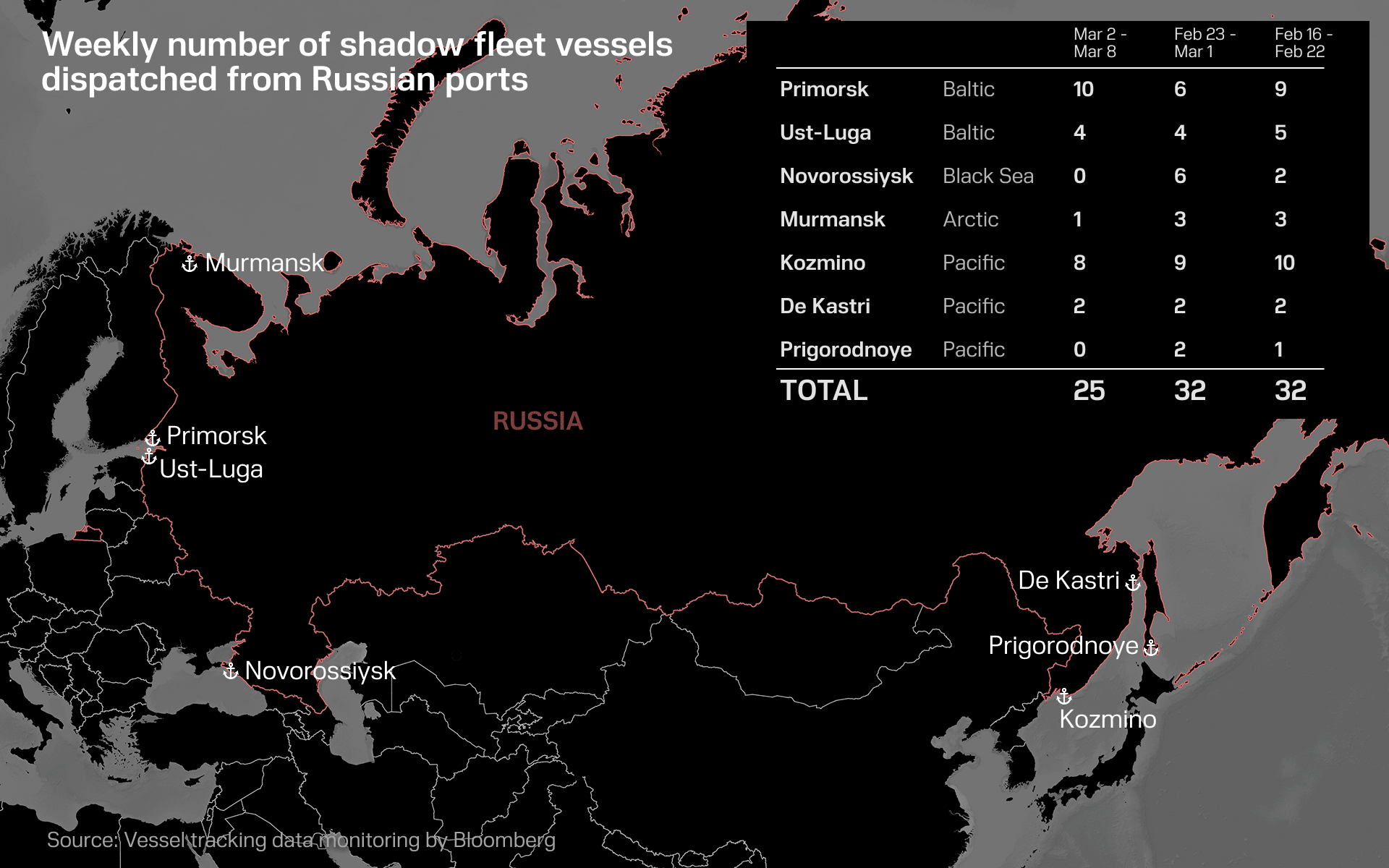
An environmental challenge
After the accident involving the two tankers off the Black Sea coast, none of the vessels’ owners were held accountable. Not only because Moscow was unwilling to blame its own, but also because of the way the schemes are built: no one ever fully understands who owns these ships—the captain and sailors are on board, but the owners are God knows where.
The creation of a flotilla of ships owned by dozens of shell companies is a modern challenge for international maritime law. It is hard even to imagine: estimates put Russia’s maritime fleet at between 600 and more than 1,200 vessels—large tankers capable of carrying tens or hundreds of thousands of tons of petroleum products. Each of them is decades old.
The problem is not only the existence of the shadow fleet itself, but also what stands behind it.
First, there is insurance, which is often fictitious. For example, most Russian insurers concentrate their major risks in the state-owned Russian National Reinsurance Company (RNRC), which lacks real insurance capacity, meaning there is no guarantee of payouts in the event of tanker accidents. In other words, the mandatory insurance is essentially nonexistent, and the consequences of any accident will fall on the countries off whose shores it occurs.
Second, there is maintenance. It is often simply not carried out properly because it is not economically viable: after a few voyages, a vessel has paid for itself and generates a strong profit, after which it is easier to abandon than to undertake costly repairs. An abandoned tanker is, in itself, an environmental problem.
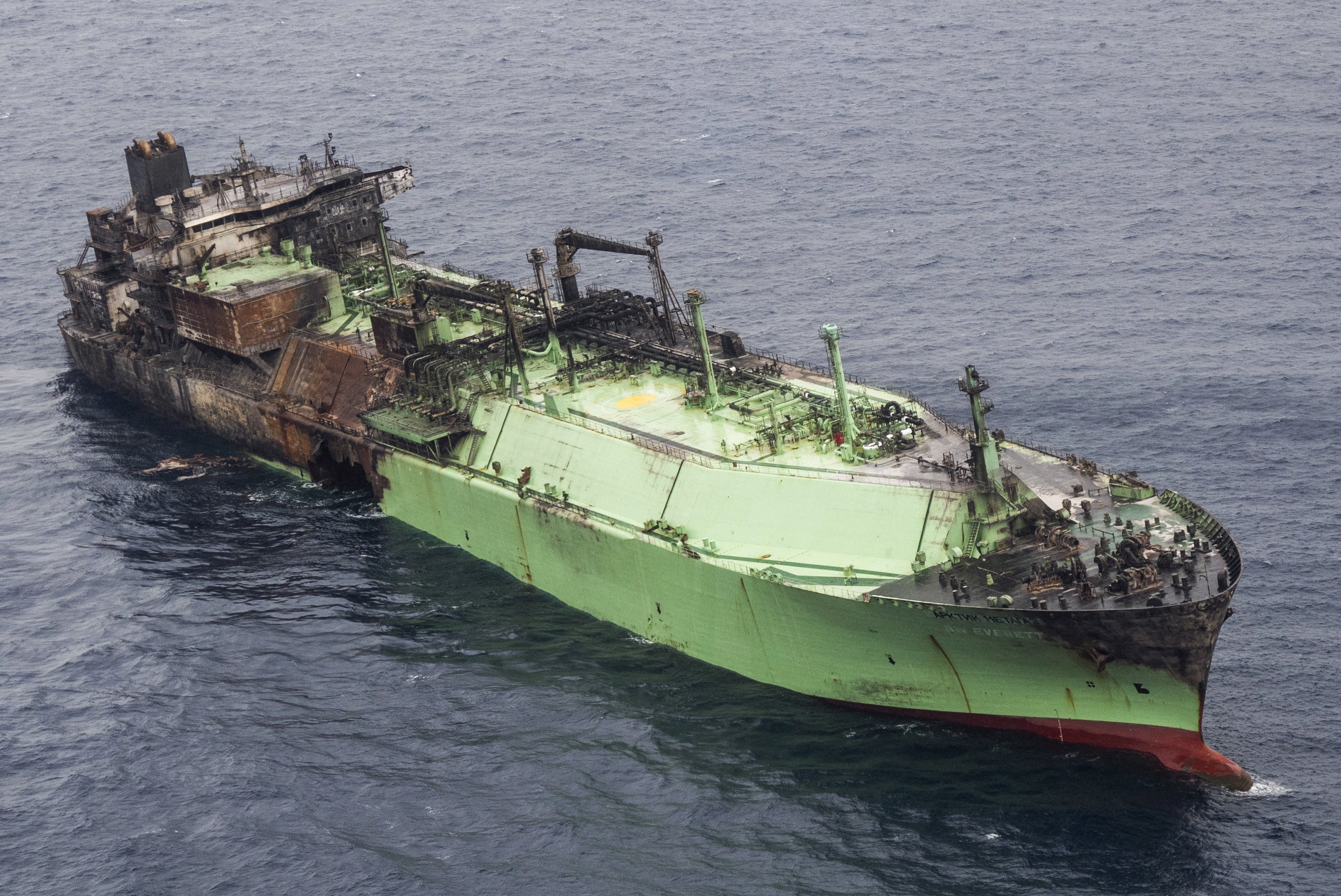
What happened in the Black Sea for the second time in the past year is nothing new when it comes to Russia’s shadow fleet:
The tanker Neftegaz 55 suffered a hull breach in the Baltic Sea in December 2023, also during a storm, though the vessel was saved. But calculations show that a full spill from one large tanker in the central Baltic would cause the region’s worst environmental disaster since World War II.
The situation could have repeated itself a year later: in November 2024, the aging tanker Pablo, which had no valid insurance policy, dropped anchor in the Baltic Sea, and when the Danish government sought to conduct an inspection, the ship simply fled into international waters. It was never possible to determine who actually owned the tanker.
The average age of a shadow fleet vessel is more than 20 years. By comparison, in the legal fleets of leading companies, it rarely exceeds 10 years. At least one-third of these ships have not undergone a technical inspection by accredited classification societies—Lloyd’s Register, DNV, or Bureau Veritas—in the past two years.
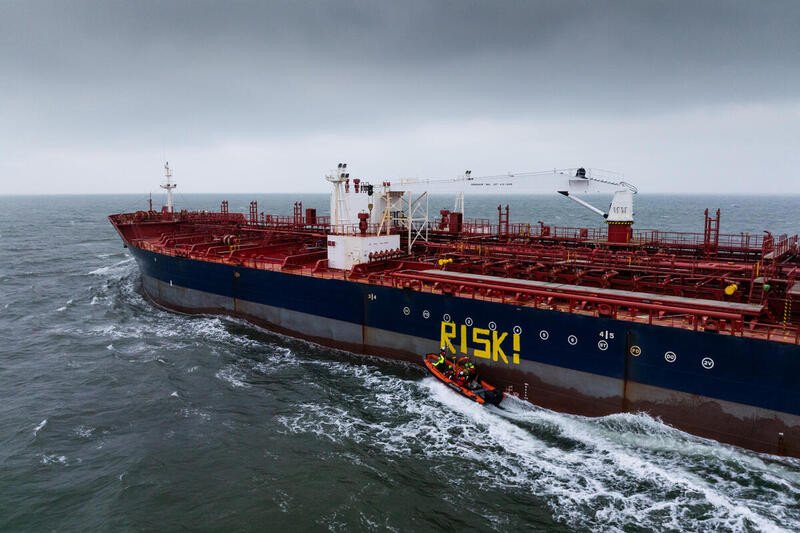
Excess profits and excess problems
The architecture of international maritime law was built in an era when no one seriously anticipated the systematic use of aging fleets to evade sanctions on a mass scale. One of the most alarming tactics of the shadow fleet is the practice of deliberately “dumping” vessels immediately after a voyage. It works as follows:
A shell company—typically registered in the Marshall Islands, Panama, or Cyprus—buys an old tanker at a relatively low price.
It registers the vessel under a “flag of convenience” and obtains a fake insurance policy from an obscure insurer.
The vessel makes one or several voyages, transporting Russian oil to a buyer.
After the cargo is delivered and payment is received—usually through a chain of accounts—the ship is simply abandoned. Sometimes the crew is abandoned with it.
In 2023 and 2024, the International Labour Organization recorded a sharp jump in the number of “abandoned” vessels in global waters. The overwhelming majority were linked to networks transporting Russian or Iranian oil. In the first quarter of 2024 alone, more than 80 vessels with abandoned crews were recorded, with sailors waiting months for rescue in the ports of the United Arab Emirates, Malaysia, and Greece.
At freight rates of $10 to $15 per barrel, a Suezmax tanker with a 200,000-ton capacity can generate $15 million to $20 million from a single voyage. A 15-year-old tanker costs about $50 million. That means that after just three to four voyages, the carrier can fully recoup the vessel’s cost, and after five to seven voyages, it can earn a substantial profit.
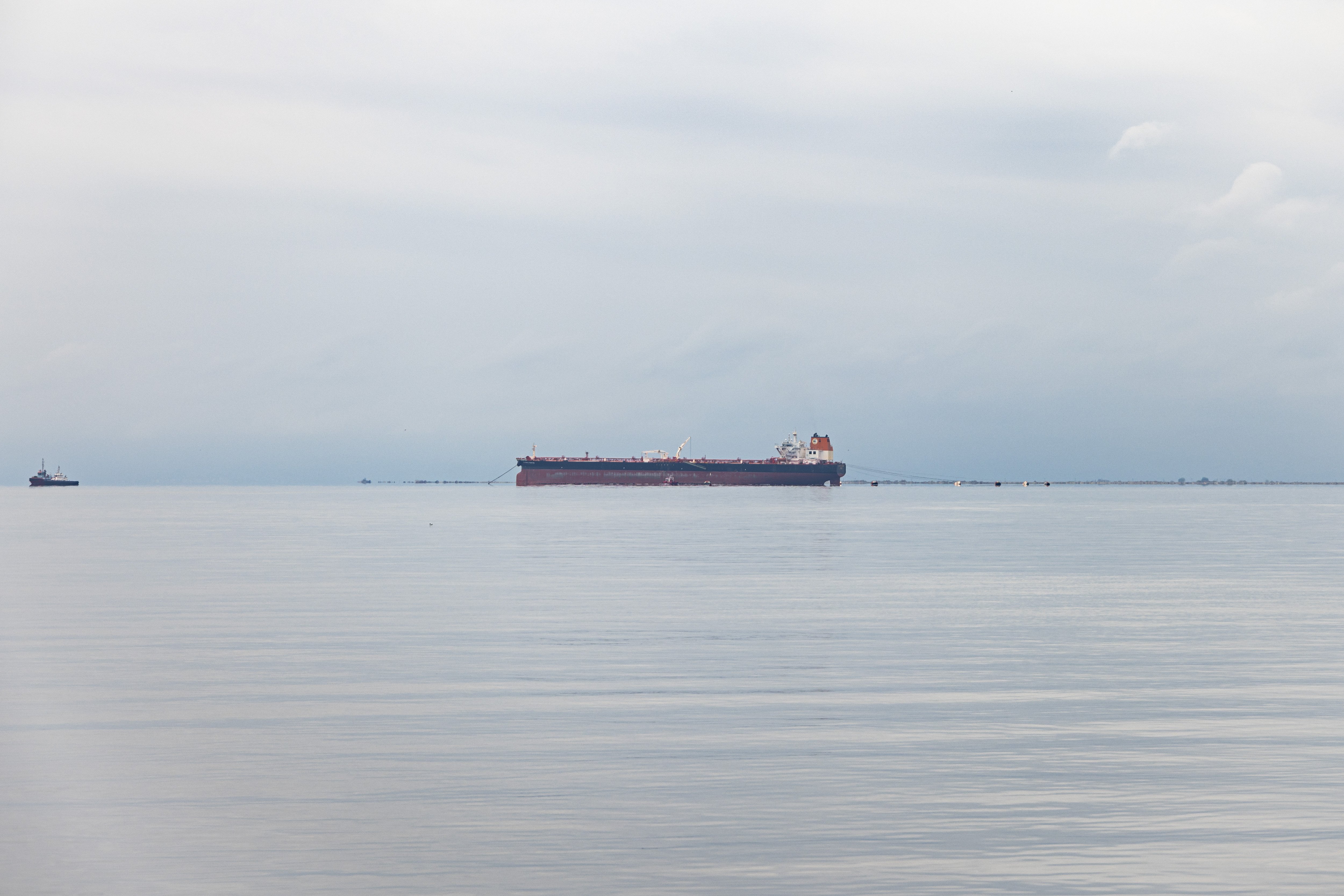
After that, the tanker is abandoned. A deserted ship without a crew is a ship without maintenance, without hull condition monitoring, with fuel tanks that age and crack. Residual cargo—oil, fuel oil, chemicals—leaks into the sea. If such a ship sinks, there is no one to salvage it and no one to bill for the damage.
Importantly, the shadow fleet and its consequences are not geographically confined. Russia’s war against Ukraine is often described as “European,” as if limiting it to that region, but the example of the shadow fleet shows that countries around the world can face the consequences:
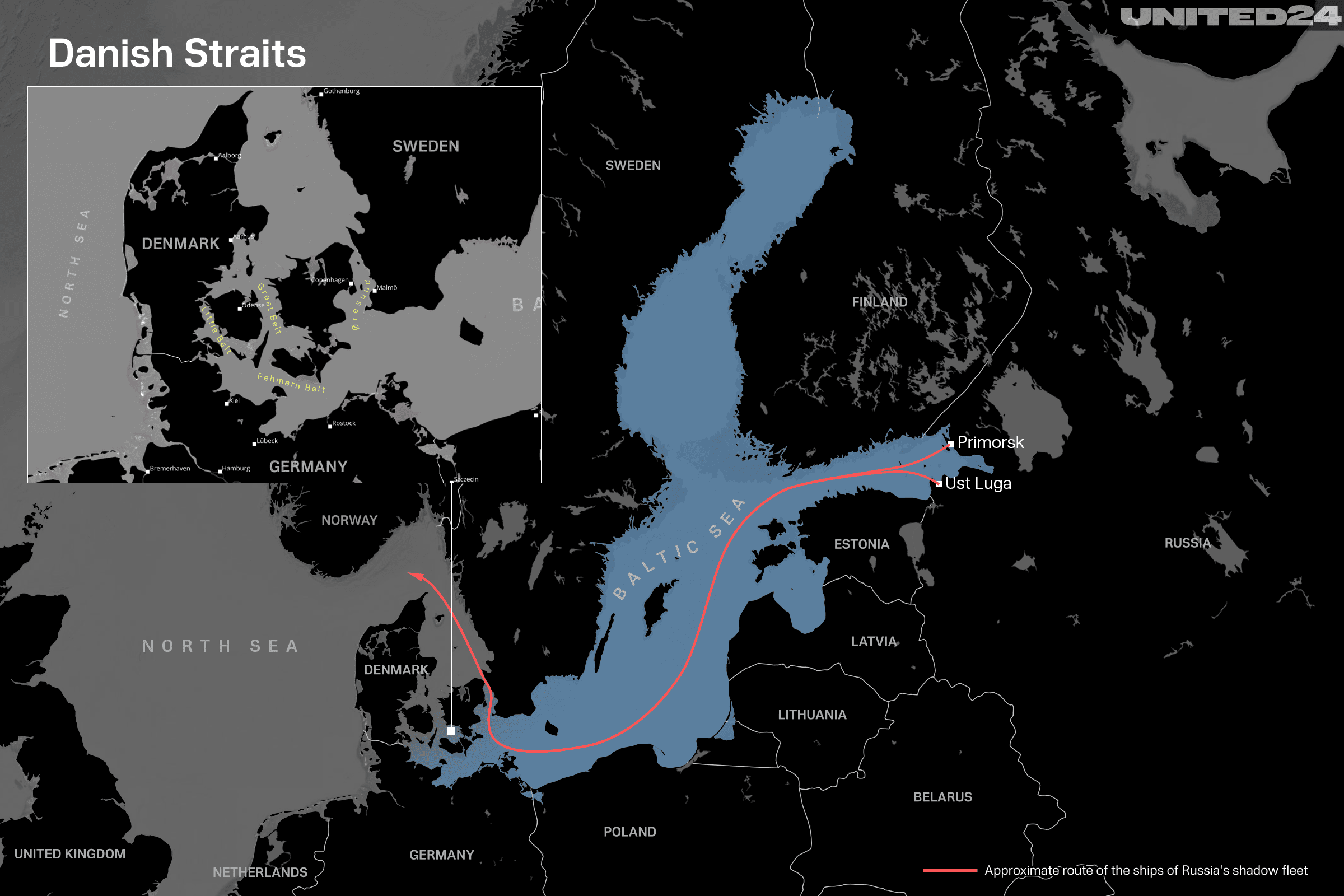
The Baltic Sea is often described as enclosed: it takes 25 to 30 years for its waters to fully renew through the Danish straits. Any large-scale pollution there would remain for decades. Every month, 50 to 70 vessels linked to the shadow fleet pass through the Danish straits—the Baltic’s only outlet to the Atlantic.
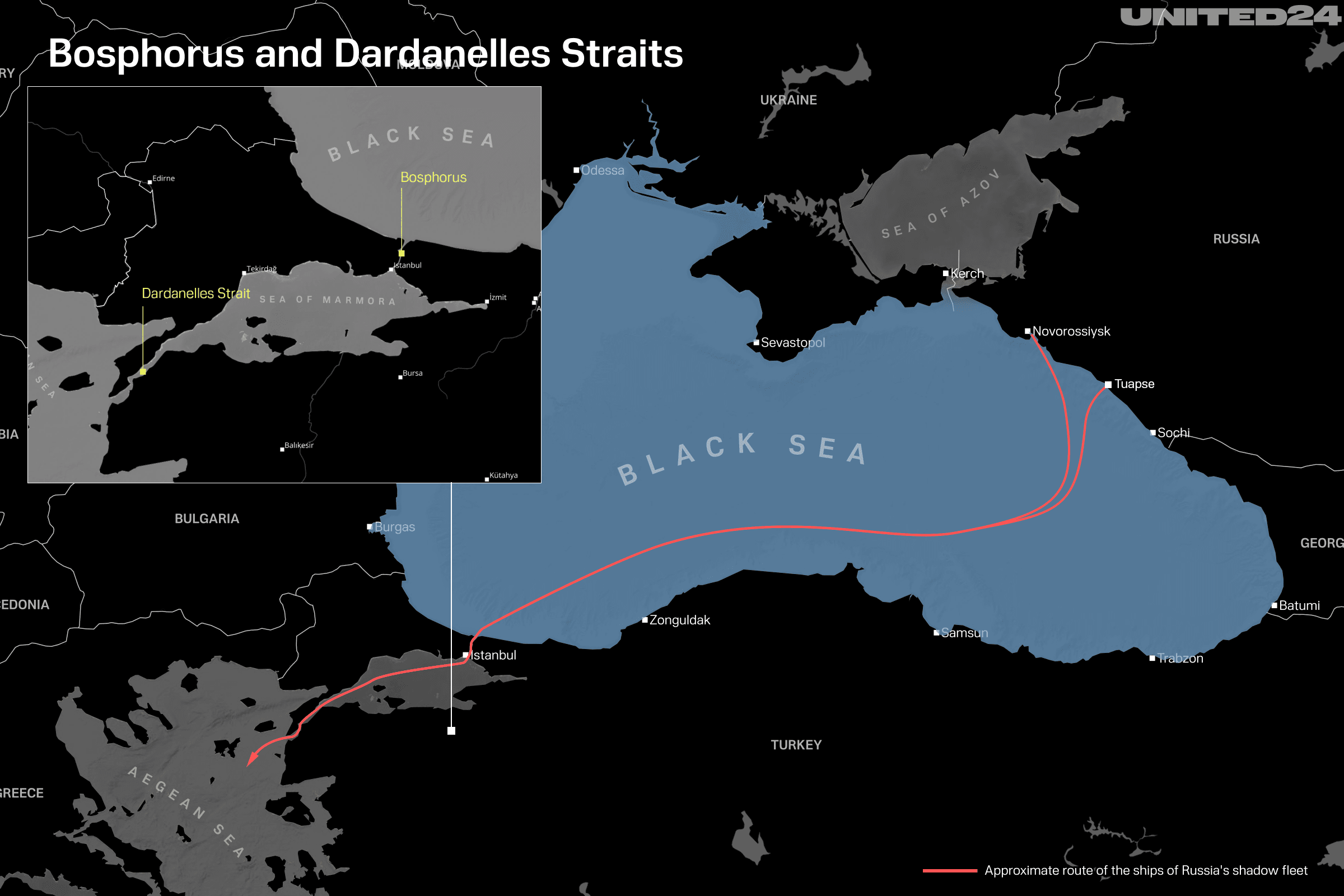
The Bosporus and the Dardanelles are the Black Sea’s only maritime exit. In 2023, the Turkish Coast Guard recorded 11 serious incidents involving shadow fleet vessels in the straits, compared with seven over the previous five years combined. Any accident would be a blow to Istanbul's ecology, a city of 15 million people. An oil spill in the Bosporus would mean shutting down one of the world’s busiest trade routes for weeks or months, devastating fisheries in the Sea of Marmara, and inflicting tens of billions of dollars in losses on the Turkish economy.
The Arctic and the Northern Sea Route are among the most environmentally vulnerable zones on the planet. Responding to emergencies during polar winters, thousands of kilometers from any infrastructure, is practically impossible. In 2024, more than 80 vessels linked to the shadow fleet passed through the Northern Sea Route—twice as many as in 2021.
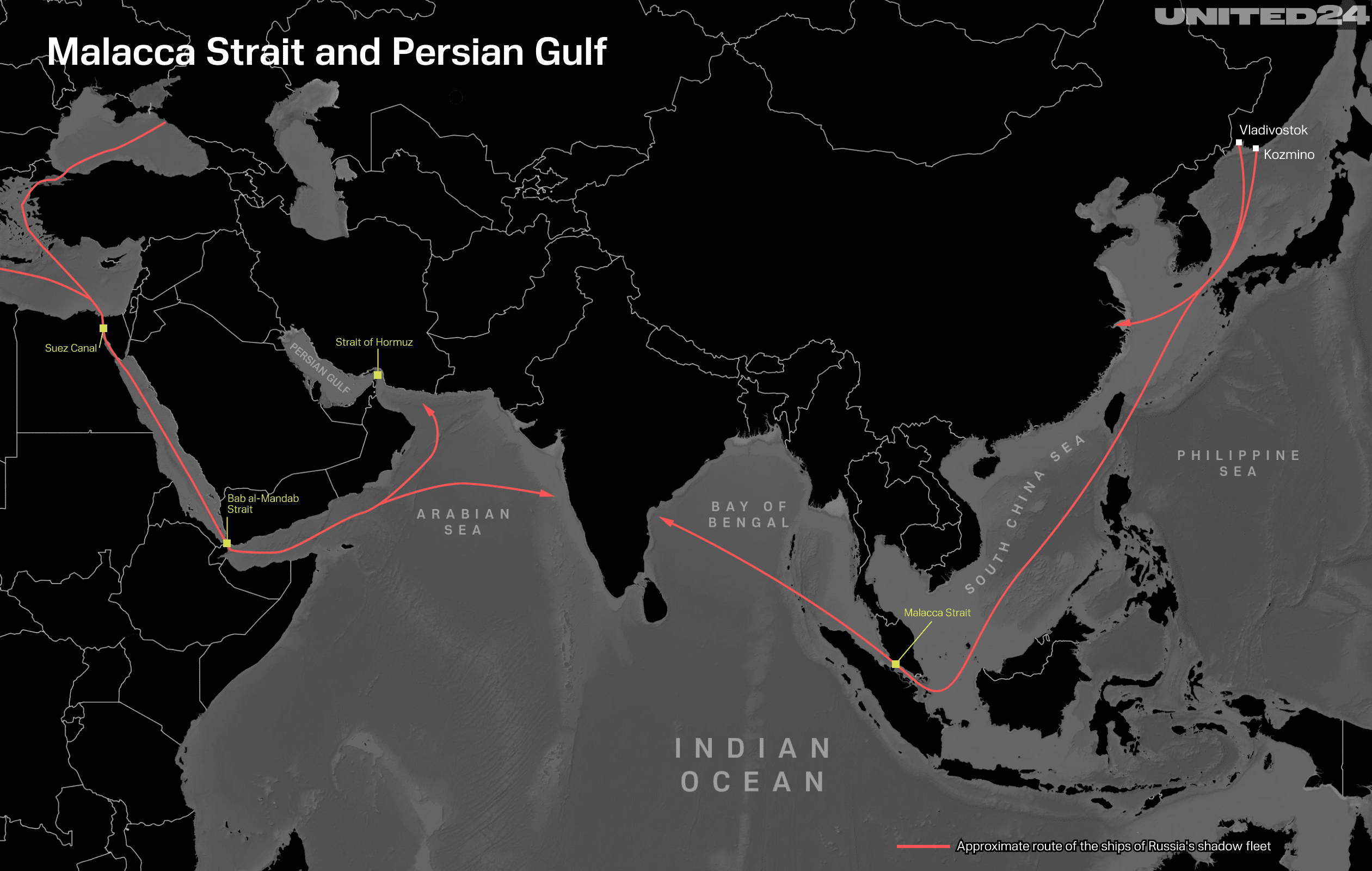
The Strait of Malacca and the Persian Gulf are also used by the shadow fleet. Some of these ships work with Iranian oil, while part of Russia’s oil exports head to Asia.
Proactive solutions
In the first quarter of 2026, European countries stopped almost as many shadow fleet vessels as they did during all of 2025. That is the right step, but much more needs to be done: about a dozen ships have been detained, while the entire shadow fleet numbers more than 600.
The shadow fleet’s operations must be made less profitable. Companies are willing to take the risk because they understand they can earn windfall profits. Meanwhile, the risks will be borne by anyone except the Kremlin: Moscow does not even care about what happens on the shores of the Black Sea, let alone in faraway parts of the world.
The problem of an aging fleet operating without proper maintenance is not, in the final analysis, Russia’s problem—because Russia is not thinking about it. Other countries may suffer instead. And that is what must be addressed: stopping the shadow fleet, tightening oversight of owners, reducing Russia’s ability to profit from it, and lowering the oil price cap even further.
Discuss this article:
-4a56a6b482ec132402c16ef6fcabf9a2.png)


-111f0e5095e02c02446ffed57bfb0ab1.jpeg "Photo of Roman Kohanets")

-b7da0e3033ba5fc9d5f47439cb28c6ad.png "Illustration featuring the logos of AI chatbots Claude (left) and Mistral (right). (Illustration: UNITED24 Media)")