- Category
- World
What Happened in Serbia’s Election and Did Putin Lose One More Friend?
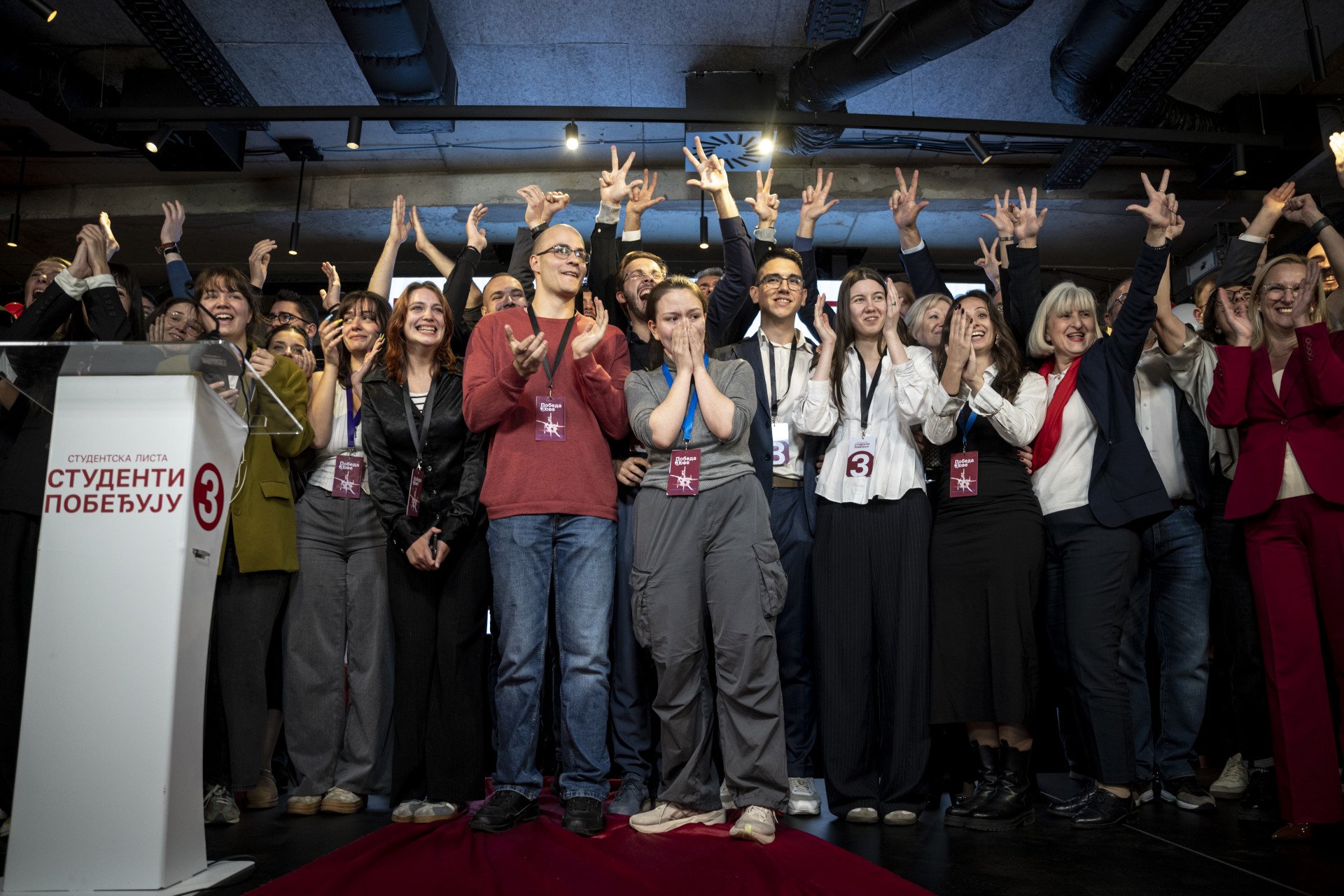
Following elections, the Student List movement could soon hold a majority in parliament; longtime Serbian leader Aleksandar Vučić conceded defeat. This could have major implications for the Balkan country that has been pivoting towards Europe but remains consistently influenced by Russia.
 Prefer U24 Media on Google
- Authors


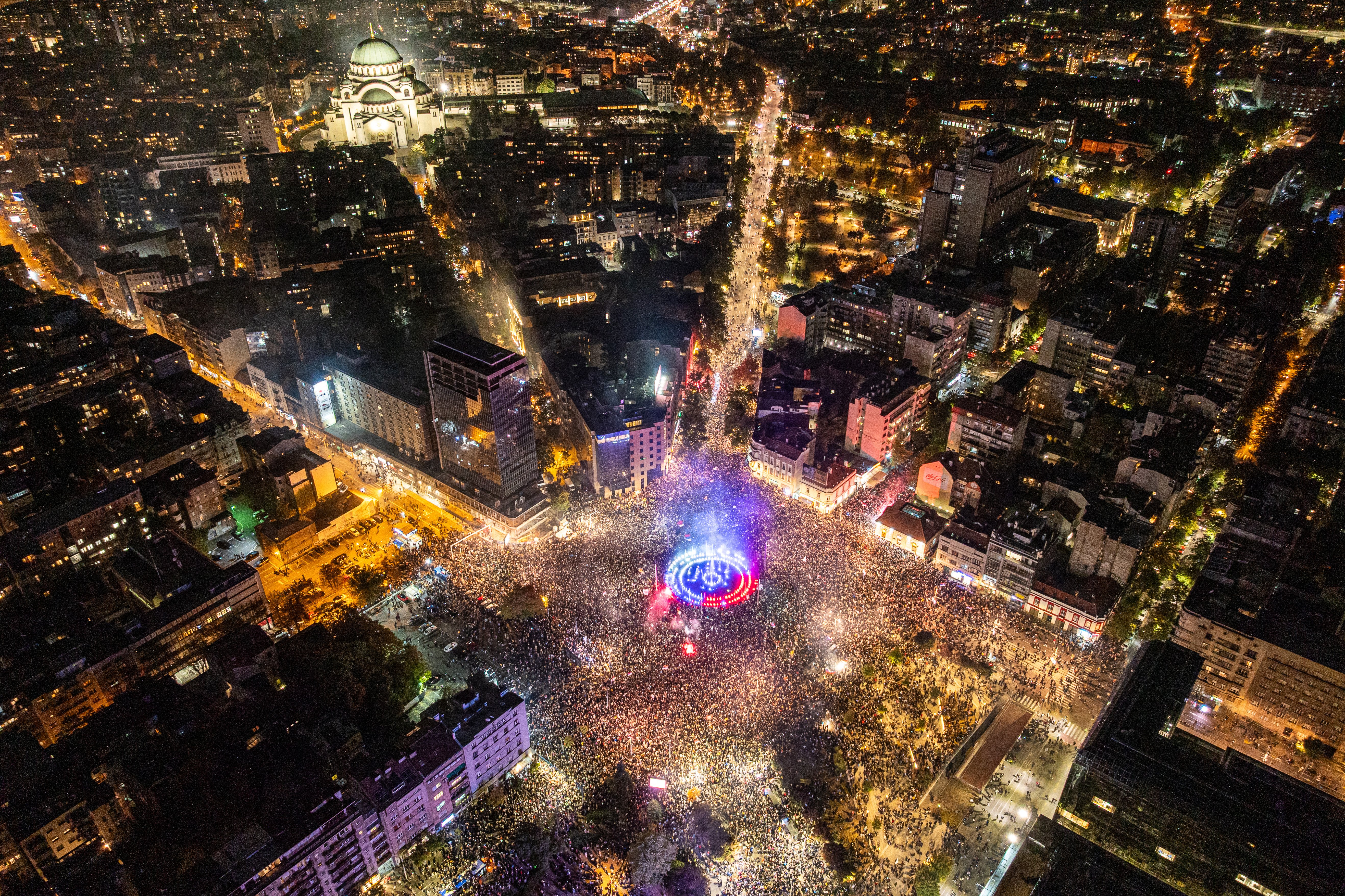
On the night of October 25, 2026, people took to the streets of Belgrade to celebrate the defeat of Aleksandr Vučić, Serbia's right-wing populist leader who ruled the country for 14 years. Many did not expect him to concede defeat or for the opposition Student List to win the election, but both happened. With around 52%, the Student List is set to hold a majority in parliament.
🇷🇸 Citizens have gathered in Belgrade to celebrate. https://t.co/UkHl2Ez9gp pic.twitter.com/VWEp3oAqaf
— kos_data (@kos_data) October 25, 2026
It's a steep rise to the top: The Student List emerged as a protest movement after the collapse of a railway station canopy in Serbia's second-largest city, Novi Sad, in 2024, which killed 16 people. The movement then grew into something bigger: challenging corruption and advocating reform. Some parties across the political spectrum, such as the Democratic Party, the Green-Left front, and the Movement for the Restoration of the Kingdom of Serbia, stood down, urging their supporters to back the Student List.
What does this mean for Serbia?
It is an unusual political force: The newly founded Student List falls short of presenting fully developed political stances on a variety of issues, as its focus has primarily been on anti-corruption and reform. As a result, it is difficult to predict the impact of its electoral victory on the country. The List has, however, issued an 11-point plan that addresses issues such as transparency, freeing the media and judicial systems from state control, improving the economy and education, and ensuring affordable housing and healthcare. Despite being somewhat unique, their victory, or the message it sends, is comparable to the defeat of Viktor Orbán just this year in Hungary, and may add momentum to a wider pro-democratic movement visible in Eastern Europe. Hungary’s Prime Minister, Péter Magyar, has congratulated the Student List, as have many other leaders and democratic politicians across Europe, indicating optimism among reformers that the new government will change the country's direction.
I have just spoken by phone with the leaders of the Students' List @studentblokade, who won the elections in Serbia, to congratulate them on their victory. I assured them of Hungary’s support. I was delighted to hear how much strength our victory in April had given them during…
— Magyar Péter (Ne féljetek) (@magyarpeterMP) October 25, 2026
Is Russia losing influence?
Vučić was often seen and described as “Pro-Russian”, although in 2026 he appeared to pivot towards Europe and Ukraine, for example, by participating in NATO exercises in Serbia. Nonetheless, there is a long-standing tradition of Russophilia among certain segments of Serbia’s population, combined with anti-Western sentiment. Vučić, for example, visited Moscow during the 2025 May 9 parade and consistently opposed sanctions.
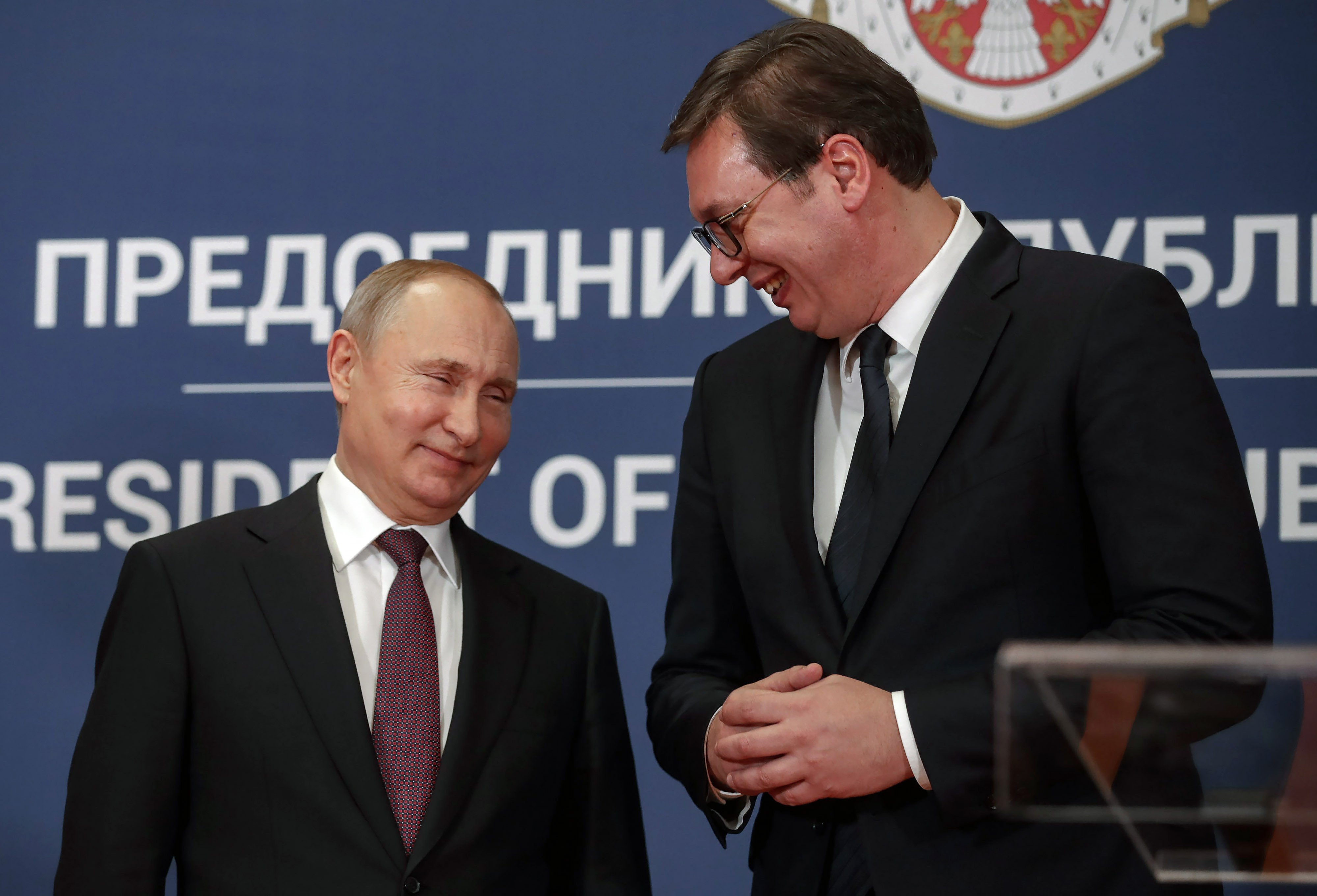
Without his Serbian Progressive Party (SNS) in power, which has at times sought to strengthen relations with both the West and Russia, Moscow may have lost more influence in another country. In addition, Serbia has attracted many Russians who fled the country, but the government has also given (and taken away) passports to pro-Kremlin Russians such as the relatives of pro-Putin Chechen leader Ramzan Kadyrov.
Putin allies around the world seem to be falling. Serbia is the latest example after Viktor Orban in Hungary, Nicolás Maduro in Venezuela, and Bashar Al-Assad in Syria. The only leader in Europe, besides Belarusian leader Aleksandr Lukashenko, who consistently tries to build relationships with Russia, is Robert Fico in Slovakia. Caucasian nations such as Armenia and Azerbaijan seem to be moving further from Russia as well.

Following the elections, Russia has signaled its intent to maintain positive relations with Serbia. This change in government doesn't come completely unexpected. In recent years, there have been concerns about a change in Serbian leadership, voiced by both Russian intelligence and major politicians. Independent analysis platform Riddle Russia noted that Sergey Shoygu, Secretary of Russia’s Security Council, and other Russians had already warned of a so-called “Color Revolution” and likened the protests in Serbia to Ukraine’s Revolution of Dignity, which Russia portrays as a Western-backed coup rather than a democratic protest movement.
It is impossible to know the full extent of Russian influence on Serbia's population and politics. Judging by the recent election results, it is smaller than expected. Or at least, the strategy didn't work.
Which strategy?
Well, one example could be the large number of far-right influencers whose content seemed to follow a clear messaging script, one that appeals to those with far-right, pro-Russian, and anti-EU positions. For example, conservative influencer Valentina Gomez stated on Twitter/X that Serbia has “ZERO doctors & engineers like the ones in Italy & France.” She also asked Vučić to “keep Serbia Christian & Conservative.” Meanwhile, former model turned influencer Weronika Rogowska posted many times on the topic, emphasizing conservative Christianity and implying the opposition opposes it: “Not every country has to become the same. Serbia is Christian and European — women here are free without the hijab. Keep it that way.” Influencer Joey Mannarino has been repeating similar statements, tying Christianity to the government.
All publicly intervened in Serbia's election debate, supporting Vučić and opposing the Student List. Gomez explicitly urged people to vote for Vučić; Mannarino warned that the student movement could change the country's political direction.
Europe or Russia? Hopefully Europe…
The future remains unwritten: With a less pro-Russian political movement in power, Serbia may further direct itself towards European integration and cooperation, as well as towards Ukraine. EU Membership is still a possibility: Negotiations opened in 2014, with one of the major hurdles to membership being concerns about the rule of law and alignment with the EU on foreign policy, especially sanctions. Without Vučić, this may be more realistic.
At the same time, Belgrade's ties to Moscow are more than just sentimental. Serbia still relies on Russian gas, around 90%, and extended its deal with Moscow earlier in 2026. In addition, many Serbs oppose sanctions, and the newly elected Student List has said it will not impose sanctions on Russia either.
🇷🇸 Serbian students stomp on the faces of Putin, Vucic and Xi following election victory. https://t.co/dwzro8YFgK pic.twitter.com/28J1lsAQrw
— kos_data (@kos_data) October 26, 2026
On a positive note: In the country, riddled with varying degrees of tension - and even bloodshed - during the past decades, many minorities within the country have expressed their support for Student List, including Hungarians, Rusyns, Macedonians, and Romanians. This could indicate a step towards reconciliation in a historically divided region. However, what their policies toward neighboring countries, and especially Kosovo, will look like remains to be seen. Some leaders have already voiced careful optimism:
“I congratulate the representatives of the Student List and firmly believe that a new chapter lies ahead for Montenegro and Serbia, based on respect and open dialogue, without unnecessary escalation of tensions. The citizens of both countries deserve relations that will be measured by concrete results of cooperation, and not by the depth of diplomatic misunderstandings,” said Montenegrin President Milojko Spajić on X.
In summary, following Vučić's defeat and the potential start of a new era for Serbia, there are still more questions than answers. In the best-case scenario, Moscow may have lost an ally in Vučić, and a more European Serbia now seems like a realistic possibility.
Discuss this article: