- Category
- World
Why Massive Attack’s Case Against Spotify Doesn’t Hold Up

Massive Attack quit Spotify over the company’s CEO, Daniel Ek’s, defense investment, calling Europe’s shield against Russia’s war “dystopian tech.”
 Prefer U24 Media on Google
- Authors

-29a1a43aba23f9bb779a1ac8b98d2121.jpeg "Photo of Illia Kabachynskyi")
UK music band members Massive Attack have pulled their music from Spotify after the company’s CEO, Daniel Ek, invested €600 million ($700 million) in the German defense company Helsing, which supplies drones to Ukraine. Their reasoning: such actions fund “military munition drones & Al technology integrated into fighter aircrafts.”
At the same time, Europe’s defense industry has indeed experienced a renaissance—only because Russia launched a full-scale war against Ukraine, killing and injuring tens of thousands of civilians, including thousands of children. Helsing is one of the companies that helps to stop it.
A closer look at Massive Attack’s Spotify boycott
The €600 million investment became public in June 2025. Helsing’s valuation has since risen to €12 billion ($14 billion). The news drew attention for two reasons. First, Helsing became the first German defense startup to reach decacorn status, with a valuation exceeding $10 billion. Second, the lead investor, Prima Materia, is the investment firm founded by Daniel Ek, the creator of the world’s largest music streaming platform.
Founded in 2021, Helsing has rapidly expanded and is now among the five most valuable defense tech startups in Europe, on par with American players in the sector. Just a year earlier, the company raised $450 million. Its total investment to date exceeds $1.5 billion. Helsing began as a software development team, but today it manufactures drones and other autonomous systems.

This was not Ek’s first investment in Helsing—he had backed the company before. As with that earlier round, Spotify is now facing criticism over its founder’s business moves.
This time, however, the controversy escalated after high-profile musicians announced they were leaving the platform: Massive Attack.
“In the separate case of Spotify, the economic burden that has long been placed on artists is now compounded by a moral and ethical burden, whereby the hard-earned money of fans and the creative endeavours of musicians ultimately funds lethal, dystopian technologies,” Massive Attack said on Instagram, while also making a statement regarding the “No Music For Genocide” initiative.
In one comment, the group bundled everything together: the economic hardships faced by artists and the claim that hard-earned money goes to fund war. Massive Attack has around 1.8 billion streams on Spotify, generating millions of dollars in revenue, and a monthly audience exceeding 10 million. It is a major music project, and we can leave the debate over economic pressure to others.
But what about financing “dystopian technologies”? This is a clear case of misrepresentation.
Defense spending during Russia’s war in Ukraine
Since the start of Russia’s full-scale invasion of Ukraine, two European countries that had never before been NATO members dramatically reversed course and joined the Alliance: Sweden and Finland concluded that security outweighed decades of neutrality. Russian drones have repeatedly violated European airspace; in September 2025, more than 20 Russian drones attacked Poland, a non-combatant in the war. Days later, Russian fighter jets spent 12 minutes inside Estonian airspace without authorization. In 2023, Russia deployed nuclear warheads and launch systems to Belarus, in violation of nuclear nonproliferation agreements. In 2024, Moscow tested the Oreshnik intercontinental ballistic missile, effectively confirming years of secret treaty violations.
The list of Russian actions is long: the destruction of thousands of schools and hospitals in Ukraine, the strike on Ohmatdyt, one of Europe’s largest children’s hospitals, the leveling of entire cities (Volnovakha, Marinka, Bakhmut, Vovchansk), millions of refugees, the demolition of the Kakhovka dam, and the resulting ecological disaster. Thousands of children and tens of thousands of civilians and soldiers have been killed.
There is only one culprit for all of this: Russia. It was the Kremlin that ordered the occupation of Crimea in 2014, the invasion in Ukraine’s east soon after, and the full-scale invasion of Ukraine in 2022 across three fronts.
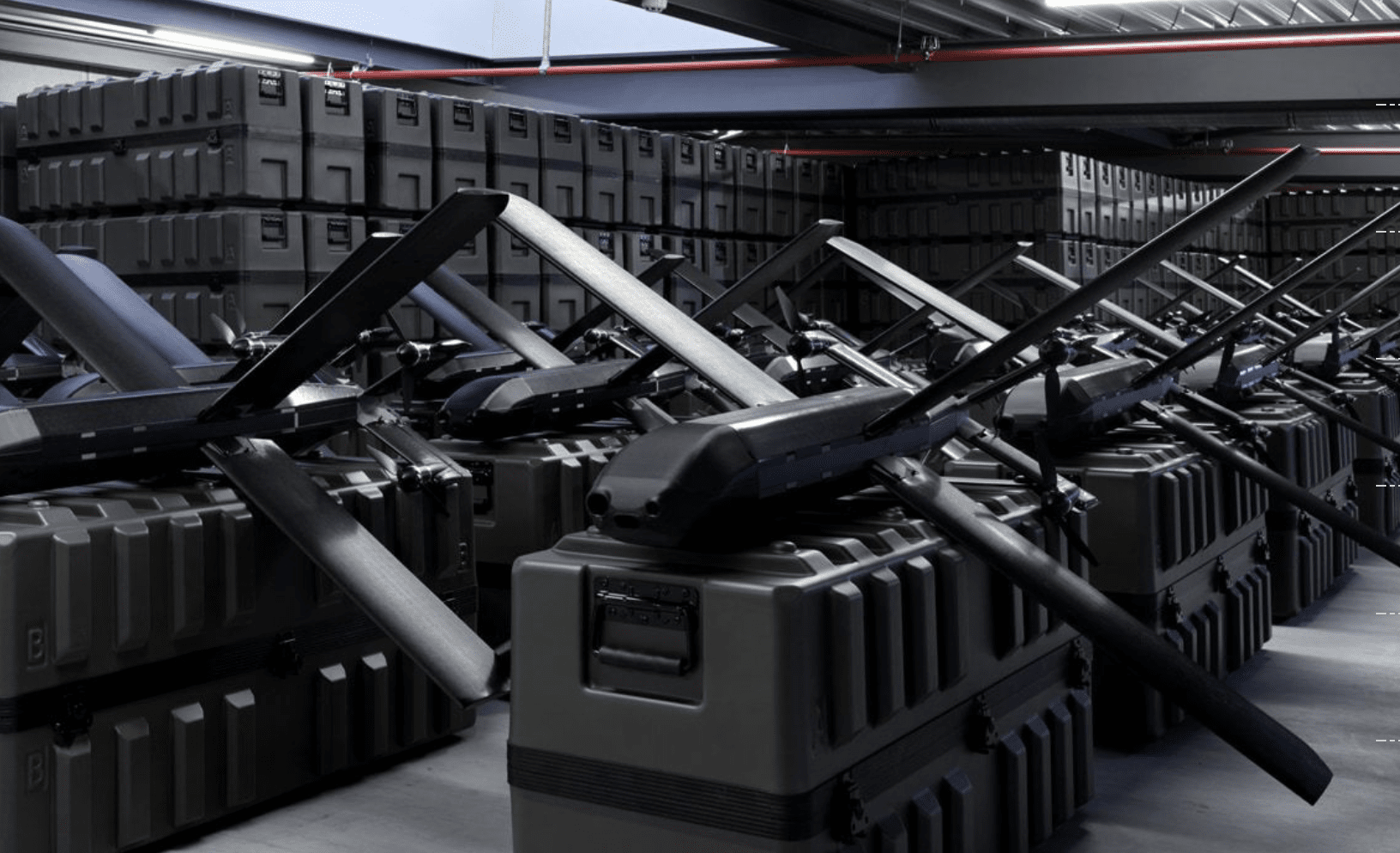
The war has revealed Europe’s vulnerabilities: insufficient tanks, aircraft, and air defense systems to protect itself; no continental system to defend against ballistic missiles; ammunition production that lags far behind authoritarian regimes; and a lack of readiness for the drone warfare of the future. Of the more than 20 drones that entered Polish airspace, only up to 4 were shot down.
Investing in local defense tech and supporting established European players such as Rheinmetall, Leonardo, Saab, and others is not about “dystopian technologies” or seeking conflict. It is, first and foremost, about self-defense. Ukraine is not attacking Russia—it is defending its own internationally recognized territory.
The technologies developed by Helsing are simply tools to do this more effectively, preserving Ukrainian lives and, in the future, protecting Europe as well. Founded in Germany, a NATO member, Helsing focuses primarily on the technologies the Alliance needs to defend itself. NATO, by design, is a defensive coalition. Technologies developed with partners like Saab and Airbus serve to safeguard the region. Are European leaders not precisely the ones still pressing the Russian leader, Vladimir Putin, to sit at the negotiating table?
And what about Massive Attack?
Russia’s Yandex: a blind spot
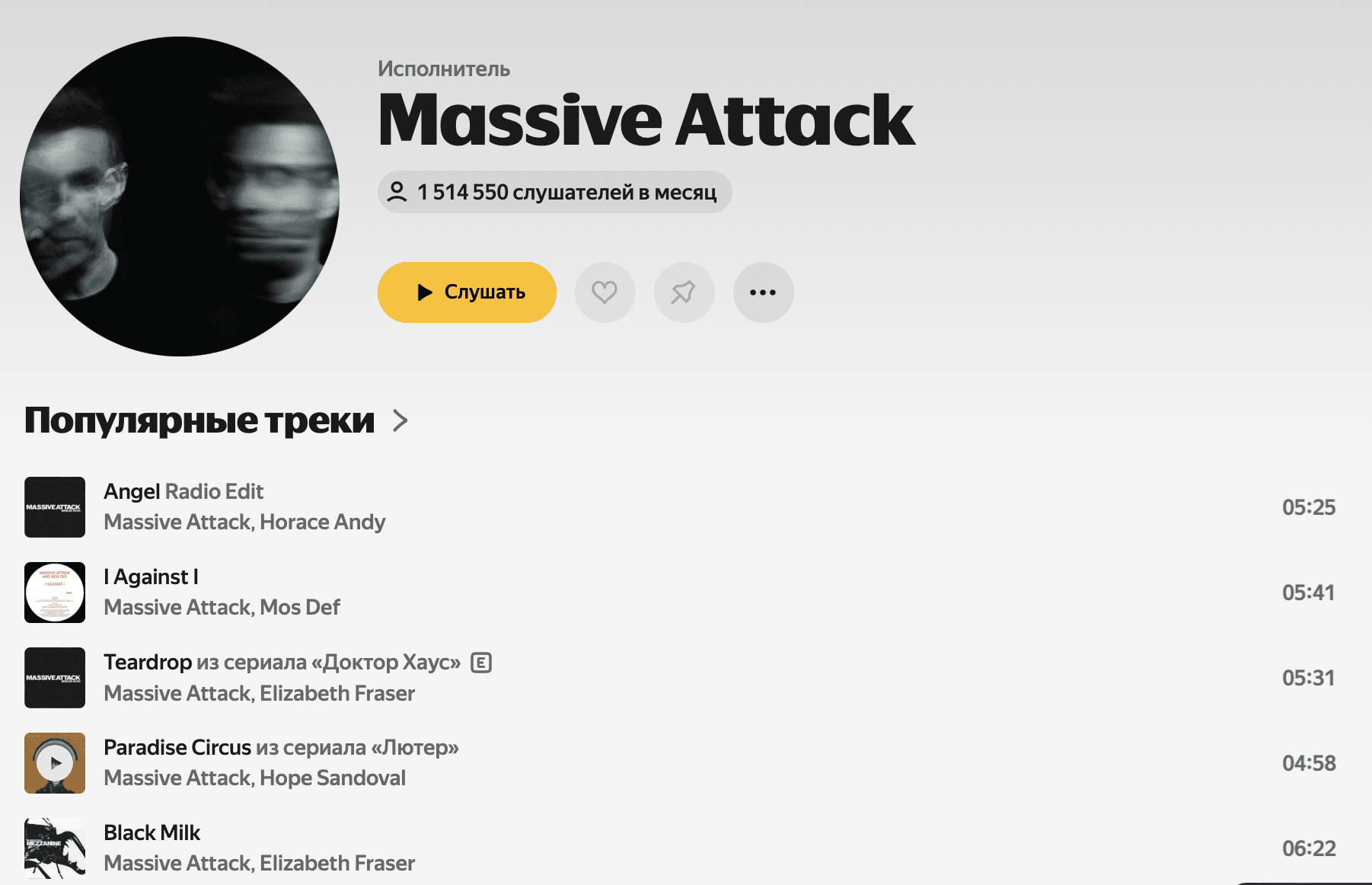
A quick search shows that Massive Attack’s music remains available on Russia’s Yandex, a music platform that pays taxes to Moscow and directly finances the war in Ukraine. In other words, the band is supporting a business whose revenue funds the drones and missiles striking Ukrainian cities—an especially stark contradiction given the band’s promotion of the “No Music for Genocide” initiative.
Backing Europe’s defense sector is a matter of protecting the continent and deterring those who might attack it. From Kaliningrad, Russian Shahed drones can reach nearly any point in Europe.
Discuss this article:
-6c7b568bf1f65853b7afd9dc1c3ca1fe.jpeg)

-c439b7bd9030ecf9d5a4287dc361ba31.jpg "Photo of Katherina Popilnichenko")