- Category
- Interview
Survivors Reveal What Happened After Russia’s Massacre of Ukrainian POWs in Olenivka
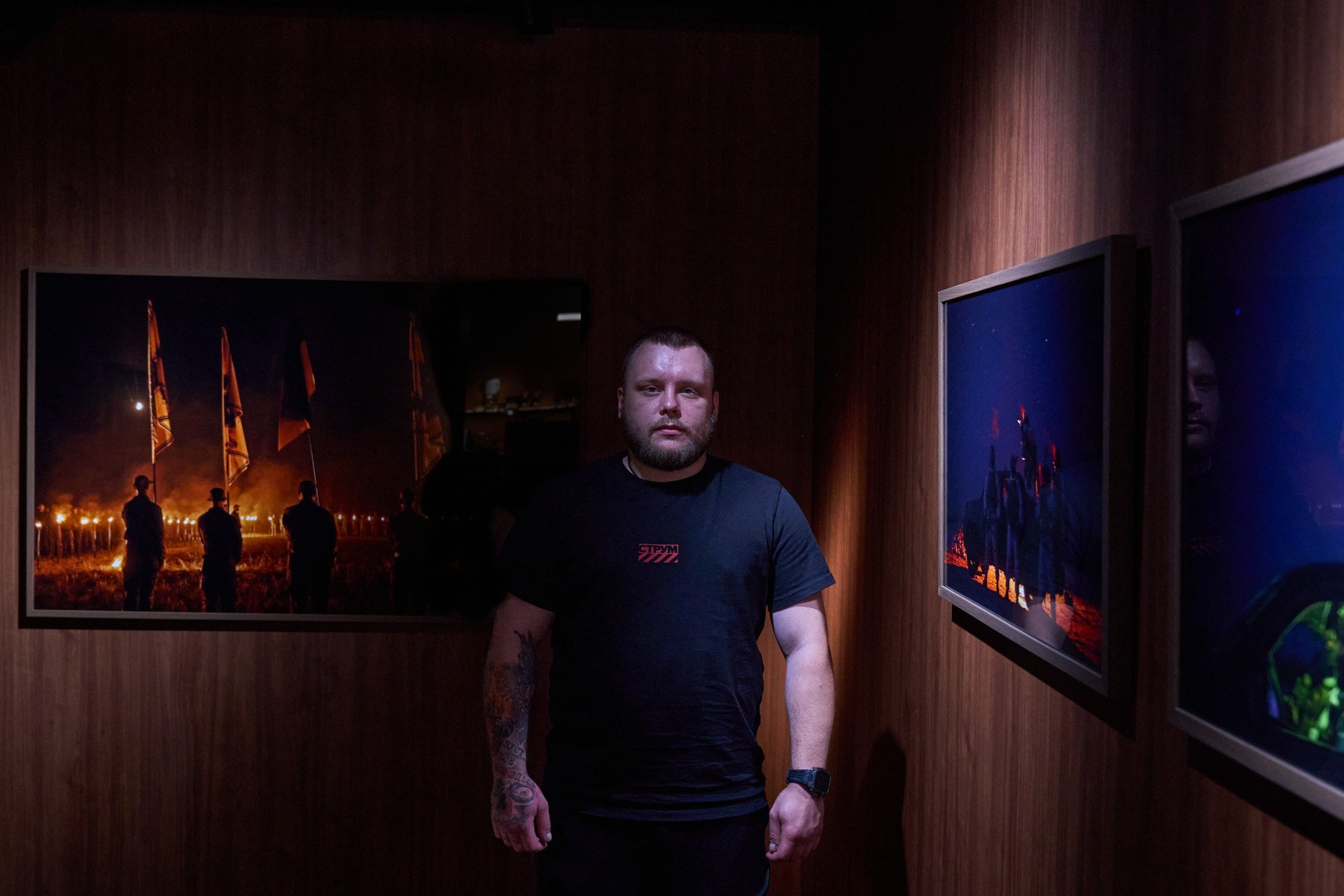
“I woke up to the blast. Even with my eyes closed, I saw a bright flash and thought dawn had come. Then came a few seconds of terrifying silence before the wounded started screaming.”
 Prefer U24 Media on Google
- Authors


Four years ago, Russia committed one of the deadliest war crimes of its full-scale invasion. On the night of July 28-29, 2022, explosions ripped through one of the barracks at Volnovakha Penal Colony No. 120 near Olenivka, a settlement in Ukraine's Donetsk region that has been under the Russian occupation since 2014. The Olenivka explosion became one of the defining symbols of Russia's treatment of Ukrainian prisoners of war. Around 50 Ukrainian POWs were killed, Ukraine's Office of the Prosecutor General reported. Among the 130 injured was Vladyslav Andrianov, known by the callsign “Bilyi”.
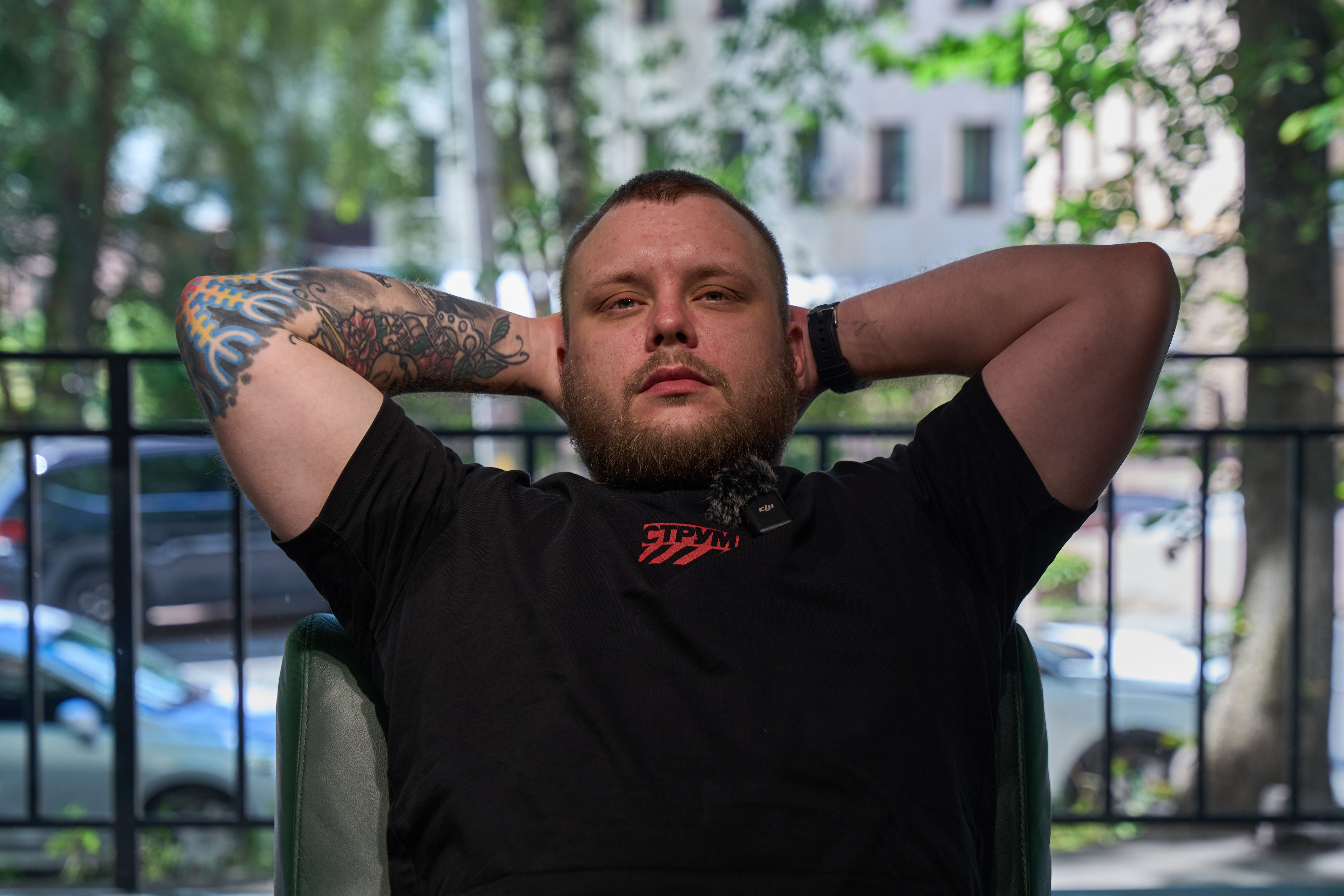
Vladyslav's life before Russia's full-scale invasion
Vladyslav was born in Makiivka, just outside Donetsk. Watching his home fall under Russian occupation in 2014 left no room for hesitation. He joined the Azov Brigade to defend both his country and the place where he grew up. He first saw combat in 2015 and was wounded that same year. By the time Russia launched its full-scale invasion in 2022, he had already spent years fighting in eastern Ukraine.
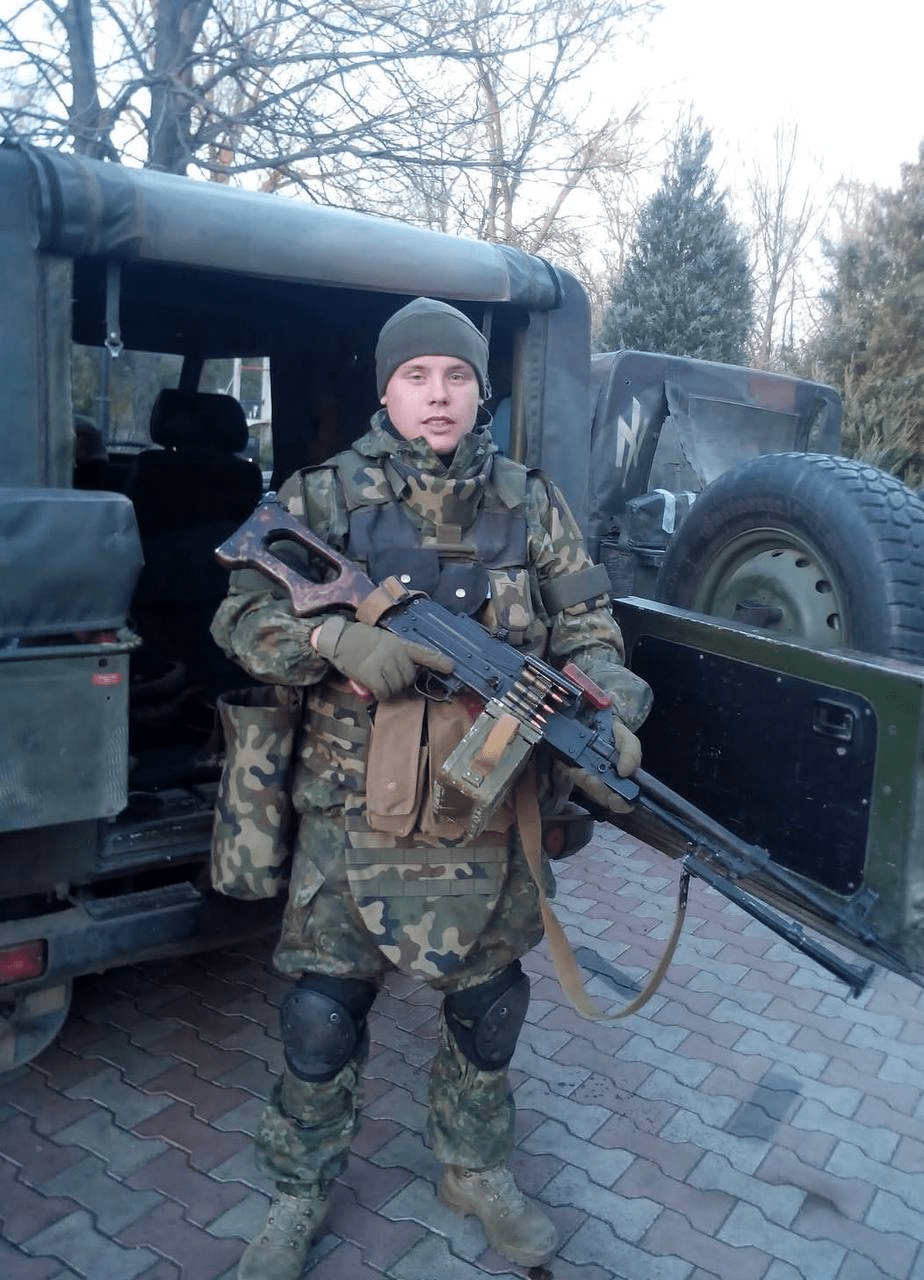
For the next eight years, Mariupol — a port city on the coast of the Sea of Azov became a second home for Vladyslav and his family. Before Russia's full-scale invasion, around 400,000 people lived there. Vladyslav says that despite the war, he and his family continued building their lives there. In Mariupol he met the woman he fell in love with, while his parents finally saved enough money to buy a house after losing everything in Makiivka.
The battle for Mariupol and Azovstal's role in the city's defense
On February 24, 2022, Vladyslav was defending Mariupol. He says watching the city come under attack was painful: he never saw his hometown, Makiivka, being destroyed.
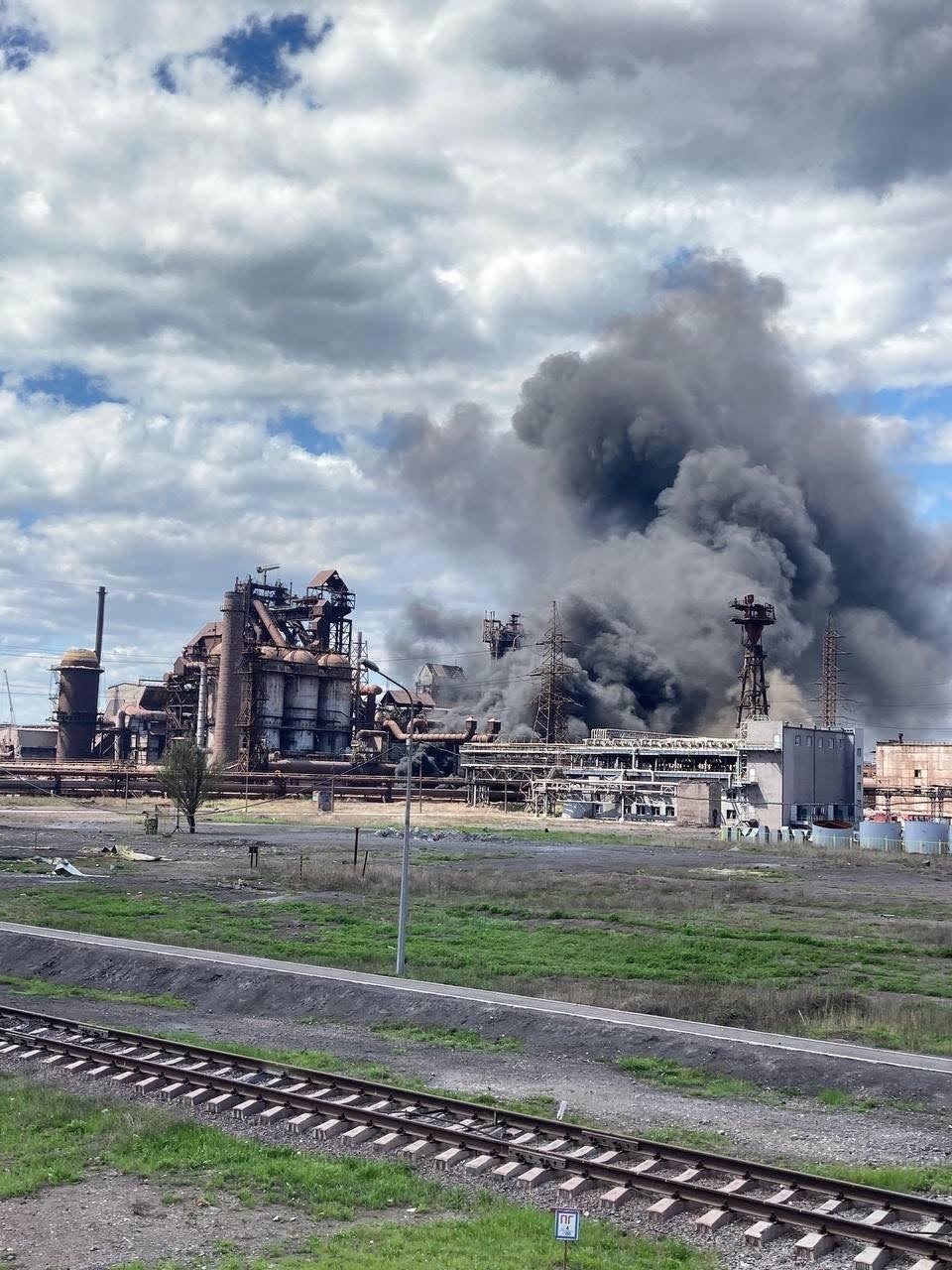
The defense of Mariupol lasted 86 days. By late April, the Azovstal steelworks had become the city's last stronghold. Before the full-scale invasion, the vast industrial complex covered nearly 11 square kilometers and employed more than 10,000 people. Its size is hard to grasp: roughly the equivalent of 22 Vatican Cities or five Monacos.
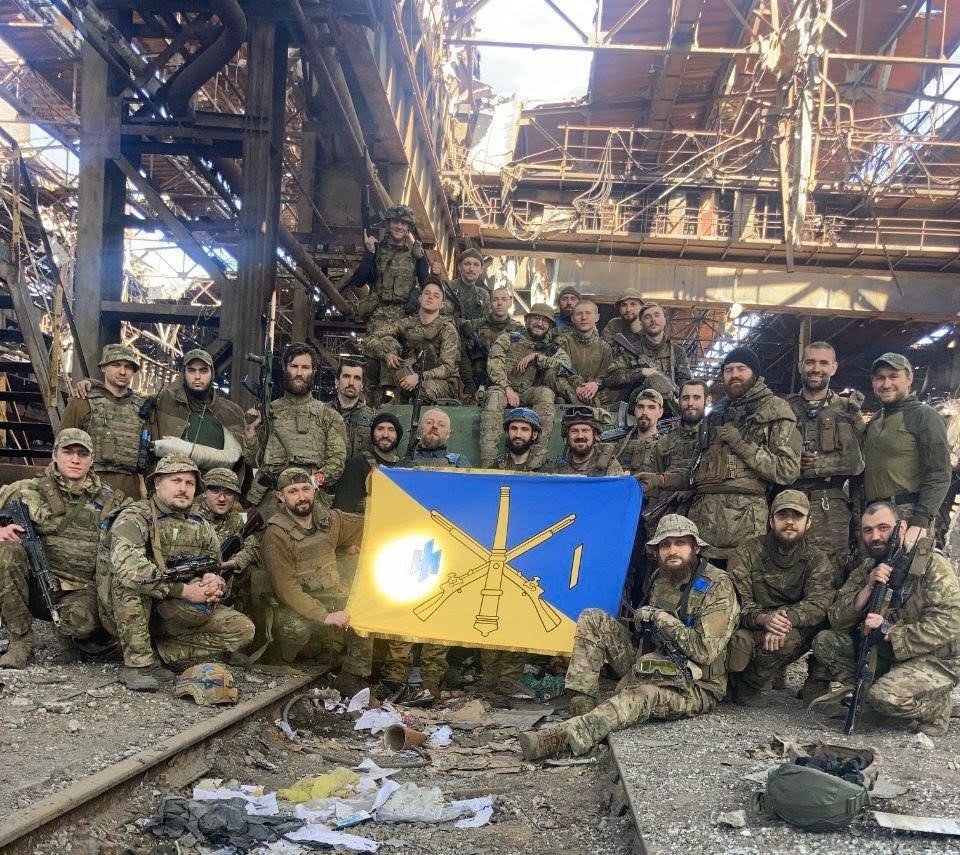
According to Ukrainian authorities, at least 2,500 Ukrainian troops defended Azovstal, including around 1,400 Azov fighters. The steelworks also sheltered hundreds of civilians, most of them women and children.
Beneath the plant were at least 34 bomb shelters connected by a network of tunnels, allowing people to move across much of the complex without ever going outside.
But conditions inside were brutal, Arsen “Lemko” Dmytryk, Chief of Staff of the 1st Corps Azov of the National Guard of Ukraine, tells me. Food and drinking water were in shortage, but the biggest problem was the lack of medical supplies. Some of the wounded, Arsen says, were simply left to rot.
One of the bomb shelters had been turned into a field hospital, where medics operated on the wounded. Without ventilation, the smell was unbearable. Reaching the hospital was another ordeal. Russia controlled the skies, and soldiers were often wounded again while trying to get there. The situation grew even worse after Russian forces discovered the hospital's location and began bombing it relentlessly.
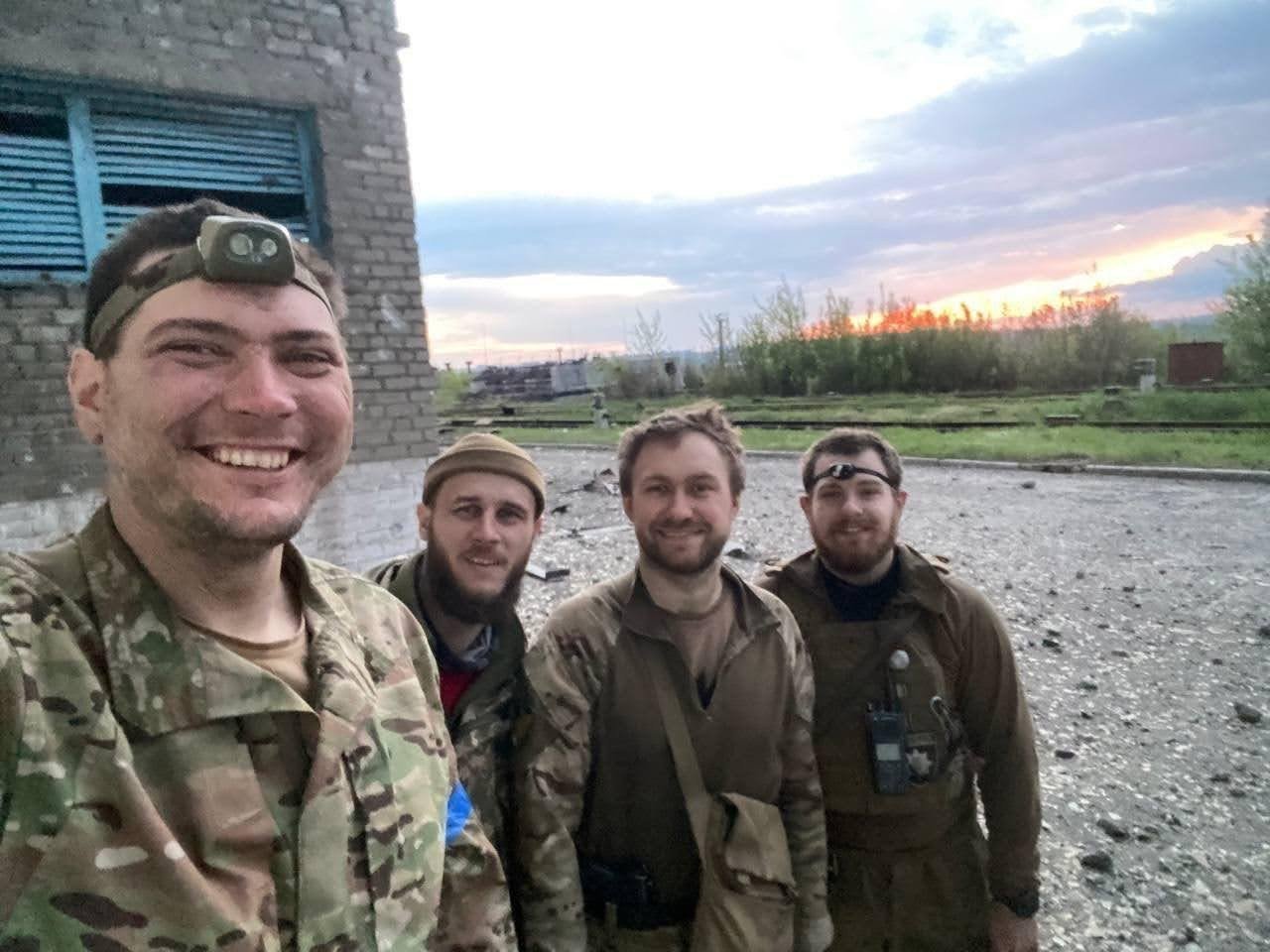
What kept them going, Arsen says, was each other. Whenever he and the other soldiers went into the city, they tried to bring back something for the wounded — anything that might lift their spirits. Most often, it was chocolate bars or bottles of soda, which they shared among everyone.
Leaving Azovstal and entering Russian captivity
Ukraine's military and political leadership ordered the defenders of Azovstal to lay down their arms and leave the plant in order to save their lives in mid-May 2022. In practice, that meant walking into Russian captivity.
Kyrylo "Maslo" Masalitin, chief sergeant of the 1st Corps Azov of the National Guard of Ukraine, says some of the fighters actually felt relieved. “No one knew what lay ahead, but it was hard to imagine anything worse than what we had just lived through,” he says. At the same time, they understood captivity could last for years. “After the Russians reduced Mariupol to ruins, believing they would follow the Geneva Conventions on the treatment of POWs felt almost naive,” Kyrylo says.
Vladyslav describes leaving Azovstal as the price they had to pay to stay alive.
The evacuation began on May 16 and lasted four days. The wounded were the first to leave. Those who could not walk were carried out. The commanders were the last to come out.
Kyrylo remembers the road leading from Azovstal to the bridge, where Russian troops were waiting. He and the other soldiers tried to keep their spirits up, joking with one another along the way. After weeks underground, simply seeing trees and breathing fresh air felt surreal.
“Everything around us was in ruins,” he says. “At the same time, everything was green, everything was blooming. It was drizzling. For a moment, you feel this strange sense of euphoria. Then comes the shock therapy, because the Russians are waiting for you.”
The soldiers say the Russians behaved professionally at first. They were not beaten or humiliated. Instead, they were questioned for hours. Arsen says some Russians appeared to respect them as soldiers after the battle for Mariupol. Once the last defenders had left Azovstal, everyone was loaded onto buses and taken to Olenivka.
Life in Olenivka and the conditions of captivity
Vladyslav left Azovstal on May 19 and arrived at the penal colony on May 21.
Before the soldiers were allowed off the buses, they were separated into Azov fighters and soldiers from other brigades. Then came the searches. Kyrylo says they were forced to undress, and their belongings were thoroughly inspected. After that, everyone was taken to the barracks — two-story buildings with their own courtyards. Three of these barracks were designated for Azov fighters.
For many of them, this was the first opportunity to find out which of their comrades had survived. That is why seeing each other again was such an emotional moment.
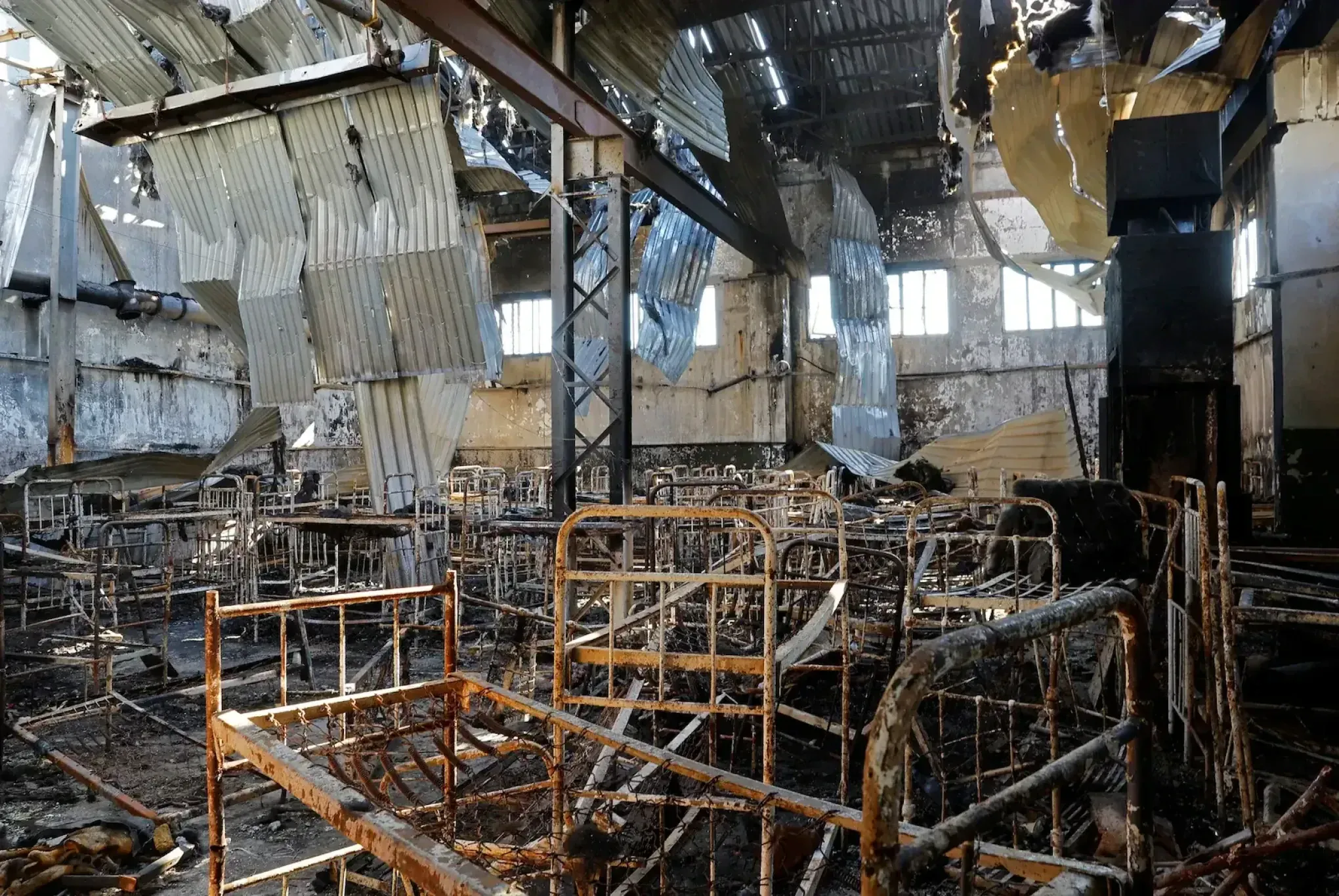
But the conditions were inhumane. The barracks were built to hold 100 people, but the Russians placed around 300 Ukrainian prisoners inside. There were not enough beds, and there was barely any space. Some POWs had no other choice but to sleep on the floor, in the hallways, and even in the bathrooms.
The day in Olenivka began at 6 a.m. with roll call, followed by the Russian national anthem.
There was no regular meal schedule. POWs could receive breakfast at noon, while lunch or dinner might be served as late as 3 a.m. Many of them began losing weight quickly.
Interrogations started almost immediately, but they were not violent at first. The Red Cross visited Olenivka in late May. The delegation was shown just one barracks and the dining hall. The visit was brief, one of the former POWs tells me. “We all said we had no complaints, even though the conditions were terrible.”
Another visit was expected later, but it never happened. Before it, the prison administration suddenly began paying attention to prisoners who needed medical care. If they didn't provide treatment, they at least checked on them every day. “It was obvious the administration was worried about the visit from the international organization,” — a former POW says. But after that, the prisoners never saw Red Cross representatives again.
The Olenivka blast and its aftermath
Russian guards came to the barracks with a list of names on July 27, 2022. They said those people would be taken to another building. All three of my interviewees—Vladyslav, Kyrylo,and Arsen— were called. Vladyslav says the number 200 on that list was symbolic - in military slang, it means “dead”. There was also a clear pattern: only Azov fighters were being moved. The Russians said they would be taken to Horlivka, a city in the Donetsk region that has been occupied since 2014.
After some time, everyone from the list was taken out of the barracks, lined up, and brought to another building located in an abandoned industrial area, Arsen said. The men were horrified when they saw the place. The conditions were completely unsanitary. There was not even a shower or a toilet. No one told them how long they would stay there. Everyone assumed it would only be until they were transferred somewhere else. The Russians tried to convince them that the building would be renovated and that they would not be there for long.
Vladyslav says that the next day, he noticed that the guard post, which had been located near the barracks, was moved farther away.
“From now on, only one person at a time would be allowed to use the outdoor toilet!” Vladyslav recalled the Russian guard saying, before the lights went out. Arsen was the senior prisoner in that barracks. On the night of July 28, before going to sleep, he made his rounds, spoke with the guard on duty, and made sure everything was in order. Around 10:30 p.m., the lights in the barracks were turned off, and everyone fell asleep.
All three men say they later heard the sound of a Russian Grad rocket launcher, but they continued sleeping — except for Kyrylo. He jumped out of bed half-asleep, not understanding what was happening, and started getting dressed on instinct. He says he was trying to decide what to do: raise the alarm or go back to sleep. Kyrylo remembers one of his comrades saying something funny in his sleep, which made him quietly laugh to himself.
At that moment, an explosion went off inside the barracks. Kyrylo was standing facing it and fell to the floor. The sound of the blast woke Vladyslav. He says he still remembers the screams of the men around him. He checked himself, realized his injuries were not critical, and started helping carry his comrades outside. Arsen also woke up because the heat inside the barracks had become unbearable. When he got down from his bed, he saw one of his comrades lying unconscious on the floor below. He checked his pulse and realized there was none. He began pulling his body outside, hoping that at least it could be preserved.
After spending some time in shock under the bed, Kyrylo tried to get out of the barracks. But he felt severe pain in his stomach. He could only walk bent over, and after leaving the barracks, he lay down on the ground.
Vladyslav says the prison staff did nothing to help the wounded. “They simply stood behind the fence and watched. Some of them were even laughing. I was desperate. That’s when I realized my life was no longer my own.”
Only later were Ukrainian medics, who were also being held in Olenivka, allowed into the barracks. They examined Kyrylo and found that he had a serious abdominal injury, as well as wounds to his arms and legs. They marked the number 1 on his temple with a marker, hoping that if an evacuation took place, he would be among the first people taken to the hospital. Arsen was also seriously wounded, with injuries to his head and torso. He recalls how, until the very end, he tried to help another prisoner. He kept talking to one of his comrades to keep him conscious, trying to distract him and stop him from losing consciousness.
The evacuation team did not arrive until 4 a.m. Vladyslav says the prison staff did everything they could to delay the evacuation of the seriously wounded. They demanded that the surviving prisoners make a list of everyone who needed to be taken to the hospital. It was difficult to identify everyone: some were unconscious, some could not speak, and many did not know each other, Vladyslav says. Eventually, the wounded were loaded onto a truck. Kyrylo and Arsen were among them. Those with less serious injuries, including Vladyslav, were placed in two cells, each holding 30 to 40 people, even though each cell was designed for no more than six. He says that from that moment on, they began hearing the Russians torture their comrades. Later, he was transferred back to a barracks.
Meanwhile, Arsen and Kyrylo underwent surgeries in Donetsk. They remained in the hospital until early September, and then they were taken back to Olenivka. They had been told they were being taken for a prisoner exchange.
After the attack, the Russians’ treatment of the prisoners changed dramatically. They became much more brutal. “It may have been because the Russians realized how strong the Azov fighters’ spirit was,” — Arsen says.
The Russians expected the prisoners, under extreme pressure, to break down and start informing on each other. Instead, they saw the opposite. Arsen says the Russians tried to persuade some prisoners to cooperate, including him: “I told them, ‘I’m not the person you need. My Russian is terrible. I’m from the Ternopil region—what Russian would I know?’”
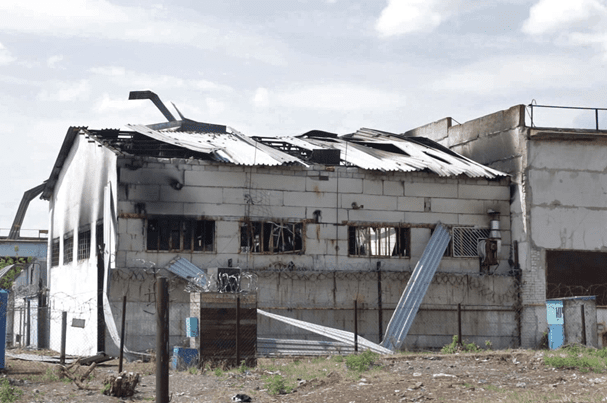
The official Russian version is that the Olenivka prison camp was allegedly hit by the Ukrainian Armed Forces using American HIMARS systems. But throughout this time, Russia has never allowed experts from the United Nations or other international missions to access the site of the attack. All three of my interviewees say the same thing: it was a terrorist attack. The barracks were blown up from the inside.
Independent investigations point in the same direction. CNN, after reviewing images from the scene and consulting weapons experts, concluded the damage was inconsistent with a HIMARS strike. The barracks' thin walls remained standing, while much of the roof stayed intact — damage experts say a HIMARS missile would not have left behind. The UN Human Rights Office later reached the same conclusion after interviewing more than 50 survivors.
A new place of captivity for Vladyslav
Arsen and Kyrylo were released from Russian captivity on September 21, 2022. Vladyslav was not included in the exchange. He remained in Olenivka for four months.
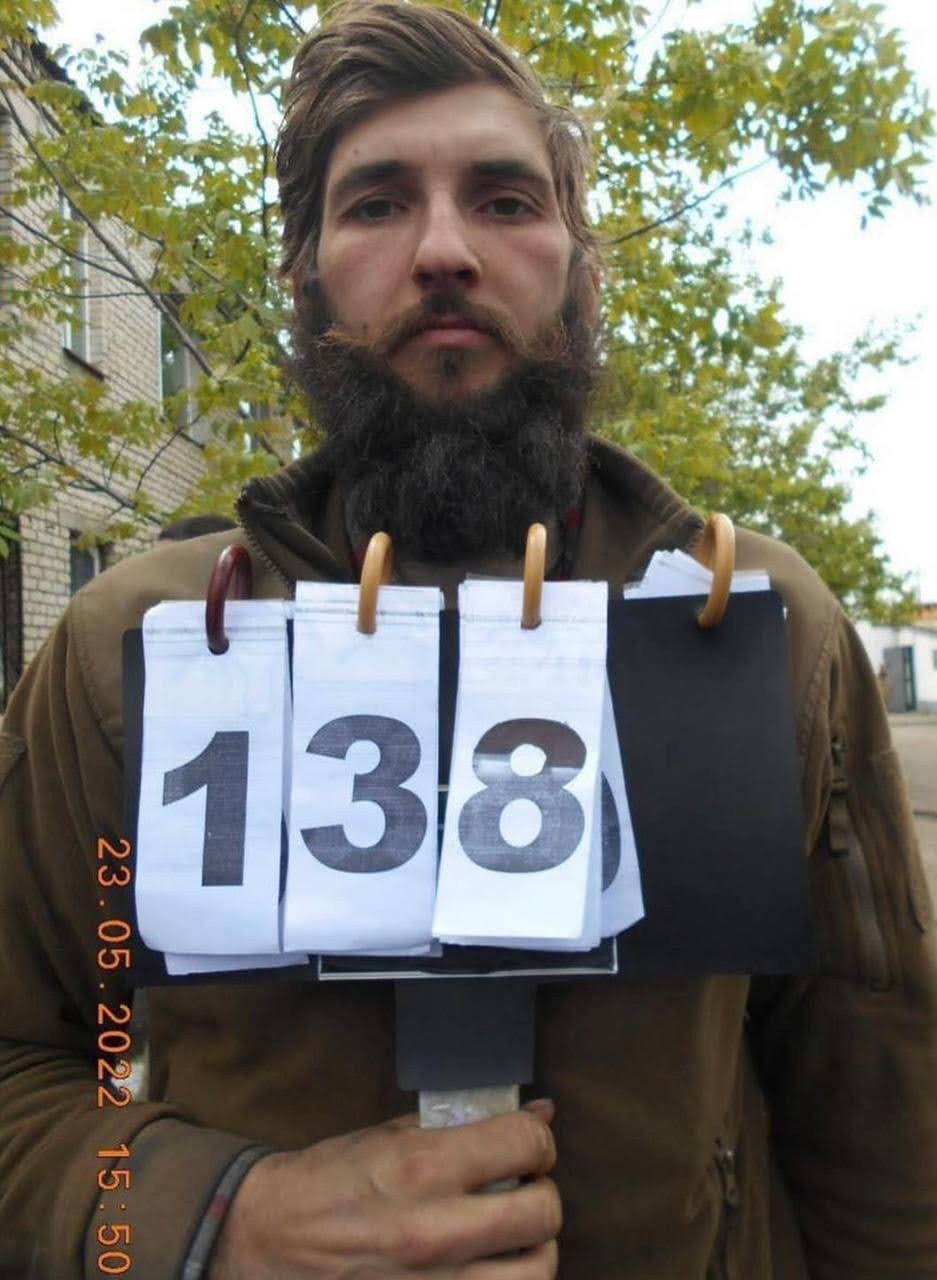
One day, without any explanation, the Russians ordered him and other POWs to pack their belongings. They loaded them into a truck, tied their hands, taped their eyes shut, and drove them to an unknown destination. The restraints were so tight that many prisoners' hands turned blue. From that moment on, the beatings became systematic. The guards walked over their bodies. But the real hell began when they arrived, Vladyslav says.
He called it the “reception”.
The moment the truck stopped, the prisoners were thrown onto the ground with their hands and eyes still bound. The Russians beat them relentlessly: on the head, legs, arms, torso, everywhere. Then someone shouted: "RUN!" Blindfolded and completely disoriented, Vladyslav had no idea where he was or where he was supposed to go. The "reception" lasted for two hours.
The Russians then took him to a cell, which Vladyslav describes as four empty walls with nothing inside. There, they took his fingerprints and forced him to sign documents without explaining what they were. By then, he could barely walk. The constant beatings had left him permanently bent over. The first interrogation followed the same day. That's when Vladyslav realized the Russians wanted him to confess to war crimes he had never committed. Every time he refused to say what they wanted to hear, they beat him even harder. After the interrogation, the Russians gave him a mattress, a prison uniform, and a metal cup before returning him to the same cell, where he would spend the next year and a half with three other Ukrainian prisoners of war.
The violence never stopped. The guards beat his legs until he could no longer stand, then ordered him to get up. When he couldn't, they beat him again. The cycle repeated over and over. Even prisoners who were asleep were not spared. Vladyslav remembers seeing one of his cellmates lying under a blanket when a guard struck him with a baton before leaving the cell.
Taganrog: a forced confession to a murder Vladyslav never committed
Vladyslav lived like this for the next year and a half. He and the other men in his cell counted the days to avoid losing track of time.
At first, they had no idea where they were. They only figured it out later by piecing together small clues. About a month after they arrived, the guards tossed them a bar of soap stamped with the words "Rostov-on-Don." Later, during an interrogation, one of Vladyslav's cellmates overheard a guard mention Taganrog—a Russian city in the Rostov region, around 100 kilometers from Mariupol.
As we talk about that time, I can tell it's painful for Vladyslav to revisit those memories. Still, I ask him what the worst day in Taganrog was. He takes a few seconds before answering, then lets out a heavy sigh.
“Every day,” he says.
Every day, he heard other Ukrainian prisoners being tortured. Every day, he listened to their screams, knowing he would be next.
“If they're not torturing you, you spend the whole day sitting there, listening to your brothers-in-arms being tortured,” he says. “And you can't help them. You can't help yourself either.”
During one interrogation, Vladyslav lost consciousness. His body had reached its limit. Months of interrogations, twice-daily inspections, beatings, and inhumane treatment had taken their toll. The lack of food left him too weak to endure the physical abuse. Prisoners were forbidden from sitting or lying on their beds during the day.
The interrogators wanted the prisoners to confess to war crimes they had never committed. Day after day, they repeated the same promise: confess, and it will all end. The constant torture, the relentless pressure, and the promise that everything would stop if he confessed created an atmosphere in which, Vladyslav says, he eventually started believing everything they told him.
That was when he said he finally understood the mindset of the Russian soldiers. They simply refused to believe that someone who had been fighting since 2014 had never committed a war crime. Eventually, he caught himself thinking: if I didn't do anything, then I can just make something up.
So he did. Vladyslav carefully invented the story of killing a civilian during the fighting in Mariupol. He thought through every detail, making sure none of his fellow soldiers appeared in the story. He didn't want anyone else to pay the price. During one interrogation, he confessed to a crime he had never committed, hoping it would finally bring the torture to an end.
The moment the interrogators realized he was ready to confess, everything changed. They untied him. The beatings stopped. Until then, he had been kept bound in painful positions, beaten until he lost consciousness, then doused with water and beaten again. This time, instead of another beating, they handed him a pen. Vladyslav wrote a confession to a crime he had never committed and signed the papers they put in front of him.
After the verdict
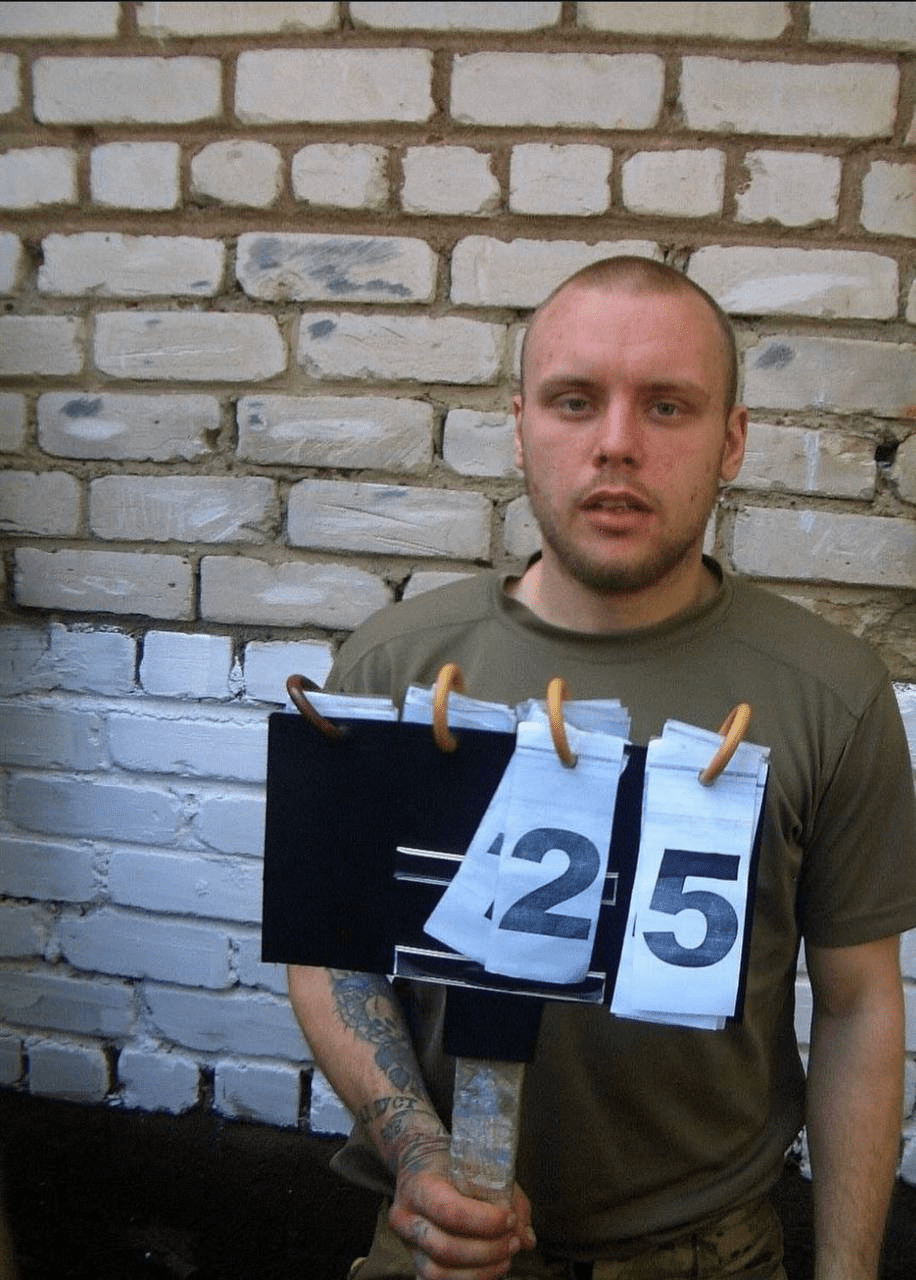
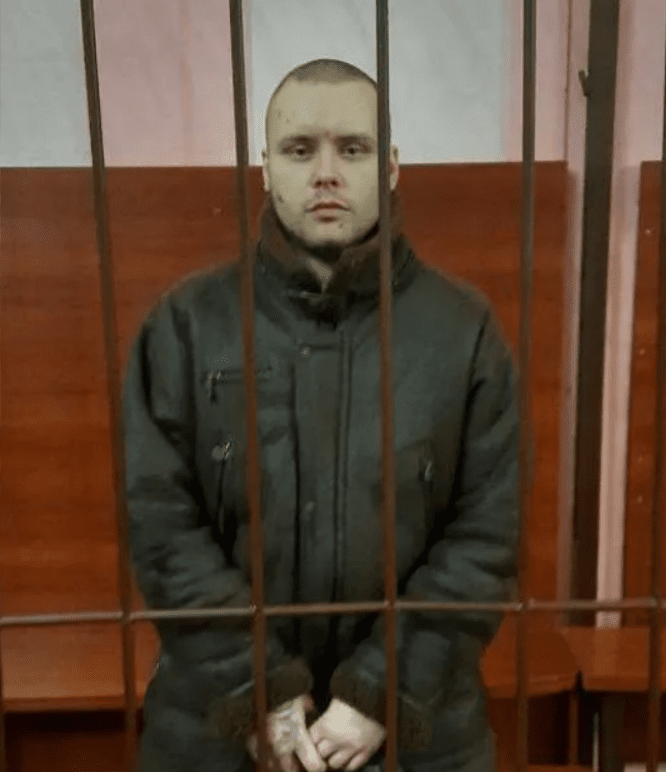
After he confessed to a murder he hadn’t committed, the investigator began putting together the case. Within 3–4 months, he was transferred to Donetsk, where the trial took place. Vladyslav calls it a charade: the judge used hand gestures to indicate whether he should answer “yes” or “no.” And right then and there, he was sentenced to 25 years behind bars.
Eventually, Vladyslav was transferred to a local pretrial detention center, where he spent about two months without proper food or hygiene. Vladaslav says that during that time, he was allowed to take a shower only once. After that, he was transferred to serve his sentence in his hometown of Makiivka. “I finally returned home, but not the way I wanted to.”
The exchange and the road home
Vladyslav spent about a month in the penal colony in Makiivka. By then, two and a half years had passed since he had been taken captive, but he still held on to the hope that he would be included in a prisoner exchange. At the same time, he says, he was already preparing himself for the possibility that he would have to serve his entire sentence.
One day, a prison officer came into the barracks and began reading out a list of names. He then asked whether those on the list agreed to be exchanged. Vladyslav Andrianov's name was among them. Before long, he was back in Ukraine.
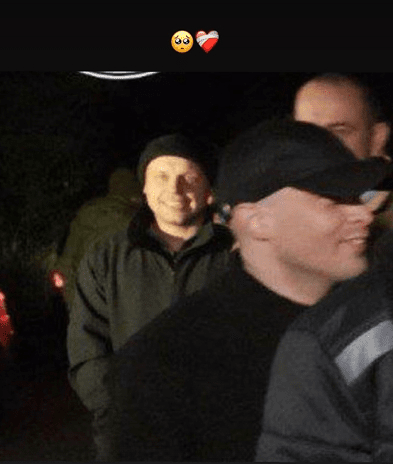
As he describes the moment he finally returned home, Vladyslav smiles for the first time during our interview. He says that was the moment he finally felt safe again. But a long recovery still lay ahead—both physical and emotional. During his captivity, Vladyslav lost 20 kilograms and got problems with his joints and back. About six months after returning home, he also began struggling psychologically. He sought professional help right away and continues to undergo treatment.
More than 600 Azov soldiers are still being held in Russian captivity. The 1st Corps of the National Guard of Ukraine’s Azov says Russia systematically removes those fighters from exchange lists and refuses to return them because of the symbolic significance they hold for Russia.
It has been a year and nine months since Vladyslav came home. He says he no longer thinks too far ahead. Instead, he takes life one day at a time. But there is one wish Vladyslav holds above all others: never to have to bury another friend.
Discuss this article:


-206008aed5f329e86c52788e3e423f23.jpg "Photo of Oleksandr Moiseienko")
-f3430f0449615e9897dff835086ac204.jpg "Ukraine Broke With a Soviet-Era Military System and Rebuilt It Around the Soldier")
-e126c16a85d580738cf2d57e760b80a3.jpeg "Photo of Vladyslav Greziev")