- Category
- War in Ukraine
Meet Azovstal’s 74-Year-Old “Godmother”: She Survived Russian Captivity and Refuses to Quit
 Prefer U24 Media on Google
- Authors

-24deccd511006ba79cfc4d798c6c2ef5.jpeg "Photo of Louis Beaudemont")
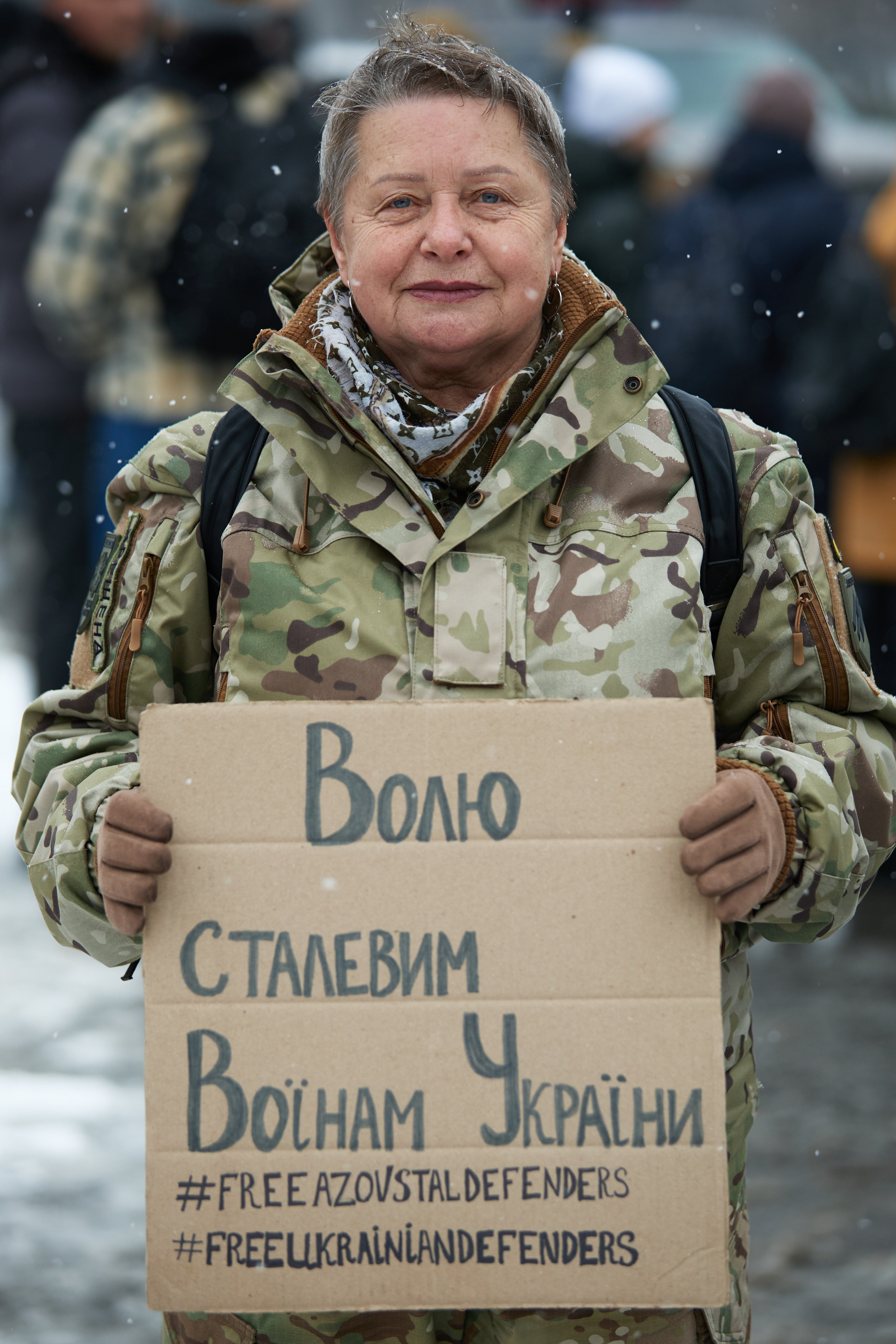
Tetiana Tepliuk survived the siege of Azovstal and brutal Russian captivity. Now, at 74, the "Godmother" of the Azov Brigade is back on duty.
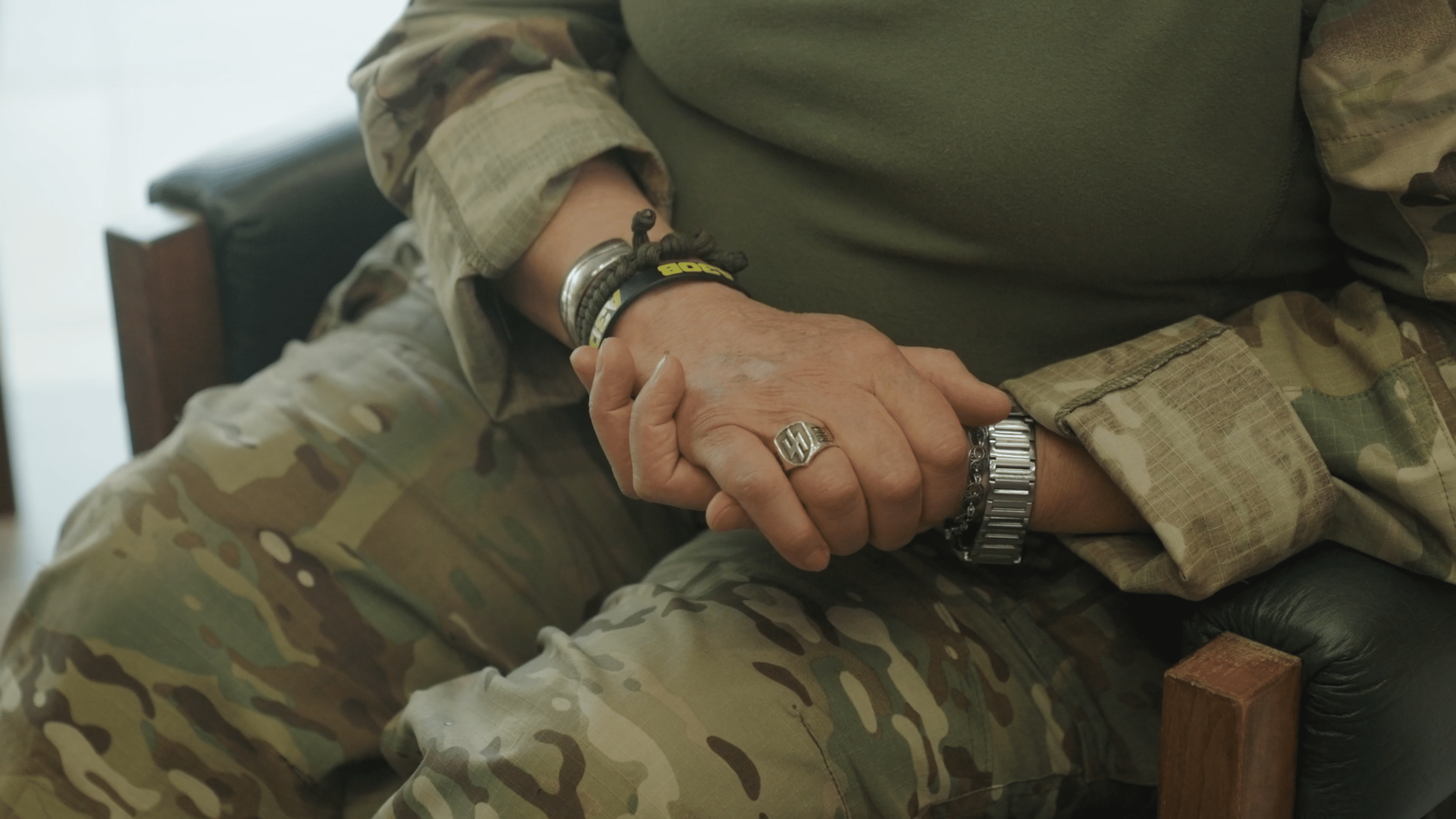
Tetiana Tepliuk holds the rank of sergeant and serves as a medical instructor for a supply battalion of the Ukrainian National Guard.
To the young soldiers she served alongside during the darkest days of the siege of Mariupol, she is known simply by her callsign: “Khreshchena,” or the Godmother.
We bring you stories from the ground. Your support keeps our team in the field.
We met at the Azov 4308 Hub space in Kyiv—a meeting place for civilians and soldiers, featuring chevrons, streetwear clothing, and matcha lattes—to talk about her unique career.
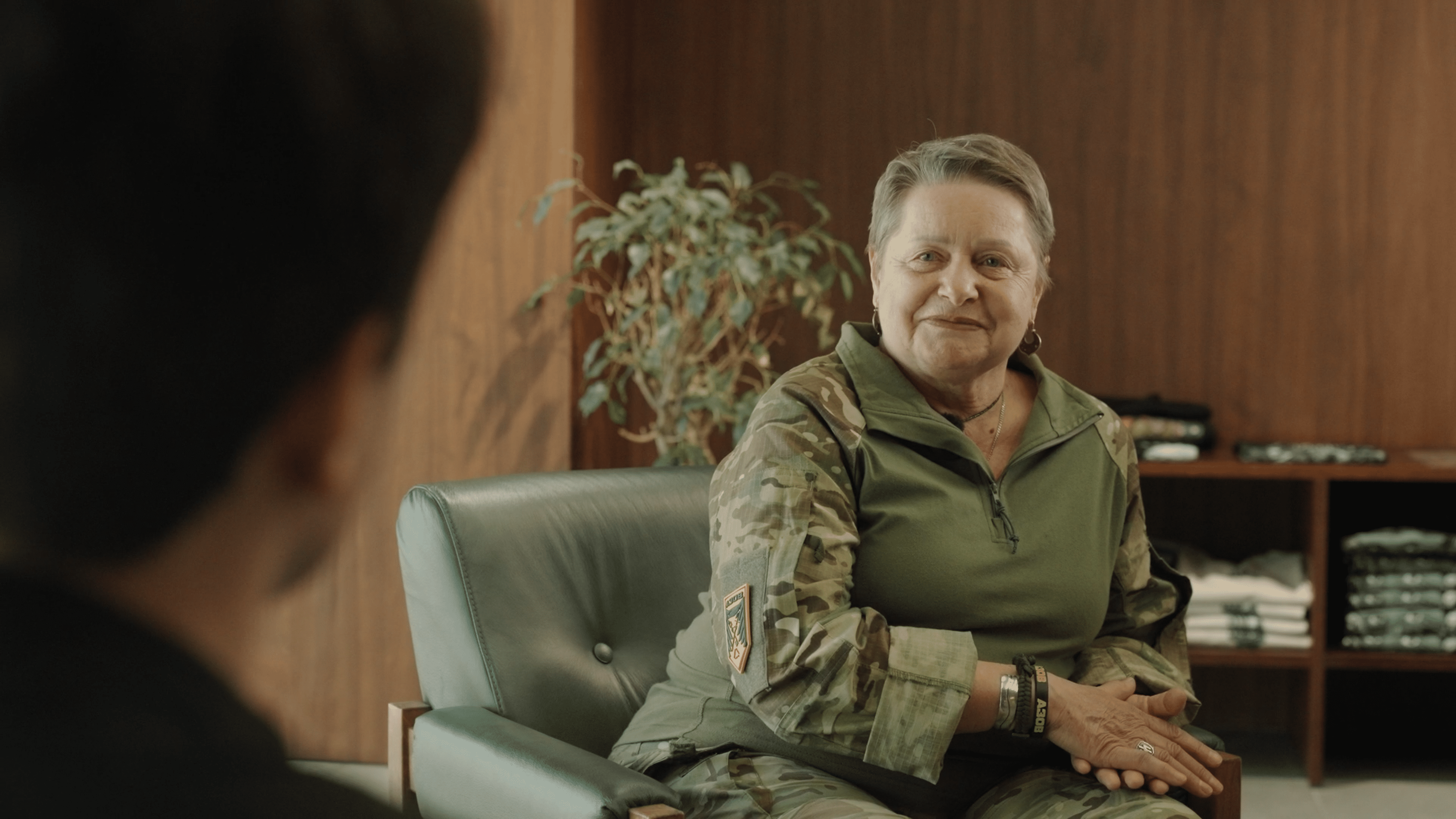
Tetiana’s path to service
Tetiana Tepliuk does not like to talk about her age. Perhaps because she joined the military at an age when others had long since retired. Her determination, both morally and physically, allows her to continue her military career far beyond standard limits.
Yet, she has endured the worst realities of war: encirclement, the proximity of death, and captivity.
Rooted in Ukrainian identity
I love my country very much. It is the motivation of my entire life.
Tetiana “Khreshchena” Tepliuk
Medical instructor in the Azov Brigade
One day, her cousin asked Tetiana to stop speaking Ukrainian to her son because “in a few years,” the Ukrainian language would likely no longer exist. “I became terrified that my language would disappear,” Tetiana explained. Ukrainian poet Vasyl Stus died in a Soviet prison camp in 1985, even as Mikhail Gorbachev was already in power.
Though a midwife by civilian profession, Tetiana worked alongside the armed forces—first Soviet, then Ukrainian. Before the war, she followed all of Ukraine’s historic shifts, from the 1991 independence to the Revolution of Dignity (Maidan Revolution) and the war that followed.
During the Revolution of Dignity in 2013-2014, she volunteered to treat protesters in Kyiv's Maidan Square day and night through freezing temperatures and police violence under the presidency of Viktor Yanukovych, whose decision to halt Ukraine’s European integration sparked the mass demonstrations. The Yanukovych government’s security forces killed more than 100 protesters
“I practiced my profession as a nurse,” Tetiana said. “The people who came out to protest grew sick because of the cold. They needed medical help, so I took care of them.”
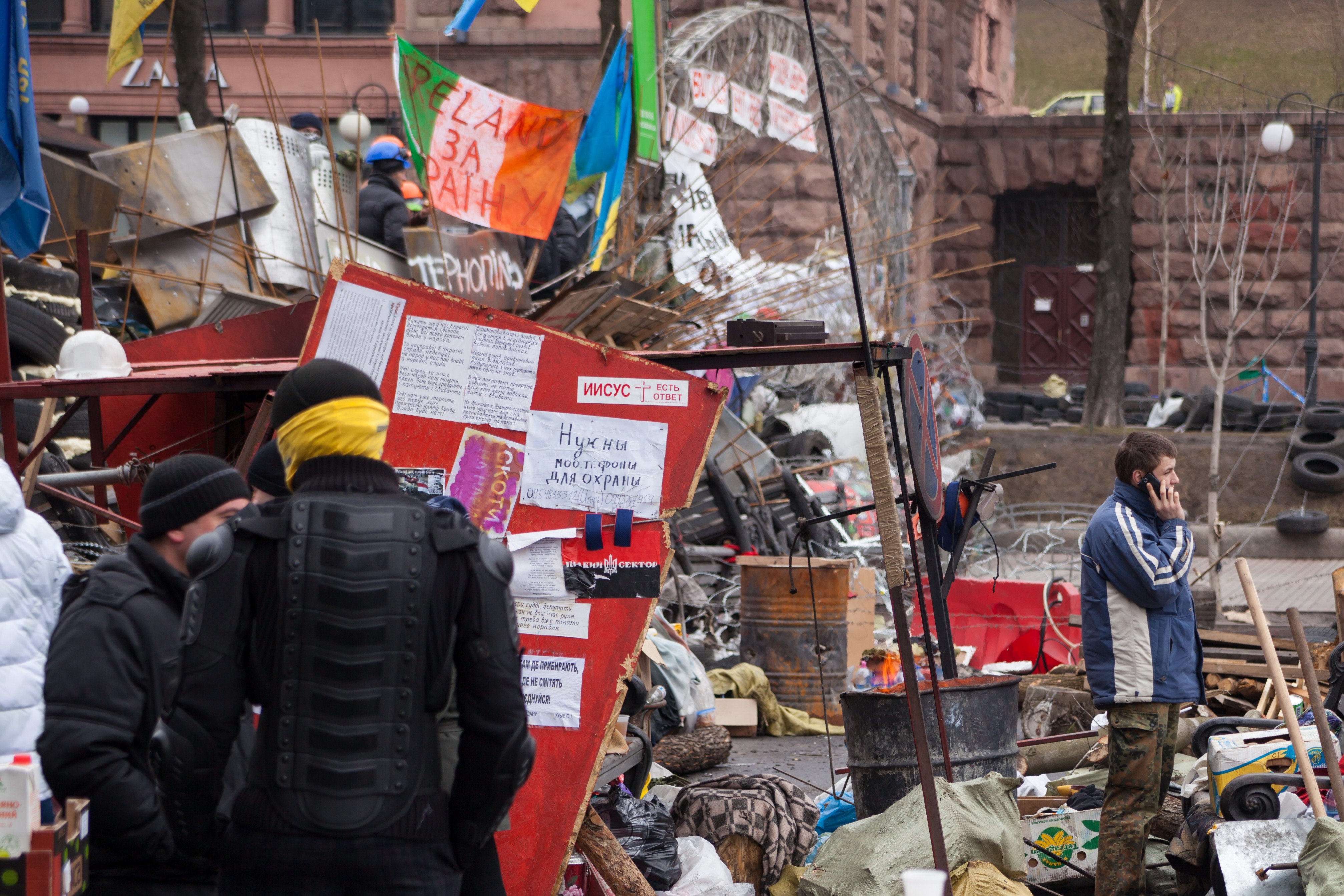
Following Maidan, she wanted to accompany the victorious protesters to defend the country against the hybrid aggression Russia launched in Ukraine’s east alongside attempts of military annexation of Crimea.
In eastern Ukraine, Russia armed and backed forces that claimed to be "secessionist," using the false pretext of a Russian language ban. Pro-Kremlin forces seized cities like Donetsk and Luhansk. The Ukrainian army, which was far from what it is today, struggled to contain the Moscow-backed forces.
In Mariupol, however, a volunteer unit prevented the Russian-backed forces from taking the city. This unit became the foundation of the 12th Special Forces “Azov” Brigade on May 5, 2014, named after the sea bordering the region. On June 13, 2014, they fully liberated the city. The Azov Brigade restructured into the First Corps Azov of the National Guard of Ukraine in 2025. Now comprising six brigades, the corps is led by Brigadier General Denys “Redis” Prokopenko.
But at that time, Tetiana, a 60-year-old woman, had no chance of officially enlisting in the army, even though now Ukraine has one of the most inclusive armies in the world. Between 2022 and 2026, the percentage of women in the Ukrainian military grew from 4% to 21%. More than 75,000 women serve in the military, including over 5,500 operating on the front line.
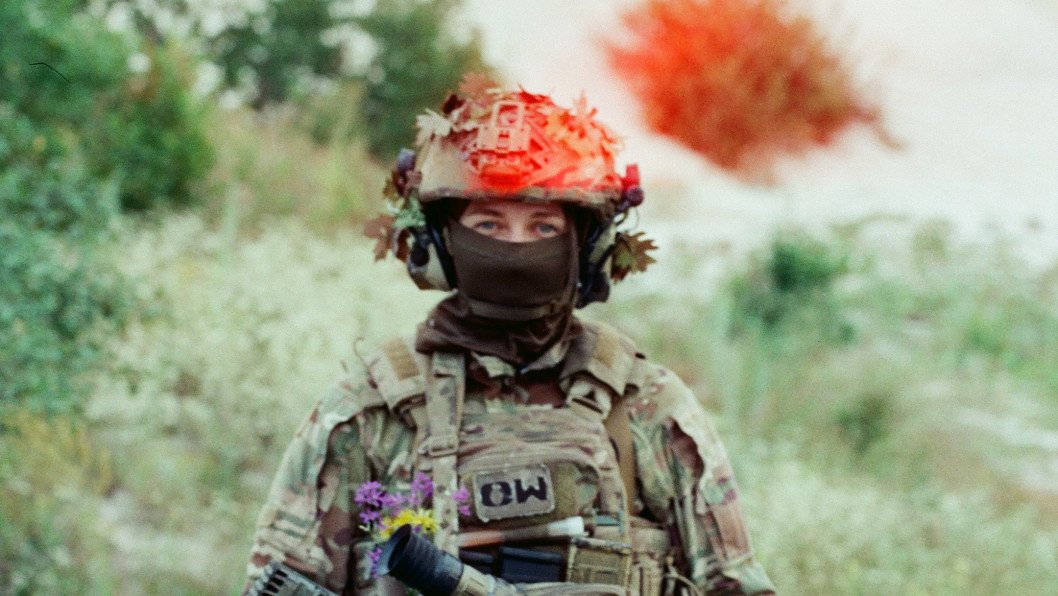
However, her life changed with a phone call. Her godson, a member of the Azov volunteer regiment, invited her to join them. From this connection, she received her callsign, “Khreshchena.”
The defense of Mariupol
From 2015 to 2022, Khreshchena lived in Mariupol with Azov. She organized their first medical post, treating Ukrainian soldiers for everything from combat wounds to the common cold.
They are like my children.
Tetiana “Khreshchena” Tepliuk
Medical instructor in the Azov Brigade
The volunteer unit, initially formed by nationalist activists, was quickly integrated into the official military structure. It became one of Ukraine's most respected formations, attracting more recruits. Azov is widely credited for holding the city of Mariupol until the full-scale invasion in 2022.
On February 24, 2022, when the Russian army invaded Ukraine, Mariupol became a highly strategic military and symbolic objective for Russian forces. The Russian military deployed massive resources to push back Azov soldiers and destroy everything they could in the city. Khreshchena, like most of her comrades, stayed.
“Naturally, I continued doing the exact same work; there was just much more of it,” she explained. “There were concussions, light wounds, and serious injuries. We evacuated the soldiers to the hospital immediately.”
Retreating into the massive underground bunkers of the Azovstal steelworks alongside her friend Iryna, callsign “Valkyrie,” Tetiana was officially mobilized as a soldier in the National Guard at the age of 69. In those dark, suffocating shelters, she refused to eat her own meager rations.
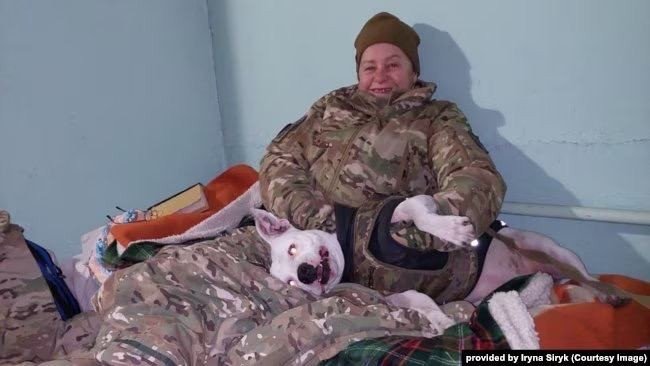
“They came to see me like a godmother,” she recalled, noting how soldiers asked her how they would survive. “I didn't even want to eat; I wanted to give it all to them. Every evening, we were given a spoonful of sugar and a spoonful of honey. I saved it and gave it to two soldiers—the sugar to one, and the honey to the other.”
Hell in Russian captivity
In May 2022, Azov servicemen went into captivity from the Azovstal plant to preserve their lives under high military and political command orders. the Azovstal garrison surrendered under orders. However, for Tetiana, leaving the plant into the hands of Russian forces marked the beginning of a different kind of hell.
Tetiana was transported to the notorious Olenivka prison camp in the occupied Donetsk region. Russian forces held her in an isolation cell measuring just eight or nine square meters, packed with up to ten women at a time. Confined to this cramped space, they could barely move for more than four months.
The severe brutality of Olenivka peaked in July 2022, when an explosion destroyed a barracks housing Ukrainian prisoners of war. According to Azov press office, the blast killed 53 Ukrainian defenders and injured at least 130 others, who were left to bleed out without immediate medical assistance.
Tetiana was transferred to the SIZO-2 detention center in Taganrog, Russia, shortly before the Olenivka catastrophe. While her new cell was less crowded, the psychological torment increased significantly. Tetiana noted that the hatred from the Russian guards was so visceral that the women felt it physically, like a crushing pressure through the prison walls.
Her experience aligns with the systemic abuse documented by Ukrainian authorities. Ukrainian Human Rights Ombudsman Dmytro Lubinets reports that Russia currently employs 695 documented forms of torture against Ukrainian prisoners of war as deliberate state policy. First-hand accounts from Taganrog and other penal colonies reveal that guards regularly strip prisoners, subject them to severe beatings, and use the “tapik”—a Soviet-era field telephone modified to deliver electric shocks.
The threat of “white slippers” and show trials
The cruelty of the Russian detention system is explicitly designed to break the human spirit. On December 30, 2022, a guard abruptly ordered Tetiana to pack her belongings. In her haste, she left her slippers in the corridor. When she asked to retrieve them, the guard coldly replied that she would not need them, promising she would soon receive “white slippers” instead—a cultural reference meaning she was being prepared for a coffin. Tetiana accepted the threat with stoic calm.
Tragically, dying in captivity is a reality for many of her comrades. Oleksandr Krokhmaliuk, an Azov combat medic captured at Azovstal, survived the siege only to be tortured to death in Russian custody. His body was returned to Ukraine with fractured ribs and blunt force trauma to the chest.
Others, like Ukrainian marine Oleksandr Savov, survived years of abuse only to return home with fused ribs, healed brain hematomas, and severe trauma. He died shortly after his release, his body unable to recover from the damage inflicted upon it.
Captured soldiers from the Azov Brigade are regularly designated as “terrorists” by the Southern District Military Court in Rostov-on-Don. Soldiers who legally defended their country in Mariupol receive draconian sentences. For example, Mykhailo Nasonov, Vladyslav Kormilin, and Serhii Kopylov were sentenced to 20 years in a severe-regime penal colony for alleged terrorist activities. Maksym Cherednychenko received a 26-year sentence.
A New Year’s miracle
Despite the threat of the “white slippers,” Tetiana was not executed. On December 31, 2022, guards stripped her of her prison uniform, returned her original clothes, blindfolded her with tape, and bound her hands tightly with plastic zip-ties. She was loaded into a freezing military transport plane and forced to sit on the frozen metal floor in a tight "chevron" formation, packed against other prisoners for hours.
Hours later, her blindfold was removed, and she stepped off a bus onto Ukrainian soil. A photograph from that day captures her wrapped in a tight embrace, beaming with a joyful smile—a stark contrast to the hardened expression her reflection had shown her in the mirrors of the Taganrog prison.
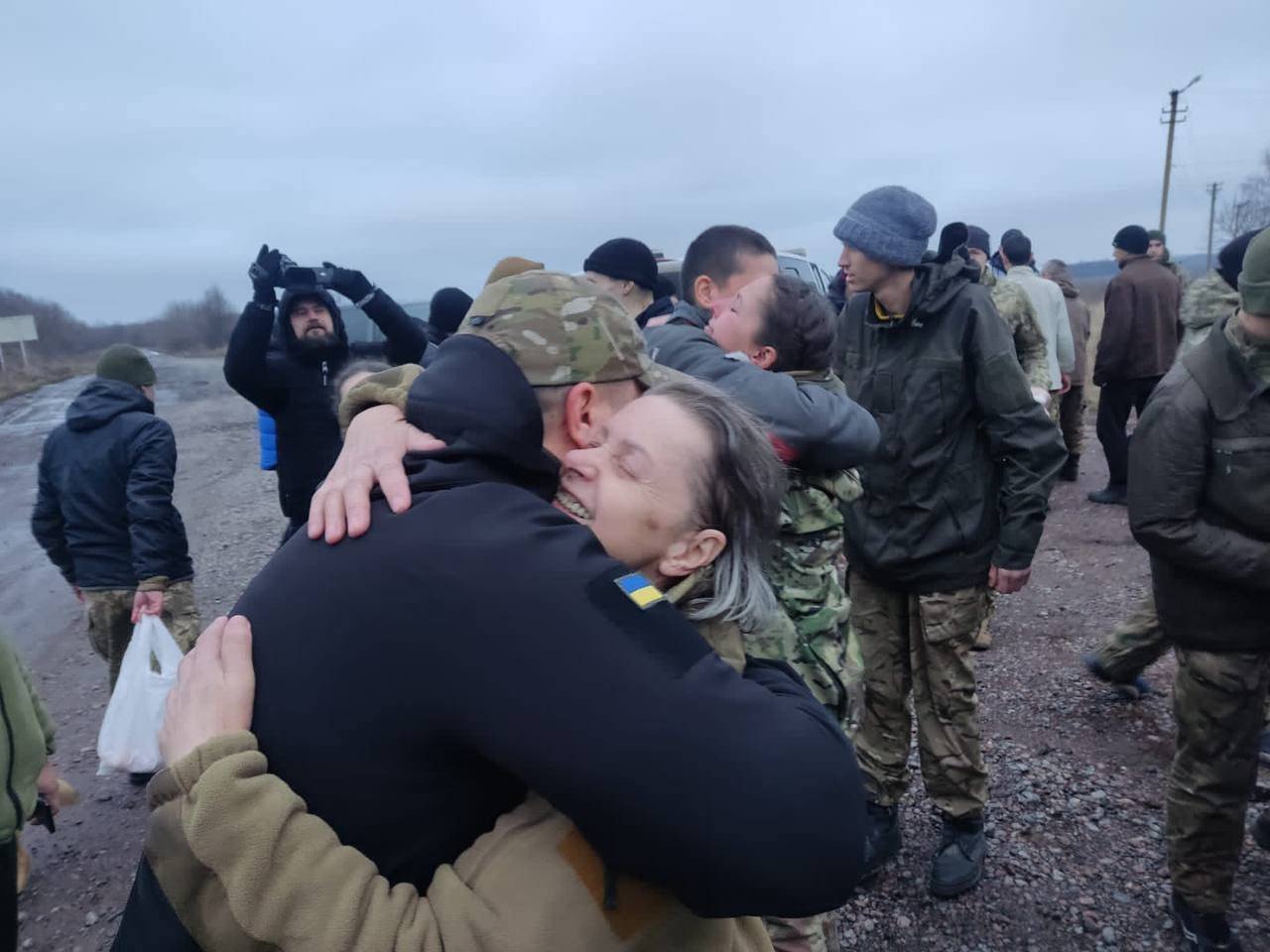
Her return also brought a moment of pure joy. Her friend Iryna had fought to keep her dog, Adi, throughout the siege of Azovstal. However, the Russian prison commander confiscated the animal upon their arrival at Olenivka, and the dog was later given to Chechen leader Ramzan Kadyrov as a propaganda stunt.

In an unexpected turn, a Chechen deputy brought the dog to the prisoner exchange to use as a public relations tool. At the border crossing, Tetiana watched as the thin but ecstatic dog recognized Iryna and ran to lick everyone in sight. Tetiana described it as a genuine New Year's fairy tale.
An unbroken spirit
The aftermath of captivity rarely mirrors a fairy tale. Tetiana required more than six months of intensive rehabilitation. The lack of food and movement in Russian colonies had caused complete muscle atrophy, leaving her skin hanging loosely on her frame.
Through sheer willpower, she forced her body to recover. Despite her age and the trauma she endured, she requested that the medical commission declare her fit for duty. She could not imagine retiring while her country faced such a tragedy.
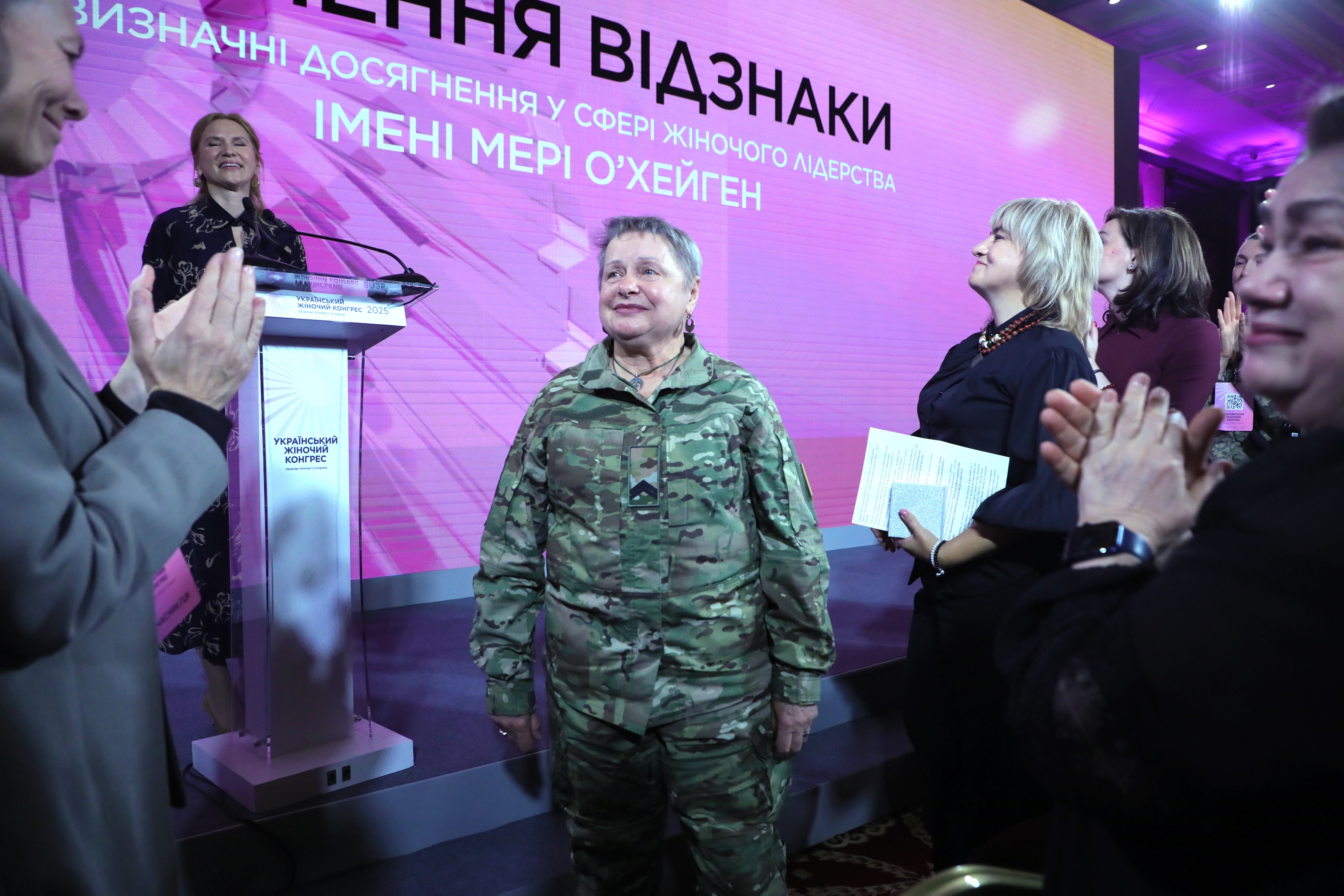
Returning to active service in September 2023, she now serves in a support role, monitoring drivers' health in her supply battalion. On her days off, she refuses to rest. Instead, she participates in “Free Azov” rallies, standing in solidarity with the thousands of prisoners of war still held in Russian prisons.
When asked what message she wants to send to the world, she just answered: “What special role? I am just doing my job conscientiously, and that is what matters most.”
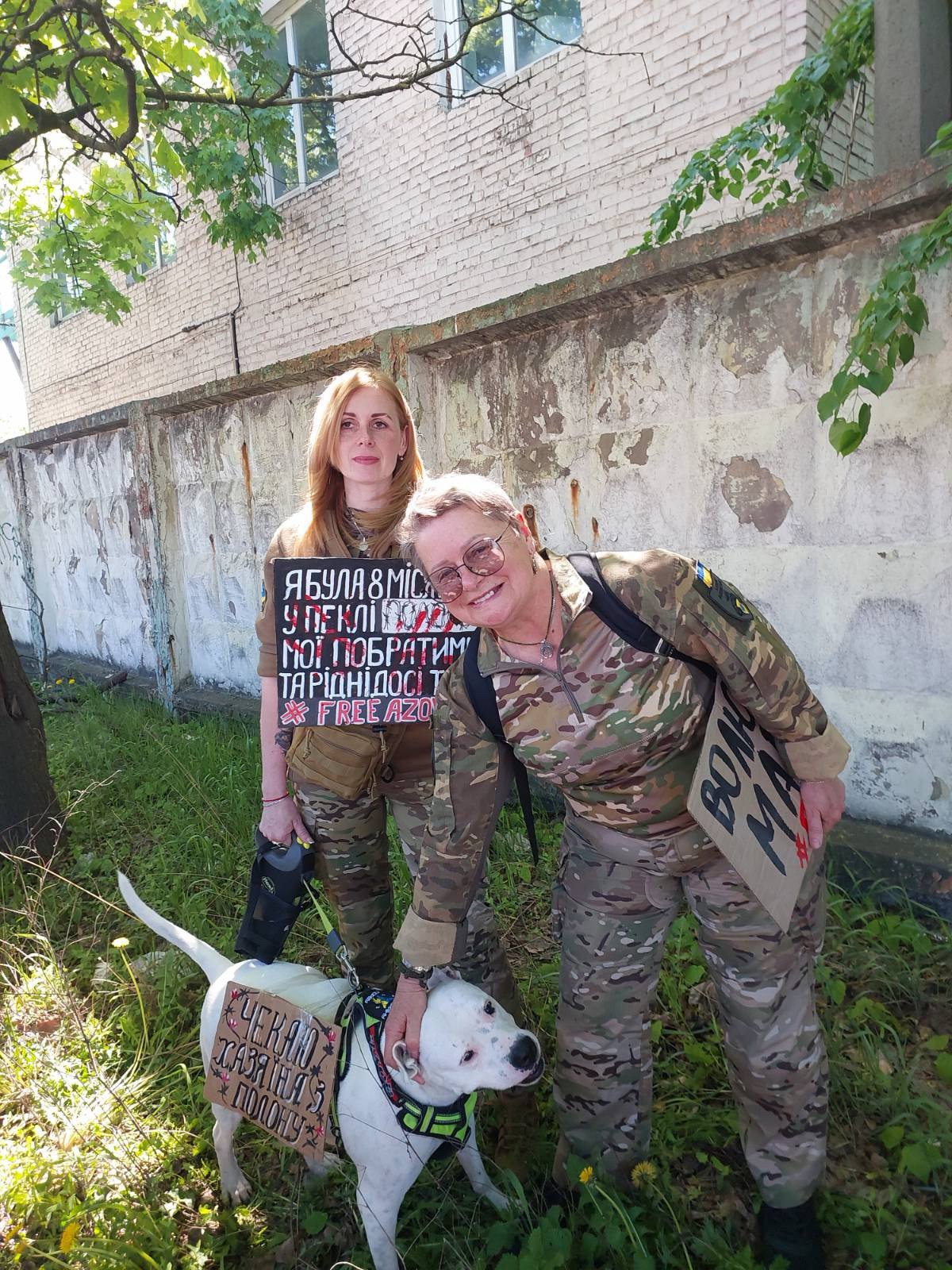
As Ombudsman Lubinets pointed out, international human rights mechanisms, including those of the International Committee of the Red Cross, do not function inside the Russian Federation. Until the international community takes decisive action to pressure Moscow, the policy of systematic torture will likely continue. Tetiana escaped the “white slippers,” but thousands of her brothers and sisters-in-arms remain in Russian captivity.
Discuss this article:
-9a7b3a98ed5c506e0b77a6663f5727c5.png)