- Category
- War in Ukraine
Ukrainian Women Who Joined the Military to Fight the Russian Invasion
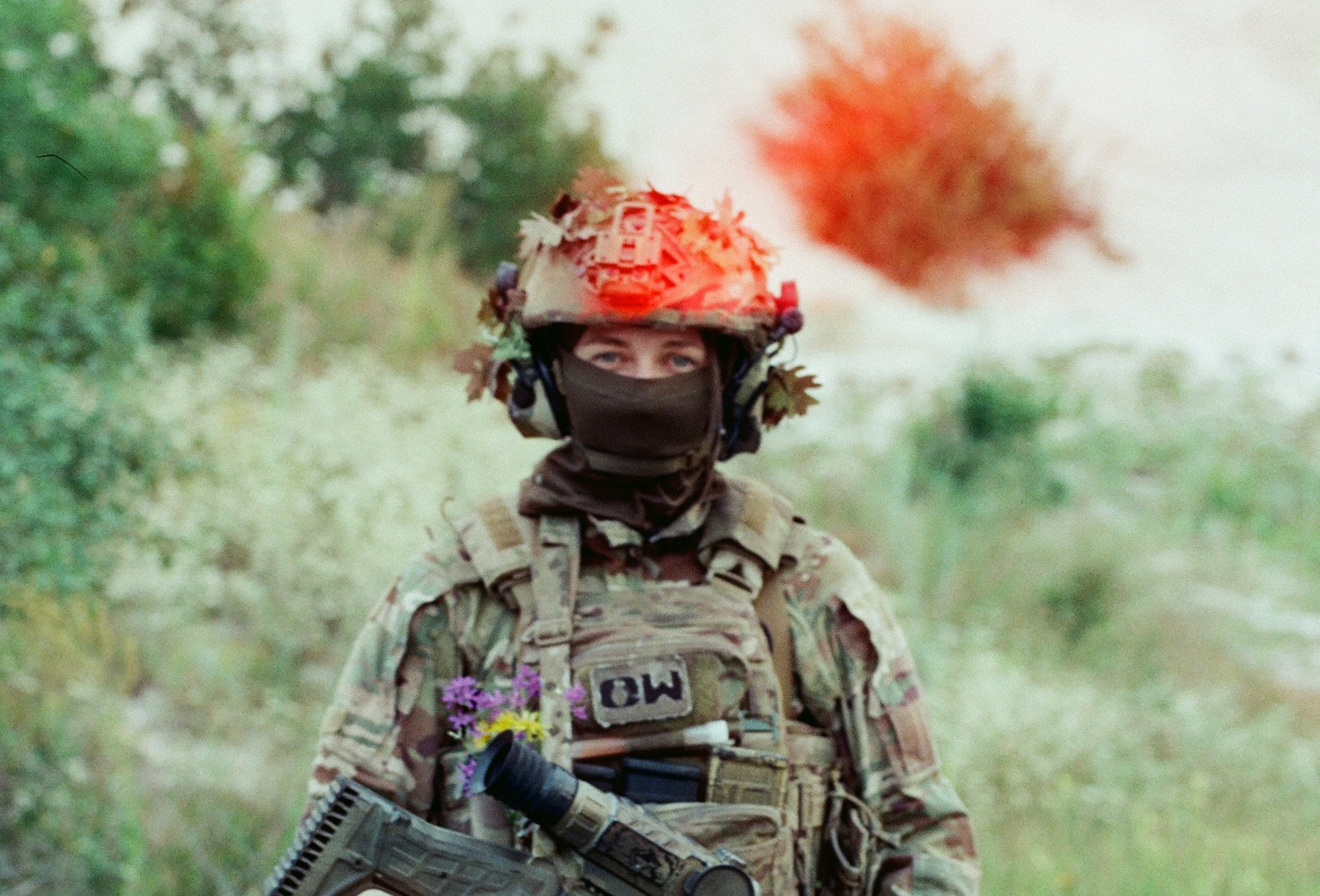
“Russia has come to our land and is killing us. What more motivation do you need?” Zoits, a drone operator, speaks with the calm precision of someone who has destroyed a Russian tank, standing tall despite her petite frame. Once civilians with careers in sports, marketing, and sales, more Ukrainian women are now picking up military uniforms as Russia’s full-scale invasion rages on into its fourth year.
 Prefer U24 Media on Google
- Authors


-0666d38c3abb51dc66be9ab82b971e20.jpg "Photo of Josh Olley")
-f88628fa403b11af0b72ec7b062ce954.jpeg "Photo of Amira Barkhush")
We head to the East of Ukraine, where we will be meeting five women who decided to voluntarily pick up arms and join the fight against Russia’s ongoing aggression.
Passing by deceivingly quiet fields of wheat and sunflowers on the way, it’s difficult for the brain to grasp that existential fights are happening just a few kilometers away from us.
In the following article, we will refer to all the women by their callsigns.
Sapfira, 28, first deputy battalion commander
Sapfira’s military journey spans ten years, including her studies at the National Military Academy. Following in the footsteps of her brothers, she initially trained as a signaler—a specialist responsible for military communications—but now serves in the operations department.
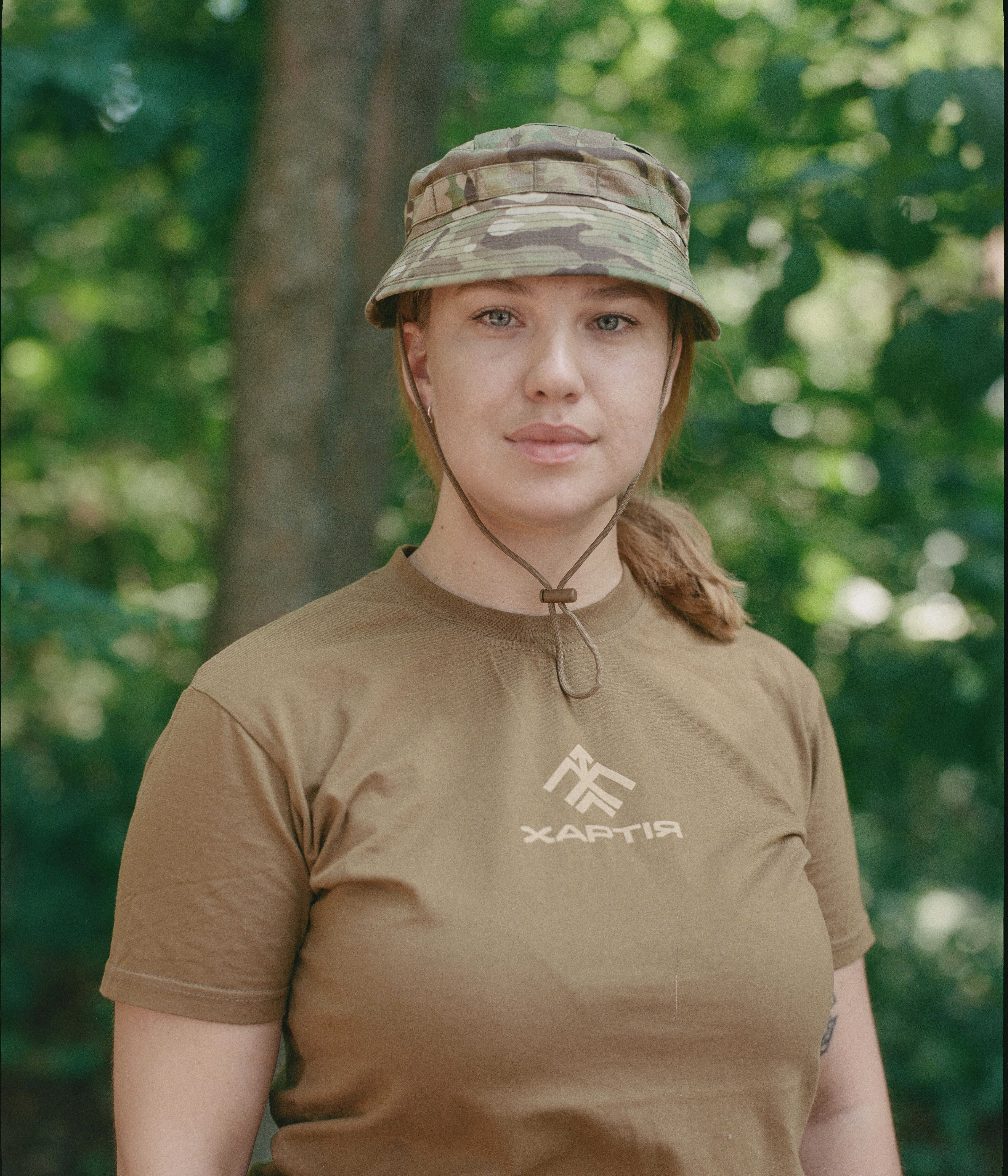
“When it comes to being a signaler, it’s a bit harder for a woman,” she says. “There are brave women who can handle these tasks technically, but I chose a different path.”
For Sapfira, she herself is both a source of personal strength and support in the army. At the beginning of her service, there were moments when she would call her father, saying, “It’s too hard; I can’t continue,” but he always reassured her, saying, “Daughter, everything will be fine.”
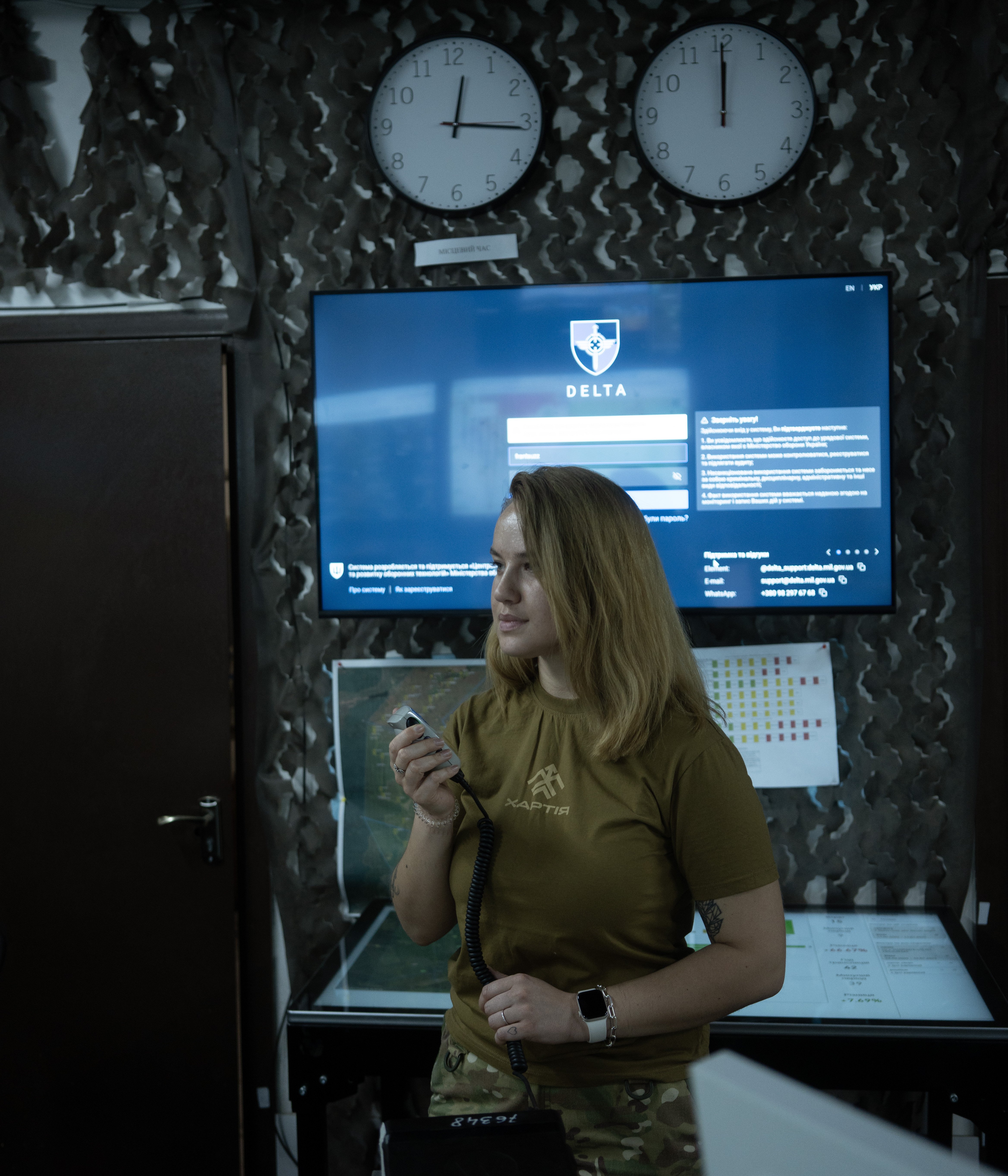
Her life in the army is demanding, with little time and a lot of responsibility. Women are generally more responsible and reliable, says Sapfira. She mentions that her brigade, Khartiia, is now actively looking for women to serve as drone operators, EW specialists, or ISTAR dispatchers, Spanish and English translators, and signalers.
“The hardest part for me is when we plan a mission, and the people head out,” she says. “You worry about them more than about yourself. The worry is unreal. But when the mission is successfully completed, you feel such pride in your fellow soldiers, the command, and in yourself.”
As for reactions to female leadership, Sapfira explains, “At first, everyone was curious about how a woman would lead in such a position. Over time, they got used to it and listened, but sometimes I still had to raise my voice.”
Kita, 31, combat medic
We first meet Kita at a shooting range near Izium, Kharkiv region, where she and her brothers-in-arms were training. A combat medic from one of the platoons of the 3rd Assault Brigade, she joined the army in 2024 with no military background.
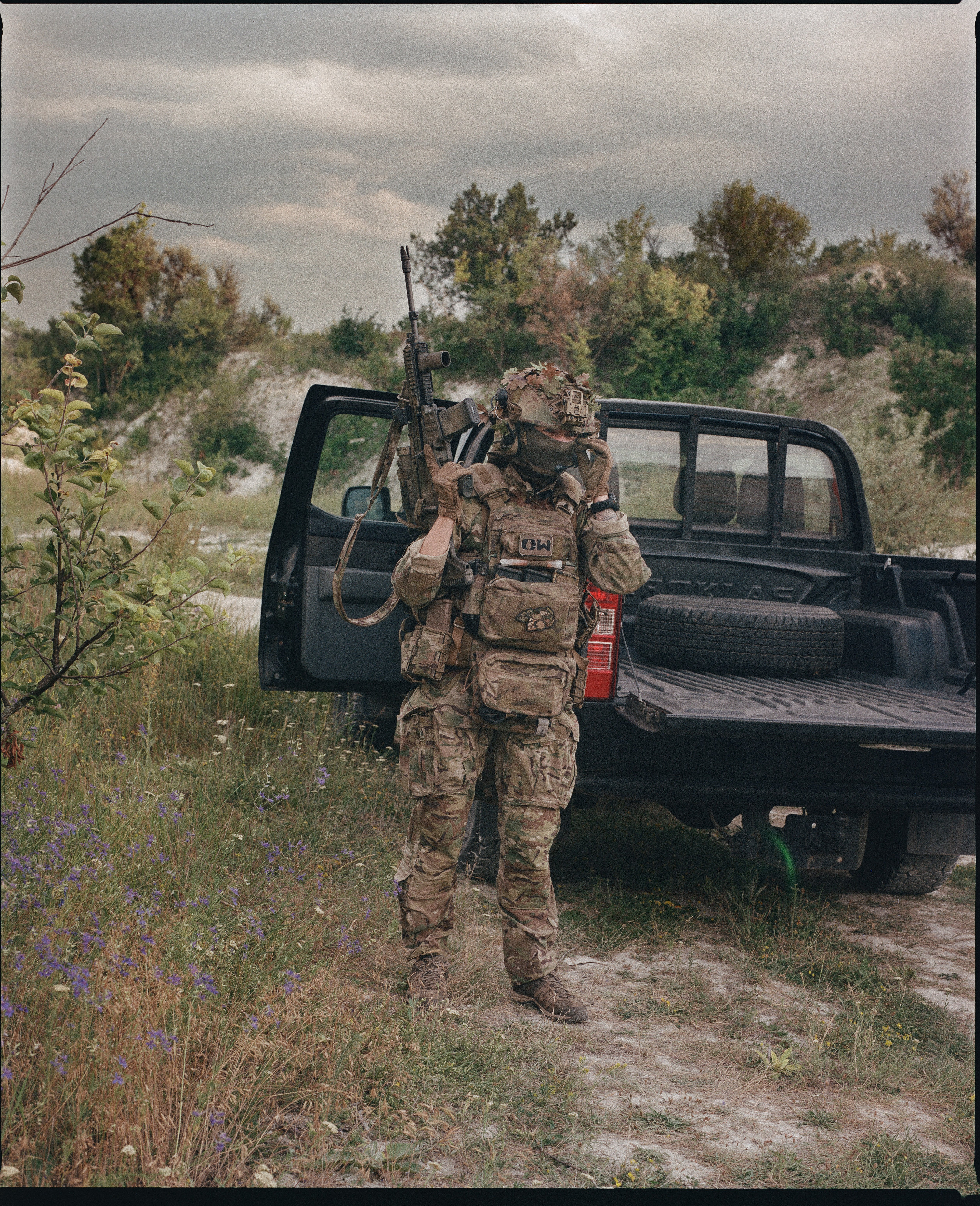
“The main motivation is that my hometown in Kharkiv region was under occupation for almost six months,” Kita said, referring to Balakliia, which was occupied by Russia for half a year until its liberation by Ukrainian forces in September 2022.
After the first trial week, Kita gained a clear understanding of the army and the brigade’s values. She seemed to have felt at home in the brigade she chose.
“When I first joined, it didn’t matter whether you were a woman or a man—you are a soldier. The duties, tasks, and rules were the same for everyone. No one cares about your gender,” she said.
Kita explains that if you accept that, it’s easier. But if you’re hoping for some “bonuses” as a woman, then it would be a big mistake. At the same time, she admits that prejudice naturally exists.
“You come in, a little girl,” she says. “Of course, at first, there will be some prejudice—that’s normal. […] But if you perform your duties well, trust is built.”
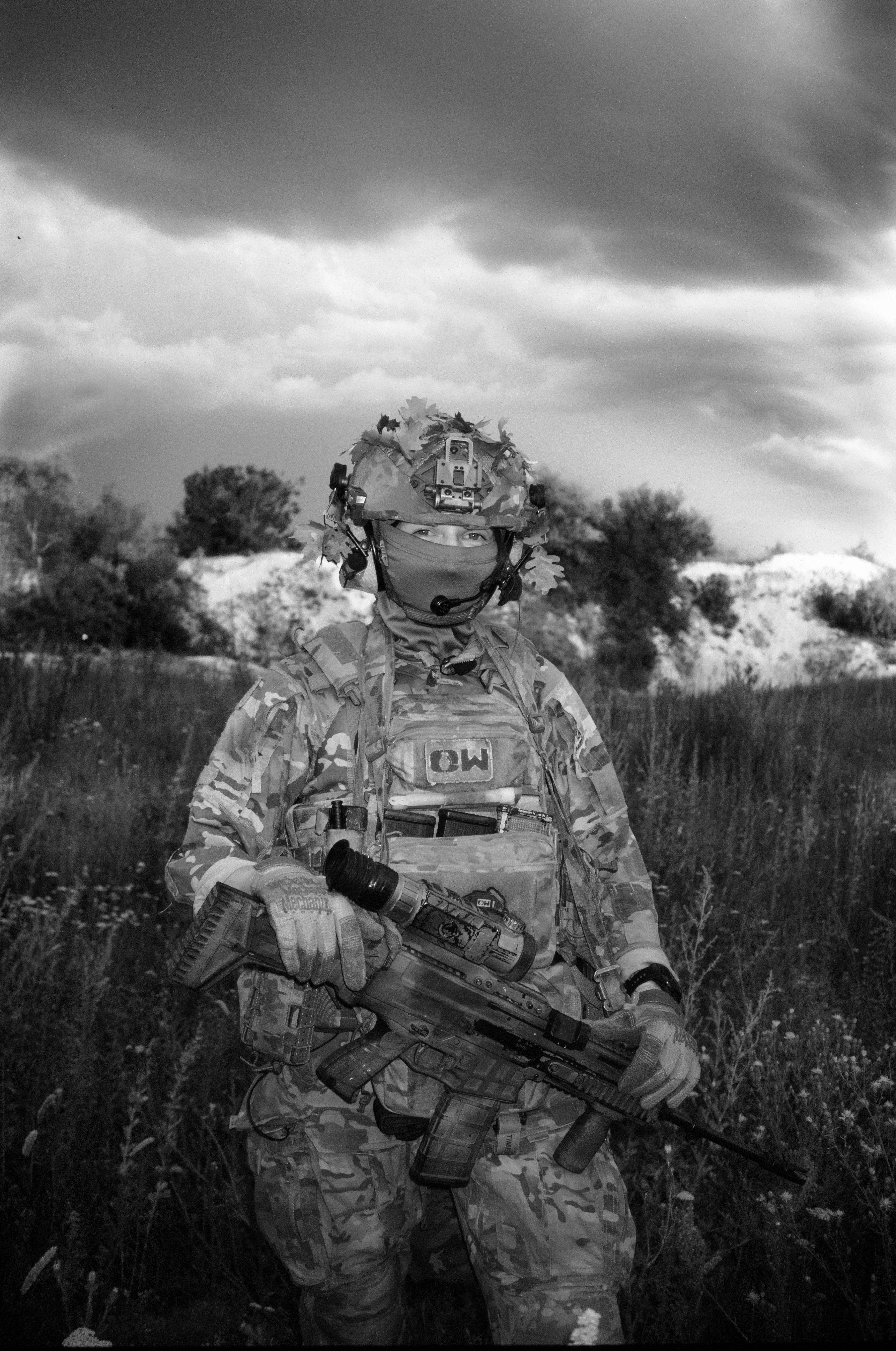
“I’m a combat medic of the platoon, which means I’m just as much a part of the group as any other fighter in our unit,” she says. “I have the same level of knowledge as they do, but with additional medical training.”
Kita adds that there was barely any time to process emotions—after long days of training, all she could think about was getting to bed.
“My family was more concerned than supportive,” she said. “On one hand, I can understand them. But honestly, I didn’t really need support because it was my decision.”
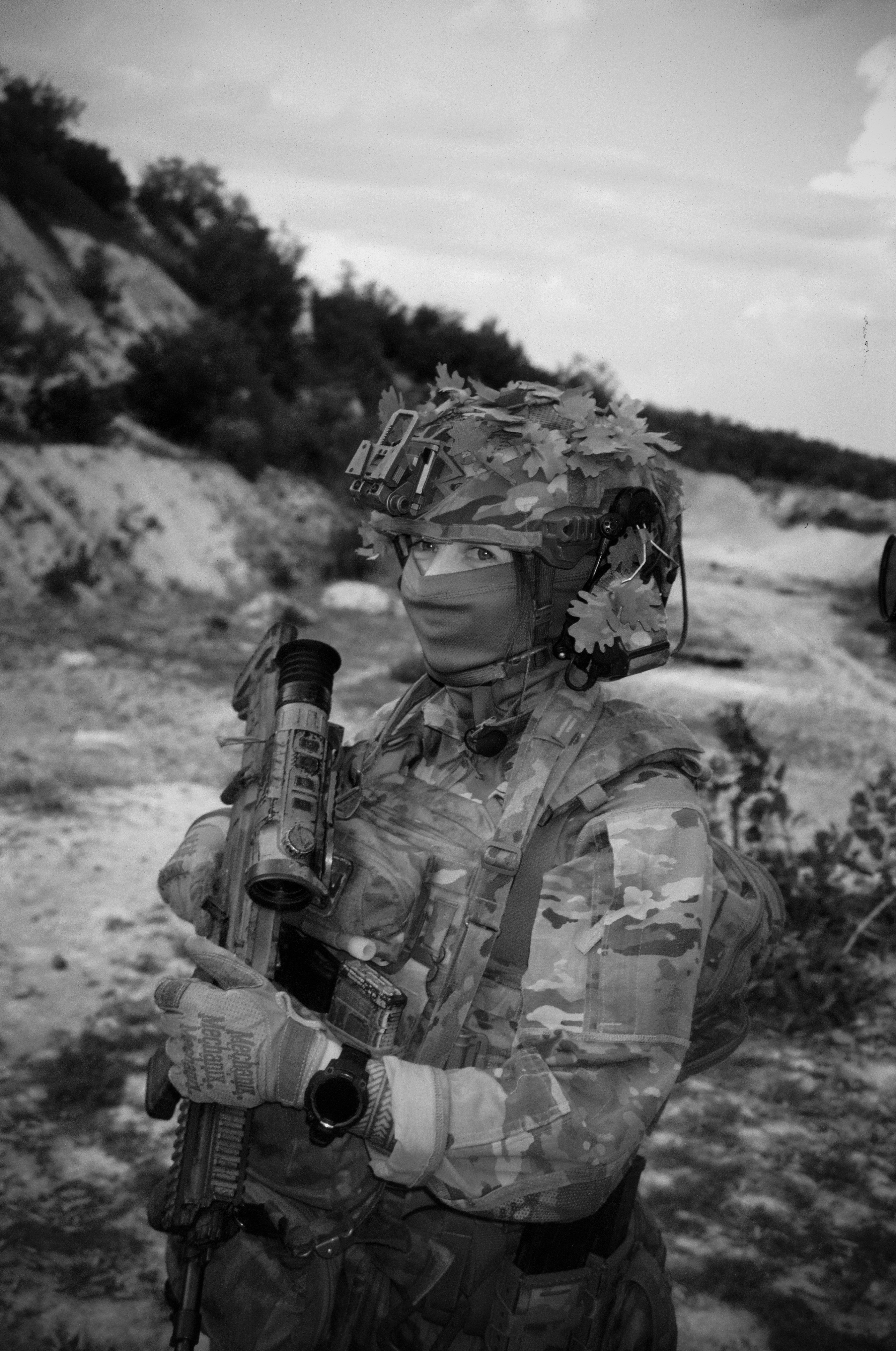
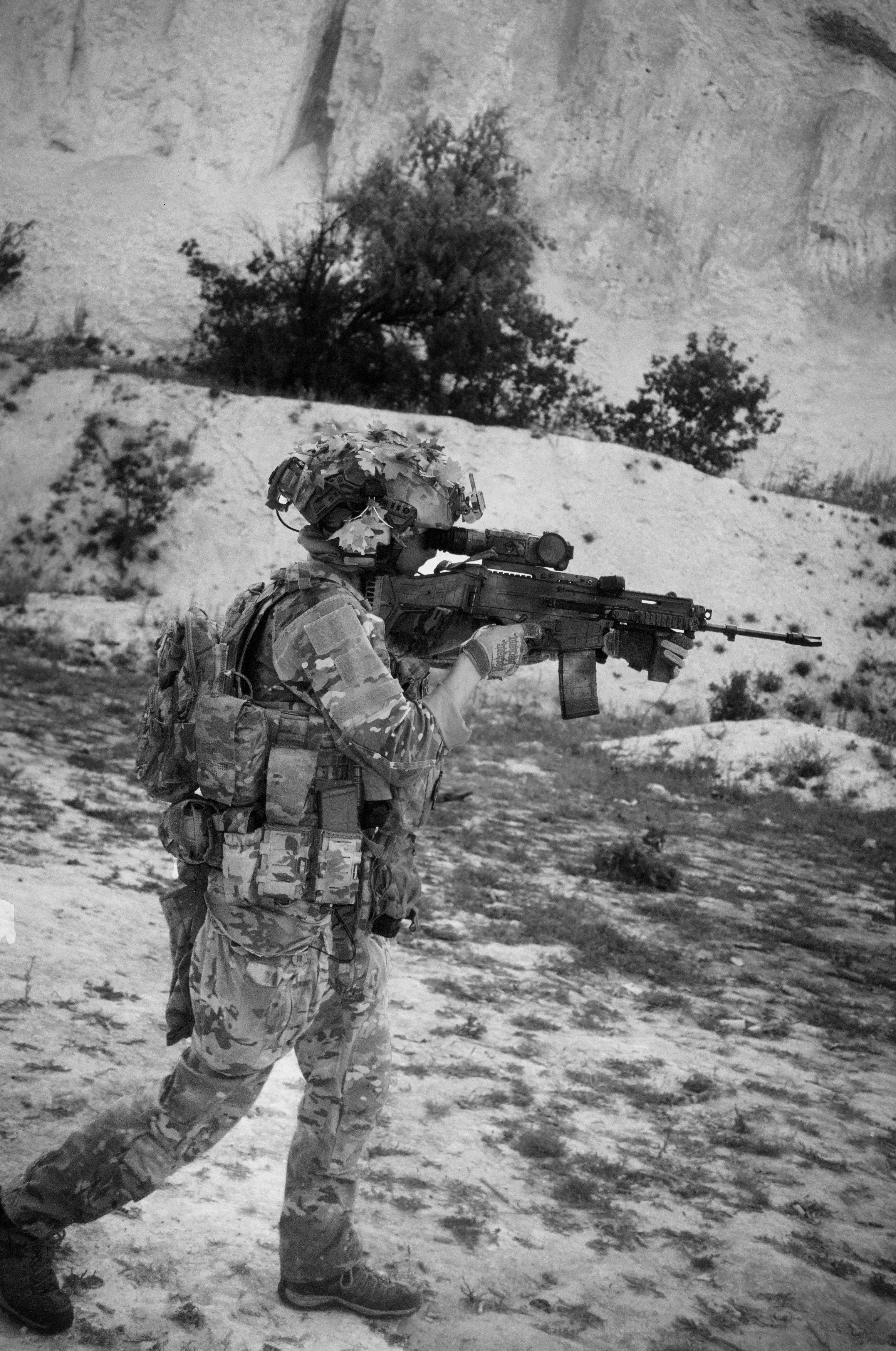
Her brothers-in-arms have become like a new family to her. “The biggest plus of war, if you can even say that, is that many people find brothers, sisters, support, and family. Here, you meet people with the same goals and views. Even if you’re completely different, this unites you.”
She laughingly expresses their unit’s need for some military equipment, but follows it with gratitude: “What we lack to fully serve is a couple of Bradleys. I’m also grateful to our foreign friends who serve and protect our country alongside us.”
Our journey through the Kharkiv region continues as we join the 13th National Guard Khartiia Brigade for a day, meeting three more women: Kep, Sapfira, and Sumatra.
Kep, 27, operations planner
We speak with Kep in the room she shares with one of her comrades at the permanent deployment point. It’s cozy and homely, decorated with fairy lights and filled with copies of Tolkien’s The Lord of the Rings and The Hobbit in English and Ukrainian.
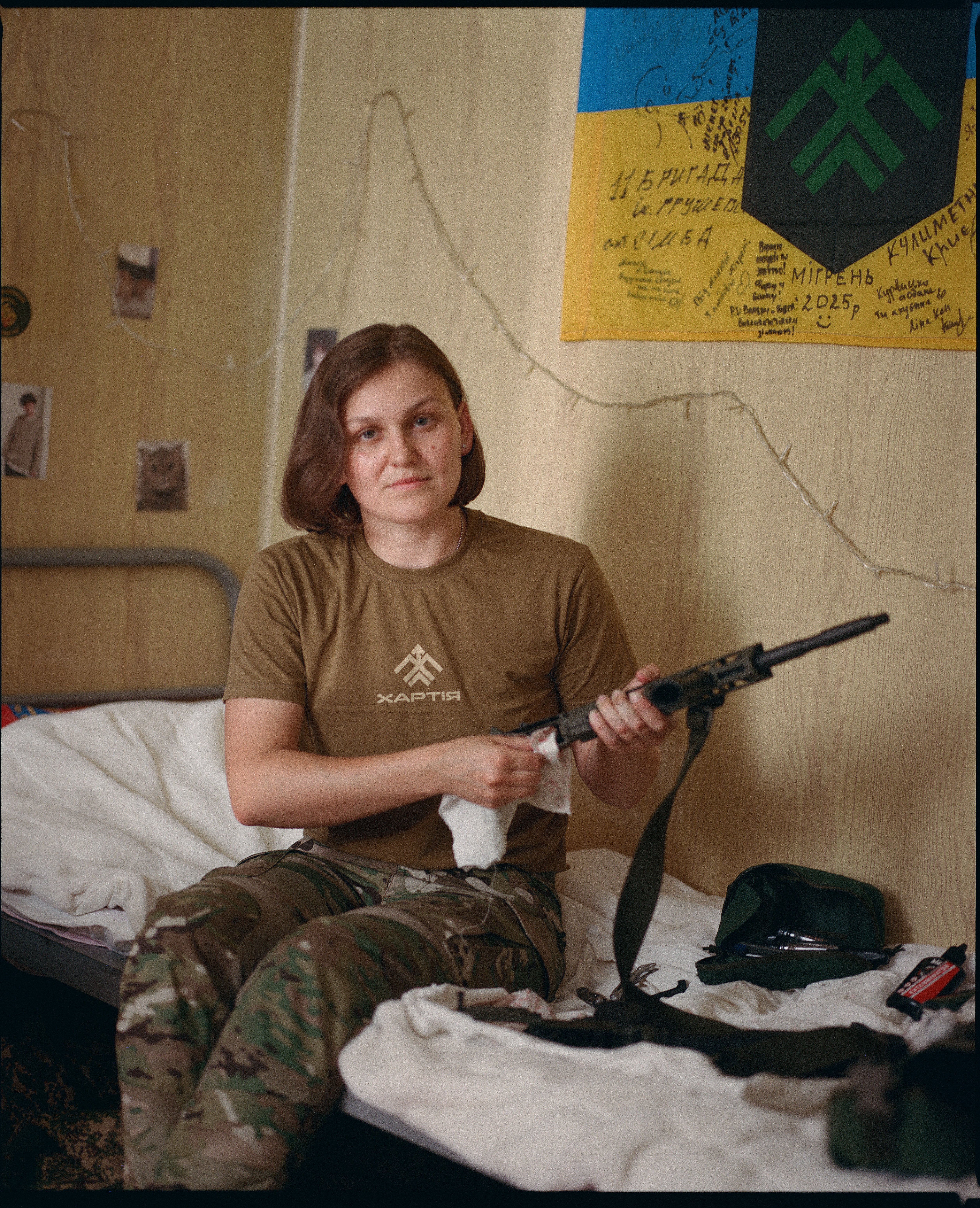
Before joining the 13th Khartiia Brigade, Kep worked as an SMM specialist and volunteered by raising funds for the Ukrainian army. However, when she saw that North Korea—yet another country directly engaging its military in Russia’s aggression against Ukraine—she realized she could be more useful by enlisting. Struggling to find her place in civilian life, she could no longer close her eyes or make plans.
Now, having served for a little over half a year, her main goal remains clear: to be useful.
“If I know that I can be useful in planning or administrative work, then why not?” Kep asks. “There’s no stigma about being a woman and working in administration. Logistics is tough work… Try to understand that if you can.”
Kep recalls considering military education back from school.
“There are many military members in my family,” she says. “My dad is a participant in the Anti-Terrorist Operation , and my brother served in the Ukrainian National Guard (NGU). I even have a childhood photo in an NGU uniform.”
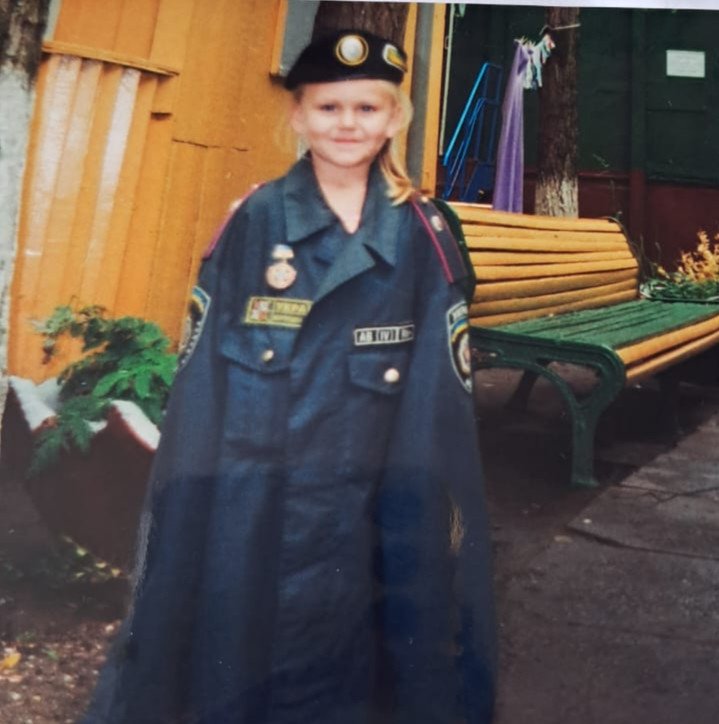
While her ex-husband reacted negatively and her mother was worried, her father reassured her that everything would be okay.
“My dad said, ‘I won’t be able to talk you out of it’—and he couldn’t,” Kep explains. “My brother was worried I might end up in a bad unit.”
The mother has gotten used to it, she says, but every time the internet connection is bad, she gets a new gray hair.
In Kep’s view, Bila Tserkva, her hometown, is even more dangerous because, contrary to civilians, soldiers in the army are always prepared.
“In civil life, people have almost no survival skills,” says Kep. “Even a simple thing like a whistle can save a life. Does everyone have a whistle? No. Does everyone have a tourniquet? No. But here, you always carry a tourniquet—it becomes a part of you.”
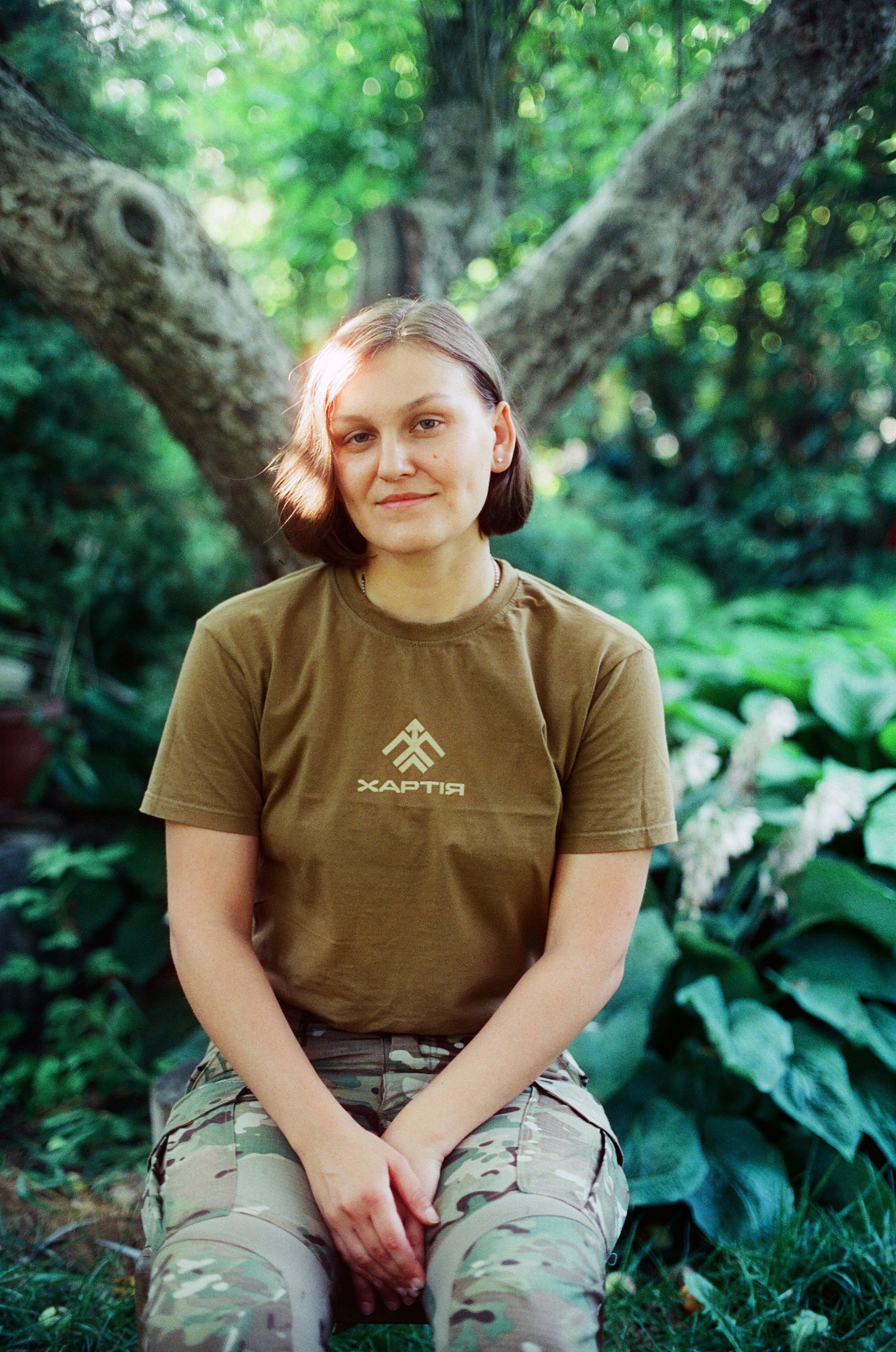
Carrying essential items like a whistle and a tourniquet is strongly advised for Ukrainians amid Russia’s war. A whistle can help attract attention in emergencies, such as when trapped under rubble, while a tourniquet is crucial for stopping severe bleeding and saving lives.
Kep always thought that logistical work would be easier, and in many ways, it is. However, when it comes to training, she realized that it’s easier to teach physical skills than to understand how to write a combat log: “That requires nerves of steel.”
What motivates Kep the most in her everyday life in the military is making life easier for those going on combat missions. Her responsibilities range from helping soldiers resolve paperwork issues so they don’t have to worry about them to small gestures that brighten their day. She recalls a time when it was rainy and one of the soldiers needed rubber boots. She couldn’t send the boots empty, so she packed them with sweets and mandarins.
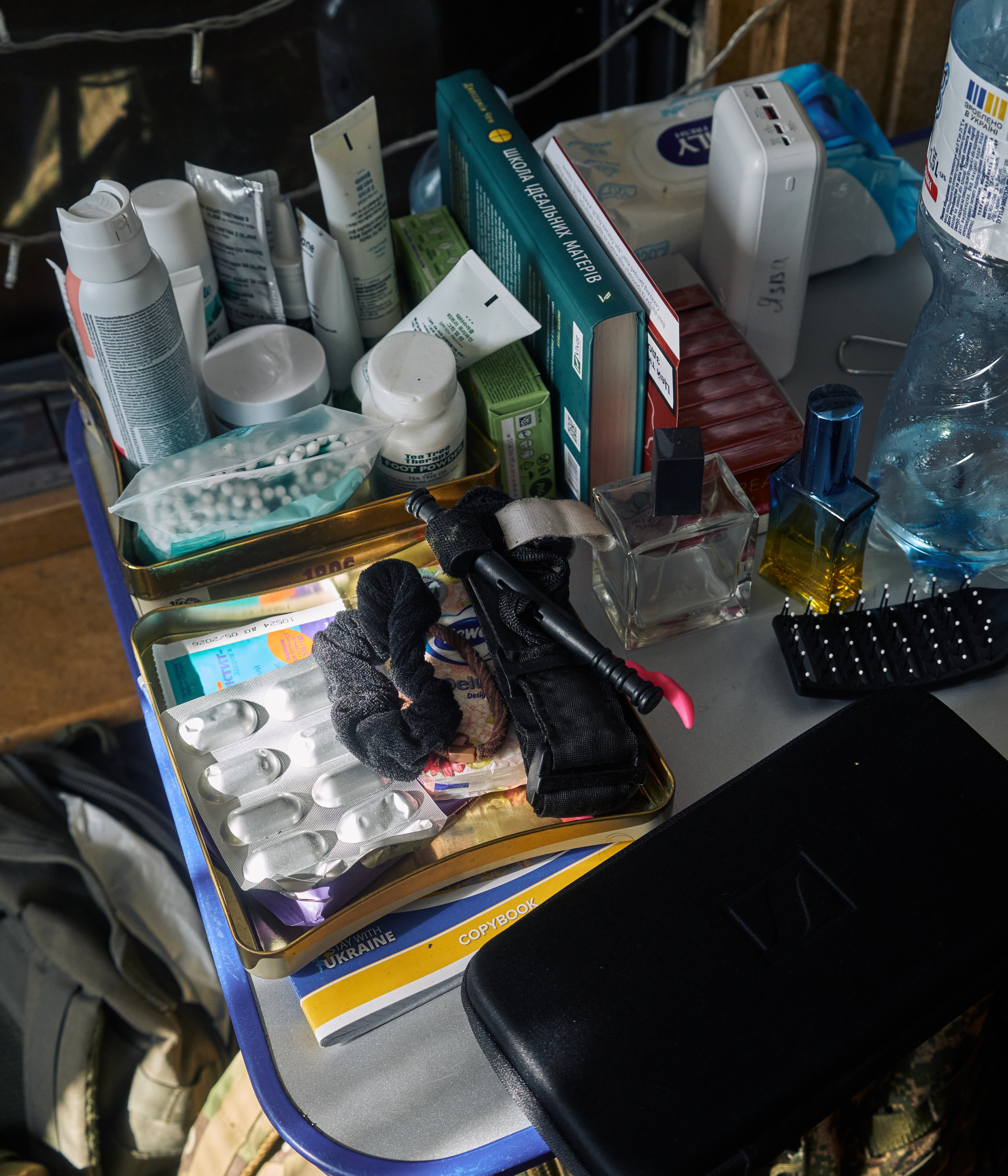
Just like Sapfira, the most difficult part of work for Kep is when your comrades leave for a mission, cause you never know how everything will go.
“Thank God, our operations are mostly successful,” says Kep. “This is because we approach planning thoughtfully and train our people for everything, aiming to minimize the likelihood of ending up in a situation where someone could get injured or worse.”
“I’ve been here for eight months, and not once has anyone belittled me or said that I couldn’t do something.”
Kep
Kep emphasizes that Ukraine is in need of aid, and if it costs the West money, it costs Ukraine human lives.
“No one can truly understand what it’s like until they lose someone,” she says. “When you serve alongside people, and then they’re gone… no amount of money can compare to that.”
Somatra, 26, translator and coordinator
Alina Shukh, the Ukrainian 2017 World Junior Champion in javelin throw and European Champion in heptathlon for youth and juniors, with the callsign Somatra, has joined the ranks of the Khartiia Brigade. The 26-year-old athlete, who ended her sports career in 2021 due to health reasons, now serves in the military.
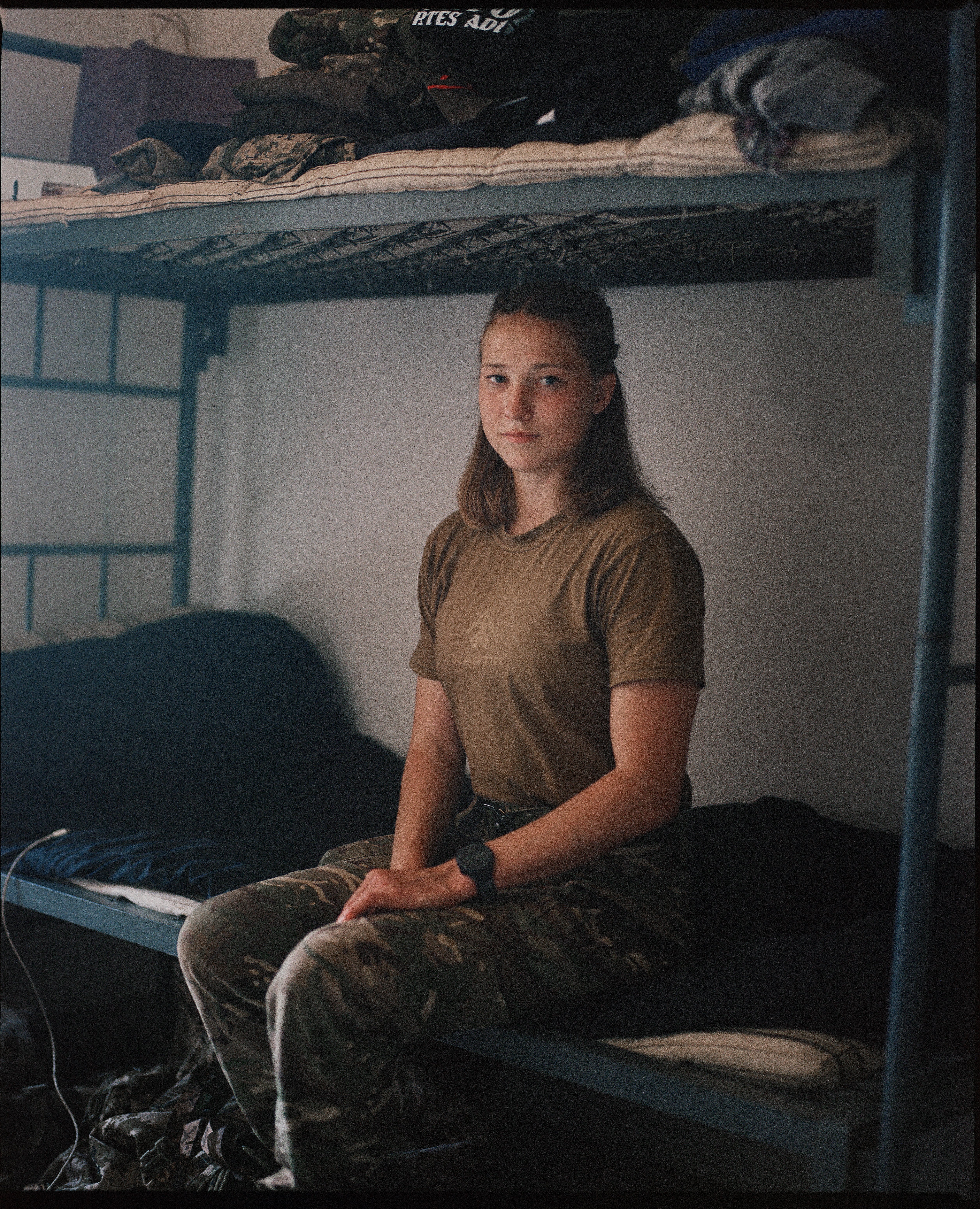
As a former track and field professional athlete, Somatra points out that it is a very individualistic sport. Her life has been centered around sports since childhood, from playing tennis with her dad to attending training camps.
“Here [in the military], it’s truly about relationships, friendship, and family,” Somatra says. “This is something I’ve found here.”
After deciding to enlist, Somatra looked for a position that didn’t require a military background, taking into consideration her shoulder injury, which made it difficult to raise her arm.
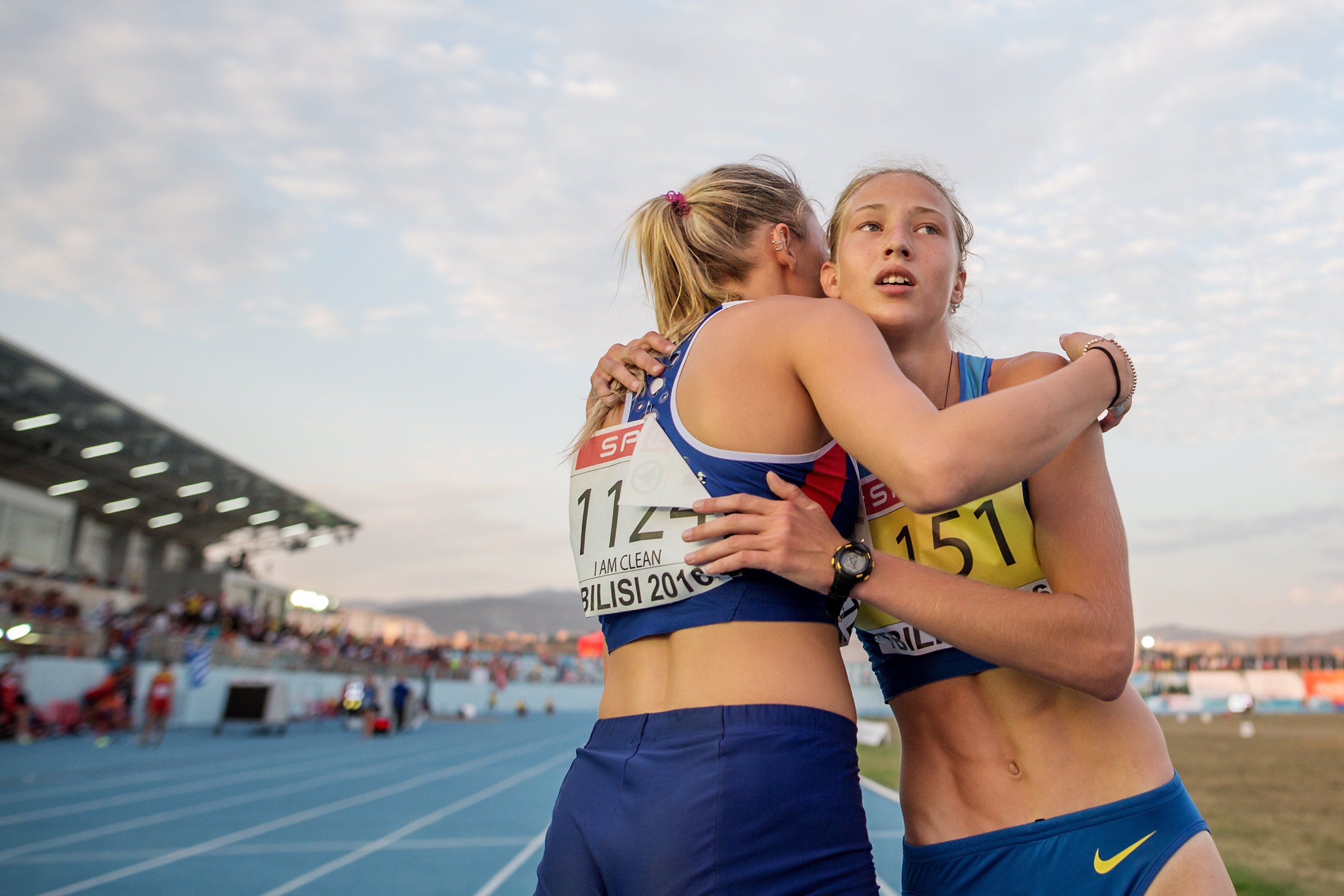
Thanks to her knowledge of English and Spanish, gained from competing and attending training camps in Spain and Portugal, Somatra found her place in the Khartiia Brigade. There, she works with foreign volunteers, assisting with recruitment, training, and translating.
“I truly admire everyone who has come here [to Ukraine] to fight,” Somatra says. “We learn a lot from them, but they also learn from us.”
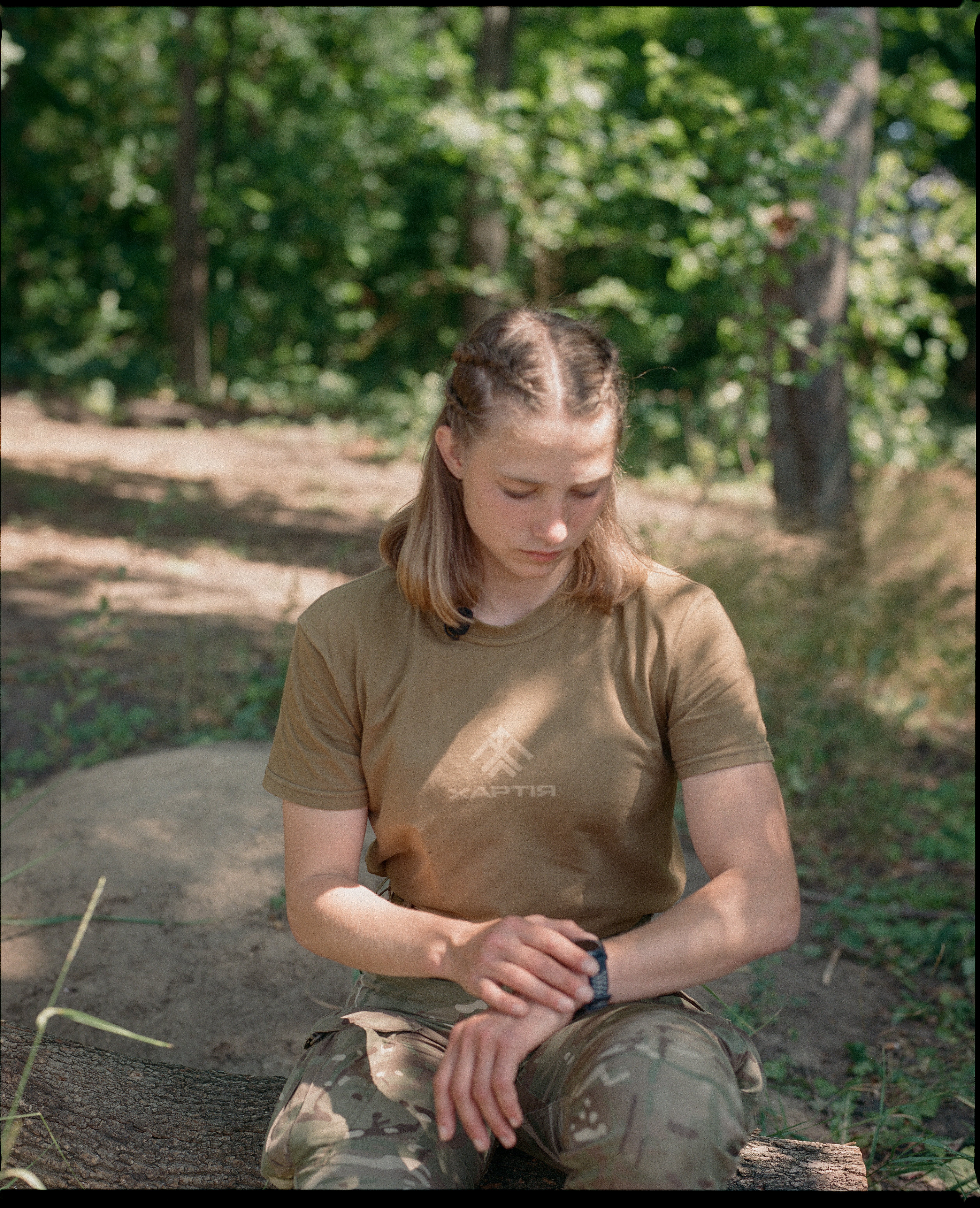
She emphasizes the importance of communicators and translators, who understand different people’s mentalities, motivations, way of thinking, and previous experiences.
“Can you imagine a situation where English, Spanish, Portuguese, and Ukrainian speakers are all sitting together? Imagine what’s happening on the radio!”
Commenting on the potential challenges of being a woman in the army, she notes that she has faced no difficulties in this regard.
“Maybe I’m super lucky, but neither in my sports career, nor in my military career, did I ever feel any inequality where I was treated badly.”
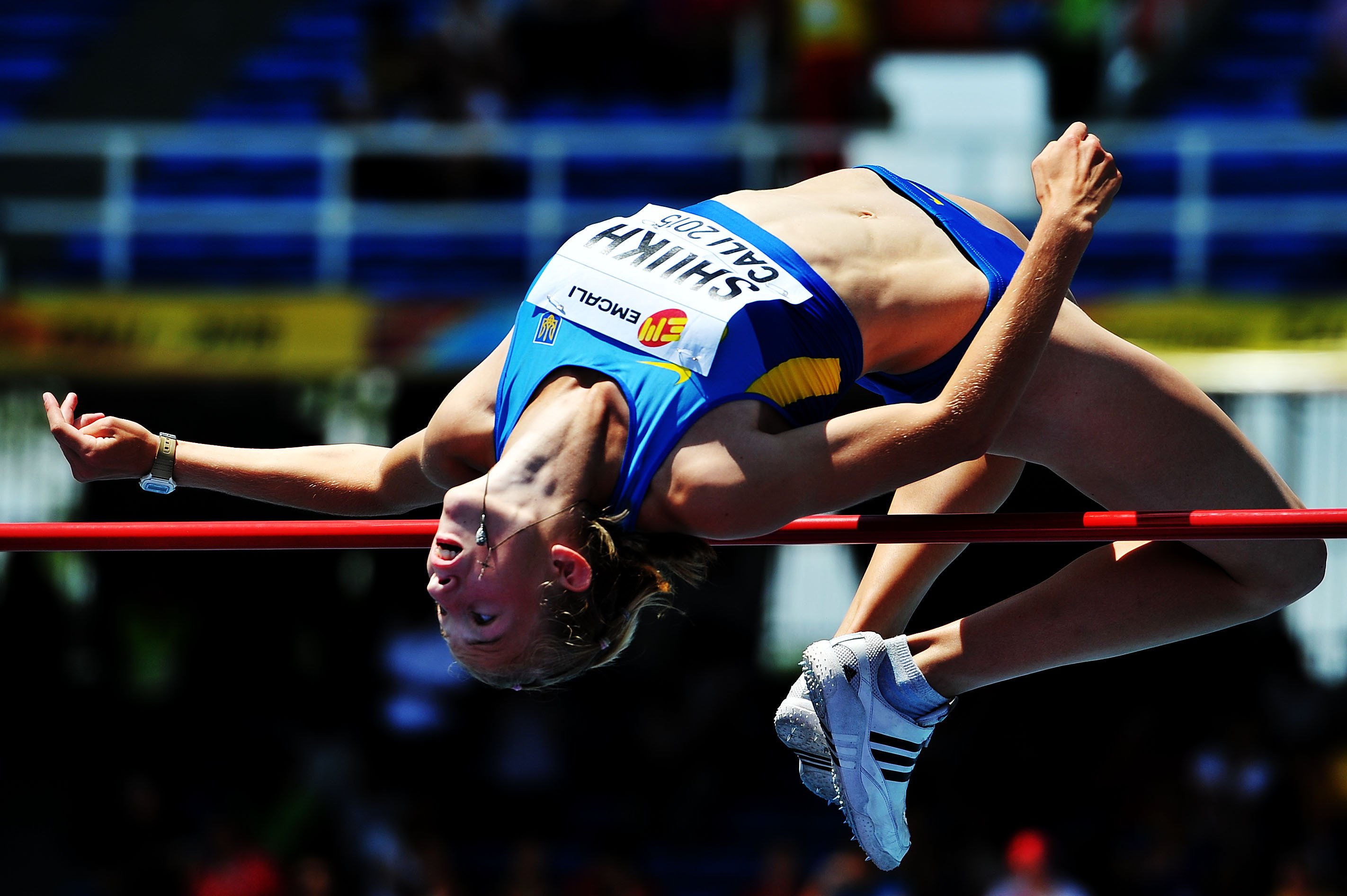
Somatra states that at this point in history, everyone must decide what role they want to play.
“There’s nothing good about war,” she says. “War is terrible. But we’re living in historic times […] It’s time for the West to decide whether they will help during this moment in history or remain outside. Think about this time in history—do you want to be part of it, or stay outside?”
Zoits, 33, drone operator
With a background in sales, Zoits was far from the military, but by the end of summer 2023, she decided to enlist. Originally from Kharkiv, she was in Türkiye when Russia launched its full-scale invasion. Upon hearing the news, Zoits returned to Ukraine to volunteer and raise funds for soldiers.
Her decision to join the 38th Separate Marine Brigade was inspired by three soldiers she had supported. Witnessing the atrocities committed by Russian forces against Ukrainian civilians, Zoits knew when she joined that she wanted to “fly and kill.”
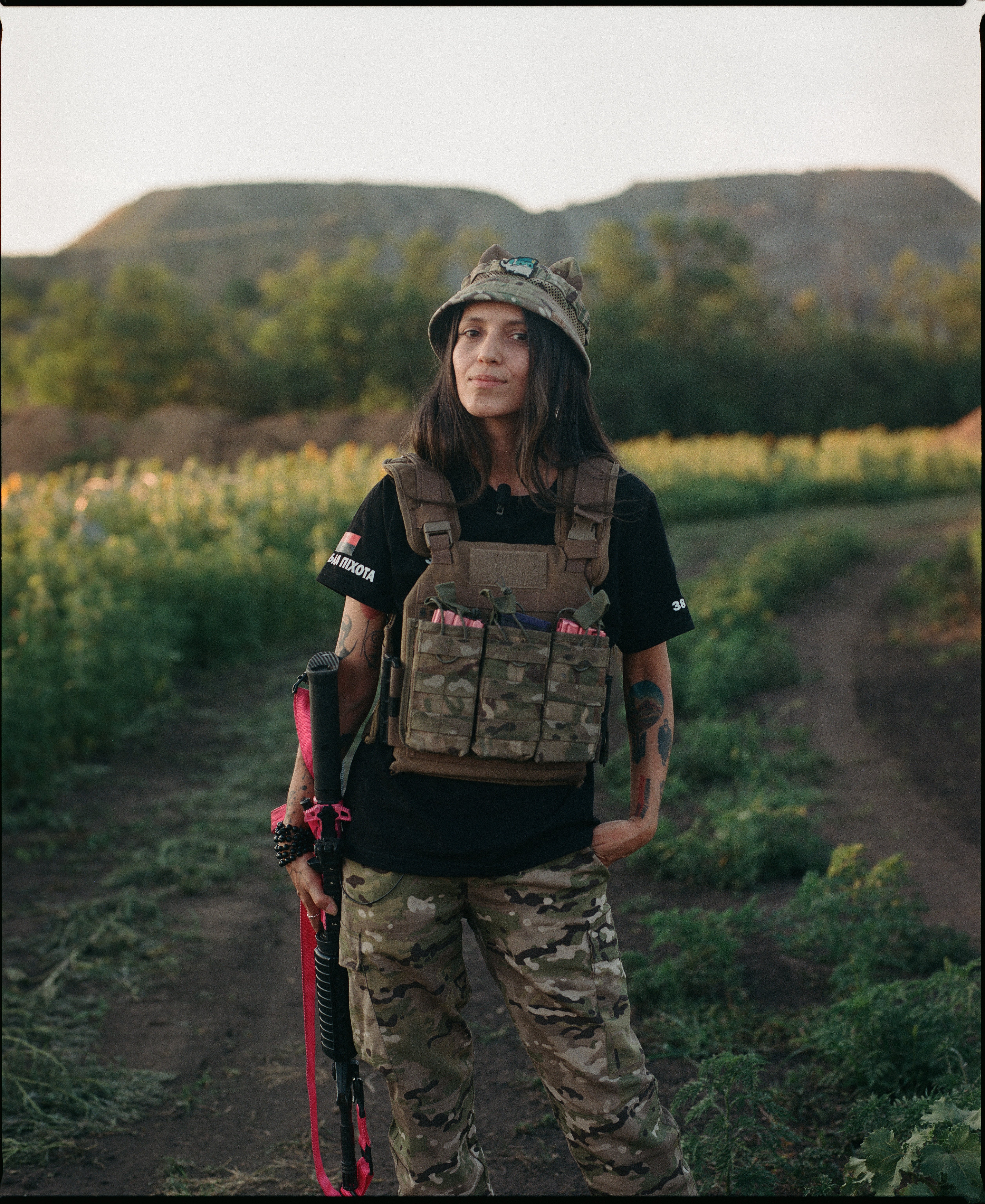
For her, it was important to do something where she could see the results right away.
“Hypothetically, I probably wouldn’t have been accepted into infantry—I weigh 40 kg, I’m a woman, and that matters when you’re chosen for a role. I understood artillery was also a no-go. I wasn’t interested in becoming a tanker either. So a UAV operator was the choice.”
Zoits started as a reconnaissance drone operator and worked her way towards her goal of managing strike drones in the fall of 2024.
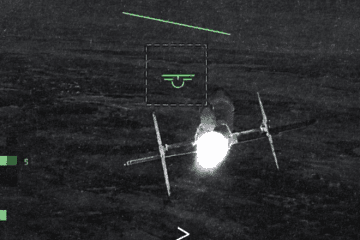
While her targets vary from armored vehicles to buildings, her first successfully targeted goal was a Russian tank.
“My first target was a tank,” she says. “I hate tanks. They killed my friends, and they caused concussions and injuries… We destroyed it with our first strike. It completely burned down. Only the frame remained. I don’t think I’ve ever had a more satisfying feeling in my life.”
A drone operator from the 38th Separate Marine Brigade shared footage showing a Ukrainian drone striking and destroying a Russian tank in the Pokrovsk direction, Donetsk region, in the fall of 2024. pic.twitter.com/0pebugCMbX
— Ivan Khomenko (@KhomenkoIv60065) July 30, 2025
For Zoits, finding motivation for her service is not difficult: “What more motivation do you need, other than the fact that the enemy [Russia] has come to our land and is killing us with the goal of genocide, with torment and suffering, on a national scale?”
Among her family, it was her brother who supported her decision to join the army, while her friends weren’t even surprised.
“My brother supported me, but he said I was crazy, though that runs in our family,” Zoits laughs. “Friends were not surprised. But they don’t like it when I joke about death. 'I’ll come if I don’t get killed.' 'Ah, here you go again! '”
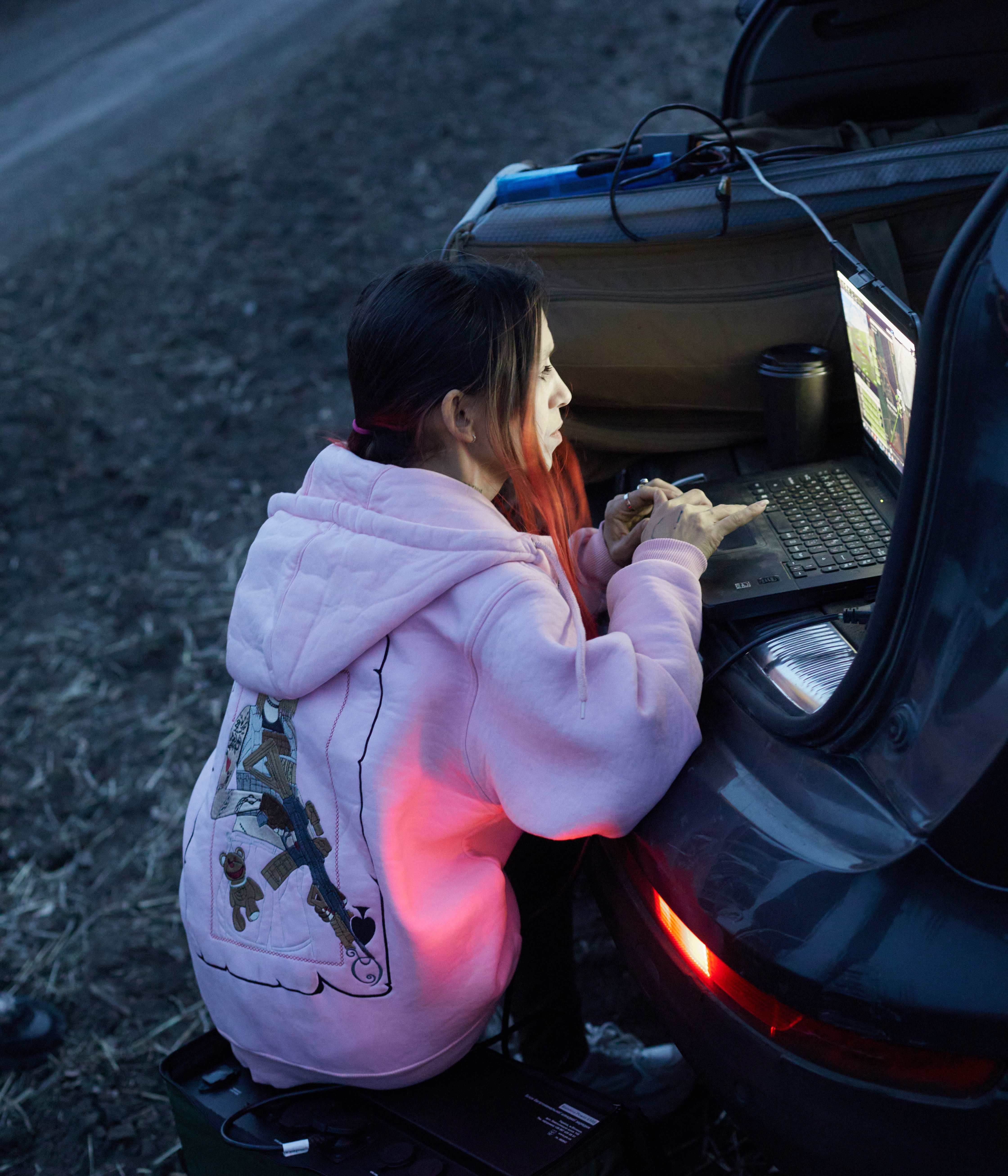
Most of the time, Zoits says she doesn’t feel scared, but she admits that one incident did cause her to fall into internal panic. One of her friends was sent to Krynky, Kherson region, and for more than seven days, there was no contact.
“I woke up in the morning, and the first thing I saw in a message from another mutual friend was that a similar callsign had been pronounced dead in intercepted radio chatter,” she says. “Until I received confirmation that he had really died, I was in a state of internal panic. After that, it was just painful, but that moment when you don’t know—it’s truly terrifying.”
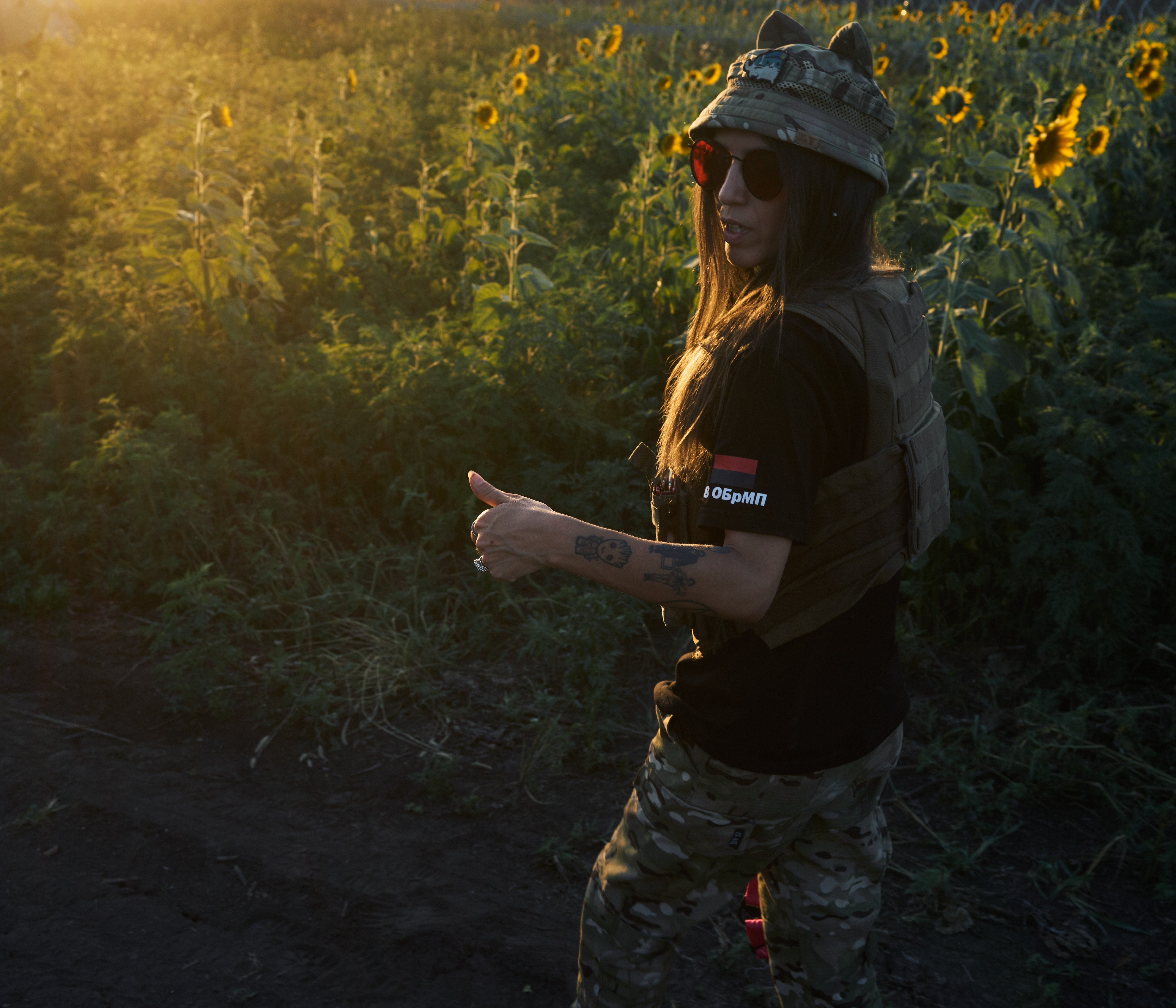
Zoits concludes that Russia’s ambitions wouldn’t stop with Ukraine.
“If you stop supporting and joining the military, we’re all doomed,” she says to the Ukrainians. “Not just the military, but civilians too.”
To people in the West, she adds: “The only thing keeping Europe and America safe from a Russian attack is us [Ukrainians].”
The five women in this story are not exceptions—they represent the new standard in Ukraine’s Armed Forces. United by a single mission to protect their country’s future, they remind us that history is shaped not only by firepower but also by resilience, solidarity, and the quiet conviction to stand and fight.

Discuss this article:

-72b63a4e0c8c475ad81fe3eed3f63729.jpeg "Photo of Cyril Barabaltchouk")