- Category
- Life in Ukraine
“We’re Their Voice”: How Five Women Sparked a Global Movement to Free Ukraine’s Soldiers From Russian Captivity
 Prefer U24 Media on Google
- Authors

-8fda54010650befcec1e2c4d694c566b.jpg "Maria Kuchapska")
A rally organized by five women in Kyiv grew into Ukraine’s most recognizable civic activism campaign, gaining global traction and offering hope to the families of the missing.
Since the beginning of Russia’s full-scale invasion, Ukraine has negotiated the return of 5,700 people—both soldiers and civilians—from Russian detention. Still, between 8,000-10,000 identified Ukrainian prisoners of war (POWs) are held in Russian captivity—a 2025 UN report found that 95% of released Ukrainian POWs underwent “systematic and widespread torture, including sexual violence” at the hands of Russian guards.
The weekly Free Azov rallies, primarily attended by the partners and families of prisoners of war and those listed as “missing in action,” play a valuable role in prisoner exchanges for many of the participants.
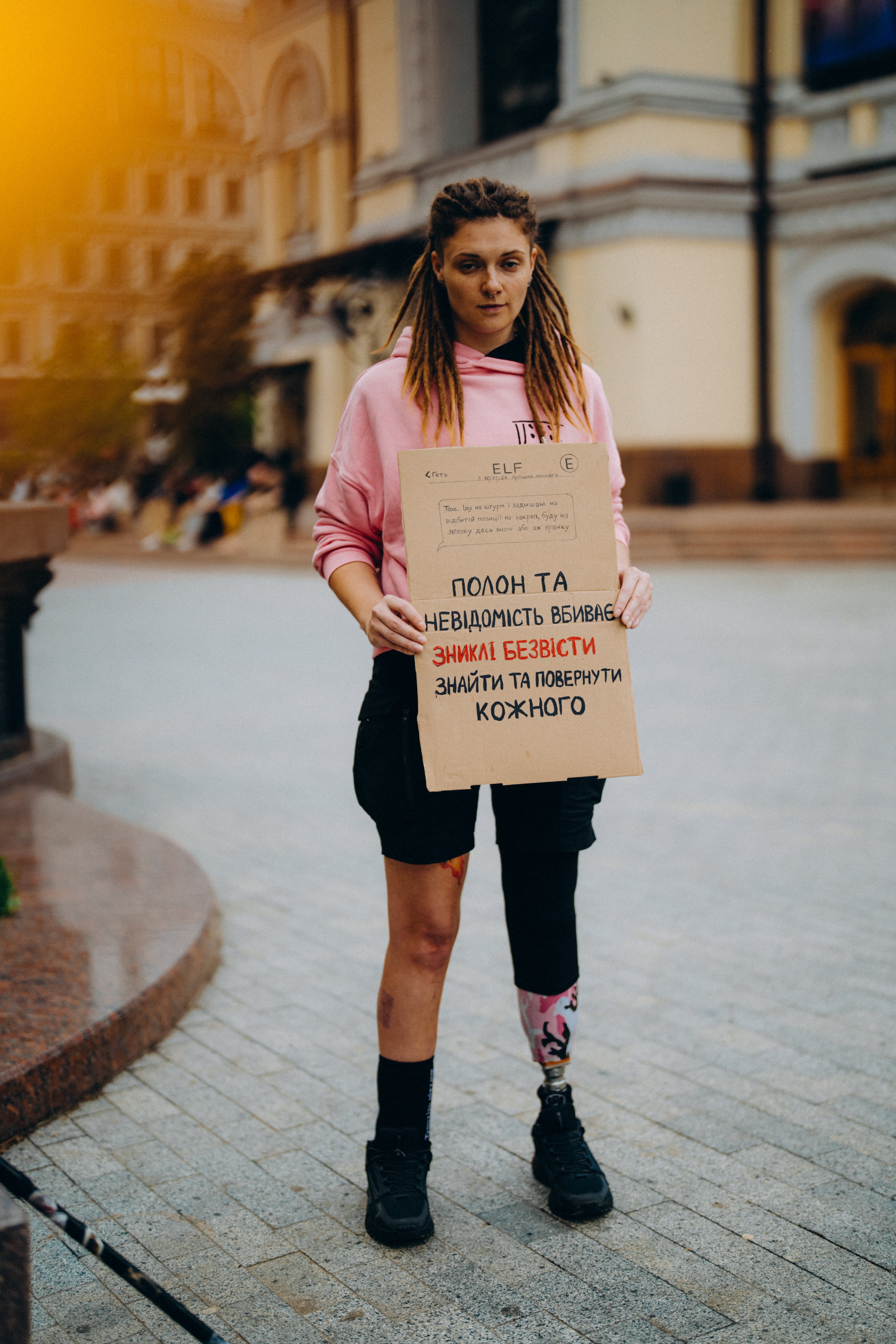
Ada Saksman is one of those people. A veteran herself, she stands out at the rally with her long dreads, pink hoodie, and pink camo prosthetic.
Fighting for the missing beloved
“I’m heading into an assault [...] I’ll be back online tonight or in the morning,” reads Ada’s sign. It’s the last message from her boyfriend, a marine from the 37th Infantry Brigade, sent on November 10, 2024. He’s now officially missing in action, and Ada is still waiting—alongside thousands of others—for answers and the return of every missing POW.
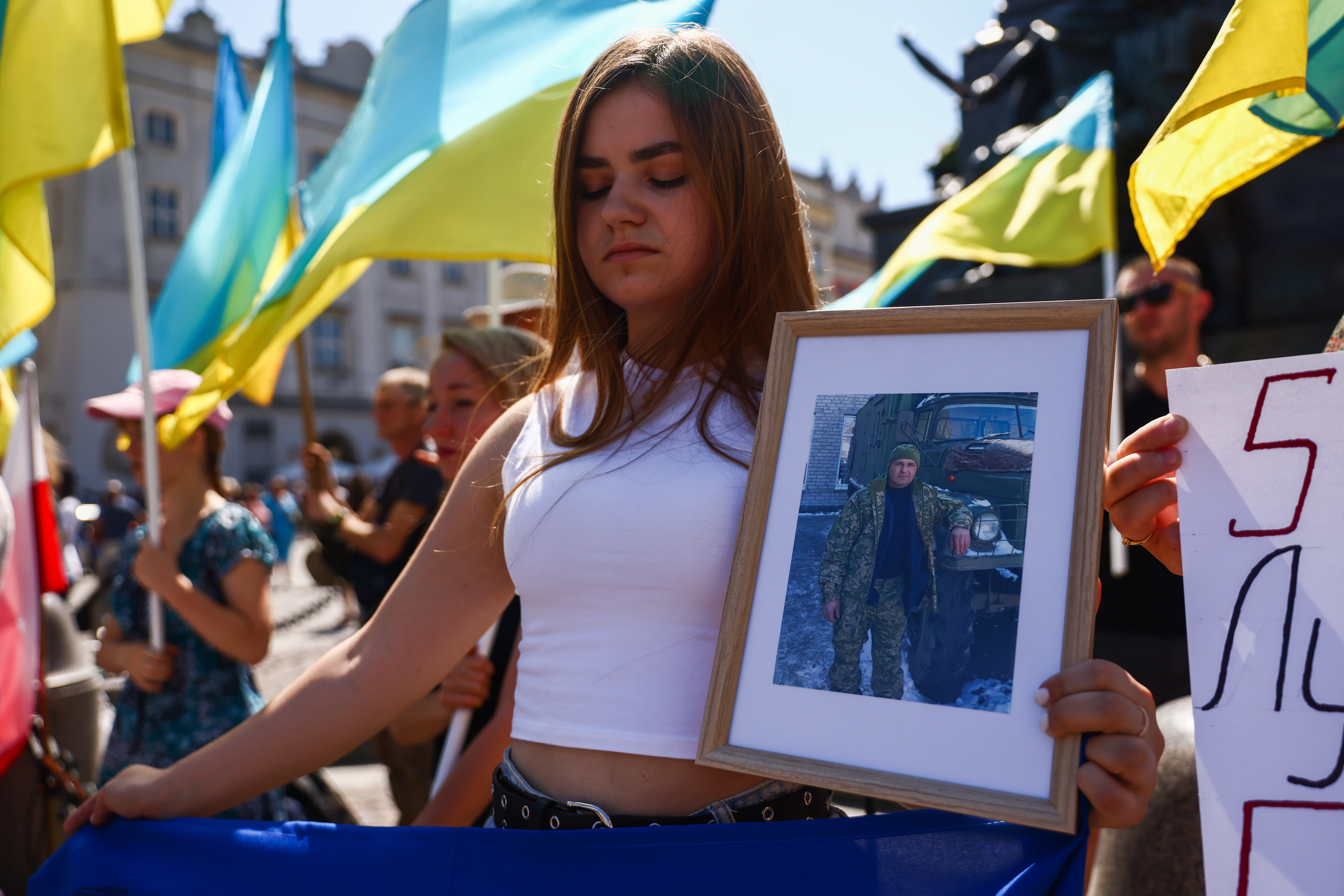
Having seen a video confirming his death, she holds onto the hope that, without a body, there is always a chance—even a minute one—that he is wounded, captive, and will be exchanged.
Ada lost her left leg when her vehicle drove over an anti-tank mine while serving with Ukraine’s 411th Unmanned Systems Regiment. She had long debated joining the military, doubting there was space for women. But after Russia’s full-scale invasion in 2022, she found her place.
“When I accepted the fact that I could be wounded or killed at any moment,” she explains, “that no matter what challenges I may face, I’m ready to fight until the end—this was the final stage of acceptance and I made my decision.”
UAV operator Ada, a former IT specialist who joined Ukraine's Armed Forces, continues her fight after losing her leg to an anti-tank mine explosion. Despite 13 surgeries to save her right foot, she plans to return to service after rehabilitation
— Euromaidan Press (@EuromaidanPress) January 10, 2025
📸 Superhumans Center pic.twitter.com/w640gLZ8Lr
Looking back at it now, Ada says, “The growing number of women serving became an example for me that women could effectively perform combat tasks. This inspired me to keep moving in the direction of enlisting.”
Now, Ada’s fight is civic. “We’re their voice now. They sacrificed what’s most precious, for us – their freedom, health, and lives.”
The rallies spur attention from society and the media, “the issue becomes a higher priority, and more energy is dedicated to its solution,” she says. “You may think that one person with a poster won’t solve anything, but when there are millions of us—we become a force.”
“Forced to eat a rat”: Inside Russian prisons
While families and supporters like Ada’s fight to keep the issue in the public eye, the reality of Ukrainian prisoners of war is critical. Abuse and torture in Russian captivity have been widely documented. A recent Amnesty International report concluded that Russia’s treatment of Ukrainian POWs – including torture, unlawful detention, and forced disappearances – amounts to war crimes and crimes against humanity.
“Torture takes place in complete isolation from the outside world, with the victims entirely at the mercy of their captors for survival,” said Amnesty International’s Secretary General, Agnès Callamard. “This is not a series of isolated incidents—it is a systematic policy that violates every tenet of international law.”
-5eea2cf1126d975e702896f6b4c7b36f.png)
The Moscow Convention—a collection of testimonies from released Ukrainian prisoners detailing Russian torture methods in violation of the Geneva Convention—was compiled by the Azovstal Families Association to document these international law violations in detail. Among those who shared their stories is Oleksii Anulia, a machine gunner who “survived beatings, torture, and a rape attempt in captivity.” Due to prolonged hunger, he lost 40 kilograms and recalls being forced to eat a rat and worms.
“There was a layer of feces in the cell, everything was covered in mold,” says Anulia, recalling the detention. “I realized then that I was guaranteed to get tuberculosis. There was a cesspool in the punishment cell: whenever anyone went to the toilet in the twenty cells in the pre-trial detention, it leaked out. There it all remained, like a layer of black soil.”
🔴 A court in Russia sentenced several Ukrainian prisoners on sham charges to long-term terms in a maximum-security colony.
— UNITED24 Media (@United24media) March 26, 2025
The defendants in the "24th Case" include military personnel, handymen, and cooks who worked for the Azov Brigade.
📹: hromadske pic.twitter.com/ZPm6byyc7W
Keeping POWs on the agenda
Accounts like Anulia’s are not isolated – they reflect a broader pattern of torture which the Azovstal Families Association seeks to expose and demand accountability for.
The Association, founded by Kateryna Prokopenko, Marianna Khomeriki, Yulia Fedosiuk, Hanna Naumenko, and Olha Andrianova, was established on June 1, 2022, with the goal of “expediting the return of prisoners of war from all units that defended Azovstal.” The organization’s goals over the course of the last three years have prioritized three main pillars:
Advocacy programs
Information campaigns
Communication efforts
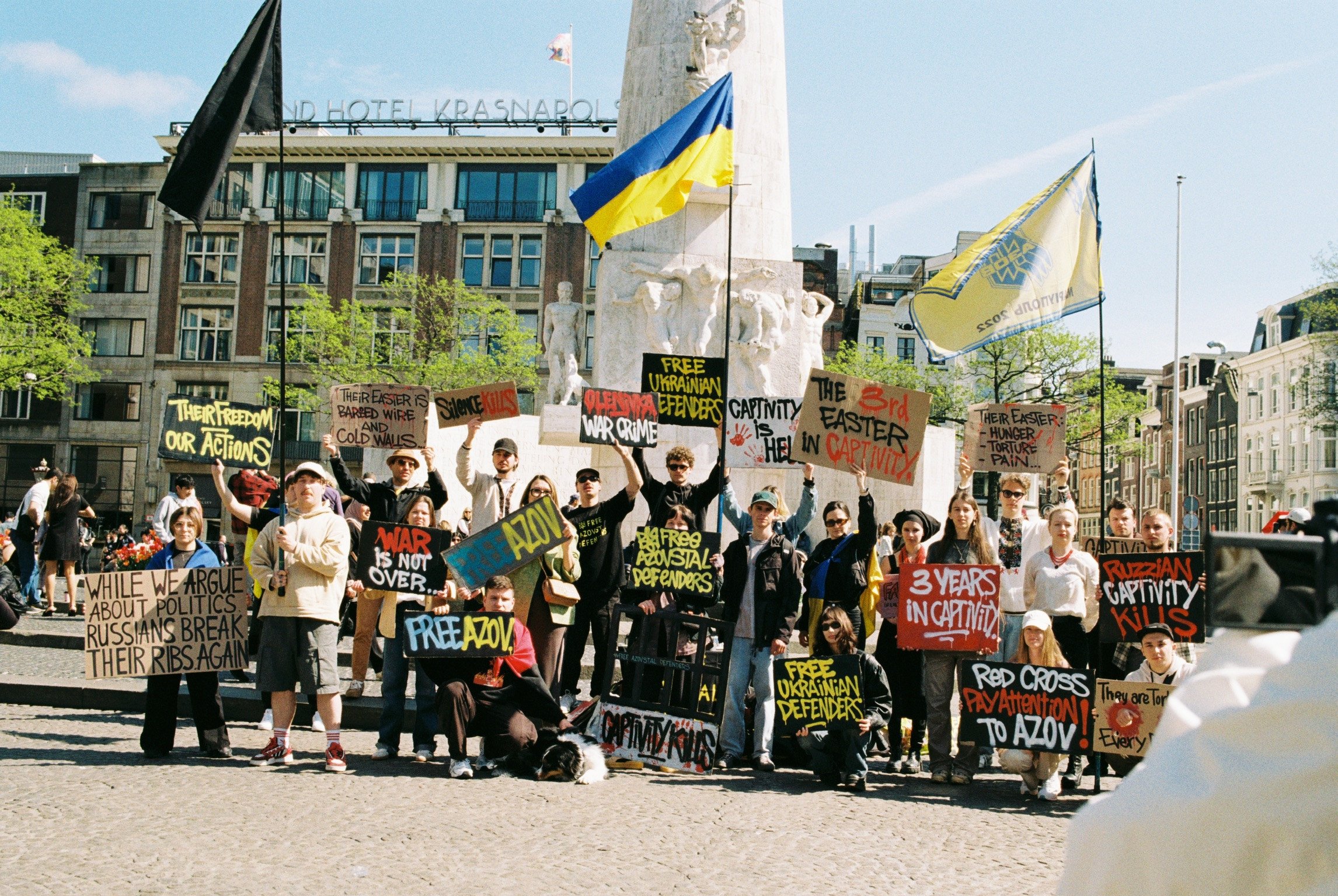
The weekly “Free Azov” rallies have resulted in significant public attention and media coverage of the torture and inhumane conditions that prisoners endure, as well as the plight of captives’ families.
Most importantly, says the Association, “these constant reminders help keep the issue afloat—ensuring that prisoners of war remain on the agenda of the media and international organizations, which are responsible for guaranteeing their safety under the Geneva Convention on the Treatment of Prisoners of War. The rallies provide moral support to the families awaiting the return of their loved ones from captivity.”
One message across the world: Bring them home
The rallies are not limited to Kyiv, or even to Ukraine. Weekly rallies happen across the country and others, though less frequent, have been organized in Amsterdam, Chicago, New York, Washington, D.C., Los Angeles, Vilnius, London, Paris, Warsaw, Brussels, and more. The common thread running through all these protests is the call for global leaders to take immediate and necessary action to secure the release of Ukrainian defenders.

In the Netherlands, Ivan Frolov, along with his brother Maksym Frolov and friend Danylo Posaida, founded Free Defenders NL, a volunteer organization that seeks to bring attention to the plight of Ukrainian POWs through rallies in Amsterdam, Rotterdam, and the Hague and film screenings in Zaandam.
Ivan Frolov’s home, in Horlivka in the Donetsk region, has been under Russian occupation since 2014. The activist lived under occupation until 2022, at which point he was finally able to escape.
“Who is to thank for my freedom?” he asks. “Our army, of course, our heroes who bear arms exactly for that.”
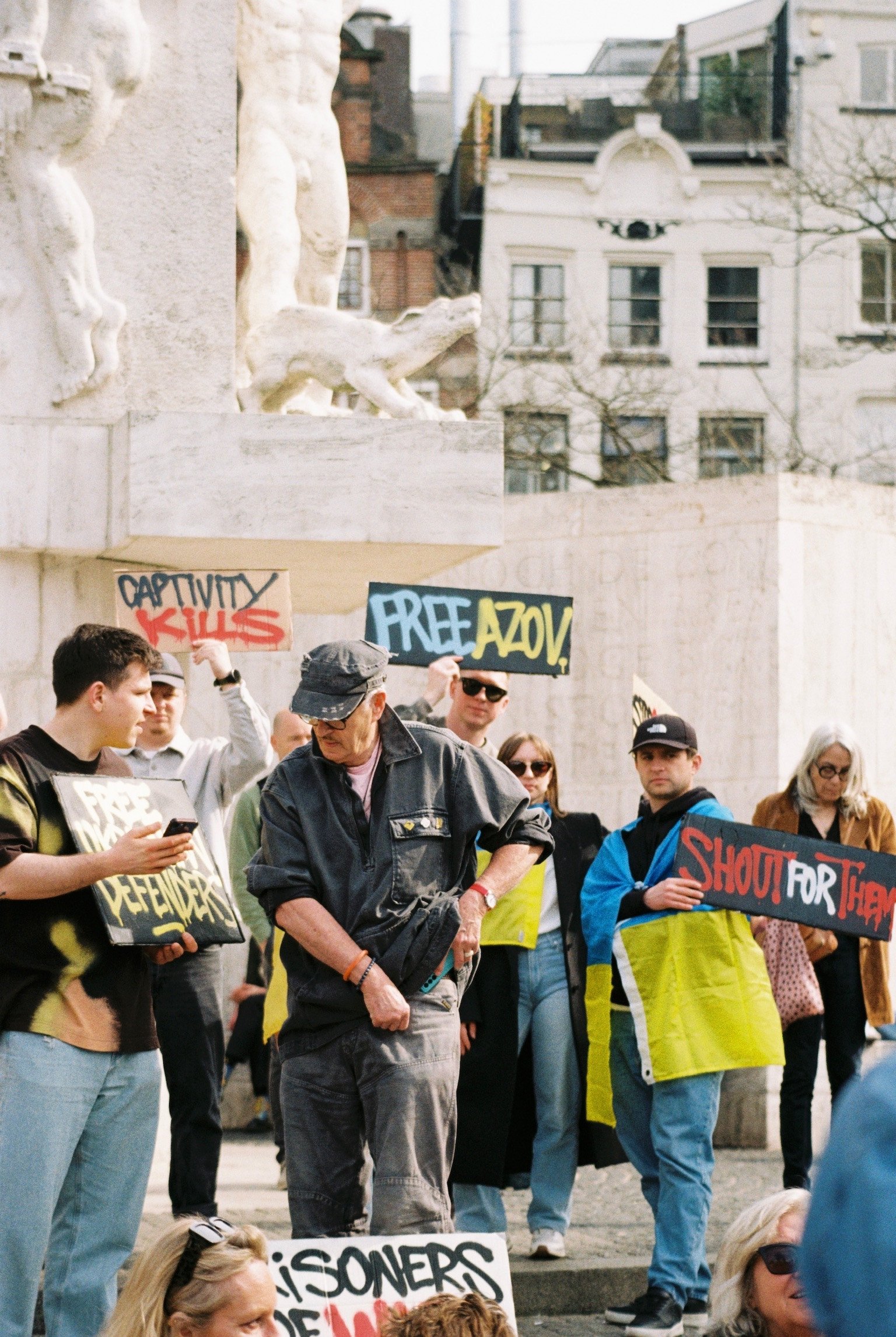
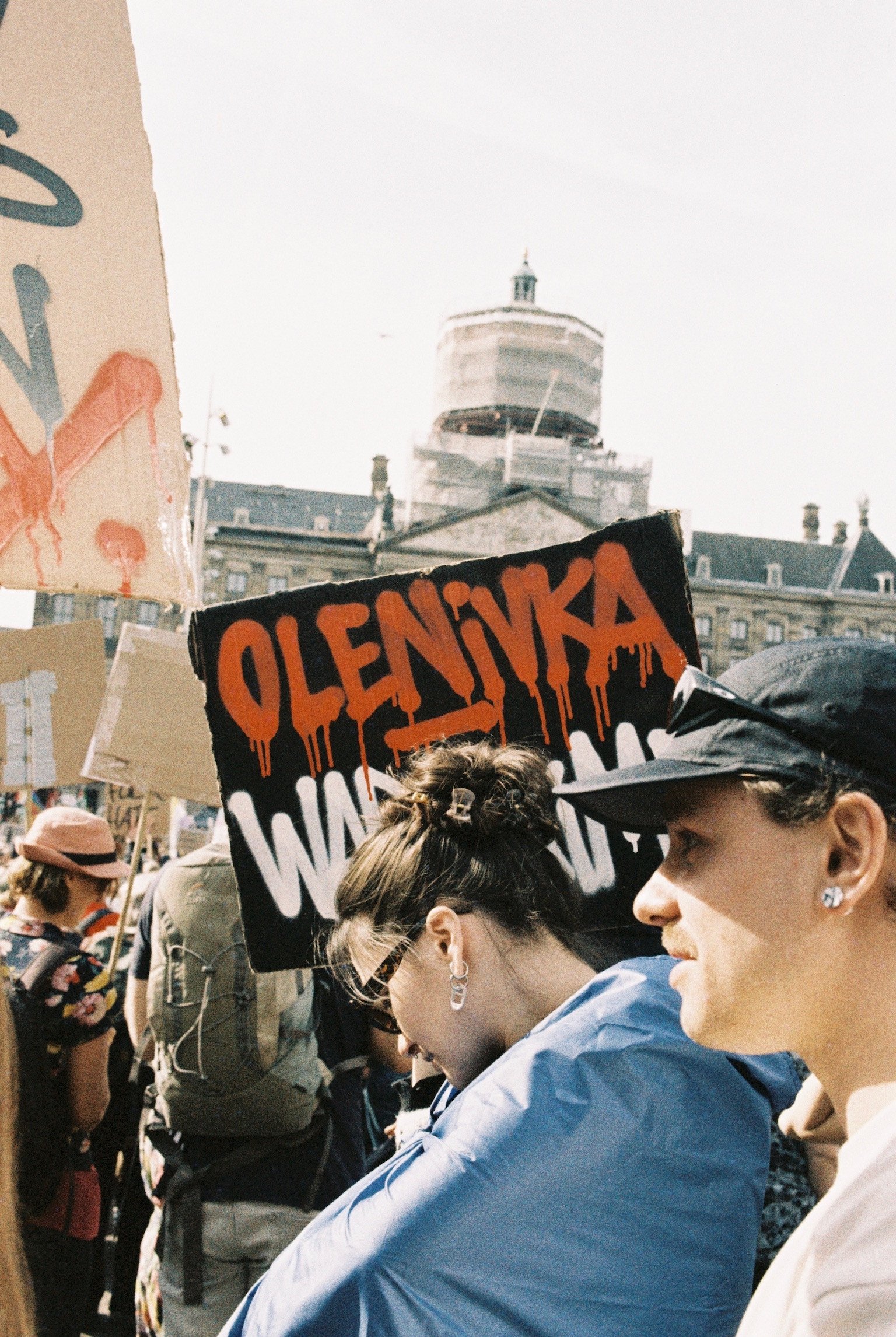
Attending the rallies gives voice, support, and remembrance to all the fallen and captive heroes, says Frolov: “When our defenders get exchanged, they’re shown photos of rallies in support of them and that touches the depths of emotion—knowing that you’re remembered.”
Several released prisoners—four or five—attended the rallies and thanked the crowd. “That’s who we do this for,” they said.
To those who think the rallies are futile, Frolov’s answer is direct:
Imagine being forgotten by your closest people—lost somewhere in captivity, killed or tortured. Feels good? No. And yet, only by imagining themselves in their place will people truly understand. That’s our reality.
Ivan Frolov
Free Defenders NL co-founder
This isn’t the first time families have led the way
The POW advocacy movement unfolding across the country and abroad, in many ways, parallels other national movements historically.
During the Vietnam War, the National League of POW/MIA Families, founded by the wives of missing American soldiers, led one of the most recognizable public advocacy efforts in US military history. The group lobbied Congress, confronted military officials, and held protests demanding transparency, humane treatment, and the safe return of prisoners. Much like the Free Azov protests, also founded by the wives and partners of missing and captive Ukrainian servicemen, the group’s actions began as a demonstration that quickly gained momentum and national visibility.
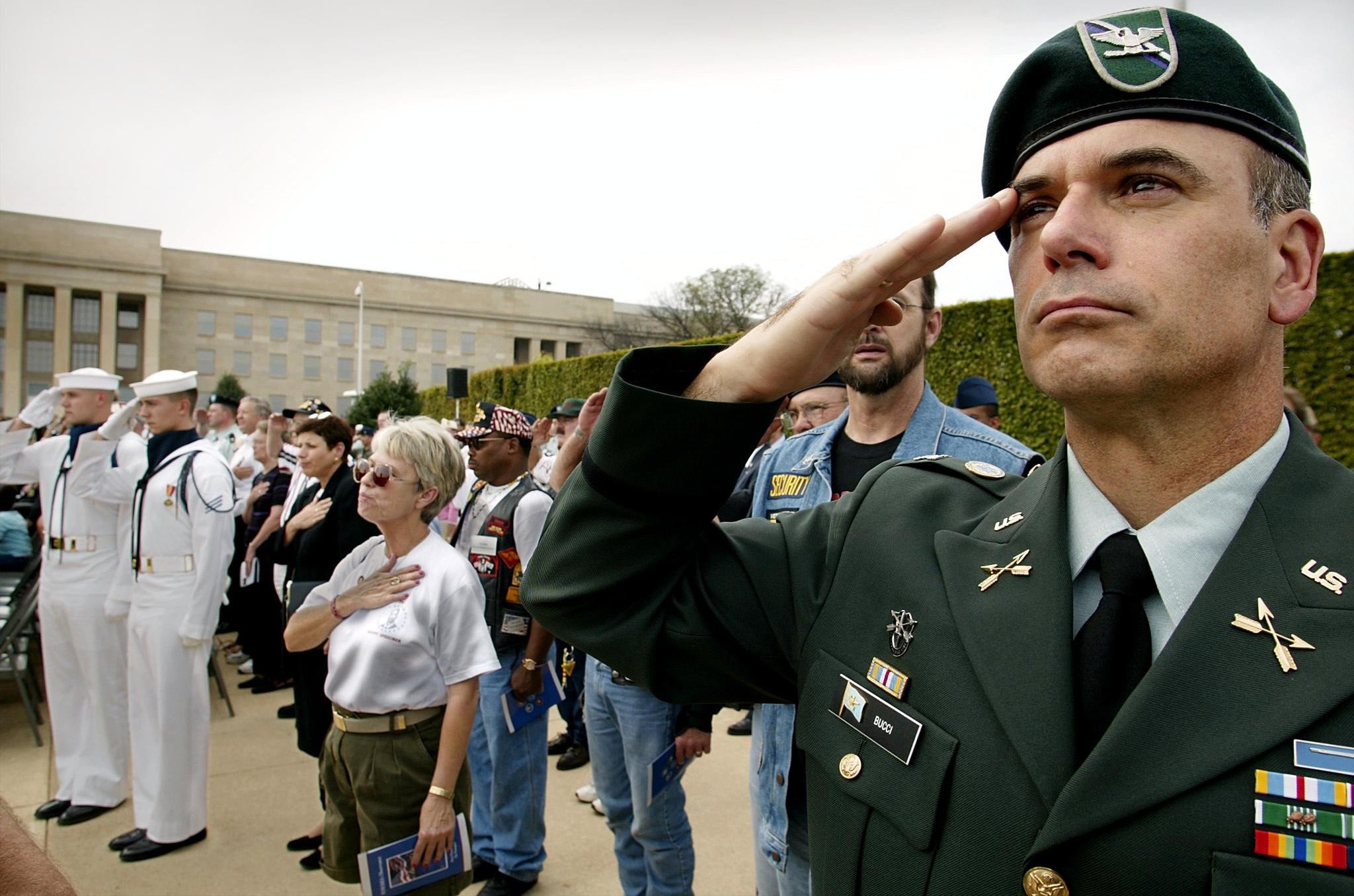
Today, a simple black and white flag, emblematic of Ukrainian POWs/MIA soldiers, is steadily becoming a strong visual reminder of who the protests are for. The flag symbolically evokes the American version, also black and white, which became a representation of remembrance and political pressure, even being displayed over government buildings and sports stadiums to this day.
In many ways, the similarities between such movements are clear: they arise from a lack of concrete answers and the trauma of war, center on family-led activism, public space assemblies, and mounting national and international pressure. They state: accountability is non-negotiable.
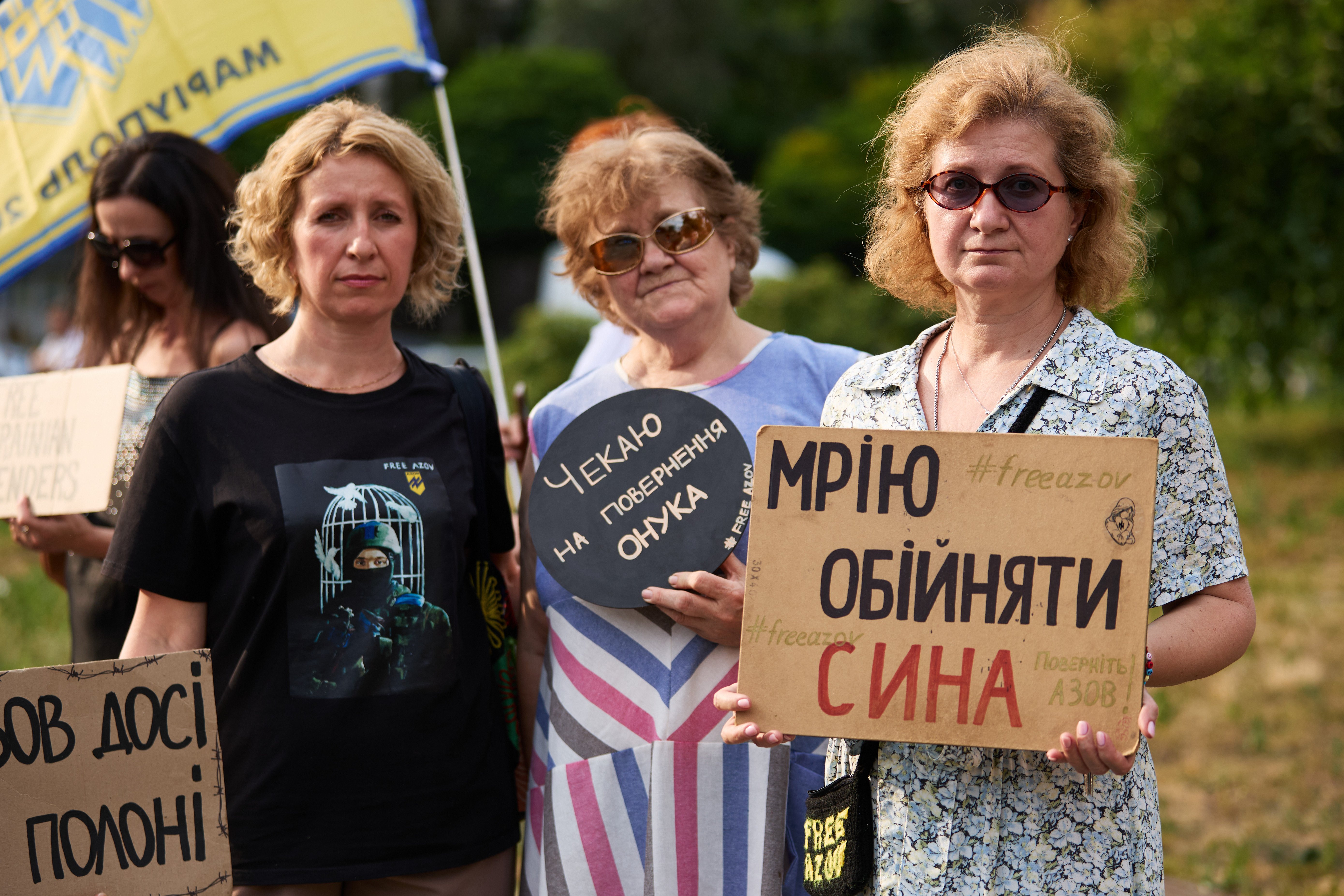
The first Free Azov rally took place in October 2023 at Sofiiska Square in Kyiv. Hundreds of people with posters, children, and pets attended the rallies. Today, the movement’s momentum shows no signs of slowing.
Continued public engagement “keeps the topic in the public discourse and sets a precedent for its resolution,” the Association representative said. “It’s impossible to determine which specific event, meeting, or statement will prove decisive. These actions help the families of prisoners of war survive a very terrifying period of uncertainty and pain. That reason alone should be enough.”
Discuss this article:
-050b2b5554ed561c87f909a001f905b9.png)

-111f0e5095e02c02446ffed57bfb0ab1.jpeg "Photo of Roman Kohanets")
-07c046f037cabcd54fb44b5253b3733d.jpg "“Bathing” (2021), an 80 × 60 cm artwork by Ukrainian artist Mariia Drozdova. (Source: Art From Ukraine/Instagram)")

-c439b7bd9030ecf9d5a4287dc361ba31.jpg "Photo of Katherina Popilnichenko")