- Category
- Latest news
British Veteran Says Western Armies Better Be Learning From Ukraine’s Battlefield Playbook
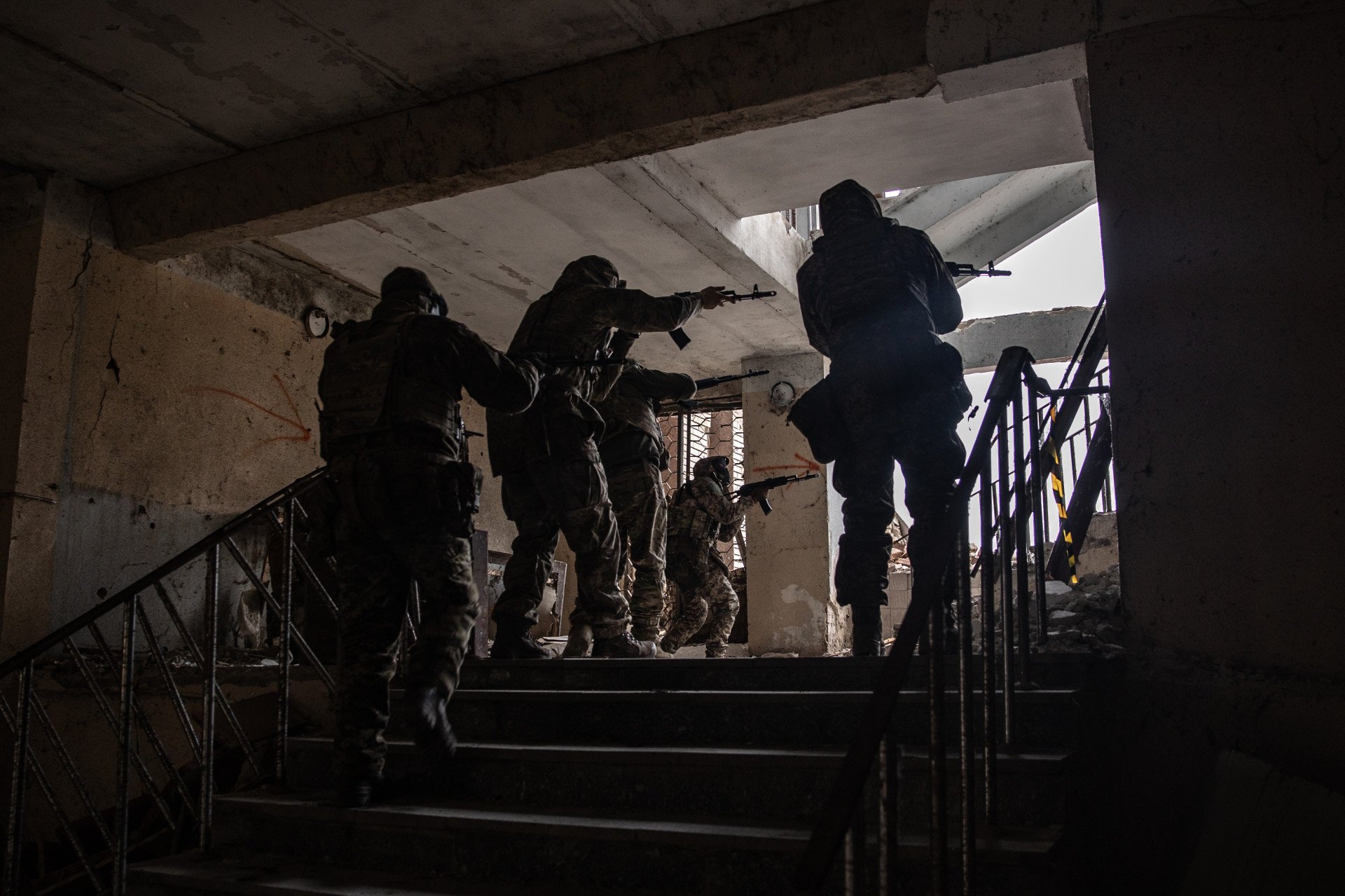
Ukrainian battlefield tactics are evolving at a striking pace as soldiers adapt to drones, urban warfare, and constant technological change, according to a former British infantry officer who has closely observed the war.
 Prefer U24 Media on Google
- Authors


Andrew Fox, who previously served with The Royal Welsh and later the Parachute Regiment, shared his assessment in an interview with BFBS Forces News on March 9.
We bring you stories from the ground. Your support keeps our team in the field.
Fox, now an academic researcher and defense commentator, has visited Ukraine multiple times to observe combat zones, including the heavily contested area around Pokrovsk.
According to Fox, Ukrainian troops are blending traditional infantry skills with rapid improvisation as they fight along some of the most dangerous frontlines of the war.
Intense footage of ultra close-range street fighting between Ukrainian and Russian troops inside the Pokrovsk-Myrhorod agglomeration.
— Status-6 (War & Military News) (@Archer83Able) November 4, 2025
0:18 - Ukrainian paratrooper eliminates three Russian soldiers from a very close range. pic.twitter.com/9OpiklgtAA
Small squads dominate urban fighting
Combat in eastern Ukraine often involves close-quarters urban warfare, where troops must clear damaged buildings while enemy fighters hide in basements, underground spaces or fortified positions.
Instead of large-scale assaults using battalions, Ukrainian units frequently operate in small squads, a tactic designed to reduce vulnerability to artillery strikes and drone attacks.
“In the open if you have battalions going forward, they get wiped out,” Fox said. “So what we’re seeing here is small squads going forward.”
New footage from the Ukrainian 425th 'Skala' operating in Pokrovsk pic.twitter.com/fMldyg7ShD
— Preston Stewart (@prestonstew_) December 11, 2025
Despite the new technologies shaping the battlefield, Fox emphasized that the fundamentals of infantry combat remain essential. Soldiers continue to rely on coordinated movement, covering fire and strong situational awareness.
“You need to be able to stay flexible, but you also need to make sure you are doing your skills and drills properly,” he said.
Fox pointed to helmet-camera footage from Ukrainian troops as an example of disciplined battlefield awareness.
“You can see [from the helmet cameras], he’s keeping his arcs covered he’s going left, he’s going right, he’s not getting fixated on the target, he’s keeping his situational awareness.”
-380b5d36bc8d4c8ee13d1a63d4da6d6c.jpg)
Drones change the battlefield
Fox noted that the main battlefield threat has shifted dramatically compared to previous conflicts such as Afghanistan.
While improvised explosive devices were a major danger during his deployments there, he said the situation in Ukraine is different.
“In Afghanistan the big threat was IEDs,” he said. “In Ukraine the IEDs are flying.”
🚨 UKRAINIAN FPV DRONES TORCH CAPTURED U.S. M113 NEAR POKROVSK
— Steven Latham (@StevenJLatham1) February 22, 2026
Drone footage shows Ukrainian forces from the Panama unit destroying a Russian-operated M113 APC during an assault near Hryshyne, in the Pokrovsk direction of Donetsk Oblast.
The area has seen intensified Russian… pic.twitter.com/R9PjnQeEPl
First-person-view drones are now widely used to track and attack individual soldiers or vehicles, forcing troops to constantly adjust their tactics and movement.
According to Fox, the pace of innovation surrounding drones has created a technological arms race between both sides.
“Essentially you need to control your drone like a tech startup,” he said.
He argued that drone units need the freedom to experiment and innovate quickly in order to keep up with the rapidly changing battlefield.
“Because the pace of change is so big at the moment, if you have a formal staffed up lessons learned process, it just takes too long … There’s a lot of trust needed,” he explained.

Western militaries are taking note
Fox also suggested that Western armed forces may ultimately find themselves learning from Ukraine’s experience on the battlefield.
While Ukrainian troops have benefited from Western training programs such as Operation Interflex, he believes the flow of knowledge may increasingly go the other way.
“They’ve clearly taken a lot from Interflex and a lot from the training, but there will, of course, always come a tipping point where actually the master has become the student,” he said.
💀🔥 Sanitary zone in the Pokrovsk direction, Donetsk region. Ukrainian kamikaze drones destroy 45 Russian soldiers. Footage of combat work of pilots of the 414th brigade "Birds of the Magyar". pic.twitter.com/T8a0DGDrQh
— MAKS 25 🇺🇦👀 (@Maks_NAFO_FELLA) February 22, 2026
“We’re going to have to go to them and say ‘can you show us how you did X, Y, Z’ because we are way behind them in terms of stuff like procurement.”
Fox added that Western militaries would be wise to study Ukraine’s battlefield experience closely.
“We’d be insane not to speak to our friends and learn the lessons that they learned the hard way.”
Earlier, reports emerged that Ukrainian service members with frontline combat experience were expected to begin training soldiers of Germany’s armed forces in the near future, focusing on drone operations, counter-drone tactics, and battlefield coordination systems.
Discuss this article:
-9a7b3a98ed5c506e0b77a6663f5727c5.png)

-c439b7bd9030ecf9d5a4287dc361ba31.jpg "Photo of Katherina Popilnichenko")