- Category
- Latest news
Croatia Rejects Hungary’s Request to Transit Russian Oil via Adria Pipeline
 Prefer U24 Media on Google
- Authors

-72b63a4e0c8c475ad81fe3eed3f63729.jpeg "Photo of Cyril Barabaltchouk")
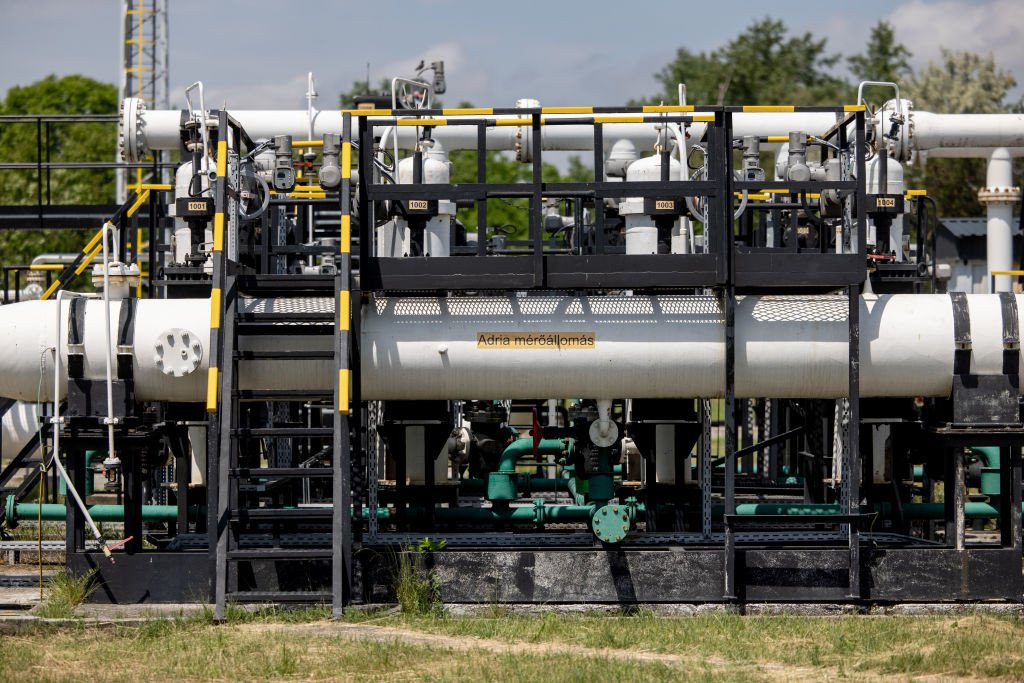
Hungary and Croatia traded sharp public statements this week after Russian oil transit through the Druzhba pipeline, which runs through Ukrainian territory, was halted. The diplomatic dispute escalated when Zagreb rejected Budapest’s request to use the Adria pipeline as an alternative route for Russian crude.
Croatia insists its infrastructure is ready to supply non-Russian oil but will not be used to perpetuate Hungary’s dependence on the Kremlin.
We bring you stories from the ground. Your support keeps our team in the field.
Minister of Foreign Affairs and Trade of Hungary Péter Szijjártó said on X on February 15 that Kyiv was refusing to restart transit through the pipeline “for political reasons,” and announced that Hungary and Slovakia had appealed to Croatia for an alternative route for Russian oil.
However, Ukrainian Foreign Minister Andrii Sybiha stated that it was the Russian air strike in late January that damaged Ukraine’s section of the Druzhba oil pipeline, halting crude supplies to Hungary and Slovakia.
We know that the Hungarian side is preparing to complain again about problems with Russian oil transit through the Druzhba pipeline.
— Andrii Sybiha 🇺🇦 (@andrii_sybiha) February 12, 2026
We can only advise them to approach their “friends” in Moscow with these photos. This is the Druzhba pipeline infrastructure burning after the… pic.twitter.com/Xbn3DGCRkl
Noting that the January 27 attack had set pipeline infrastructure on fire, Sybiha published photos of the damage to preempt expected criticism. “We know that the Hungarian side is preparing to complain again about problems with Russian oil transit through the Druzhba pipeline,” he wrote on X.
“We request Croatia to enable the transport of Russian oil to Hungary and Slovakia via the Adria pipeline,” Péter Szijjártó wrote, arguing that their sanctions exemption allows seaborne imports if pipeline deliveries are disrupted. “The security of a country’s energy supply must never be an ideological issue,” he added, saying he expected Croatia “unlike Ukraine, not to endanger the oil supply security of Hungary and Slovakia for political reasons.”
Since Ukraine refuses to restart oil transit through the Druzhba pipeline for political reasons, together with Slovak Economy Minister Denisa Saková we sent a letter to Croatian Economy Minister @susnjar_a .
— Péter Szijjártó (@FM_Szijjarto) February 15, 2026
We request Croatia to enable the transport of Russian oil to Hungary… pic.twitter.com/eHDygiMRBp
Croatia’s Minister of Economy Ante Šušnjar responded the next day, framing Zagreb as a reliable transit partner while also using the dispute to press for a general EU break with Russian oil, stating that the Adria oil pipeline is ready, so no EU country has any technical justification for remaining tied to Russian oil.
“Croatia has acted responsibly and transparently on regional energy security and we will do so again,” he wrote, insisting that the Adria pipeline has capacity and that Croatia has kept “critical infrastructure stable and uninterrupted.” He said Croatia was “ready to help solve the acute disruption, within EU law and OFAC regulations,” stressing: “No one should be left without fuel.”
Croatia has acted responsibly and transparently on regional energy security - and we will do so again for our Hungarian @FM_Szijjarto and Slovak friends @SakovaSr, while fully respecting our Ukrainian allies and the daily suffering they endure.
— Ante Šušnjar (@susnjar_a) February 16, 2026
When we were told the Adria… pic.twitter.com/huJ8aXyNyU
At the same time, the Croatian minister argued the episode exposed the deeper problem of EU dependence on Moscow. “The Adria pipeline is ready, so there are no technical excuses left for staying tied to Russian crude for any EU country,” he wrote. “A barrel bought from Russia may appear cheaper to some countries, but helps fund war and attacks on Ukrainian people. It’s time to stop that war profiteering.”
-66a2900a622e096cca7808c9e73e093f.jpg)
The Adria oil pipeline is a crude oil pipeline in Croatia, Serbia, and Hungary with branch lines to Slovenia and Bosnia and Herzegovina. Hungarian Prime Minister Viktor Orbán has long argued that Hungary’s landlocked geography left the country dependent on Moscow for energy. Hungary had previously imported roughly 90% of its oil from Russia and has benefitted from discounted prices under temporary EU sanctions exemptions.
However, Hungary’s only refiner Mol Nyrt. said it can cover most of its crude oil needs without relying on Russia. In its previous earnings report, Mol said that supplies via the Adria pipeline from Croatia could replace around 80% of its crude intake if Russian deliveries through the Druzhba pipeline were disrupted. The company acknowledged this option carries “higher technical risks and logistics costs,” but insisted it remains viable.
Earlier, Hungary had summoned Ukraine’s ambassador to Budapest over what it describes as attempts by Kyiv to interfere in Hungary’s parliamentary elections.
Discuss this article:


-c439b7bd9030ecf9d5a4287dc361ba31.jpg "Photo of Katherina Popilnichenko")