- Category
- Latest news
Europe Moves to Tighten Visa Rules for Russians, Curbing Travel Across Schengen Zone
 Prefer U24 Media on Google
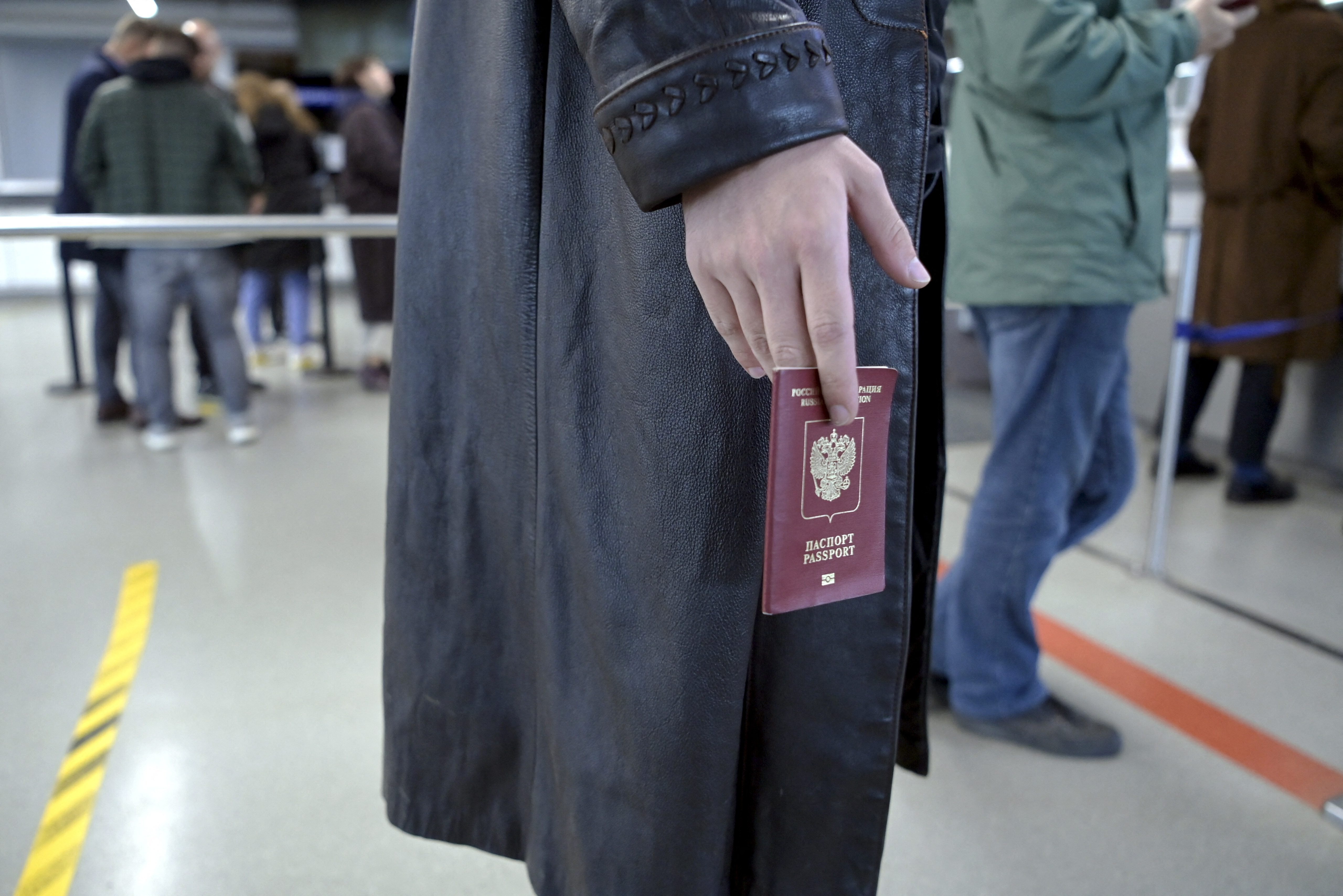
The European Union is preparing to sharply tighten its visa regime for Russian citizens, effectively ending the issuance of multi-entry Schengen visas in most cases, POLITICO reported, citing three European officials familiar with the discussions on November 5.
The move marks another escalation in the bloc’s efforts to penalize Moscow for its ongoing war of aggression against Ukraine and will largely restrict Russians to single-entry visas—with only limited exceptions for humanitarian reasons or dual citizens holding EU passports.
Brussels had already made it harder and more expensive for Russian nationals to obtain travel permits when it suspended the EU-Russia visa facilitation agreement in late 2022, following the launch of Russia’s full-scale invasion.
-39b8ad8fe20a5072e65ac372f7c0896e.jpg)
Some member states—notably Estonia, Latvia, and Lithuania—went further, imposing near-total entry bans on Russian citizens or heavily restricting land crossings from Russia and Belarus.
However, visa issuance remains a national competence, meaning that while the European Commission can make the process more cumbersome, it cannot legally enforce a complete ban on Russian visitors.
According to European Commission data, more than 500,000 Schengen visas were issued to Russian citizens in 2024—up from the previous year but still a fraction of the over 4 million visas granted in 2019, before the invasion.
-972b40303f2e57597e22987d16a593dd.jpg)
According to POLITICO, despite growing political pressure, several countries, including Hungary, France, Spain, and Italy, continue to issue tourist visas to Russians at relatively high rates.
The new restrictions—part of a wider EU package aimed at reducing Russian mobility across Europe—are expected to be formally adopted and implemented later this week.
In parallel, as part of its upcoming 19th sanctions package, the EU also plans to limit the travel freedom of Russian diplomats, requiring them to notify host states in advance before moving between countries within the Schengen Area. The measure is designed to counter what EU officials describe as “increasingly hostile intelligence activities” linked to Russian diplomatic missions.
-06edd17576e8390bd2b40028a0890918.jpg)
The European Commission is also preparing to unveil a new bloc-wide visa strategy next month. The plan will include common recommendations for member states, urging them to use visa policy as a geopolitical tool—tightening entry rules for nationals of “hostile” countries such as Russia while ensuring stronger security vetting and coordination across the bloc.
Together, these steps reflect a growing consensus within the EU that travel restrictions remain one of the most direct ways to pressure Russia’s elite and limit Kremlin influence in Europe, even as the war in Ukraine drags into its fourth year, POLITICO noted.
Earlier, Russian intelligence services used the wreck of the MS Estonia ferry in the Baltic Sea as a covert site for underwater surveillance operations targeting NATO naval activity.
Discuss this article:



-c439b7bd9030ecf9d5a4287dc361ba31.jpg "Photo of Katherina Popilnichenko")