- Category
- World
When Europe’s Tourist Visas Become Russia’s Window for Hybrid War
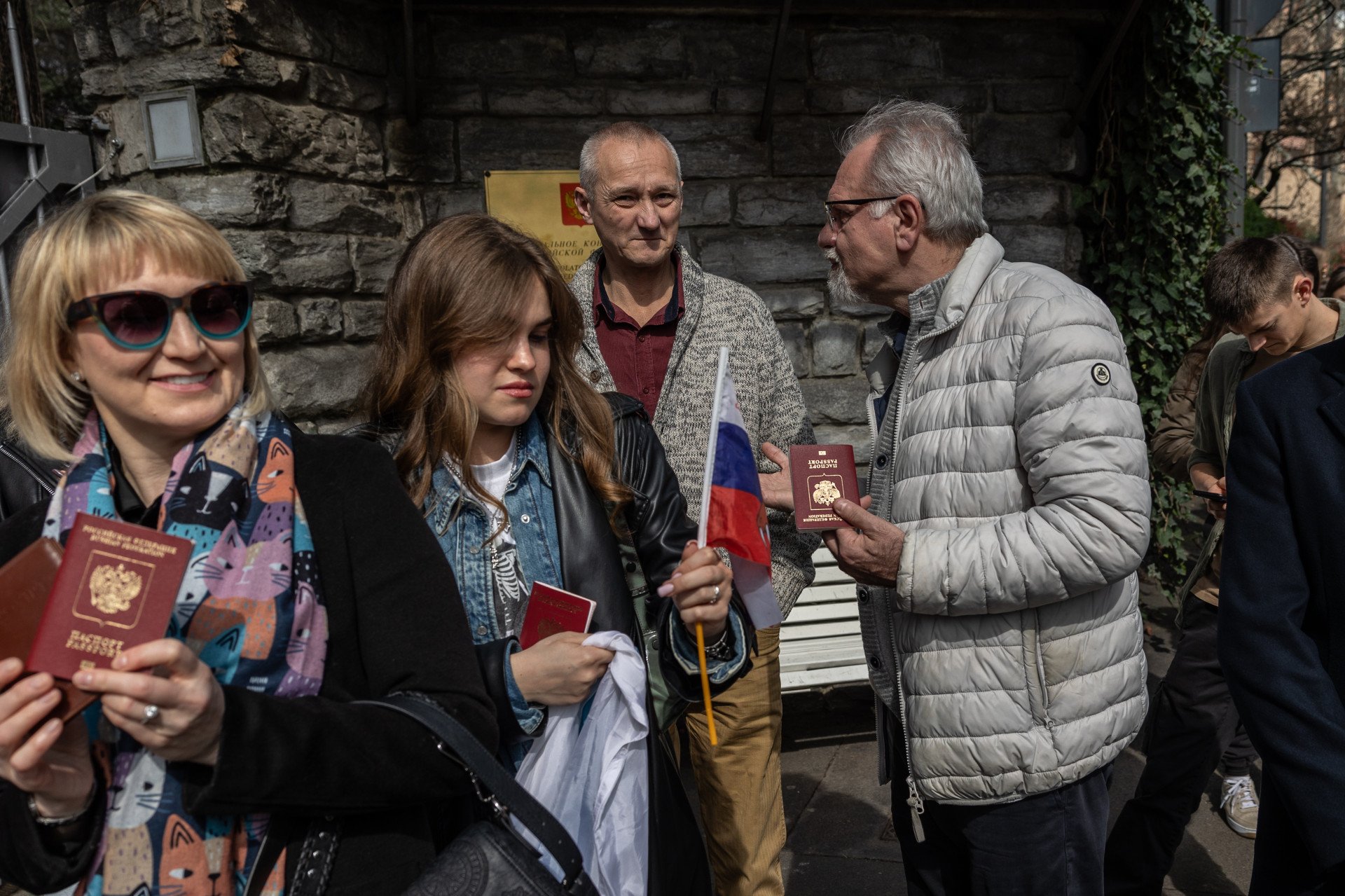
Each new round of EU sanctions on Russia revives the same debate—should Russian citizens still get tourist visas? Over the past four years alone, 131 Russians or post-Soviet nationals linked to Moscow have been detained in Europe for espionage, sabotage, and other hybrid operations.
 Prefer U24 Media on Google
- Authors

-46f6afa2f66d31ff3df8ea1a8f5524ec.jpg "Photo of Jess Daly")
The European Commission tightened Russian visa rules in 2022, making applications longer, pricier, and harder to get. The Commission warned that access to the EU would give Moscow an easy in for hybrid operations.
Russia is a security threat. We need more, not less vigilance. Giving potential Russian spies and saboteurs easy EU access would undermine the security of us all.
Ylva Johansson
Former European Commissioner for Home Affairs
The Commission was right—but these tougher rules haven’t slowed the flow of visa applications. Russians are still fueling hybrid warfare across the EU.
How Russians get Schengen visas today
From June 2007, an EU-Russia visa facilitation agreement simplified short-stay visa issuance for Russian nationals. In February 2022, the EU partially suspended the agreement, removing facilitation for Russian government officials and businesspeople.
In September 2022, the EU Council then fully suspended this agreement for all Russian nationals as a “direct consequence of Russia’s actions” for its “unprovoked and unjustified war of aggression,” making the visa application process more expensive, lengthier, and subject to increased scrutiny.
Czechia largely closed its doors, and Finland stopped issuing new tourist visas in 2023, except for family or residents. Estonia, Latvia, Lithuania, and Poland took a step further and imposed an entry ban for all Russian nationals with a short-stay Schengen visa (exceptions apply), as of September 19, 2022.
“We agreed politically on:
— European External Action Service - EEAS 🇪🇺 (@eu_eeas) August 31, 2022
🔹Full suspension of EU-Russia Visa Facilitation Agreement
🔹Granting visas on individual basis
🔹Passports issued by Russia in occupied territories of Ukraine won’t be recognised
🔹Need for guidelines on existing visas” @JosepBorrellF after #Gymnich pic.twitter.com/MdTWq4riN1
While some countries enforce stricter measures, France, Spain, and Italy grant visas more liberally. Hungary has relaxed its rules even further, allowing Russian workers to enter without security screening.
The chair of the European People’s Party, Manfred Weber, raised serious national-security concerns, warning that this would allow Russians to bypass restrictions required by EU law.
Before the full-scale invasion, Russian Schengen visa applications took about 15 days. Today, decisions can take up to 45 days, fees have jumped from €35 to €80, and applicants must submit extra documentation. Non-essential travel, such as tourism, may be given lower priority, and multiple-entry or long-term visas are issued only in limited cases.
Entry/Exit System (EES)
The EU rolled out its new Entry/Exit System (EES) for all Schengen countries on October 12, 2025. The system uses biometric data to track every entry and exit of non-EU nationals—including Russians. It is designed to tighten border security and flag anyone involved in criminal activity.
Under the EES, visa applicants now have fingerprints and photos recorded, and every time they cross a Schengen border, their biometric data is captured again. The rollout will be gradual, covering all Schengen countries within six months, with full implementation expected by April 10, 2026.
Strong protection of our external borders is vital for the European Union. The new Entry-Exit system will help us ensure that non-EU nationals travelling to Europe comply with our rules. That will make our borders safer and border checks more efficient.
Minister for Immigration and Integration
The EU is working to further tighten visa issuance for Russian citizens by the end of 2025, a European Commission official told POLITICO. The proposed new guidelines have not yet been publicly disclosed. According to the Commission’s call for evidence, the latest up-and-coming visa strategy will focus on securing borders.
Russia’s hybrid war
Since the start of Russia’s full-scale invasion of Ukraine, the European Union has sanctioned more than 2,500 individuals and entities linked to the Kremlin’s war machine and propaganda ecosystem.
Russians are now bragging on social media about how easy it is to get a Schengen visa & travel around Europe.
— Pekka Kallioniemi (@P_Kallioniemi) July 16, 2025
In Russia, traveling abroad is a privilege reserved for the wealthy, so many of these tourists are the children of oligarchs & politicians who fund Russia's war machine. pic.twitter.com/kpRqXLOnIs
EU Commissioner for Security and Migration Magnus Brunner argues that a complete ban can’t be imposed because visas are handled by individual member states. Still, he says there is a need for tighter controls.
Over half a million Russians received EU or Schengen visas in 2024 alone—25% more than in 2023—with 90% for tourism. Rejections barely increased, staying just under 3%, the European Commission reported.
Between Jan 2022 and July 2025, 110 Russia-linked incidents hit Europe—sabotage, arson, assassination attempts, and more. Nearly half occurred during the first half of 2024.
One of the recent ones was in February 2025—two Russian citizens were sentenced in Poland to five and a half years in prison for espionage linked to the Wagner Group and for intelligence work for Moscow.
Russians with dual nationality have also exploited their second passport, using it as a loophole to evade sanctions, protect assets, and fuel Russia’s war machine—enabling wealthy Russians to travel freely, open bank accounts, and engage in illicit or criminal activity across Europe.
Following a surge in Russian-linked operations—often run by spies under diplomatic cover—EU governments now require Russian diplomats to notify authorities before crossing borders outside their host country.
In the current circumstances, we cannot continue business as usual—we must acknowledge that we are in a state of hybrid warfare.
Latvian Interior Minister
The need for tighter controls
As hybrid warfare escalates across Europe, Latvian Interior Minister Rihards Kozlovskis is calling for a blanket ban: “We are dealing with illegal border crossings, acts of sabotage, drone incursions, and propaganda efforts to manipulate public opinion. That is why I call on all member states to take this threat seriously. It is our moral duty to ban this service.”
Poland, the Baltic and Nordic countries also want to target Russian nationals who have fought against Ukraine.
We will not issue them residence permits or visas. This group, which has been killing and destroying, poses a very significant security threat to all of us.
Estonian Interior Minister
Meanwhile, Czech Foreign Minister Jan Lipavský said that a Russian visa to the Schengen zone is “an unnecessary advantage we give to the Russian regime, and it is being abused to facilitate sabotage operations.”
Russia’s war isn’t fought only with missiles—it’s waged through loopholes, bank accounts, and border crossings. While a blanket ban may not be feasible, visa control must remain Europe’s first line of defense.
Discuss this article:


-c439b7bd9030ecf9d5a4287dc361ba31.jpg "Photo of Katherina Popilnichenko")

-111f0e5095e02c02446ffed57bfb0ab1.jpeg "Photo of Roman Kohanets")

-a1738cb523135070a26ed61c09a8eb5e.jpg "Police stand in front of the Russisches Haus in Berlin, Germany. (Source: Getty Images)")
-72b63a4e0c8c475ad81fe3eed3f63729.jpeg "Photo of Cyril Barabaltchouk")