- Category
- Latest news
Funding Crunch and Sanctions Force Russia to Halve Merchant Fleet Construction
 Prefer U24 Media on Google
- Authors

-72b63a4e0c8c475ad81fe3eed3f63729.jpeg "Photo of Cyril Barabaltchouk")
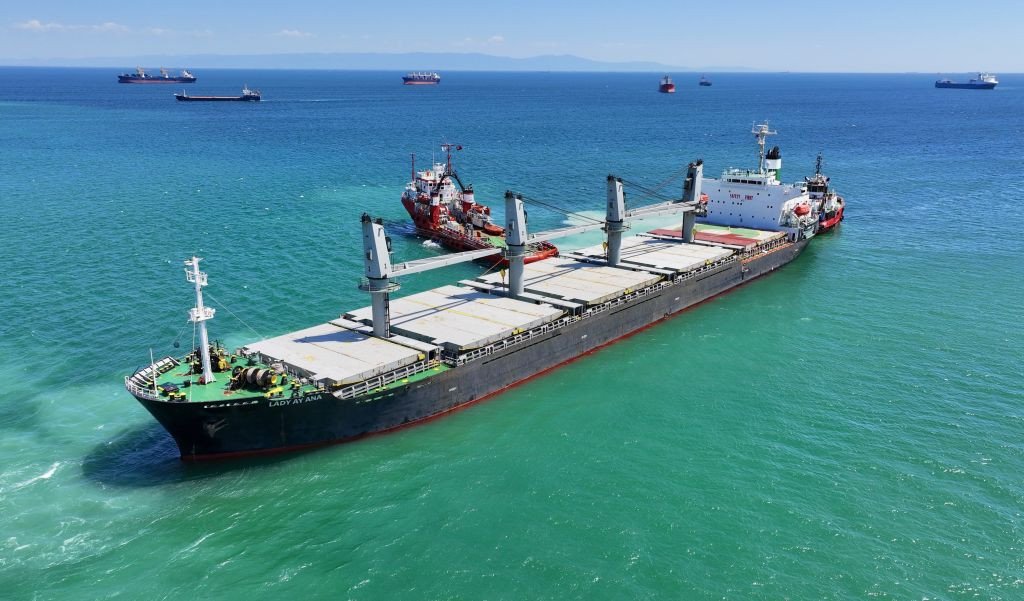
Russia has sharply scaled back its civilian merchant fleet construction program after running into funding shortfalls, according to Russian media cited by The Moscow Times on January 26.
The Russian government has nearly halved the number of RSD59 dry cargo vessels to be built under its preferential leasing scheme. A cabinet order shows that between 2023 and 2028, the state-owned State Transport Leasing Company (GLTK) is now expected to deliver 18 river-sea class vessels to lessees, instead of the 34 originally planned.
We bring you stories from the ground. Your support keeps our team in the field.
The revised program is valued at about $330 million, with roughly $255 million to come from Russia’s National Wealth Fund and the remainder financed through borrowing.
In 2023, GTLK signed a contract with the United Shipbuilding Corporation (USC) for 34 vessels, when the cost per ship stood at about $13.7 million. That figure has since risen to roughly $18.3 million per vessel, according to The Moscow Times.
Similar issues persist in other production sectors in Russia. For example, Russia has begun transporting civilian airline passengers on cargo aircraft, a move that experts say reflects the ongoing deterioration of the country’s civil aviation sector.
Russia’s aircraft manufacturers have also delivered just one of 15 planned commercial jets so far this year, as sanctions on foreign components stall production and high interest rates deter investment.
-e4ae7d0c8eb24d9d226d7c40efa811d8.jpg)
Delivery deadlines for cargo ships have also slipped. No ships were handed over in 2024, largely due to financial troubles at the Krasnoye Sormovo shipyard, where actual construction costs exceeded contract prices, resulting in losses.
Shipyard management has cited difficulties with import substitution, while USC has previously warned that both a reduction in output and higher costs were likely.
The fate of the remaining 16 vessels remains unclear and may be decided later under different terms, a source involved in the project told Russian state media outlet, cited by The Moscow Times.
Industry analysts attribute the cost overruns to high interest rates set by the Central Bank of Russia, expensive import substitution, labor shortages, and sanctions-related supply and certification problems. Equipment alone can account for up to half of a vessel’s cost, with imported components making up at least 50%, according to sector experts.
The cutbacks come amid a general retrenchment. At the end of 2025, the government reduced overall funding for the preferential leasing program through 2028 from about $2.5 billion to $1.45 billion, lowering the planned number of vessels from 260 to 219.
Previously, a senior Kremlin aide said Russia’s shipbuilding industry remains dependent on foreign software and is struggling to attract young specialists who “prefer” higher-paid jobs with “more comfortable” working conditions.
Discuss this article: