- Category
- Latest news
Zelenskyy’s New Year Message: Ukraine Stands, Fights, and Moves Closer to Peace
 Prefer U24 Media on Google
- Authors


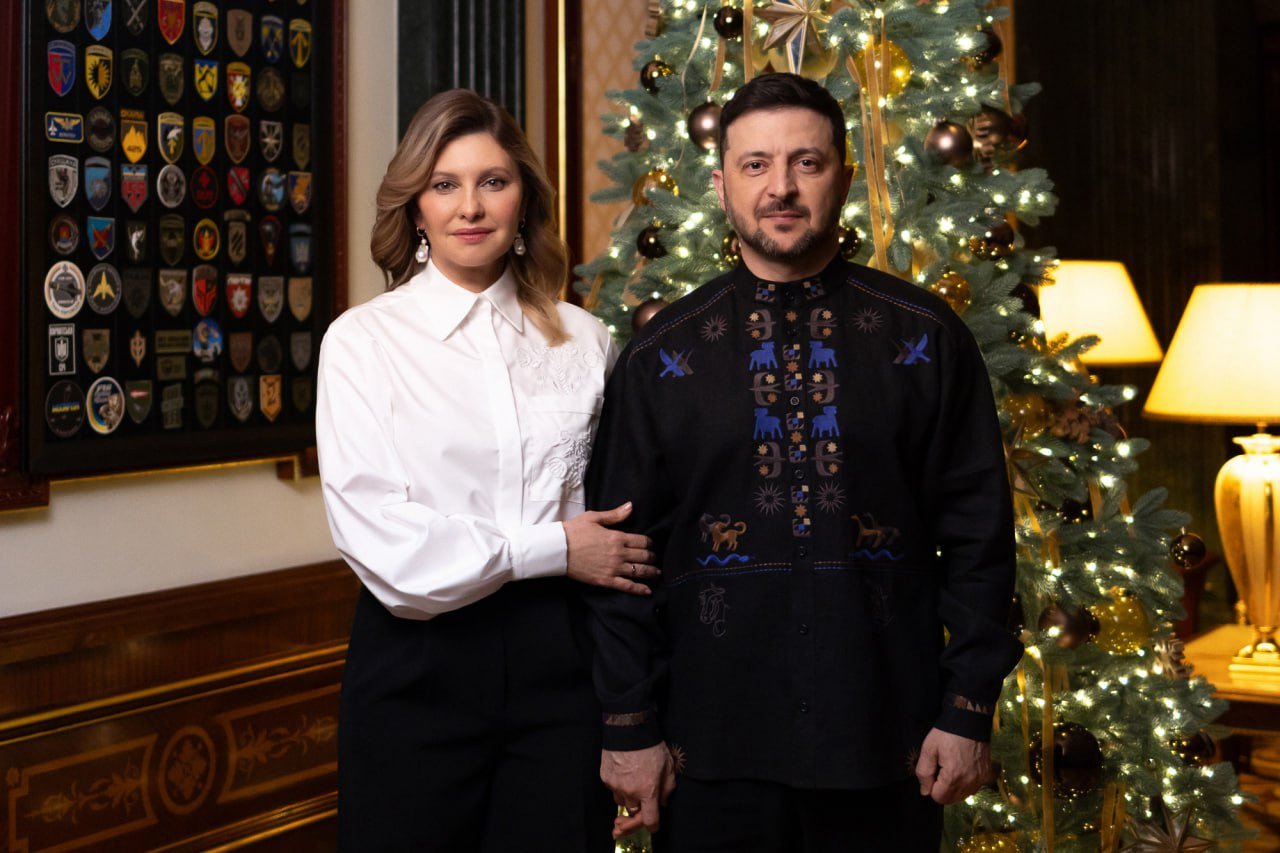
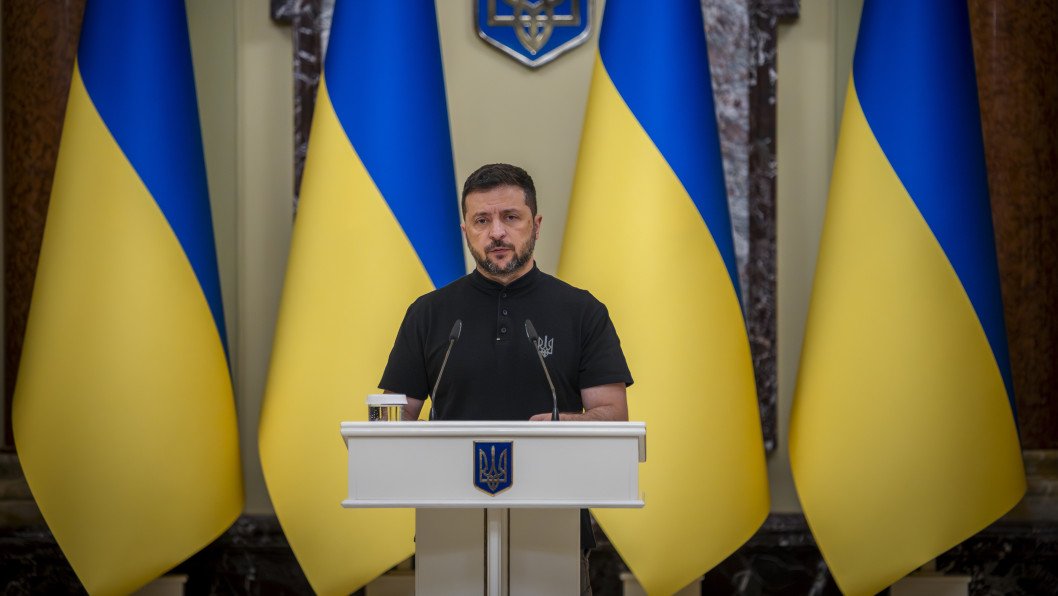
On December 31, as the final seconds of 2025 tick away, President Volodymyr Zelenskyy delivers a focused and forward-looking New Year’s address to the Ukrainian people. Speaking as the country enters its fourth year of full-scale war, Zelenskyy reflects on Ukraine’s efforts toward achieving a just peace and maintaining national resilience.
Read the full text of Zelenskyy’s New Year’s message—a call for solidarity, a plea for resolve, and a reminder that even in war, the human spirit and the hope for peace endure.
Dear Ukrainians!
In just a few minutes, the new year will begin. And I would give anything in the world if, in this address, I could say that peace will also come in just a few minutes. Unfortunately, I cannot say that yet. But with a clear conscience, I—all of us—can say that Ukraine is truly doing everything for peace. And continues to do so.
I returned to Kyiv yesterday, at 6 a.m. Our team spent nearly 50 hours on the road. The peace agreement is 90 percent ready. Ten percent remains. And that is far more than just numbers. Those ten percent contain, in fact, everything. Those are the ten percent that will determine the fate of peace, the fate of Ukraine and Europe, how people will live. Ten percent to save millions of lives. Ten percent of the determination needed for peace to work one hundred percent. Ten percent of the unity and wisdom so desperately needed—Ukrainian, American, European, from the entire world. Ten percent to peace.
I want all of us to be on the same page right now—to understand reality in the same way, to be armed not only on the battlefield, but also with the truth. The truth about who truly wants what. What does Ukraine want? What does America want? What does Russia want? What do Europe and the entire world want?
Let us begin with the most important thing. What does Ukraine want? Peace? Yes. At any cost? No. We want the end of the war – not the end of Ukraine. Are we tired? Extremely.
Does that mean we are ready to surrender? Those who think so are deeply mistaken. And clearly, over all these years, they still have not understood who Ukrainians are. A people who have held on through 1,407 days of a full-scale war. Just take in that number. That is longer than the Nazi occupation of many of our cities during World War II. 1,407 days of an unconquered Ukraine.
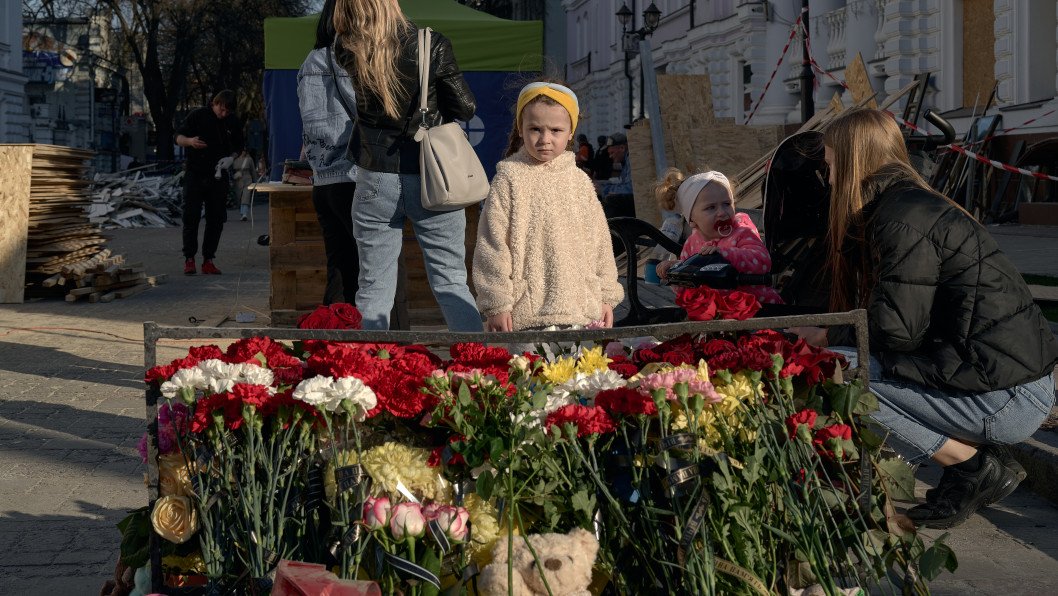
A country that, in effect, spends every night in shelters. Every day—in struggle. Often—without electricity. Often—without sleep, holding positions for many, many days. Yet always—without panic, without chaos, without division, in unity—so that we can have peace.
Do we want the war to end? Absolutely.
Why has it not happened yet? The answer is right next door to our country. Can Russia end the war? Yes. Does it want to? No. Can the world force it to do so?
-4f462e99384b26a51e30f0968fbef267.jpg)
Yes—and only that way will it work. Why does the world not do this to the full extent? Let us break it down. Step by step. Honestly. As it truly is. Our people know this better than anyone. Russia does not end its wars on its own. There has never been a war in history that they ended of their own free will. Only pressure from others – only coercion from others, which they themselves call a goodwill gesture.
This has been the case every year Russia has fought someone—that is, throughout its entire existence.
This can be confirmed by everyone against whom Moscow has waged war at different times. Poland, Türkiye, Finland, Syria, Georgia, Abkhazia, Ossetia, Chechnya—and the list can go on endlessly, because almost the entire territory of Russia was assembled through wars. This is who we are dealing with. We—Ukraine, Europe, the United States, and the entire world.
Withdraw from Donbas, and everything will be over. That is how deception sounds when translated from Russian—into Ukrainian, into English, into German, into French, and, in fact, into any language in the world. Does anyone still believe them? Unfortunately. Because too often, the truth is still avoided and called diplomacy, though in reality it is simply lies in suits.
We bring you stories from the ground. Your support keeps our team in the field.
That is why there is pressure on Ukraine—yes. That is why we keep fighting the way we do and proving what should have been obvious long ago: that after the occupation of Crimea, the seizure of parts of Donetsk and Luhansk regions, the full-scale invasion on February 24, after Bucha, Mariupol, Olenivka, and everything the Kremlin has been doing all along—taking them at their word is nothing less than a verdict. A verdict against shared international security. And against every leader whose duty is simply to protect their people.
Have our arguments been heard? We very much hope so. Have they agreed with us? Not fully. Not yet. That is precisely why, for now, we speak of 90 percent, not the full 100 percent, readiness of a peace agreement.
Intentions must become security guarantees. And therefore—be ratified. By the US Congress, by European parliaments, by all partners. A Budapest-style piece of paper will not satisfy Ukraine. Ukraine does not need a Minsk-style meticulously drafted trap. Signatures under weak agreements only fuel war. My signature will be under a strong agreement. And that is exactly what every meeting, every call, every decision is about right now.
To secure a strong peace for everyone. Not for a day, not for a week, not for two months—peace for years. Only then will it truly be a success. For Ukraine, for America, for Europe—and, in truth, for every nation that wants to live, not to fight.
I said this to President Trump. I said it during our first meeting—when everything could have ended in a storm for all of us—and during our recent meeting, which gives hope to all of us. Hope that peace is close, more possible than ever, and that we are capable of securing it together.
And I will be honest—it was not easy at all to achieve such a change in the tone of relations between Ukraine and the United States. From the first meeting in the Oval Office, with all its tense moments, to the conversation at Mar-a-Lago, which made one thing clear: without Ukraine, nothing will work.
Ukraine has defended its right to have a voice. And everyone can see that Ukraine respects itself—and that is why we are respected, Ukraine is respected. And the most obvious proof of this is the seven meetings I had this year with the President of the United States. And no matter where in the world we meet—Washington, New York, The Hague, the Vatican—the US. President always mentions our people and talks about how bravely Ukrainians are fighting.
And for the entire world, such recognition of Ukrainians has become essential. It is a joy to hear this—and a great pride to be the President of such a people.
And of such a state. A state that has stood firm and can reach any enemy military target and oil refinery; that brings the war back to Russia and teaches NATO militaries what modern drones are; that delivers an asymmetric blow to Russia and forces Putin to lie—claiming he has taken Kupyansk three times and personally shot down drones near his own residence. A Ukraine that has mature foresight and its own long-range capabilities—and therefore has arguments; that has wisdom and dignity; and that is ready for compromise—but not for shame.
And I thank every leader who supports Ukraine in this. And who understands the most important thing: today, there are only two options. Either the world stops Russia’s war, or Russia drags the world into its war. And this is shocking – shocking that after so many wars, after four years of such a war, a war in Ukraine, in Europe, we still, unfortunately, have to explain this to many. And we explain it, we repeat it— and even as leaders change, the questions remain the same.
Is America capable of stopping the aggressor quickly and decisively? Absolutely.
Would we want that? Very much. When is it possible? Always. And when is it needed? We needed it back yesterday. And in 2026, it is possible. Sanctions are in place—we are grateful. Sanctions are biting Russia—but only an iron grip will work. Russian oil is already cheap, but their tankers must be stopped completely for the war to stop.
Russian plants are already slowing down, but they must be brought to a halt so that the occupier cannot advance. And Tomahawks in Ukrainian hands would prove only one thing: peace has no alternative. There must be peace. There must be support. And there must be a strong agreement. And then—everything will work.
Does Europe understand this? Yes. Does all of Europe understand it? No. And I do not want that understanding to come to everyone in Europe one day, at four in the morning—the way it came to Ukraine. I do not want that understanding to be brought to Europeans by armored vehicles with the letter “Z” on their streets. And when Putin says, “We’re not going to attack you,” that is the first warning of exactly where his tanks will go and where his drones will fly.
And today we have every right to say this plainly: Ukraine is, in fact, the only shield that now separates Europe’s comfortable way of life from the Russian world. And for most leaders, the question “Why support Ukraine?” does not arise. Because if— God forbid—Ukraine falls, the next questions would be: “Why support Poland?” and “Who will fight for the Baltic states?” and “What is there to do without Ukraine in NATO?”
Europe needs Ukraine. And Ukraine needs Europe. We feel this more than ever. And when, after meetings in the United States, we are on the phone with our partners, and Europeans are not sleeping, everyone is worried, always in touch, and we coordinate with Emmanuel, the President of France, on how to act next.
-8697d57eca9db0e831bc38e9403a73a9.jpg)
And when, on the road back to Kyiv, we speak with the Chancellor of Germany, and Friedrich says, “Air defense will be delivered.” And we speak with Keir Starmer about the need to meet immediately after the New Year, without making any pauses, to have the Coalition of the Willing engaged, and to push through all the documents, and not to lose the United States, and to pressure Russia to comply.
And how absolutely right Giorgia Meloni is when she says: Look, the documents of the agreement must be correct. Peace must be such that Ukrainians accept it. This peace must be approved by Ukrainians. Because if everything is unfair, if the peace is fragile, and Moscow attacks again—she says—I do not want disappointed people in Ukraine then burning portraits of European and American leaders in the squares.
These words—that peace must be dignified—are supported by everyone who is truly doing a great deal for Ukraine: the Netherlands and Sweden, Norway and Poland. And the Prime Minister of Denmark, Mette, who always says: We are not doing enough for Ukraine; we must do more for Ukraine because this is for the defense of all of Europe. And Spain, which stands with us. And the Vatican and the Phanar, with their diplomacy and prayer. Czechia, Romania, Greece. And President Erdoğan.
All countries of the European Union. And this morning, the President of Finland, Alexander Stubb, called me. And every day we talk on the phone with him. And after our important conversations, he always says at the end, “My friend, do not forget to train—because you must be strong, Ukrainians must be strong. We believe in you. We all need you.”
And this kind of our communication with Europe’s leaders—this warmth and the spirit of partnership – means that Ukraine is already part of the European family, and that all negotiating clusters between us have, in reality, long been open. And such unity gives us hope. And such unity between Ukraine and Europe has been proven. We have secured support worth 100 billion dollars. And this is far more than just assistance for two years. It is the resilience of our army. It is peace of mind for our people. It is money, salaries, and pensions—yes, that is life. And it is justice that, in the end, Russia pays for this.
And such unity and concern for Ukraine goes far beyond our continent. We feel it and see it—in Japan, Australia, Canada. I sincerely thank everyone in the world who stands on the light side of history, on the side of Ukraine, and does everything so that Ukraine succeeds in achieving its goal, in pressing forward, in forcing its way to peace.
Dear people!
In just a moment, it will be the New Year. Millions of us are waiting for it. And we will have a New Year, despite everything, because that’s the kind of people we are—we are Ukrainians. We will figure something out, we will prepare something, and we’ll have a good time, delicious food, and a glass of champagne—or, for some, perhaps something stronger. And there will be a toast—very important words. A toast. One for everyone. For millions of Ukrainians.
For our warriors who are now on the contact line. For everyone who gave their life for Ukraine. For all those who save us and teach us every day. For all those who are always on duty—even tonight.
Firefighters, doctors, energy workers. For our people who have returned from captivity and will meet this New Year at home. For all those we are waiting for. For all those who help us. For the war to end. For peace to come. For the enemy to achieve nothing. And they will not. As long as we fight like this. As long as we stand like this. As long as we remain Ukrainians.
Russia will have to end the war—the moment they find one reason for peace more than for fighting. That is why we often say to one another what our guys at the front say: all we need is to hold on for one day longer than they do.
And today we add: to be one step ahead. One hour faster. One decision braver. Even by one tenth – but better. And by ten percent – by those ten percent I spoke about at the beginning – ten percent stronger. And then we will win peace one hundred percent. I wish this to all of us.
Dear Ukrainians!
The year 2025 is coming to an end. Around us is a real winter. And something we have not seen for a very long time—snow for New Year’s Eve. And all the children, of course – and, honestly, the adults too—have been waiting for this.
And it gives a powerful feeling: if we truly want something, sooner or later, it happens. Of course, more than anything else right now, we want peace. But unlike New Year’s snow, it will not simply fall from the sky as a miracle. But we believe in peace, we fight for it, and we work for it.
And we will continue to do so. Because in 2026, we truly want that the skies be calm and the land peaceful; that warmth and light fill our homes—and not 170, but the full 220, as it should be; that all our people return home—from the front, from captivity, from occupation; that we stand; that Ukraine stands.
Happy New Year, dear people!
Glory to Ukraine!
Discuss this article:
-9bd5e1532102621f8fb1c4ba871a3171.png)

-c439b7bd9030ecf9d5a4287dc361ba31.jpg "Photo of Katherina Popilnichenko")