- Category
- Latest news
New Satellite Images Confirm Destruction of Russia’s Be-12 and An-26 in Crimea Airbase Strike
 Prefer U24 Media on Google
- Authors


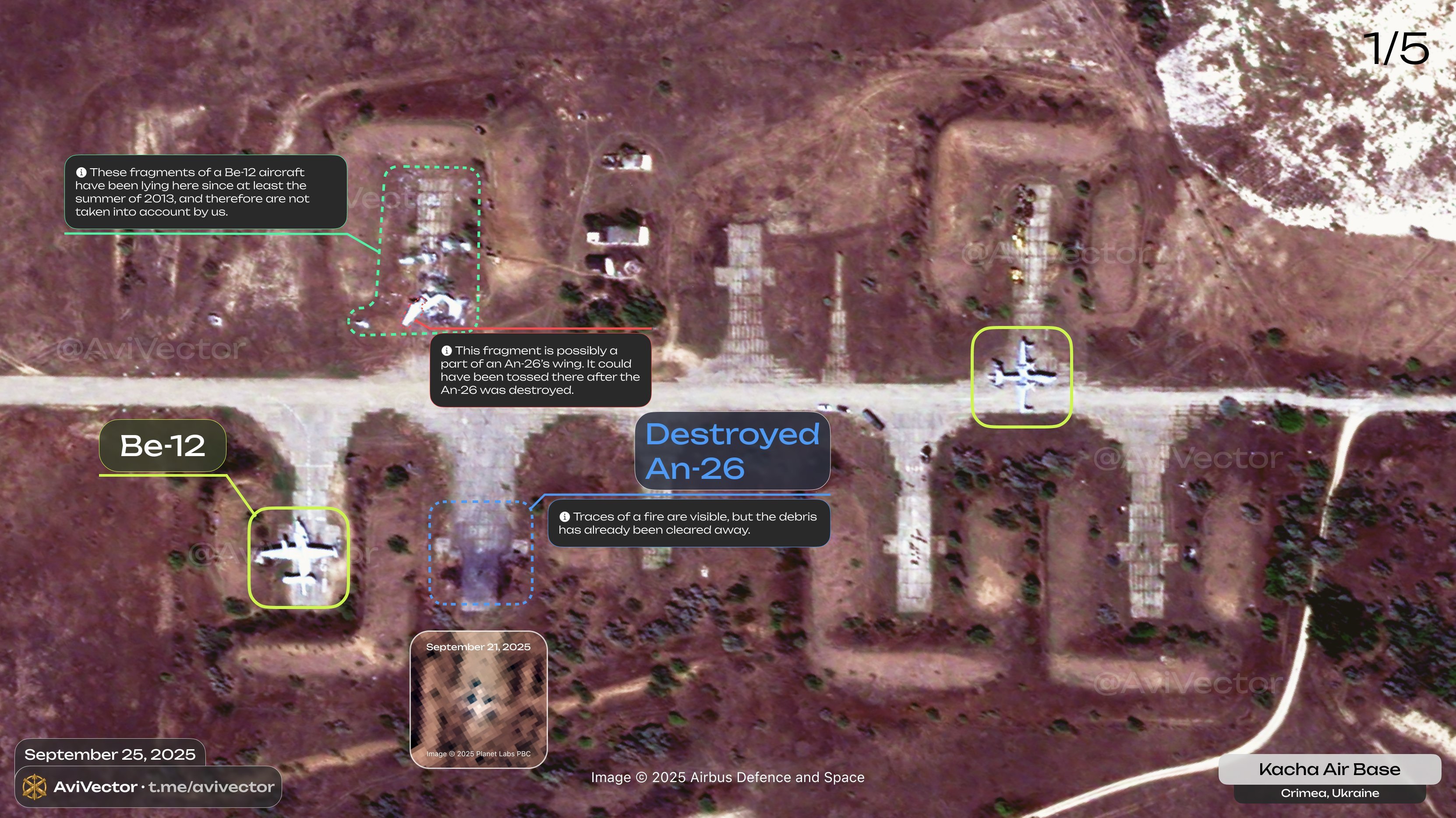
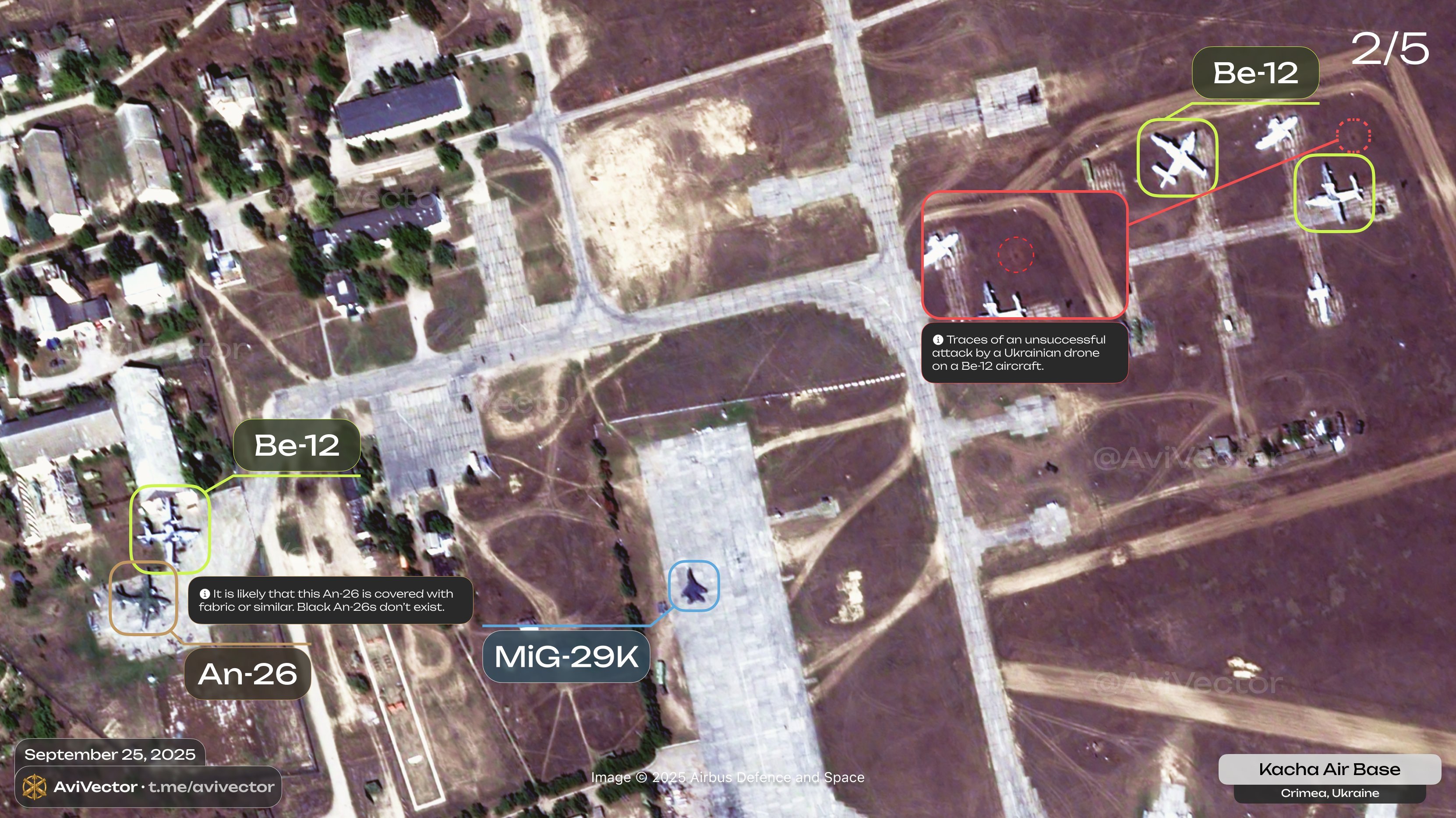
Satellite imagery has confirmed the results of recent Ukrainian intelligence strikes against Russian air bases at Kacha and near Simferopol in occupied Crimea, according to the images, published by OSINT-analyst AviVector on September 28.
Photos taken on September 25 revealed five Be-12 amphibious planes, one Antonov An-26 transport, three MiG-29K fighter jets, and a combined eight helicopters (Mi-8 and Ka-27/29 models) on site.
🔻 Satellite images of 🇷🇺 Kacha Air Base as of September 25, 08:22 UTC
— AviVector (@avivector) September 27, 2025
The airbase housed 5 Be-12 (Mail), 1 An-26 (Curl), 3 MiG-29K (Fulcrum-D), 4 Mi-8 (Hip) and 4 Ka-27/29 (Helix).
During the week, the Main Intelligence Directorate of Ukraine reported the destruction of 2… pic.twitter.com/e1StpJJ3OM
The analysis confirmed the complete destruction of an An-26 transport aircraft with tail number RF-46878 (“Blue 30”). Only burn marks remained at the site, with wreckage already removed. A second An-26 spotted earlier could not be identified.
One Be-12 amphibious plane sustained damage and was removed from the base, while another Be-12 was also taken away. A large crater was noted near a third aircraft, though it likely survived intact.
-8d3afcc470e0fdb4e949c599b0f37216.png)
An attempt to strike a Mi-8AMTSh helicopter was observed, but no visible damage was confirmed—analysts believe it was either flown out or relocated.
At the Simferopol site, satellite images revealed that one Mi-8 helicopter had been destroyed and another damaged.
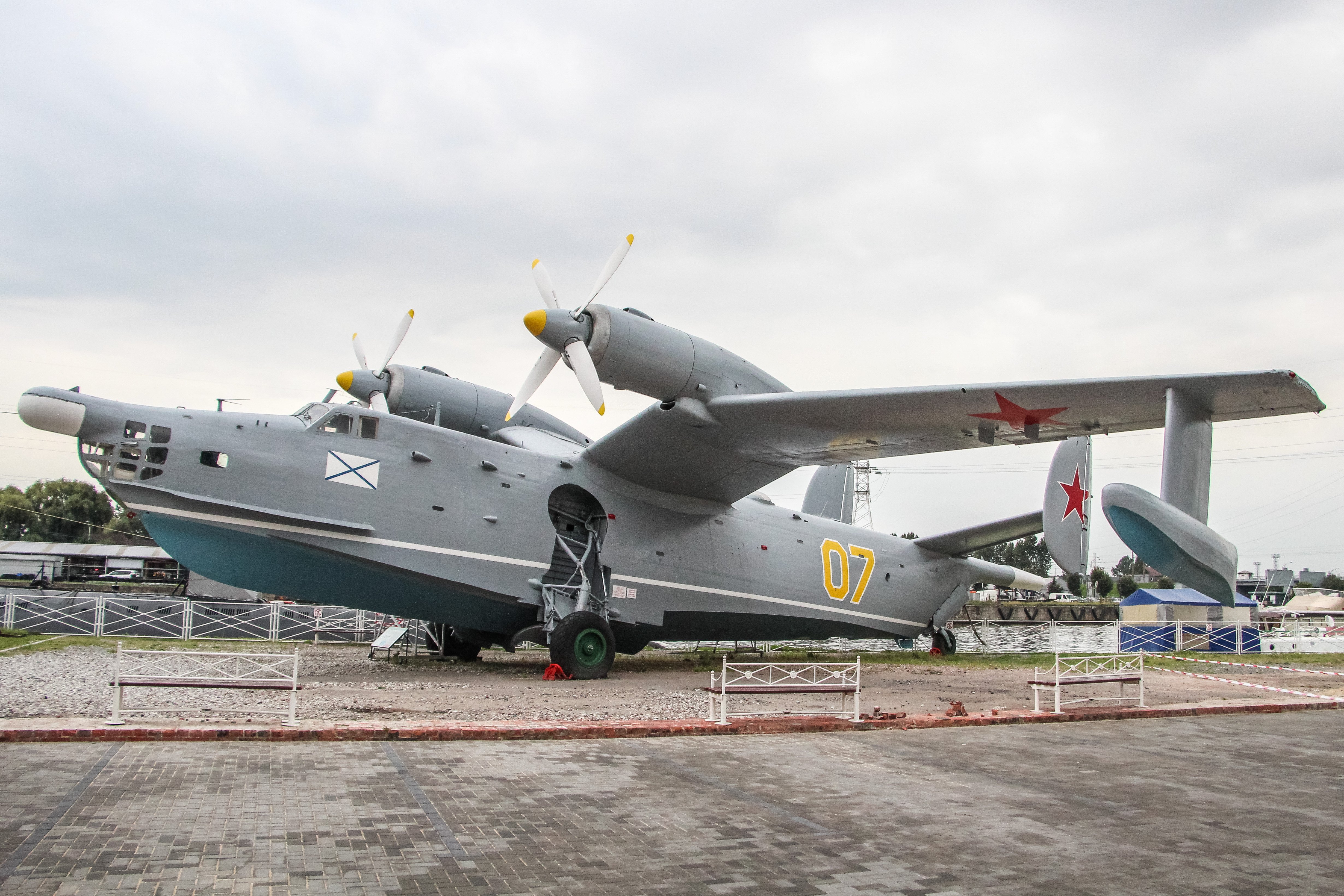
The Be-12 “Chaika” is one of the oldest operational aircraft in Russia’s arsenal. First introduced in 1968, the amphibious anti-submarine plane was officially retired from service in 1992 due to poor technical condition. Yet the Russian Black Sea Fleet continues to operate a handful of them “until their resources are fully exhausted.”
While technically amphibious, Russian crews no longer risk water takeoffs, using the aircraft exclusively from land bases due to safety concerns.
The Be-12 has a fuselage and wingspan of 30 meters, a maximum takeoff weight of 36 tons, and a flight range up to 4,000 kilometers.
Its patrol speed averages 320 km/h, with a maximum of 550 km/h. It can carry 1,500–3,000 kilograms of ordnance, though in practice its capabilities are severely limited by age and maintenance issues.
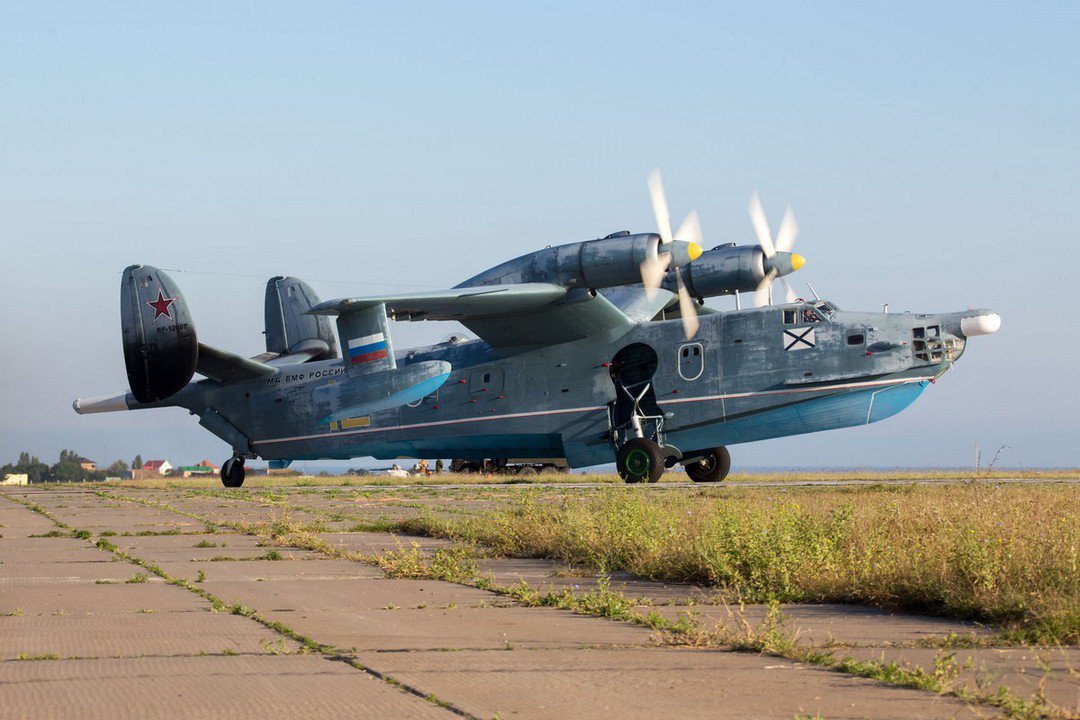
Estimates of how many Be-12s remain operational vary. The Military Balance 2023 listed just six aircraft, primarily in search-and-rescue roles rather than anti-submarine warfare.
Open-source satellite photos from July 2022 showed 7–8 Be-12s parked at Kacha, with only four to five assessed as airworthy, assigned to the 318th Independent Mixed Aviation Regiment of the Black Sea Fleet.
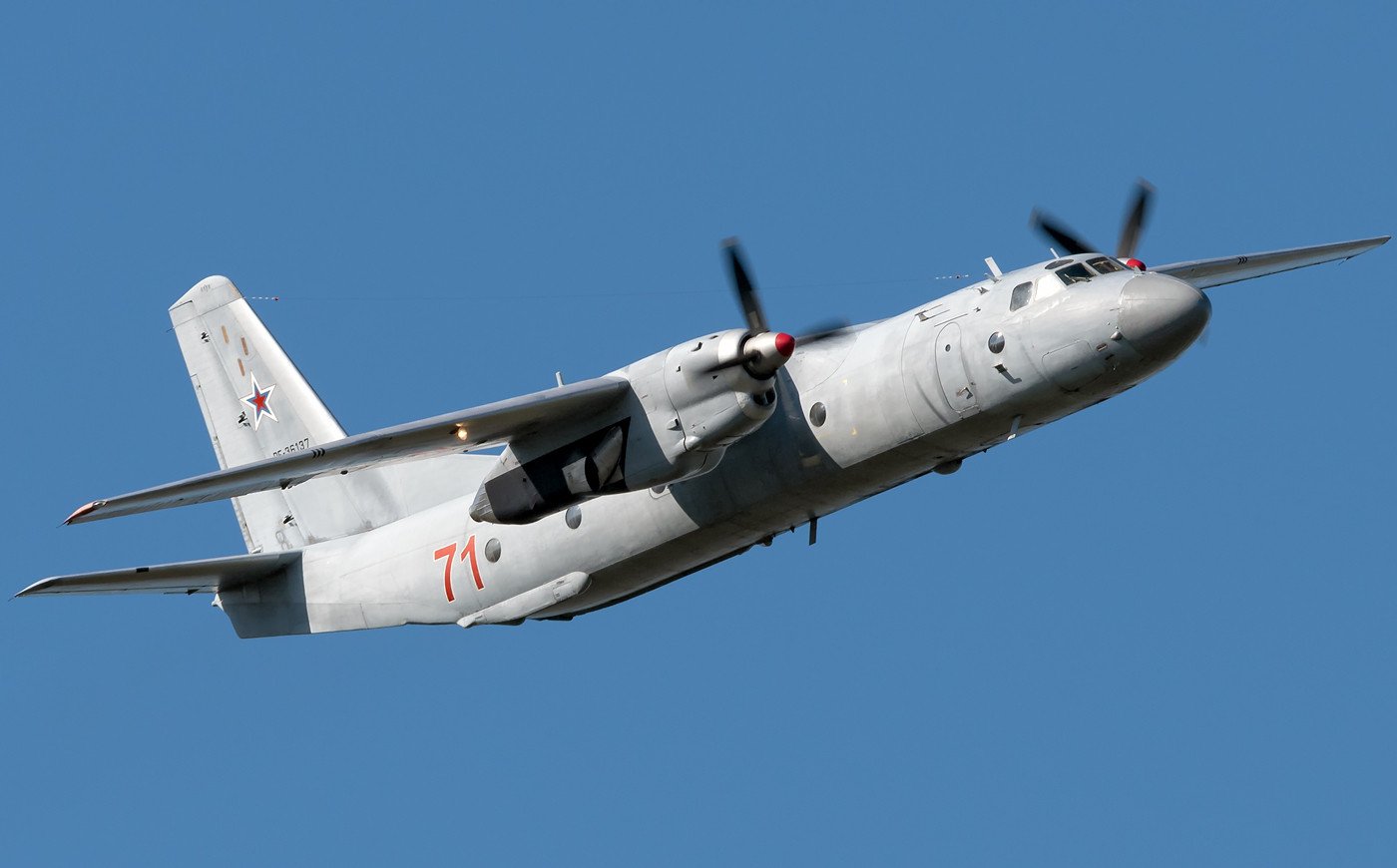
The Antonov An-26 (NATO reporting name: Curl), also destroyed in the strike, is a Soviet-era twin-engine turboprop transport designed between 1969 and 1986.
Earlier, Ukraine’s Armed Forces shot down a Russian Su-34 fighter-bomber over the Zaporizhzhia axis on the morning of September 25.
Discuss this article:


-c439b7bd9030ecf9d5a4287dc361ba31.jpg "Photo of Katherina Popilnichenko")