- Category
- Latest news
Quantum Frontline Industries to Deliver First Batch of Linza Tactical Drones for Ukrainian Military
 Prefer U24 Media on Google
- Authors


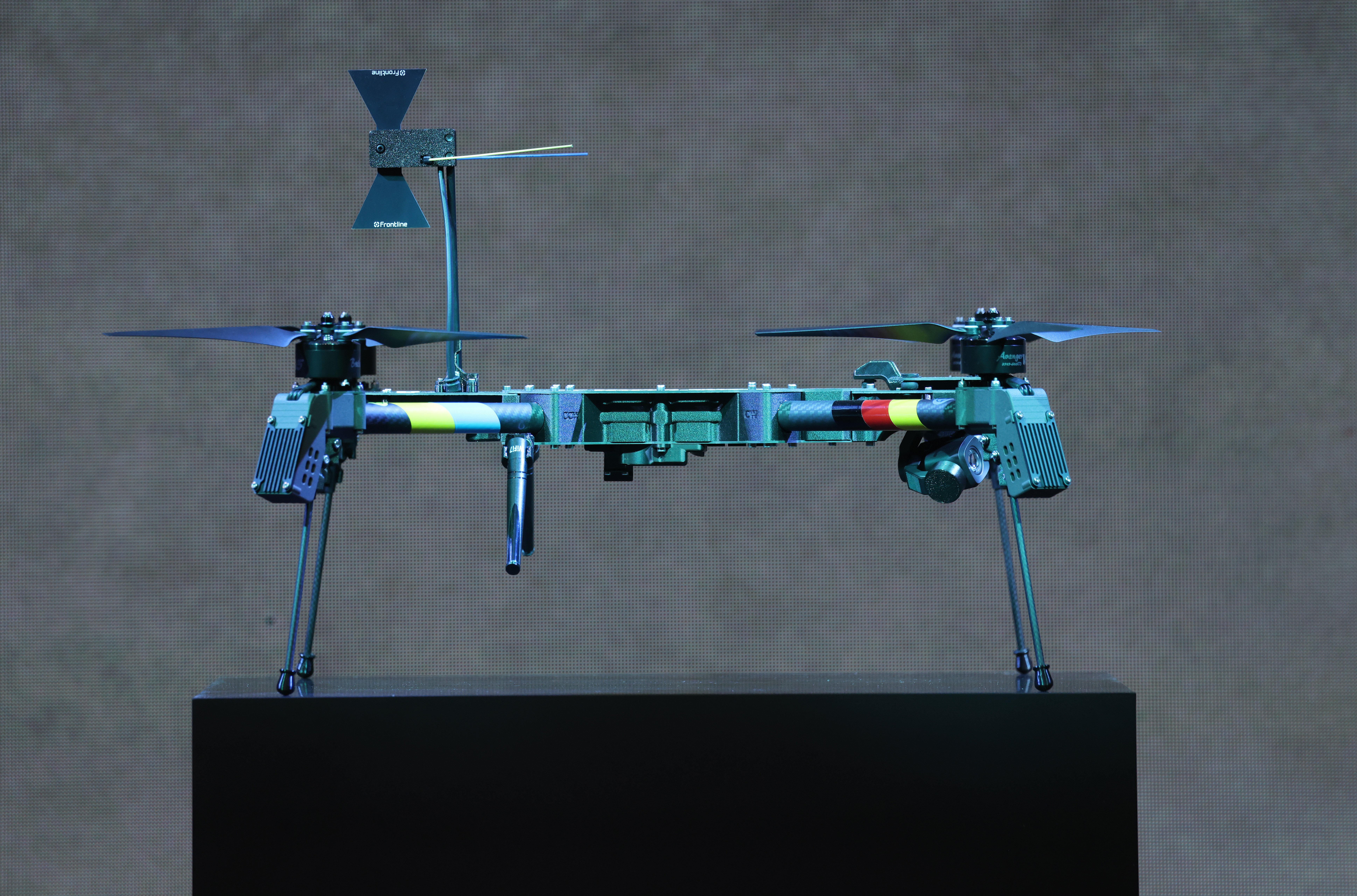
Quantum Frontline Industries, a German-Ukrainian joint venture, has successfully completed the production of its first batch of drones, which are now set to be delivered to the Ukrainian Armed Forces.
According to Defender Media on April 1, this marks the transition from initial production setup to stable serial manufacturing within the framework of the German-Ukrainian cooperation model.
We bring you stories from the ground. Your support keeps our team in the field.
Following the launch of production, Quantum Frontline Industries plans to scale up its operations and accelerate deliveries over the coming year.
Matthias Lena, CEO of Quantum Frontline Industries, stated that the company's priority is to increase production volumes, stabilize processes, and ensure continuous supply in line with the Ukrainian military’s needs.
Mikita Rozhkov, Business Development Director at Frontline Robotics, emphasized that the company is focused on meeting the Ukrainian military’s demand for tactical drones, while ensuring stable and predictable deliveries.
According to Defender media, the Linza unmanned systems, developed by Frontline Robotics and battle-tested in combat conditions, are part of the “Build with Ukraine” initiative.
In February, Frontline Robotics has introduced the upgraded Linza 3.0 bomber drone, which is now in operation with over 60 units of the Ukrainian Armed Forces.
The latest version of Linza brings several improvements, including enhanced tactical range, greater payload capacity, and increased reliability. Designed as a versatile multi-purpose platform, Linza 3.0 can perform a variety of functions including target strikes, mine deployment, reconnaissance, logistics support, relay system operations, and even drone evacuation.
The drone is equipped with an AI-powered visual-inertial navigation module and is available in both day and night configurations. It can maintain its position above a target at altitudes of up to 200 meters, stabilize during landing, and display its flight path on a map during loiter mode.
“We often see Linza referred to as the ‘Ukrainian Mavic’ in the media. This comparison is understandable, but unlike commercial drones, we designed this platform specifically for military tasks,” said Frontline Robotics.
The reference to the "Mavic" alludes to the DJI quadcopters commonly used in the field for their user-friendly design and high-quality optics. However, these drones, which operate on civilian frequencies, are vulnerable to interference from Russian electronic warfare systems.

The Linza 3.0, on the other hand, is militarized to address this limitation, offering encrypted communications and the ability to carry heavier payloads, making it better equipped to withstand the challenges of a high-jamming environment.
At the same time, Ukraine is working swiftly to develop cost-effective, domestically produced air defense systems in response to ongoing Russian drone and missile strikes targeting its cities and critical infrastructure.
Unlike large-scale Western laser programs, such as the US Navy’s $150 million Helios project, Ukrainian developers claim to have created their laser system in just two years at a fraction of the cost—only a few million dollars. Each unit is expected to cost just a few hundred thousand dollars, the report added.
Discuss this article:





-c439b7bd9030ecf9d5a4287dc361ba31.jpg "Photo of Katherina Popilnichenko")