- Category
- Latest news
Russia Could Strike Madrid With Shahed Drones From Belarus, Pushing Threat Beyond Germany and Italy
 Prefer U24 Media on Google
- Authors


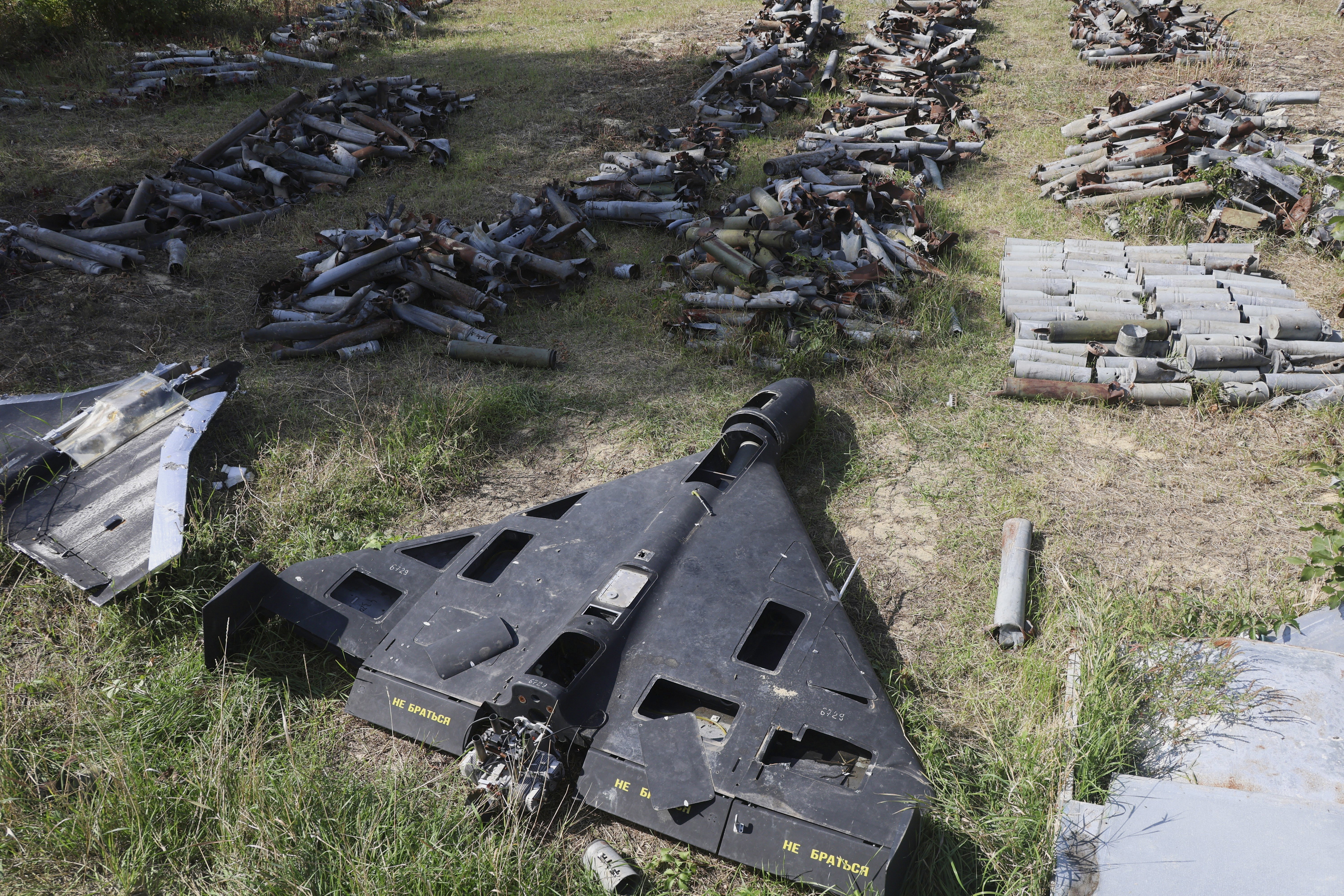
Russia already has the infrastructure to launch Shahed drones against several NATO countries in Europe, according to Defense Express on September 23.
Ukrainian military intelligence has assessed that the range of the Russian-modified Shahed, known as Geran-2, extends between 1,800 and 2,500 kilometers. This capability puts much of the continent within reach, depending on where launch sites are positioned.
Defense Express reports that current Russian launch infrastructure in occupied Crimea near Cape Chauda and in the Bryansk region could already support strikes on Denmark, Germany, and Italy.
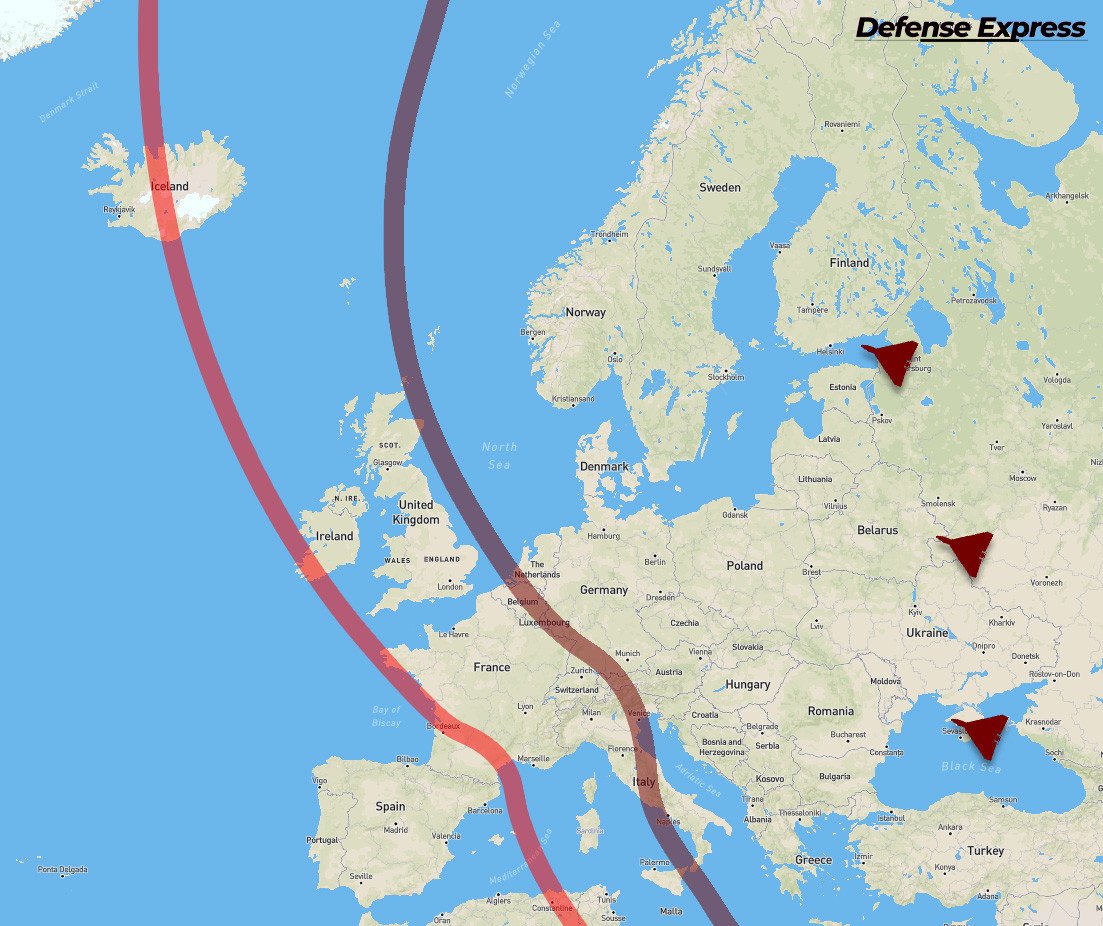
Another possible location is the area around St. Petersburg, which offers favorable logistics and reach into northern and central Europe.
At a range of 1,800 kilometers, Shahed drones could target Scandinavian countries, the Netherlands, large parts of Germany, and southern Italy.
Extending the maximum range to 2,500 kilometers places all of the United Kingdom, Italy, and most of France within potential striking distance.
According to the report, Russia could rapidly establish new launch sites within months. The airbase at Osovtsy in Brest region, Belarus, is highlighted as a potential deployment area, along with Kaliningrad.
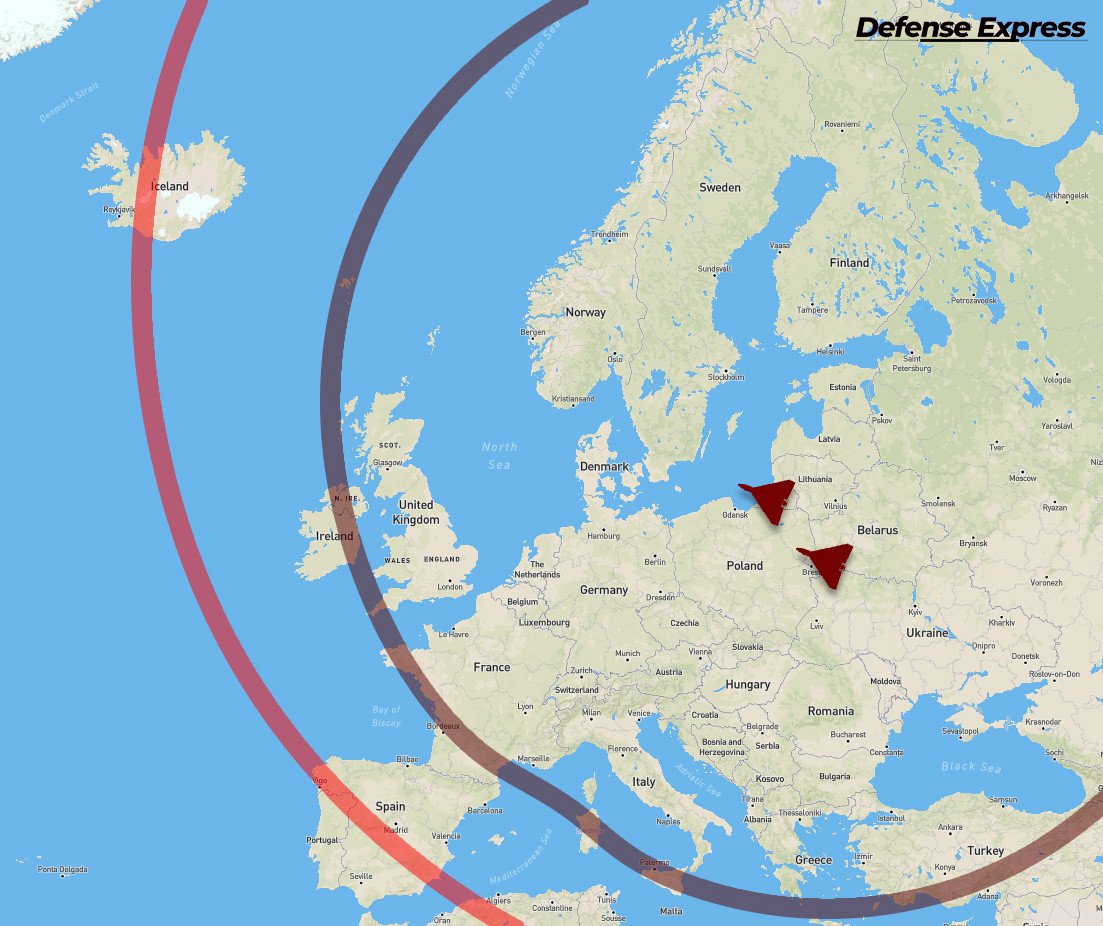
Using these sites would provide an additional 700 kilometers of effective reach, putting almost all of Europe within the operational radius of Shahed drones.
At maximum range, even Madrid would fall within the strike zone. Only Lisbon would remain outside of reach, meaning nearly every European capital is theoretically vulnerable.
While these are theoretical maximum ranges, Shahed drones are typically flown on complex routes to avoid air defense systems.

Defense Express notes that the recent Russian use of lightweight “Herber” drones in Poland exposed gaps in NATO’s eastern air defense coverage. Once drones penetrate the first line of defenses, they may move further into European territory with limited interception.
The analysis also stresses the cost imbalance: European air defense systems rely on interceptors that are hundreds of times more expensive than the drones themselves, a factor Moscow is likely to exploit.
Earlier, demand for bunkers in Germany surged after Russian Shahed drones breached Polish airspace during a mass strike on Ukraine. According to Bild on September 22, German companies such as BSSD Defence reported a 50 percent increase in inquiries, while Deutsche Schutzraum-Zentrum confirmed heightened interest in protective shelters.
Discuss this article:


-c439b7bd9030ecf9d5a4287dc361ba31.jpg "Photo of Katherina Popilnichenko")

-72b63a4e0c8c475ad81fe3eed3f63729.jpeg "Photo of Cyril Barabaltchouk")