- Category
- World
For the First Time in Over 30 Years, Berlin Heard the Sound of Sirens
When President John F. Kennedy stood in West Berlin in 1963 and declared “Ich bin ein Berliner,” his words rang out as a Cold War promise of protection. More than 60 years later, Berlin is again defined by sound—not speeches but sirens—as Europe rediscovers a warning system once thought obsolete.
 Prefer U24 Media on Google
- Authors


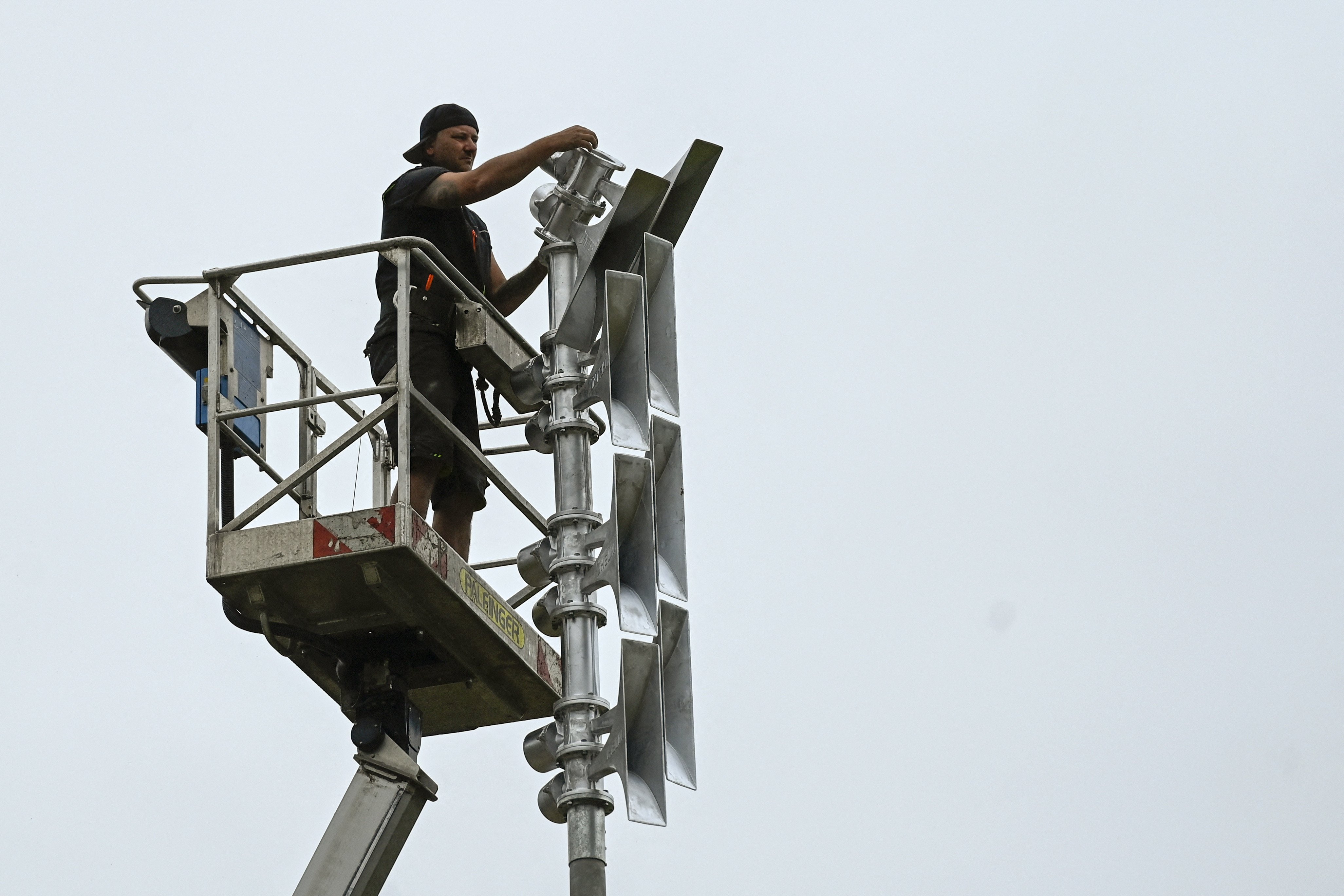
Beeping, howling, ringing—that is how the German capital’s official website described the sounds Berliners would hear on September 11, as more than 200 newly installed sirens were switched on across the city. At 11 a.m. sharp, a one-minute rising and falling tone filled the air, followed later by a steady one-minute all-clear. The announcement, delivered by Interior Senator Iris Spranger, stresses the signals will be “very loud.”
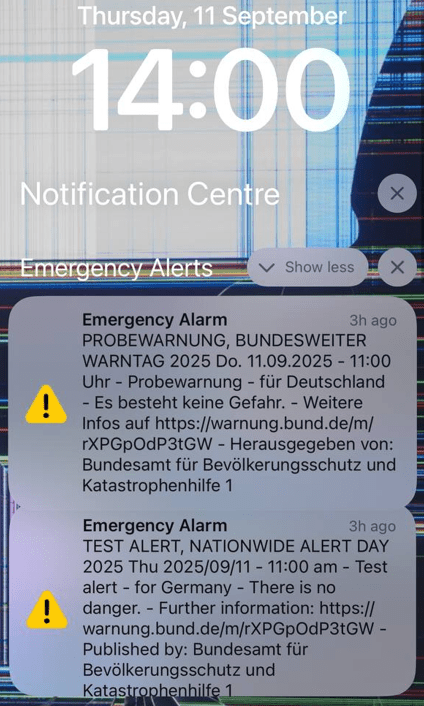
It was also the first time since 1993 that Berliners heard such alarms, after the city dismantled its Cold War-era network.
The idea of using loud sounds to raise the alarm is as old as civilization. Folklore from China tells of watchmen blowing into hollowed acorns to warn of approaching Mongol raiders, while guards along the Nile pressed papyrus reeds between their palms to create a piercing noise. For centuries across Europe, church bells rang out not only to mark the hours but also to alert villagers of dangerous attacks.
In the late 1800s, police in England were issued whistles to signal emergencies. By the time warfare modernized during the First and Second World Wars, they gave way to mechanical air raid sirens—devices powerful enough to be heard by entire communities.
But what exactly are air raid sirens, and how did they develop into the systems we know today?
What are air raid sirens?
Scottish physicist John Robison first outlined the principle of the siren in 1799 as a musical instrument. In 1819, French physicist Charles Cagniard de la Tour improved on the design, noting it could produce sound underwater and naming it a ‘sirène’ after the singing creatures of Greek mythology. Today, air raid sirens are powerful mechanical or electronic warning devices that use this principle to emit loud, wailing tones, alerting civilians to imminent danger such as air strikes, missile attacks, or other emergencies.
From mechanical rotors to electronic systems
Cagniard’s early models used a rotor-and-stator: pressurized air passed through their holes to create rhythmic pulses of sound. Later came dual-tone sirens with two concentric rotors, producing two pitches at the same time—commonly a minor third apart, a three-semitone interval often associated in Western music with tension and unease.
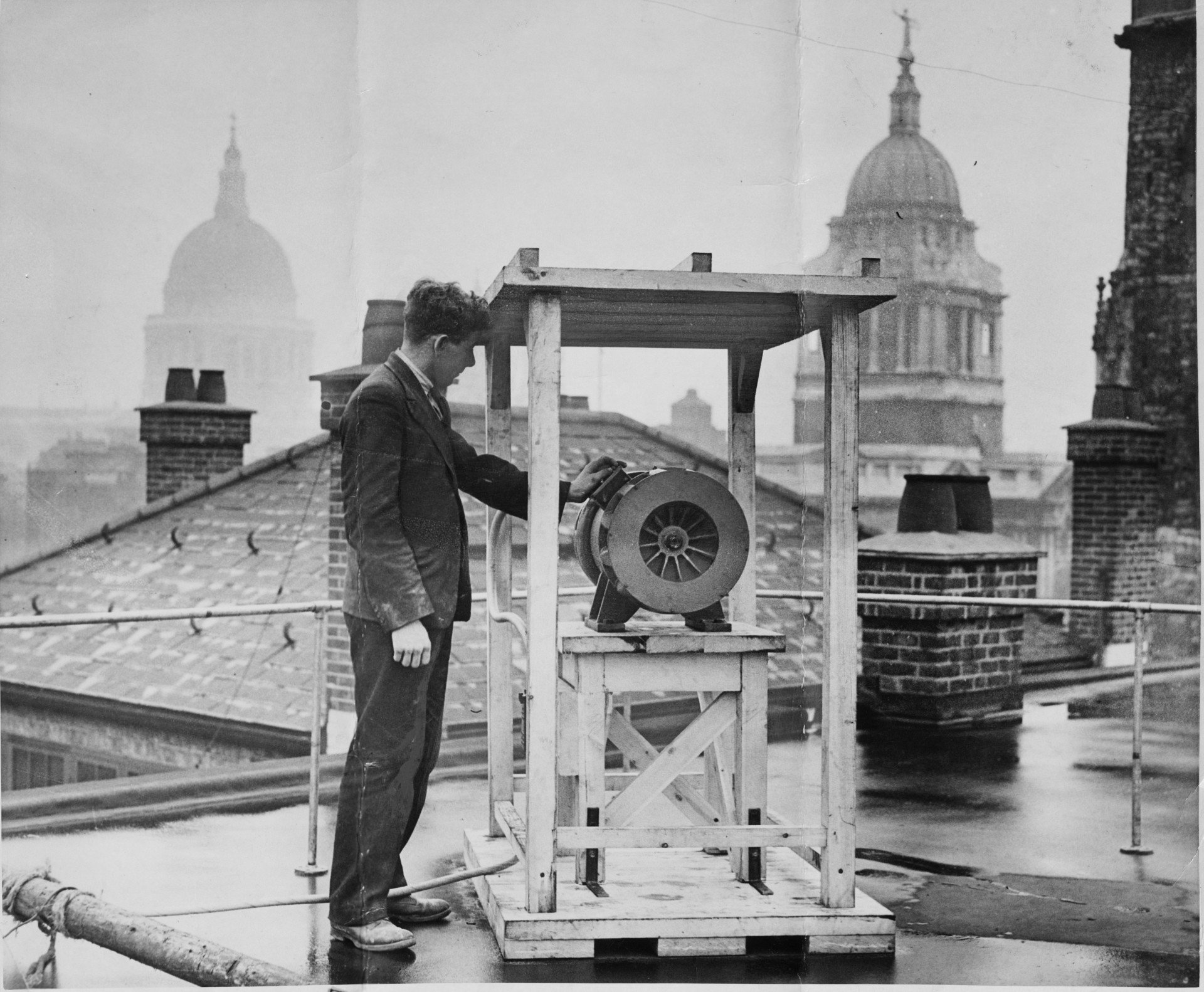
Most warning sirens are tuned between about 300 and 1000 Hz—roughly the middle of the piano keyboard—where such dissonant tones project well outdoors yet still penetrate walls and windows. Their unmistakable rising-and-falling wail, produced by changing motor speed, was first heard on a mass scale during the Blitz in London in World War II.
Modern electronic sirens build on these principles with amplifiers and loudspeakers that can deliver prerecorded voice messages. Today’s large outdoor warning sirens typically produce 120–130 decibels at the source, making them audible 2-3 km away.
From their wartime origins, sirens have become a fixture of public safety in many countries, where regular tests and drills ensure citizens know the sound and how to respond.
How air raid sirens work in different countries
Europe
The German government decided in 2019 to introduce Warning Day, with annual alarm tests to be held nationwide on the second Thursday of every September, to raise awareness of catastrophes like floods or forest fires. In the very first drill in 2020, the streets of Berlin stayed quiet, chiefly because, as city spokesperson Martin Pallgen admitted, “there are no sirens here.” The final units of Berlin’s warning network were dismantled in 1993, as they were no longer considered necessary.
In the Netherlands, 4,200 warning sirens sound at exactly noon on the first Monday of every month, each wailing for 1 minute 26 seconds. In France, the SAIP network blares every first Wednesday at midday for 1 minute 41 seconds, a rising-falling cycle repeated three times.
In Austria, the first Saturday of October brings Europe’s largest coordinated siren test: more than 8,000 sirens sounding nationwide between 12 and 1 pm, cycling through three signals—a 3-minute steady warning, a 1-minute rising and falling alarm, and a 1-minute steady all clear. Neighboring Switzerland runs its own nationwide drill each year on the first Wednesday of February, when over 7,200 sirens roar across all cantons. The test begins at 1:30 p.m. with a regular ascending and descending tone, repeated once after a two-minute interval; in dam regions, a special water alarm follows.
Across the Nordic countries, Sweden's “Hesa Fredrik” system wails four times a year—on the first Monday of March, June, September, and December—with a two-minute cycle of seven-second bursts. Norway runs biannual drills each January and June, its signal meaning simply: “Important message—seek information.” Denmark sticks to one nationwide test every first Wednesday in May at noon, while Finland goes monthly, sounding a brief seven-second tone on the first Monday.
Czechia sounds a steady 140-second tone on the first Wednesday of every month at noon, delayed by 10 minutes in the Olomouc Region to not interfere with the striking of the Astronomical Clock. Hungary’s system is more specialized with the MoLaRi network, launched in the early 2000s to cover chemical and industrial sites. Tests occur on the first Monday of each month at 11:00, usually in silent mode but sometimes with full siren blasts.
Americas
On other continents, sirens are less tied to war than to disaster and tragedy. After the deadly 2010 floods and landslides in Brazil, more than 100 alarms were installed across Rio de Janeiro’s hillside communities to warn residents of life-threatening rains. The Pacific’s seismically active Ring of Fire triggers earthquakes, tsunamis, and volcanic eruptions, threatening coastlines from Japan and Hawaii to California and Chile—places where coastal sirens stand ready to clear beaches and towns in minutes.
America’s outdoor warning sirens grew out of Cold War fears of nuclear attack and the nationwide NAWAS system. Today, they’re most often used for tornado alerts, especially in the Midwest. In Wisconsin’s Dane County, for example, 144 sirens cover nearly every community, tested at noon on the first Wednesday of each month with a three-minute steady tone. If severe weather is forecast within six hours of a scheduled test, the sirens are not sounded.

Present-day Ukraine
In Ukraine today, sirens are no relic of drills — they are a daily reality of Russia’s full-scale war. The familiar rising-falling wail, now paired with smartphone apps, is a grim soundtrack that can cost a night’s sleep—and, when unheeded or unheard, even cost lives. As President Volodymyr Zelenskyy has said in his evening addresses: “We must pay attention to air-raid warnings.”
UNITED24 ambassador and actor Mark Hamill, best known as Luke Skywalker, lends his voice to the Ukrainian Air Alert mobile app, warning users with lines like “Don’t be careless. Your overconfidence is your weakness” and closing with “May the Force be with you” once the danger has passed. Each alert sends people hurrying into basements or metro stations, a routine that recalls Londoners sheltering in the Underground during the Blitz of World War II.
While the 2019 decision to overhaul Germany’s siren systems was initially aimed at tackling natural disasters, Berlin’s plan to have 450 sirens active by the end of this year signals escalating instability. As Friederike von Holtum, a Berlin Senate official, put it: “The threat situation is a little different now.” Long dismissed, air-raid warning systems have been revived in response to Russian aggression and its war in Ukraine—from Kyiv and now Berlin, the continent echoes in the sound of sirens.
Discuss this article:
-6c7b568bf1f65853b7afd9dc1c3ca1fe.jpeg)


-c439b7bd9030ecf9d5a4287dc361ba31.jpg "Photo of Katherina Popilnichenko")