- Category
- Latest news
Russia Liquidates 71% of Its Gold Reserves to Finance War Effort—And the Sell-Off Isn’t Over
 Prefer U24 Media on Google
- Authors




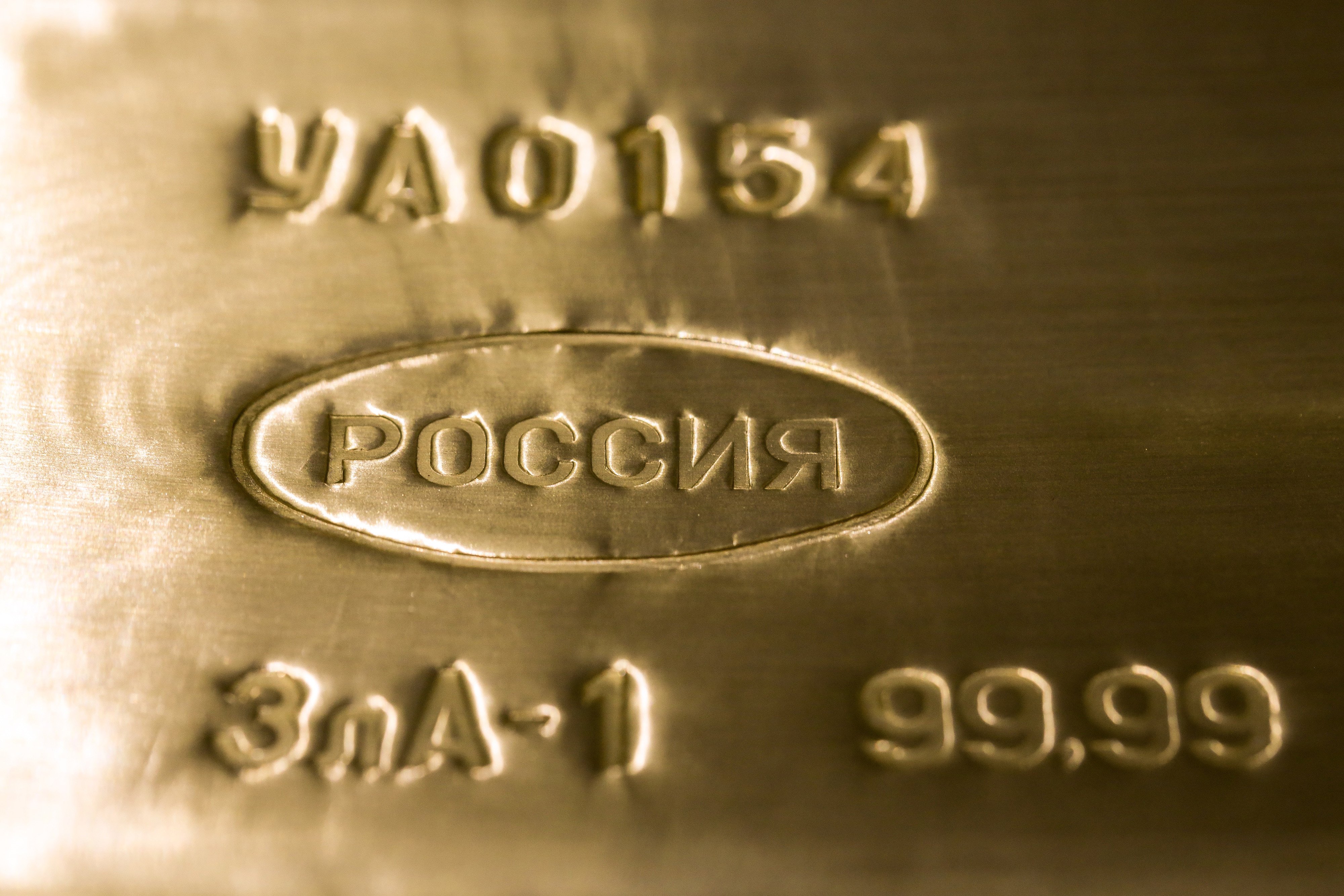
The Russian government has liquidated nearly three-quarters of its sovereign gold reserves held in the National Wealth Fund (NWF) over the past three years, using the proceeds to finance its budget, state-owned banks, large infrastructure projects, and the ongoing war in Ukraine.
According to data from Russia’s Ministry of Finance, the volume of gold on the NWF’s balance sheet dropped by 71% between May 2022 and January 2025—from 554.9 metric tons to just 160.2 tons.
The figures, detailed by The Moscow Times on January 20, reveal that gold has become a primary stopgap as traditional revenue sources have weakened under international sanctions.
The Ministry of Finance sold gold from the NWF in nearly every month of 2023 and 2024. In 2023 alone, the fund’s holdings were reduced by 196 tons—about one-third of its starting total.
The pace accelerated in 2024, with a further 171-ton drawdown. Despite a mid-2024 addition of 72.4 tons of newly purchased gold, the bulk of this was promptly resold.
The pattern continued through the end of the year. By January 2025, the total volume of liquid assets in the NWF—comprising gold and yuan-denominated holdings—stood at 4.1 trillion rubles. Though nominally up 350 billion rubles from the previous year, this total represents a 60% decline from pre-war levels, when the fund’s assets exceeded 9.7 trillion rubles.
The 2026 budget originally projected no withdrawals from the NWF, aiming to preserve what remained of the state’s financial cushion. However, new rounds of US sanctions under US President Donald Trump and a steep drop in the price of Russian oil forced the Kremlin to revise those plans.
According to the Ministry of Finance, the average price of Russian Urals crude fell to $39 per barrel—well below the $59 assumed in the federal budget. To cover the shortfall in oil and gas revenues, the ministry began selling gold and foreign currency at a rate of 12.8 billion rubles per day from January 16 to February 5, 2026. The Moscow Times reports this to be the fastest pace of asset sales since the start of such interventions.
Analysts at VTB Bank estimate that if current market conditions persist, Russia may spend up to 2.5 trillion rubles from the NWF in 2026—amounting to approximately 60% of its remaining liquid reserves.
The federal budget deficit in 2025 reached 5.7 trillion rubles, five times larger than initially planned and the highest since the pandemic, according to data reviewed by The Moscow Times. Oil and gas revenues fell by 25% year-on-year.
-3aed29944c85ef24f42784c3821fdca4.png)
The 2026 budget includes new revenue measures, such as an increase in the value-added tax (VAT) and higher levies on small businesses, with the government targeting a reduced deficit of 3.8 trillion rubles. However, according to economists at Gazprombank cited by The Moscow Times, the actual budget shortfall may remain in the range of 5 to 5.5 trillion rubles unless oil prices recover significantly.
Natalya Milchakova, chief analyst at Freedom Finance, noted that the drop in oil exports—caused by logistical constraints and weakened demand—continues to strain Russia’s fiscal position. She warned that if the discount on Urals crude relative to Brent persists, the government may be forced to further increase taxes on both businesses and households.
Earlier, Interfax reported that Russia began selling physical gold from its reserves for the first time, marking a break from previous internal transfers within the National Wealth Fund.
Discuss this article:
-4a56a6b482ec132402c16ef6fcabf9a2.png)


-c439b7bd9030ecf9d5a4287dc361ba31.jpg "Photo of Katherina Popilnichenko")