- Category
- Latest news
Russia Uses Satellite Intelligence to Spy on US and Allied Sites for Iran
 Prefer U24 Media on Google
- Authors

-72b63a4e0c8c475ad81fe3eed3f63729.jpeg "Photo of Cyril Barabaltchouk")
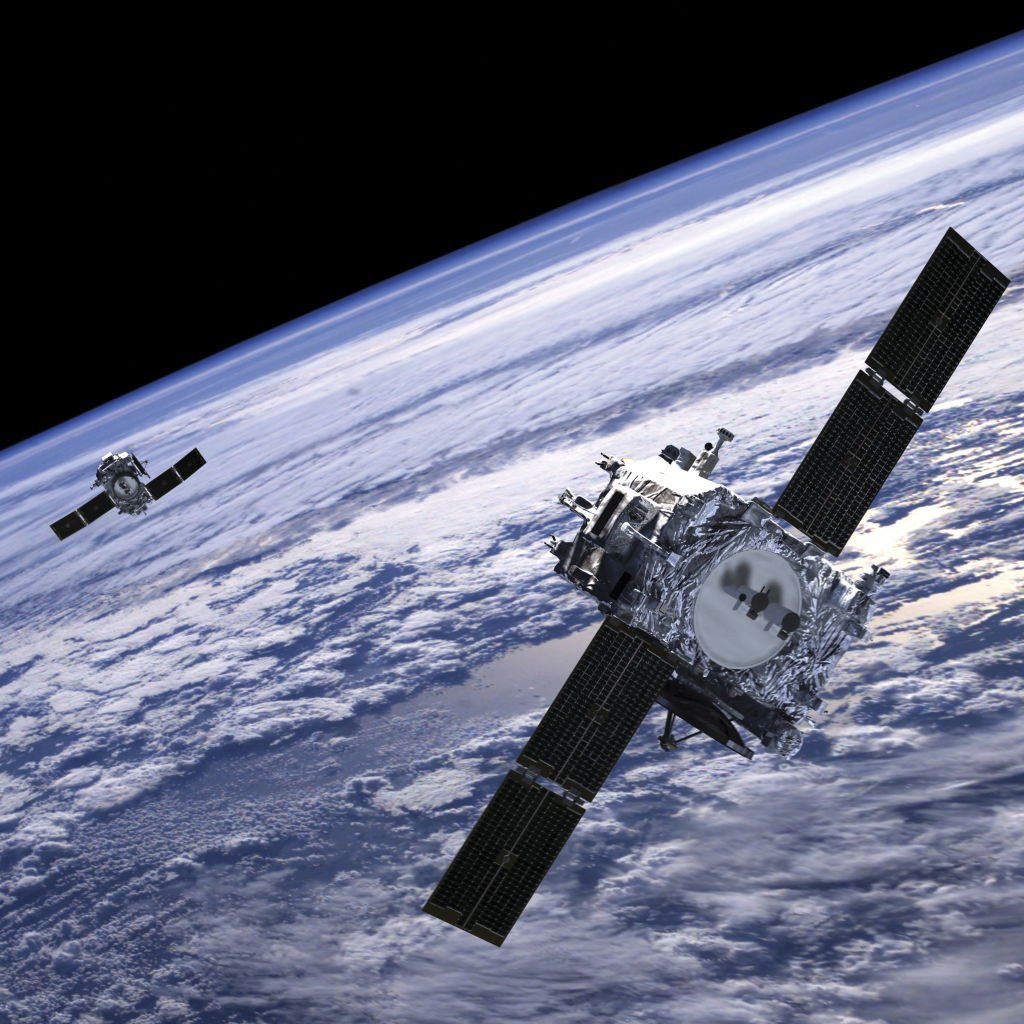
Russia is actively utilizing its space assets to conduct reconnaissance on United States and allied military facilities across the Middle East and the Persian Gulf on behalf of Iran, Militarnyi reported on March 29.
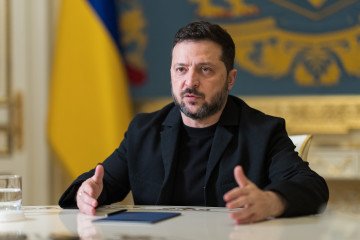
The revelation was made by Ukrainian President Volodymyr Zelenskyy, who detailed a sweeping campaign of orbital surveillance targeting critical Western infrastructure.
We bring you stories from the ground. Your support keeps our team in the field.
According to Ukrainian intelligence data, Russian satellites photographed a series of high-value targets over a three-day period in late March. On March 24, Russian space assets captured imagery of the joint US-British military facility at Diego Garcia in the Indian Ocean, as well as Kuwait International Airport and portions of the Greater Burgan oil field.
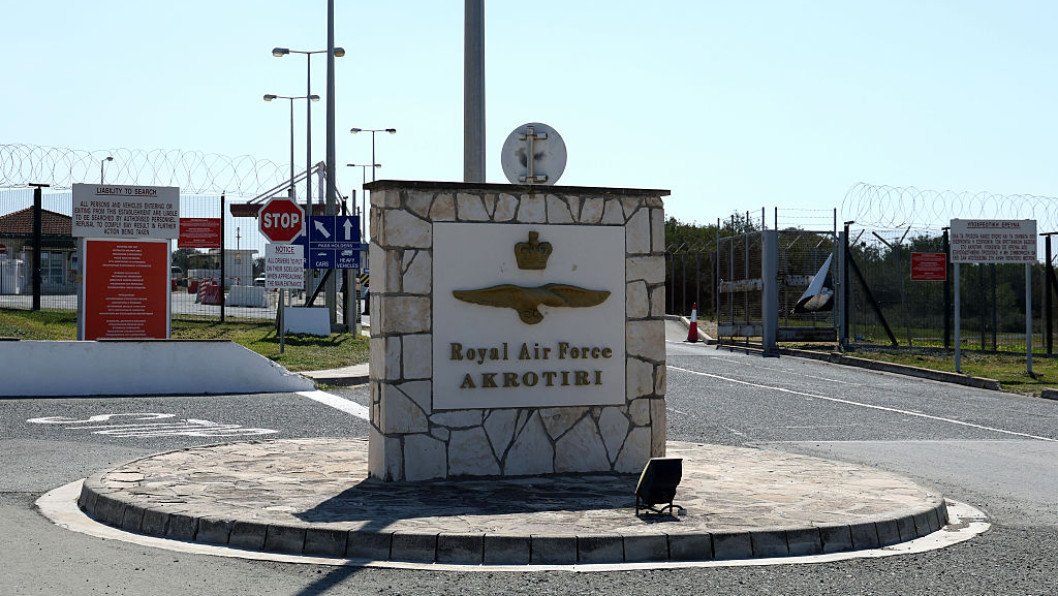
The surveillance continued on March 25, targeting the Prince Sultan Air Base in Saudi Arabia. By March 26, the reconnaissance expanded to include the Shaybah oil and gas field in Saudi Arabia, the Incirlik Air Base in Turkey, and the Al Udeid Air Base in Qatar.
Zelenskyy used the intelligence drop to highlight the direct threat Moscow poses to global security, specifically criticizing recent international moves to ease economic pressure on Russia. “There are no Ukrainian objects on this list,” Zelenskyy stated. “But who is helping whom by lifting sanctions on an aggressor who earns money daily and passes on relevant information regarding attacks on American, Middle Eastern, British, and American-British bases?”
Independent analysis by Militarnyi corroborated the intelligence. By analyzing open-source monitoring services that track orbital movements, Militarnyi discovered that a Russian synthetic aperture radar (SAR) satellite known as “Neutron” (Kosmos 2553) made two distinct passes over the Diego Garcia base on March 24.
While Moscow officially classifies the “Neutron” as a technological apparatus for testing radiation exposure, Western intelligence and space observation data indicate it is a highly capable reconnaissance satellite. Launched in early 2022 into an unusually high orbit of approximately 2,000 kilometers, the Neutron sacrifices some maximum image detail for a significantly wider field of view compared to low-orbit satellites.
Militarnyi notes that due to the classified nature of the spacecraft, its exact capabilities remain guarded. However, it is believed to be built on the “Kondor” satellite platform, which utilizes S-band SAR radar capable of capturing high-resolution images of 1 to 2 meters across a 10-to-20-kilometer swath, even through cloud cover.
The discovery highlights the extensive orbital capabilities the Kremlin is currently deploying to assist Tehran. In total, Russia operates a fleet of at least 17 optical satellites, five SAR satellites, and eight electronic intelligence (SIGINT) satellites, which are further supplemented by an unknown number of dual-use civilian spacecraft.
The revelation of Russian orbital surveillance confirms recent warnings from European diplomats regarding the depths of the Moscow-Tehran alliance. Just days prior, German Foreign Minister Johann Wadephul stated that Russia was actively assisting Iran in identifying potential strike targets.
This intelligence-sharing—now proven to include high-level satellite imagery of US and allied bases—is viewed as a calculated strategy by Russian leader Vladimir Putin to inflame the Middle East conflict, maximizing the threat to American forces in order to divert Western attention and military resources away from Russia’s invasion of Ukraine.
Discuss this article:


-c439b7bd9030ecf9d5a4287dc361ba31.jpg "Photo of Katherina Popilnichenko")