- Category
- Latest news
Russia’s Budget Deficit Hits $22.3 Billion in January, Half of It’s Annual Target for 2026
 Prefer U24 Media on Google
- Authors

-72b63a4e0c8c475ad81fe3eed3f63729.jpeg "Photo of Cyril Barabaltchouk")
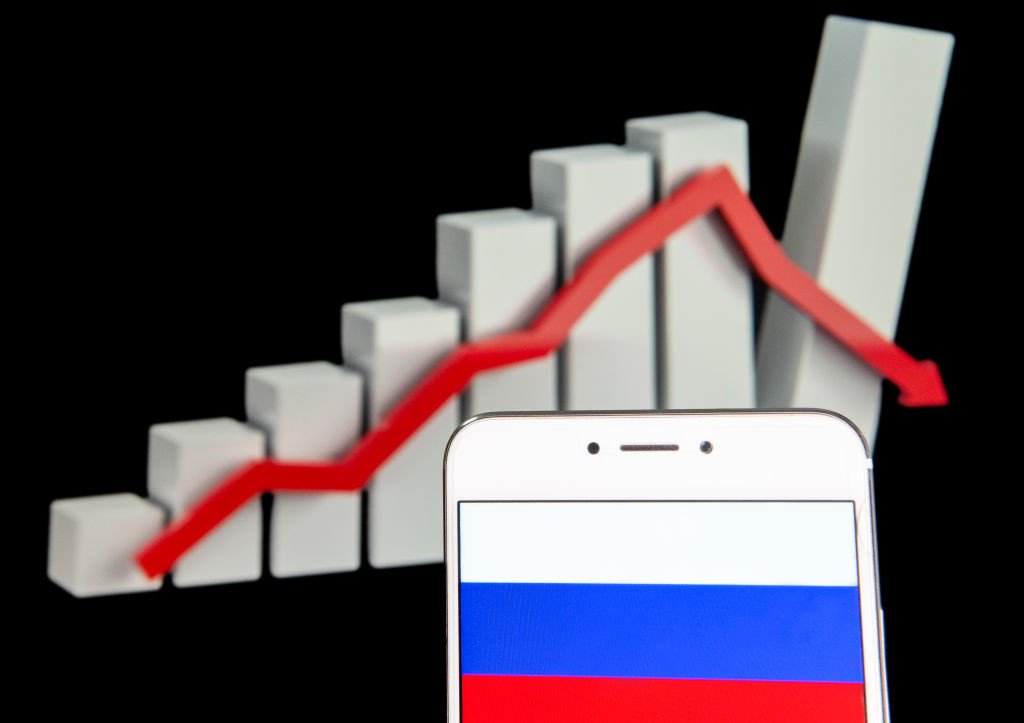
Russia’s federal budget posted a deficit of $22.3 billion in January, nearly half of its full-year target, according to Finance Ministry data cited by The Moscow Times on February 6.
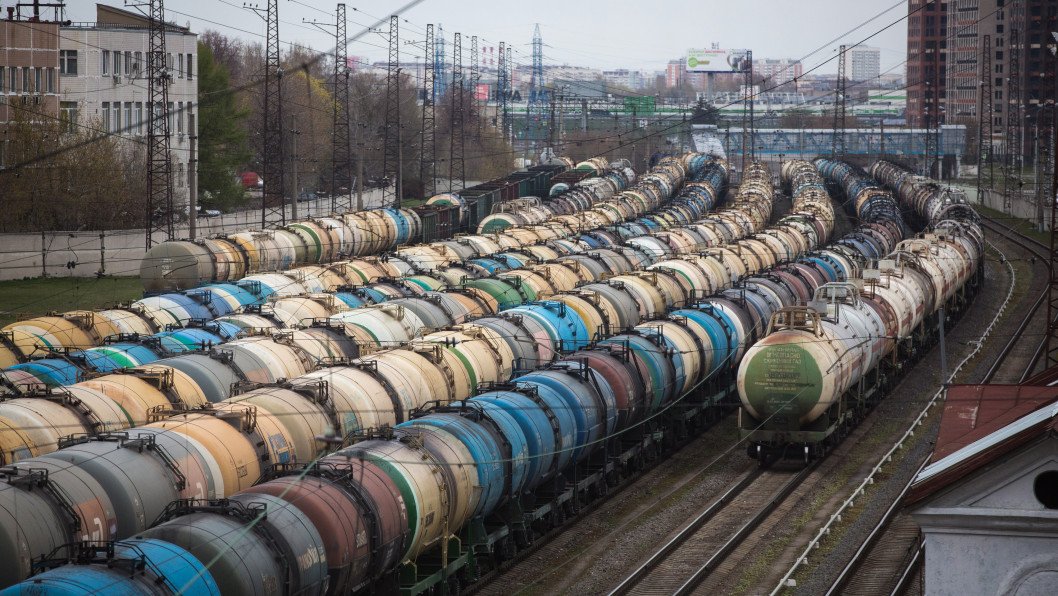
Revenues totaled $30.7 billion, down 11.6% from a year earlier, as oil and gas income fell by 50% to a five-year low of $5.1 billion. Non-oil and gas revenues rose 4.5% to $25.6 billion, with value-added tax receipts jumping almost 25% to $14.7 billion after the VAT rate increased to 22% from January 1.
We bring you stories from the ground. Your support keeps our team in the field.
Spending was slightly reduced by 1.4% to $53.0 billion, but the sharp drop in energy income pushed the January deficit 17% higher than in the same month of 2025. Since Russia’s full-scale invasion of Ukraine, the cumulative budget deficit has reached $226.2 billion, The Moscow Times reported, citing Russia’s Finance Ministry data.
Earlier reports stated that Russia’s industrial output had slipped into decline in November, marking a general slowdown in Russian economy and a deepening downturn in civilian manufacturing.
Rosstat reported that overall industrial production fell 0.7% year-on-year, while manufacturing output dropped 1%, the first contraction in the sector since February 2023.
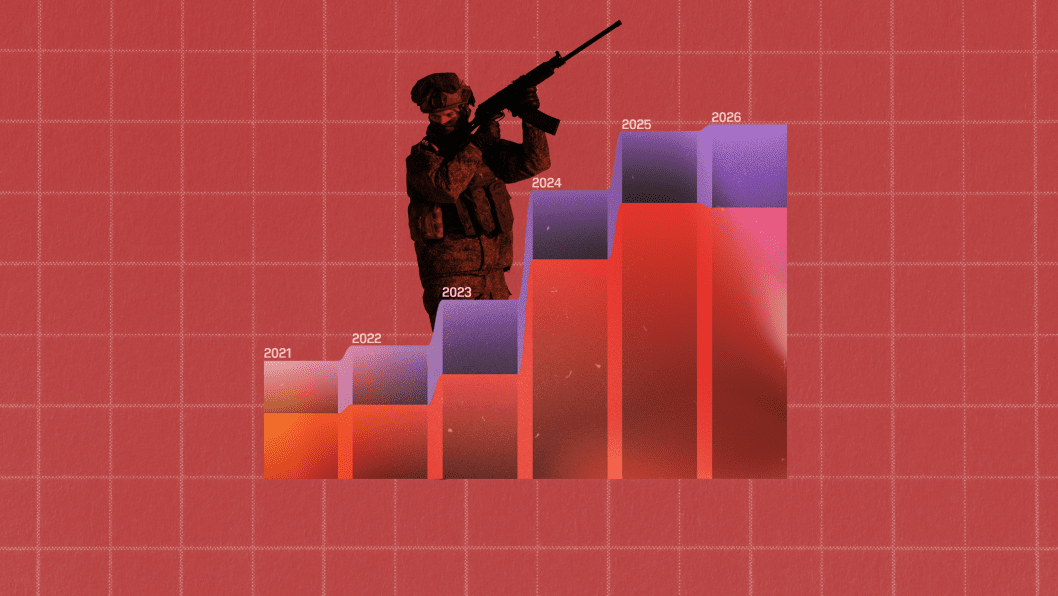
The ministry attributed the early-year gap to front-loaded spending and forecast the annual deficit narrowing to $49.4 billion in 2026 from $74.1 billion last year.
However, a government source told Reuters that weaker crude prices and export difficulties could cause the shortfall to exceed the plan by nearly threefold, potentially reaching 3.5% to 4.4% of GDP.
Economists warned that Moscow may be forced to seek new revenue sources or consider spending cuts, tax hikes, and increased borrowing if sanctions-driven oil discounts persist, according to The Moscow Times.
“In a negative scenario, the authorities will likely be forced to look for new sources of revenue, with non-energy commodity sectors, the broader non-resource economy and even household incomes among the first in line,” said economist Dmitry Polevoy.
“Putin will encourage the central bank to print money; he will continue to raise taxes, sell state property and nationalise business corporations,” Dr Vladislav Inozemtsev, an economist and co-founder of the Centre for Analysis and Strategies in Europe thinktank told The Guardian.
“This will allow him to get enough money to wage the war for 2026, and, most probably, for 2027,” he continued.
Previously, it was reported that western sanctions are exerting a “significant impact” on Russia’s economy, the European Union’s sanctions envoy has said, as the fourth anniversary of Moscow’s full-scale invasion of Ukraine approaches.
Discuss this article:


-c439b7bd9030ecf9d5a4287dc361ba31.jpg "Photo of Katherina Popilnichenko")