- Category
- Latest news
Ukraine Reopens Award-Winning EXPO 2025 Pavilion After Six Months in Japan
 Prefer U24 Media on Google
- Authors


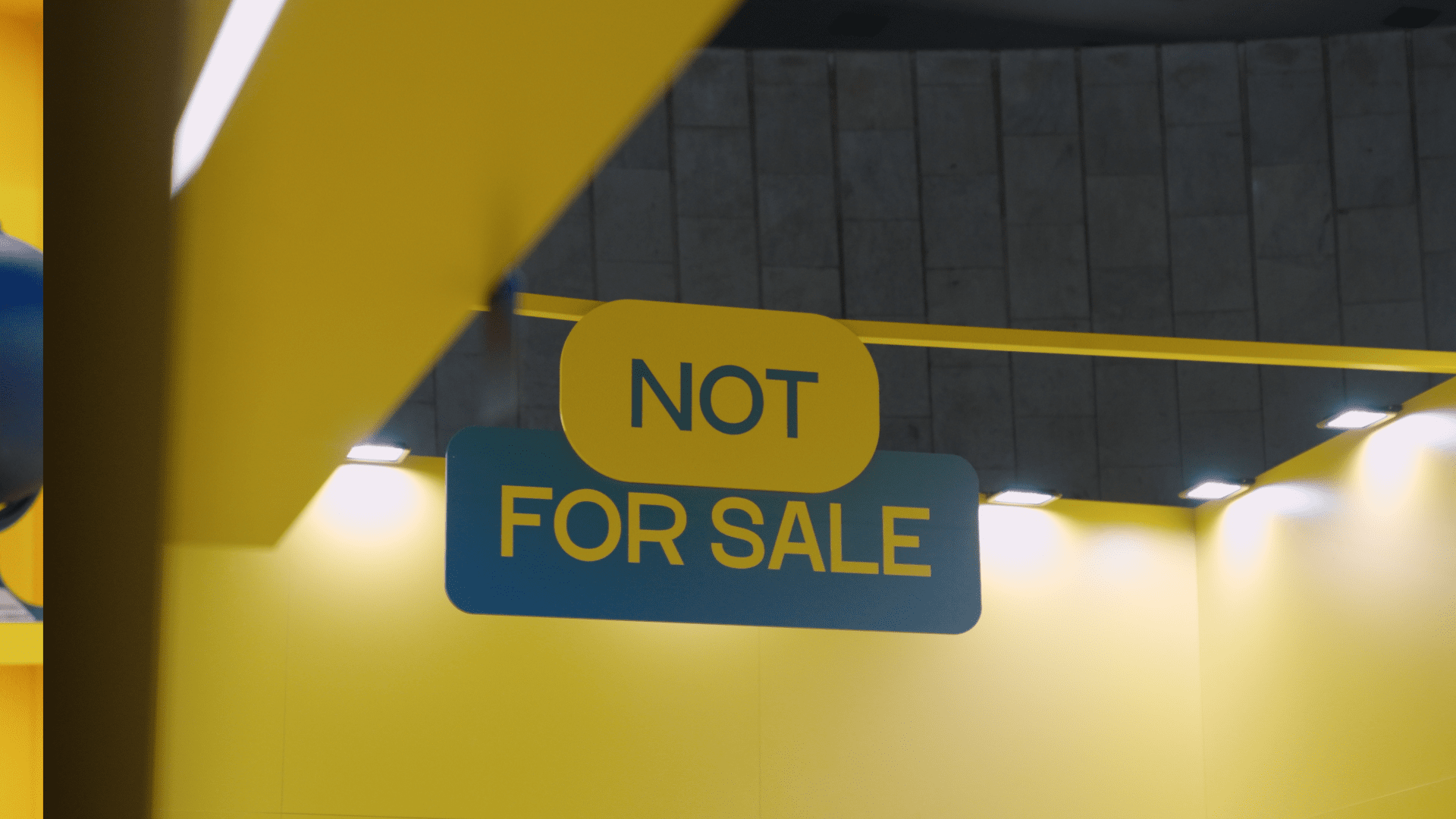
Following a six-month run at EXPO 2025 in Osaka, Japan, the Ukrainian pavilion Not For Sale has been reconstructed in Kyiv’s Ukrainian House, where it will be open to visitors from November 1 to 16.
The exhibition was one of the few national pavilions at the World Expo to focus not on products or technology—but on values.
According to the Ministry of Culture of Ukraine, the installation in Japan attracted nearly three million visitors and received two silver awards: one for Best Activation or Engagement, and another for Exhibition Design.
The World Expo gathered over 160 participating countries and was held in Osaka under the theme Designing Future Society for Our Lives.
“Our pavilion was visited by nearly 3 million people from all around the world—not only the Japanese people, but also from other countries,” said Tetiana Berezhna, Ukraine’s Deputy Prime Minister for Humanitarian Policy and Minister of Culture.
“And this was a chance for us…to tell why values are most important for us, why they make us Ukrainians—good people, alive, brave.”
Designed in Ukraine, presented in Japan
Developed by Ukrainian creative agency Bickerstaff.734, the 53-square-meter pavilion was conceived as a symbolic store where nothing is for sale. Instead, 18 physical objects—each representing a democratic value such as dignity, freedom of speech, or the right to choose—were arranged on minimalist blue shelves.
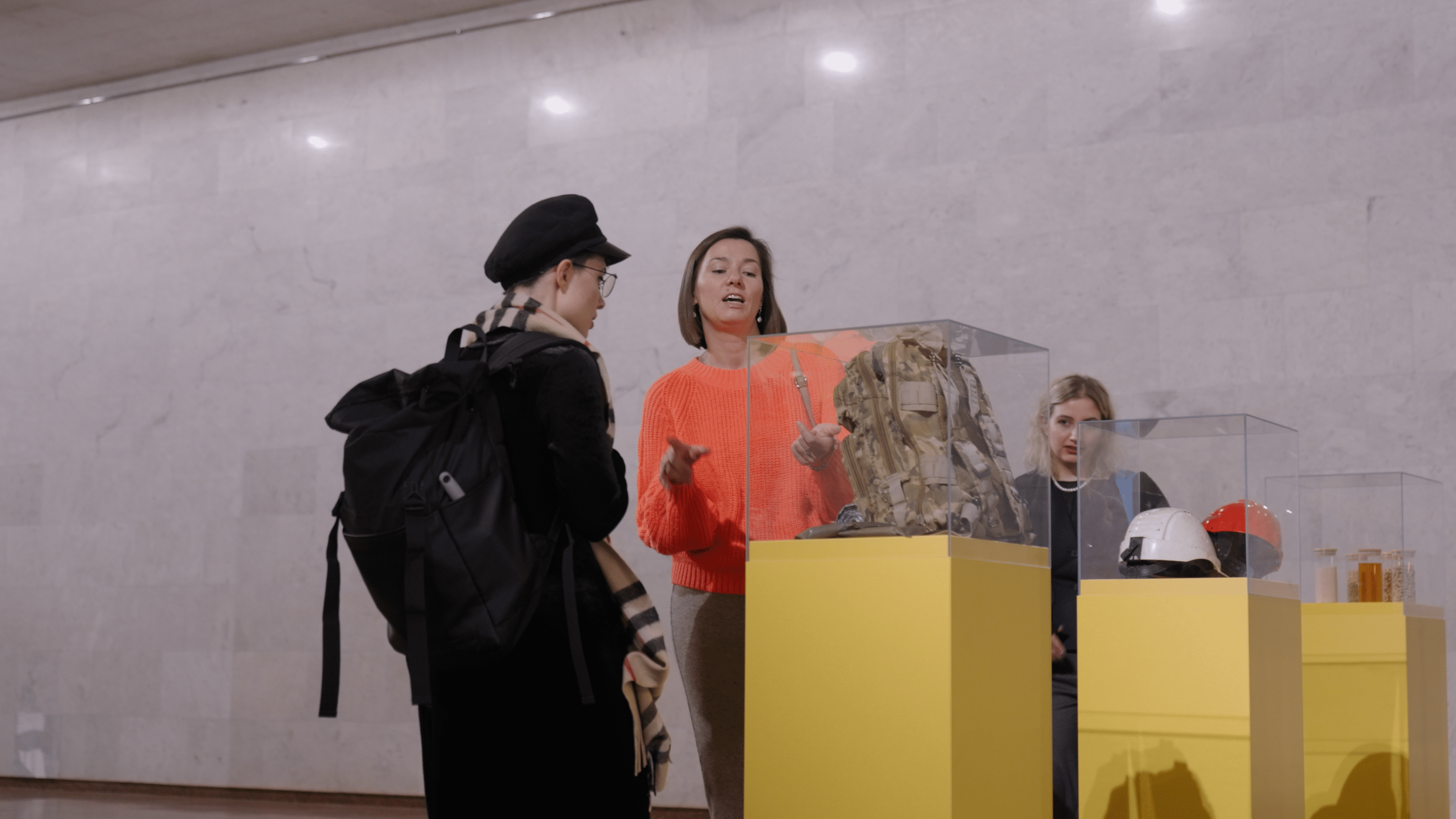
Visitors used barcode scanners to reveal personal video stories from Ukraine, showing the social cost of preserving those values during wartime.
“Each item symbolizes a human value,” said Maryna Schepienko, Head of PR at Bickerstaff.734. “When you scan any item, you see video stories from Ukraine. These video stories prove Ukrainians’ resilience and what Ukrainians are going through during the war time.”
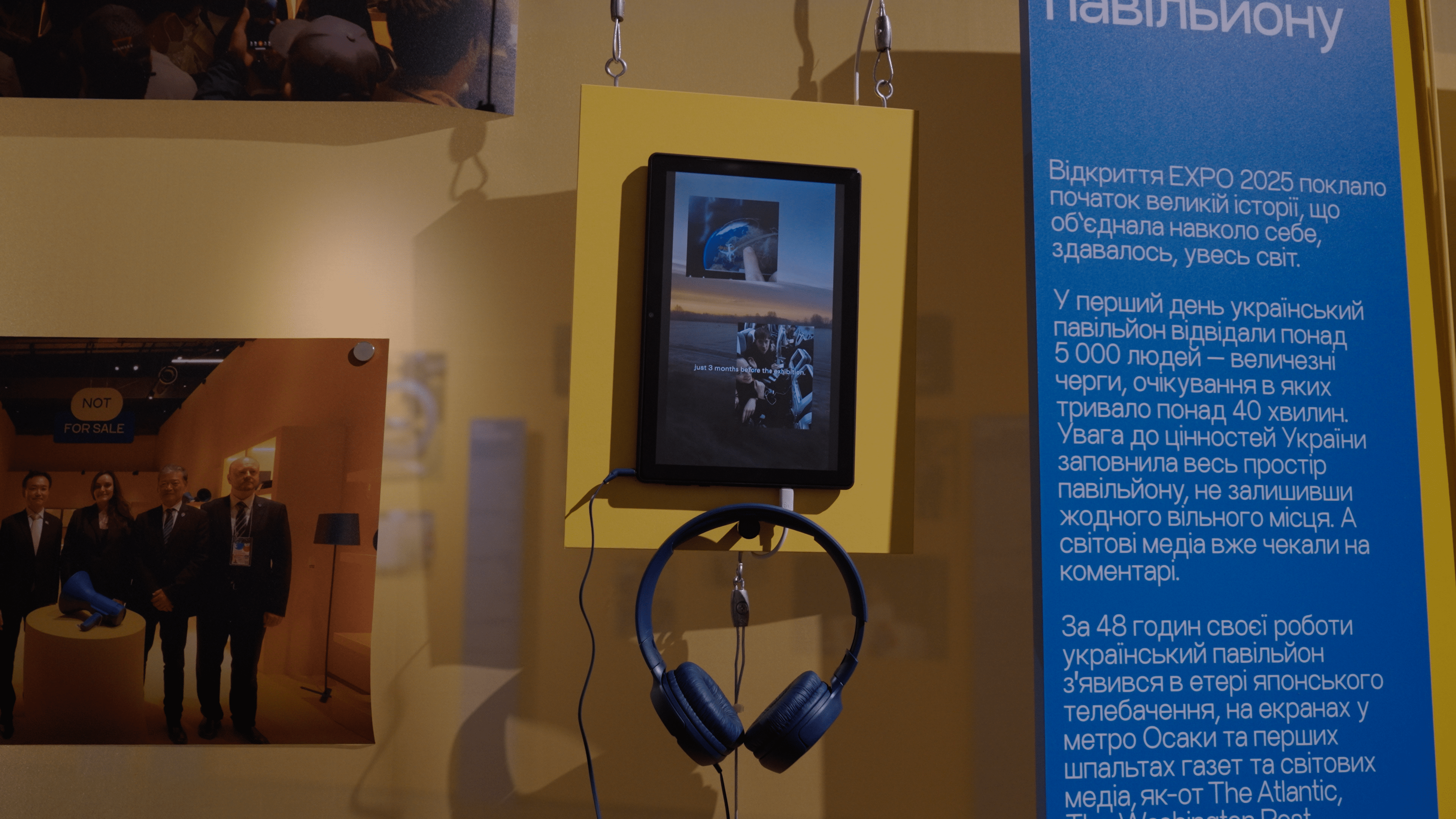
“In Japan, there’s not a lot of information, not a lot of news about the war,” said Veronika Seleha, Chief Growth Officer at Bickerstaff.734. “They know only facts, they don’t know about the life of the people. And there were a lot of tears, a lot of emotions, a lot of questions.”
Public response in Japan
Throughout the expo, Japanese audiences engaged deeply with the exhibit. According to Berezhna, “They spent like 40 minutes in lines, in queues, because they wanted to see the pavilion. Once they entered—some of them cried.”
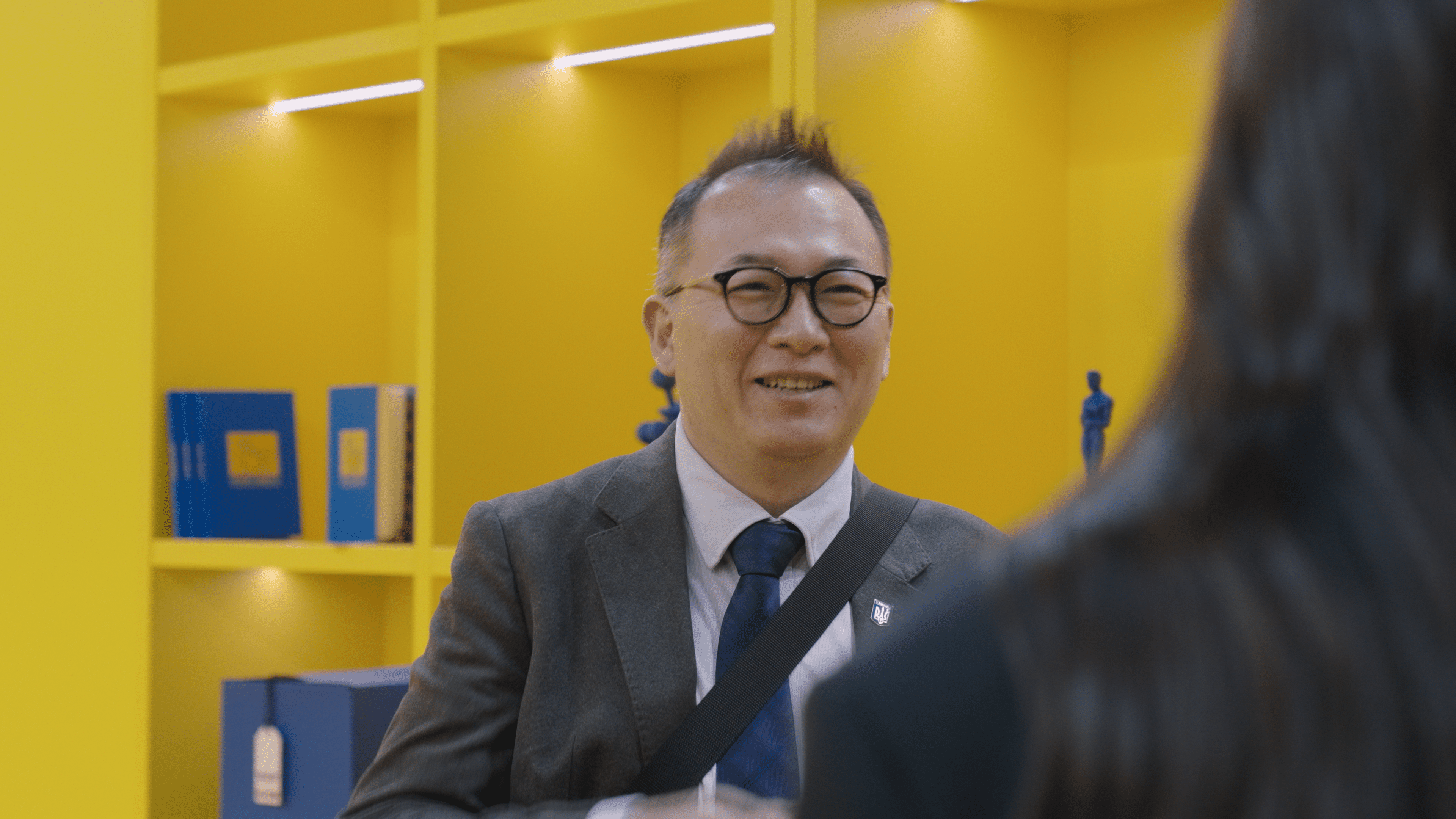
Masashi Nakagome, Ambassador of Japan to Ukraine, confirmed the strong public interest: “Many visitors around the world visited the Osaka Kansai EXPO. They really like the Ukrainian story, this really resonated with them. I really like each story, all of them are really well-made and very inspiring.”
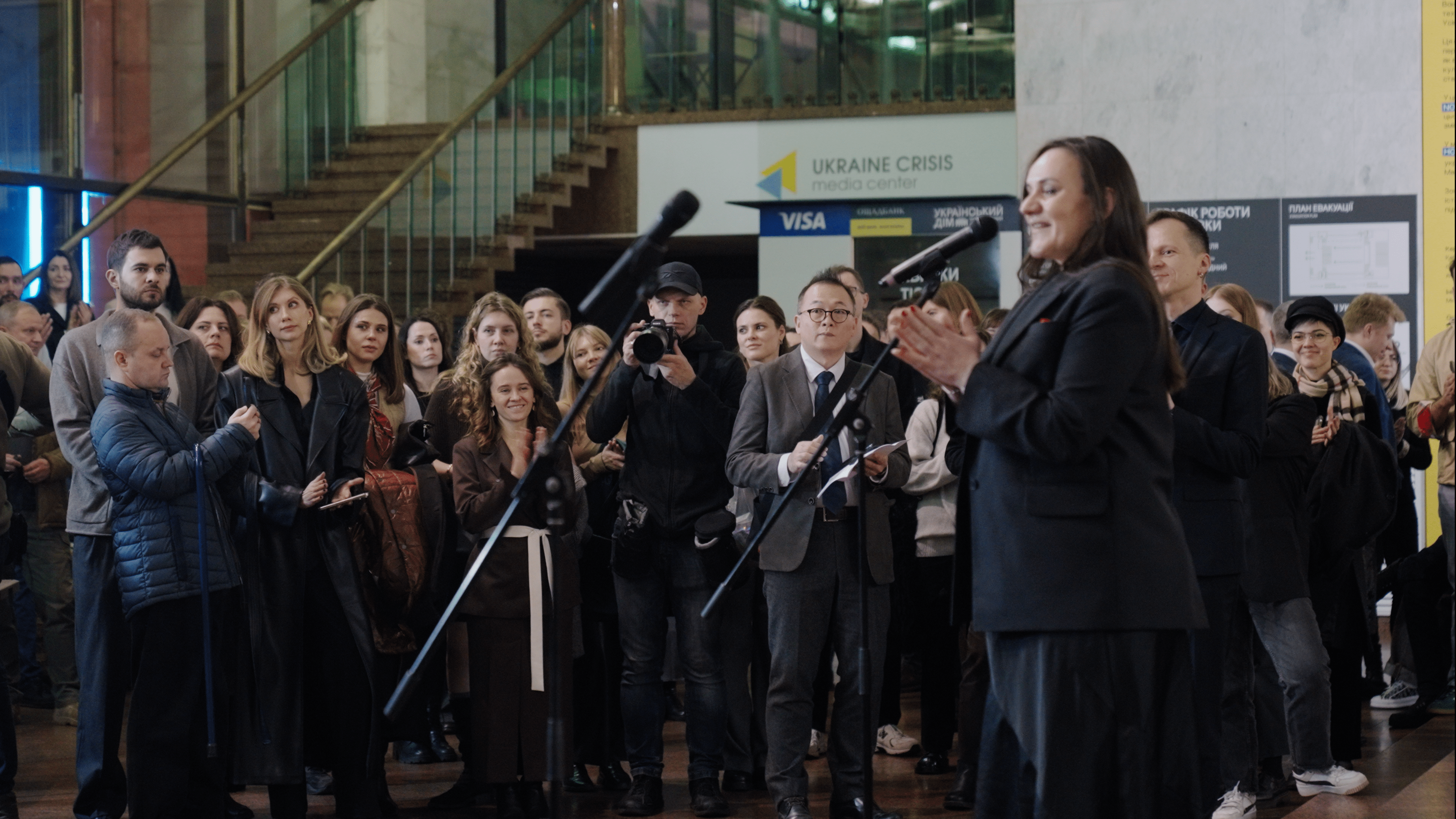
Among the notable guests to visit Ukraine’s pavilion were European Commission President Ursula von der Leyen, the Crown Princess of Japan, and the King of Sweden.
Reopening in Kyiv
After the conclusion of EXPO 2025 in mid-October, the installation was transported and rebuilt in Ukraine. The Kyiv version of the exhibition includes the full pavilion Not For Sale as well as two additional thematic zones:
Values Driven Economy: Showcasing stories of Ukrainian businesses that supported the country’s participation in EXPO 2025 and continued operations during wartime.
Home Beyond the Dawn: A curated video installation featuring works by 30 Ukrainian contemporary artists, presented earlier at EXPO 2025 as part of the EU’s Nurturing Tomorrow program.
EXPO Through the Years: A visual timeline of the World Expo’s evolution from 1851 to the present.
Ukraine at EXPO 2025: A section dedicated to this year’s participation, detailing the pavilion’s concept, visitor numbers, international reactions, and behind-the-scenes development.
Maria Acetoso, a representative from UNESCO who visited the Kyiv edition, noted: “It’s extremely important to make people outside of Ukraine understand that the war is not just a matter of numbers, but there are lives, there are emotions. But it also shows how Ukrainians are resilient.”
EXPO 2025 is one of the world’s largest global exhibitions. The Ukrainian pavilion was coordinated by the Cabinet of Ministers of Ukraine, the Ministry of Culture, and the Ministry of Economy, Environment, and Agriculture. The Kyiv exhibition runs through November 16. Admission is 120 UAH (approx. $3) for general visitors and 50 UAH (approx. $1.30) for eligible categories.
Earlier, on October 17, the exhibition “There Are No Children, There Are People” opened at the Museum of Memory and Human Rights in Santiago, Chile. According to the organizers, the project—part of the Ukrainian presidential initiative Bring Kids Back UA—documents the illegal deportation of Ukrainian children by Russia and highlights evidence recognized by the International Criminal Court.
Discuss this article:


-c439b7bd9030ecf9d5a4287dc361ba31.jpg "Photo of Katherina Popilnichenko")