- Category
- Latest news
Ukraine’s New Drone Isn’t Carbon Fiber—and That’s Exactly Why Moscow Should Worry
 Prefer U24 Media on Google
- Authors


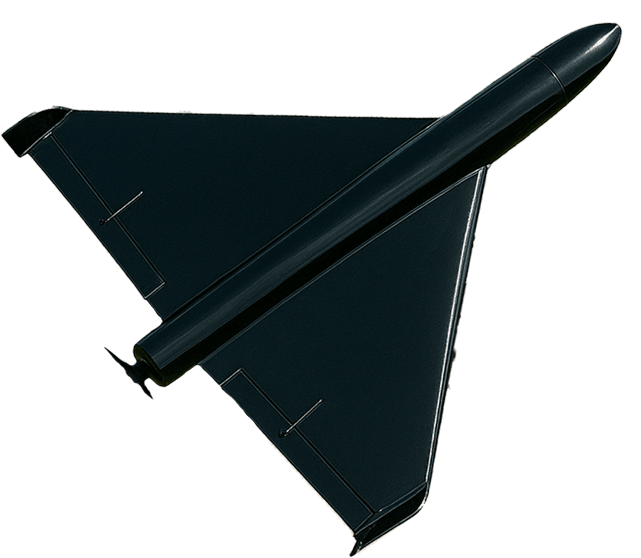
Ukrainian defense manufacturer POLIFLY has introduced a production technology that creates unmanned aerial vehicle airframes using high-grade polyurethane, a shift the company says meets the three critical demands of the modern battlefield: low cost, high performance, and rapid mass production, according to Militarnyi, which reported from the Brave1 Components exhibition on December 9.
According to POLIFLY engineers, the polyurethane-based manufacturing approach cuts weight by 19% compared to traditional three-component composites while maintaining structural strength.
We bring you stories from the ground. Your support keeps our team in the field.
The material is not only cheaper but also easier to adapt for different variants, giving drone units flexibility in both design and deployment.
POLIFLY’s flagship prototype, an attack drone called Cooper, features an aerodynamic layout similar to that of the Iranian Shahed.
The unmanned aircraft features a rear-mounted pusher motor, a fully polyurethane-reinforced fuselage, and a 1.2-meter wingspan. The system is capable of carrying a 5.5-kilogram warhead and striking targets at distances beyond 90 kilometers.
🇺🇦 Ukraine develops Shahed-like “Cooper” drone made of polyurethane The Ukrainian company POLIFLY has presented a new technology for producing UAV casings made of polyurethane. It is also quicker and easier to process - ideal for mass production. pic.twitter.com/kxgKJA7TBx
— 🔰 Military-News (@MilitaryNewsEN) December 10, 2025
The Cooper drone launches from a catapult and navigates autonomously via autopilot and GPS, allowing quick deployment in field conditions. It can operate with a ground control station at a range of up to 35 kilometers with no external communications links, making it easier to integrate into existing frontline infrastructure.
The drone can be fitted with thermobaric, high-explosive fragmentation, or shaped-charge warheads, broadening its role from anti-personnel to anti-armor applications.
One of the most striking advantages, POLIFLY says, is scalability. “With just three sets of molds, up to 700 drone airframes per month can be manufactured—four and a half times more than traditional composite methods,” the company stated.
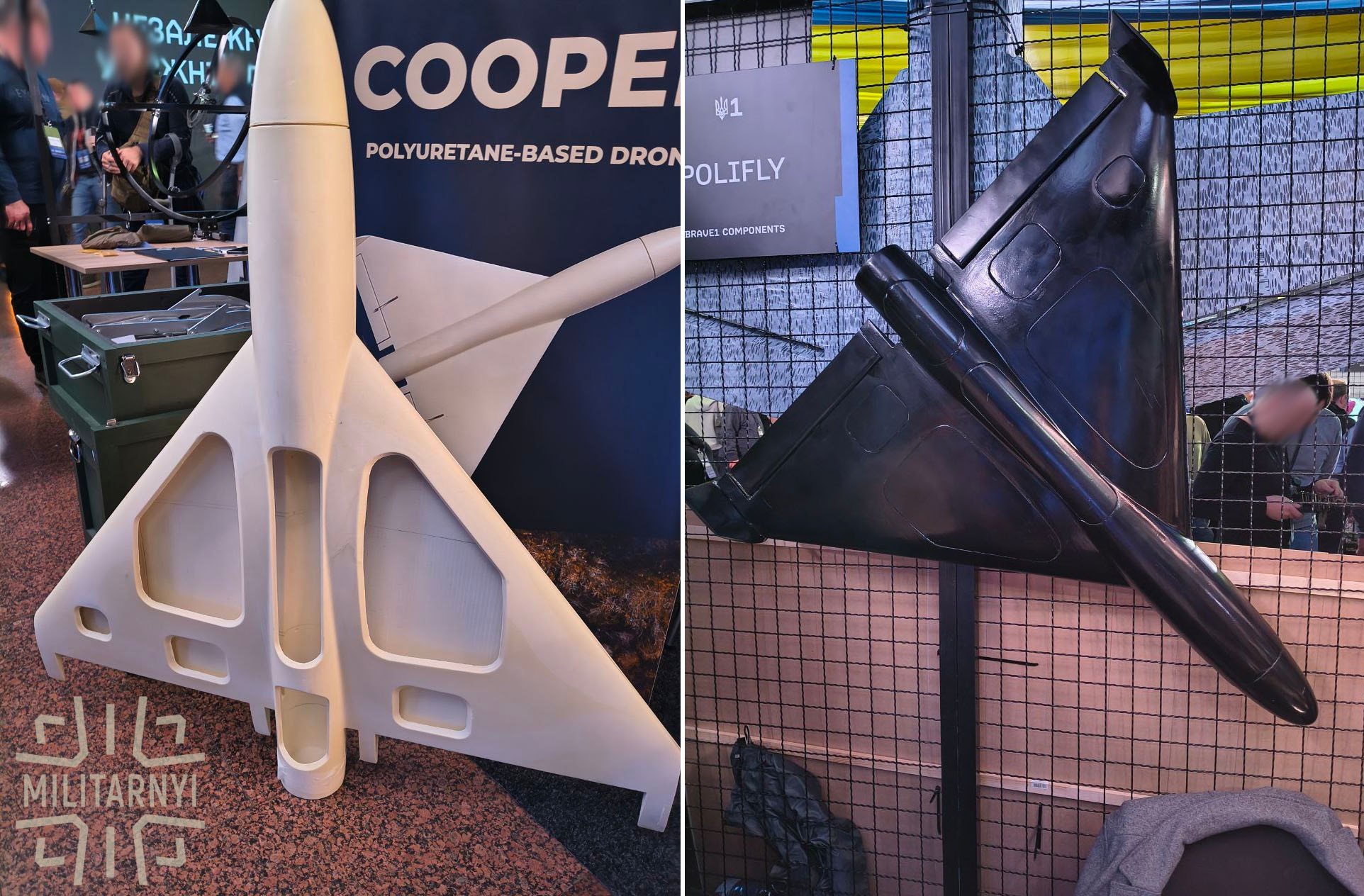
Polyurethane molding also allows critical in-body openings—for cameras, warheads, and batteries—to be formed during production, reducing assembly time and cutting manual labor.
Developers claim airframe production costs are several times lower, and the materials provide better repairability in field conditions.
Current manufacturing capacity already allows POLIFLY to produce up to 200 airframes per month, with room to scale as demand grows. The company believes the polyurethane method could become a cornerstone of Ukraine’s ability to supply strike UAVs in the quantities the front requires.
Earlier, reports emerged that Ukrainian company Ukrspecsystems secured a site at an airfield in the UK for its drones and is constructing a dedicated runway for UAVs.
Discuss this article:



-c439b7bd9030ecf9d5a4287dc361ba31.jpg "Photo of Katherina Popilnichenko")