- Category
- Life in Ukraine
Rebuilding Homes Just Miles From Russia: How Life Survives on Kharkiv’s Edge Under Fire
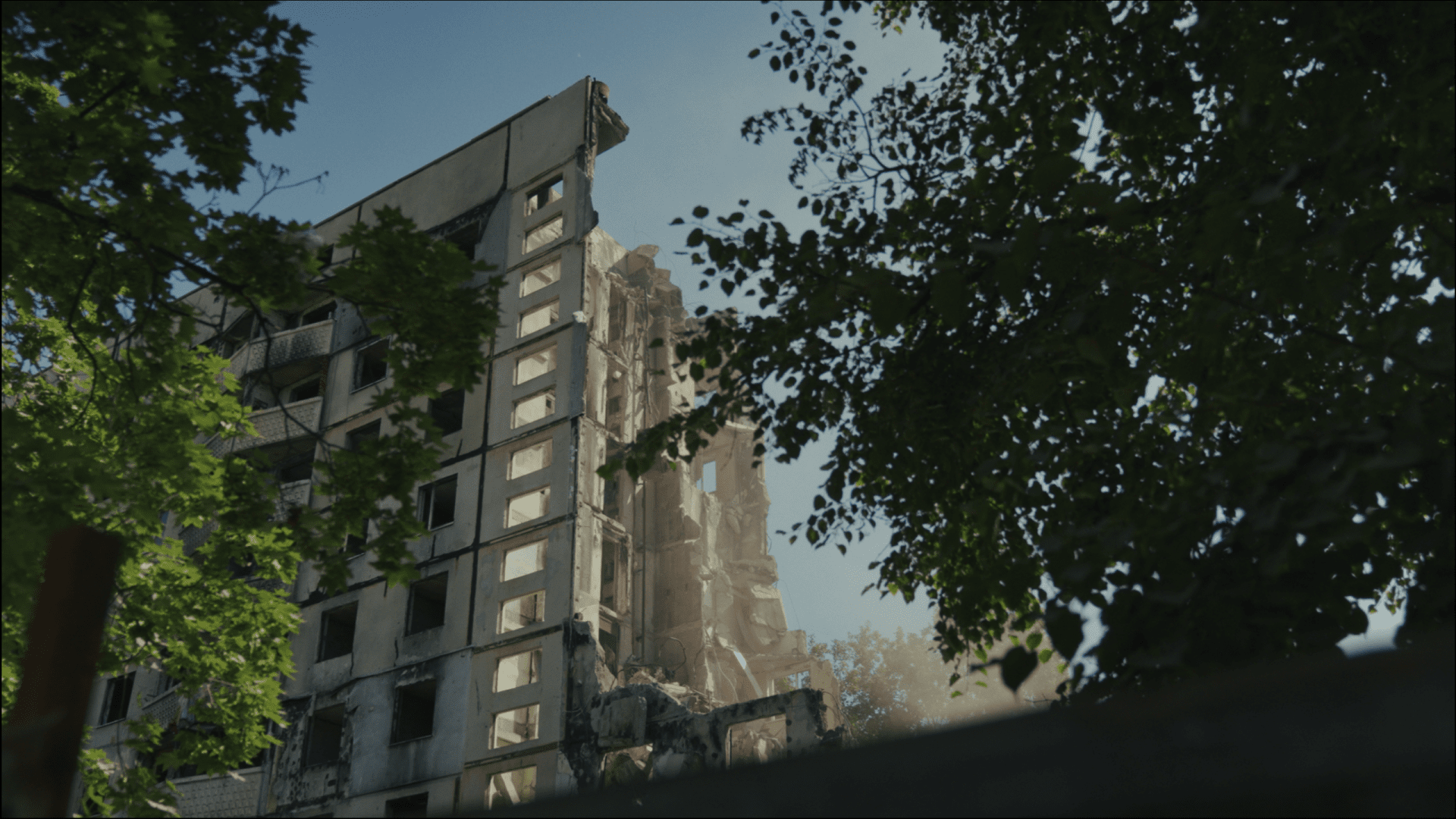
The first thing that catches your eye when you enter Kharkiv’s Northern Saltivka district is the desolation—burned-out buildings, empty courtyards. No wonder: it’s just less than an hour drive from the Russian border, well within range of nearly every weapon in the Kremlin’s arsenal.
 Prefer U24 Media on Google
- Authors

-73e9c0fd8873a094288a7552f3ac2ab4.jpg "Photo of Olena Blizniakova")
But this impression quickly shifts. A moment later, a woman and her child walk past; you hear shouts from construction workers above; a car drives slowly by. It’s certainly not as crowded as it was before Russia’s full-scale invasion, when 300,000 people called this place home. But it is alive, waiting for its residents to return.
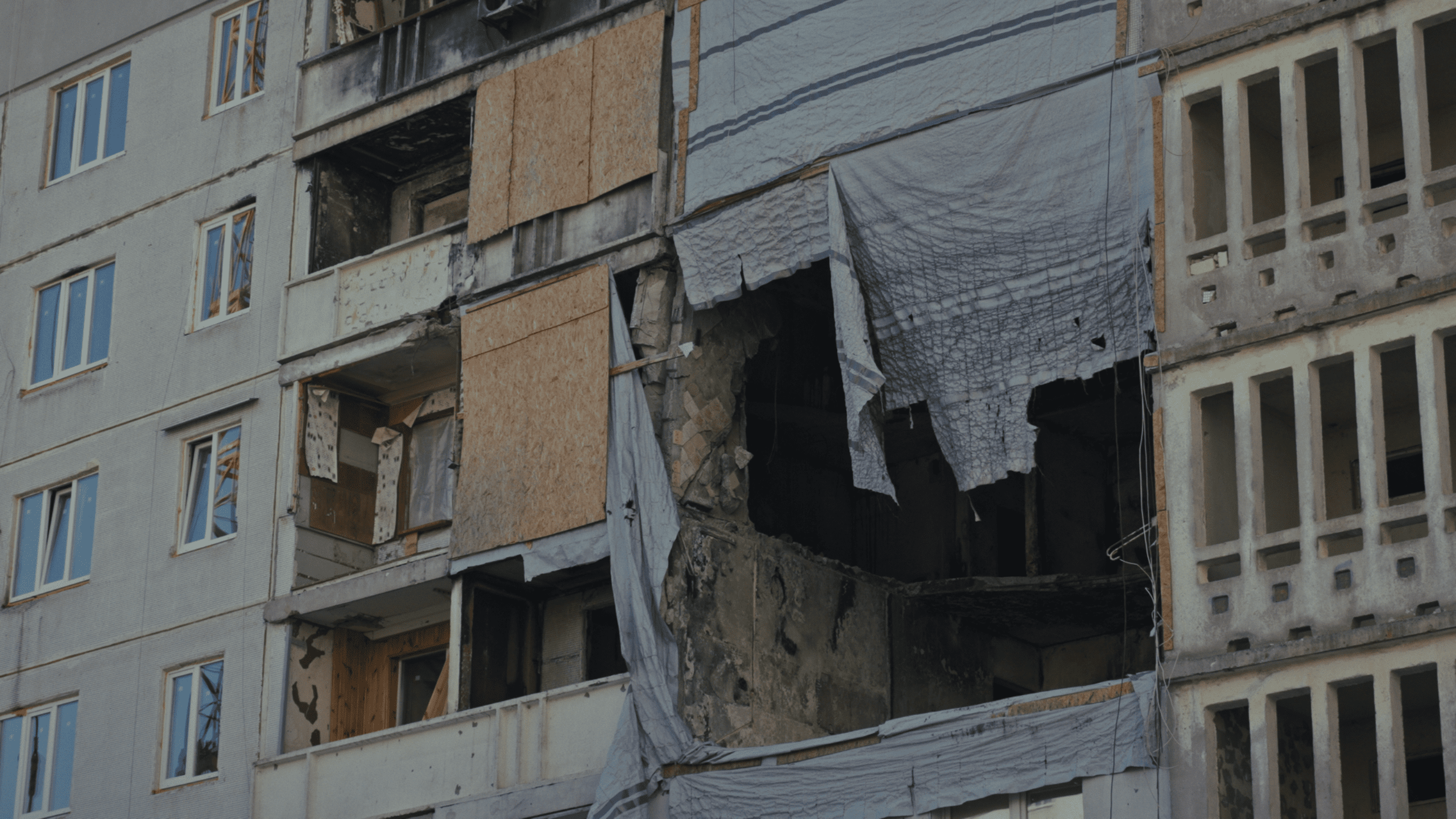
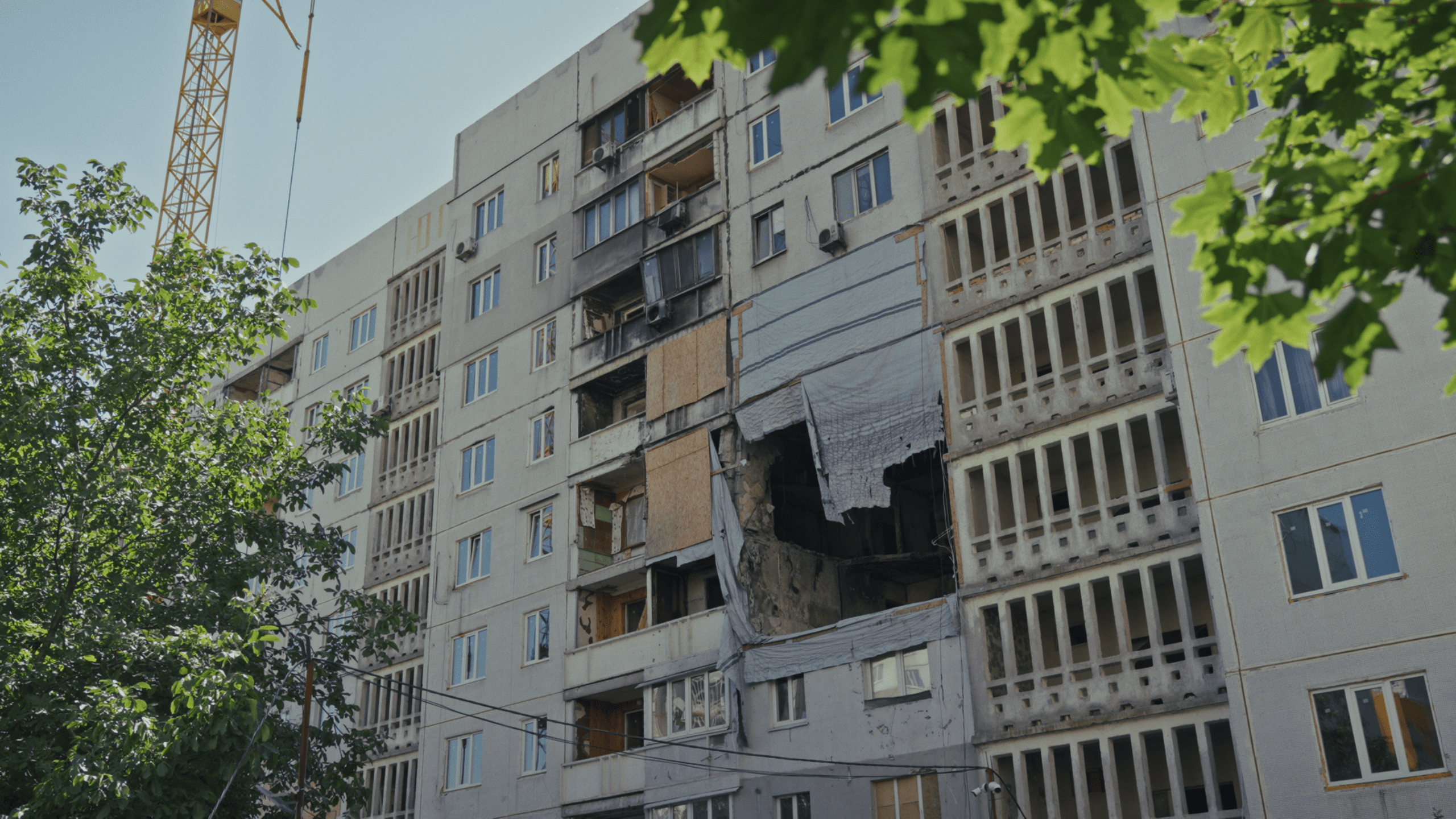
It’s 36 degrees outside, and the scorching sunshine is forcing people into the shade. From under a tree, we observe a heavily damaged 9-storey residential building. Inside one of the apartments is a gaping hole covered in plastic sheeting. Just below it—the apartment of my best friend.
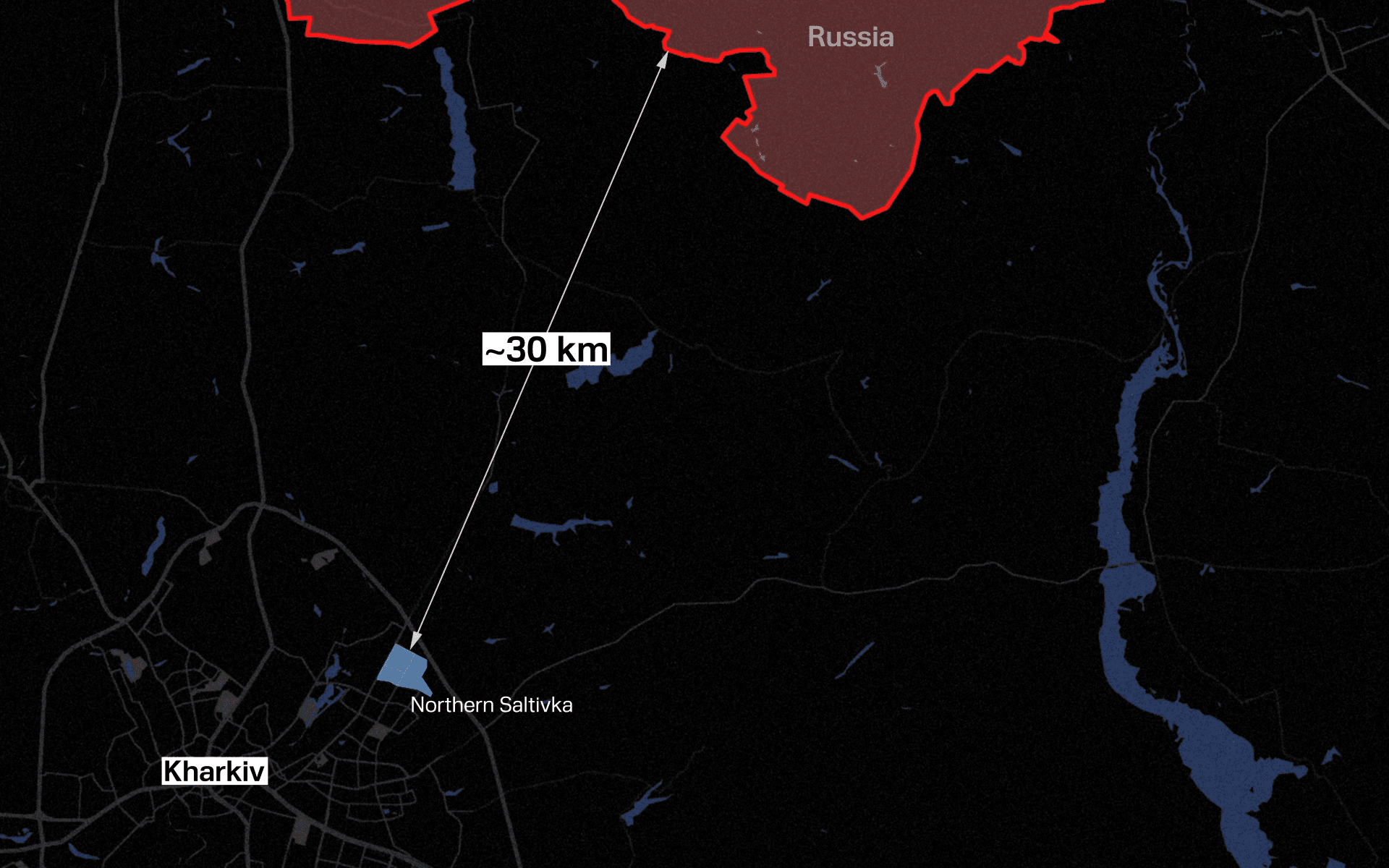
Northern Saltivka is part of the largest residential area in Ukraine—Saltivka. Located on the northeastern outskirts of Kharkiv, just near the ring road, this district is one of the closest urban districts in major Ukrainian cities to Russian territory—only 30 km to the border. It can be compared to the distance between New York's Lower Manhattan and JFK, or London's Trafalgar Square and Heathrow. Due to this proximity, this urban area of Kharkiv was heavily shelled by Russian troops in their attempts to seize the city in 2022.
Damaged, but alive
“They only recently started restoring it,” explained Aliona, born and raised in Northern Saltivka. “It wasn’t clear whether they were going to demolish or restore this one, because certain buildings have to be torn down. Some already have.”
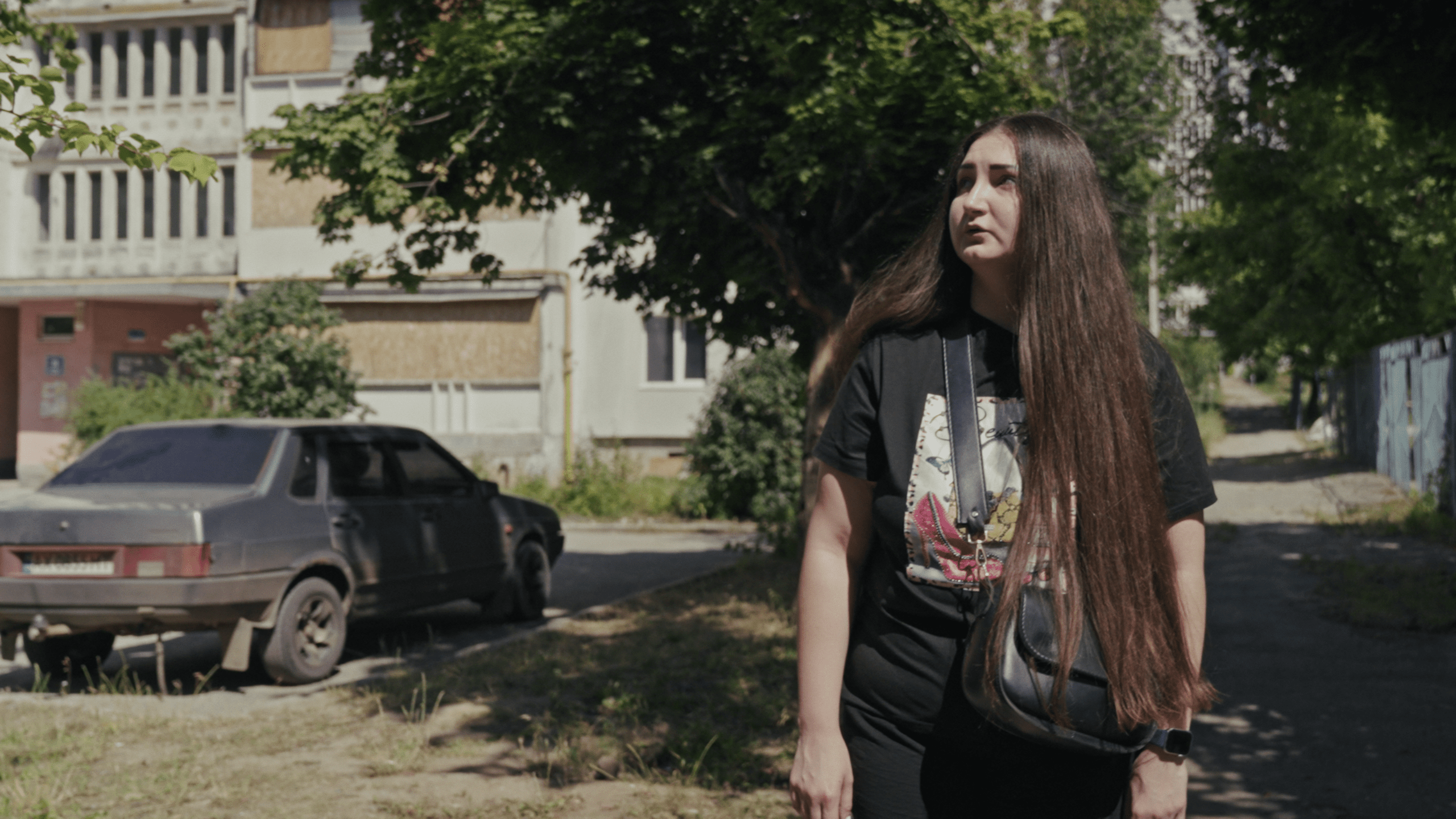
The gaping hole in this residential building, along with other visible damage, is the result of relentless Russian shelling during the early months of the full-scale invasion. “They’re going to fully restore everything on this building—the windows, of course, even the balcony units. Everything, completely”. According to the plans, work is expected to be completed in 2026.
However, this is hardly the only building that has been damaged in the district. Nearly 90% of the buildings of Northern Saltivka were damaged or destroyed, says Kharkiv city mayor Ihor Terekhov.
“As of today, 15 buildings are slated for demolition, as they cannot be restored,” he said. “In their place, new residential buildings will be constructed.”
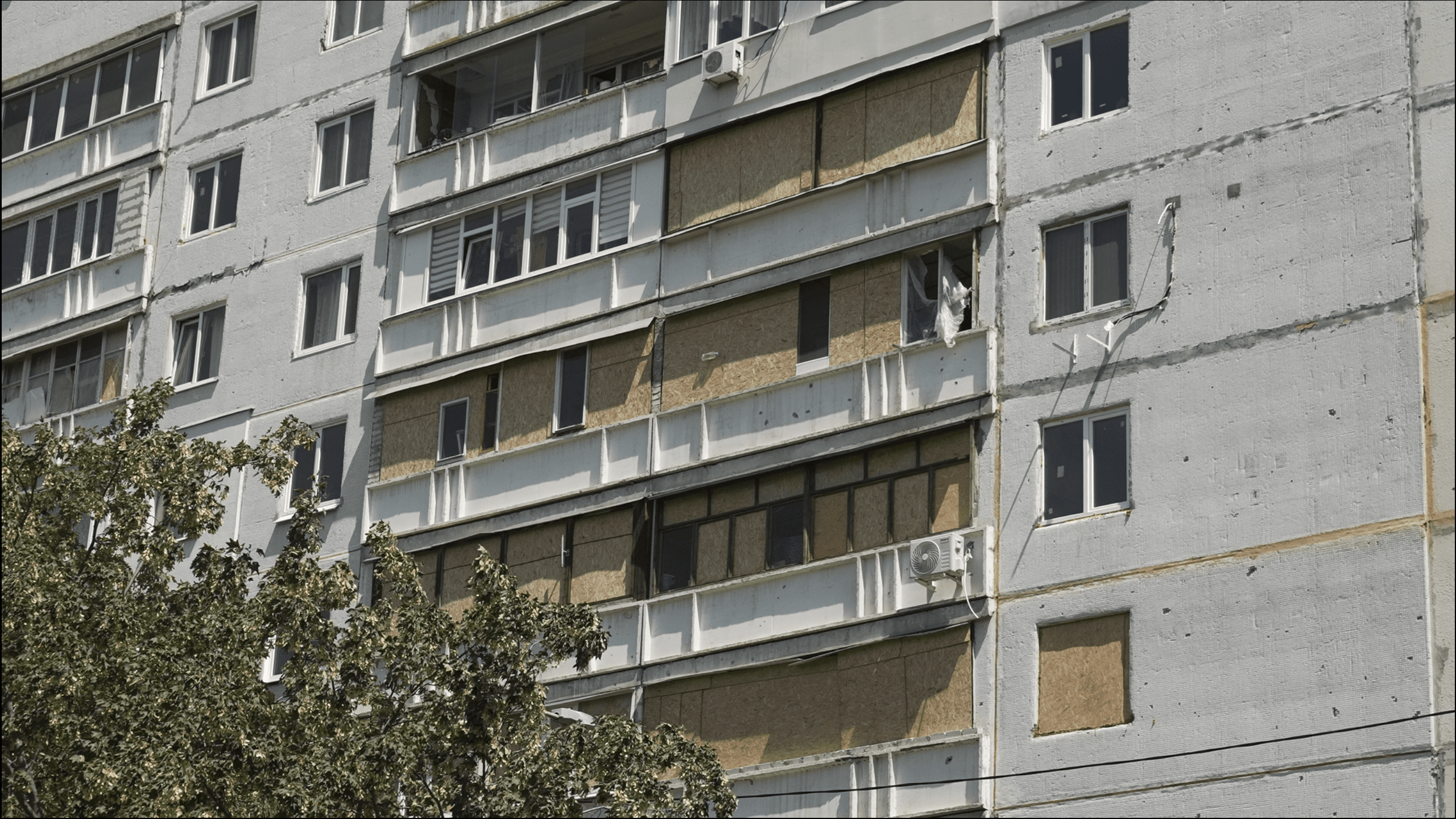
Aliona’s home was unfortunately among the 90%. “My apartment had no windows,” she says. “There were birds living there, and there was a hole that went straight through the kitchen from a [Russian shell] fragment. It was a horrible feeling.” She described the first time she saw it after returning to the city. “There were about six strikes on the house,” added her neighbour Kostiantyn. “Isn’t even that many if you compare it to another building that was hit 44 times.”
The rebuilding of their house began in 2022, “around August or September,” says Kostiantyn. Some sections of the building were missing roofs. “All the apartments—from the 9th floor down to the 1st—were completely flooded because of snow, rain, and so on.” Kostiantyn returned in April 2023—almost a year after he made the decision to leave.
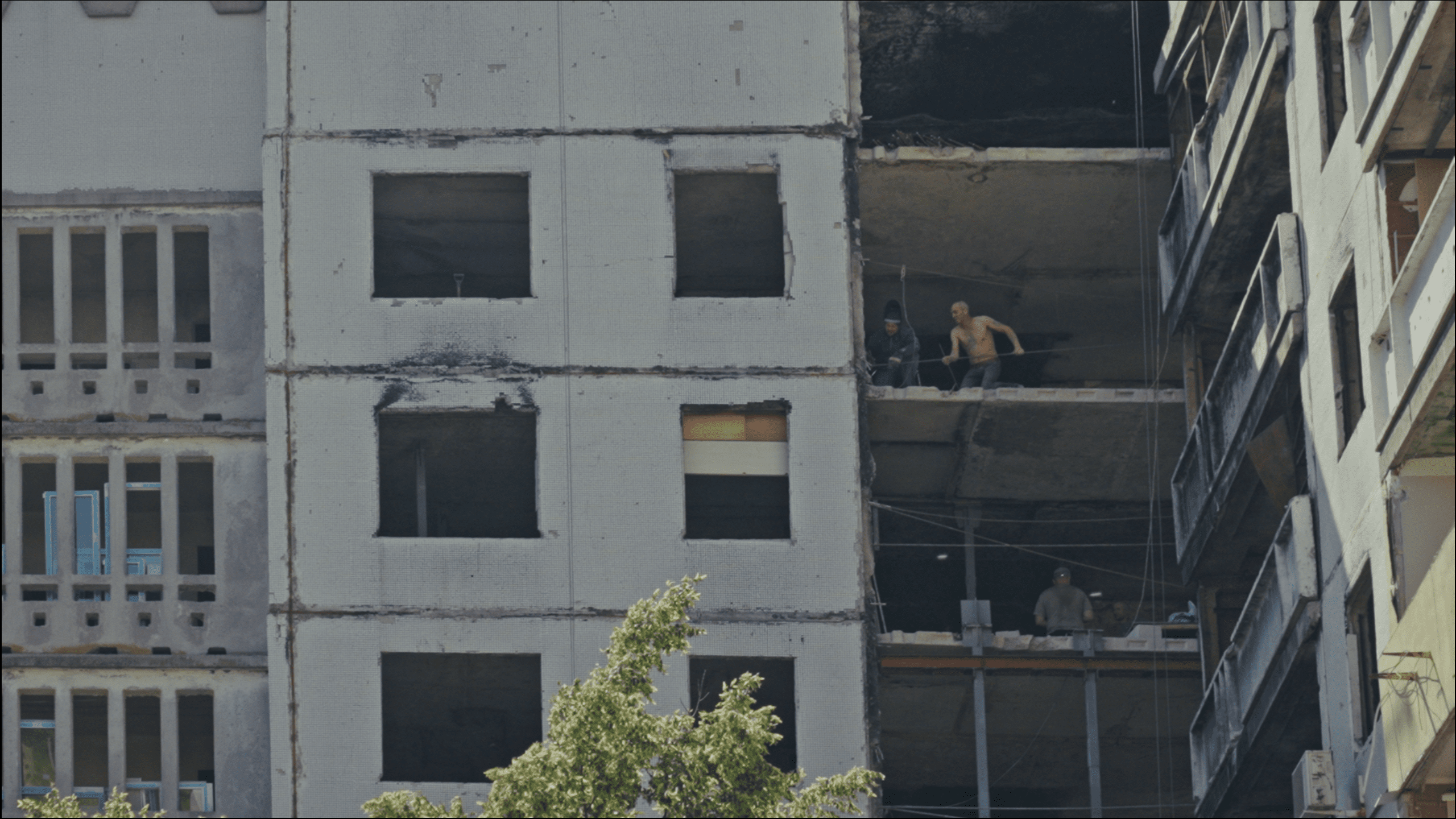
“Some of the families in our building never left at all,” he says. “Volunteers brought them food, and we organized a group chat and bought them power banks so they could charge their phones.”
Locals cooked food over open fires. We worried about them a lot, but they couldn’t leave because they had bedridden parents here, and they wouldn’t abandon them.
Kostiantyn
Kharkiv resident
Among those who had also chosen to stay was Aliona’s father. “He had to make a fire in the building entrance to cook food. He took my grandmother in, and somehow they managed to get by—then eventually they left too.”
Everything was in flames
While Kostiantyn has since returned to live here full-time, Aliona—who currently lives in Lviv, a city in the West of Ukraine—only comes back once every few months. In the first weeks after Russia’s full-scale invasion, Aliona was determined to remain in Kharkiv—even though she often had to shelter behind two walls in her own apartment. However, after Russian troops began deliberately targeting residential buildings, she decided it was time for her to leave.
“On February 24, 2022, we were all awoken at 5 a.m. by explosions and heavy shelling—it was very loud,” she says. “We realized that the war had begun.”
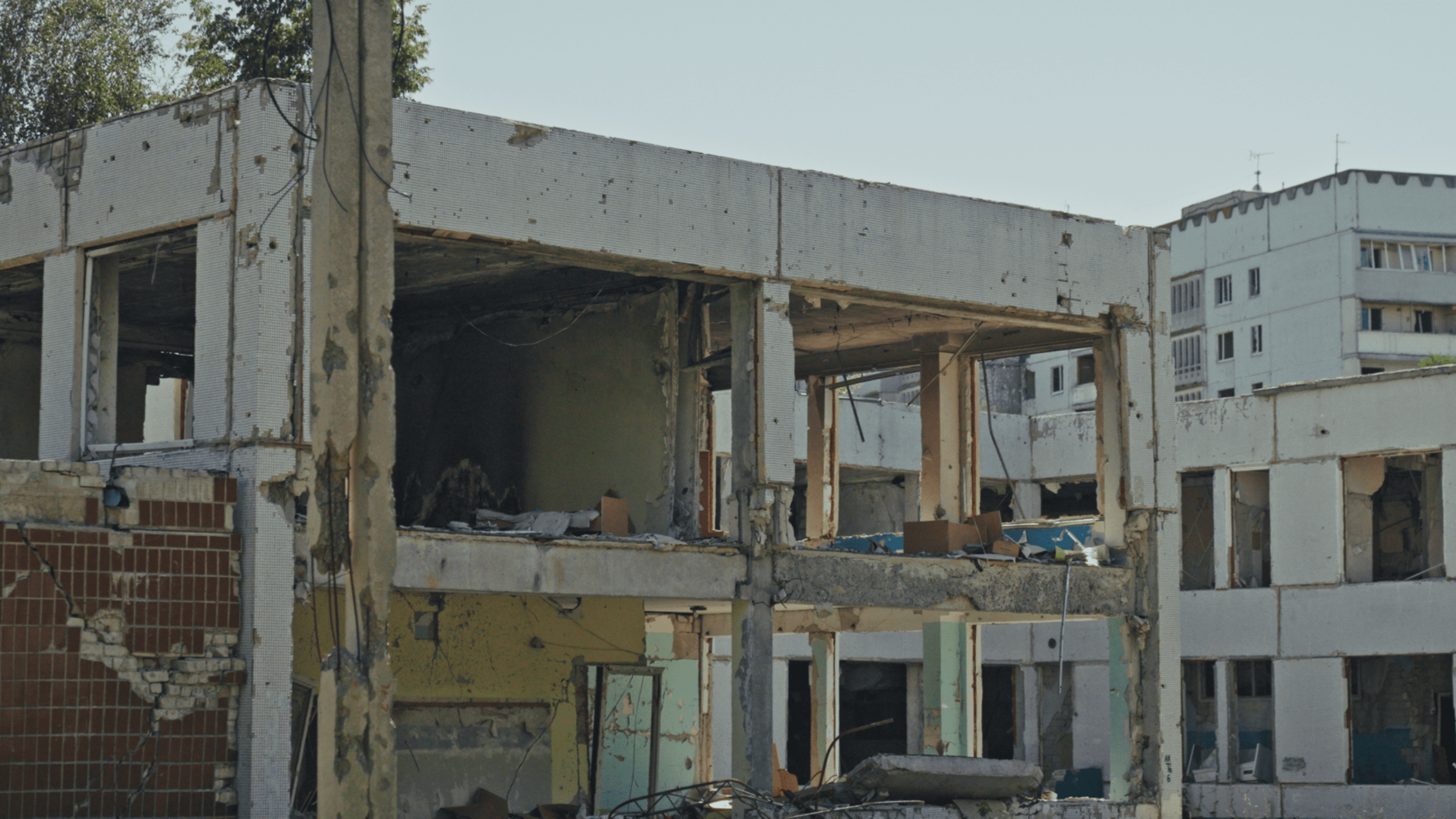
On the very first night of the full-scale war, she slept in a kindergarten basement—like many others did. “It was not a real shelter,” she says. “People just brought benches and chairs.” While we were talking, we passed the same kindergarten—now completely destroyed from a direct Russian strike.
“I was standing near the window and watching, at the exact moment when shells hit that very building,” said Kostiantyn, pointing to a residential complex. “I saw it with my own eyes. That sixteen-story building was on fire, another one was burning, and a nine-story building too. Everything was in flames”.
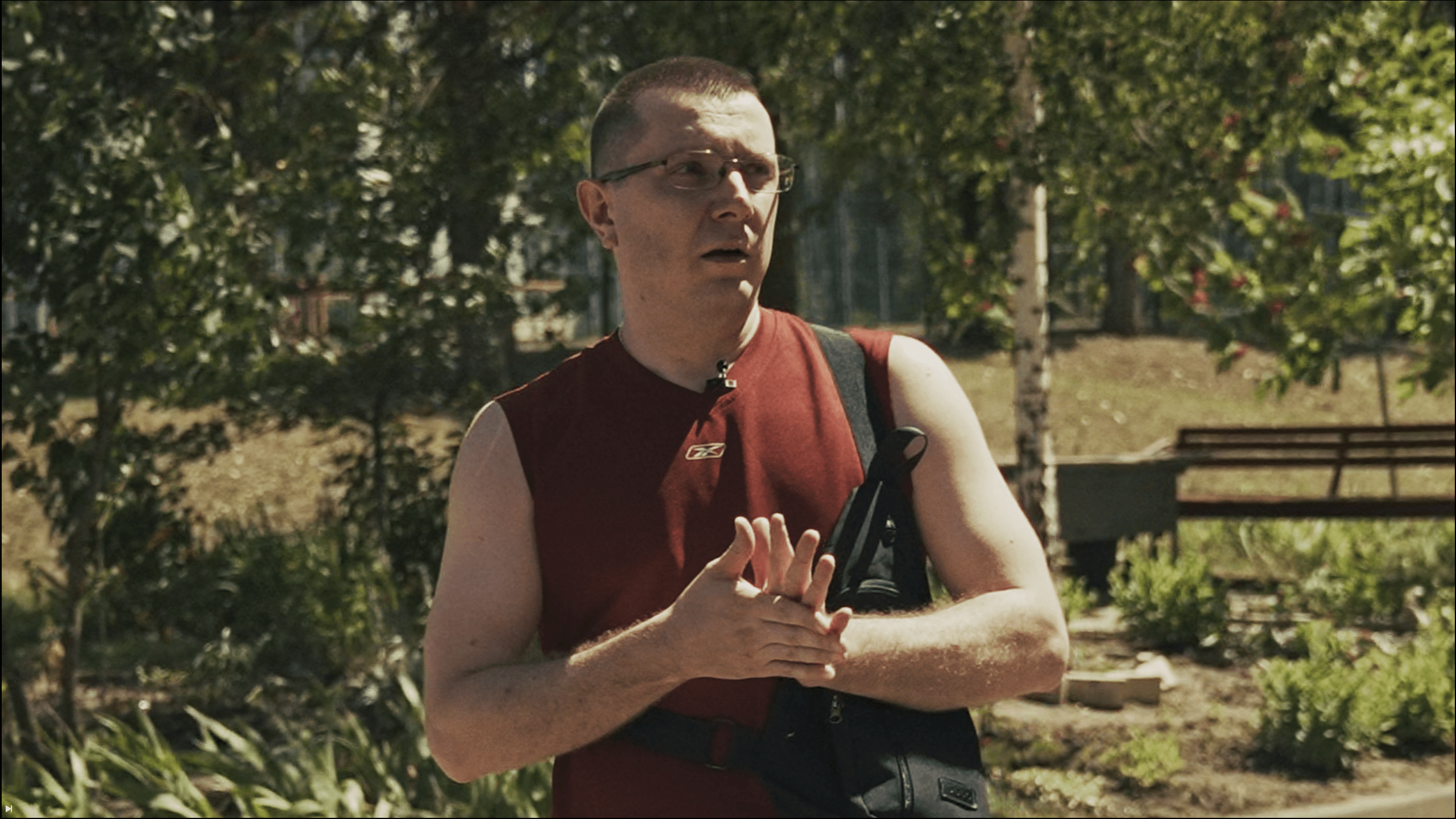
Kostiantyn briefly came back to assess the damage to his apartment in June 2022. “It was loud every day,” he recalled. “Every day, almost without pause.” Despite this, he decided to go ahead with renovating his apartment. “Everything was flooded. That is, all of it was taken and thrown out. We restored everything.”
For Aliona, June 2022 was her first time back: “I was afraid to return, because I thought it would be the same as it was at the very beginning [of the full-scale invasion—ed.]. But when I arrived, I realized it was a little easier, because the region had been liberated. Still, it was frightening. There were S-300 missile strikes, then the Shaheds [attack drones Russia commonly uses for its attacks against Ukraine—ed.] started flying.”
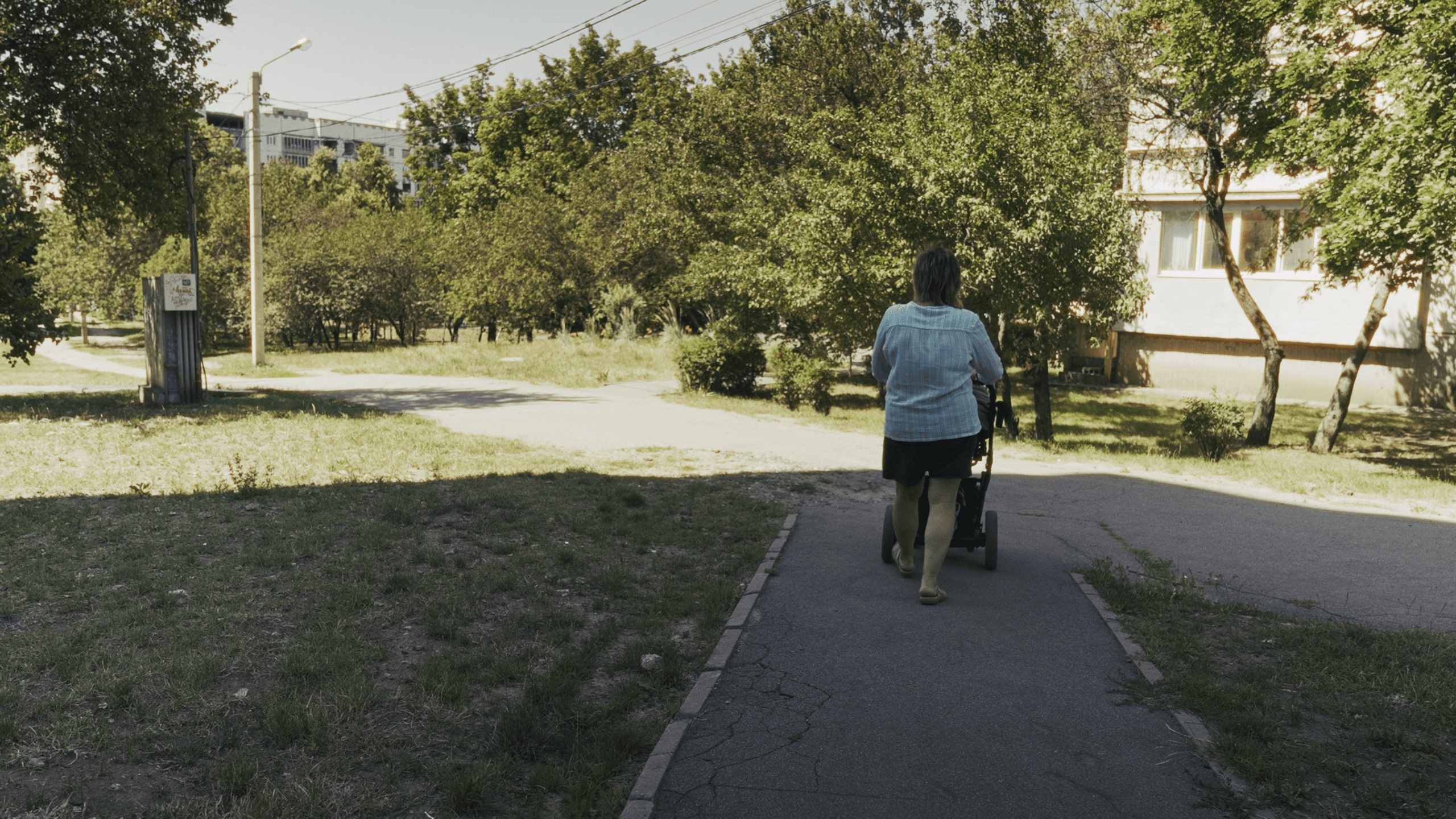
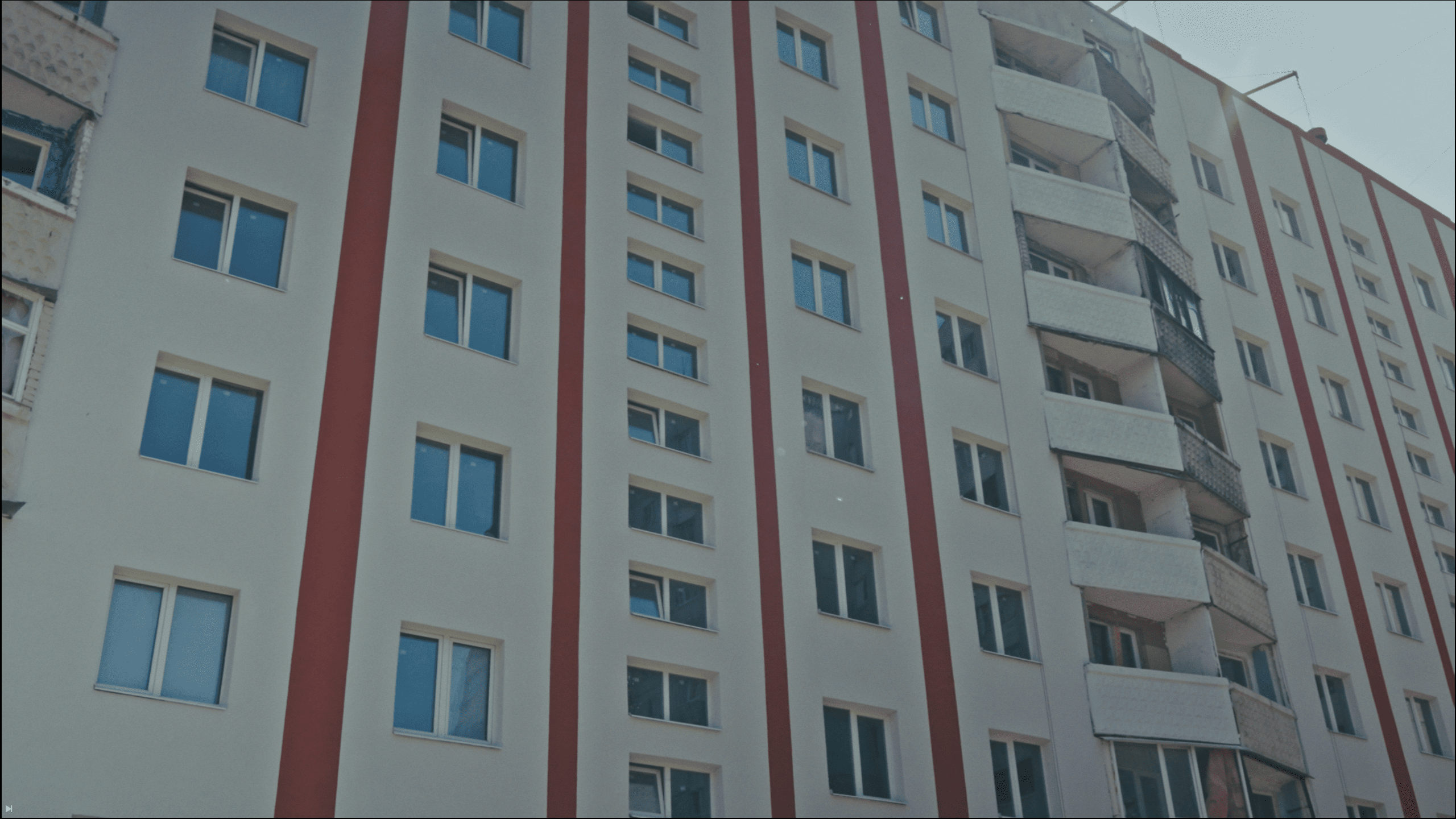
Walking around Northern Saltivka, we see that completely damaged houses are sometimes right next to others being repaired. Then we passed one brand new-looking building with a brightly renovated facade—this is where Aliona’s brother lives. “We all lived here together during my childhood,” she said.
Her brother’s apartment is on the fourth floor and was completely burned out in a Russian strike.
“There were no doors, no windows, and no appliances. There were cracks in the walls. And now the building is being restored—they’re doing a full renovation: the plumbing, insulation, and painting.” The windows and doors are already installed, soon—they will have running water.
Aliona stressed that while it’s sad to see her district looking like this, she is pleased that the neighbourhood is undergoing restorations. She dreams of coming back: “I constantly think about how much I want to return home.”
Dreaming of home
While the buildings are being renovated, residents are also trying to improve conditions, not only for themselves, but for the whole neighbourhood. From clearing the rubble to cleaning the yards, they work to make their district pretty again.
We are next to a small garden in front of a newly renovated building. “There was a strike that took away five entire floors," explained Aliona, adding that restorations began in 2024. The well-kept garden is cared for by the residents, including her friend’s mom, who lives there.
“They dug up the flowers from places where buildings were completely destroyed and can’t be restored, but bought some new ones too,” she says. “Every weekend, they work to make it look nice.”
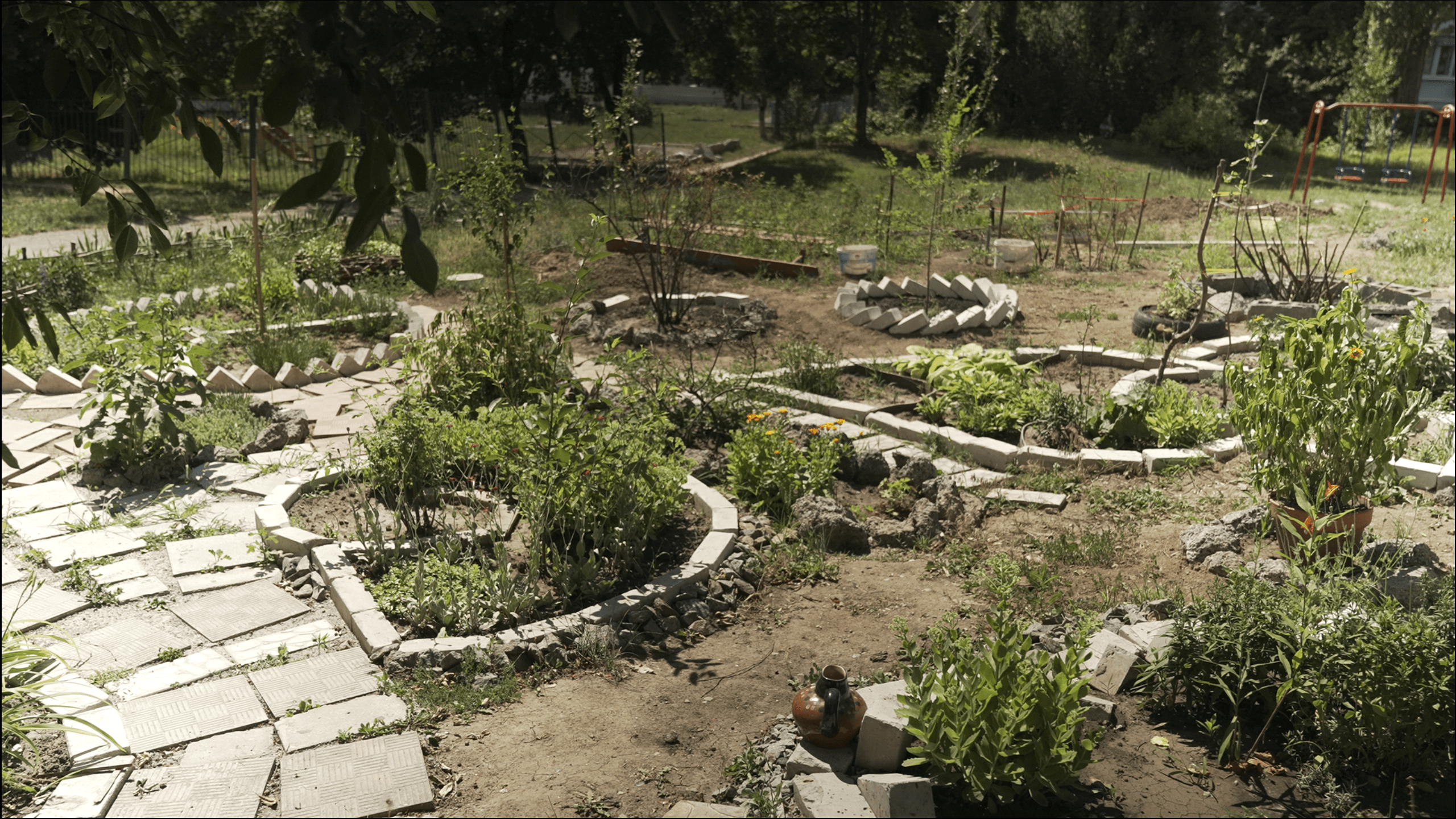
Aliona believes that as soon as the buildings are renovated, people will start to return, even though Russian troops are still constantly attacking Kharkiv.
“If you compare the neighborhood to how it was before the war—when you walked down the alley, you would greet someone every few meters,” says Kostiantyn. “Now, you can walk there and back without encountering a single person.”
“This is home!” says Aliona. “We all grew up here. It feels good here, despite everything. I really want to go back home.”
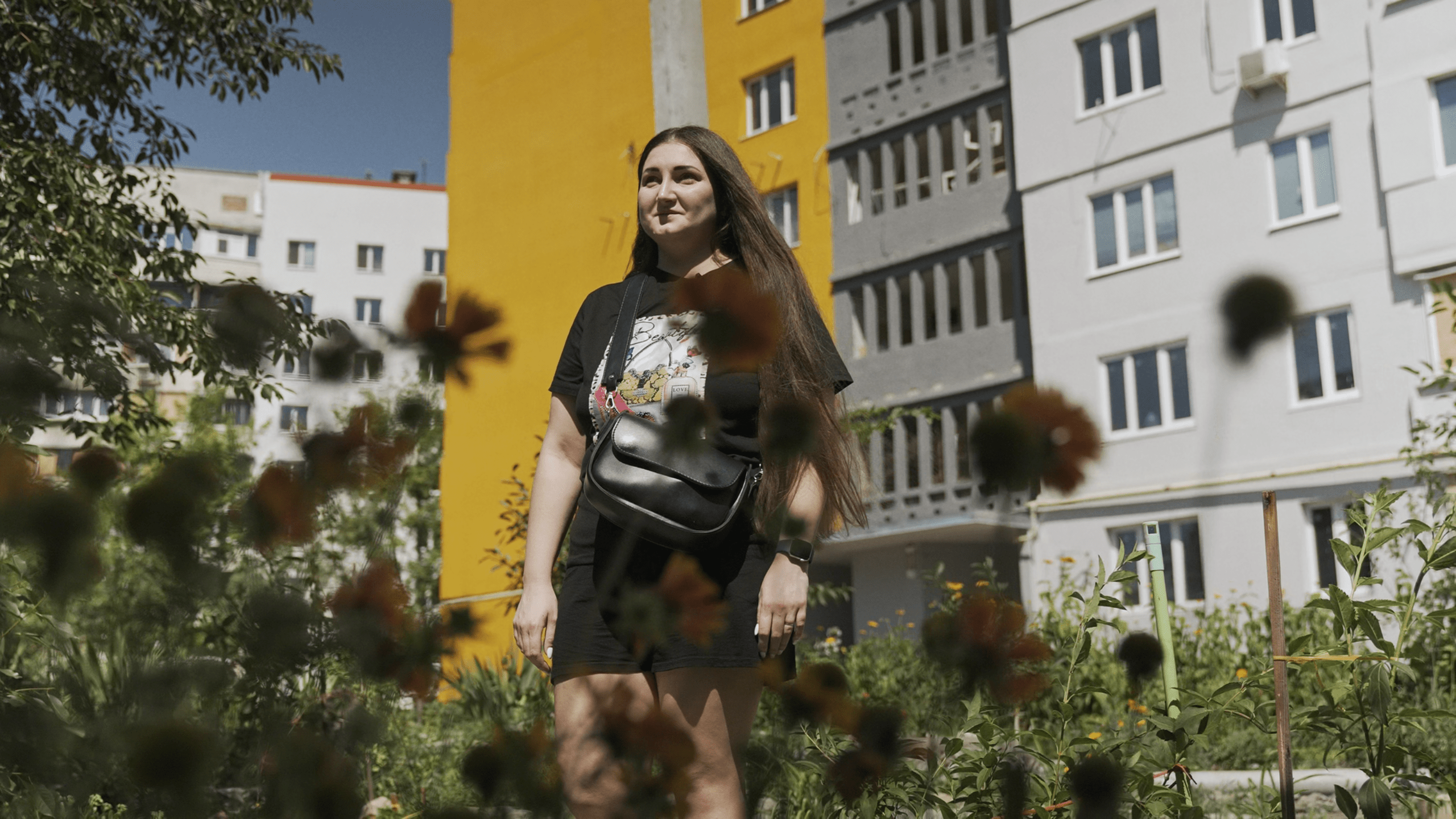
It’s still 36 degrees outside. People are still hiding in the shade. Northern Saltivka is undeniably alive, patiently waiting for its residents to return.
Discuss this article:

-111f0e5095e02c02446ffed57bfb0ab1.jpeg "Photo of Roman Kohanets")
-07c046f037cabcd54fb44b5253b3733d.jpg "“Bathing” (2021), an 80 × 60 cm artwork by Ukrainian artist Mariia Drozdova. (Source: Art From Ukraine/Instagram)")


-c439b7bd9030ecf9d5a4287dc361ba31.jpg "Photo of Katherina Popilnichenko")