- Category
- Photoreports
Ukrainians Celebrate Epiphany Amid War with Icy Plunges—In Photos
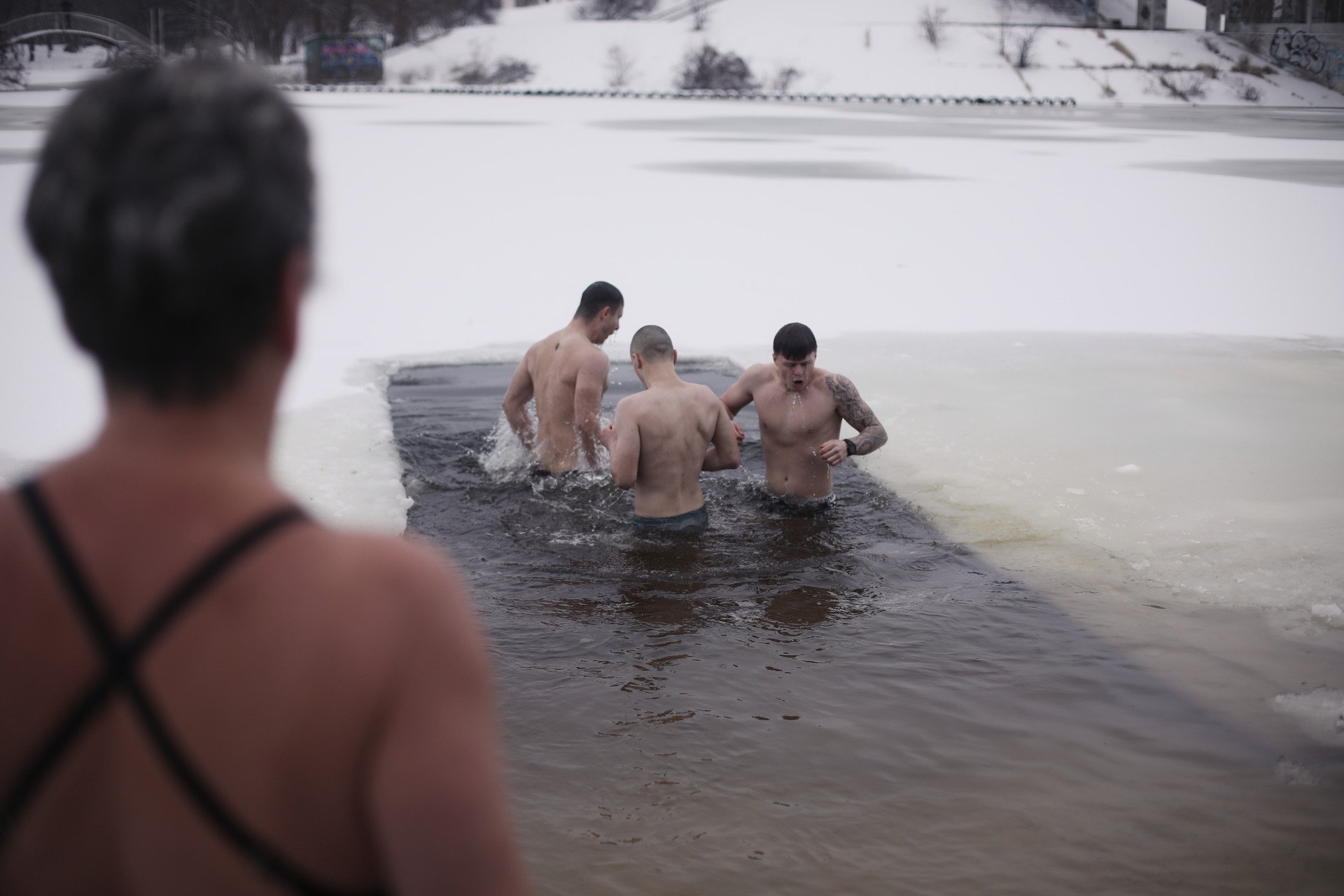
On January 6, Ukrainians across the country marked Epiphany with a time-honored tradition—plunging into icy waters to renew their faith. Despite ongoing challenges from Russia’s war, the ritual of immersing in frigid rivers, symbolizing the Holy Trinity, remains a powerful expression of Ukraine’s cultural resilience and spiritual renewal.
- Authors

-554f0711f15a880af68b2550a739eee4.jpg "Photo of Lucile Brizard")
Epiphany, celebrated across Ukraine with a unique blend of religious devotion and folk tradition, holds deep significance as one of the most important Christian holidays. Known as Khreshchennia Hospodne in Ukrainian, it commemorates the baptism of Jesus Christ in the Jordan River at the age of 30.
For many Ukrainians, however, the day is far more than a religious observance; it serves as a powerful expression of faith and a moment of spiritual renewal. The celebration in Kyiv on January 6 echoed these traditions, drawing people together in both sacred and cultural rites.
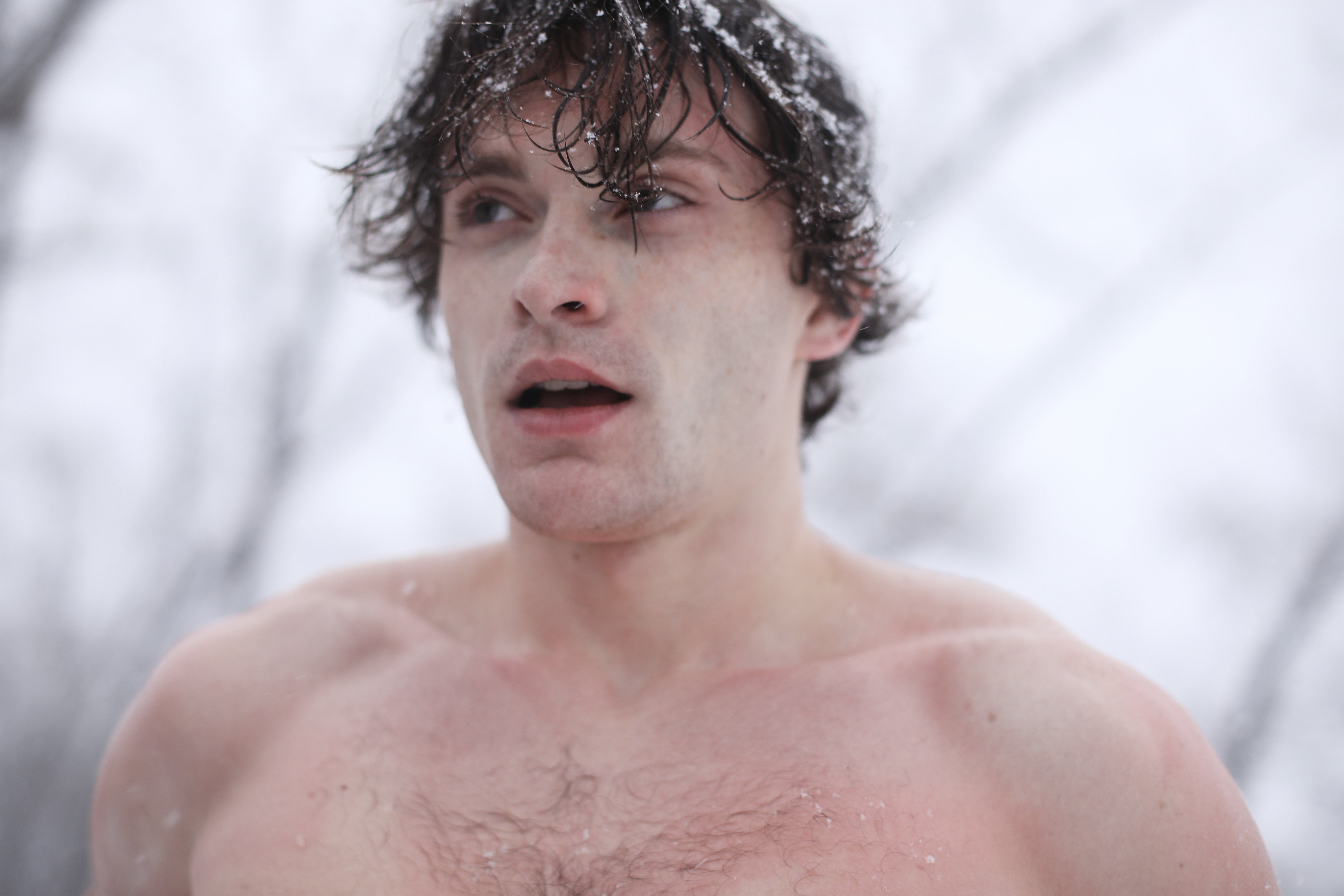
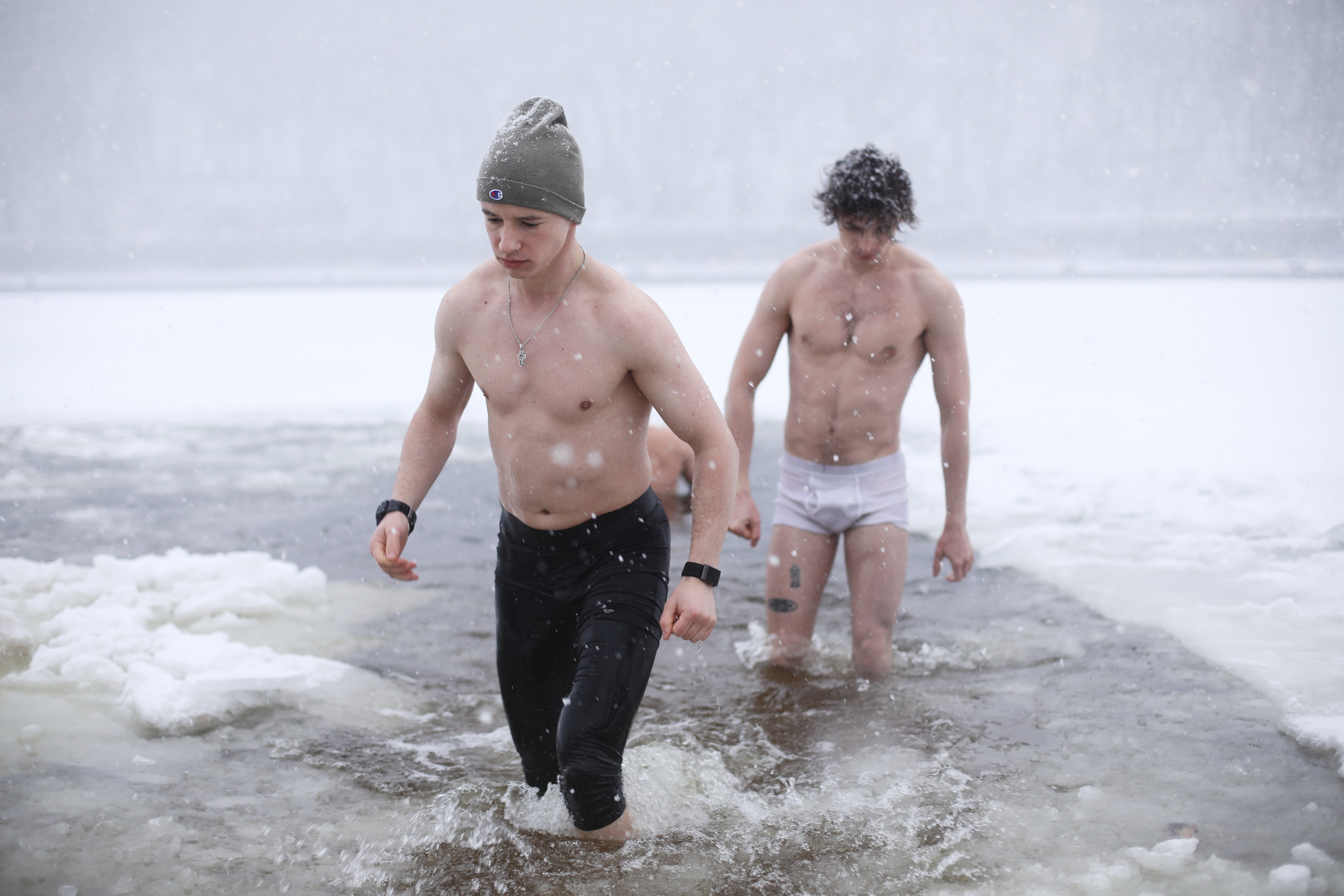
This year, as in many before it, one of the most striking rituals associated with Epiphany was the mass plunge into icy waters. On the white-dusted banks of the Dnipro, snow plummeted down onto the shores as hip young Kyiv residents waded into the freezing water. This group didn’t cross themselves, but the congenial aspect—whoops and tea being passed around—marked the moment as something special.
A somber Epiphany plunge in Kyiv’s Hydropark: a tradition of faith amidst war
Across town, in Hydropark—a recreational bank also on the Dnipro River, known to all Kyiv citizens—a more somber Epiphany plunge was taking place. In the well-cut-out ice rectangle, senior men, middle-aged women, and young children all waded calmly in and plunged their heads three times under the water, crossing themselves as they went.
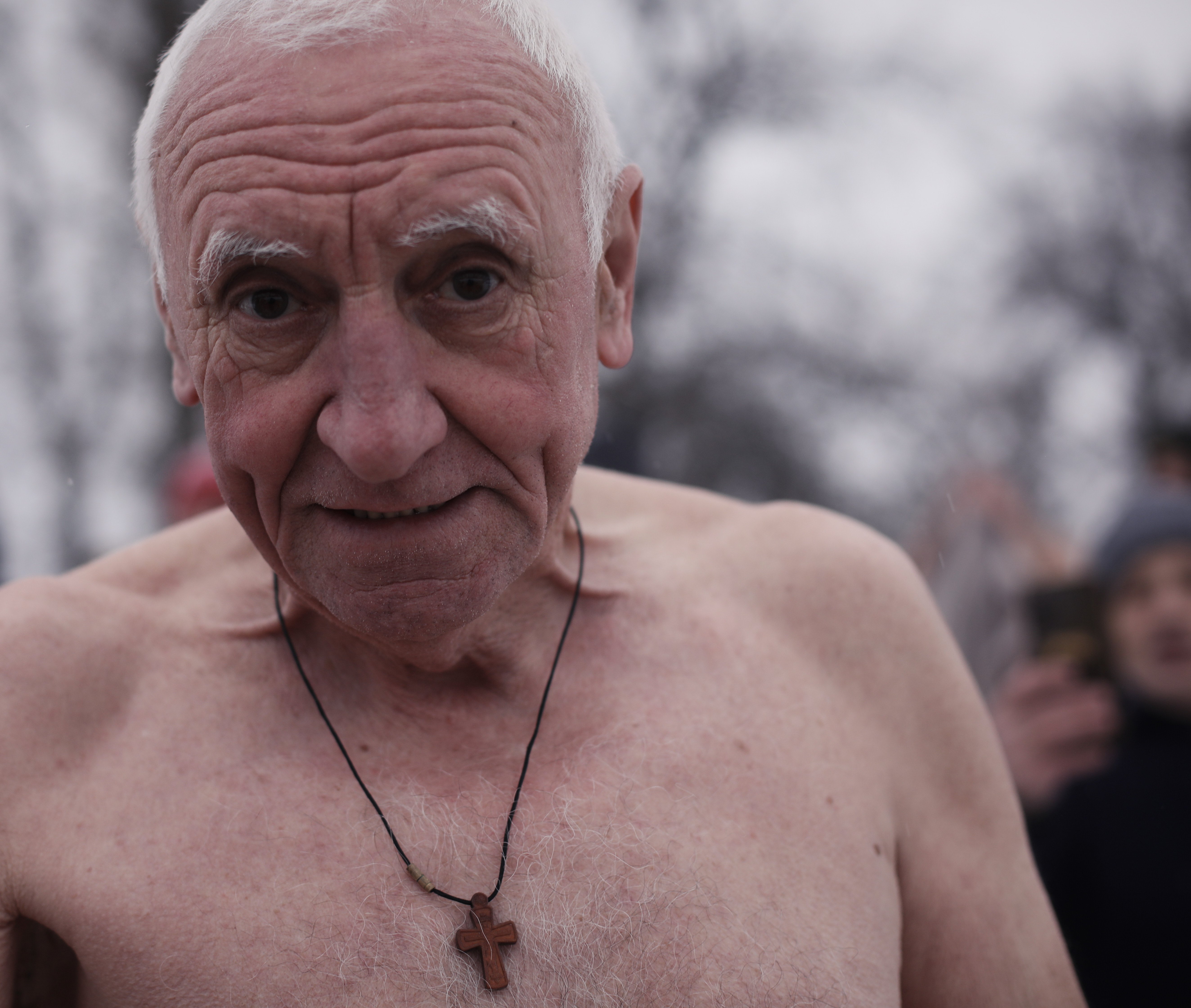
Despite the chill of winter, people across the country took part in this cleansing tradition. The ritual of immersing oneself three times in the frigid water—symbolising the Holy Trinity—has been passed down through generations, rooted in both Orthodox Christian doctrine and Ukrainian folk customs.
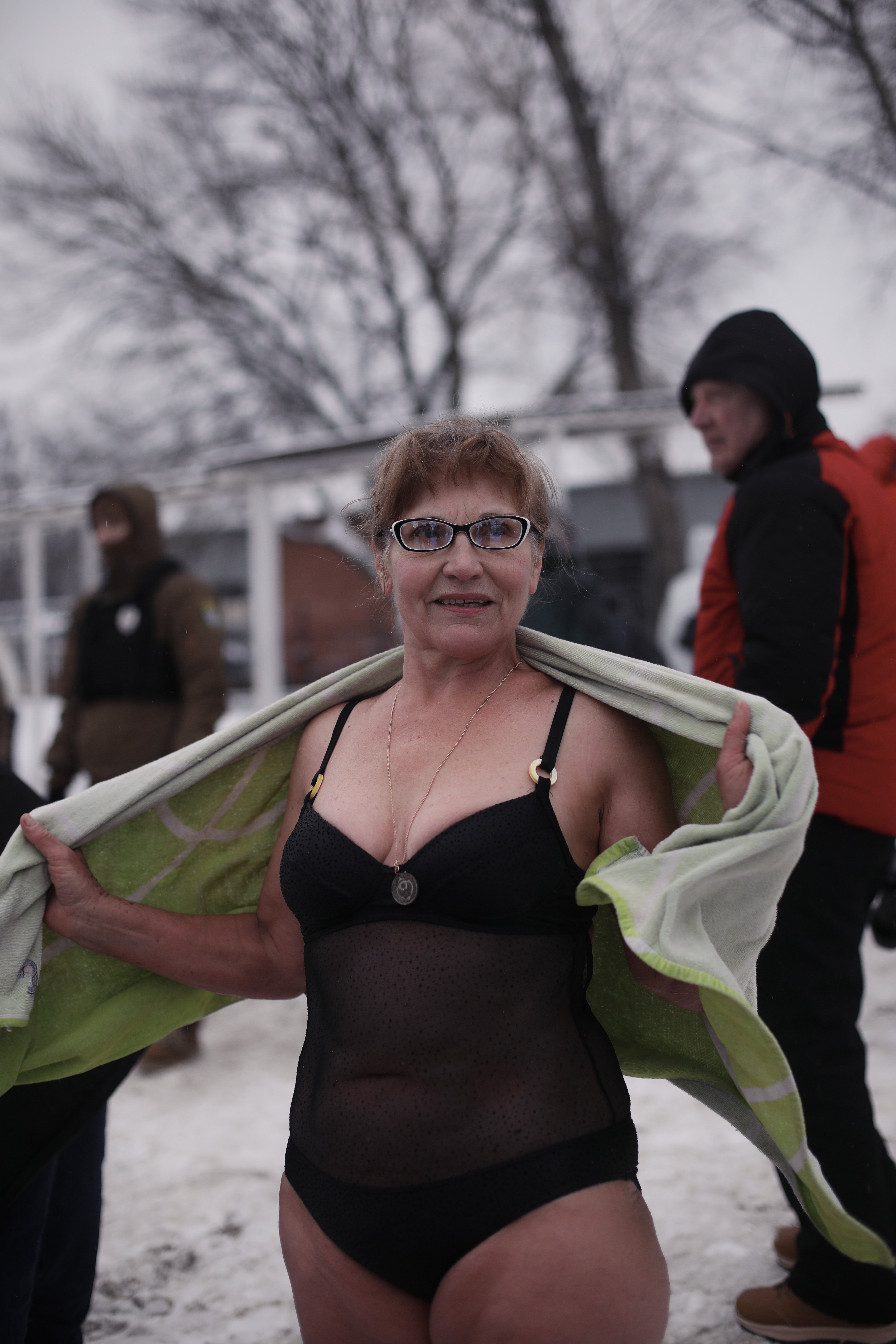
For Bohdana, a Kyiv resident, who plunged into the Dnipro River near Kyiv’s Hydropark, the ritual, has not lost its significance. “It’s a little unusual, the hardest part is undressing and getting in,” she says with a smile, “but when you come out, you feel warm, and it’s such a great feeling.”

This year, the celebration was marked by a significant change for Ukraine. On September 1, 2024, the independent Orthodox Church of Ukraine (OCU) officially adopted a revised Julian calendar, which moves the date of Epiphany to January 6, in line with the Gregorian calendar.
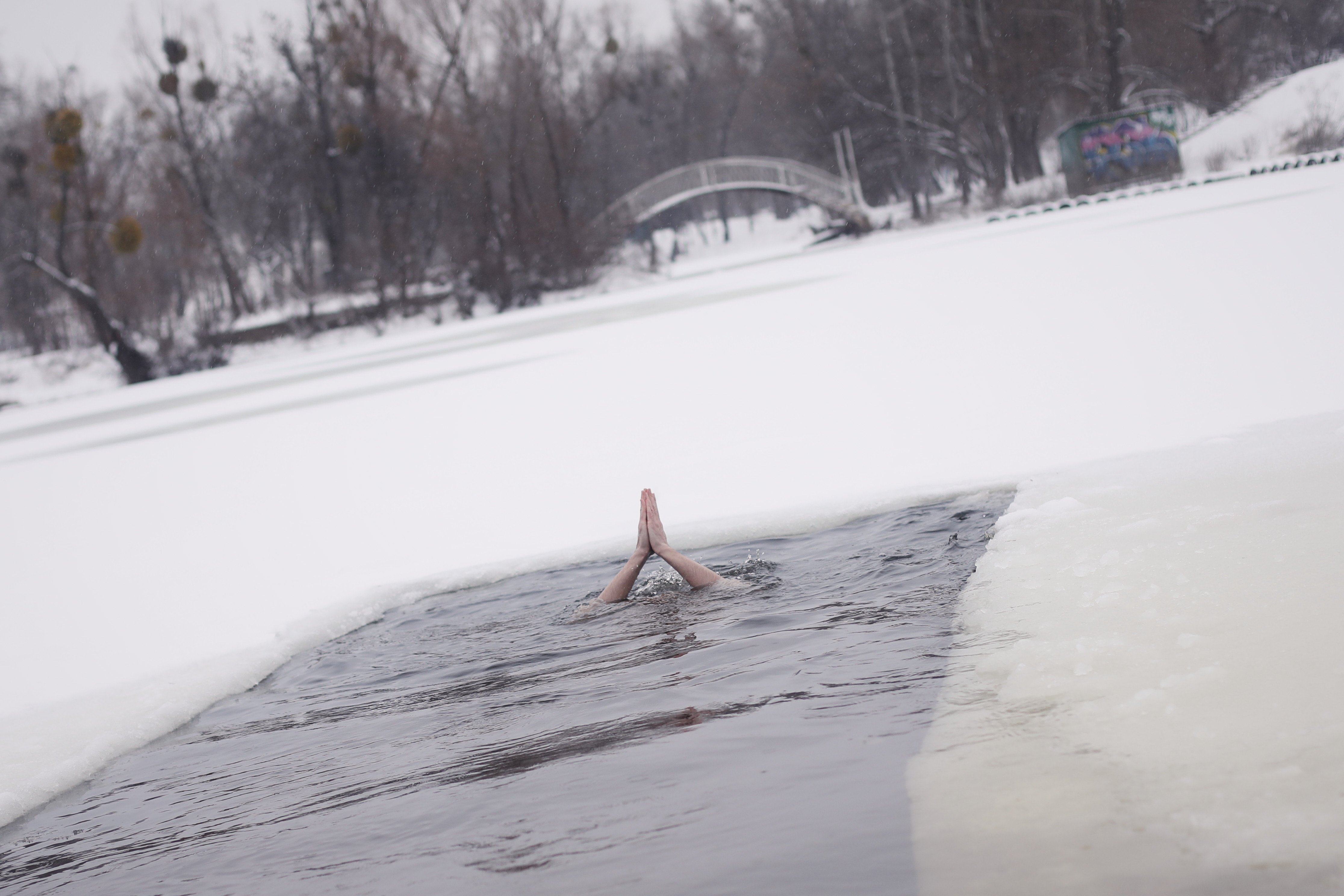
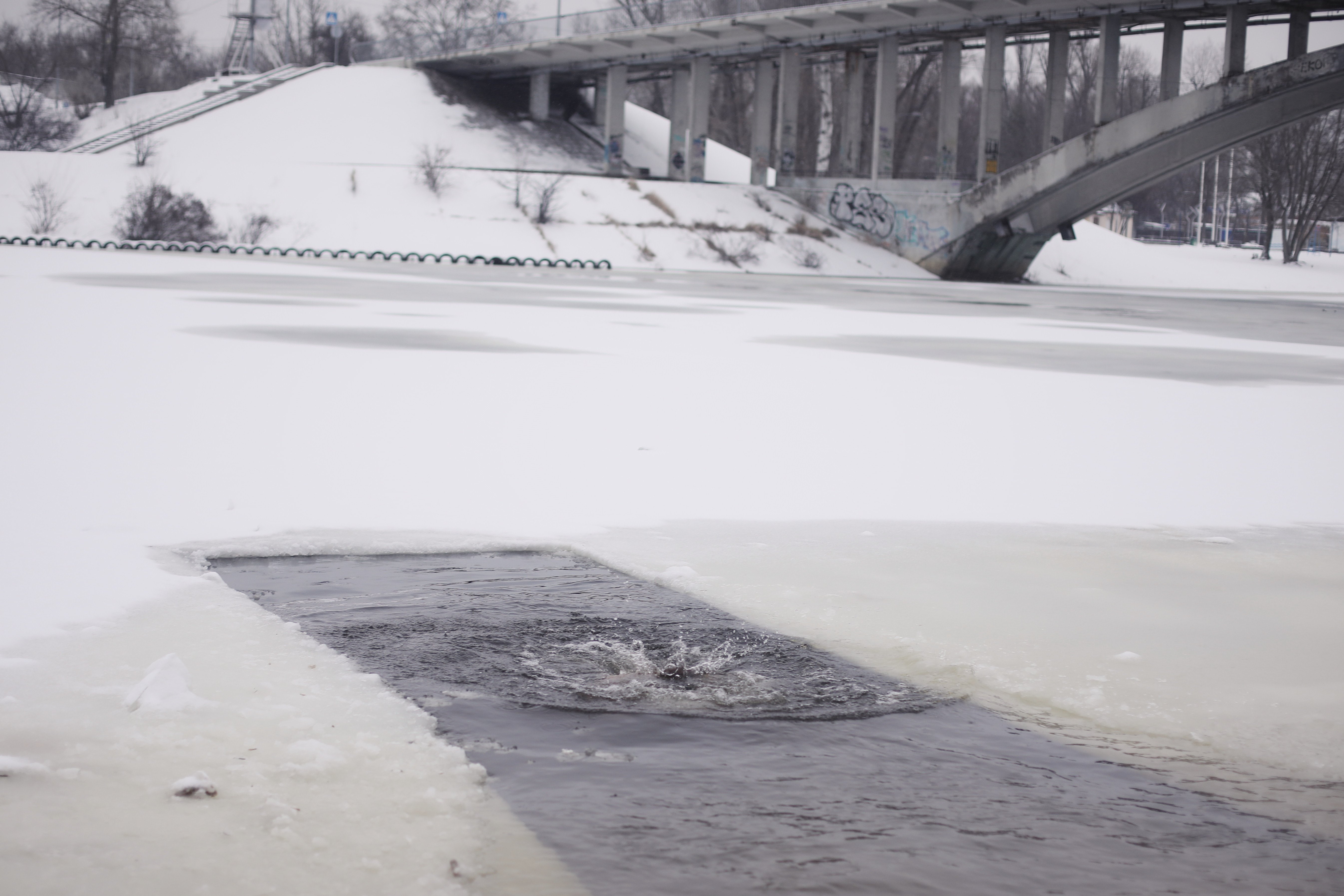
This adjustment, prompted by Russia’s full-scale invasion of Ukraine, also brought about the shift of Christmas celebrations from January 7 to December 25.
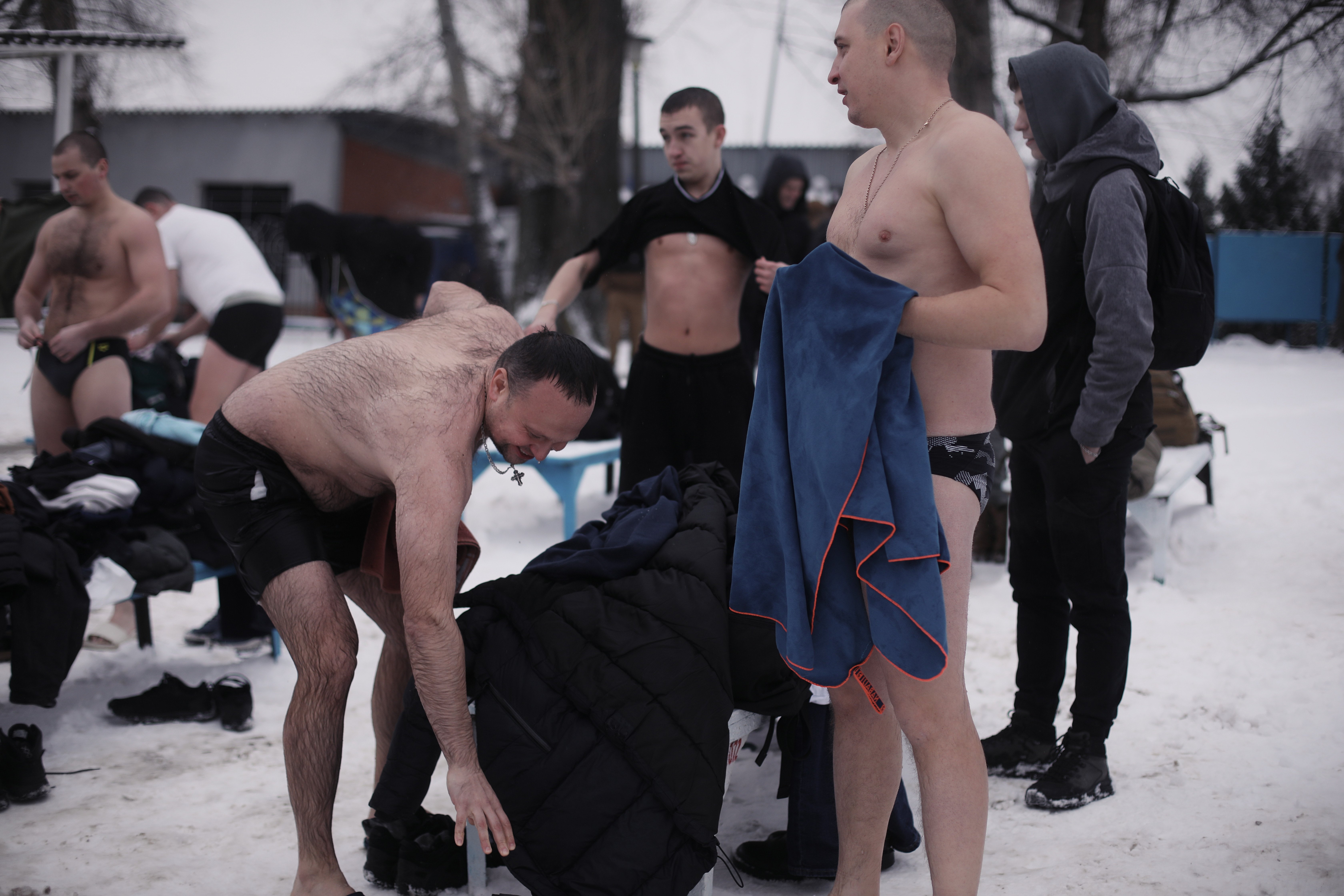
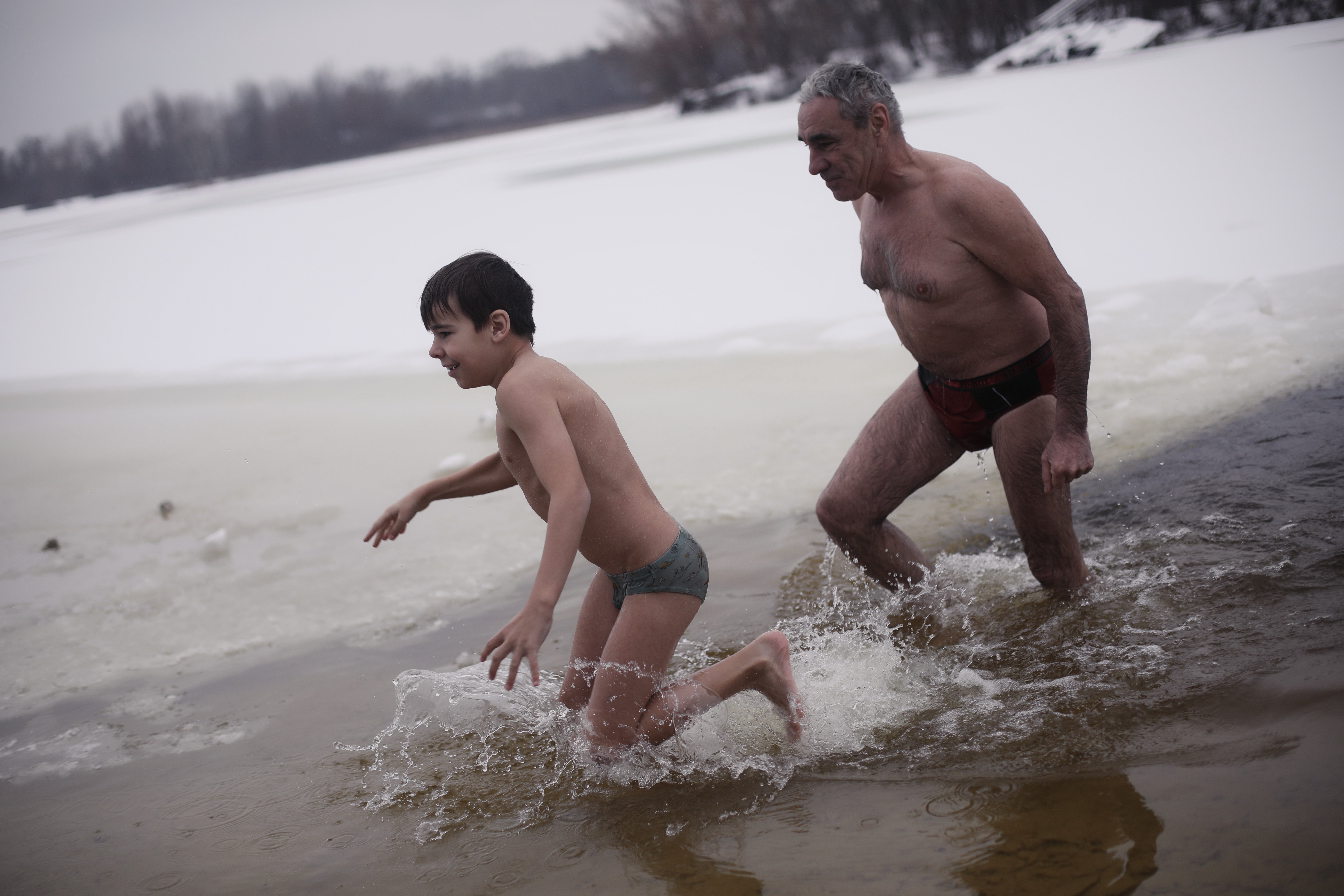
Dmytro, another Kyiv resident, remembers the time he and his friends braved the cold waters of the Kalmius River in Donetsk in the early 2000s. The 40 year old tells us, “We brought our own towels and a change of clothes and headed to the river in the morning, lining up for our turn to climb down the ladder and into the freezing water. It was fun.”
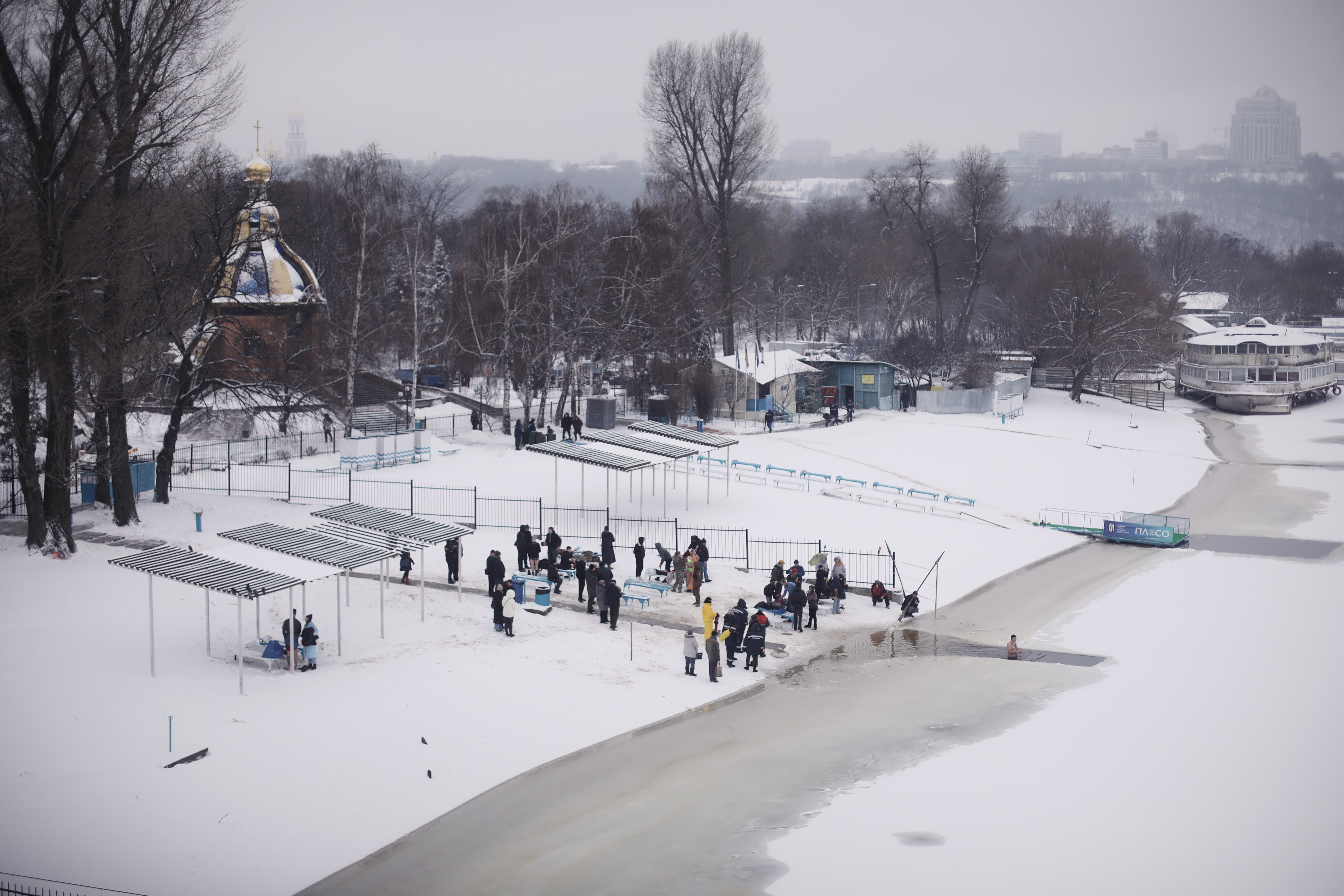
After 2014, Dima, his wife Ania, and their son Timmy were forced from their home in Donetsk by Russia’s occupation and resettled in Kyiv. For a few years after that, he continued the tradition on January 19, renting a sauna by the banks of the Dnipro River and enjoying the triple plunge into the cross-shaped hole cut into the ice. After Russia’s full-scale invasion in 2022, Dima said, “Everything stopped. I know they changed the calendar and everything, but over these last years of war, other things have taken priority.”
Ukrainians embrace new epiphany date
The new date was embraced by many, though some still hold to the old traditions of the Julian calendar, which had long dictated the timing of Ukrainian Orthodox celebrations. For Ukrainians, this date is no mere formality: Epiphany is intertwined with both faith and folklore. It is a time when water is considered sacred; the waters of rivers and lakes are blessed by priests and are thought to possess healing properties.
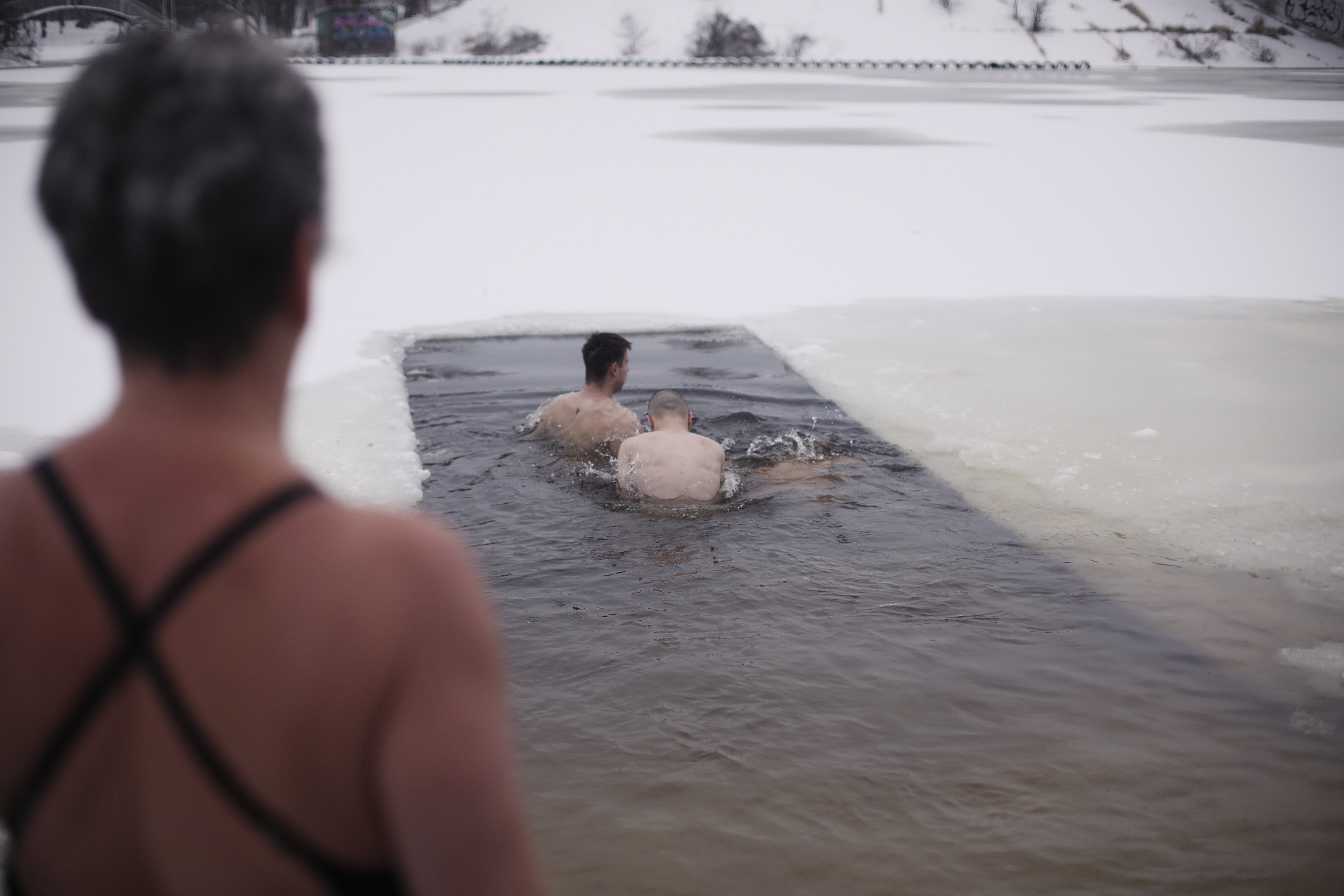
Many people take home the blessed water to use in their homes, gardens, and even for their animals. It is believed that this water can bring prosperity, protect from evil, and bring good health throughout the year.
Despite the ongoing war and the security challenges that it brings, Ukrainians continue to practice these traditions. Authorities in Kyiv had urged citizens to refrain from large gatherings and traditional swimming in open water bodies, given the ongoing security situation.
The tradition is a powerful reminder of Ukraine’s cultural and religious heritage, its connection to the European spiritual tradition, and the continuity of Ukrainian customs despite the ongoing crisis.
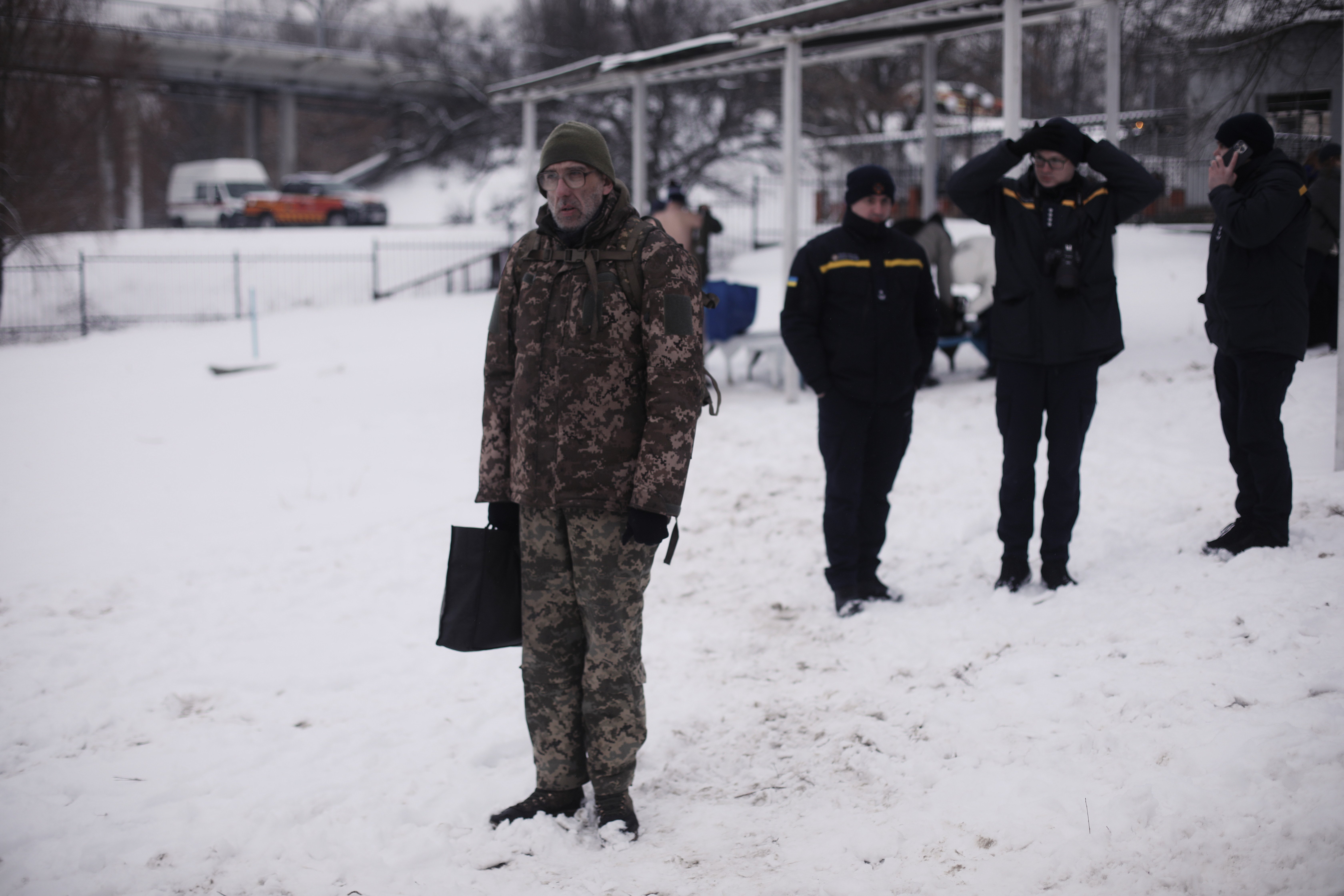
For Bohdana and many like her, the ritual of Epiphany is a way of reaffirming faith and unity—even in difficult times. “It’s about much more than wishes for health or happiness,” she says. “It’s about remembering our past, our culture, and the connection we have with the land, with each other, and with something much larger than ourselves.”
Discuss this article:
-8321e853b95979ae8ceee7f07e47d845.png)


-42696701342093d1cdbc4069f0f07d6c.jpeg "Photo of Mykyta Shandyba")
-0666d38c3abb51dc66be9ab82b971e20.jpg "Photo of Josh Olley")