- Category
- War in Ukraine
Ukrainian Soldiers Endure –25°C Holding the Frozen Sumy Front, in Photos
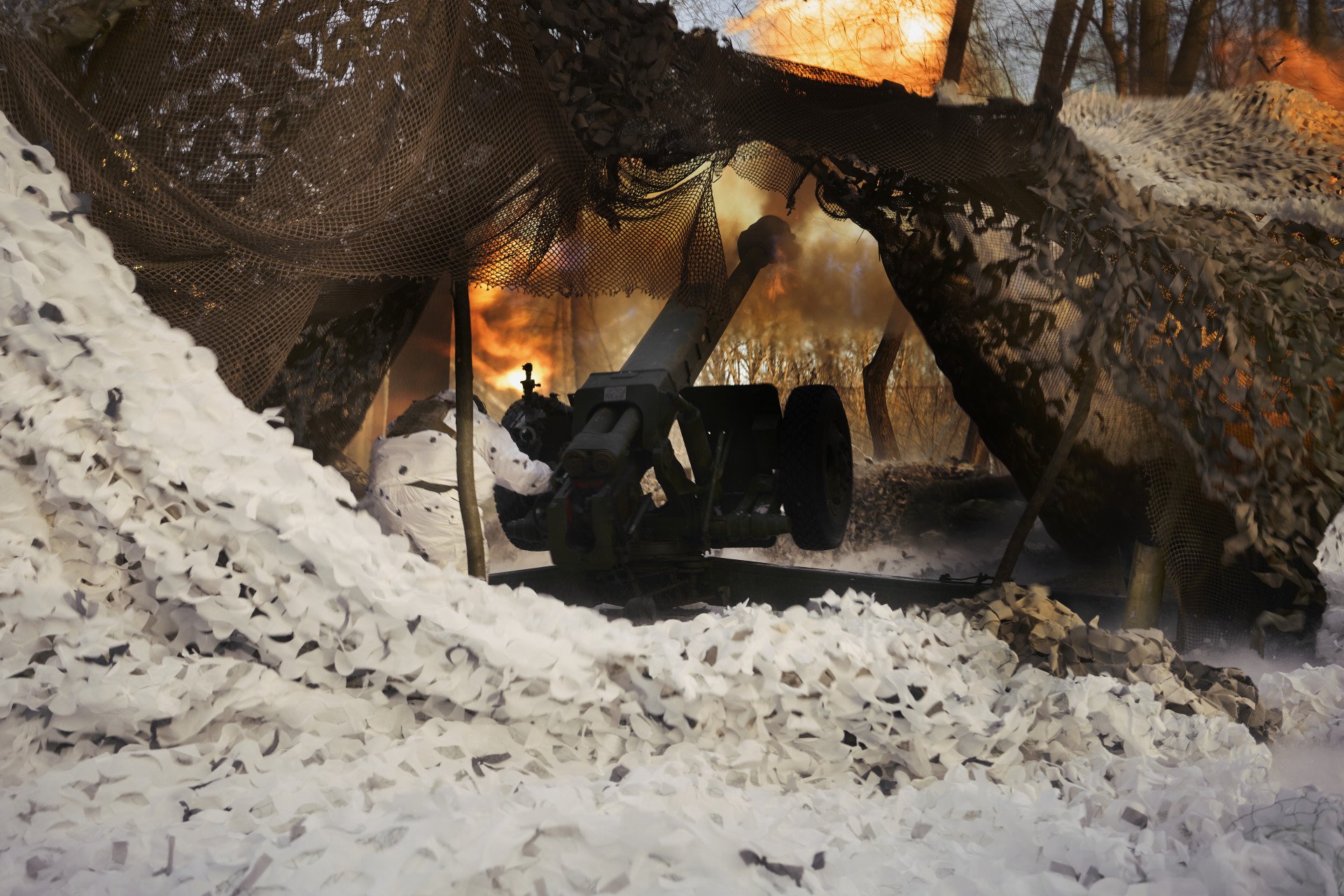
Ukrainian troops on the Sumy front are battling subzero temperatures as low as –25°C (–13°F), where frozen trenches, failing engines, and constant drone surveillance reshape daily combat. Snow conceals artillery positions even as it risks exposing them, while frostbite and exhaustion shadow soldiers holding the line. In Ukraine’s winter war, endurance has become as decisive as firepower.
 Prefer U24 Media on Google
- Authors

-0666d38c3abb51dc66be9ab82b971e20.jpg "Photo of Josh Olley")
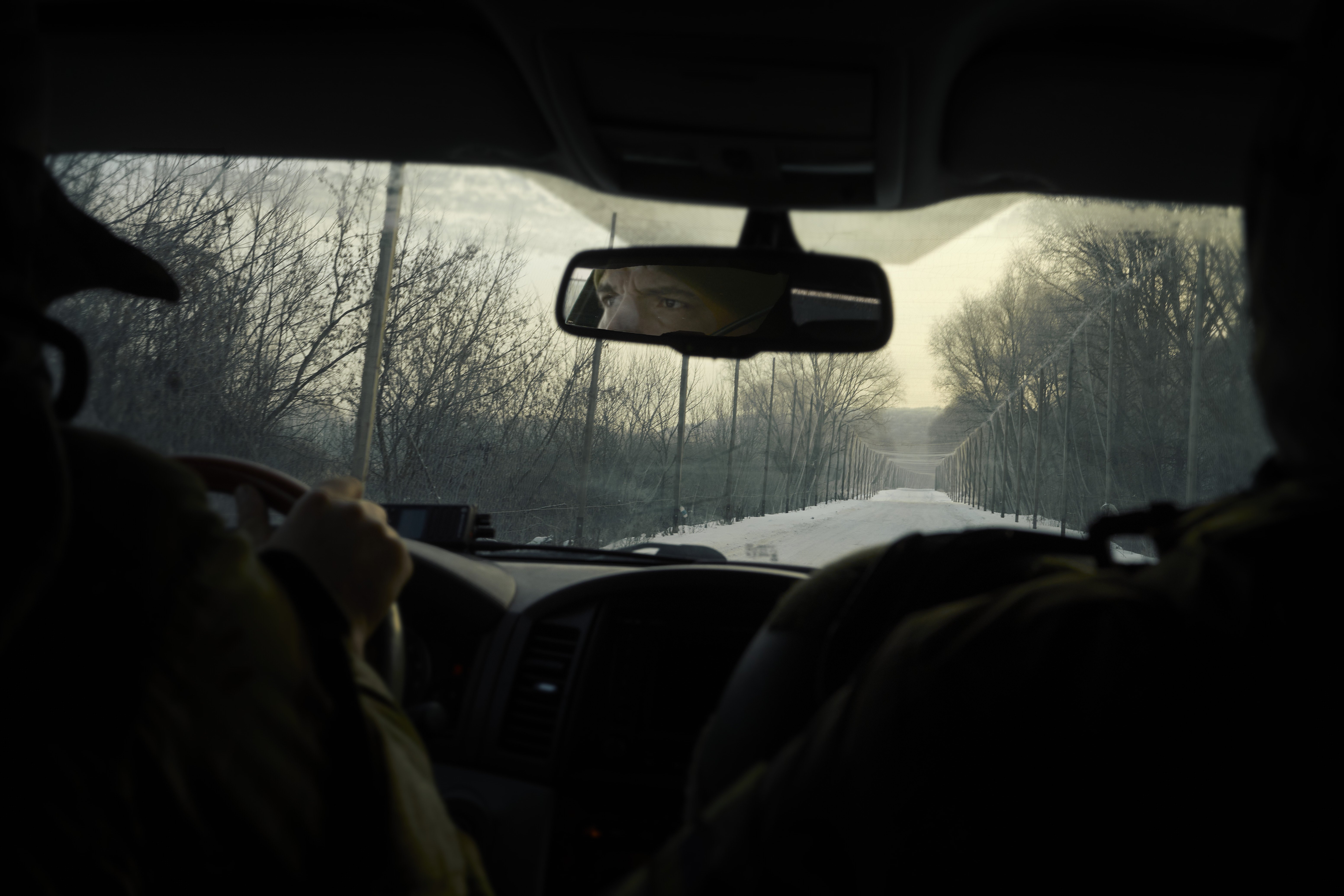
When the pickup arrived to take me to the positions, the outside temperature read -25 °C (-13°F). Today, it’s a clear morning along Ukraine’s northern front in the Sumy direction. The sun had not yet risen, but the sky was already baby blue.
Extreme cold reshapes combat operations
Winter warfare in Ukraine is defined not only by cold, but by the operational constraints it imposes on troops holding artillery and trench positions under constant drone threats and artillery fire.
“Spending the first two days in trenches without heating is somehow manageable,” says “Chornomor,” the commander of an artillery unit in the 47th Mechanized Brigade, holding the Sumy line. “But when the frost drops to -10°C (14°F), and you’re already going into the third or fourth day, that’s when it starts getting really hard. If you’re staying still in a defensive position, and you don’t have heating behind you, it often leads to severe frostbite.”
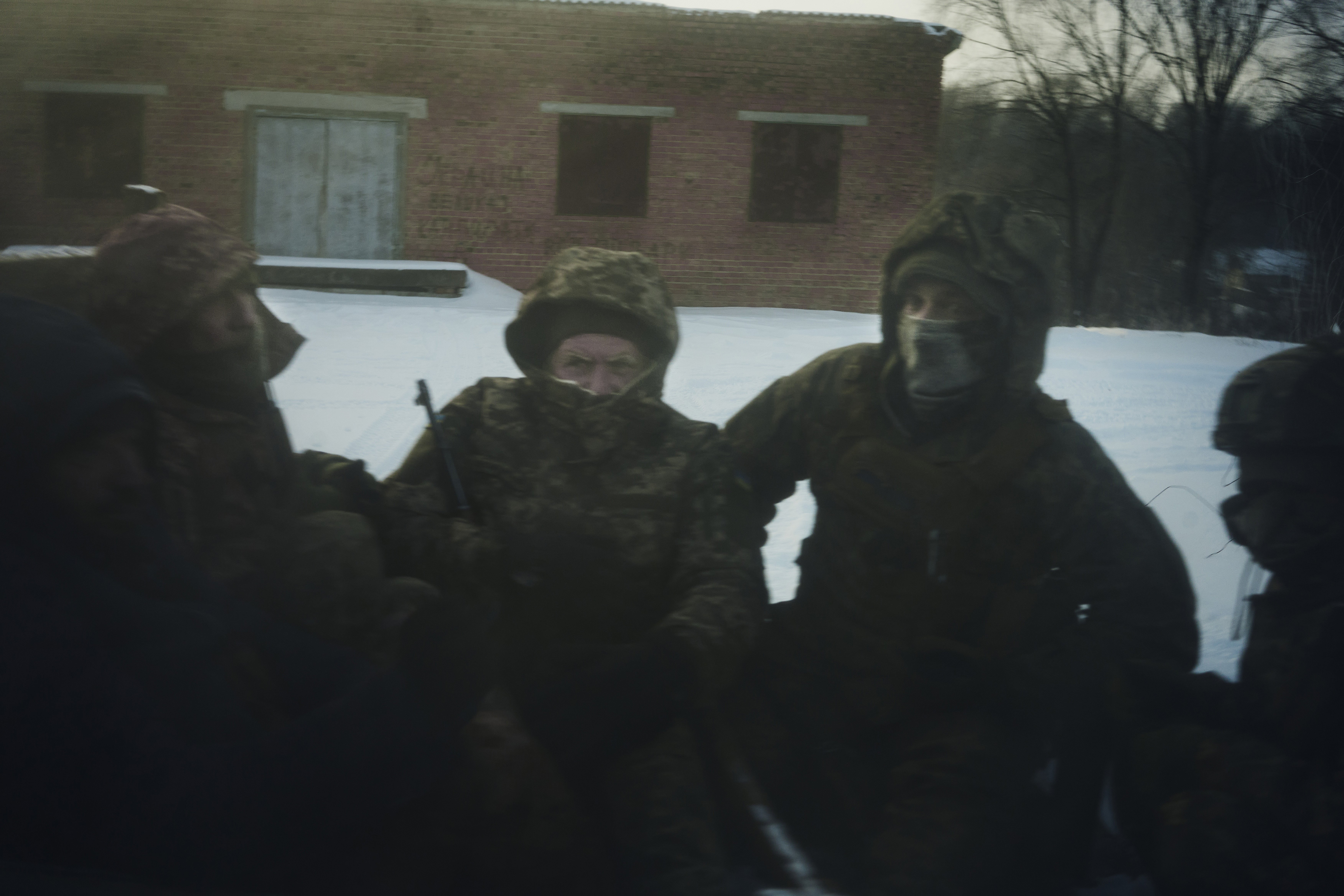
Soldiers and commanders have described winter as an added layer of strain on positions already under near-constant drone observation.
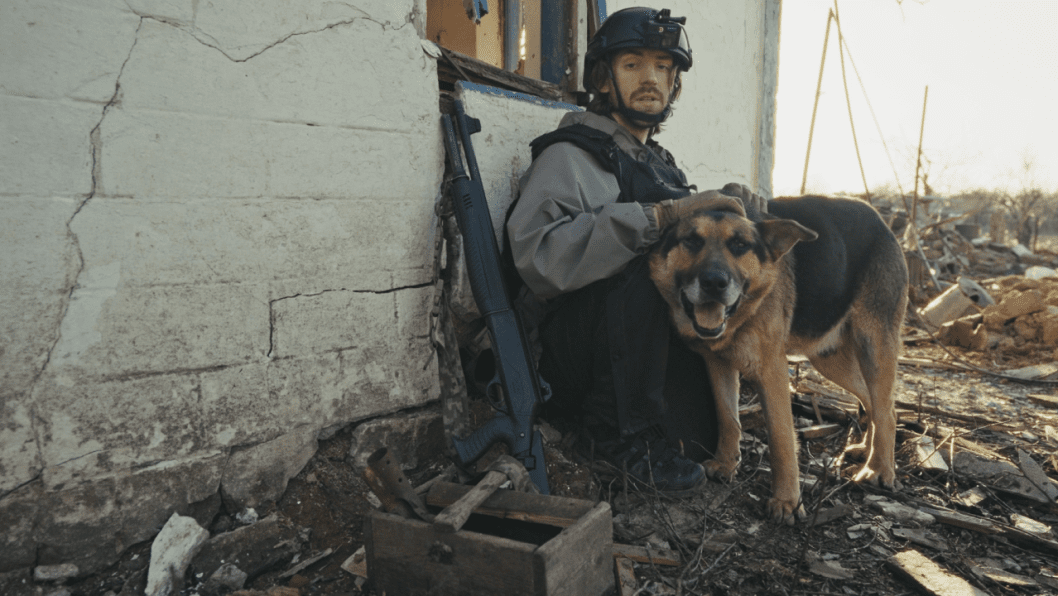
When we reached the position, I saw an older man standing nearly motionless in full white camouflage, holding an anti-drone shotgun. His uniform matched the surrounding snow closely enough that he was difficult to distinguish at a glance. Without speaking, he led us the remaining distance to a D-30 howitzer.
Within roughly ten meters of the emplacement, the crew emerged from the blindage and removed camouflage netting from the gun. The shift from concealment to action was rapid. The three-man team moved into position, entered coordinates, adjusted elevation, and loaded a round.
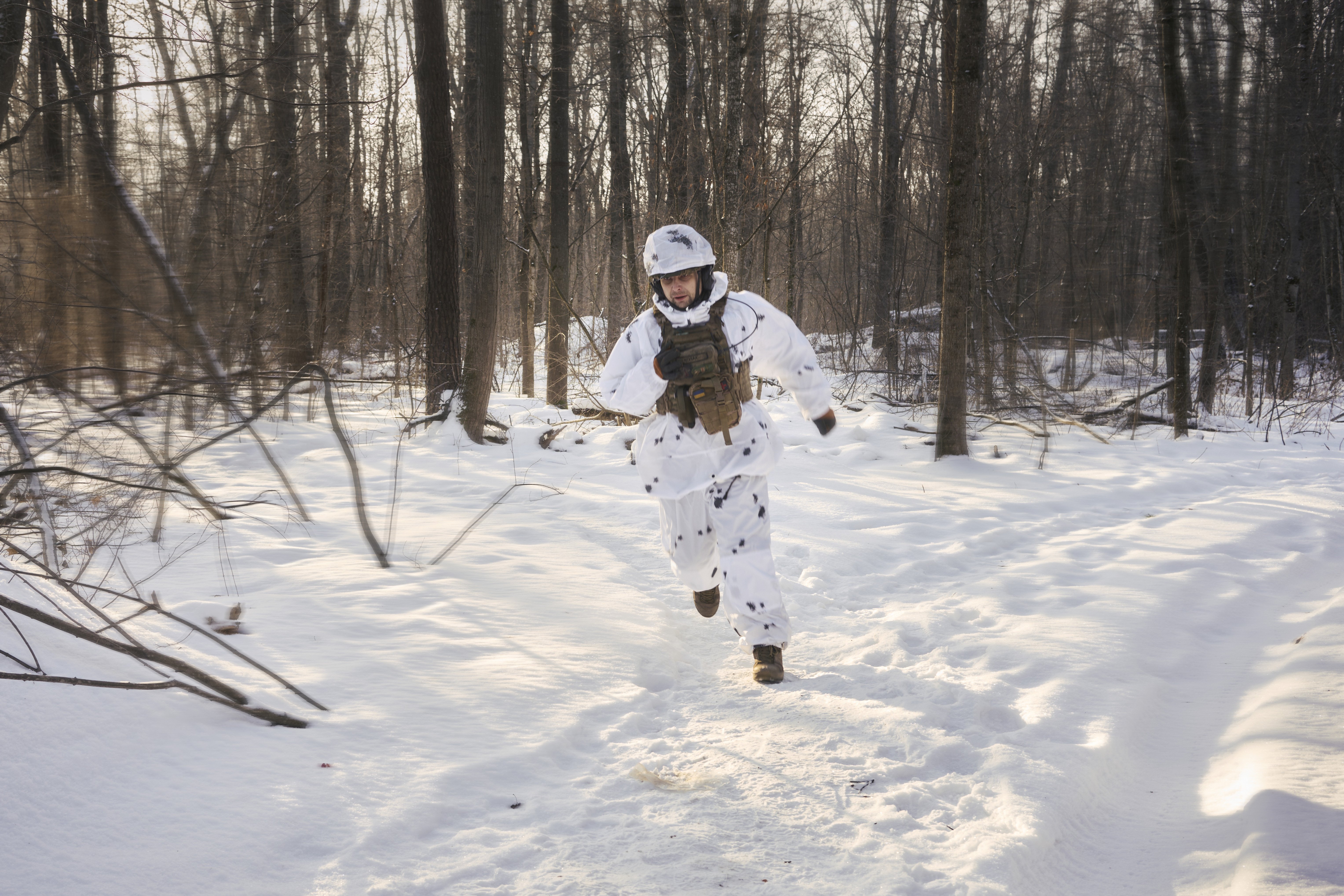
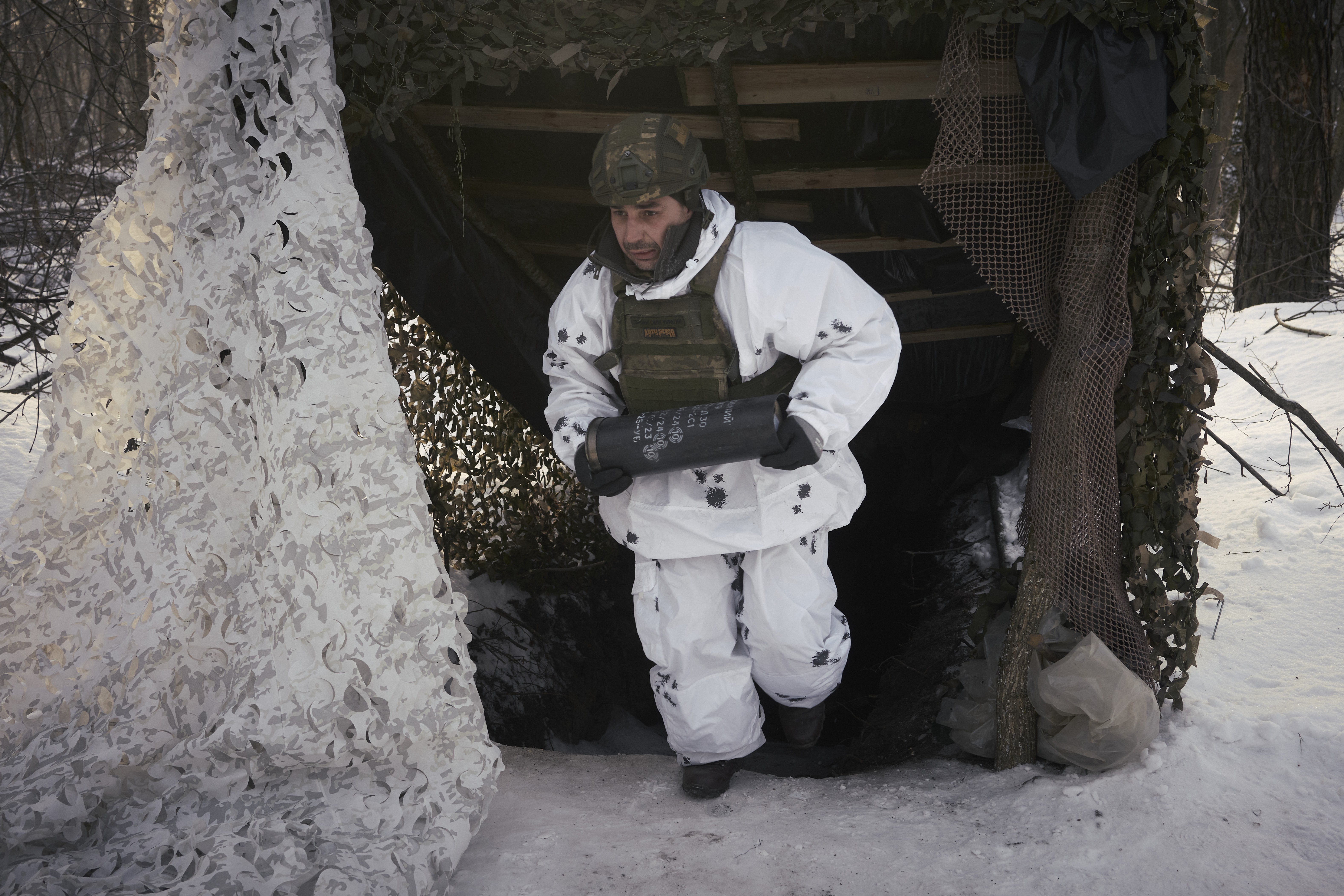
“Harmata! Postril!”
The weapon fired.
The soviet era D-30, smaller than many modern howitzers, produced a forceful blast. Snow rose inches off the ground, everything shaking, the gun surprisingly, bewilderingly powerful despite its relatively compact size. The report dominated the immediate surroundings, briefly overwhelming other sounds, including the wind and the cold.
Freezing temperatures affect weapons and machinery, increasing the risk of metal components jamming and engines failing at critical moments. Snow and ice slow transport and complicate resupply, while evacuation becomes less predictable on frozen roads and buried tracks. Visibility can shift rapidly.
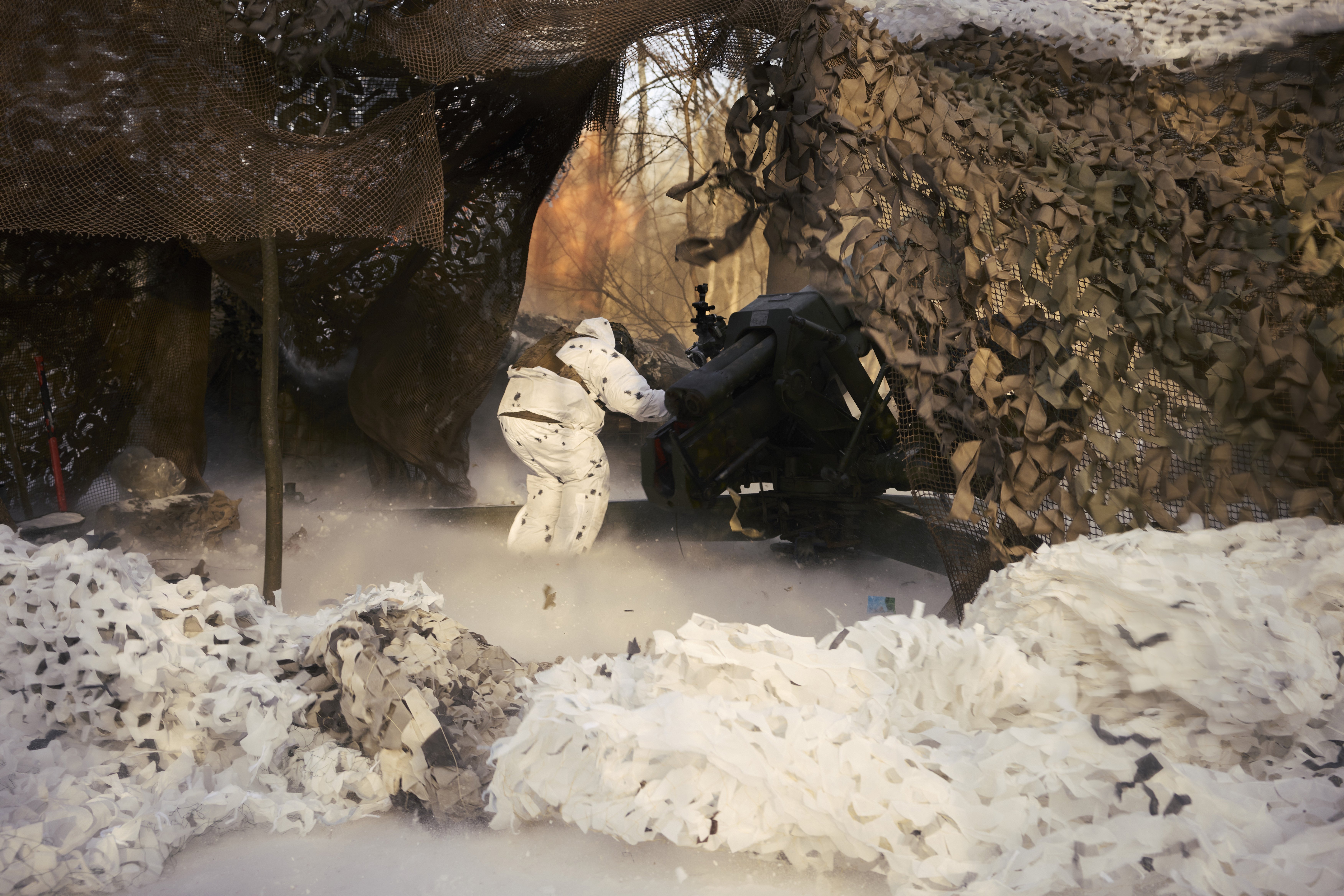
Footprints in fresh snow may reveal the outlines of positions, while flurries can obscure them just as quickly. Such conditions underscore that survival depends not only on firepower, but on preparation, endurance, and the ability to operate in terrain hardened into ice, frozen mud, and snow.
Winter can also shape the balance of endurance between opposing forces. Units already weakened by illness or shortages face sharper strain in subzero air, as fatigue deepens and small injuries or infections become more difficult to manage. Movements slow, coordination becomes harder, and the energy required simply to stay warm reduces what remains for combat operations. Along the Sumy front, the cold does not replace the threat of attack, but it magnifies the pressures of holding ground through another season of war.
“I spent a full week right beside the gun,” says Chornomor. “Even when you had an hour to rest, it was in an individual foxhole, about a meter and a half deep, with no cover overhead. You’d lie down in your sleeping bag, pull a sheet of plastic over yourself. You’d doze off for half an hour, maybe an hour, open your eyes, and the snow had already covered you.”
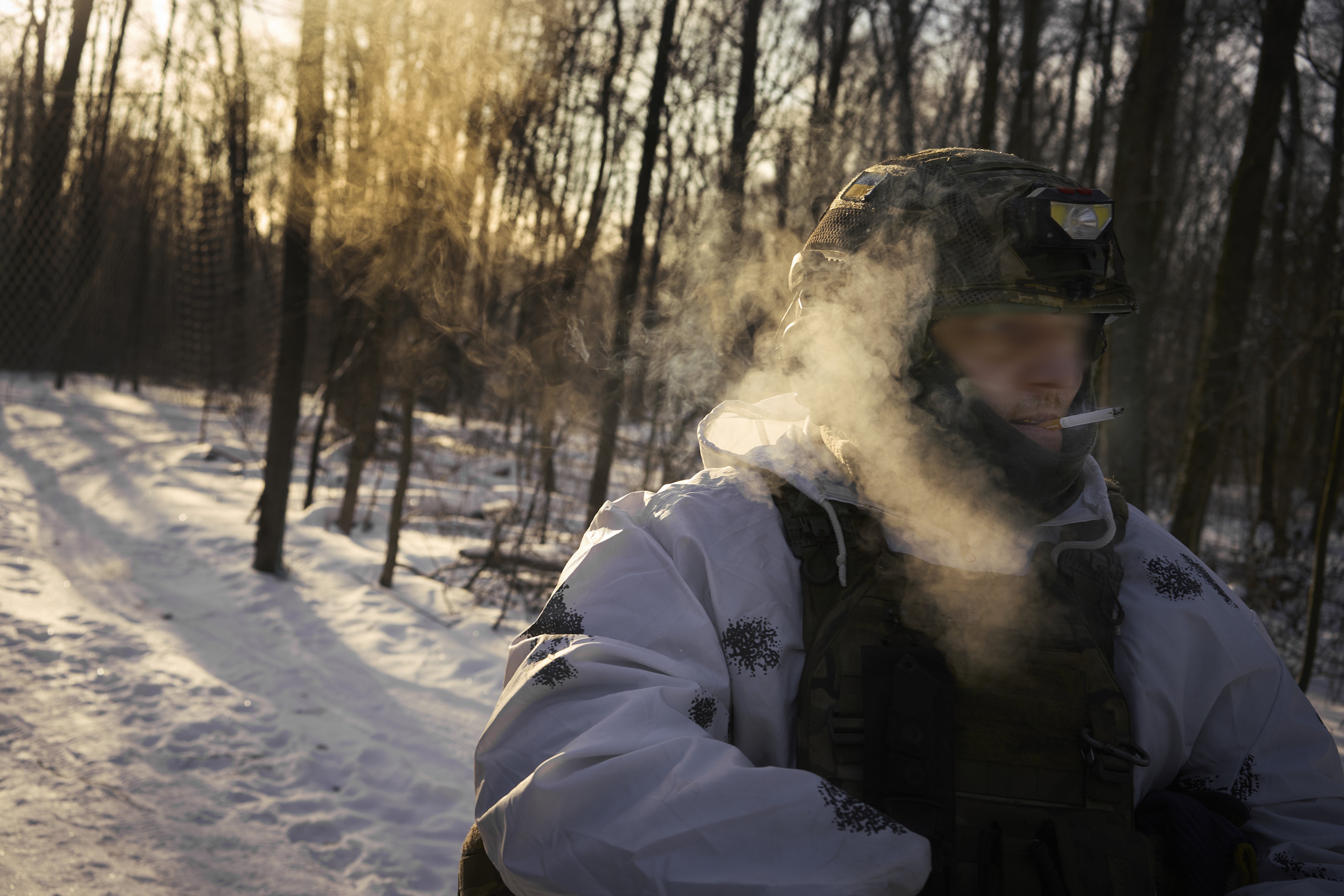
Surviving the dead of winter requires what soldiers described as a balance between warmth, concealment, and the ability to keep equipment functioning.
How soldiers survive subzero trench warfare under drone and artillery threats
The physical demands of winter fighting are often framed through stereotypes about endurance in cold climates, soldiers say, but daily experience is shaped by preparation and exposure rather than cultural familiarity. Chornomor, being from southern Ukraine himself, addressed the assumption directly.
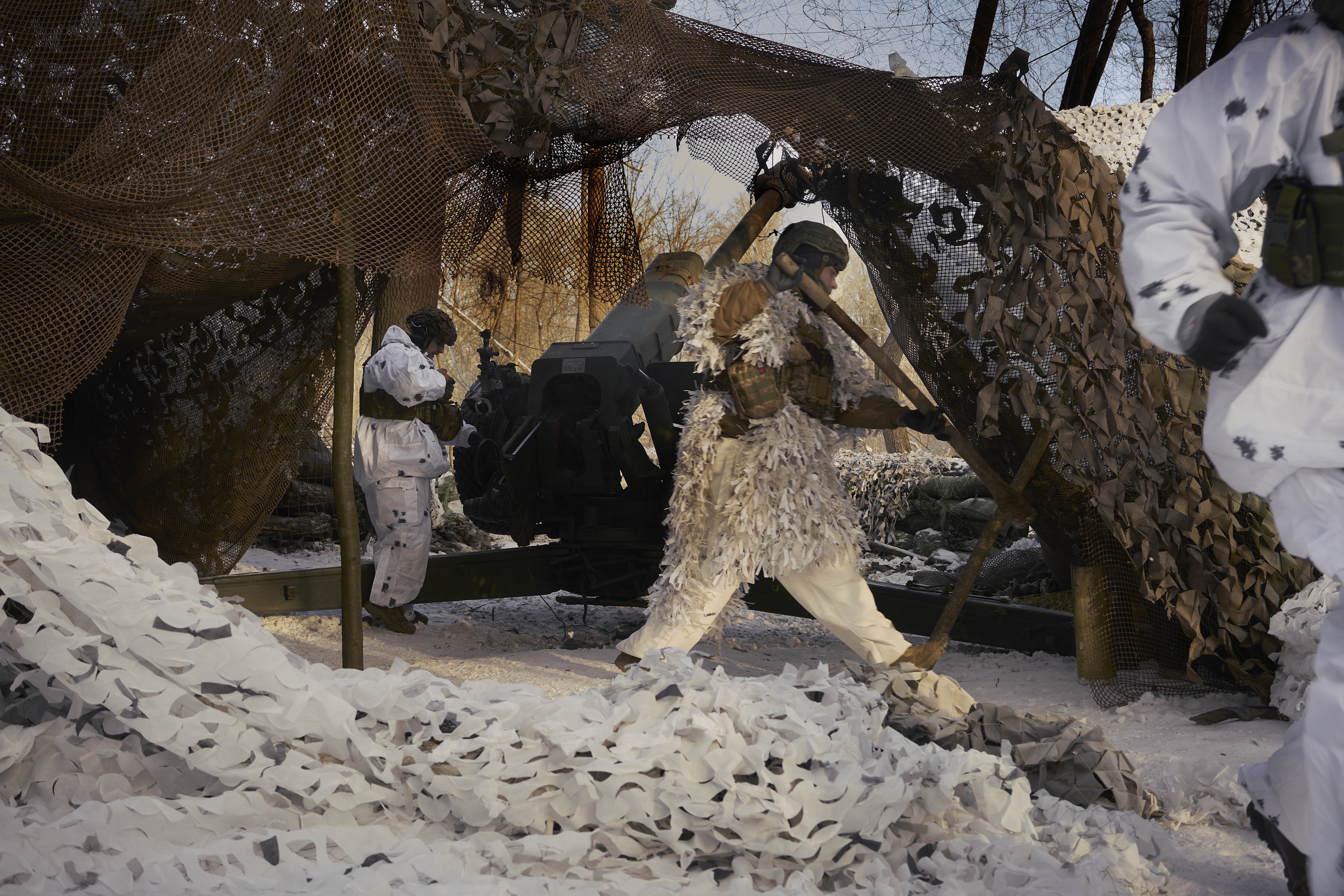
“There’s a stereotype that Ukrainians and Russians are very adapted to fighting in freezing conditions,” says Chornomor. “In the West, there are these stories that Slavs can handle winter easily. As someone from southern Ukraine, it doesn’t really change much. I’m adapted to winter. It is even better, maybe because I’m tired of the heat.”
Chornomor says that winters in Ukraine have shifted over time, “Younger generations haven’t experienced such winters that often. For them, it can be a bit harder. But we have that mentality—we get used to anything, we survive.”
For infantry and assault units, cold compounds the risks of immobility and exposure. Chornomor, reflecting on winter operations, described the limits.
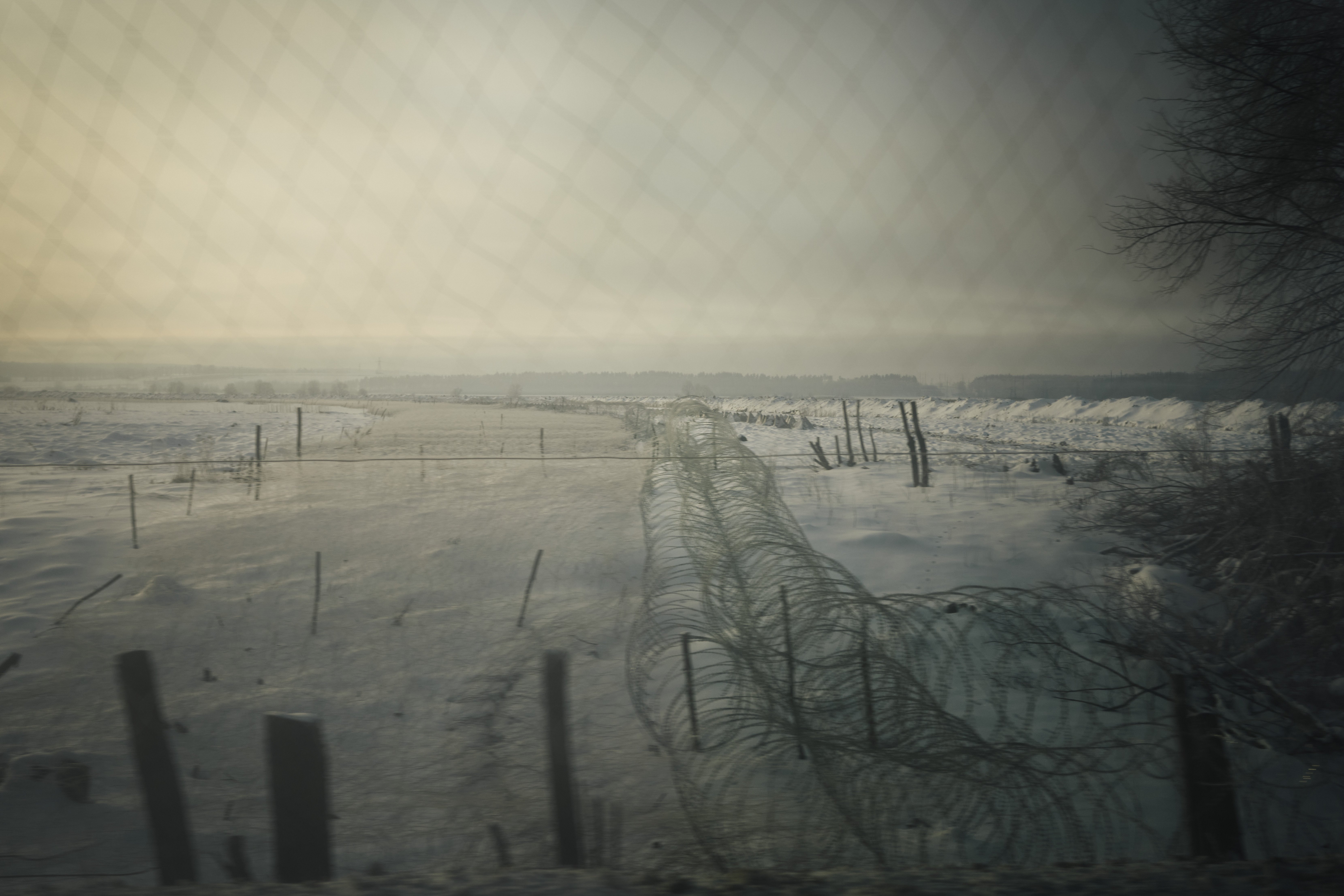
“If the operation moves fairly quickly, then it’s more or less manageable,” he says. “But defending Soledar and Bakhmut was quite difficult. Difficult in terms of concealment. If a person is wounded, then it’s even harder. Evacuation… There are many cases where people simply don’t survive. Hypothermia. People just don’t make it.”
On artillery positions, winter means prolonged exposure, limited shelter, and constant vigilance. Chornomor, describing observation posts and frontline duty, said the strain accumulates over days.
“At our observation posts, we call them ‘s-peshkas’—there are usually two or three people, no more,” Chornomor says. “You don’t sleep there at all, sometimes a day, two, even three. That’s just how it is when you’re working in winter conditions.”
That’s when thinking turns into art. “You might even compose a poem in your head, and later sing it,” Chornomor says. “Although most of the time, in the infantry, when you go to zero line, your civilian subconscious just switches off completely.”
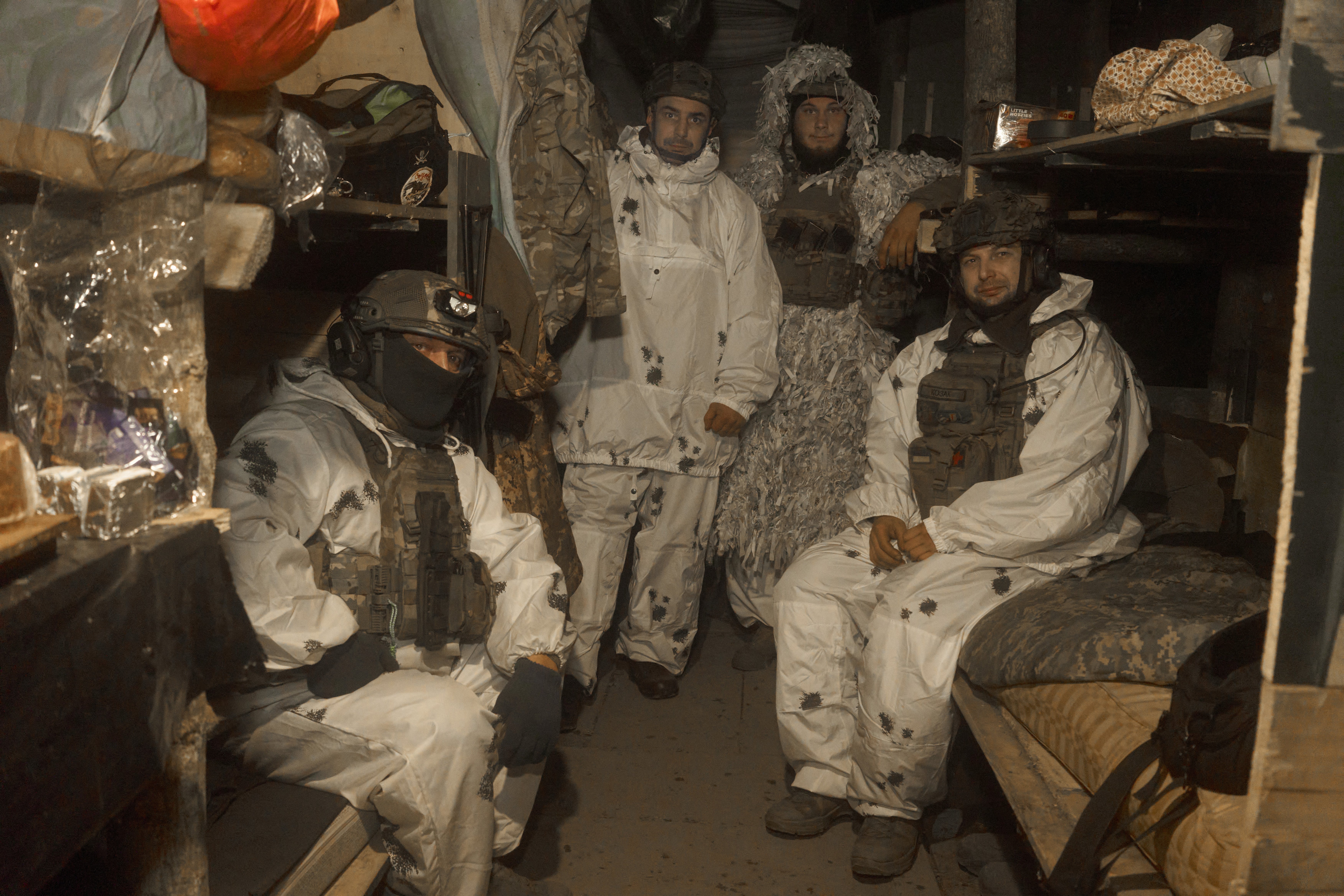
Discuss this article:


-80134f2dc17b4a887d01513a1c7bc929.png "Illustration of Russian military infrastructure targeted by Ukrainian strikes in temporarily occupied eastern Ukraine. (Source: General Staff of the Armed Forces of Ukraine)")