- Category
- War in Ukraine
After I Jumped Into the Lake and Before I Got Punched—Special Operations Forces Selection, Ukraine Style
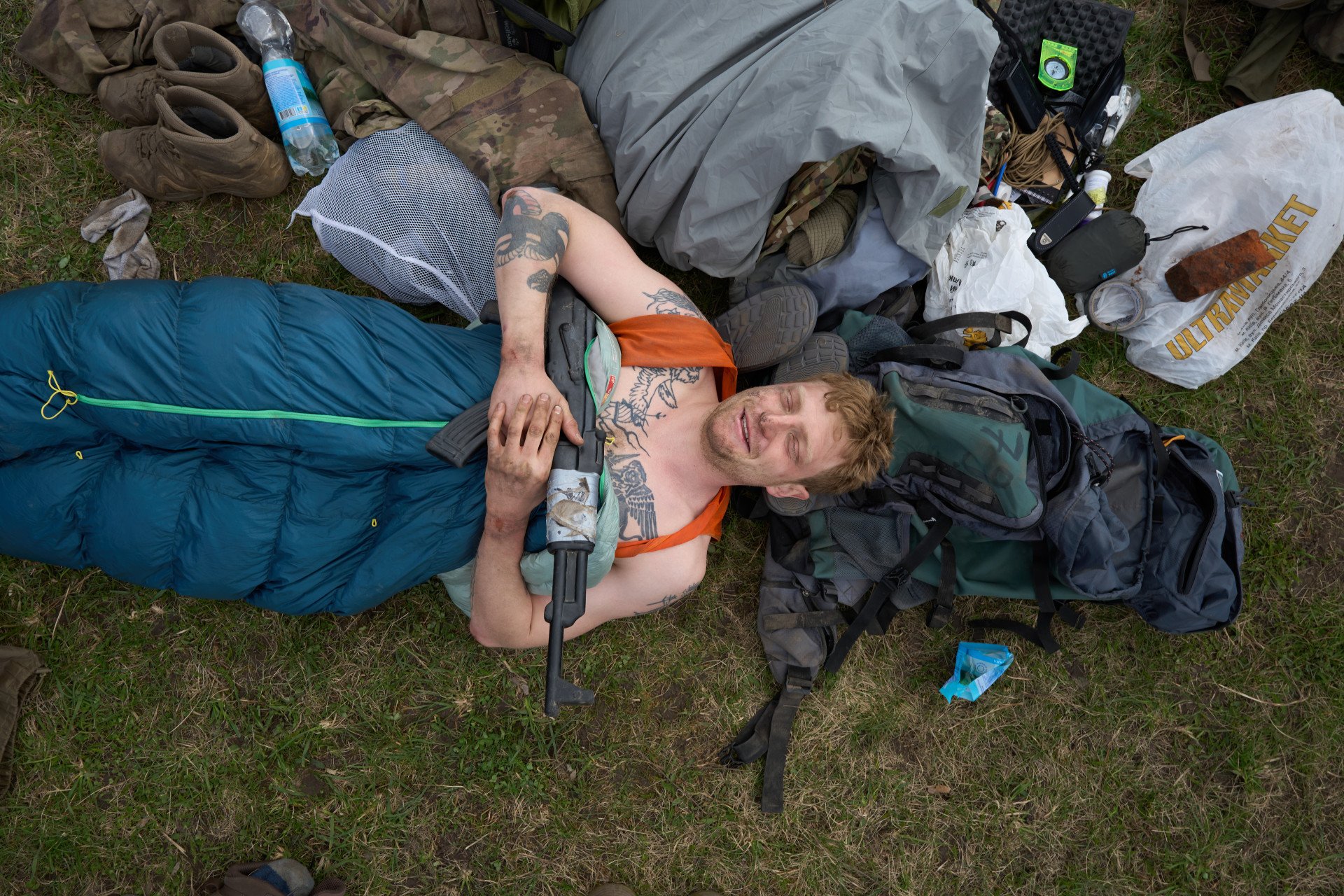
To become a Special Forces Operator in Ukraine, you first have to survive selection: six days and six nights of crawling, marching, exhaustion, and pain. I joined the process—twice—to look behind the curtain of one of the country's most secretive military units. I didn't pass (big surprise), but I came away with a deeper understanding of the people fighting in Russia's war against Ukraine.
 Prefer U24 Media on Google
- Authors


When the Special Operations Forces (SOF) wrote to us one year ago, the question alone should have been warning enough: "Do you realize what you have signed up for?"
Driven by curiosity and recklessness, I had agreed to participate, unprepared and untrained, in the selection process for the SOF in Ukraine. I expected nothing—maybe some sort of light version tailored to our needs, aimed at a common goal: make a good film.
Pain and suffering
Reality slapped me in the face, hard. The special forces are not a place for exceptions, for favors, for fakes. The result was the only possible outcome: 15 humiliating minutes of training before I rang the bell. You do that - you are out!
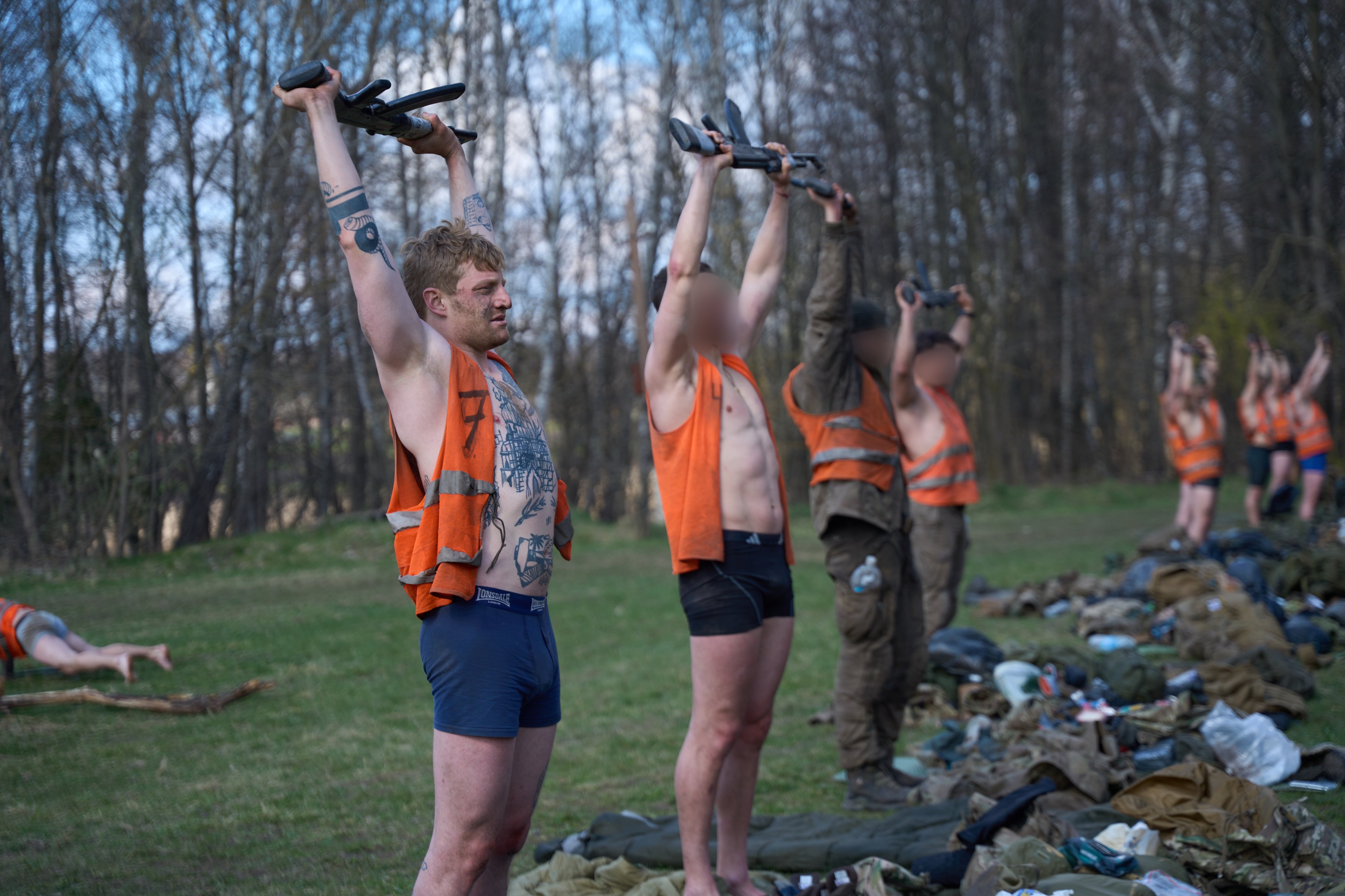
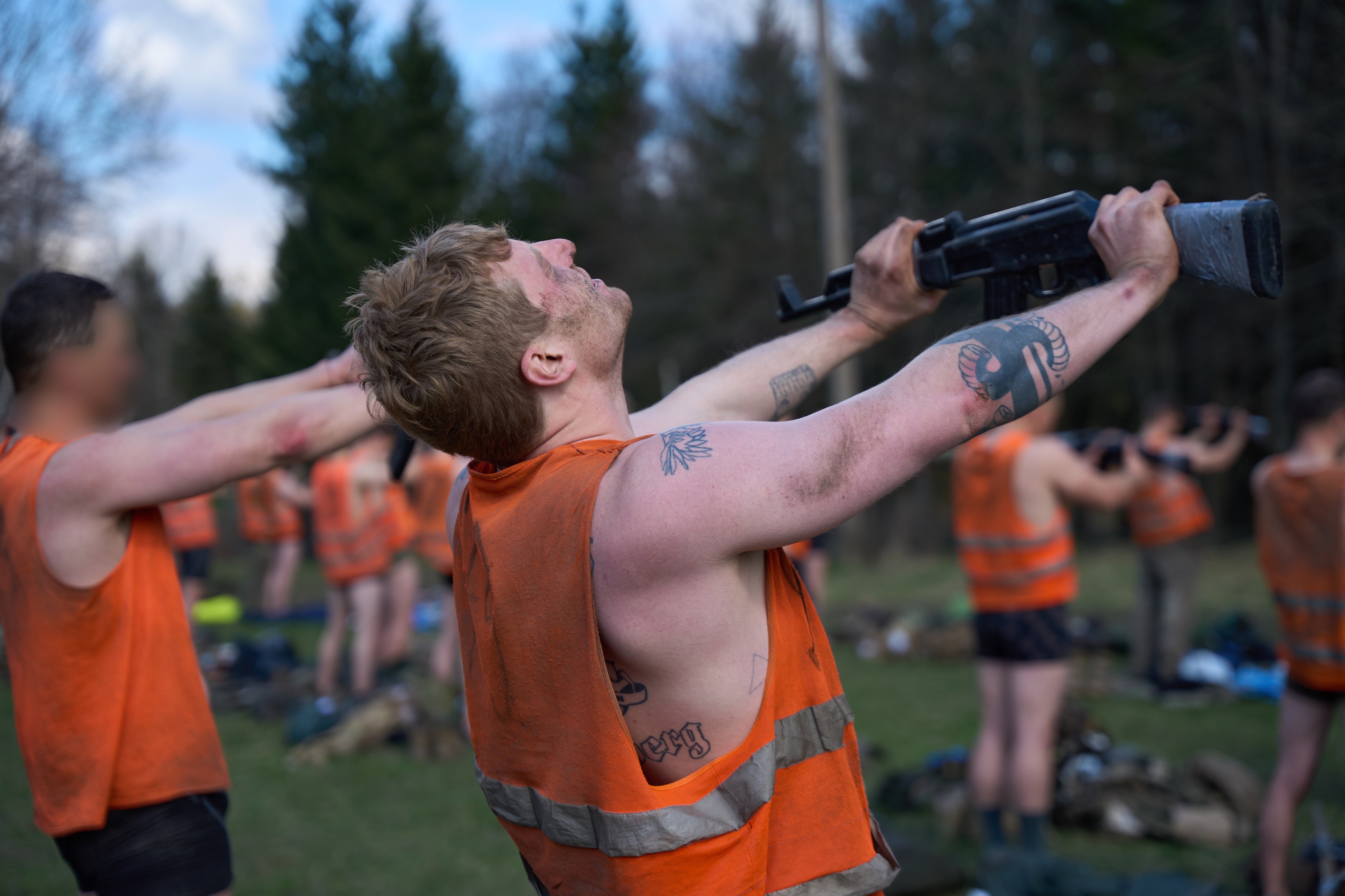
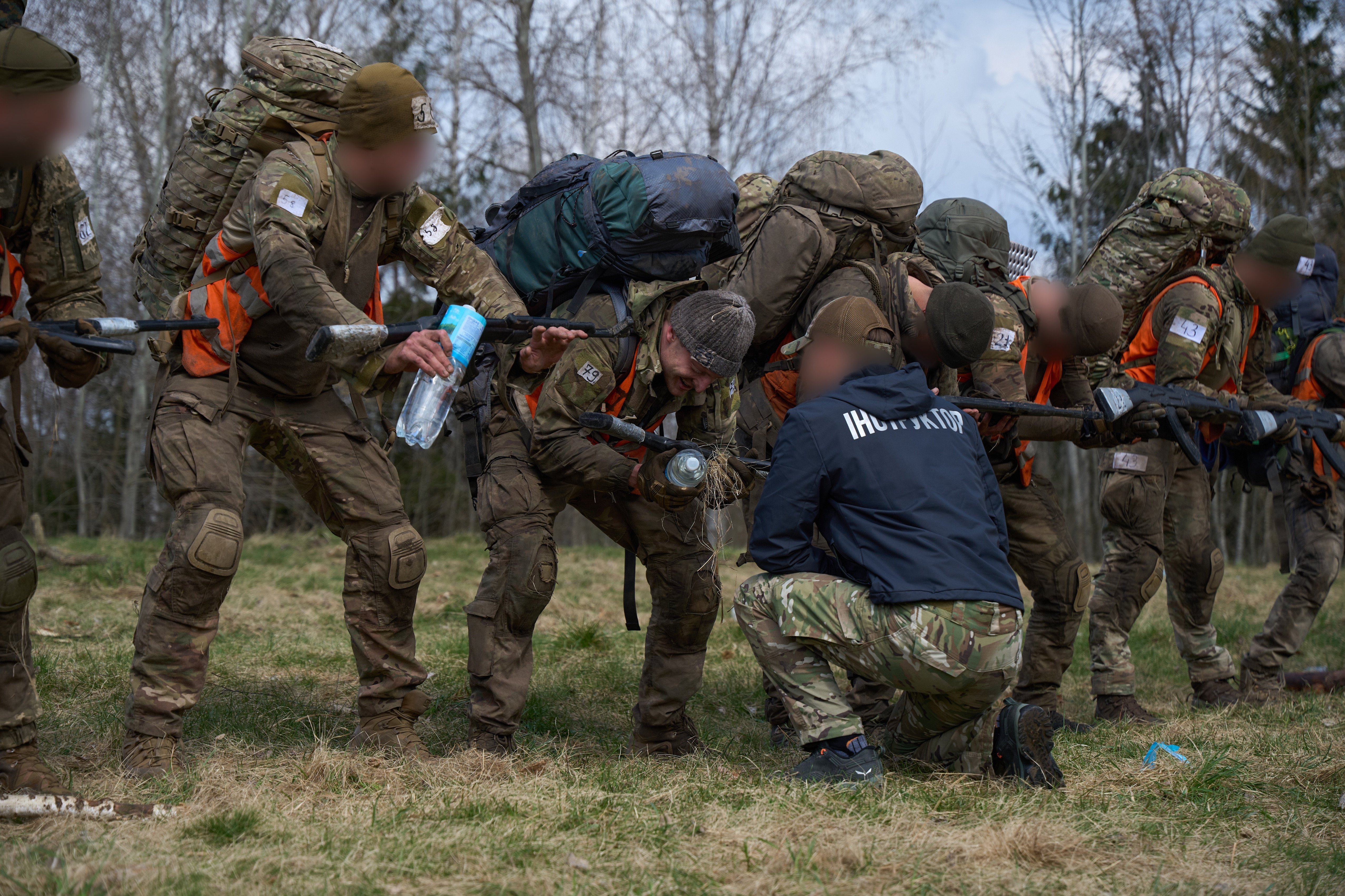
The real lesson came afterward. From the sidelines, I watched as a group of men—and a woman—for six days and six nights performed an act of superhuman endurance. Countless kilometers of crawling, hopping, jumping, running, and marching with a full backpack and weapon. Hundreds of burpees, pushups, squats, maybe thousands. One hour of sleep a day, sometimes a bit more, often less. Four minutes to scoff down breakfast, lunch, and dinner. The whole madness accompanied by a choir of testosterone-fuelled instructors.
Afterward, one question stayed with me:
"Why does someone put himself through all this pain and suffering?”
In Ukraine, it's not hard to join the army, to go to the furthest frontline. To fight in brutal battles. Now, during wartime, when manpower is the most valuable resource of all, you can even join the SOF without first completing the arduous, five-month Q-course.
The "selection"—this week of hell—is your ticket into the course. But to get the ticket, you need to be broken, crushed, tested, and only then will you be rebuilt by instructors forged in the fires of the most brutal war in Europe since 1945.
So, again: "Why go through all this pain and suffering?”
A year ago, I asked the men driving the sweating candidates across the field.
Shum, who, when he is not shouting at the recruits, exhibits an almost zen-like calmness, casually told us how he was once caught behind enemy lines, how he bumped into a group of Russians, how he killed one, how he ran, limped, and crawled—already shot in the leg—to escape the others. How a civilian who tried to shelter him died in his hands, and how he told his wife and daughter it would be better to surrender to the Russians before being murdered with him in the house where he was hiding.
The short version of Shum's answer was this:
"If it's just a job for you, then no, it's not worth it. But if it's your choice, if it's your war, and you understand why you're here—then it's definitely worth it, and you should be here.”
"N.", another instructor—young, mustached, with soft skin and the eyes of someone who will easily kill you if he has to—said this:
You need to go through it for the sake of who you will become afterward.
N.
SOF training instructor
Instructor "N.", by the way, was one of three who rescued the bleeding Shum from the last house at the edge of the forest.
Back home, looking at the footage we filmed, I listened carefully to these words. Many times. But still, I didn't understand them.
My job as a journalist is first to experience something, and then explain it to others. And since it is hard to explain something you don't understand, I made a decision.
I trained, and trained, and trained. I quit drinking. I went to bed at ten, woke up at six. Like everyone living in Ukraine, I was tired, trying to work, survive, and not lose my mind, all at the same time. My path was tested: I was almost killed by an FPV drone, managing to jump out of the car before it was ripped to shreds. I lost one of my oldest friends—also to an FPV—with whom I had started reporting from war zones years before Putin launched his full-scale invasion. But I stayed on the straight path, trained some more, and six months later, it was time.
We bring you stories from the ground. Your support keeps our team in the field.
Before the rain comes the wind
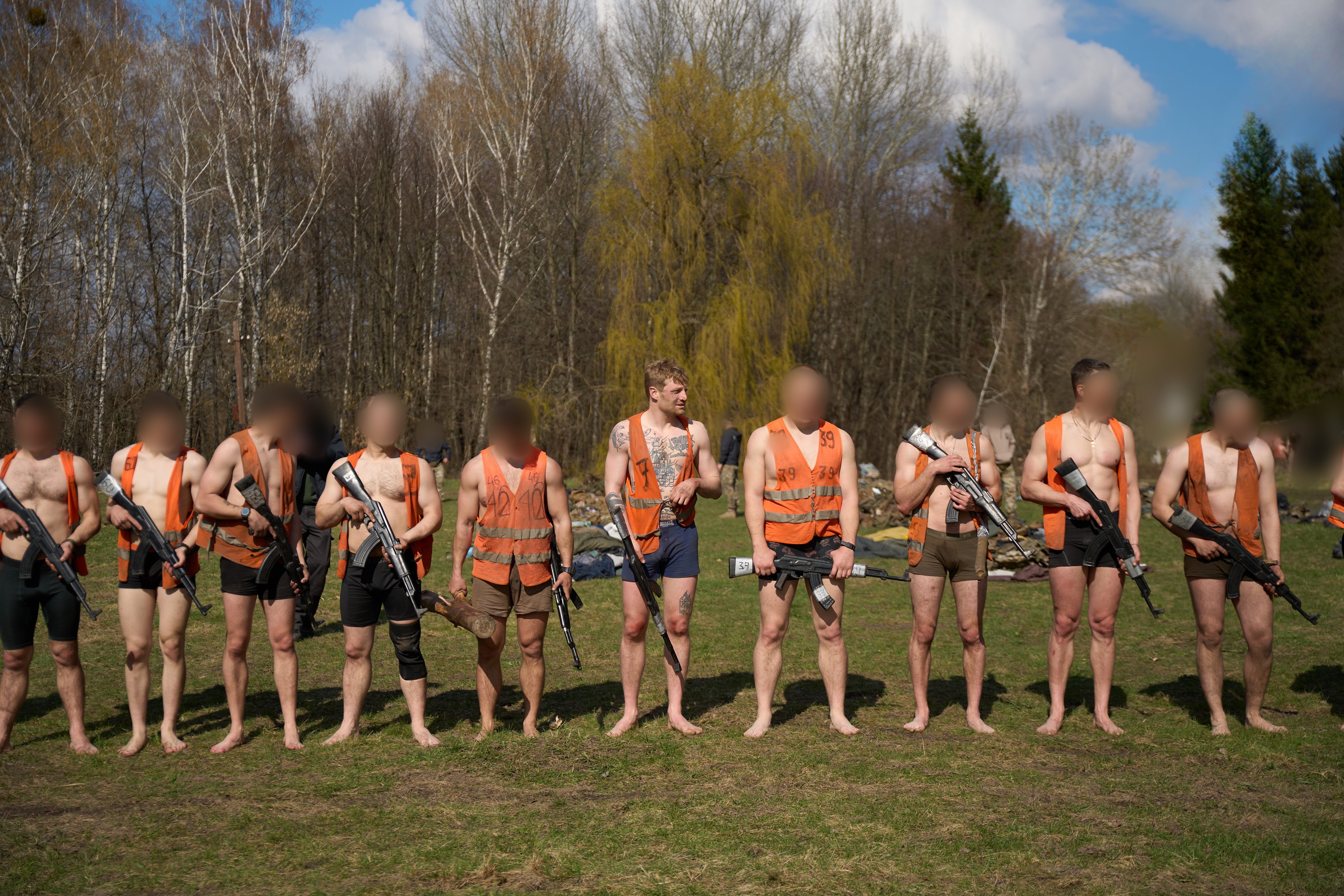
I arrive at the base on a grey, windy day. This would usually be where I describe the place, the buildings, the finer details of my surroundings—but I can't, because this is a country at war and this place is secret. I am handed a replica AK-47 and an orange vest. I join the other candidates in room number 17. The window is taped shut. It's dark. The interior is Spartan: double-decked metal beds strewn with foam mattresses.
I'm the late arrival, so I grab the top bunk and look around from above.
It looks a bit like a prison cell in a third-world country. I've seen a few—in Afghanistan, in Iraq, in Syria.
It's not a prison, of course—quite the opposite. Everyone is here of their own free will. And to stay—a privilege reserved only for the best—you have to want it more than anything else in the world.
The men and women around me are all soldiers. Number 10, a major, served a stint in the French Foreign Legion. "Are European armies ready for war?" I ask him. He smiles at me. Number 10 used to command a special reconnaissance unit. He has a small child at home, just a couple of months old.
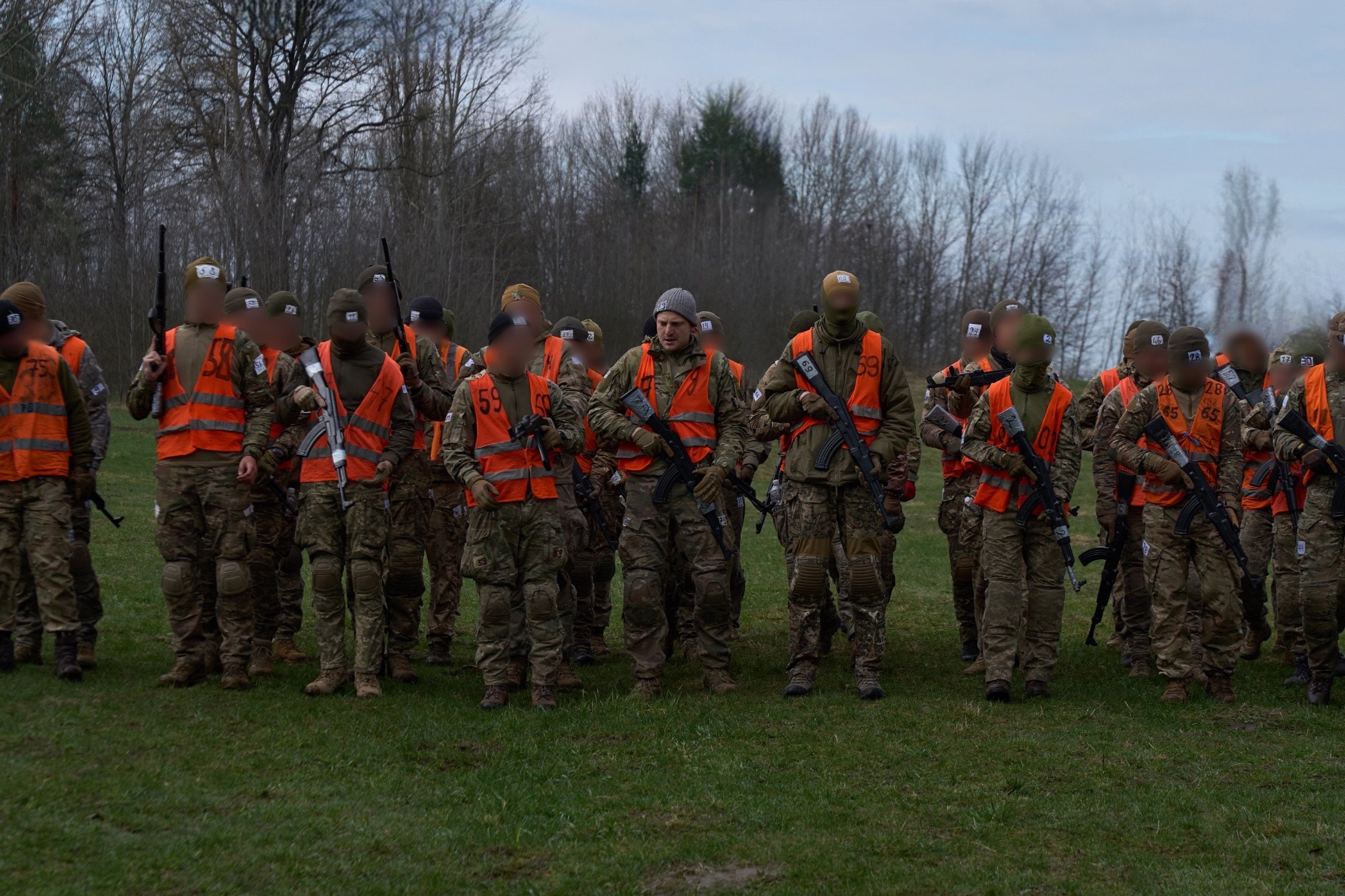
With us are a butcher, two dentists, a medic, and an ex-football hooligan—from western Ukraine, from the east, from Odesa in the south. Some are tall, some small, some thin, some not so much. All of them are owed a good night's sleep on a tropical island far, far away, to return what four years of war have stolen. They serve in infantry, in air defense, in the Marines, and in various SOF units. This is an army at war; sometimes you fight, and then you do the qualification afterward. Everyone is coughing up green slime, it's cold, and we're packed like sardines—but that doesn't kill the vibe.
"It's better than at the front. Compared to that, this is a summer camp," says a voice from the dark.
The voice is not wrong. The food is warm. There is tea with slices of lemon. The air is fresh, and no one is trying to kill you. Well—except when there is an air raid, and Russia sends drones and missiles. Then we hide in an underground shelter and wait it out.
There are no phones allowed, so we are forced to do what people did before technology grabbed us, squeezed us, and refused to let go: we talk.
"What's the best beer in Germany?" "How much money do you earn?" "What do you think about Ukrainian girls?”
Between the men, the topics are darker.
"How many Russians did you kill?"
"Not so many. To be honest, I didn't count.”
"Don't lie. Everyone counts.”
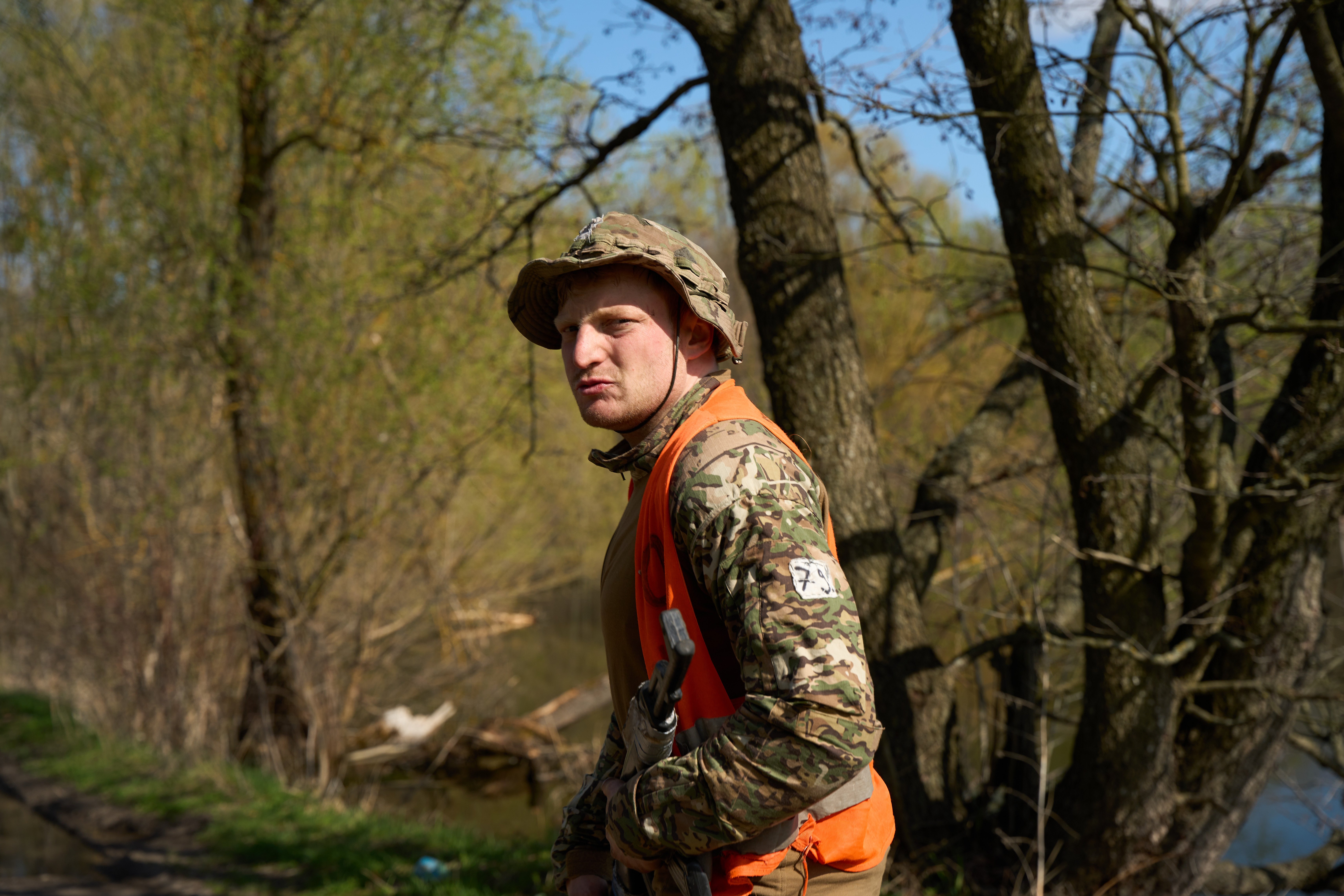
The wind is howling outside. Before the storm arrives, it's time for the final preparation. We stitch our numbers to our uniforms. I am number 79.
Three weeks ago, when the candidates arrived on the base to begin preparation, there were a lot more. Many have already left—injuries, fatigue, disillusionment. It happens.
Those who stayed have grown into a small community. And like all communities, this one has two things: hierarchy and infrastructure. There are natural leaders, like number 13—the dentist, a beastly strong man who listens more than he speaks, but whose authority is clearly felt when he opens his mouth.
There is also a smuggling network. One of the candidates—let’s call him “Number X”—has cigarettes, milk, and candy. He keeps them hidden in small stashes throughout the base—“zakladki.”
In the evening, I sit with number 6. He is 41 years old, a husband and father. He used to work for large international companies. He speaks perfect English. Right now, he has a comparably safe desk job in Kyiv, far behind the kill zone—the 30-kilometer-wide stretch of land roamed by killer robots. But number 6 wants more. More commitment, more action, the feeling of having played a greater part in this existential mess. For himself, and for the country.
I want to tell my son that I did something great.
Number 6
SOF candidate
Lying in bed, my thoughts circulate. For some men here, joining the SOF will increase their chances of survival. The Special Forces are not easy, but they are well-equipped, well-trained, and better-financed. These things help. In the Territorial Defense Forces, it can happen that you are sitting in a dirt hole with six magazines, a rifle, some canned meat, and a packet of wet wipes, fighting for your life. Rotations are increasingly difficult due to the constant threat of drones—if you're unlucky, you stay six months without relief.
For men like Number 6, it's the opposite. Ringing the bell and returning to his desk in Kyiv might save his life. But war changes the definition of what is rational. And of what is necessary.
The night is accompanied by the songs of the grasshoppers outside and by the intermittent waves of creaking. The system seems to work as follows: if one person moves, disturbing the collective silence and provoking the agonizing sound of the rusty bedframe, all the others—who have been waiting for a chance to turn over but were too polite, too shy, or too scared—seize the opportunity.
The rhythm is as follows:
Silence.
Bed 1. Creak, creak.
Beds 15, 11, 18, 3, 4, and 9, collectively: creeeeeak!, creeeeeeaaaak!
Bed 2. Creak.
Silence.
I don't sleep a single minute.
And so it begins!
Monday morning has broken. Showtime.
We are lined up in the courtyard.
"PHHHHIIIIIIIIIIIIIIIILLLLLLLLIIIIIIIIIPPPP!" Shum's booming voice echoes across the courtyard. I raise my hand from the middle of the pack.
"Hello, Shum.”
"ARE YOU READY???!!!”
"I am.”
"I REAAALLYYY HOPE YOU MAKE IT THIS TIME!”
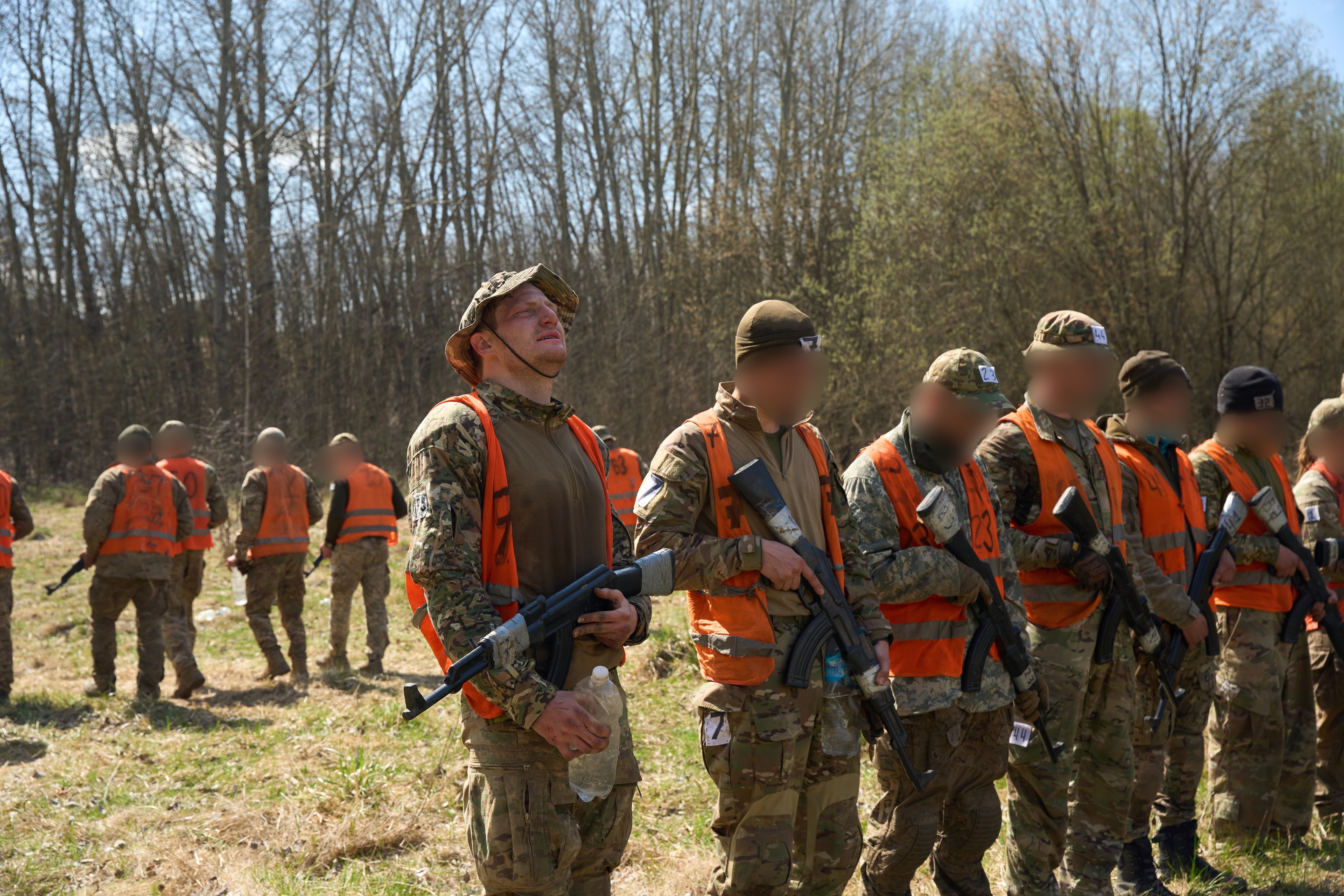
For the others around me, it's about much more than ego and curiosity. The next few days will decide their futures. Being close to people while they experience some of the most important moments of their lives is a special privilege—one of the things I love most about my job.
Shum reads out the rules.
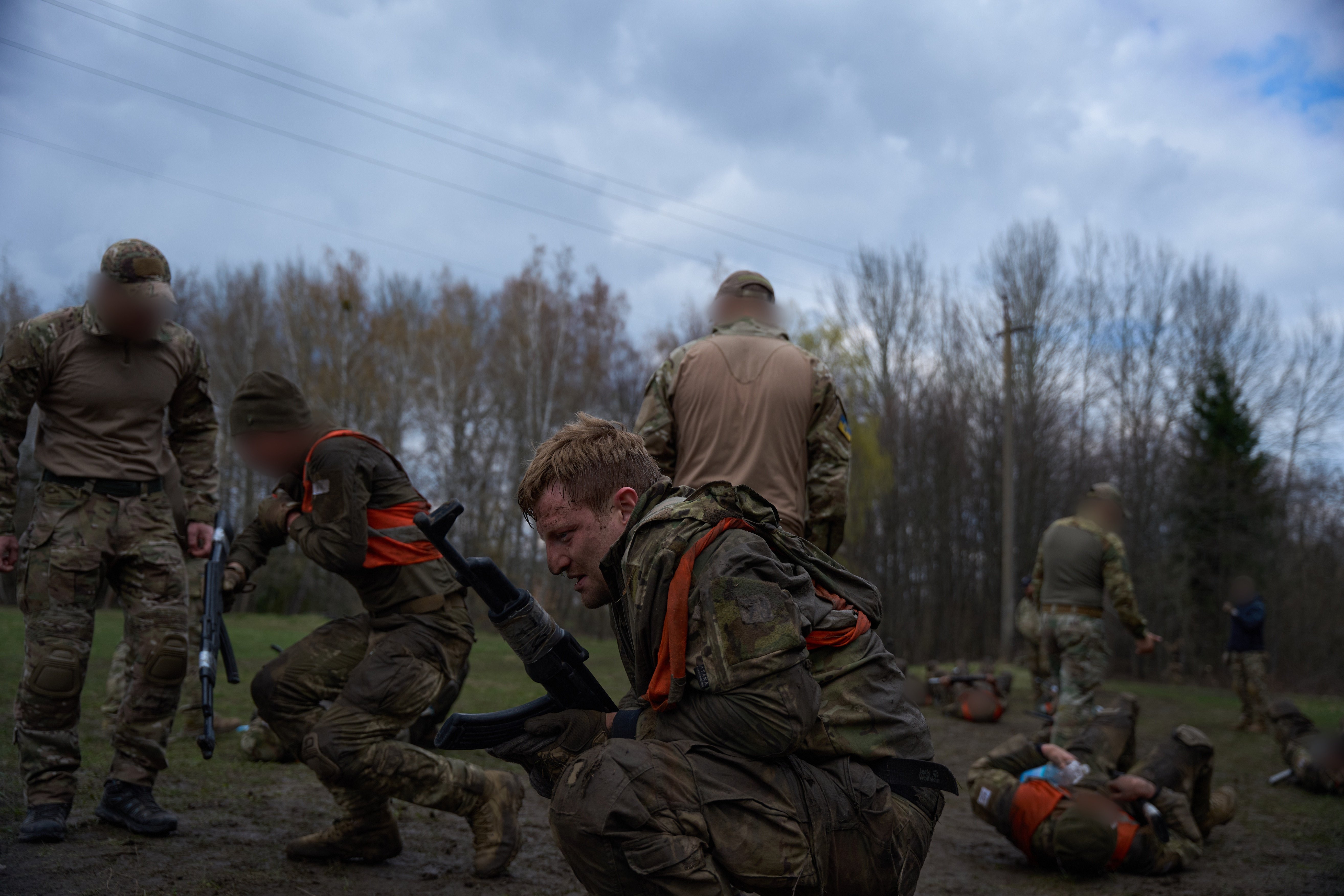
Six days and six nights. One hour of sleep a day. Your backpack must weigh 20 kilograms, without water and weapon. You never, ever leave your gun—otherwise, you will be given a tree branch. Any lost equipment must be won back, physically. You never walk, only run. You never run alone, only in pairs. To the toilet, to the medic, it doesn't matter. Instructions must be followed at all times. If they tell you to crawl, you crawl. If squat, you squat. Ring the bell, you are out.
"YOU ALL HAVE FIVE MINUTES TO RUN UP, GRAB YOUR BACKPACK, YOUR THINGS, AND ARRIVE HERE ON THE FIELD!”
We run into our rooms, throw on the backpacks, and make sure the straps sit tight.
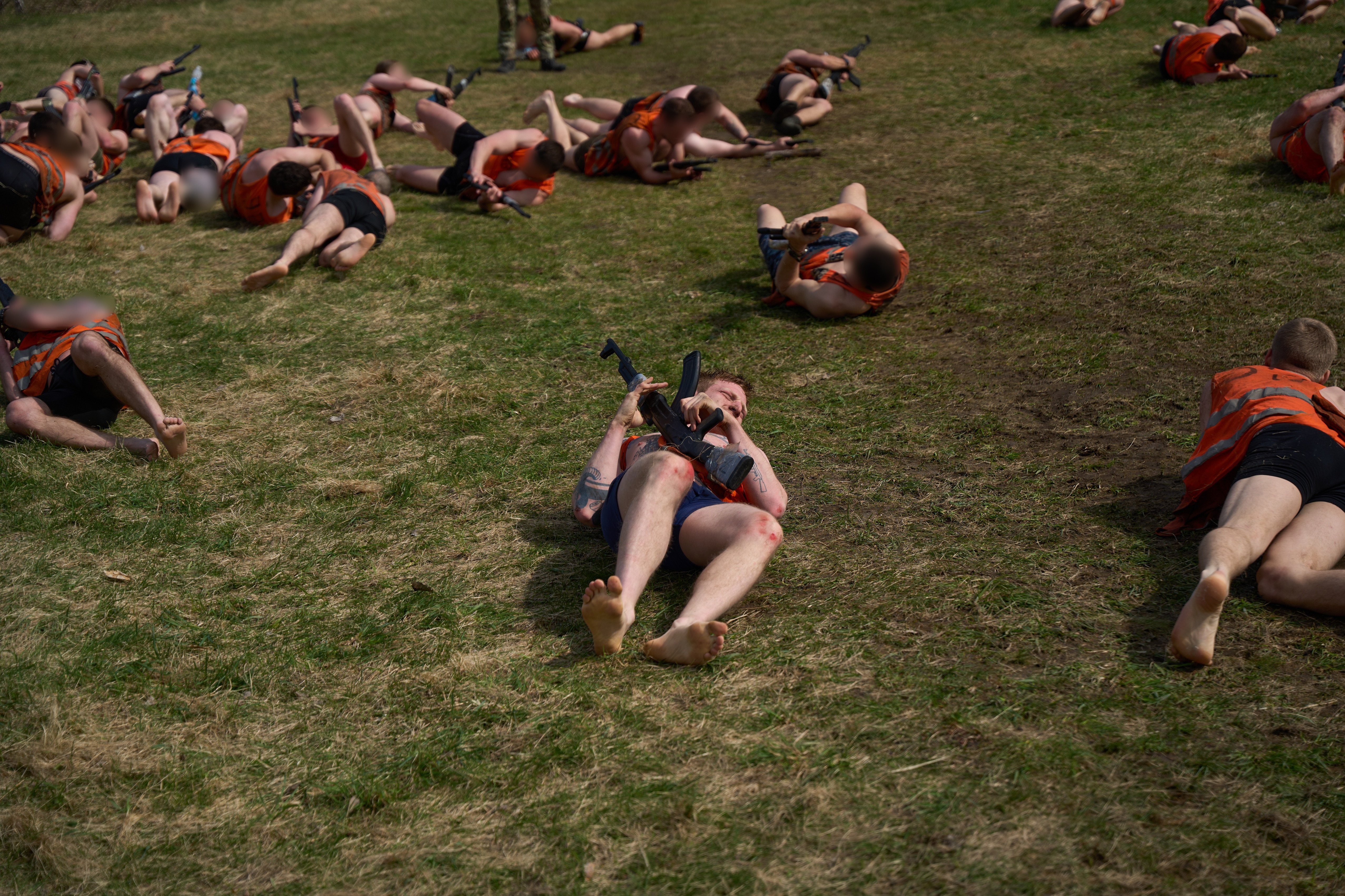
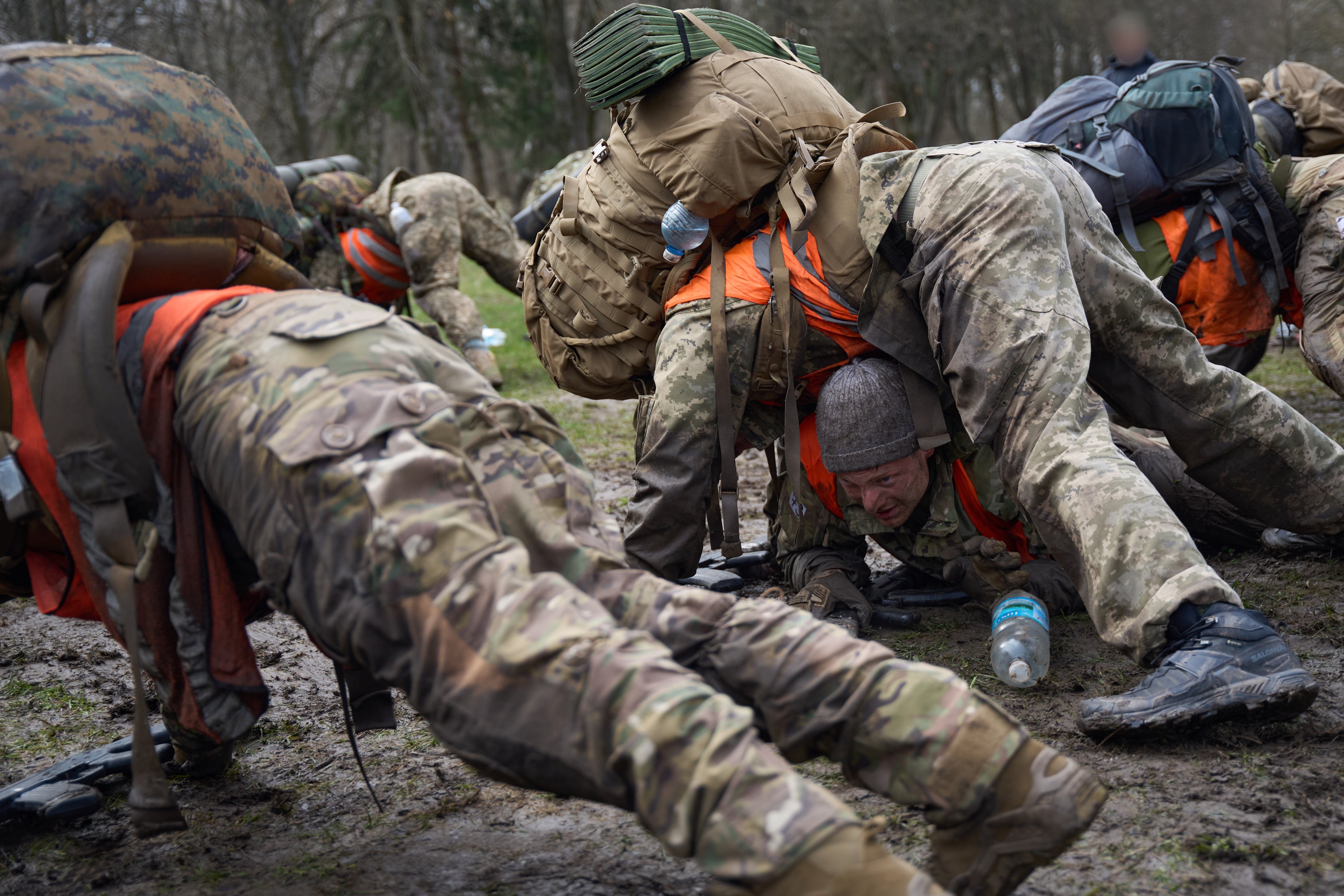
The first instructors are waiting just outside the barracks. We fall onto the asphalt. And we crawl.
It’s painful, wet, and muddy. The weight presses down on your back, and you understand immediately: This is not a race. This is about how much you can endure. About how much shit you can eat. About survival.
Number 6 makes the first mistake. We fall, but he takes another few steps. The instructor tells him to go back and dive into a puddle of murky water.
I hear the bell in the background. Once, twice, three times, and more. The first have fallen.
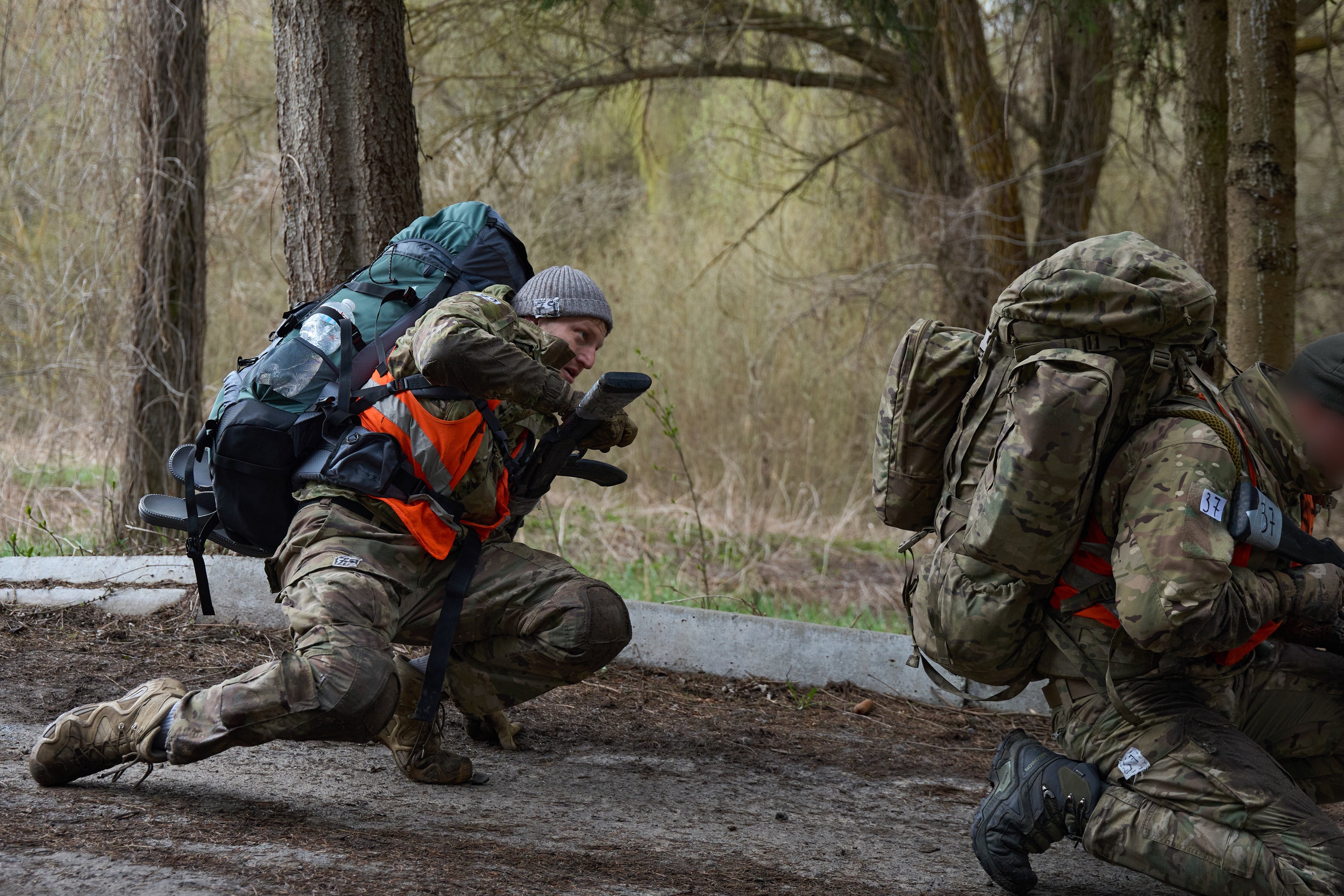
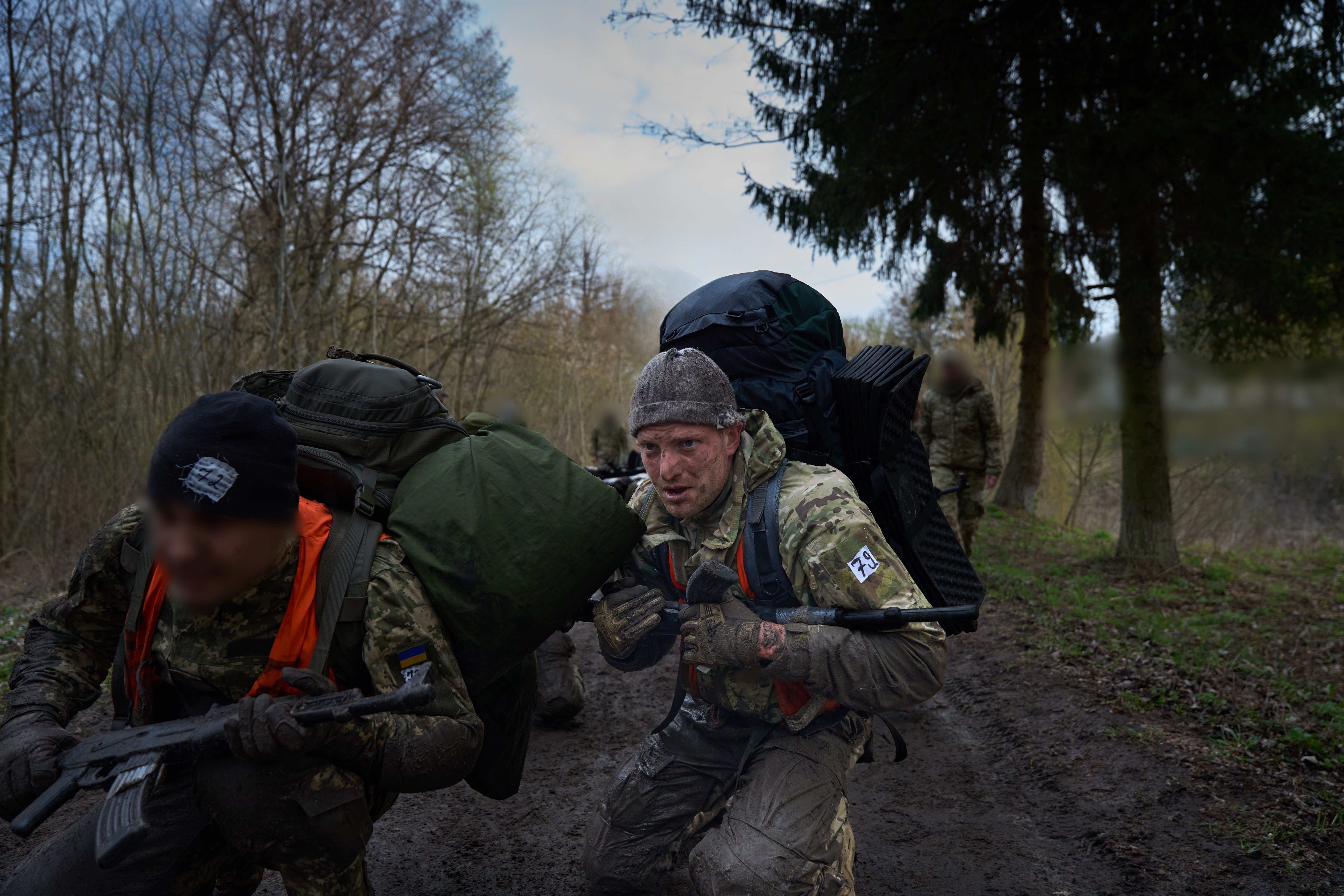
It's difficult. I'm already cursing my own stupidity for signing up again—but then, all of a sudden, I have left the asphalt. I'm on the field with the others. Hands and feet on the ground, body in the air, the backpack weighing us down, we hold. I look left and see candidates somewhere on the horizon.
Not last. Not bad. Number 53, next to me—his backpack slipping over his head to the ground—smiles. I wink back.
Number 13, the dentist, is behind me. "Don't ring the bell," he says.
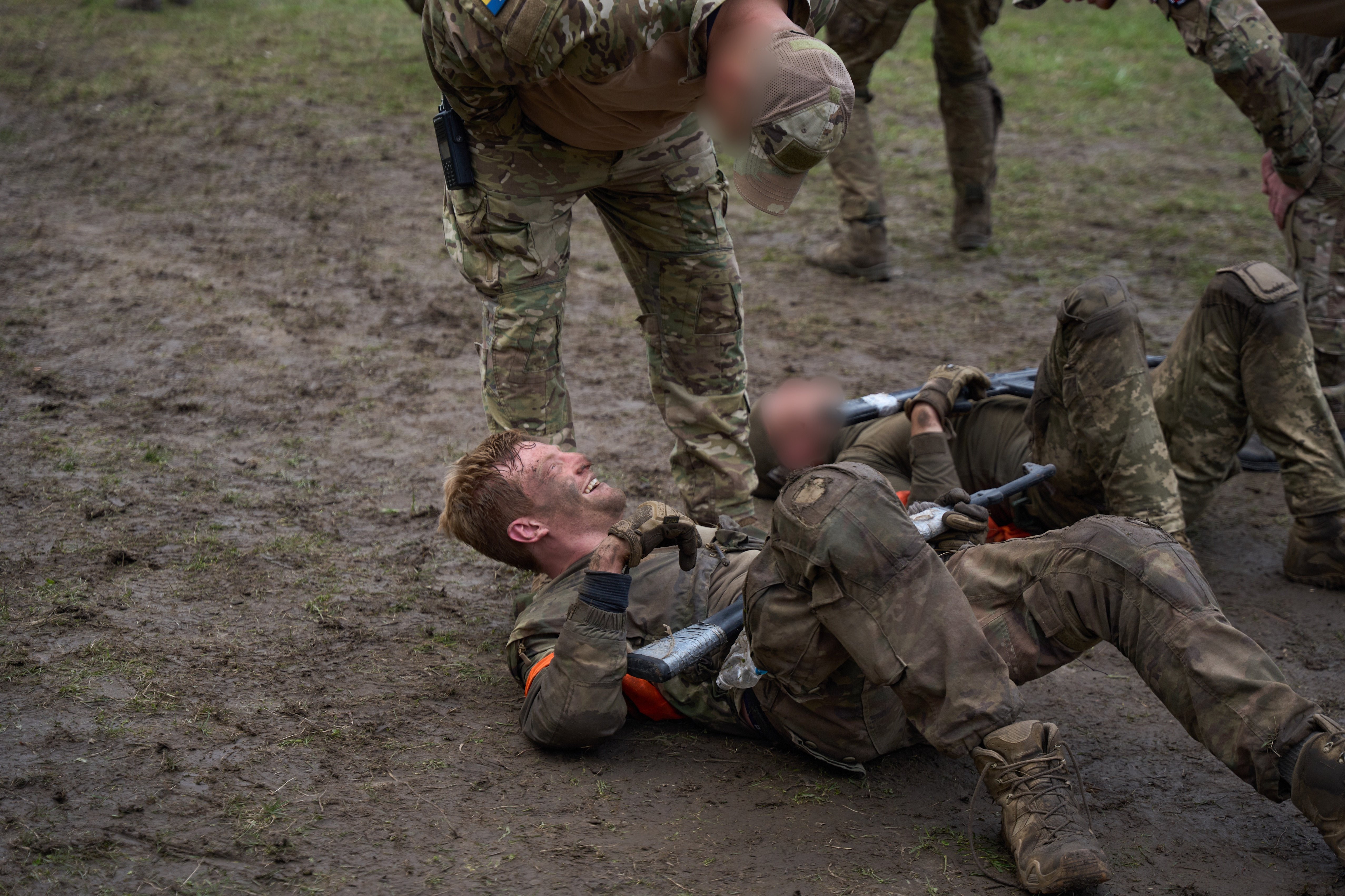
The next hours blend into one large mess. We jump, we run, we roll in one direction, we roll back. I hear people throwing up. I try to do the same, but I can't, so I continue rolling.
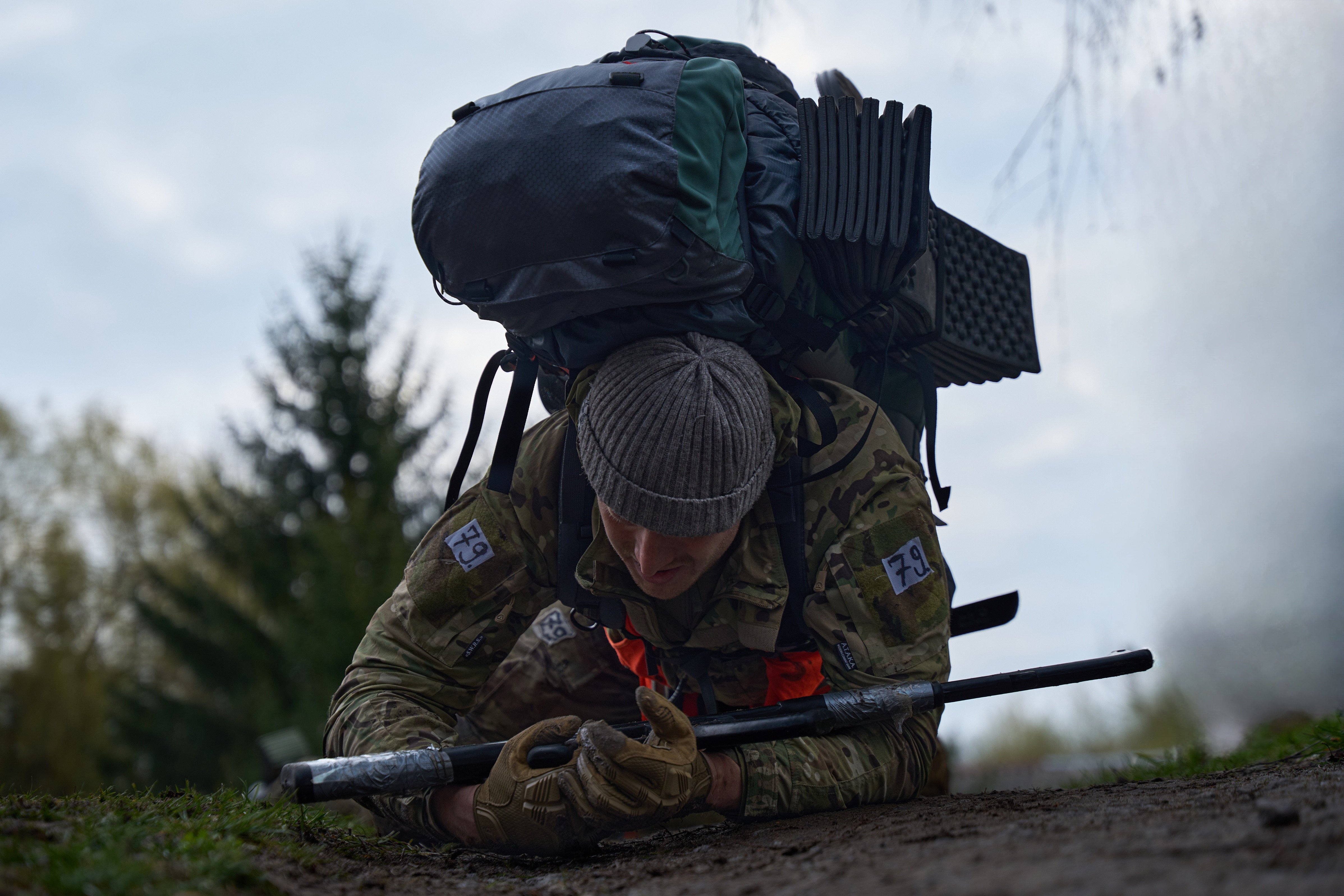
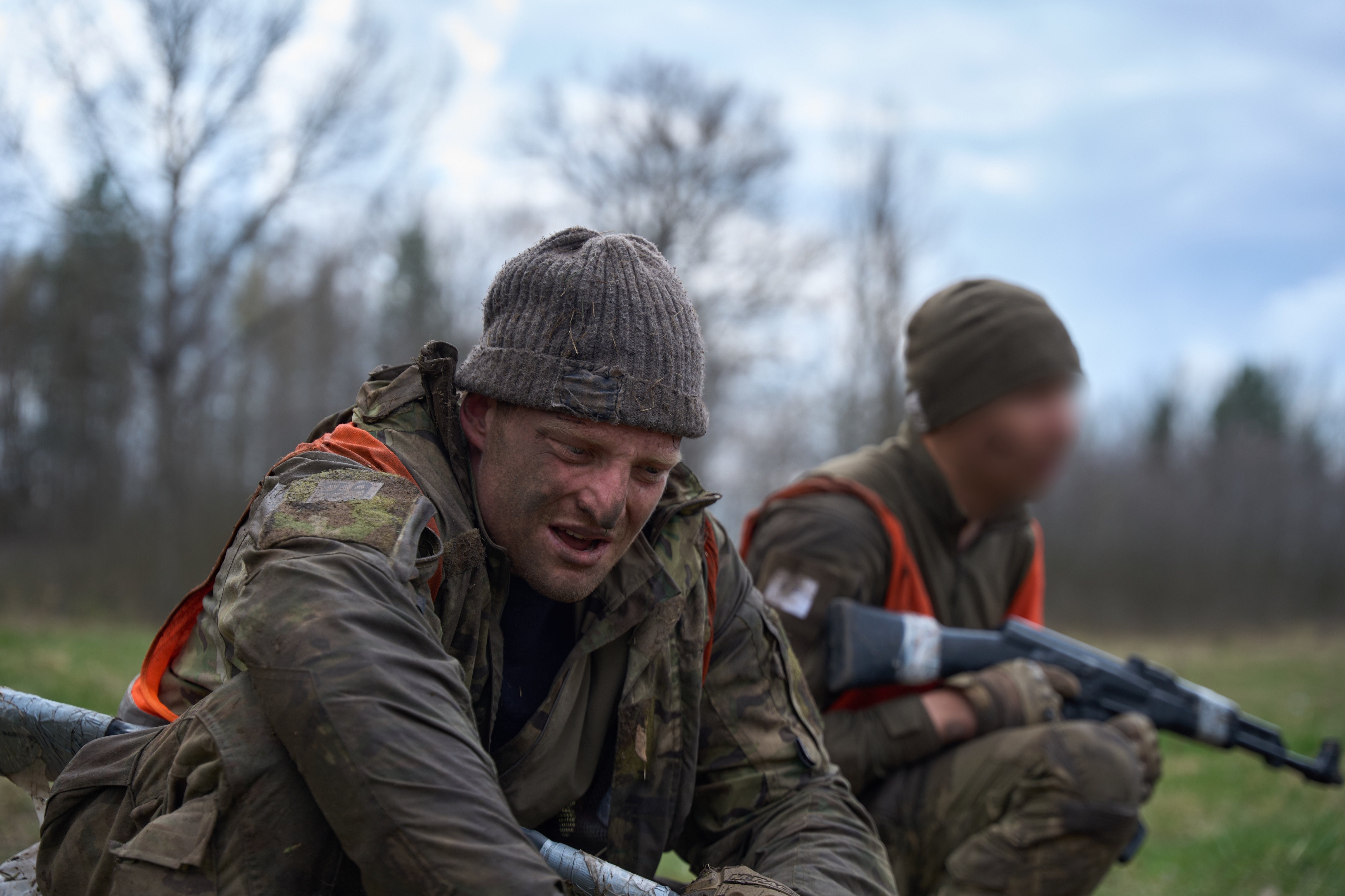
Instructor "A." speaks fluent German. In the most difficult moments, he leans in and asks:
"If I don't smoke, why do I need a fridge?"
"I don't know."
"Think about it."
He's messing with me, I think at first. Then I think he's trying to help—to distract me from the pain.
"If I don't smoke, why do I need a fridge?"
"Because I still eat food if I don't smoke."
"That's a bad answer, and wrong."
We crawl, gun held behind our backs. My hat falls off. I try to hold it between my teeth.
"In the Ukrainian army, we don't put things in our mouth," says Instructor "A." Wise words.
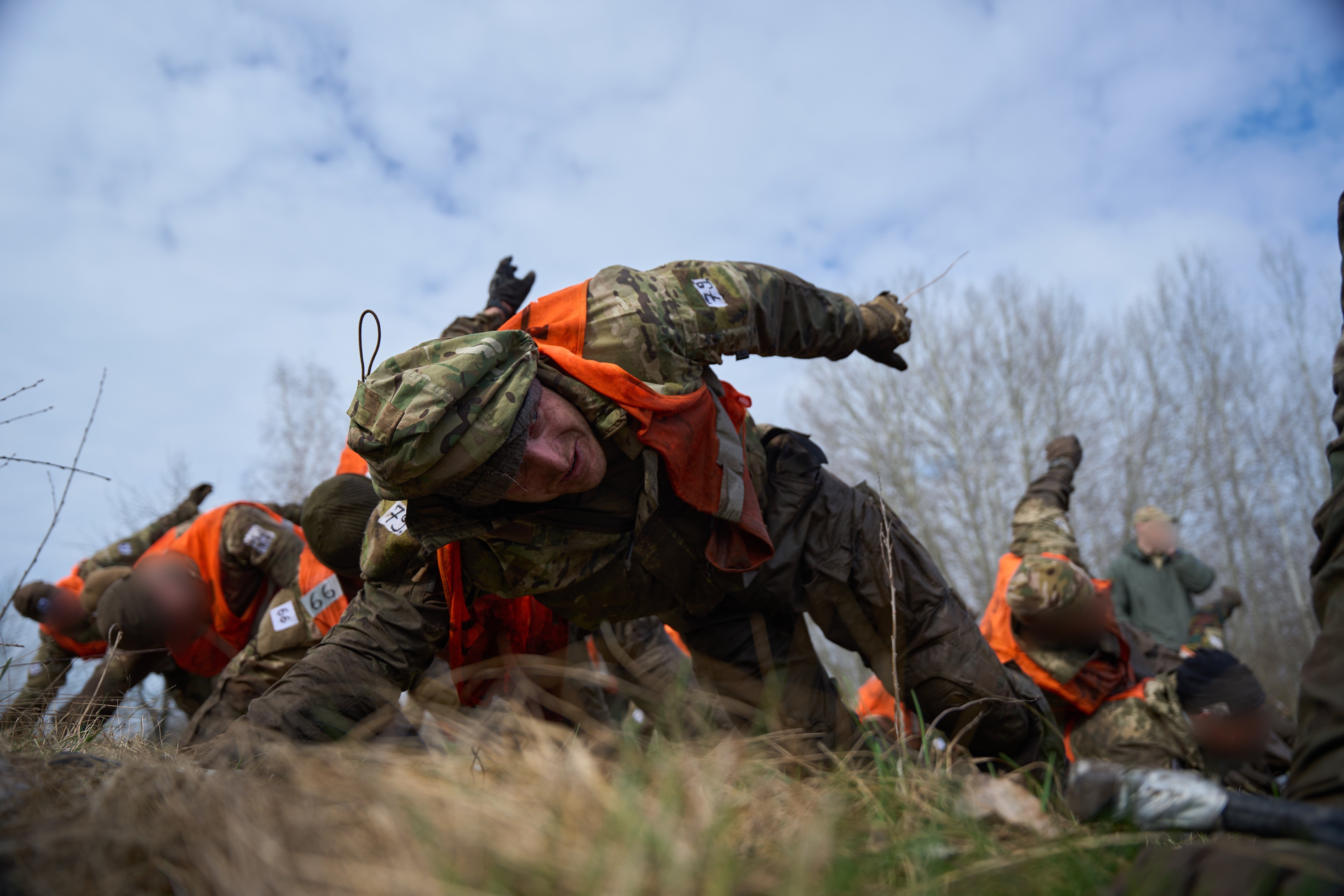
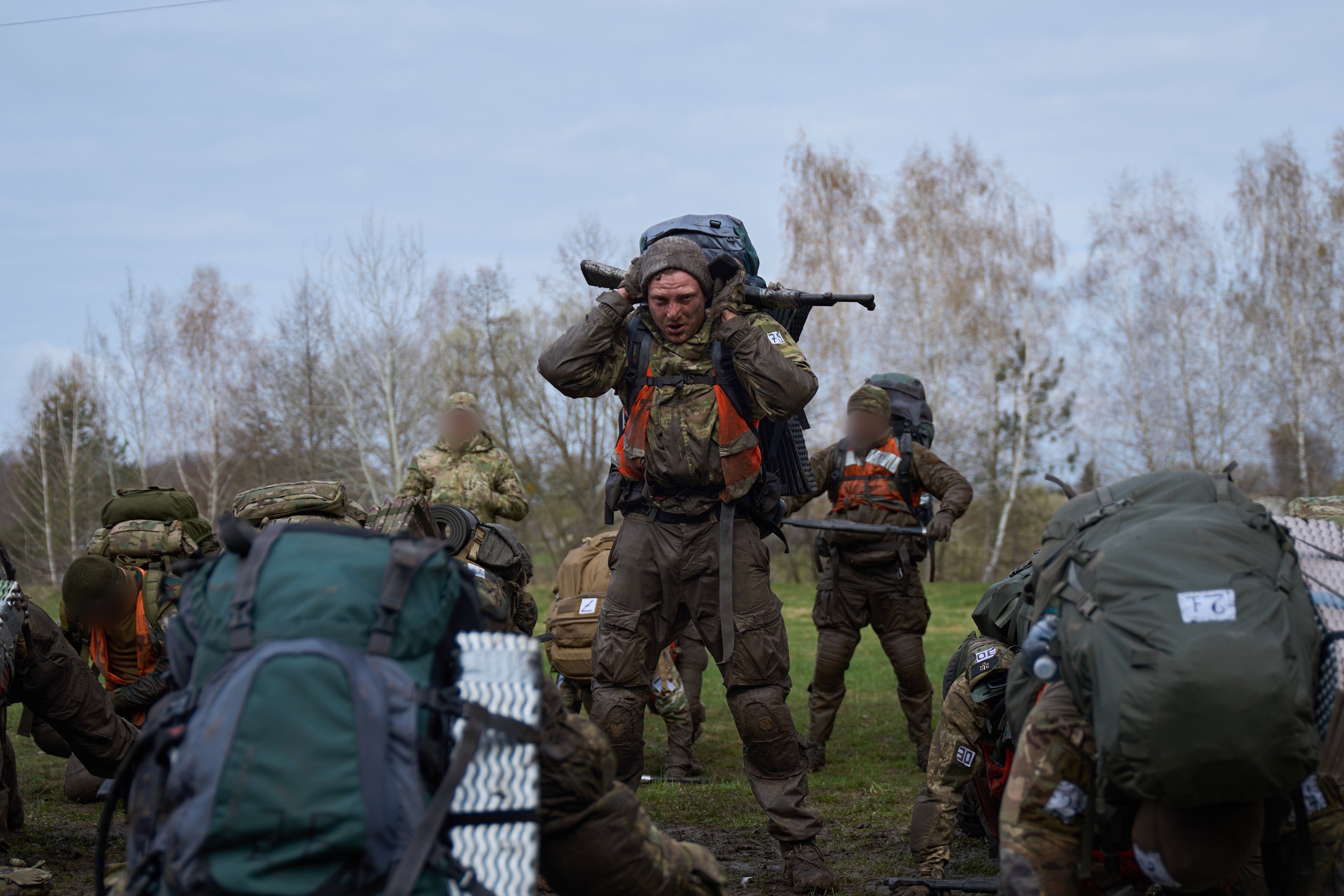
Every instructor has his own style, his own rhythm. They sometimes contradict each other, confusing you, irritating you. Temptation and punishment. The stick and the carrot.
Instructor N. comes close, grabs my arm, and says, "So you trained and became a tough guy now?"
I don't answer. What is there to say? I'm busy trying not to throw up.
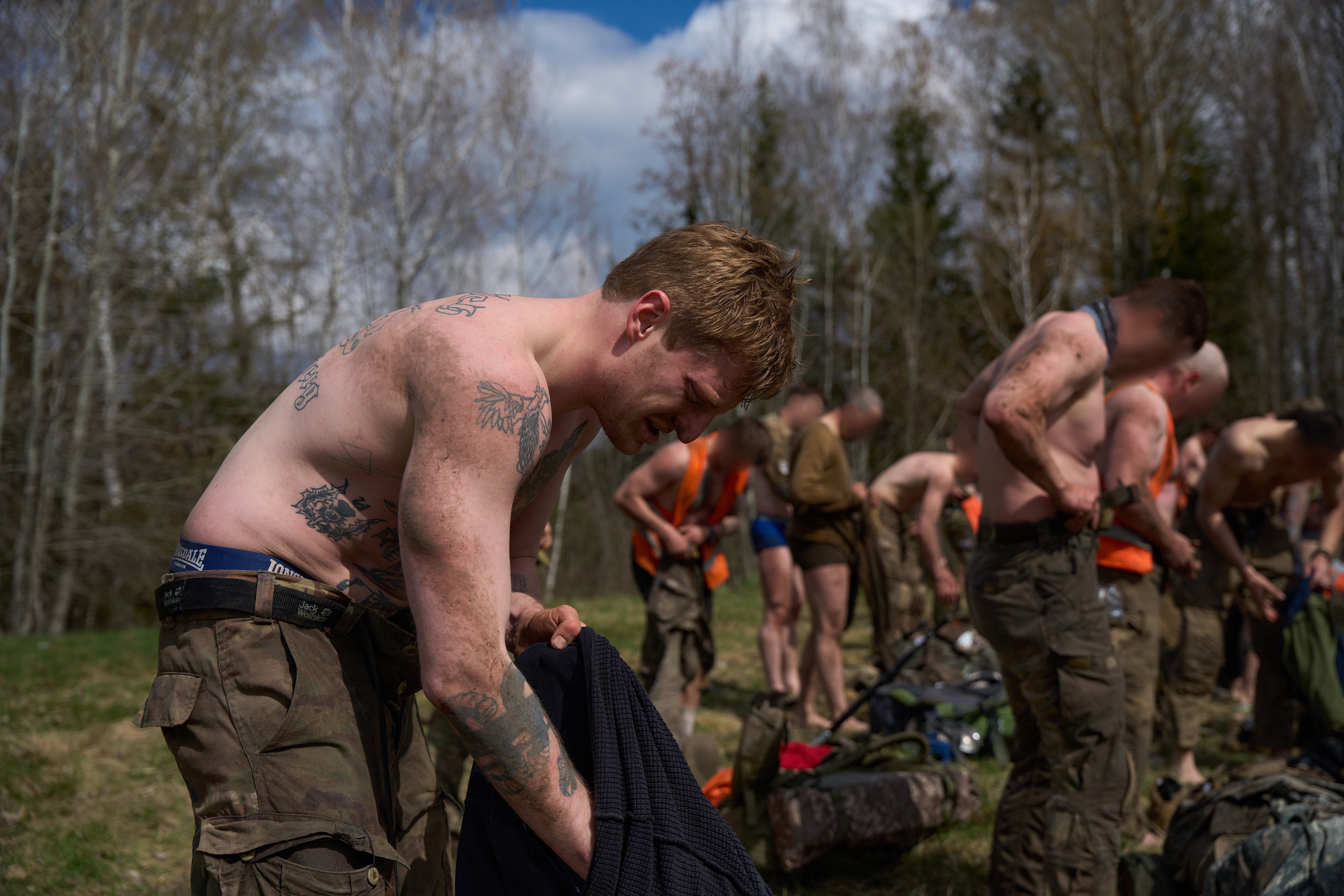
All day: bag on, bag off, bag above our heads. Get undressed, dress, undress. Gun in front. Gun above.
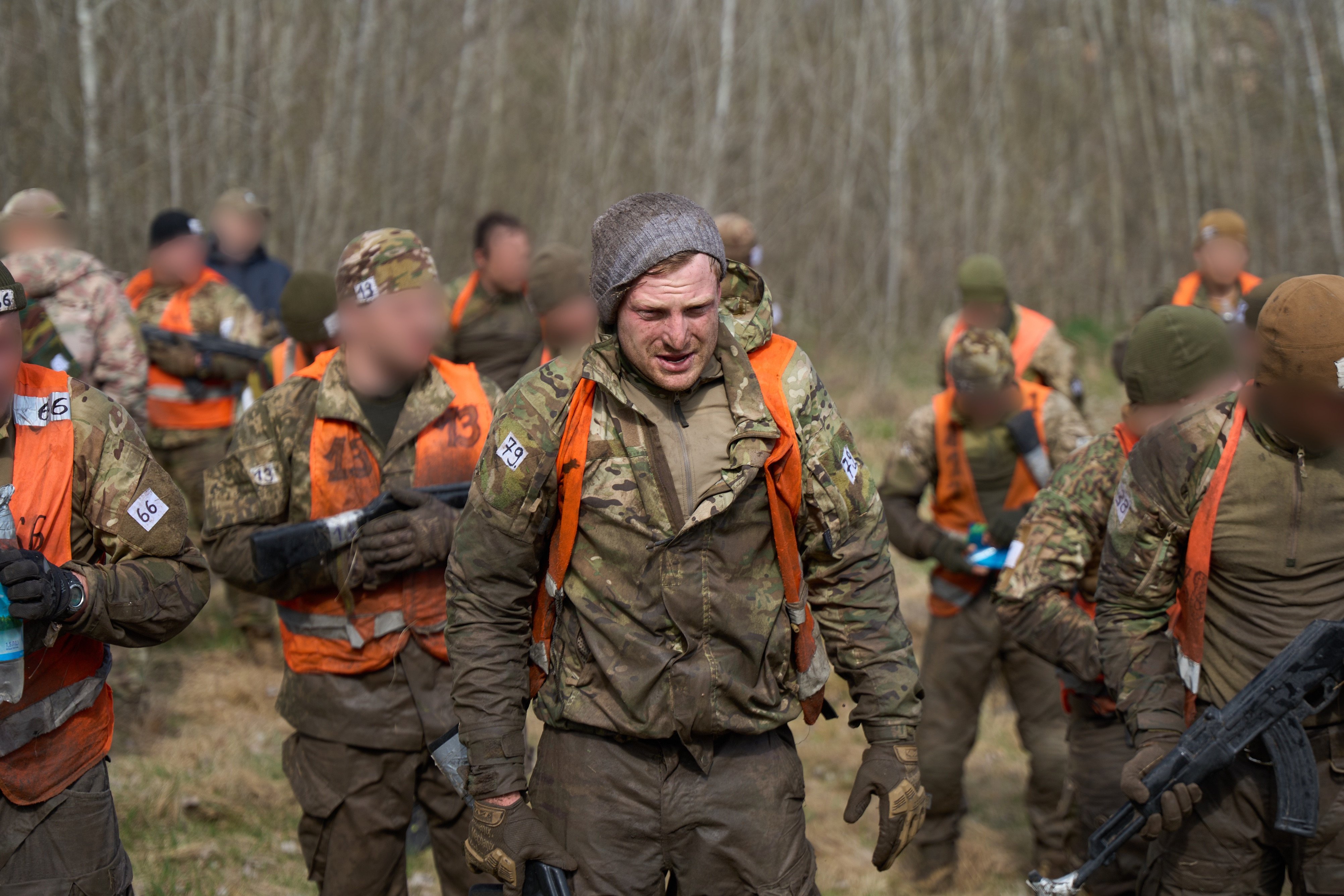
At lunch, we have four minutes to push down the food. Then, finally, a stroke of luck: an air raid alarm gives us a well-deserved break.
Just before sundown, we arrive back in the room. Almost half the candidates are out—their backpacks already collected, leaving just empty beds. Number 10, the major, is gone. Number 37, in the bed below me, has a stomachache. He pulls up his shirt and reveals two huge scars. "I had two operations," he says. "I'm finished." He takes his backpack and leaves. I get the bottom bunk. Thank you, Number 37.
"Guys," I say. "We survived the first day."
"Be careful," says number 13. "It's not over."
He is right. Two minutes later, we are summoned, and the survivors—around half has already quit—line up outside the barracks.
Sitting calmly on a bench, smoking, are the instructors. Beside them: a quite impressive pile of cigarettes and candies, and an old telephone. Remember the zakladki, the secret stashes?
The punishment is dire. Burpees. Many burpees—hundreds, I would say. All the while, Number 4, punished for one of the found items, walks around us in circles. After every burpee, we express our gratitude:
Thank you, Number 4.
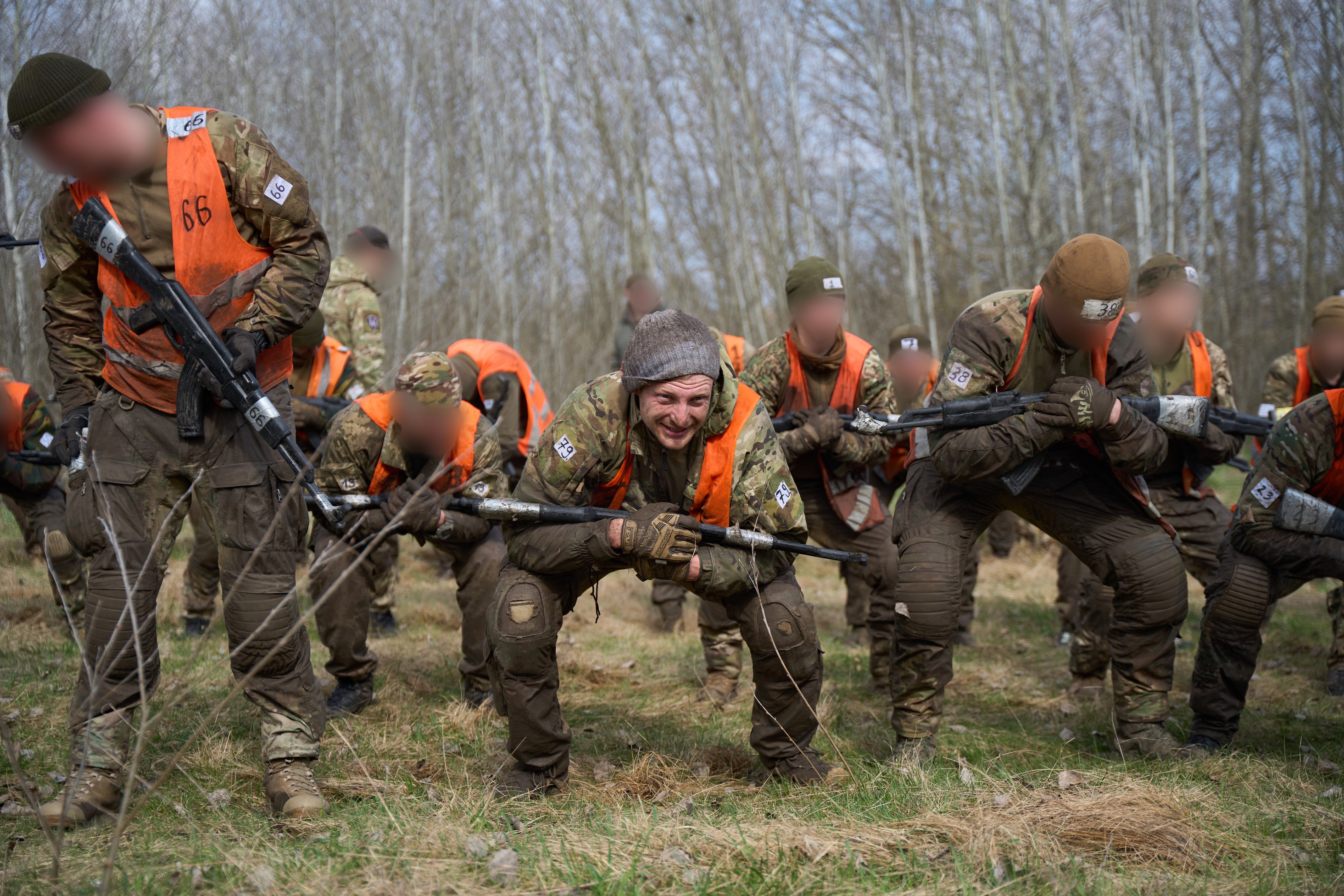
I think of Shum's words from a year ago: "Not everyone understands where they are going. The romance quickly disappears at the beginning of the active phase."
The sun is going down.
One more burpee.
I think I'm beginning to understand.
Thank you, Number 4.
One more burpee.
I look around for Number X—the businessman, the smuggler, the man who brought all the contraband onto base. I don't see him. It looks like the bastard already gave up and is lying peacefully somewhere in the tent.
Thank you, Number 4.
Night falls. We put on the backpacks and march. Twenty kilometers.
It's just my cameraman, Igor Toretski, and me. We creep along dark forest roads, step by step, following the faint red beam of my headlight.
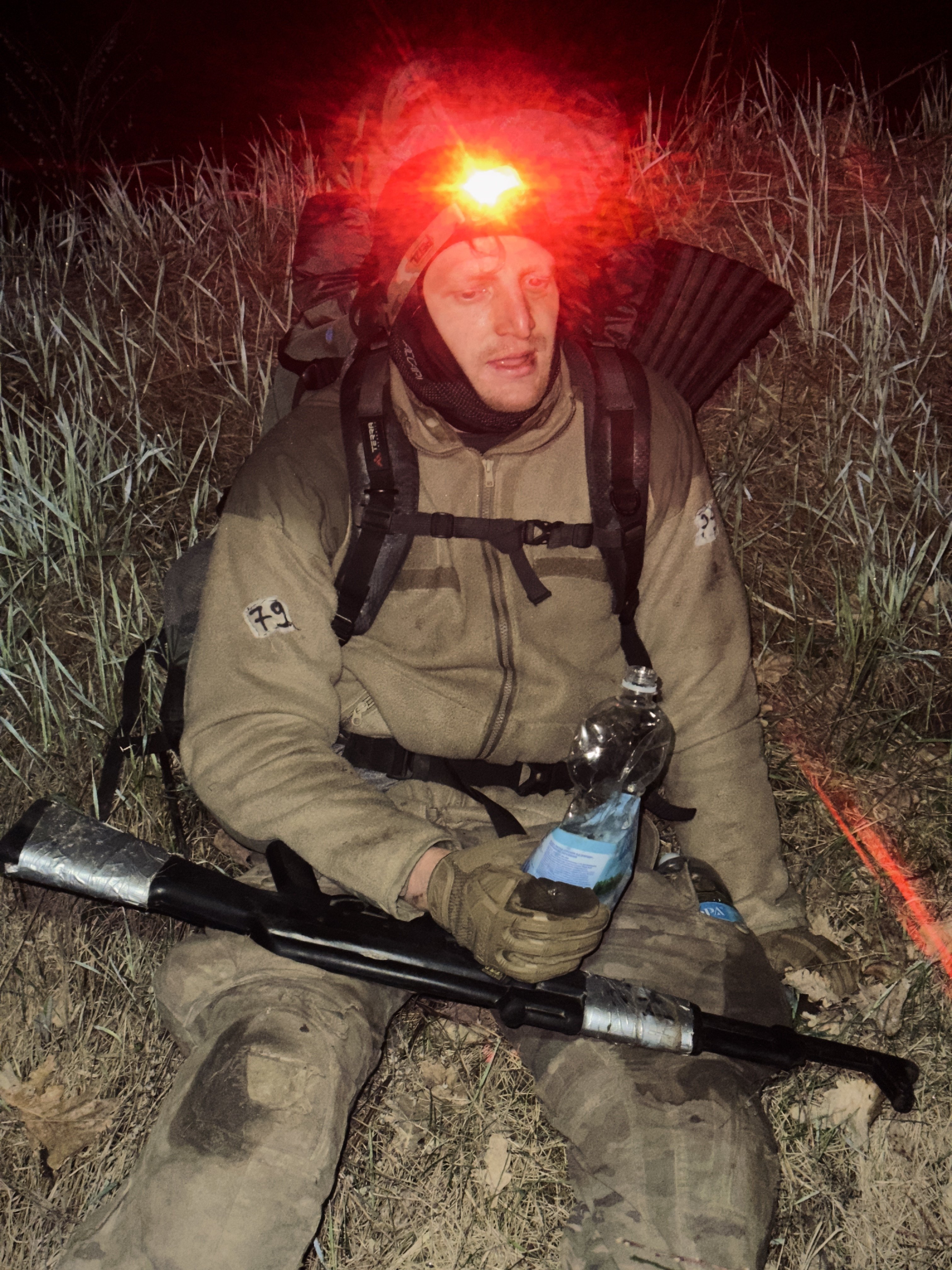
I thought the march would be the easy part. It's just walking, after all. My knees are acting up—red in the morning, the skin irritated from rubbing against the kneepads. I saw it, but didn't feel it. Now the pain comes. The first layer of skin is pretty worn. But what to do? Nothing, really.
I almost miss the shouting, the group dynamic. It keeps you going.
Along the way, we pass the next quitters. By a warm fire, they wait for the buggy to take them home. Among them: number 6, who will return safely to his family in Kyiv.
Sleep? No.
I fall onto my bed. Just 30 minutes, I think. But no. I close my eyes, and the command comes booming through the halls: "EVERYBODY UP! LINEUP IN 2 MINUTES! NO BACKPACKS!"
At sunrise, our freezing breath falls to the sandy ground. Blindfolded, we jump into the ice-cold water.
Four minutes for breakfast. And it continues.
We do push-ups. We crawl. We box.
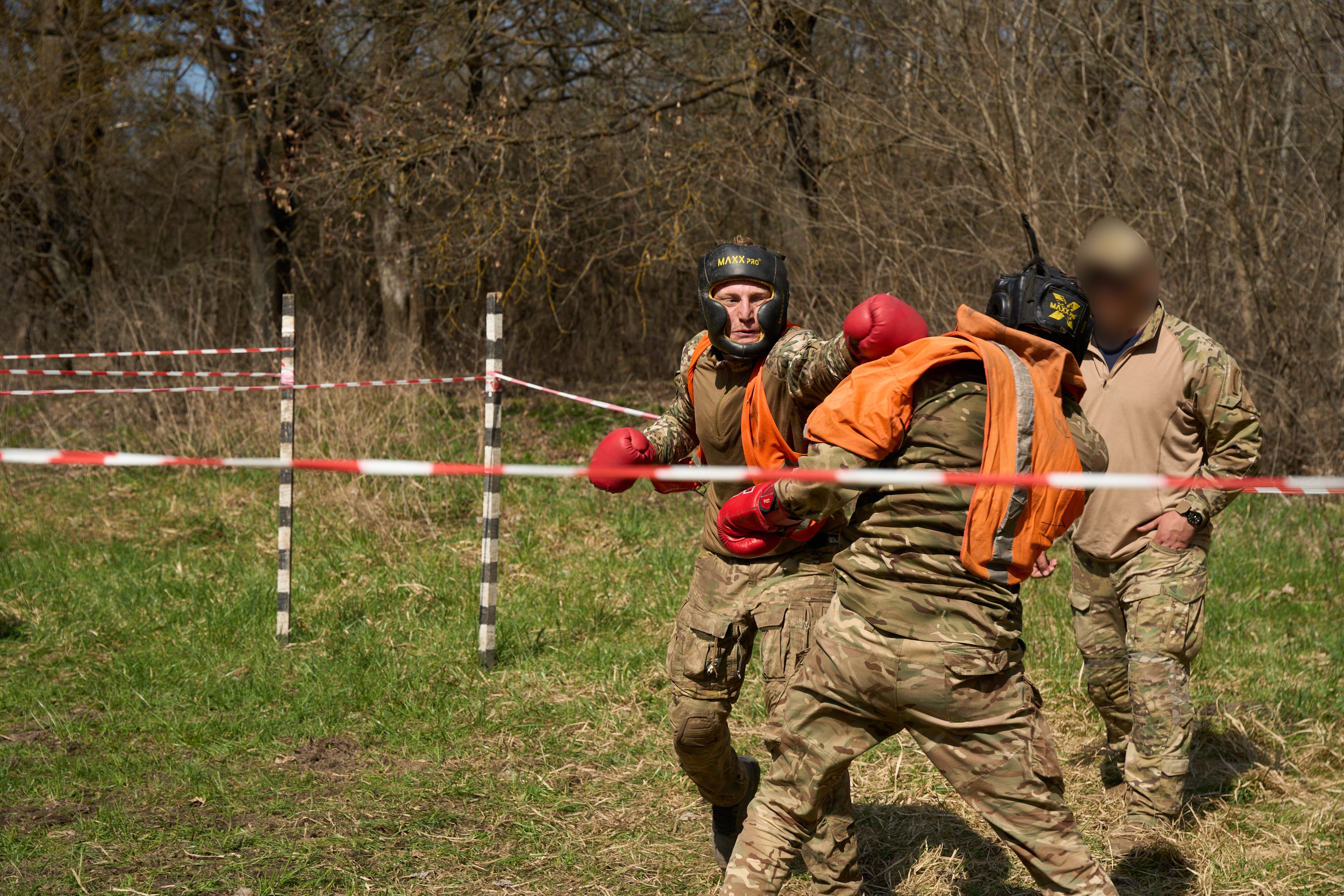
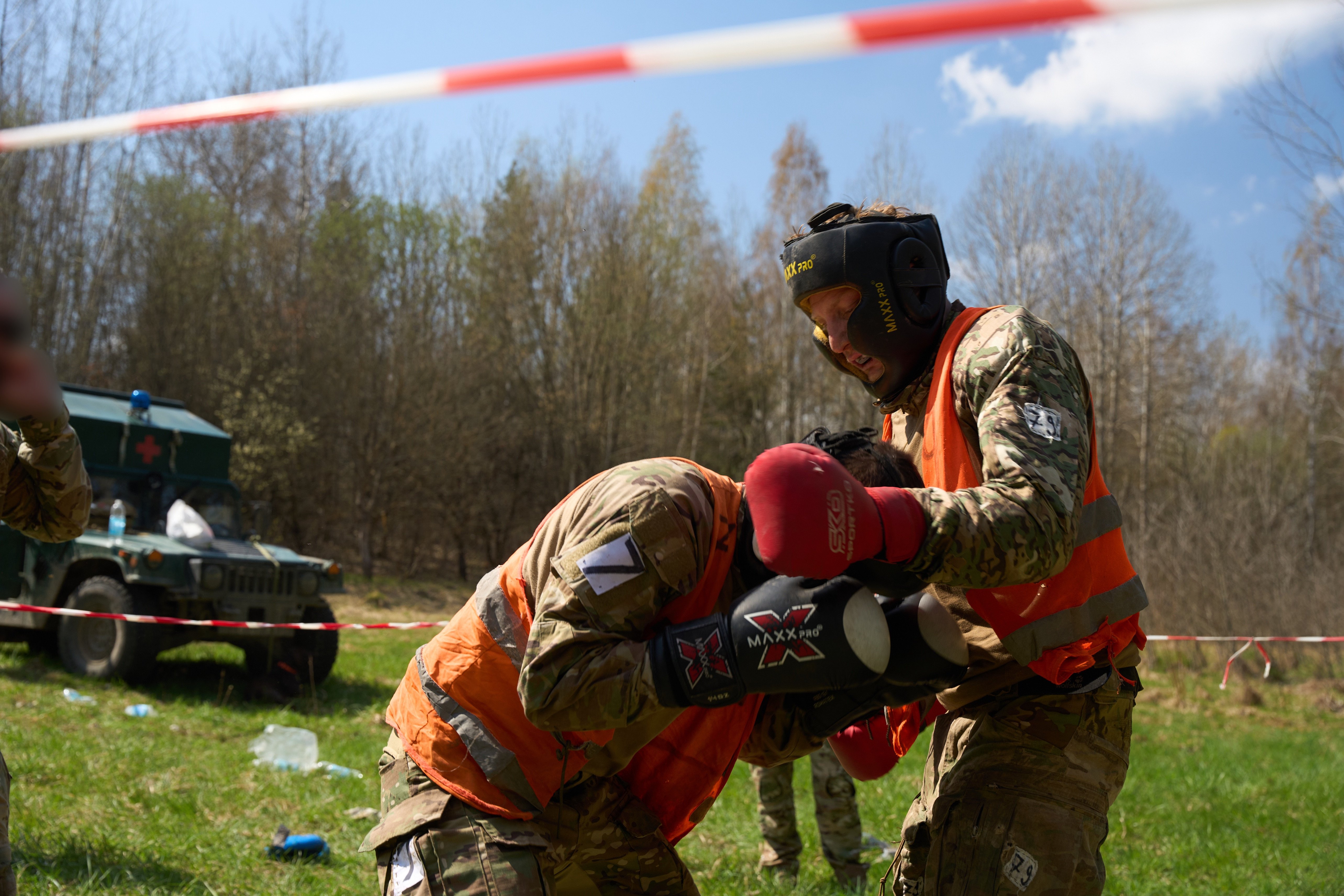
My first opponent is number 7. A strong, broad-shouldered man with dark hair and hazelnut eyes. He is already serving in the SOF. Two days ago, he was telling stories from Pokrovsk.
My straight left sends him to his knees. "Wow," I think. "Maybe I have a chance." Then he stands up, lands a hook to my stomach, and I feel breakfast knocking on the door. The bell rings. We hug.
My next opponent: Number 12. Young, with long brown hair. "This should be easier," I think. I'm wrong. Number 12 sends fists flying, like in an old kung-fu film. I hold on and survive.
Then more exercise, exercise, exercise. Standing up, falling down, standing up. The faces around me all wear the identical expression of absolute fatigue. Eyes pointed to the ground.
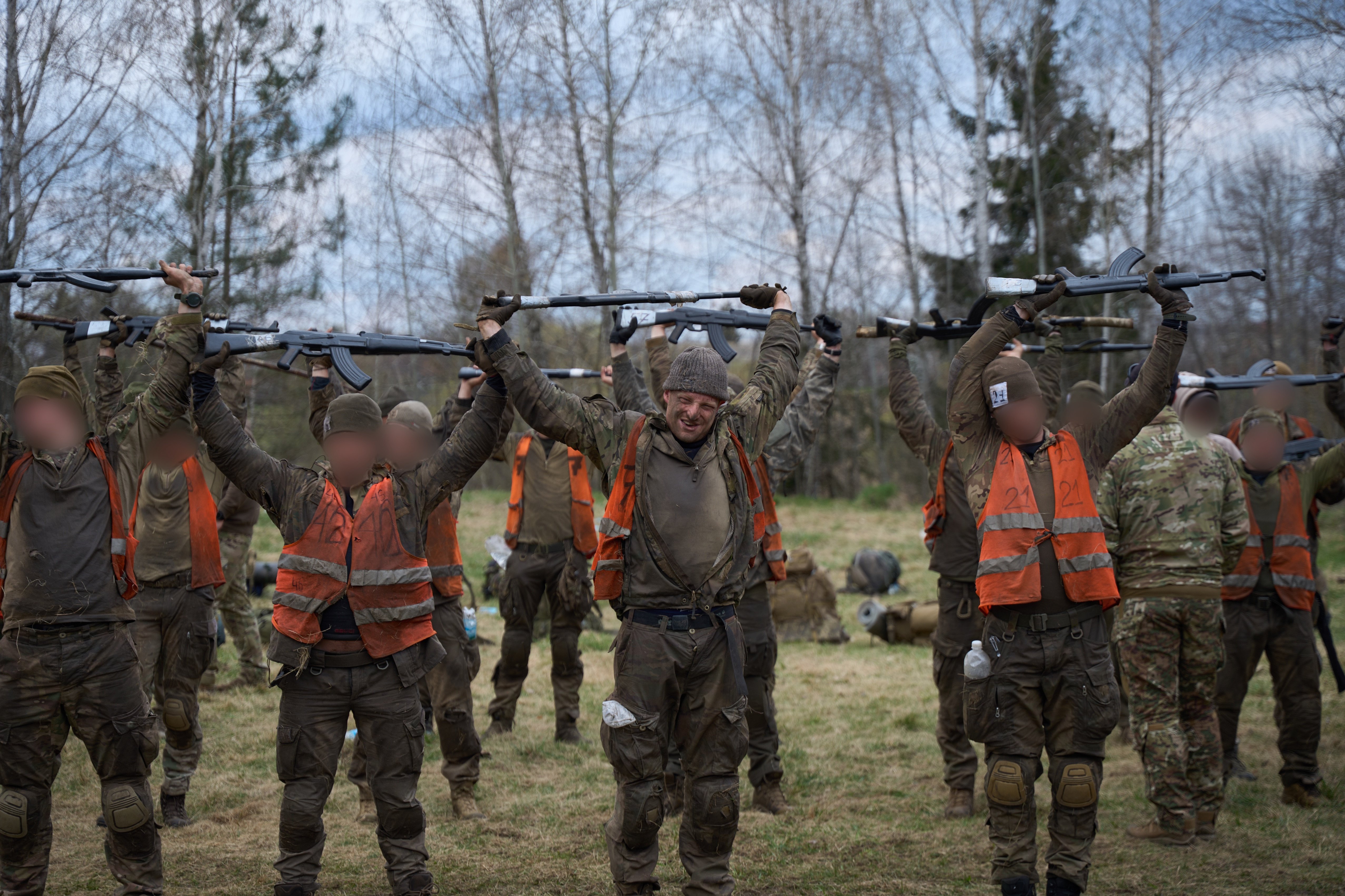
I feel the skin peeling off my knees with every movement.
We eat lunch. Four minutes.
We run ten kilometers.
The fastest is 13, the dentist. Like a bull filled with boundless energy, he passes me at least three times on the circuit. "DON'T RING THE BELL," he shouts as he flies by.
Somehow, someway, much later than the dentist, I also finish.
The end, for me
We eat dinner. Four minutes.
What happens next is simply cruel. Dangling the carrot of sleep in front of our noses, we spend six hours waiting for a break that never comes. Lined up outside, we have 15 seconds to all be inside the base. The first eight times, we fail. Back outside. Pushups, burpees, try again.
When we manage, we get to lie down—but not sleep. The instructors check. Of course, the first eyes have fallen shut.
Back outside. 15 seconds. Fail. Pushups, burpees, try again.
It's past midnight. My knees are gone. I can barely stand up by myself. My pants are sticking to the fluid from my open skin.
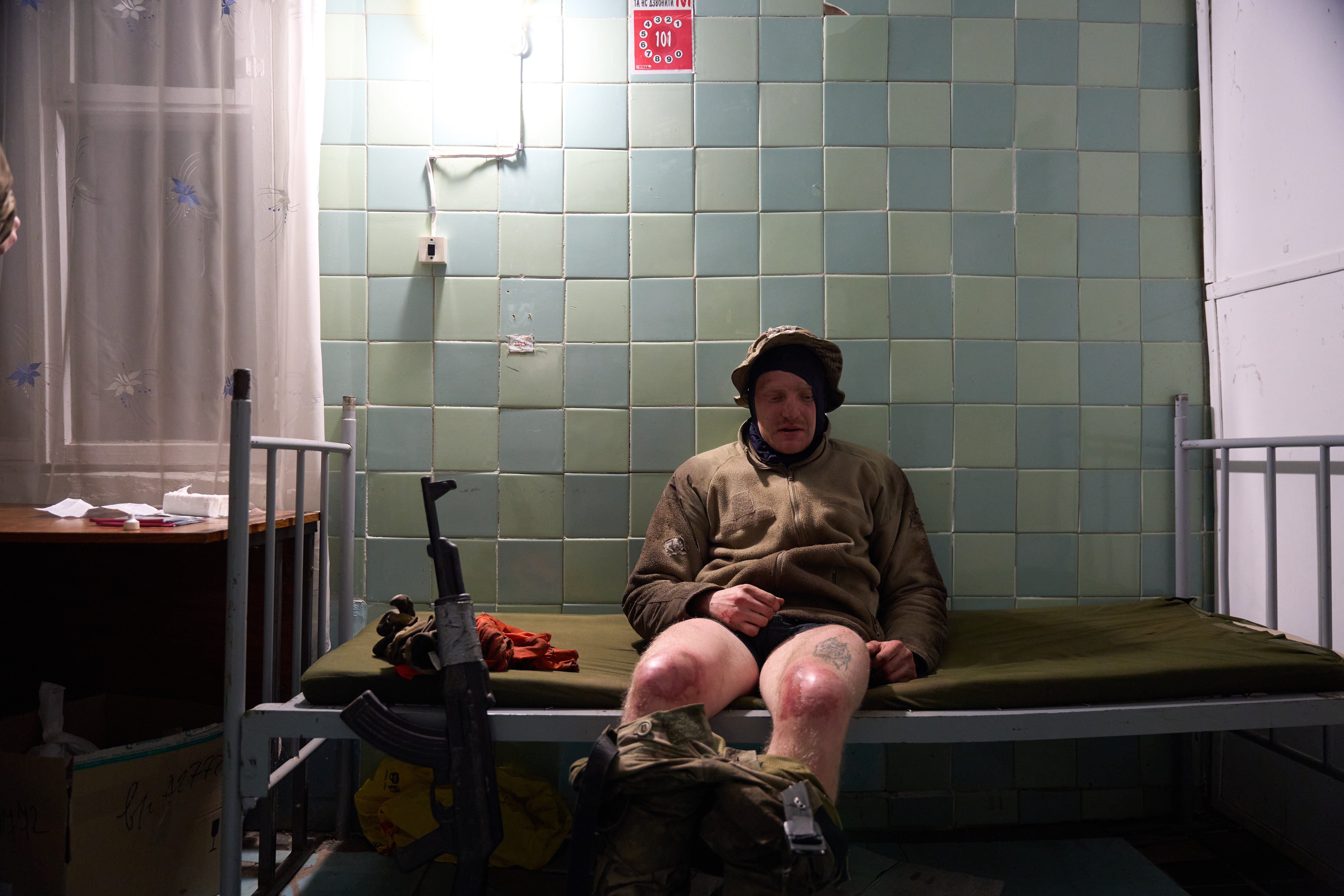
Lying there, I try to answer what I came to find out:
"Why does someone put himself through this? What use is all this—the mind games, the torture, the injustice, the constant shouting?"
I hear Shum's words. Not from the sidelines, and not on a screen—but in my head. My tired head, which hasn't slept in almost 3 days, was cooked in the sun, dragged across the ground, and punched.
"This selection observes a person's behavior in conditions close to combat. When a candidate is placed in an imaginary prison, or enters the ring, we do not observe the strength of his blow. We observe how he can withstand the blow.
How they react to pressure, how they react to pain, how they react to fear, how they react to injustice. Because in real combat, all of this will happen.”
Our tasks are designed to understand and see who we are dealing with—a person who will break down, or a soldier who will get up after falling.
Shum
SOF training instructor
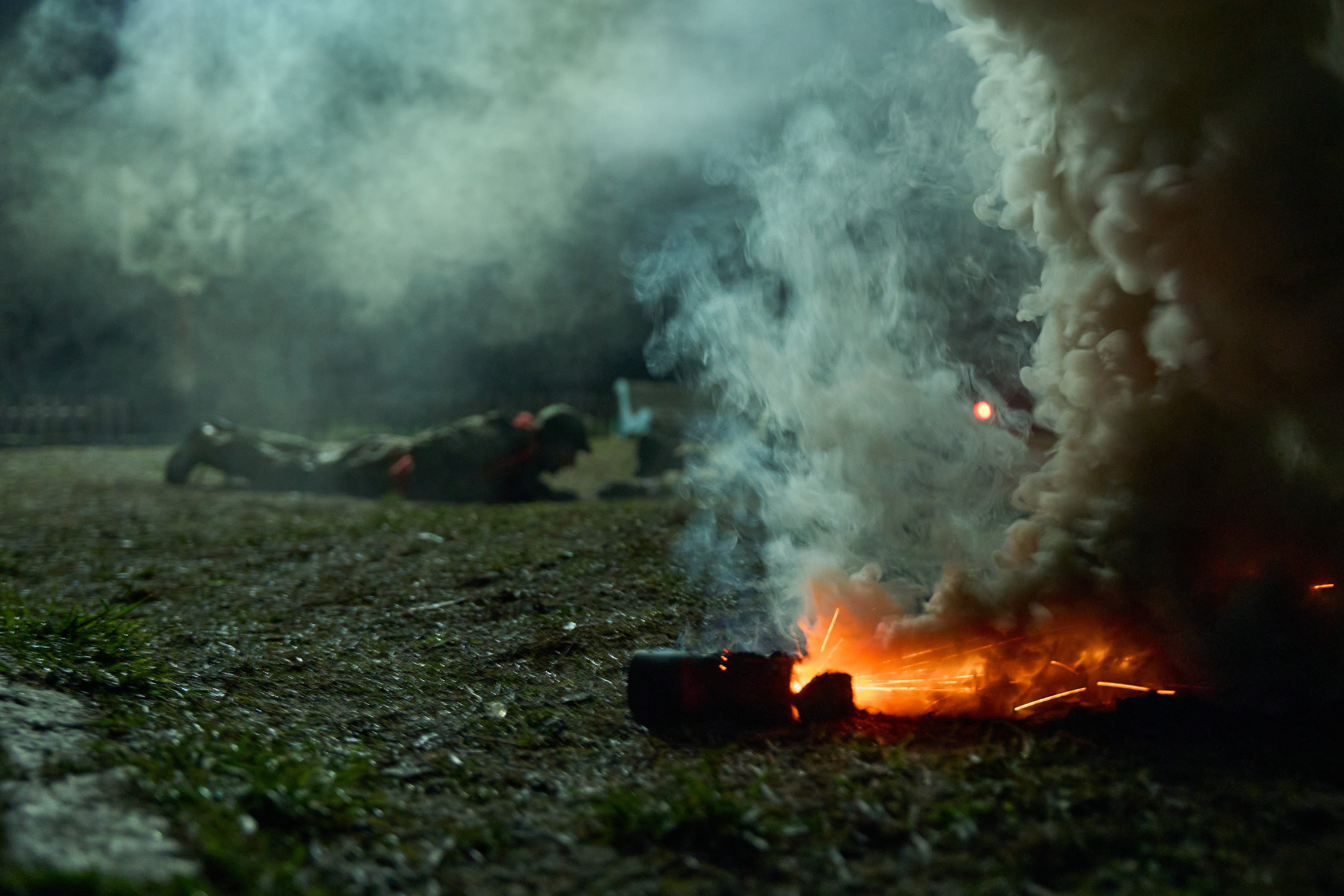
At 2:30 in the morning, we are woken with fireworks, gunshots, and smoke grenades. We crawl, then roll around the base. Around, and around, and around. Over the grass, over the cement, over the gravel, over the grass.
My knees are burning through my legs. That's it for me.
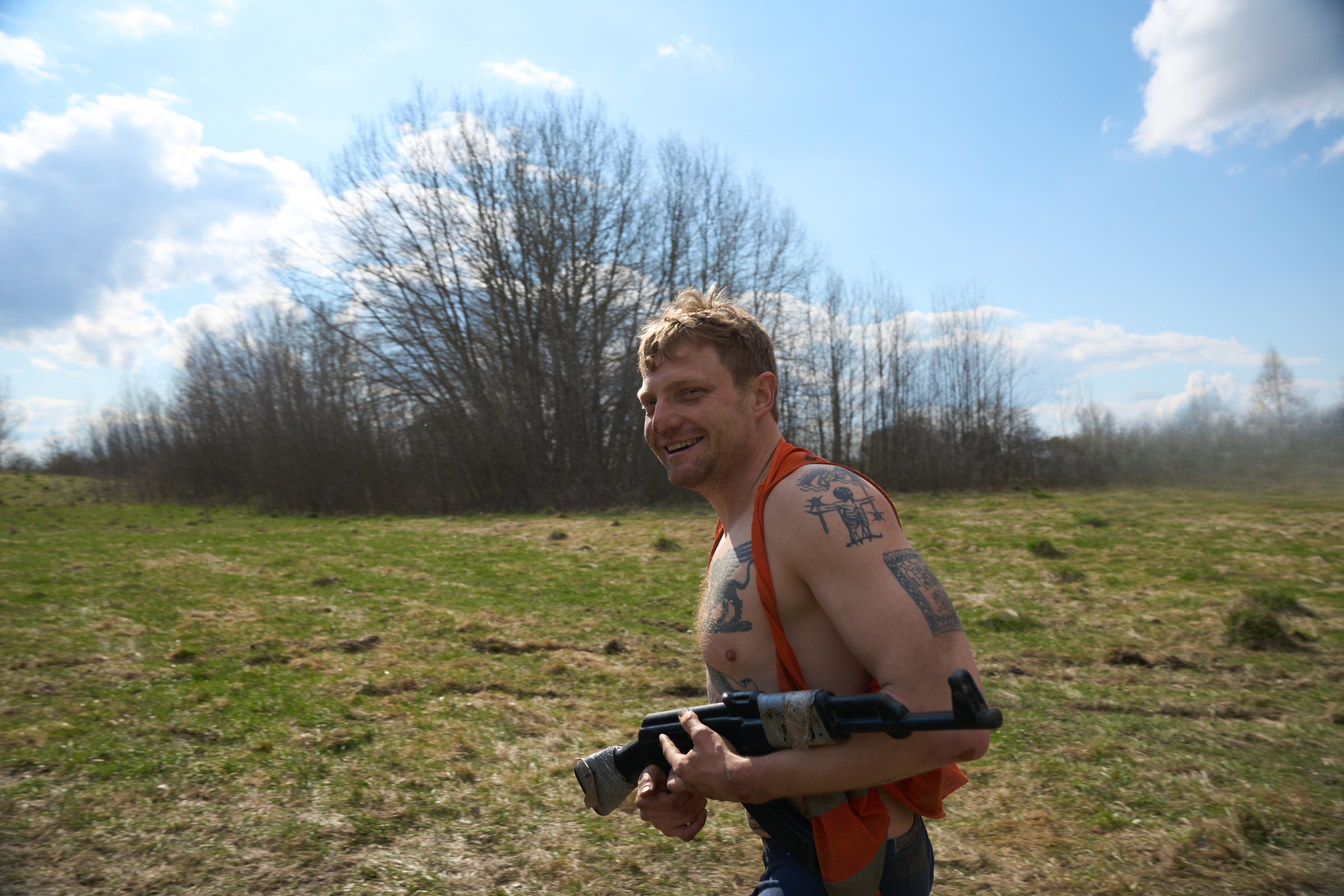
I ring the bell, and suddenly I'm not number 79 anymore. I'm Philip again.
Epilogue
On the field, around a third of those who started are left. What happens to them in the next few days, you can watch in our report from last year. Only a handful will pass through the many challenges that lie ahead. Because in the end, even though it indeed feels like a summer camp at times, with comedic moments, moments of laughter and absurdity, this is not a joke.
The brutal reality of war is waiting out there for all those who have proven their worth and determination during this selection. And even for those who haven’t.
The question is for most not IF they will fight, but how. And with whom.
To all the candidates who passed selection: I congratulate you, and bow my head in awe and respect. To all the instructors: I do the same, and thank you for letting me take a look behind the curtain. To everyone, including the candidates who didn’t pass, and who have returned to their units to continue protecting Ukraine from Russia’s invasion: I hope you will survive this war, and grow old and happy!
Discuss this article:

-c439b7bd9030ecf9d5a4287dc361ba31.jpg "Photo of Katherina Popilnichenko")
-72b63a4e0c8c475ad81fe3eed3f63729.jpeg "Photo of Cyril Barabaltchouk")