- Category
- War in Ukraine
Putin Demands the Donetsk Region Russia Has Failed to Fully Capture for 11 Years
 Prefer U24 Media on Google
- Authors

-29a1a43aba23f9bb779a1ac8b98d2121.jpeg "Photo of Illia Kabachynskyi")
One of the Kremlin’s key demands in any negotiation is the complete transfer of the Donetsk region under Russian control, but after 11 years of war in Ukraine, including nearly four years of full-scale invasion, Russia still hasn’t managed to seize its 26,000 square kilometers.
Russian leader Vladimir Putin insists that Ukraine must hand over the entire Donetsk region to Moscow as part of any negotiation framework.
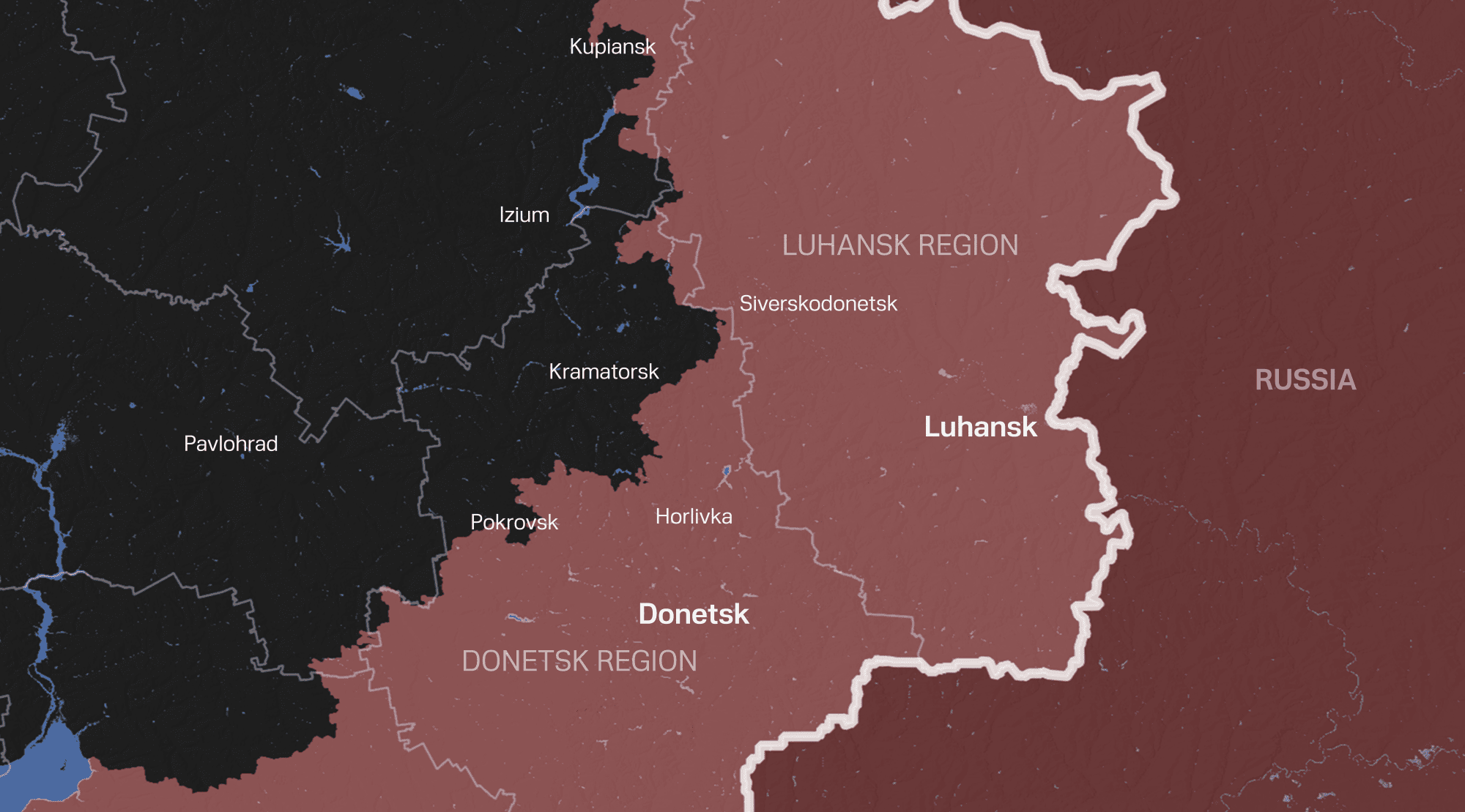
Russia currently occupies approximately 70% of the region. Ukrainian forces continue to defend cities like Kostiantynivka and Pokrovsk, while major cities such as Kramatorsk and Sloviansk remain under Ukrainian control. Capturing them would cost Russia tens of thousands of soldiers killed and wounded, and require years of grueling assaults. Every major battle in Russia’s war against Ukraine has shown the same pattern: even with a significant numerical advantage, Moscow cannot quickly seize Ukrainian cities.
The battle for Bakhmut lasted nearly a year. Pokrovsk has held out for almost 20 months. To capture Avdiivka, Russia sacrificed over 40,000 troops killed or wounded, deploying more than 120,000 soldiers. Around 170,000 Russian troops are now assaulting Pokrovsk.
Despite these losses, Putin now demands to take the rest of Donetsk “for free,” fully aware that a continued offensive would cost enormous human resources. The difficulty of this war for Moscow is clear from the results of the past three years.
The war of devastation
When Russia first launched its war against Ukraine in 2014, Moscow controlled roughly 8,000 square kilometers of the Donetsk region—the area where it created the so-called “Donetsk People’s Republic,” a quasi-administration of the occupied territories. Fearing sanctions, Putin refrained from officially recognizing these territories as independent states until 2022.
By the fall of 2025, following the full-scale invasion, the area under Russian occupation had expanded to around 16–17 thousand square kilometers. In three years, Russia has doubled its territorial control—but still failed to capture the entire region. Roughly 30% of Donetsk remains under Ukrainian control.
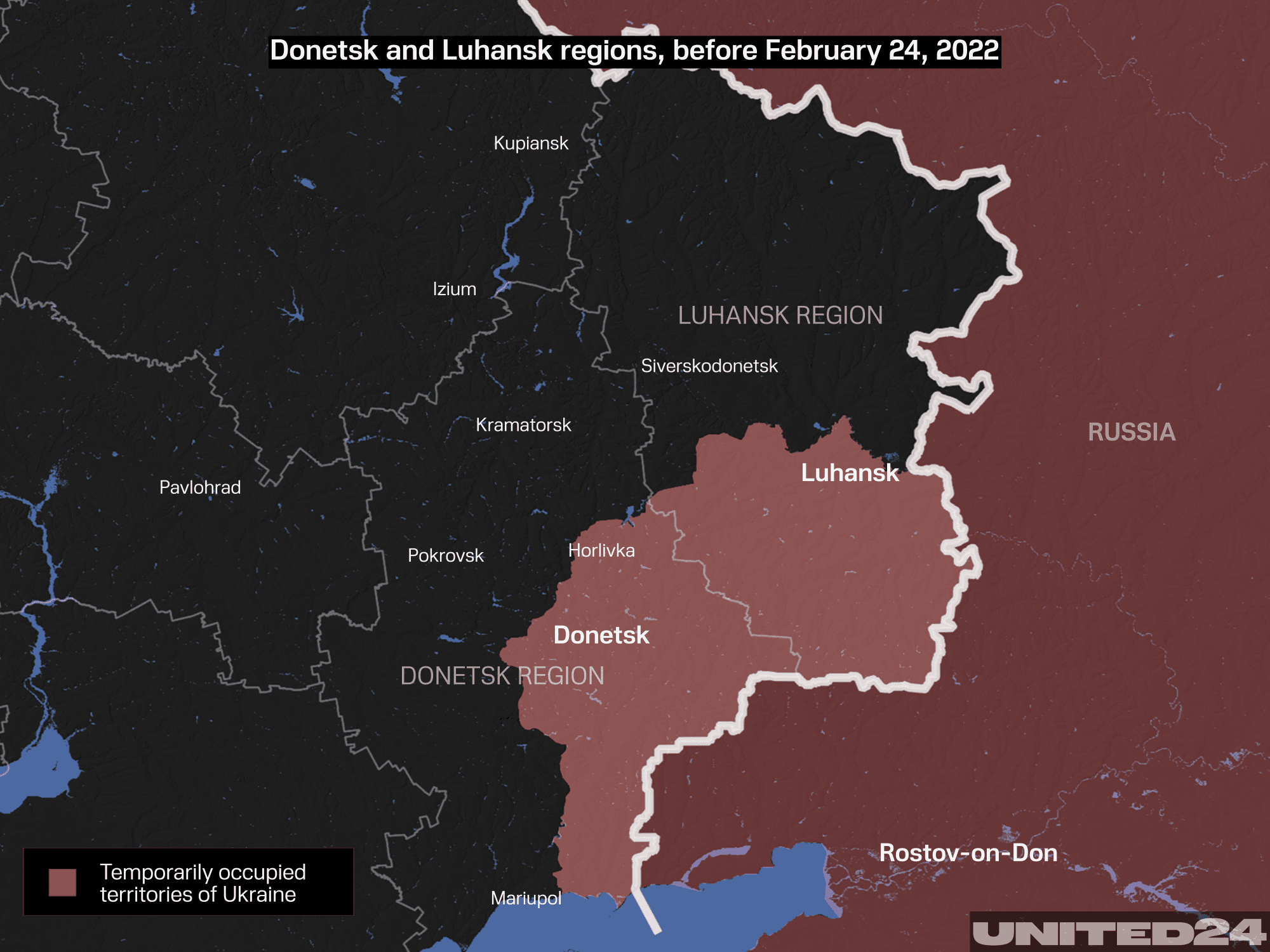
Pokrovsk has become a particularly important target for the Kremlin, both militarily and ideologically. Throughout 2025, the Russian army has failed to seize any major Ukrainian city—and Pokrovsk is one of the last that could qualify as such. Before the war, Avdiivka had a population of 30,000 and covered an area 100 times smaller than Moscow. The battle for Bakhmut ended only in 2023. Since then, Russia has managed to occupy only small towns and villages.
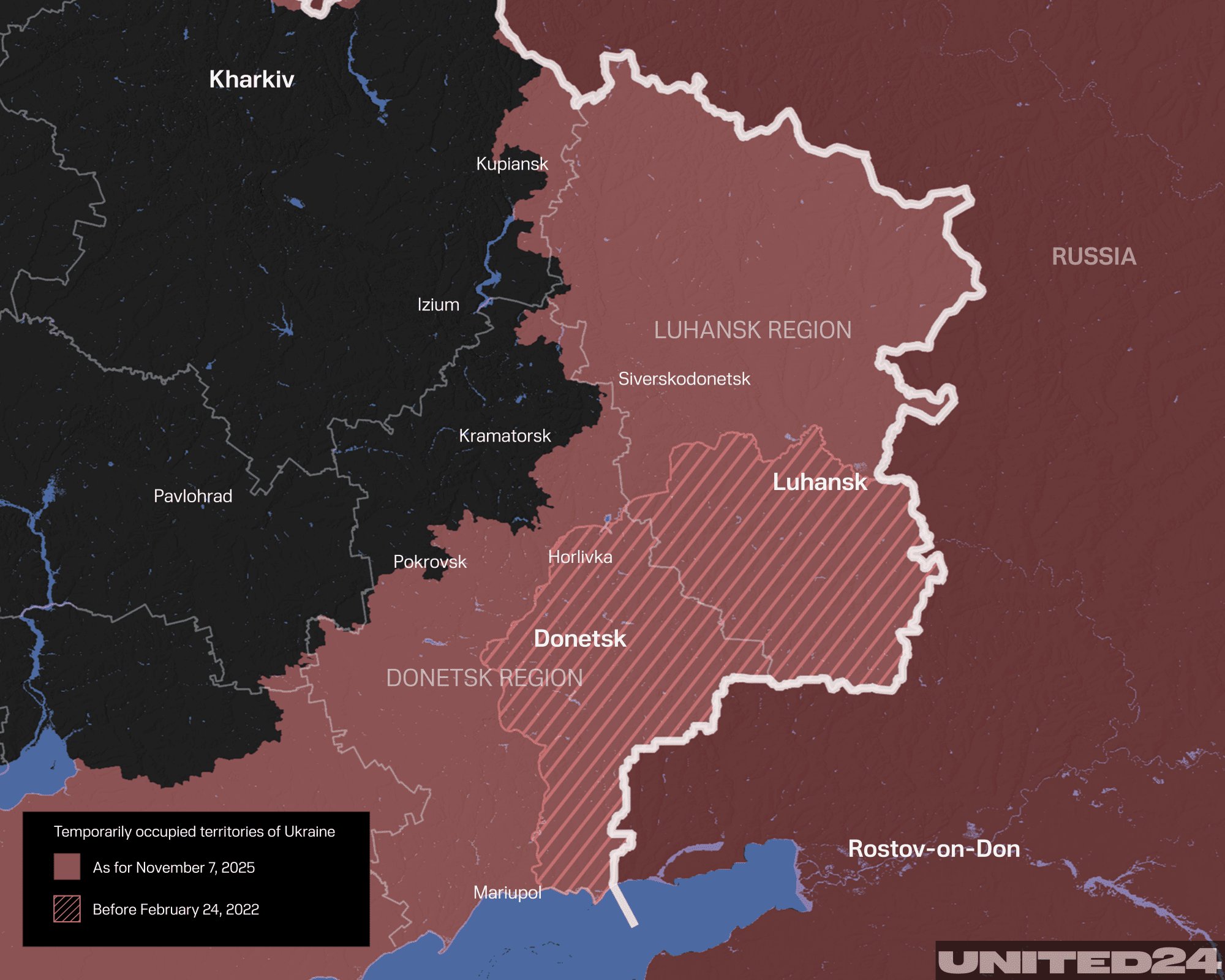
At the current rate of advance, it would take another 3–4 years and around one million Russian casualties—killed and wounded—to fully occupy the Donetsk region. These unprecedented losses for the capture of a single region illustrate the true state of Russia’s army.
What Russian control looks like
But perhaps the most telling aspect is this: the Kremlin claims its invasion aims to “liberate” Ukrainian territories from the “Kiev regime.” In reality, it brings only devastation. The city of Popasna, for example, has been declared beyond repair—even by Moscow itself. Marinka and Volnovakha have been completely destroyed. Toretsk and Chasiv Yar lie in ruins. Everywhere the Russian army advances, it leaves a trail of scorched earth behind. Official data shows that in cities once home to tens of thousands, only a few hundred people remain — those who simply couldn’t flee. There is nothing left to return to—everything is gone.
That is why Putin now so desperately demands these territories be handed over to him—without resistance and without concessions on his part. Recruitment into the Russian army has become increasingly difficult; even generous cash incentives have lost their effectiveness in 2025. The economic situation has also worsened: reserves may be depleted by the end of this year or the next, oil revenues have dropped sharply, and sanctions continue to take a toll.
Discuss this article:


-dd35be762f08867915b1187d08f5b7cb.jpg "Aftermath of a Ukrainian Neptune missile strike on a Russian Borisoglebsk airfield, October 15, 2026.")
-f1e0a0eb8dc4159d1ee6f9483ef88571.jpg "Malambahe Sabtar Sabanal, a Philippine national identified by Ukrainian military intelligence as a Russian military recruit who was killed during assault operations in the Donetsk region. (Source: HUR)")

-72b63a4e0c8c475ad81fe3eed3f63729.jpeg "Photo of Cyril Barabaltchouk")