- Category
- War in Ukraine
Record €32B in Partner Aid and a Race to Close the Skies: Inside Ukraine’s Revamped Defense Ministry
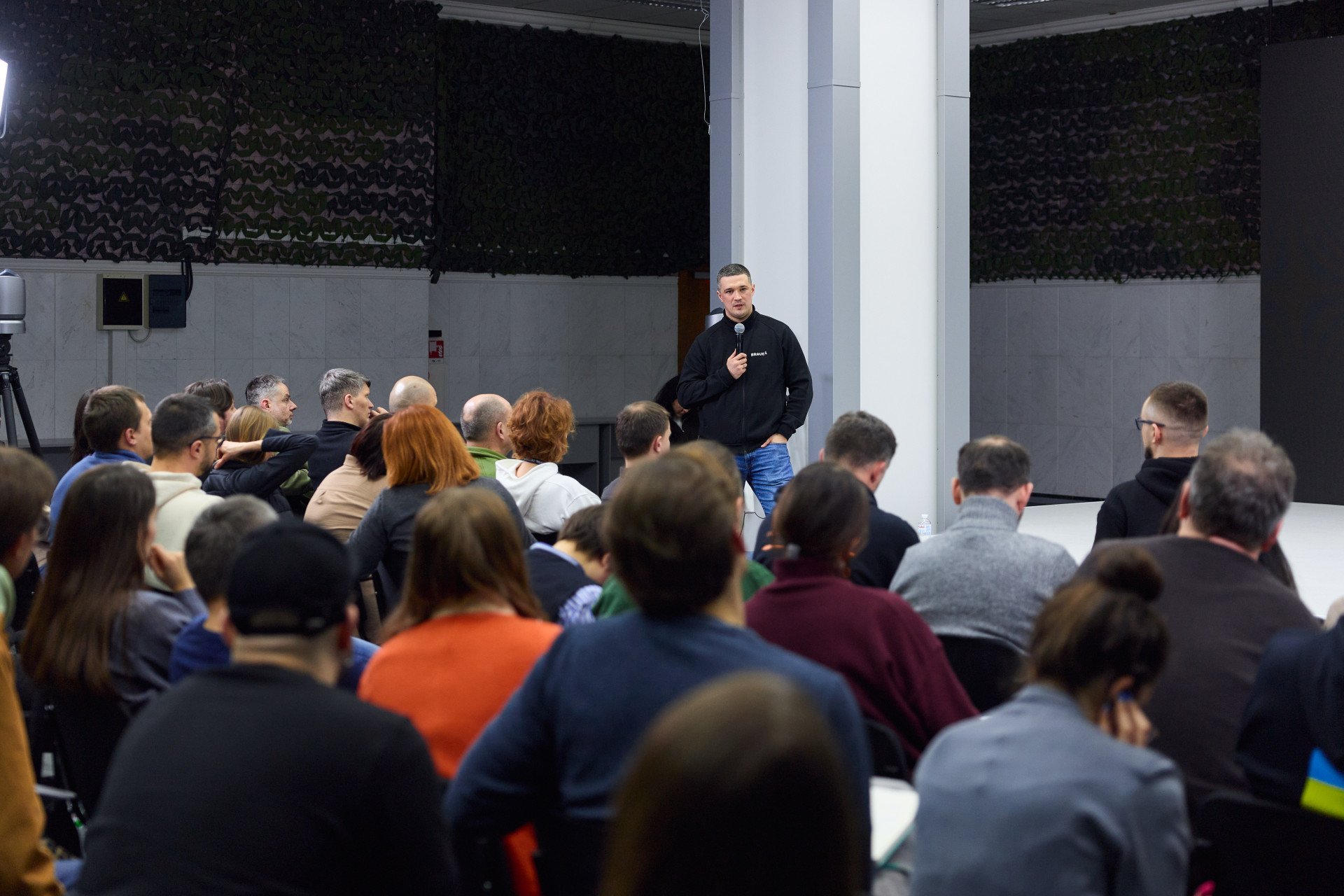
From disabling Russian Starlink access to building anti-ballistic capabilities, Ukraine’s Defense Ministry is betting on speed, technology, and tighter partner coordination to regain the initiative in the war.
 Prefer U24 Media on Google
- Authors

-29a1a43aba23f9bb779a1ac8b98d2121.jpeg "Photo of Illia Kabachynskyi")
Mykhailo Fedorov took over as head of the Ministry of Defense in January 2026, outlining several priority tasks for the institution.
We bring you stories from the ground. Your support keeps our team in the field.
“Everyone is working without days off,” he said at a meeting with journalists dedicated to the first month of work of the renewed team at the Ministry of Defense. The “stress test” came almost immediately: Russia launched a record number of ballistic missiles at Ukraine, while ahead lay a meeting with partners in Ramstein. From that meeting, Ukraine secured a historic support budget from its partners—€32 billion ($37 billion) for 2026.
“We changed our approach to working with partners,” Fedorov said. “We began pitching specific projects. At Ramstein, we presented our war plan, followed by the projects and operations that need to be executed. We explained the linkages and what partners would gain as a result.”
Partners supported drone assault units, a basic minimum package to supply brigades with drones, drones for operational depth, and additional PAC-3 interceptor missiles for air defense.
However, the main challenge remained at home—Russia’s ongoing air attacks. That became the central focus during the first month of work.
“Our primary focus during the first month of work was air defense,” saud Fedorov. “In response to intensified Russian strikes, our task was to strengthen the air defense system. To achieve this, we implemented an After Action Review system. After every large-scale attack, we convened teams from the Ministry of Defense and the Air Force to analyze the strike: the positioning of interceptors, where Shahed drones were shot down, ballistic trajectories, how short-range air defense performed, and the consequences of each attack.”
This analysis, he says, enabled swift decision-making on what needed improvement and where. The Air Force itself is also undergoing transformation—a comprehensive concept for systematically defending the country against Shahed drones and strengthening short-range air defense has already been developed. Recruitment has begun under this framework, and specific solutions are being implemented.
Fedorov also reiterated remarks by Ukrainian President Volodymyr Zelenskyy about the destruction of a mesh network in Belarus that had been used by Shahed drones in the north—a move that bolstered Kyiv's and central Ukraine's defense capabilities. In mid-February, Zelenskyy said that relay transmitters operating in Belarus were being used to guide Russian Shahed drones in their strikes against Ukraine. “Ukraine has taken steps to destroy at least three or four such facilities,” he said.
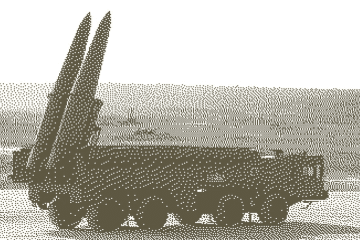
Russian ballistic missiles remain a major problem: Ukraine critically lacks PAC-3 missiles—weapons capable of intercepting ballistic threats. The first line of effort is to create joint consortia with partners to quickly build the necessary stockpiles. The second is developing Ukraine’s own anti-ballistic capabilities. This is a complex and time-consuming process, but it is the only way to ensure the required level and volume of protection.
Taking the initiative
Ukraine must seize the initiative in many areas to disrupt the Russian army’s offensive, says Fedorov. One example is Starlink terminals. Ukraine quickly reached an agreement with SpaceX and Elon Musk to disable Starlink systems in Russia.
“We effectively cut Russia off from this connectivity,” he said. “The number of Russian livestreams dropped elevenfold, and radio-frequency intercepts increased significantly.” This is not only about a technological response to Russia, but also about the fair use of Western technology that an aggressor has employed against civilians, Fedorov said.
Next comes the domain of economic warfare. The Ministry of Defense team has also begun working to strip Russia of its ability to generate revenue. This includes blocking Russia’s “shadow fleet,” for which a dedicated team with relevant expertise has been formed.
“Russia aunches missiles at us straight off the production line,” he said. “To finance this, it has increased crude oil exports—it needs cash. Its budget deficit is growing. We must continue applying pressure because we are approaching a pain point.”
To accelerate and systematize reforms, the Ministry has also overhauled its internal operations and established a new organizational structure aligned with NATO's best practices and adapted to the war plan.
Coming from the Ministry of Digital Transformation, Fedorov has also brought over management practices used there. Previously, the government introduced the position of CDTO—a chief digital transformation officer responsible for implementing technology in state institutions. Now a similar vertical is being created for the military: a chain of digital officers within the Ukrainian Armed Forces who will serve as innovation leaders. The first such officer has already been appointed, with the goal of placing one in every corps and brigade.
A process to establish technology competence centers has also been launched.
“It is crucial to create dedicated centers for drones, for Middle Strike, for Deep Strike, for artillery, and other areas,” Fedorov said. “The mission of these centers is to continuously analyze the next step in the war and ensure victory in the war of technologies.”
Overall, the strategy outlined by the Ministry of Defense to journalists aligns with what Fedorov has previously stated—close the skies, halt the advance of Russian troops, and deprive them of the economic capacity to sustain the war. The action plan is already in place, and the team is now working on its implementation.
Discuss this article:
-9a7b3a98ed5c506e0b77a6663f5727c5.png)




-111f0e5095e02c02446ffed57bfb0ab1.jpeg "Photo of Roman Kohanets")