- Category
- War in Ukraine
Russia Revives WWI Dazzle Camouflage to Evade Ukrainian AI Drones—Does It Work?
 Prefer U24 Media on Google
- Authors


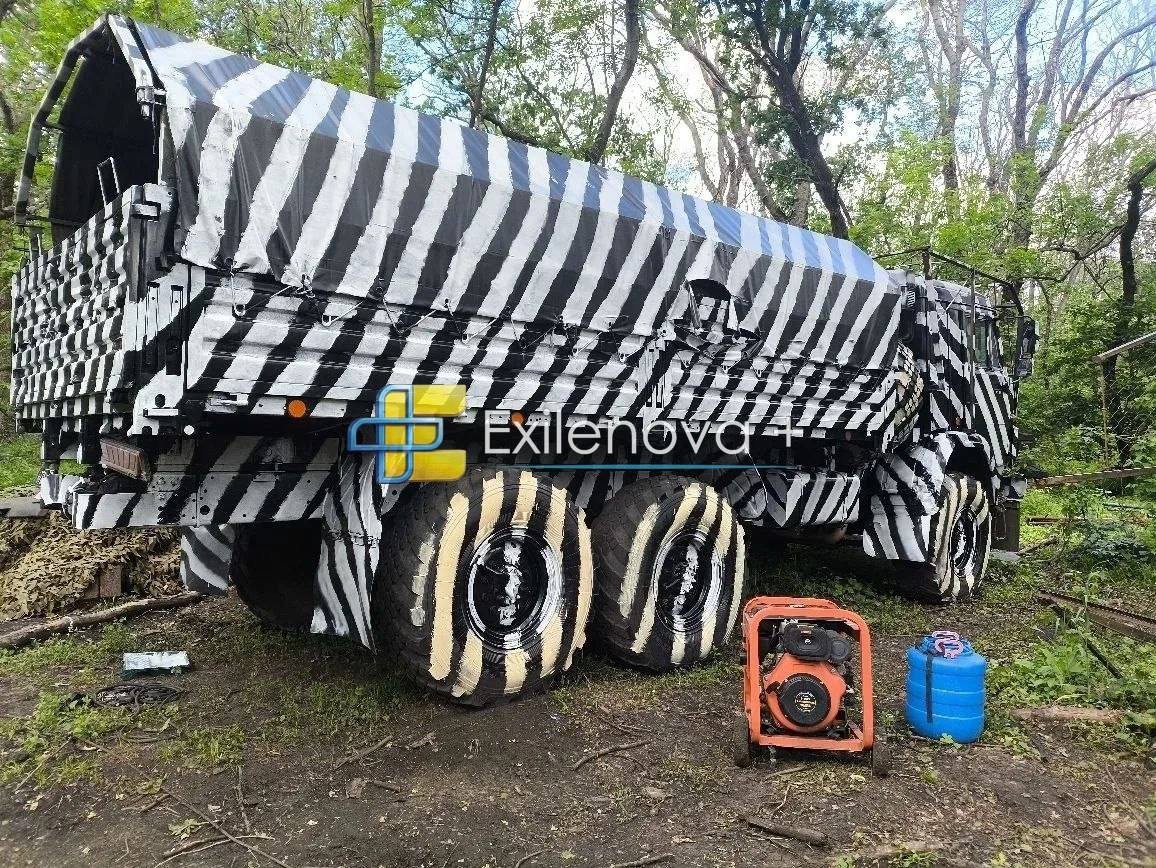
A Russian military KamAZ truck has been photographed carrying an unusual black-and-white paint scheme that resembles the “dazzle camouflage” technique first used by naval forces during World War I.
We bring you stories from the ground. Your support keeps our team in the field.
According to Defense Express on May 30, the vehicle was observed with a pattern of contrasting geometric stripes intended to disrupt the visual outline of the truck. The outlet suggested the appearance of such camouflage may reflect Russian efforts to adapt to the growing threat posed by Ukrainian strike drones and systems equipped with machine-vision technologies.
Dazzle camouflage was originally developed for warships during World War I. Unlike conventional camouflage designed to conceal an object, the technique aimed to make it more difficult for enemy observers to estimate a vessel’s speed, heading, and distance. Large geometric patterns distorted visual cues used by optical rangefinders and fire-control systems.
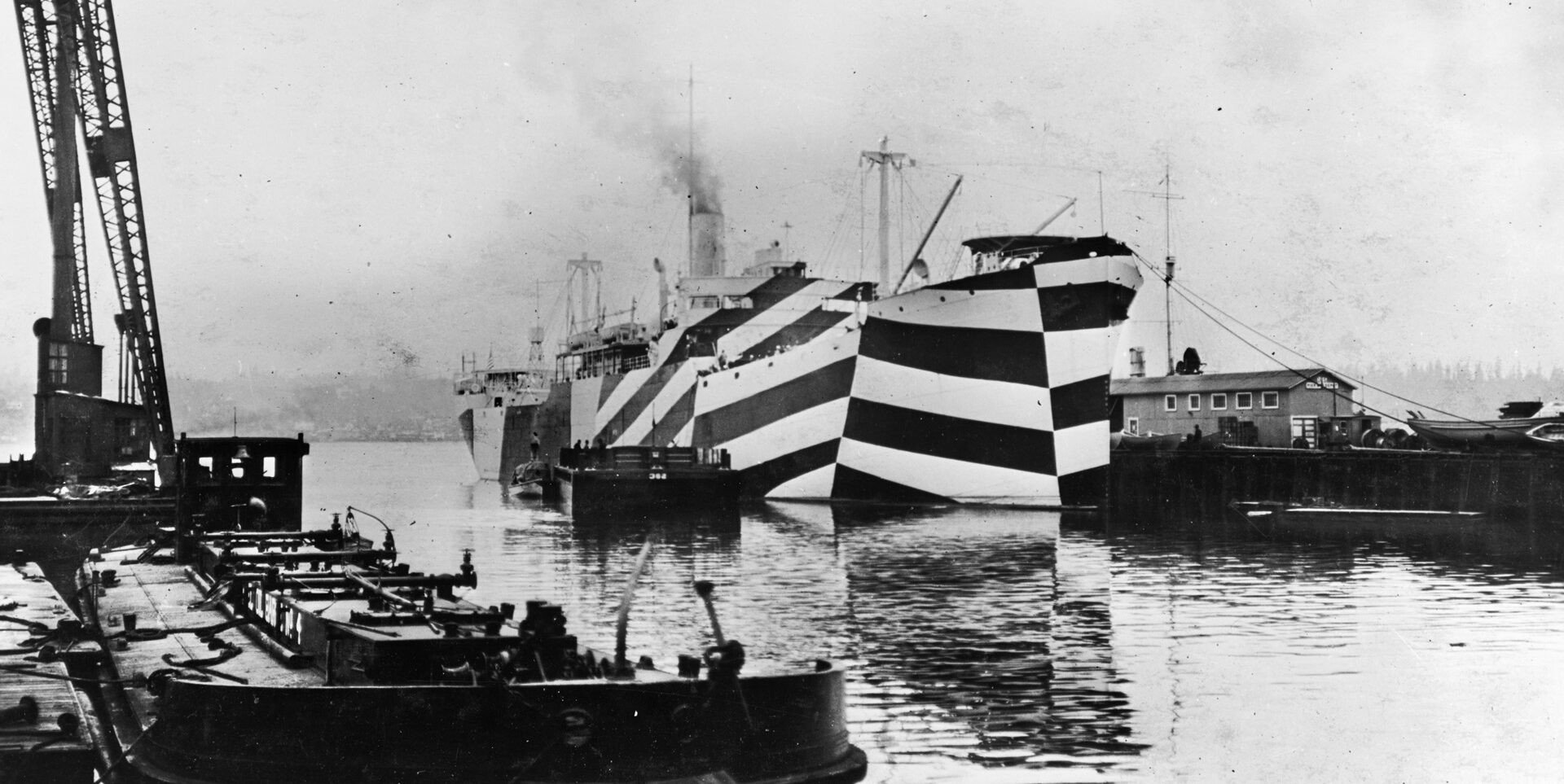
According to Defense Express, the method was primarily effective against large naval targets observed from long distances. It relied on confusing human operators rather than making an object invisible.
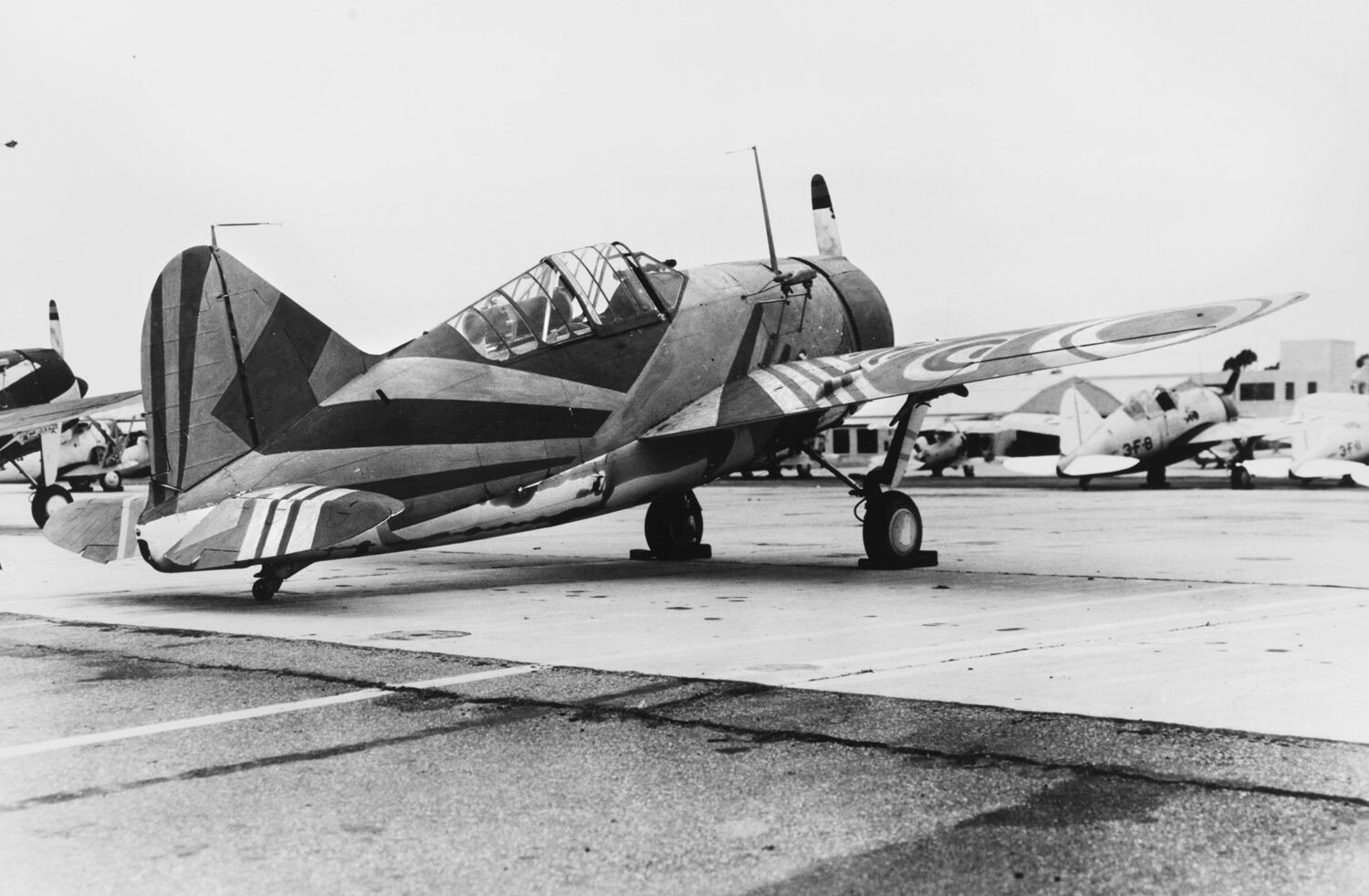
Historical examples show that dazzle camouflage was widely applied to warships but saw limited success on aircraft and largely disappeared with the introduction of radar technologies during World War II.
The outlet noted that modern machine-vision systems operate differently from the optical ranging methods that dazzle camouflage was designed to defeat.
According to Defense Express, artificial intelligence-based target recognition systems do not depend on the same visual measurements of distance and movement used by early 20th-century naval fire-control equipment.
The report also noted that thermal imaging sensors, which are increasingly used on reconnaissance and strike drones, would be unaffected by a vehicle’s external paint pattern.
-3e0ce9cc15df48bb33986204cd936bb2.jpg)
Earlier, Ukraine announced the launch of its “Logistic Lockdown” program, a new initiative aimed at disrupting Russian supply routes deep behind the front lines using medium-range strike drones.
According to Defense Minister Mykhailo Fedorov, the campaign focuses on targeting logistics hubs, ammunition depots, command centers, and key transport corridors linking occupied territories to support Russian military operations.
Discuss this article:
-9a7b3a98ed5c506e0b77a6663f5727c5.png)


-c439b7bd9030ecf9d5a4287dc361ba31.jpg "Photo of Katherina Popilnichenko")


-29a1a43aba23f9bb779a1ac8b98d2121.jpeg "Photo of Illia Kabachynskyi")