- Category
- War in Ukraine
Russia’s Starlink Rival “Rassvet” Fails to Reach Target Orbit 6 Months After Launch
 Prefer U24 Media on Google
- Authors


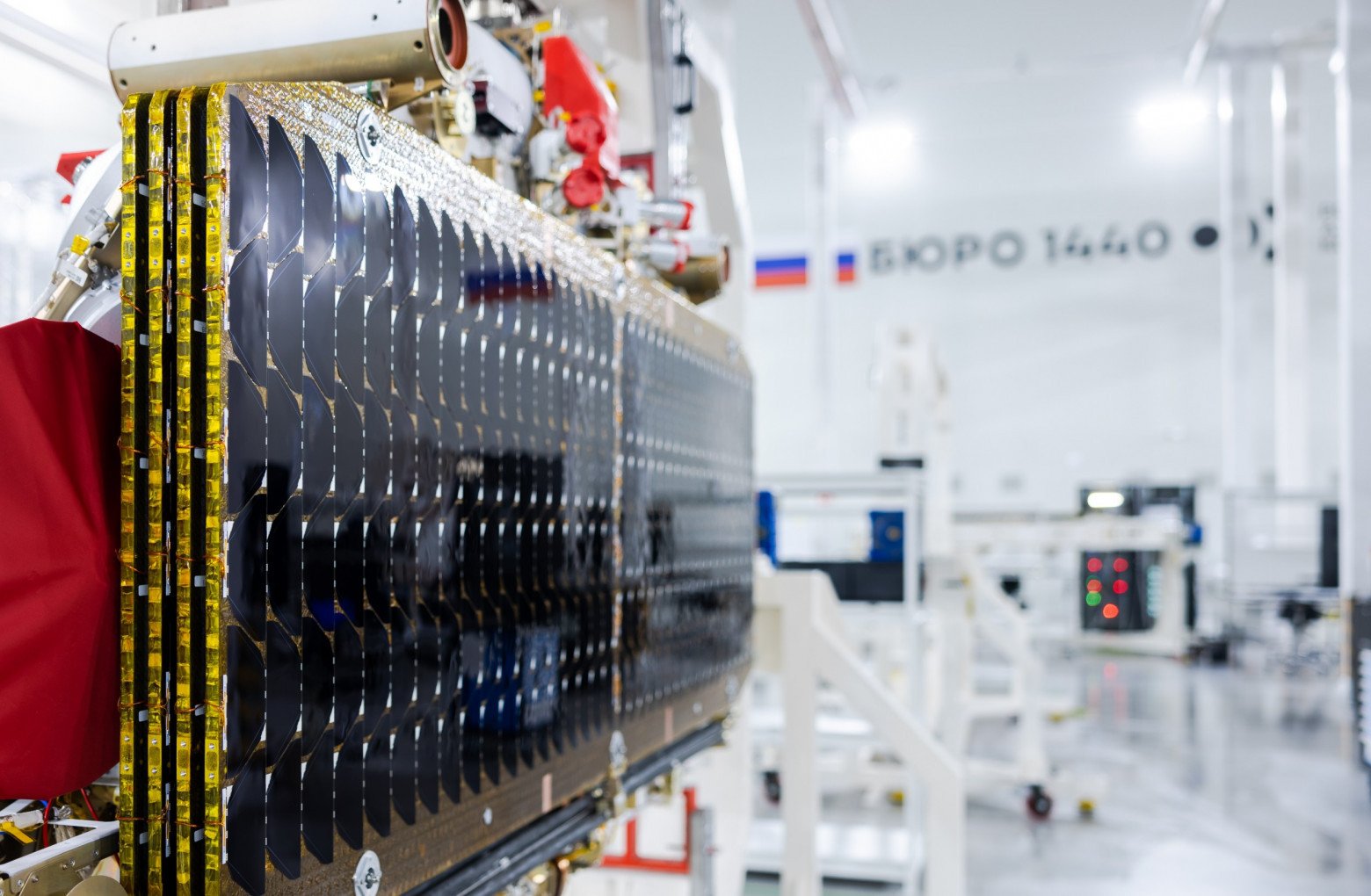
Russia’s Rassvet-3 satellite constellation, intended to form the basis of a domestic alternative to Starlink, has yet to reach its planned operational orbit six months after the first group of satellites was launched.
We bring you stories from the ground. Your support keeps our team in the field.
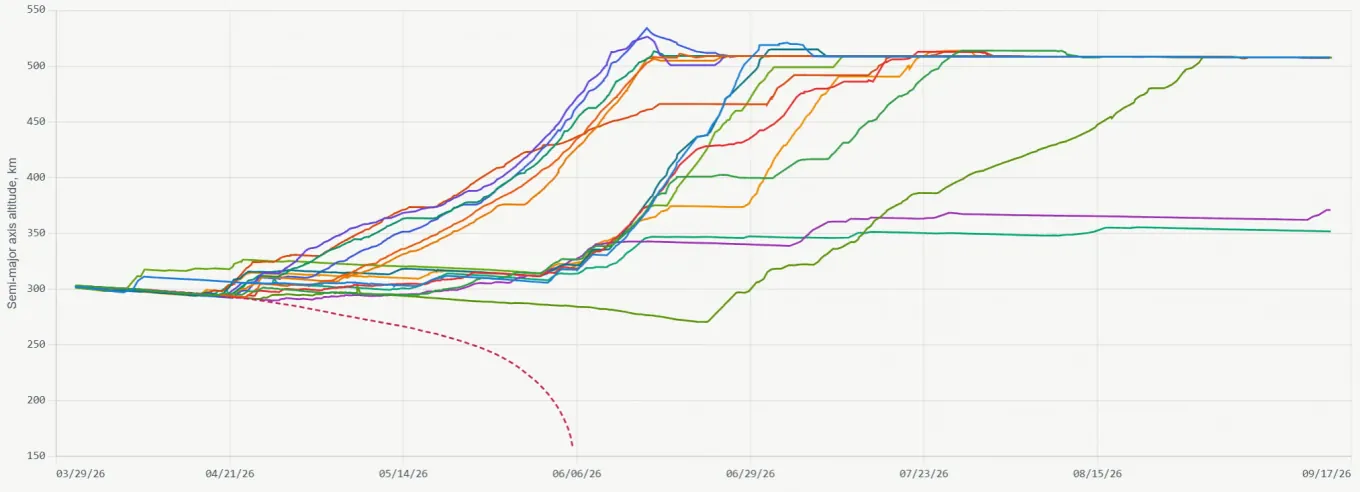
According to Defense Express on September 15, none of the satellites from the initial Rassvet-3 deployment has reached the planned altitude of 800 kilometers, preventing the constellation from beginning full-scale operations as originally envisioned.
The system is being developed by Russian aerospace company Bureau 1440. The first group of Rassvet-3 satellites was launched on March 23, followed by a second deployment on July 19.
Most satellites from the first launch have remained at an altitude of about 507 kilometers for roughly three months.
Defense Express reported that 13 of the original 15 satellites have reached that altitude and appear to have established positions relative to one another. Two others remain at lower altitudes, while another satellite associated with the deployment has already left orbit.
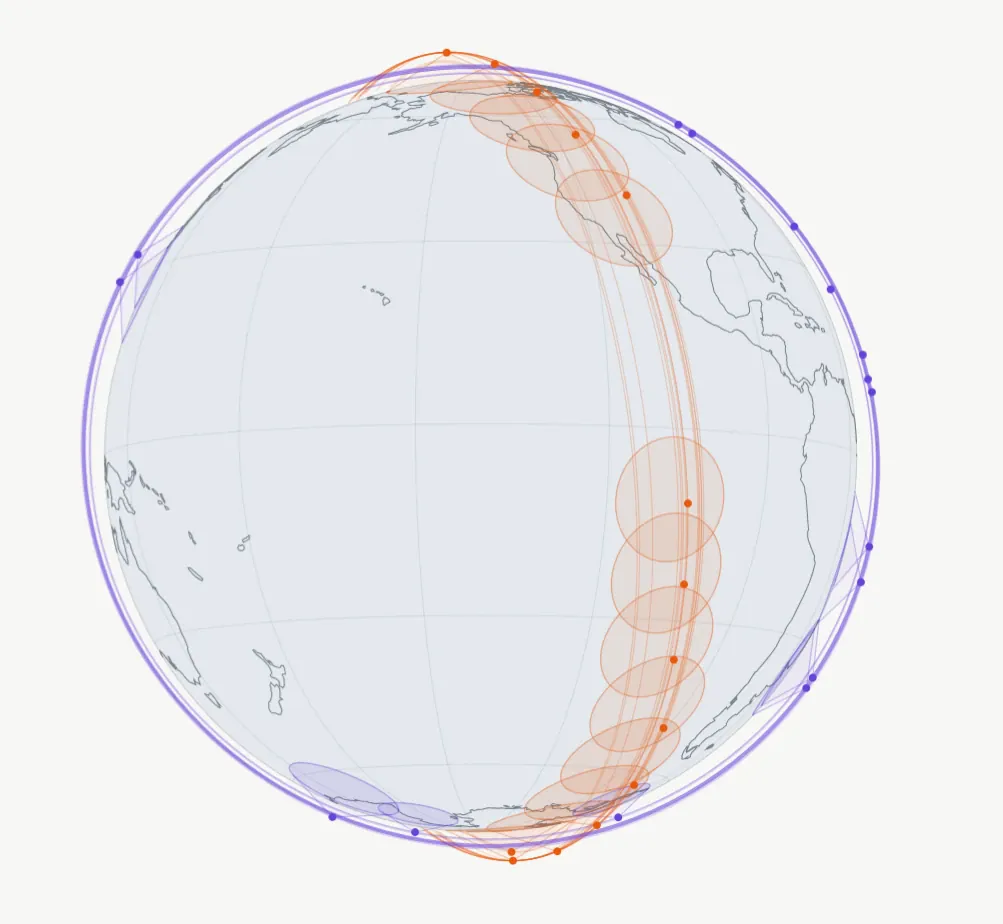
The current configuration may explain why the first group has not yet climbed toward its planned 800-kilometer orbit. Satellites deployed from the same launch vehicle must first separate and establish their positions along the orbital plane. Carrying out those maneuvers at lower altitudes can reduce the amount of propellant required.
Orbital tracking cited by Defense Express indicates that the 13 satellites have spread across roughly half of their orbital path, although a gap remains in the formation. The two satellites operating below 500 kilometers may still be maneuvering into positions intended to close that gap.
Once the formation is established, the satellites could begin raising their orbits together toward 800 kilometers. However, Defense Express noted that available tracking data does not indicate that such a maneuver is imminent.
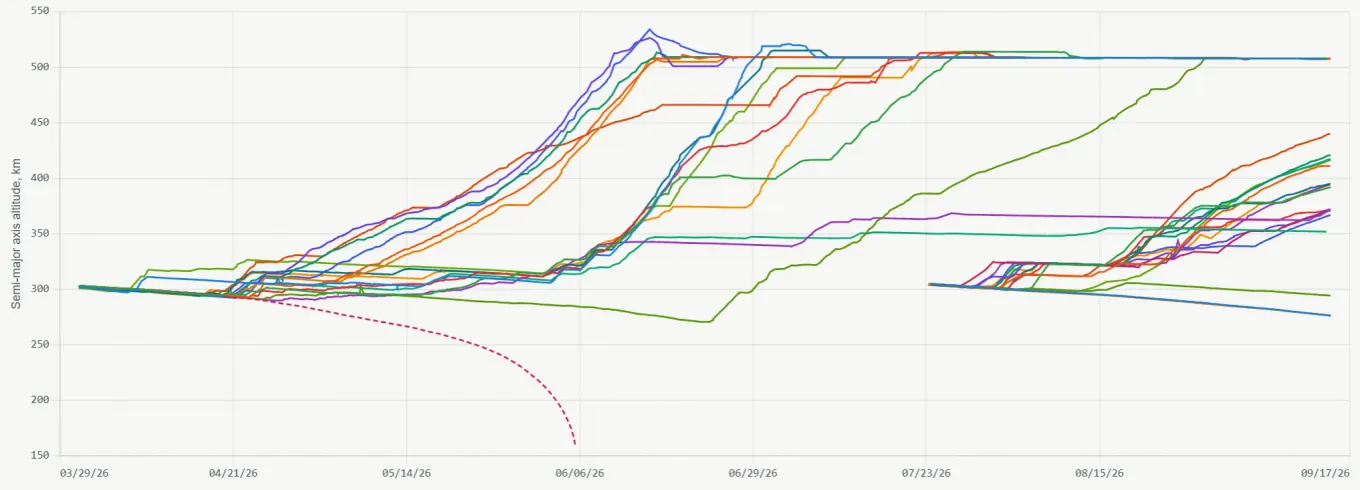
The second Rassvet-3 group, launched on July 19, is meanwhile continuing to increase its altitude. Those satellites may also pause at around 500 kilometers while they establish their positions before attempting to move higher.
The constellation has faced additional setbacks. Two satellites from the second deployment are currently at risk of reentering Earth’s atmosphere, according to earlier Defense Express reporting, while one satellite from the first group has already deorbited.
Future launches could also face complications following a Ukrainian strike on the Progress Rocket Space Center in Samara, a major Russian facility involved in producing Soyuz launch vehicles.

Ukraine previously struck the Progress facility with FP-5 Flamingo cruise missiles. The plant produces Soyuz-2.1b rockets, the launch vehicle previously used to place Rassvet satellites into orbit.
Bureau 1440 is developing Rassvet as a low-Earth-orbit communications network designed to provide broadband connectivity through a constellation of satellites, placing it in the same general market as SpaceX’s Starlink. The latest orbital data, however, indicates that the first operational Rassvet-3 group has not yet reached its intended deployment altitude.
Discuss this article:
-9a7b3a98ed5c506e0b77a6663f5727c5.png)


-c439b7bd9030ecf9d5a4287dc361ba31.jpg "Photo of Katherina Popilnichenko")