- Category
- War in Ukraine
Russia’s Starlink Rival “Rassvet” Is Falling—One Satellite Gone, Two More May Be Next
 Prefer U24 Media on Google
- Authors


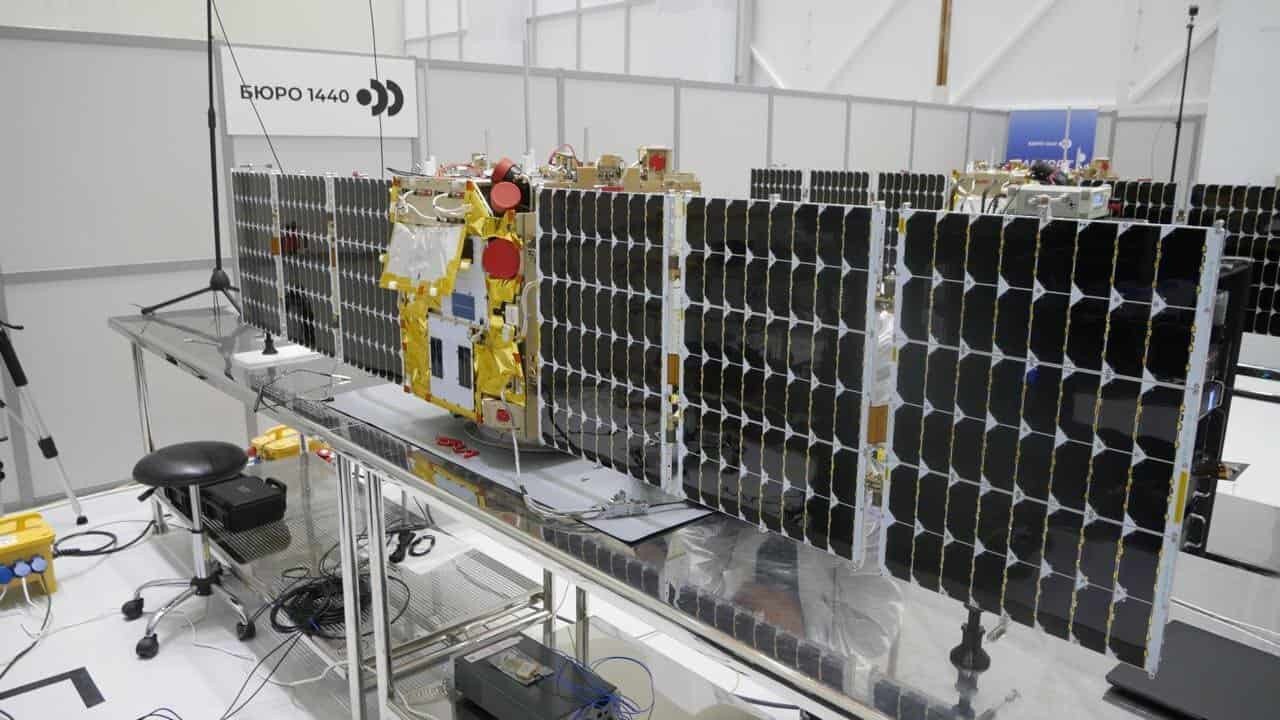
Russia’s effort to build its own alternative to Starlink is running into mounting problems, with one Rassvet-3 communications satellite already lost and two more potentially heading toward atmospheric reentry as Moscow races to deploy a massive low-Earth-orbit network, according to Defense Express on August 25.
Russian aerospace company Bureau 1440 has launched two operational batches of Rassvet-3 satellites this year as part of its planned broadband constellation, with the first sent into orbit on March 23 and the second on July 19.
We bring you stories from the ground. Your support keeps our team in the field.
But the deployment has not gone according to plan.
One spacecraft from the first batch, Rassvet-3 No. 4, identified as NORAD 68363, failed to raise its orbit and reentered Earth’s atmosphere on June 6.
Now two satellites from the second batch appear to be facing a similar problem.
Rassvet-3 Nos. 17 and 23, registered as NORAD 100083 and 100089, have not performed a single observed orbital-raising maneuver since separating from their launch vehicle on July 19, according to satellite tracking data.
As pointed out by Anatoliy Zak, there appear to be a number of orbit raising failures in the Rassvet-3 constellation; here is the height-vs-time diagram pic.twitter.com/RWvbID2bBG
— Jonathan McDowell (@planet4589) August 25, 2026
Both remain at an average orbital altitude of roughly 290 kilometers, with their lowest orbital points at about 277 kilometers.
Their orbits are gradually decaying, and unless the spacecraft activate their propulsion systems and climb higher, they could eventually reach a point where atmospheric drag makes reentry unavoidable.
The two potentially failing satellites are only part of the problem facing Bureau 1440.
The Rassvet-3 spacecraft that have successfully begun raising their orbits have also yet to reach the constellation’s originally announced target altitude of roughly 800 kilometers.

Even satellites from the first operational batch, launched more than five months ago, remain well below that target. Most are currently operating at roughly 500 to 550 kilometers, while several have yet to reach even that altitude.
Why Bureau 1440 has not continued raising the spacecraft toward the previously announced 800-kilometer orbit remains unclear.
Russia plans to use the Rassvet constellation as a domestic counterpart to SpaceX’s Starlink, providing high-speed broadband communications through hundreds of interconnected satellites in low Earth orbit.
Bureau 1440 shows footage of separation of 16 Rassvet satellites from Soyuz's third stage pic.twitter.com/jhe2krZ1kA
— afec7032 🇷🇺 (@afec7032) March 24, 2026
The program is supposed to begin offering service in 2027, with Russian plans calling for roughly 292 operational satellites in orbit by the end of that year.
Keeping that schedule will require a rapid series of additional launches.
But Russia now faces another complication on the ground.
Ukraine struck the Progress Rocket and Space Center in Samara on August 15 using FP-5 Flamingo cruise missiles. The facility manufactures Soyuz-family launch vehicles, including the Soyuz-2.1b rockets used to deploy Rassvet-3 satellites.
The plant is a critical part of Russia’s space-launch infrastructure and supports not only the Rassvet program but also launches involving Russian military, reconnaissance and communications satellites.
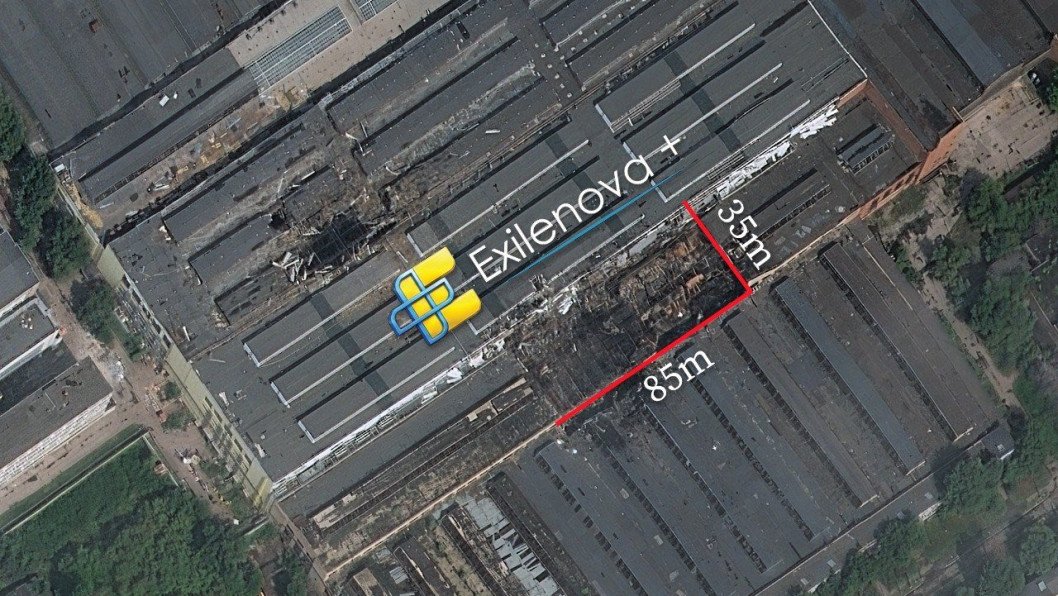
If those setbacks persist, Russia’s plan to have nearly 300 Rassvet satellites operating by the end of 2027 could become significantly harder to achieve.
Damage to key production areas at Progress could therefore create additional pressure on Russia’s ability to maintain the launch tempo needed to build the Rassvet constellation.
The first two groups of Rassvet satellites were launched into orbit using Soyuz-2.1b rockets manufactured by the Progress Rocket Space Centre in Samara.
According to previous reports, the production of carrier rockets is one of the key constraints on the deployment of the constellation.
Discuss this article:
-9a7b3a98ed5c506e0b77a6663f5727c5.png)


-c439b7bd9030ecf9d5a4287dc361ba31.jpg "Photo of Katherina Popilnichenko")

-111f0e5095e02c02446ffed57bfb0ab1.jpeg "Photo of Roman Kohanets")
-72b63a4e0c8c475ad81fe3eed3f63729.jpeg "Photo of Cyril Barabaltchouk")