- Category
- War in Ukraine
Ukraine’s Flamingo Missiles Strike Russia’s Soyuz Rocket Factory Behind Its Starlink Rival
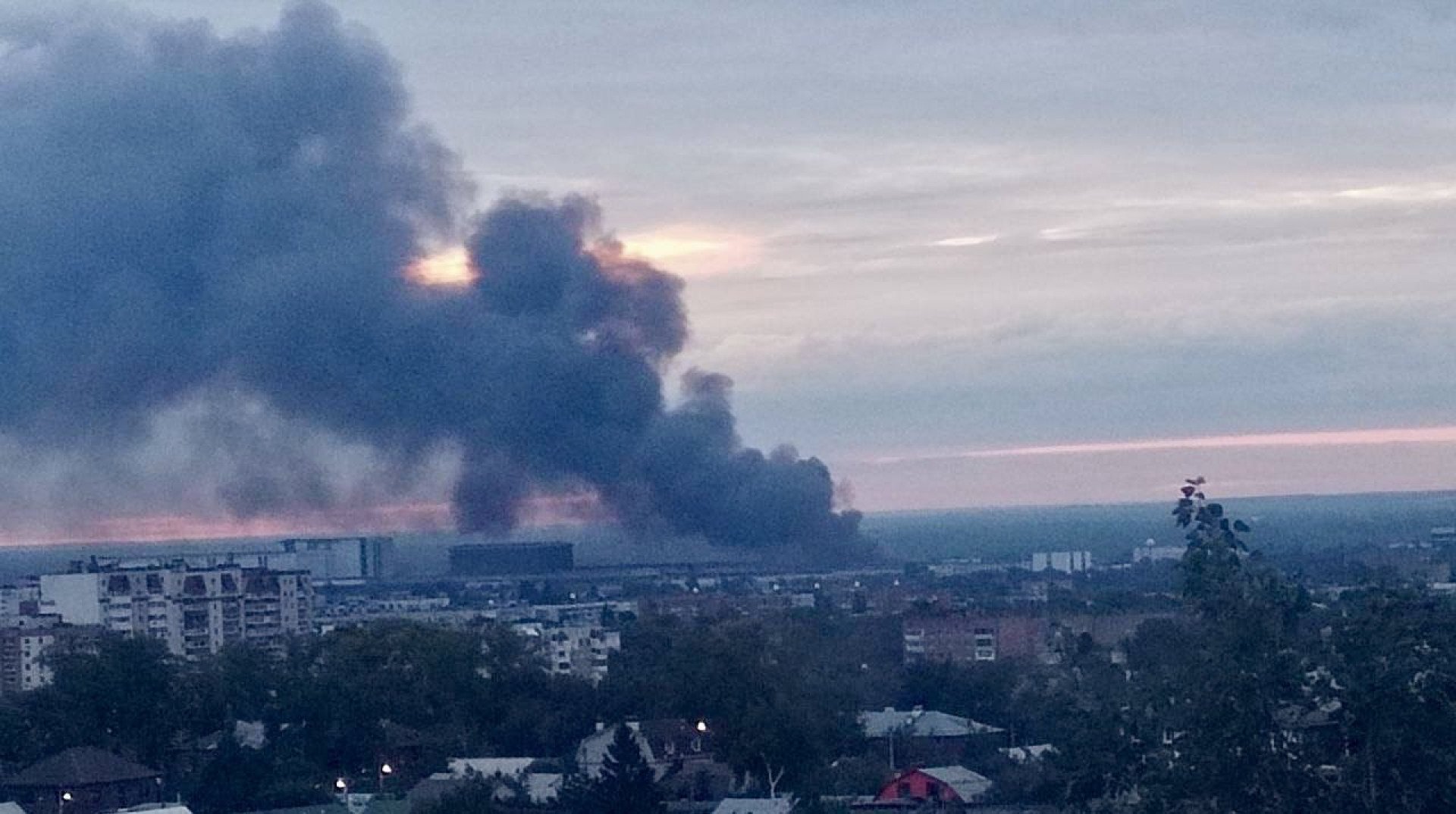
Ukraine’s Flamingo cruise missiles struck the Progress Rocket Space Centre in Samara overnight on August 15, hitting the factory that produces Soyuz-2 launch vehicles used to deploy Russian military satellites and the Rassvet low-Earth-orbit network—Moscow’s answer to Starlink.
 Prefer U24 Media on Google
- Authors


The apparent confirmation that Flamingo cruise missiles were used in the attack came from Fire Point co-founder Denis Shtilerman, who shortly after the strike posted nighttime footage showing the launch of the Ukrainian-made missile.
We bring you stories from the ground. Your support keeps our team in the field.
Samara regional governor Vyacheslav Fedorishchev confirmed that a missile strike had hit an industrial facility in the city but did not identify the target. Samara Mayor Ivan Noskov described the attack as a large-scale missile strike.
)) https://t.co/L100bgttR8 pic.twitter.com/aNa3VmwBTo
— Denys Shtilierman (@DenShtilierman) August 15, 2026
Local residents reported explosions shortly after a missile alert was issued in the region. Videos published from Samara showed a large fire and a column of smoke rising from an industrial area occupied by the neighboring Progress Rocket Space Centre and Aviakor aircraft plant.
According to Defense Express on August 15, available imagery indicates that the strike may have hit Progress, one of Russia’s key producers of space launch vehicles. The outlet said satellite imagery would still be required to confirm the precise impact point and determine the extent of the damage.
CyberBoroshno’s preliminary analysis says FP-5 Flamingo missiles likely struck Building 106A at RKC Progress in Samara, the only Russian facility serially assembling Soyuz-2 launch vehicles. The building reportedly handles onboard electrical systems, instruments, circuit boards,… https://t.co/V25aNTlCPp pic.twitter.com/mIpxIte3sG
— NOELREPORTS 🇪🇺 🇺🇦 (@NOELreports) August 15, 2026
Progress is one of the central enterprises in Russia’s space-launch industry and manufactures the Soyuz-2 family of launch vehicles, including the Soyuz-2.1b.
The Soyuz-2.1b is used to place Russian government and military spacecraft into orbit and has also been used to deploy satellites for Rassvet, a planned Russian low-Earth-orbit communications constellation often described as Moscow’s counterpart to Starlink. On March 23, 2026, a Soyuz-2.1b launched 16 satellites associated with the Rassvet system.
According to Defense Express, the Samara plant represents a particularly concentrated point in Russia’s Soyuz production chain. The enterprise consists of an interconnected industrial complex roughly one kilometer long where launch vehicles pass through successive stages of assembly.
The fire continues at the TsSKB-Progress facility in Samara following a strike by a Flamingo cruise missile. There are reports that the main production building was hit. pic.twitter.com/pcq1OAi7bS
— Exilenova+ (@Exilenova_plus) August 15, 2026
The outlet assessed that the reported strike may have affected the western section of the complex, where later stages of Soyuz production are believed to take place.
Defense Express reported that Russia has conducted approximately six to eight Soyuz-2.1b launches annually since 2022, with the rockets supporting military, government and other space missions.
Soyuz remains one of Russia’s primary methods for placing military satellites into orbit, meaning disruption at Progress could also affect reconnaissance, communications and other space programs beyond Rassvet.

Vadym Skibitskyi, deputy chief of Ukraine’s Defense Intelligence, previously said Russia was developing the satellite system faster than initially expected. The constellation is intended to provide broadband communications from low Earth orbit and could support both civilian and military users.
The Progress and Aviakor facilities are located roughly 850–950 kilometers from Ukraine’s state border, placing the industrial complex deep inside Russian territory.
Earlier, Russia’s Rassvet satellite network was reported to face a major launch bottleneck because its satellites rely on Soyuz-2.1b rockets produced at the Progress Rocket Space Centre in Samara. Russia needs at least 18 Soyuz-2.1b launches to deploy the planned 288-satellite constellation, while only six to eight such rockets are typically launched per year.
Discuss this article:
-9a7b3a98ed5c506e0b77a6663f5727c5.png)

-2386d89295678553e91e27f1a0d592e3.png "Ukraine Just Wrapped Up a Four-Season Military Operation: 277 km² Cleared, 8,000 Russian Troops Eliminated")
-29a1a43aba23f9bb779a1ac8b98d2121.jpeg "Photo of Illia Kabachynskyi")

-c439b7bd9030ecf9d5a4287dc361ba31.jpg "Photo of Katherina Popilnichenko")

-111f0e5095e02c02446ffed57bfb0ab1.jpeg "Photo of Roman Kohanets")