- Category
- War in Ukraine
Should Ukraine Have to Justify Its Use of Battlefield AI?
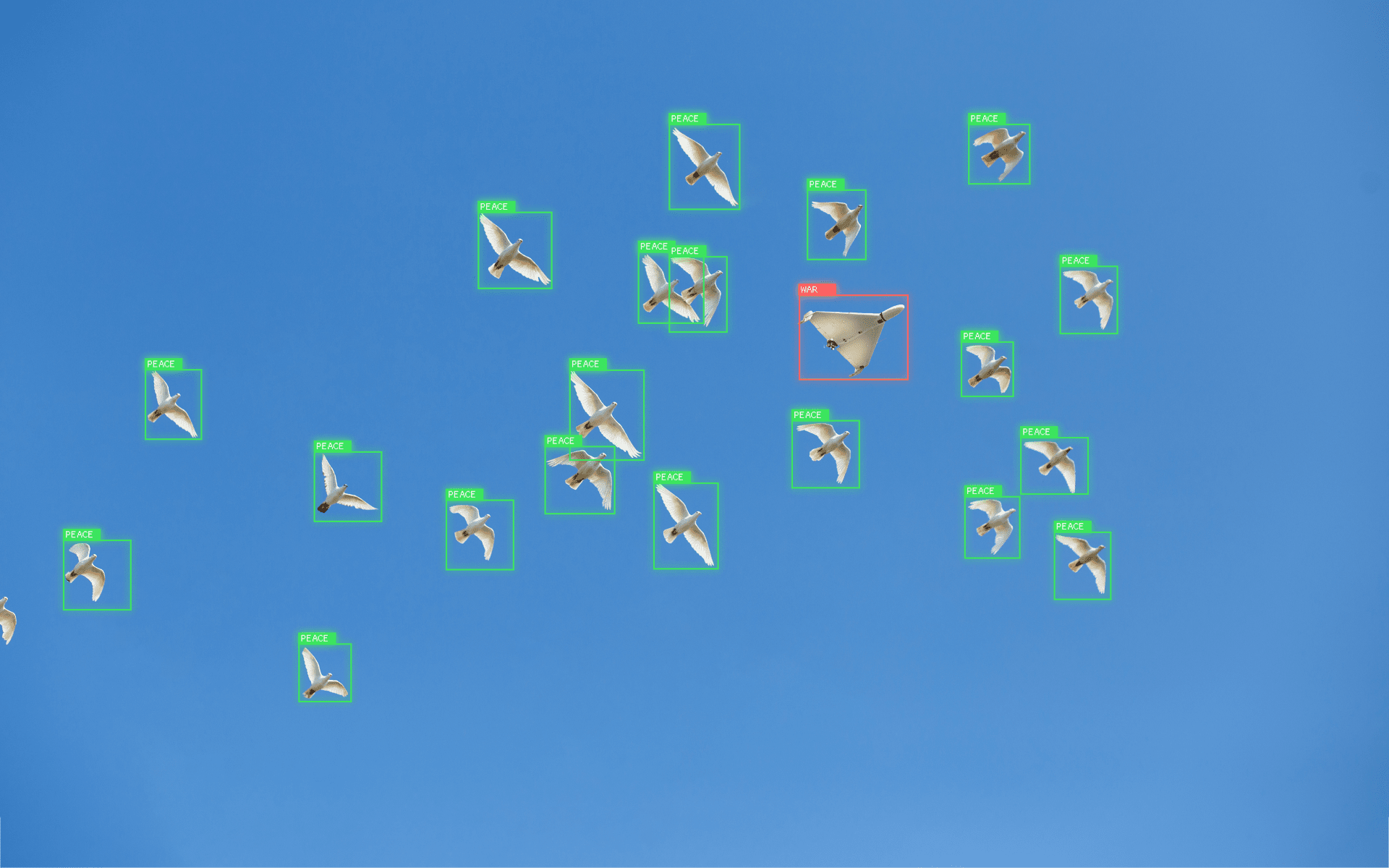
The relentless pressure to out-innovate a brutal Russian advance has turned Ukraine into a high-stakes laboratory for battlefield AI and autonomous weapons. While some view the debate as a peacetime luxury, others take a more nuanced view. In a war for survival, will existence always trump ethics?
 Prefer U24 Media on Google
- Authors

-554f0711f15a880af68b2550a739eee4.jpg "Photo of Lucile Brizard")
Two years ago, Ukrainian “Terminator” drones beelined toward Russian positions. The 10 quadcopter drones were AI-controlled and programmed pre-launch with no human oversight. Their flight resulted in the first soldiers ever to be killed on the battlefield using fully Autonomous Weapons Systems, according to a senior figure in the Ukrainian defense industry.
“There is no connection to the drone at all, you cannot see the video, nothing… Everything it sees will be killed,” said Alexander Kokhanovskyy, a drone engineer who spoke to the English magazine New Scientist. After the strike, which took place near Bakhmut, human operators flew drones into the zone to inspect the outcome firsthand, and discovered that “a couple of soldiers [Russian], and one truck” had been hit, reported Kokhanovskyy.
These statements are, to this day, the only evidence that soldiers have been killed using a closed sensor-to-shooter loop.
Despite this, the current rules of Ukraine’s Ministry of Defense prohibit fully autonomous operation and require humans to verify targets in the final stages of interception, a requirement often referred to as human-in-the-loop.
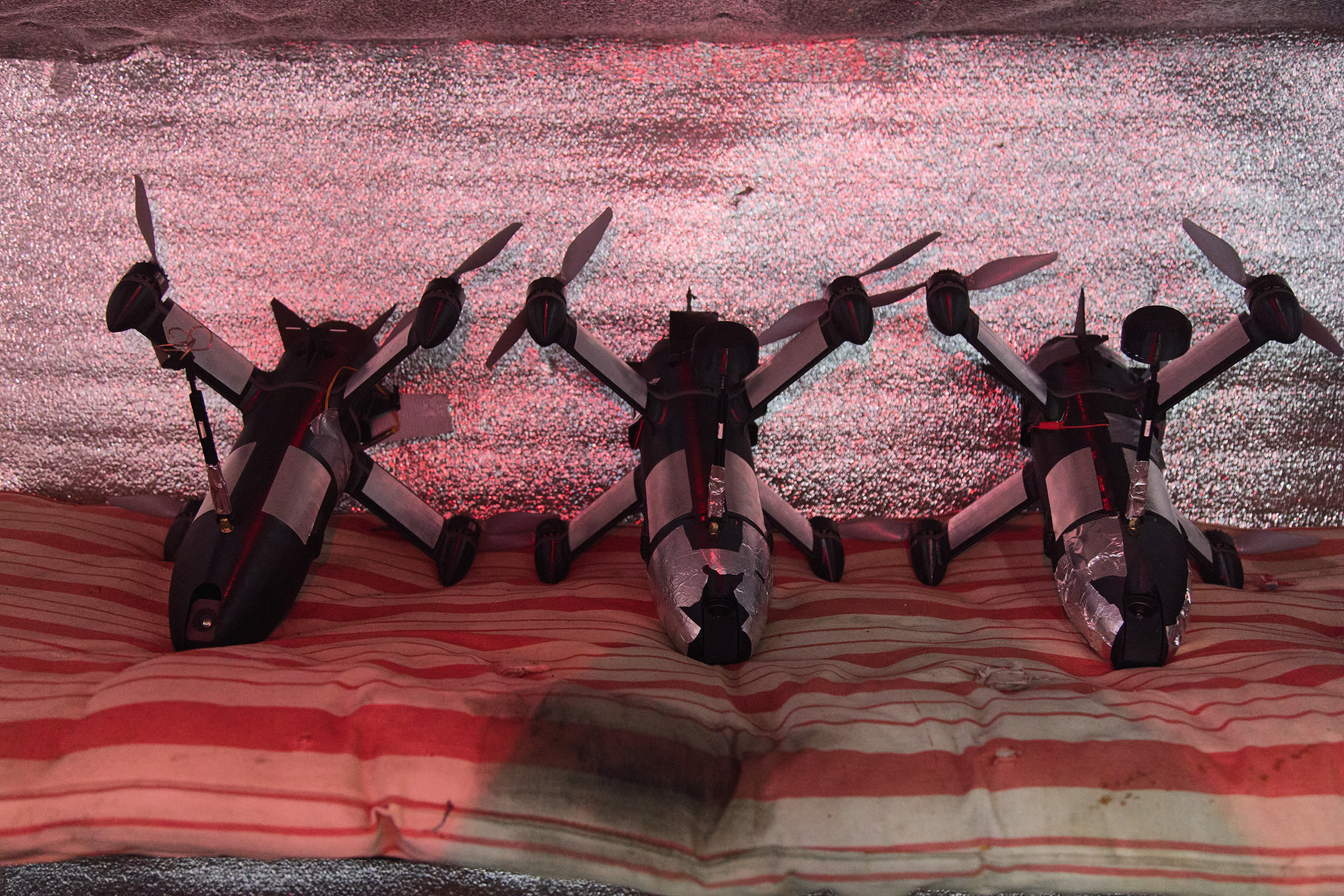
For Andrew Hoskins, Professor of AI, Memory and War at the University of Edinburgh, the human-in-the-loop framework is “a nonsensical argument.” In an interview, he argued that the concept was an illusion because a human operator is almost always systematically pressured to defer to the speed and authority of AI.
Hoskins mapped out a scenario that illustrates this pressure—if an operator agrees with the AI and is right, everyone is happy; flip it around: the pilot disagrees with the AI and is then proven right, it ultimately changes nothing. Their human intuition is rendered useless in the grand scheme of things.
Despite his skepticism, Hoskins holds a pragmatic view on AI deployment—one that favors battlefield reality. “When facing an existential threat, you will use whatever means possible,” he says, adding that “international humanitarian law and international regulation, to some extent, will always clash against that.”
At this stage, Ukraine has no official policy or framework around the deployment of AI-driven autonomous weapons. At the UN level, states are still negotiating possible rules, but no legally binding international instrument specifically governing autonomous weapons has been agreed. The term “autonomous” as it stands today is ambiguous.
“There’s a need, clearly, for clarity,” said Georgia Hinds in an interview. A legal adviser in the arms and conduct of hostilities unit at the International Committee of the Red Cross, she called for a structural overhaul of international humanitarian law. Without clear rules, tech developers are left guessing what is allowed and what is banned; “clearing up this confusion will ultimately require a new, legally binding international treaty,” she believes.
Over the past ten years, a UN Group of Governmental Experts has been debating the margins of a “rolling text” which maps out what to prohibit and what to restrict. The latest version says humans must remain in the chain of command, with the power to hit a kill switch if things go wrong.
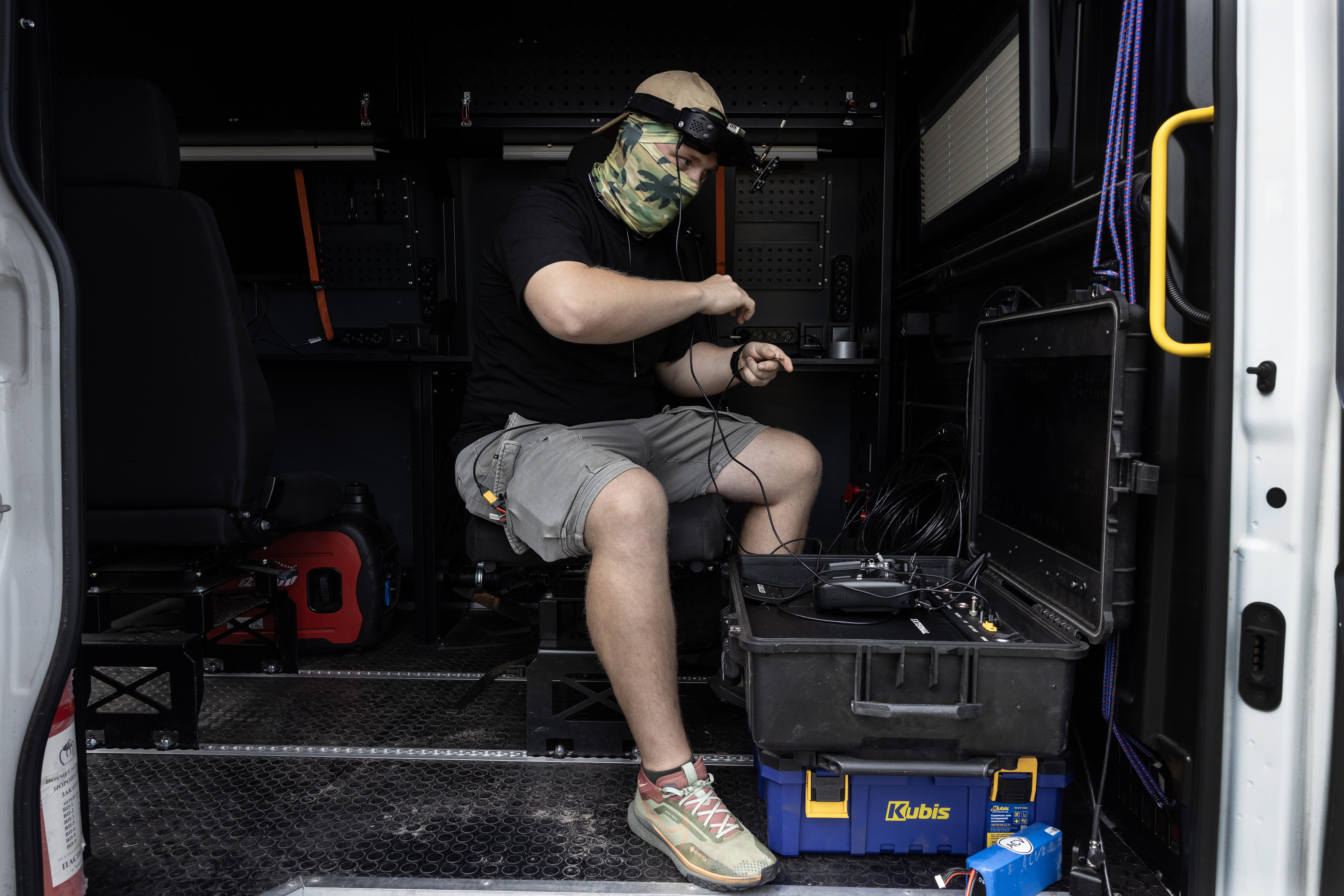
For the ICRC, the real concern is where autonomous weapons are heading. The focus is less on their current capabilities—and more on their future trajectory.
In the future, these upcoming AI systems will be smarter and could have a longer leash: operating across vast distances, and running for days without human checks while hunting a wider variety of targets. Hinds warns, “This creates a massive surge in unpredictability.”
While she points out that “we aren’t calling for a total ban on all autonomous weapons,” the ICRC is urging a specific prohibition on the most volatile systems, their objective being to “prohibit the types of autonomous weapons that are particularly unpredictable.”
AI navigation boosted Ukraine’s drone accuracy to 80%
As of today, the use of AI in drones is mostly present in what is known as “the last mile,” using machine vision. Before hitting the target, at around the 15-meter range, AI kicks in and acts as an un-jammable digital pilot even if electronic warfare completely severs the radio link.
When Russia scaled up its use of jam-resistant fiber optics around April 2025, Ukraine had to come up with a solution, and autonomous targeting seemed the most obvious option.
Autonomous “last-mile” navigation has made Ukrainian drone strikes three to four times more effective, raising hit rates from 10–20% to as high as 80%, while reducing the need for highly skilled drone pilots, according to the Center for Strategic and International Studies.
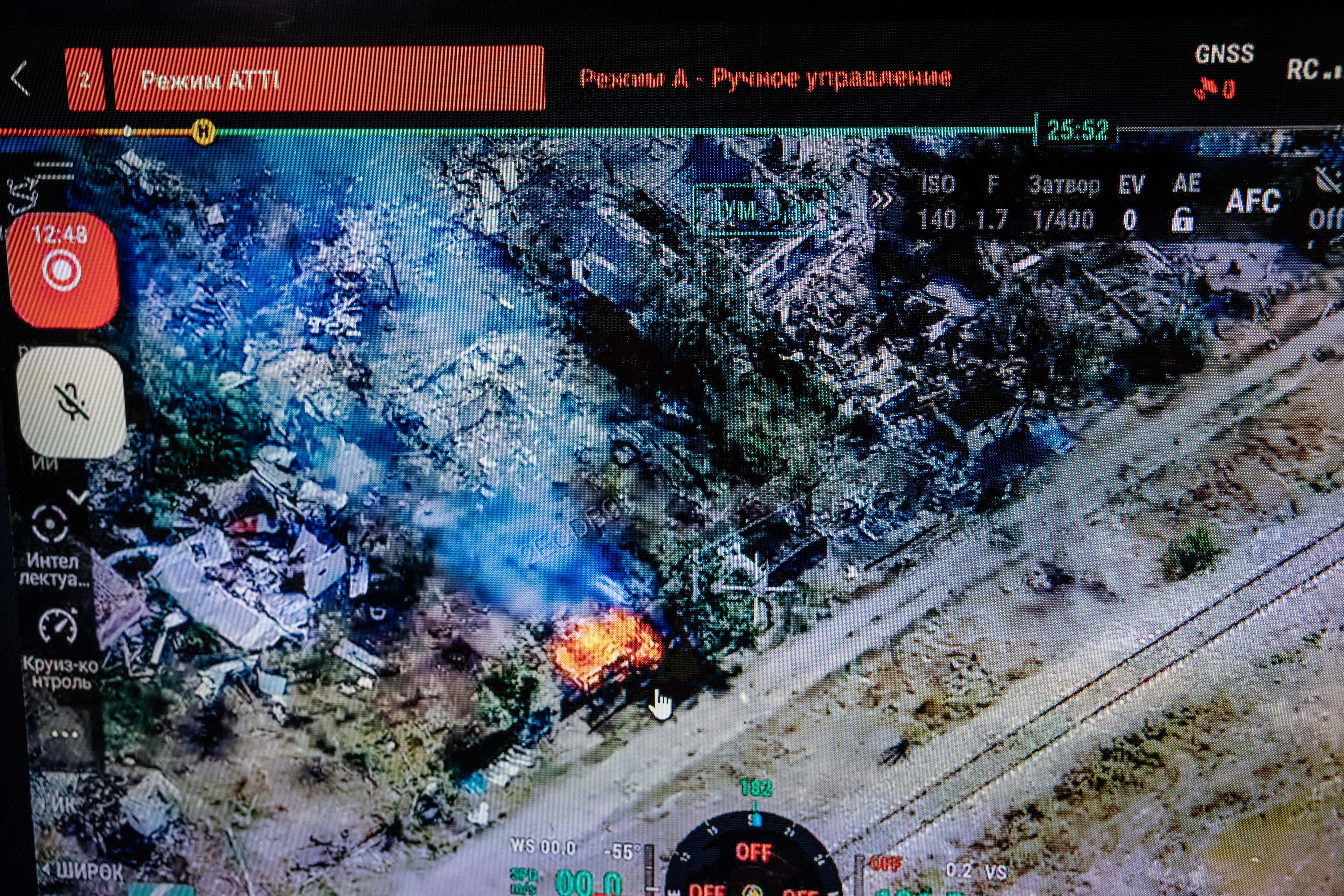
In the same report, its author, Kateryna Bondar, a Senior Fellow at the Wadhwani AI Center, detailed that unmanned platforms have proven to successfully offset Ukraine’s manpower shortage.
Before his dismissal, Ukraine’s former Defense Minister Mykhailo Fedorov told The New York Times that in the future, robotic systems will do all of the fighting, and that the kill zone will be entirely empty of people, predicting Russian “meat grinder” tactics will become obsolete.
“Ukraine, with very limited manpower, I think has no choice but to lean into these systems,” says David Kirichenko, a military analyst and frontline journalist specializing in robotic warfare and Ukraine conflict strategy, who sees the situation from a practical standpoint. “If you can have one person controlling a batch of drones, then you can drastically scale the output of a single soldier,” he said, adding, “not to mention, rotate them off the line.”
How Ukraine uses battlefield AI
Under Fedorov, Ukraine’s defense strategy had relied on feeding vast streams of frontline data—drone video, satellite imagery, and civilian tips—into its cloud-based battlefield management system, DELTA. Operating inside DELTA is Avengers, an AI visual-recognition engine that scans streams of battlefield video in real time to map the front and flag targets automatically. Avengers identifies Russian army equipment in as little as 2.2 seconds and drastically cuts the time it takes to execute a strike.
With a battlefield now ruled by targeting speed, “if you can kill them first, then you’re going to survive,” says Kirichenko. And if Ukraine is able to scale its split-second advantage, that could translate to a serious upper hand.
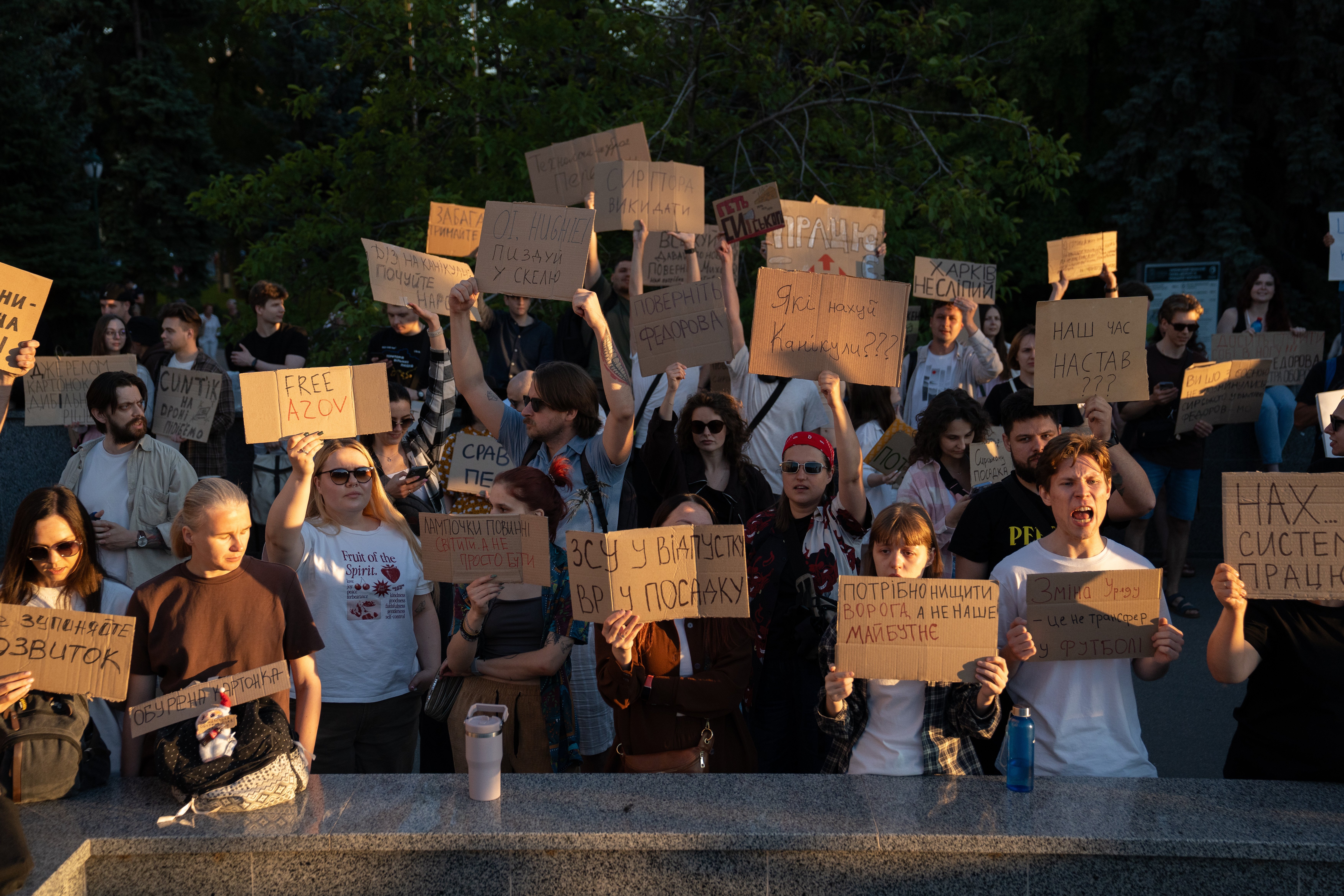
Yet in Kyiv, wartime politics moves faster than tech. Almost immediately after it was announced that Fedorov had been dismissed, six months into his tenure, there was a public outcry. Many Ukrainians were deeply in favor of Fedorov’s robotic vision of Ukraine’s fight against the Russian invasion.
The protests expanded beyond Fedorov’s dismissal, with demonstrators demanding changes to military leadership and calling for Ukraine to maintain its technological momentum. Days later, President Zelenskyy dismissed Commander-in-Chief Oleksandr Syrskyi, then appointed Joint Forces Commander Mykhailo Drapatyi as his replacement—a commander favored by reformers and veterans.
It remains unknown if Fedorov will reenter the defense administration, though Zelenskyy offered him an adjacent role overseeing the tech sector. Given the clear benefits of AI for Ukraine, the country does not want to fall behind Russia, which is already utilizing these advanced technologies.
Ukraine’s Ministry of Defense confirmed that a policy is being drafted to bridge the gap between traditional autonomous weaponry and advanced AI, despite Fedorov’s firing. This is according to Michael Markevych, the head of artificial intelligence at the Main Directorate of Information Technology, who confirmed in an interview that Ukrainian policymakers are actively drafting rules to align the two generations of technology. “It’s an incredibly high-stakes task,” said Markevych.
Brushing aside precise legal distinctions, Markevych defined autonomous systems like this: “Basically, every weapon more complicated than a gun.”
In his view, trying to draw a neat line between advanced machine learning and traditional automated weaponry is nonsensical; a landmine can be just as lethal and just as autonomous as an AI-powered drone.
For Markevych, if you fire a weapon—intentionally targeting civilian infrastructure, or if you understand that you are operating in a densely populated zone, then the pilot is responsible. If the weapon fires correctly but doesn’t perform as it’s supposed to, then, he explained, responsibility clearly lies with the manufacturer.
“We are not building the Terminator,” says Markevych. “We are nowhere near an AI that is indistinguishable from a human, and we likely never will be. These systems are simply highly advanced targeting tools.”
The ethics of autonomous weapons
Mariarosaria Taddeo, a philosopher working on the ethics of digital technologies at the University of Oxford, saw it more like this: “Consider the perspective of a Ukrainian mother whose child has been killed by an autonomous weapon system.”
Legally, she went on, the state might try to deflect blame onto the technology provider. But what happens if “the provider says they didn’t control the context of deployment”? Taddeo theorizes that the blame could shift onto the soldier: “What if they say they were simply obeying orders?”
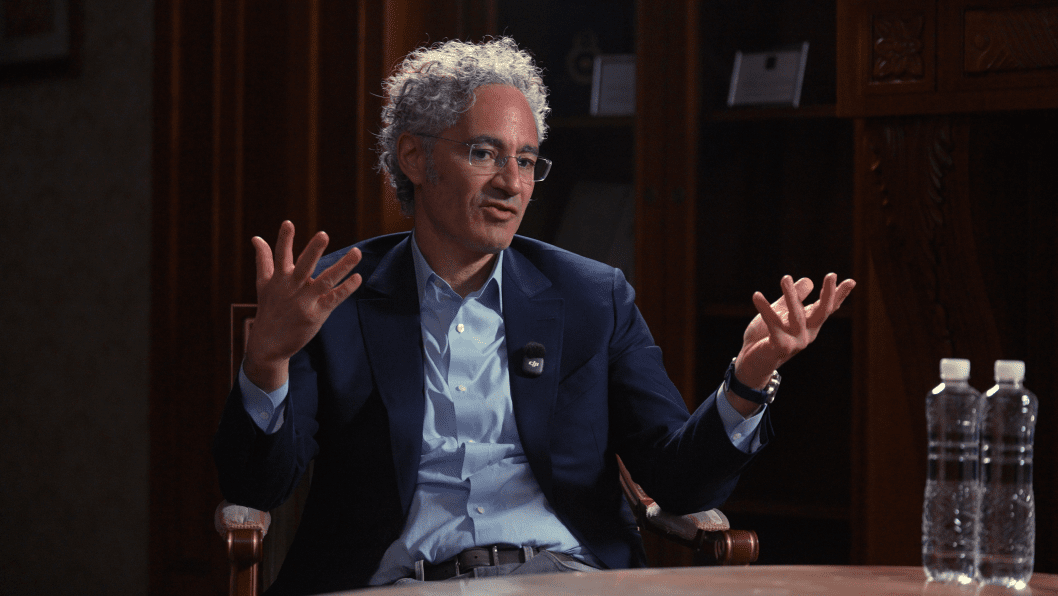
“This creates a dangerous game of moral whack-a-mole where accountability vanishes,” says Taddeo. “Who is the criminal? Against whom do you invoke justice? In philosophy, this vacuum is known as the ‘responsibility gap.’”
For her, while humans are traditionally held accountable for their actions in combat, AI-enabled warfare erases that clarity. Markevych’s stance, to blame the provider, is “alarming.” In Ukraine, where international firms and defense contractors operate side by side, what would hypothetically happen if the provider were a US defense contractor or a tech billionaire like Elon Musk? “Who’s going to go after Elon Musk?” she asks.
“This idea that you’re going to win the war if you have no limits, if you have no rules, is actually a very trivial idea,” Taddeo says, reiterating emphatically: “You’re not going to lose the war if you behave ethically in war […] War, first and foremost, is a game of strategy and diplomacy and economics. Force is one element, but it’s not what makes you win a war.”
She issues a warning, prefacing it with: “I think it’s harder to say this to people who live in a country at war, but there is a relation of influence between the war we wage as a society and the societies which we become.”
She worries about the extensive pool of drone pilots working in Ukraine, some of whom have a kill count of over 60—or even 100.
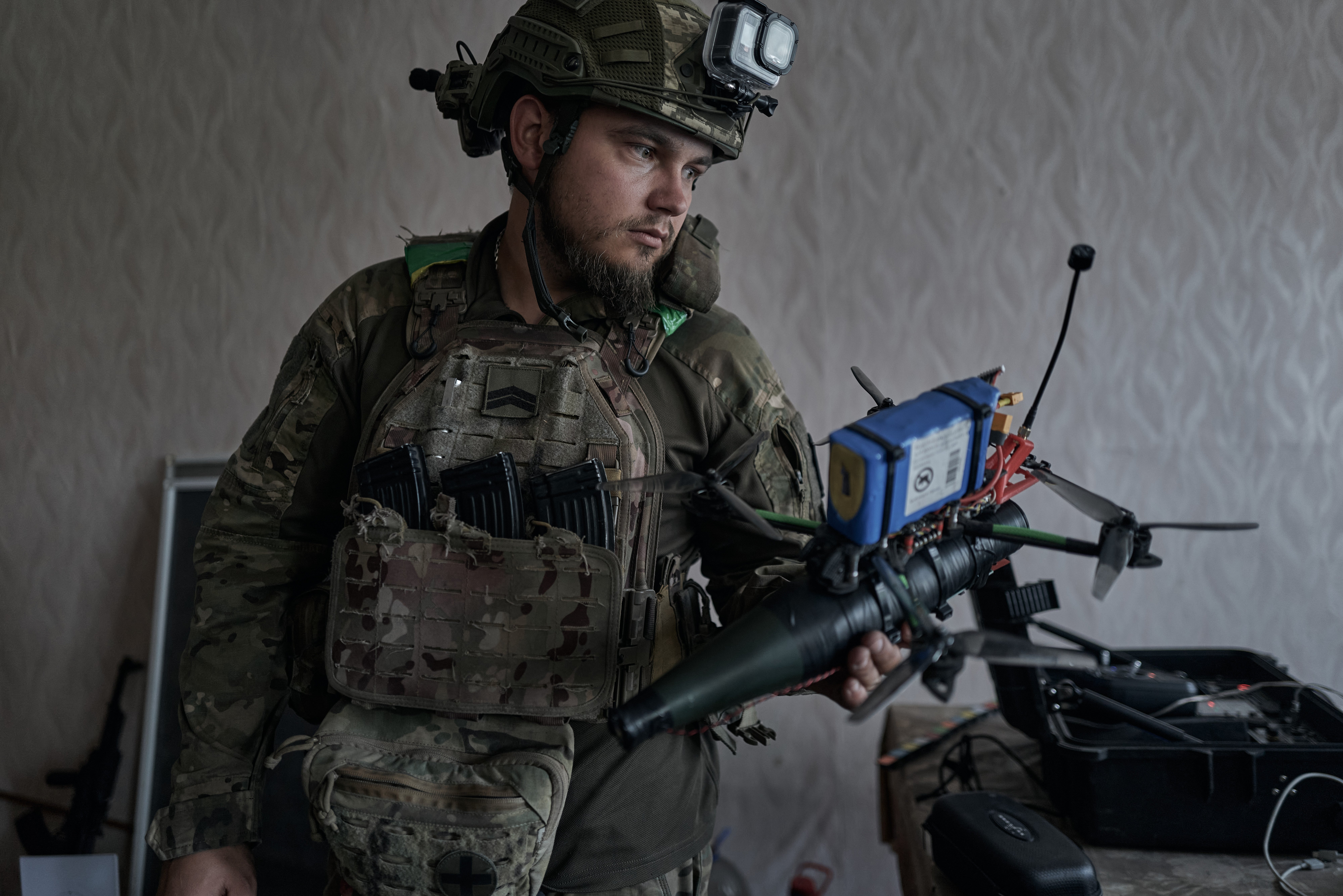
Across the battle line in Russia, ethical debate is absent. Ukrainian military tech specialist Serhii “Flash” Beskrestnov confirmed that Russian forces are deploying a new, AI-enabled variant of the Molniya strike drone in the Zaporizhzhia region.
The configuration suggests the pilot may be completely cut out of the process, leaving the drone’s built-in software to fly itself, identify the target, and execute the final strike—completely on its own.
In the race for supremacy, Kirichenko is skeptical that Russia will place guardrails around AI: “Think about Russia throughout modern history, or even after the breakup of the Soviet Union, Russia flourished by having everyone else follow international law, but Russia wouldn’t. Russia thrives by breaking the law, while everyone else adapts and falls in line.”
Professor Hoskins makes a similar point. “You can see from the Ukrainian perspective that this is the way to survive,” he says. “Ultimately, in Ukraine, existence will always trump ethics.”
Danylo Tsvok and the AI Defense
Danylo Tsvok, CEO of the Defense AI Center “A1” at Ukraine’s Ministry of Defense, in a statement issued after news of Fedorov’s dismissal, said that his departure “naturally raised questions and concerns.”
“The A1 Defense AI Center continues its work,” he said. “The war is not over, and our goal—to defeat the enemy and restore peace […] has not yet been achieved.”
However, he noted specifically that the government needs “a partner in the government who understands the importance of technological development” as the war enters its next, AI-dominated phase.
Zelenskyy actively reshuffled key personnel who originally built Fedorov’s tech ecosystem right into top Ministry of Defense roles: officials like Kateryna Chernohorenko moved from the "Army of Drones" team, safeguarding critical platforms like DELTA, Reserve+, and Armiia+.
In a prior interview, Tsvok explained it was important to focus not so much on full autonomy as an end in itself, but rather on the accuracy of the algorithms in existing systems, as this is an enabler of high-quality, full autonomy. But he warns that it’s important to recognize where AI can bring real value on the battlefield, because in Ukraine, the “AI for AI’s sake” approach doesn’t work.
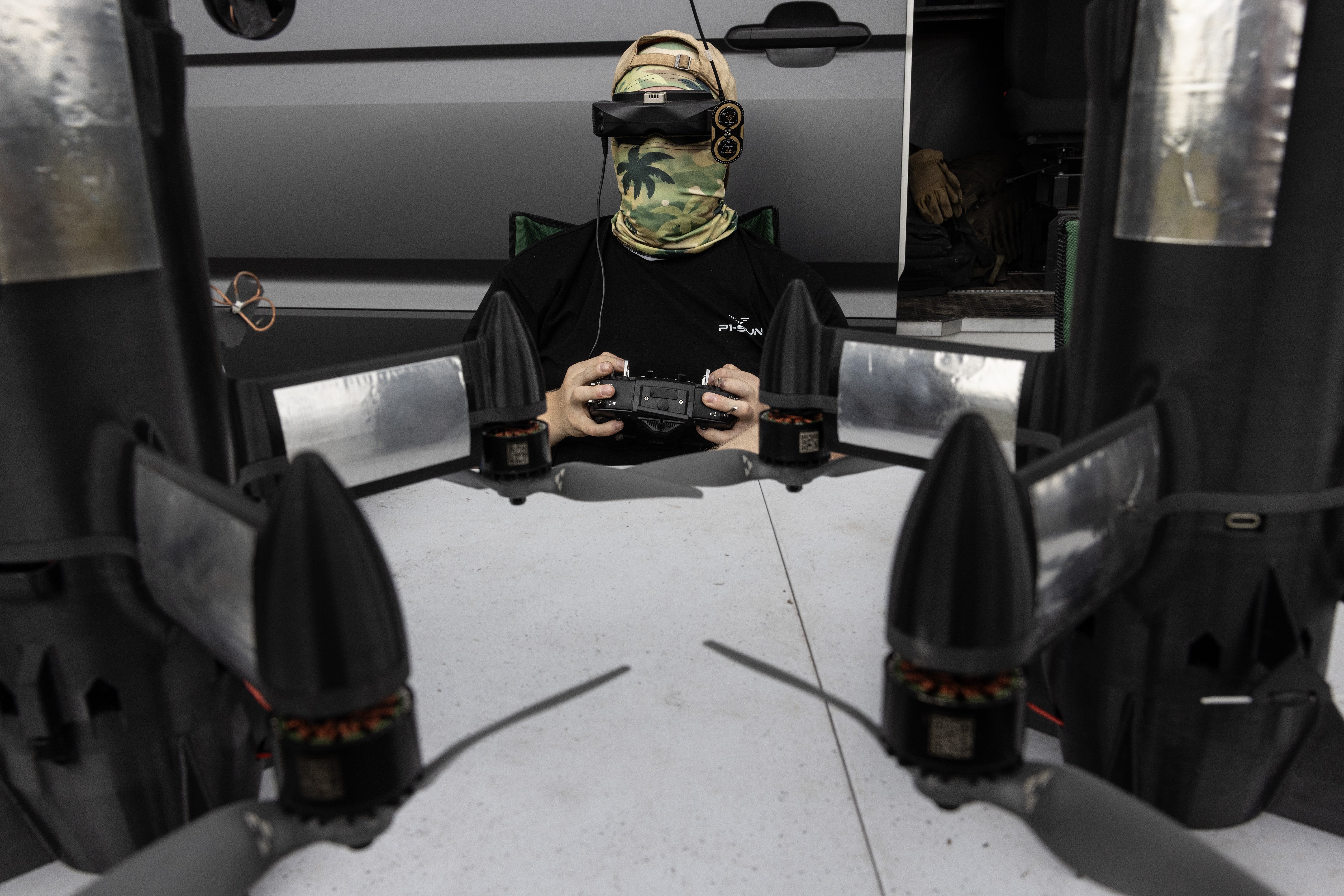
“Everyone wants to talk about implementing, but there are a lot of cases where you don’t need to use AI,” he says. “It’s better to use a simple computer algorithm that provides the same level of value, but with less effort. We, as a government AI team, are the first guys who will say you don’t need AI. Sometimes, you just need to integrate a logical mathematical algorithm, and that’s all.”
Yet this logic cuts both ways. Fedorov, for his part, states that “Autonomous systems are the new nuclear weapons. Countries that possess them will be protected.”
A1’s strategy is to create capabilities that would protect Ukraine not only now but in the long term, Tsvok said. For him, the comparison with the atom bomb matches in AWS deterrence capabilities: “We must turn our environment into a capability to deter. The enemy needs to realize that striking or infiltrating us is completely pointless—because we have the power to protect.”
“Within defense circles, the core objective is achieving autonomous supremacy,” Kirichenko says. But he warns that the scramble for an algorithmic edge carries profound risks. “If a supreme AI system is successfully engineered, only to fall into the hands of a dangerous actor, it could trigger a true ‘Oppenheimer moment.’”
The ideal scenario, military strategists argue, is for democratic nations to ally under the rule of law, pioneering the technology together to serve as a powerful barrier against future global conflicts. Though Markevych states, “introducing drones is very unlikely to make the war better. But it’s not going to make it any worse. Because you can’t make it worse.”
Ukraine is uniquely positioned to guide global AI policy
“Ukraine is certainly ahead in AI. That’s clear,” says Kirichenko, pointing to the deployment of Hornet drones—a system Russia has not yet found a way to intercept.
Such examples have created a window of opportunity for Ukraine to radically change the tide of the war. In their summer 2026 briefings, analysts from the New York-based NGO The Soufan Center warned that if the West gets bogged down in hesitation rather than increased support, “Ukraine may struggle to utilize tactical innovations to seize the momentum.”
In 2025, Russian forces were gaining, on average, 13.2 square kilometers per day. In the first four months of 2026, that daily advance plummeted to just 2.9 square kilometers. As of now, their current advance sits at roughly 4.6 square kilometers per day: less than half of what they managed during the exact same period in 2025, and partially thanks to AI.
It would be wrong to assume that Ukraine, as a nation, is not grappling with these questions. The country is an active member of the Convention on Conventional Weapons, and, as Hinds assures, “they participate in the group of governmental experts on autonomous weapons; their military personnel are quite active in the discussions.”
In her opinion, it would be a missed opportunity not to apply the ethical knowledge gained by Ukraine to shape policy: “It’s an advantage to be shaping the discussion early,” she says.
On top of that, Hinds said, the private sector and defense firms want a “level of technical specificity that they can then work towards in building their systems.” A clear policy would engage public opinion and address the widespread discomfort around AWS: “public polling shows a deep discomfort with autonomous weapons, especially those targeting humans,” she says. For Ukraine, taking the lead on autonomous weapons policy could elevate its global standing, not just on the battlefield, but at the negotiating table.
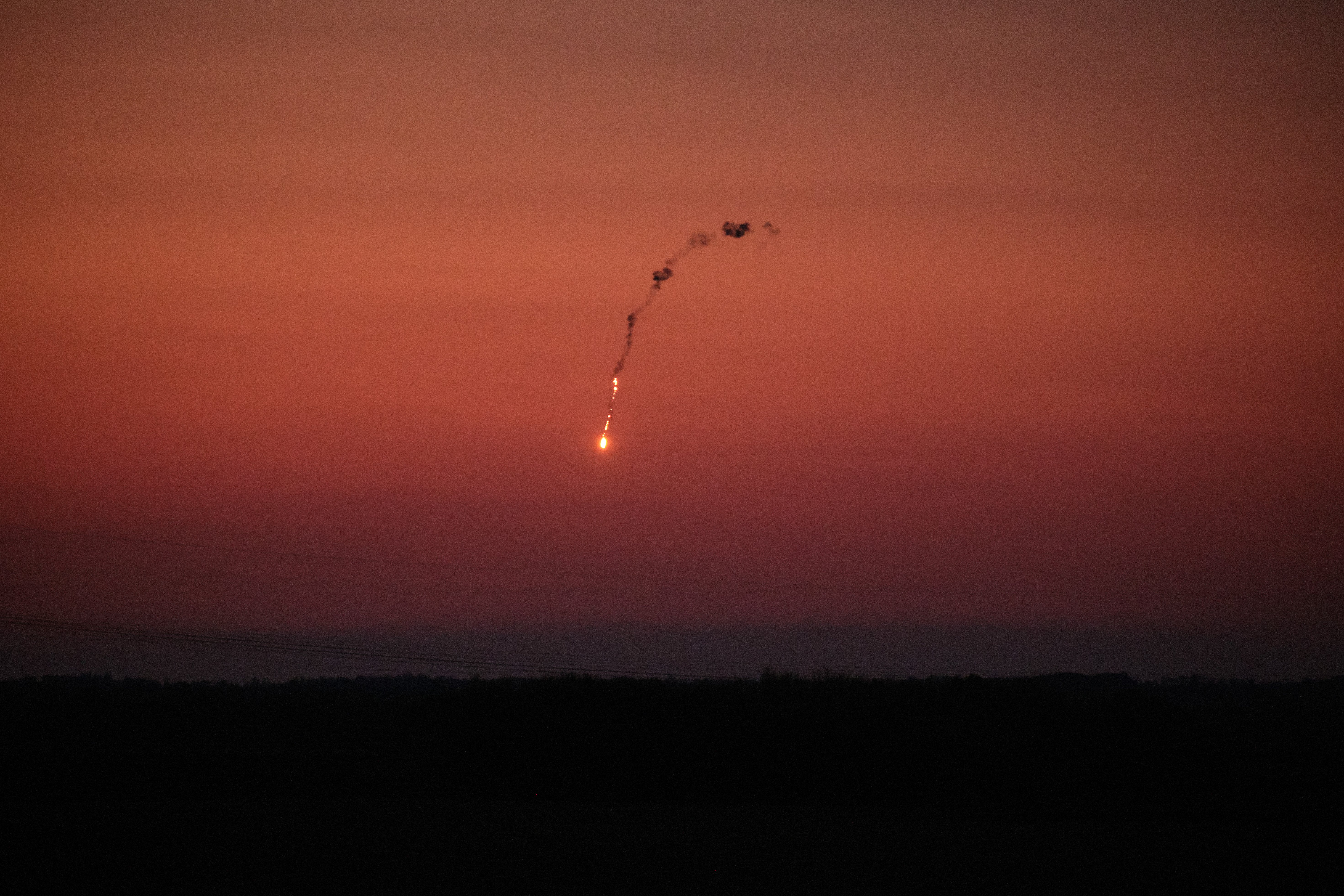
Though as Markevych noted, within Ukraine’s borders, many ethical warnings are dismissed as “total peacetime thinking.” Tsvok summed up what many Ukrainians often express outright when referencing the Kremlin: “We know our history.” Judging by the current protests, a shared conclusion has emerged: cutting-edge technology, not traditional attrition, is the key to the country’s survival.
And, as Ukraine successfully brings the war home to Russia, the mood in the country is shifting, with Tsvok hinting at a strategic pivot, transitioning Ukraine from a defensive stance to an offensive posture.
“You know, where the sunrise is in Ukraine?” he asked. “In the east. We need to return to the east to see the sunrise there. I truly believe that AI can help with that.”
Discuss this article: