- Category
- War in Ukraine
Ukraine’s Flamingo Missile Could Be Produced in Germany as Diehl Defense Opens Talks
 Prefer U24 Media on Google
- Authors

-c439b7bd9030ecf9d5a4287dc361ba31.jpg "Photo of Katherina Popilnichenko")
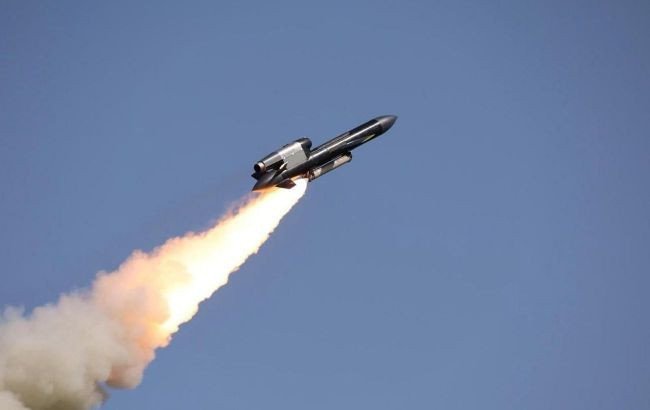
The German defense manufacturer Diehl Defense is currently evaluating the potential to begin production of the Ukrainian-designed Flamingo cruise missile in Germany.
Helmut Rauch, the chief executive of the company, indicated that leadership is viewing the proposed partnership with the Ukrainian firm Fire Point with significant optimism. Formal discussions regarding the specifics of this collaboration are expected to take place in the coming weeks, according to Financial Times on June 11.
We bring you stories from the ground. Your support keeps our team in the field.
“I think that it is quite realistic. If we are creating a new product, then it makes a lot of sense to also deploy its production in Germany or other countries,” Rauch said regarding the prospect of scaling up the project.
This potential move follows a strategic pivot in Berlin as the government seeks alternatives for long-range strike capabilities. Original plans to deploy American Tomahawk missiles in Germany were halted after President Donald Trump canceled the decision, reportedly due to disagreements with German Chancellor Friedrich Merz concerning the war in Iran.
With the European Union facing an urgent need for weapons capable of striking targets at long ranges, the Flamingo has emerged as a viable candidate to fill the void.
The Flamingo is not the only technology currently bridging the gap between Ukrainian innovation and European defense needs.

Fire Point recently conducted successful tests of the Freya interceptor, a system designed to counter Russian ballistic missiles and serve as a potential future alternative to the Patriot system. The Freya is currently being developed with an infrared homing head in close coordination with Diehl Defense.
Beyond long-range strike capabilities, the necessity for such partnerships is underscored by supply constraints. Ukrainian officials have reported critical shortages of interceptor missiles for Patriot, NASAMS, and IRIS-T systems.
In some instances, military units have faced situations where they are effectively without sufficient ammunition, forced to request small batches of missiles to maintain defensive operations.
Meanwhile, Fire Point has also positioned its ballistic FP-7 and FP-9 missiles as potential lower-cost alternatives to the American-made ATACMS, with projected costs roughly half that of the US systems.
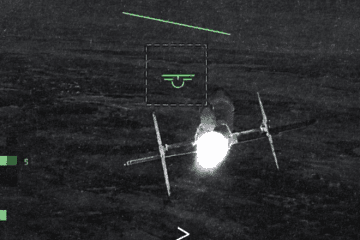
On June 10, a Ukrainian FP-5 "Flamingo" cruise missile struck the VNIIR-Progress defense electronics plant in the Russian city of Cheboksary, located approximately 1,000 kilometers from the Ukrainian border.
The facility, which manufactured navigation and antenna systems for various Russian military platforms including Shahed drones and Kalibr missiles, sustained visible damage after the low-flying missile hit an area near the main production building.
On June 11, 2026, NATO allies reached a consensus that Russia could possess the military capacity to launch an attack against a member state by 2029. General-Lieutenant Christian Freuding, the Inspector of the German Army, emphasized that this assessment was based on coordinated intelligence from all 32 NATO partners.
During the ILA Berlin Air Show, he stated that the Alliance had to be prepared to fight and stressed that Germany needed to accelerate its defense procurement to address critical capability gaps immediately rather than relying on long-term projects.
Discuss this article:
-4a56a6b482ec132402c16ef6fcabf9a2.png)