- Category
- War in Ukraine
What Is Putin’s Approval Rating? Why It Is Falling Now
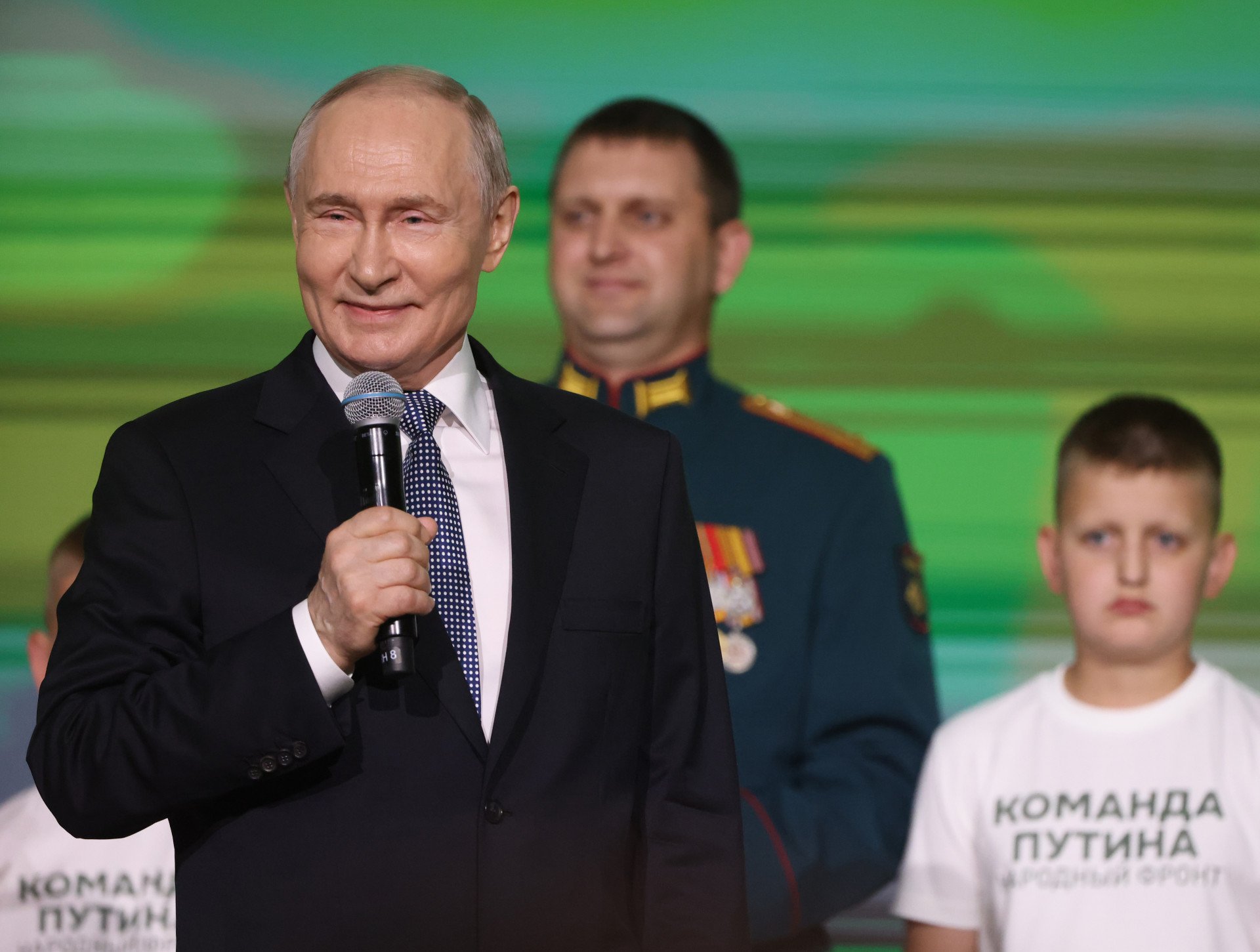
After more than four years of Russia’s full-scale war in Ukraine, one of the Kremlin's most closely watched political indicators is beginning to change. Putin's approval rating has recorded its sharpest decline in more than two years, raising questions about what the numbers reveal—and what they don't—in terms of public sentiment in Russia.
 Prefer U24 Media on Google
- Authors


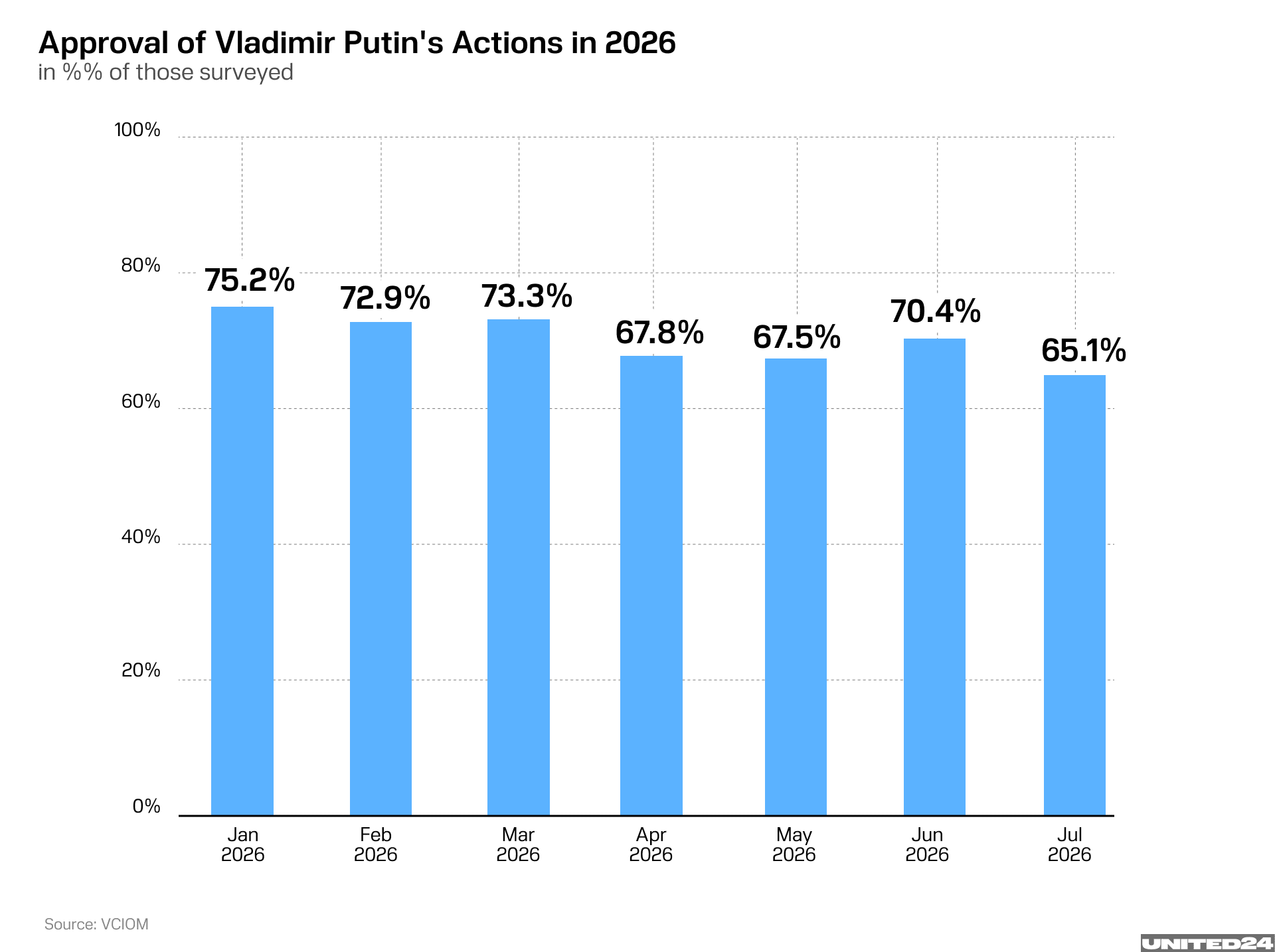
The latest Russian Public Opinion Research Center (VCIOM) survey says that 65,1% of respondents approve of Putin's performance. The last time his approval rating dropped this fast was in August 2024, when Ukraine launched its operation in Russia’s Kursk region. Meanwhile, 71% of respondents said they still trust Putin. Both indicators have now declined for a third consecutive week. Over that period, Putin's approval rating fell by 5.3 percentage points from 70.4%, while the share of respondents expressing trust in him dropped from 76.7%.
Why is Putin's approval rating falling now?
Putin gave a late-night interview on June 30 to Kremlin propagandist Pavel Zarubin, where he publicly addressed Russia's growing fuel shortages. While acknowledging that supply problems existed, he insisted they were not critical. He also claimed that damaged energy infrastructure was being repaired quickly and that the country's energy system continued to operate with a significant safety margin. Recent developments suggest otherwise.
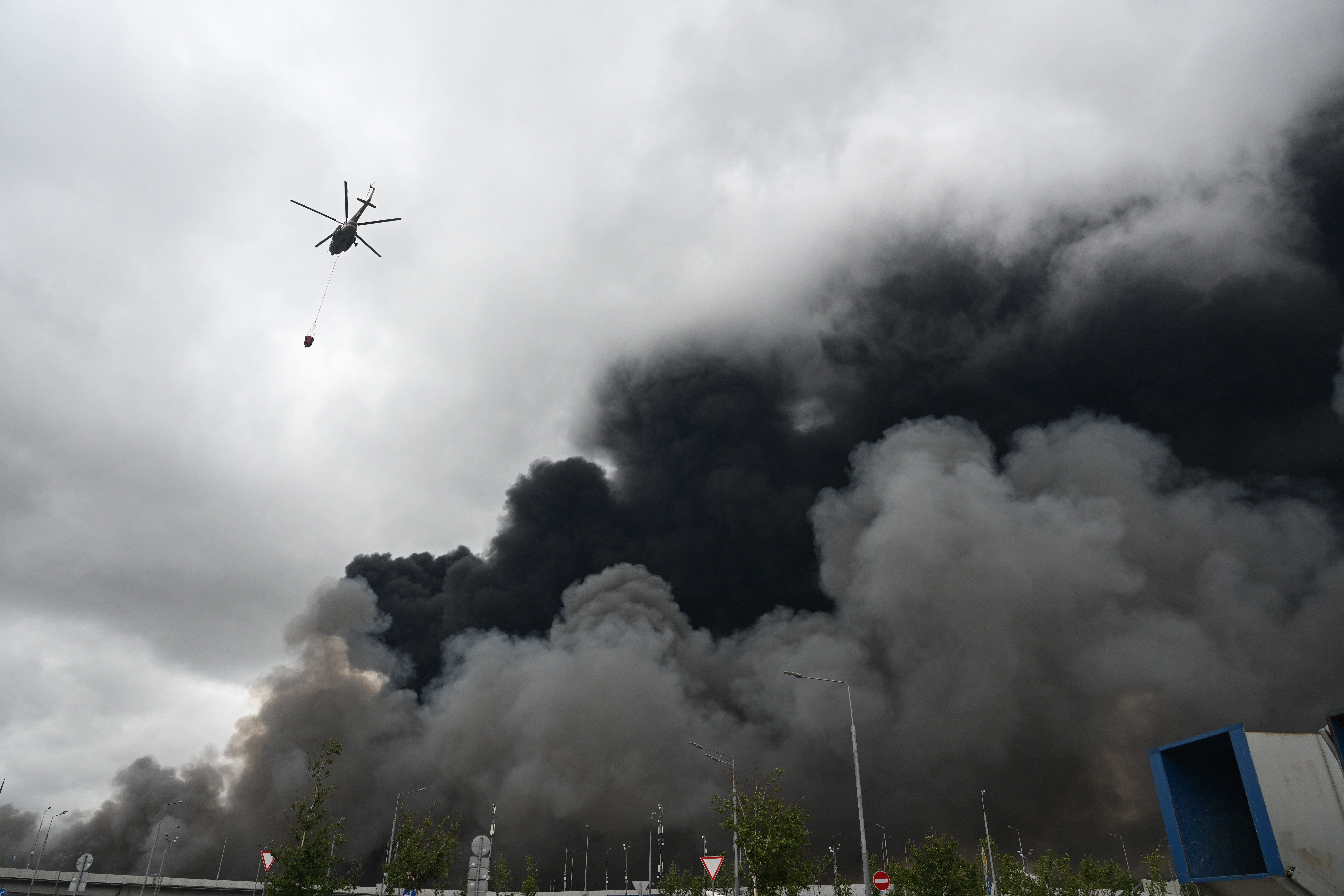
One of the most significant Ukrainian strikes targeted the Kapotnya Oil Refinery, the main fuel supplier for the Moscow region. The facility was hit twice this month and is not expected to resume full operations until at least the end of 2026, according to Reuters.
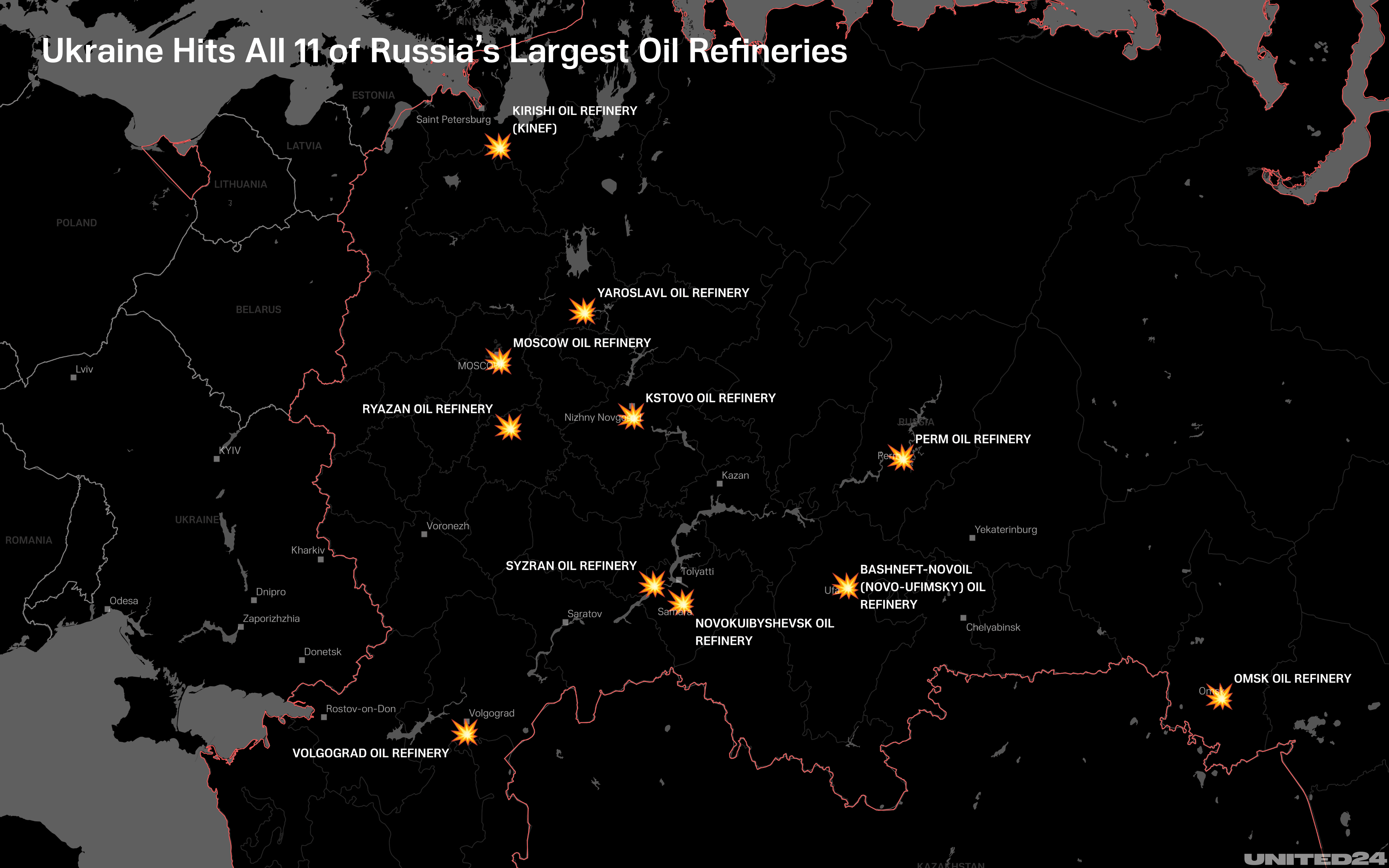
Nor is Kapotnya an isolated case. With the latest attacks, every one of Russia's 11 largest oil refineries has now been struck by Ukrainian drones or missiles since the start of the full-scale invasion. Rather than targeting facilities at random, Ukraine has systematically focused on refineries that supply fuel to both Russia's military and civilian economy.
Russia is now experiencing its worst nationwide fuel shortage in more than two decades. At least 17 regions have introduced mandatory restrictions on gasoline and diesel sales, while dozens of others have reported shortages or limits imposed by private fuel retailers.
Despite Putin’s claim in the interview, Russia’s military actions drag on, and recruitment targets become harder to meet. Reports of forced recruitment tactics have become more frequent across several Russian regions.
Some of the most detailed reports have come from the Penza region, where local residents say men have been stopped on the streets, taken from their cars, workplaces, and even shops, then pressured into signing contracts with the Russian Defense Ministry. Similar reports have emerged from other parts of Russia, suggesting these practices are becoming more widespread. The raids have begun to change daily life in affected areas.
Residents have created Telegram channels to warn one another about the locations of recruitment patrols, while some say they avoid going outside unless necessary in an effort to avoid being detained.
What was Putin’s approval rating before the full-scale invasion of Ukraine?
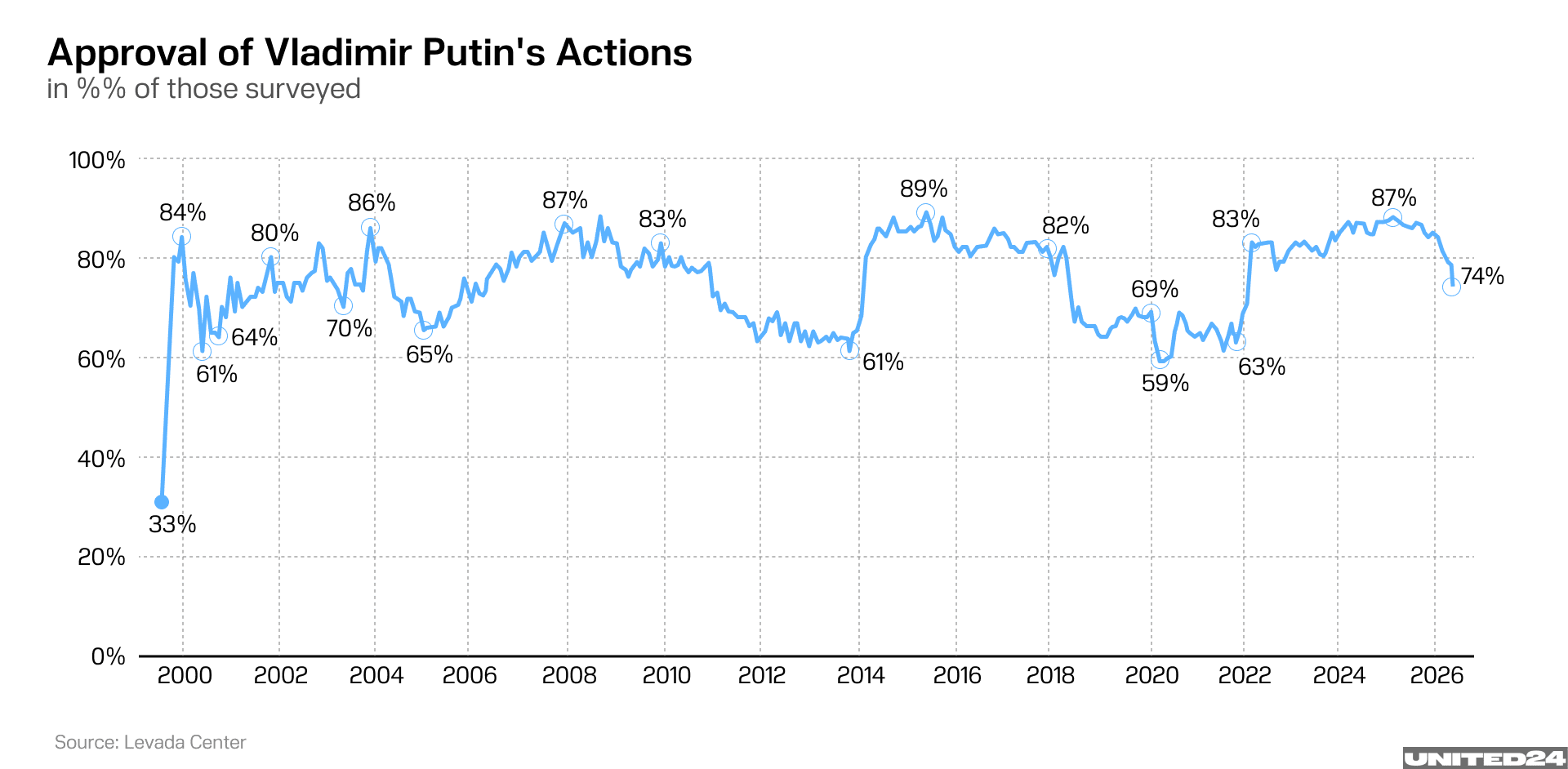
Putin's approval rating stood at around 61% in December 2021, according to VCIOM. At the time, his reputation had been affected by several domestic challenges, including the economic consequences of the COVID-19 pandemic, rising prices, and growing public fatigue after more than two decades of his rule. The imprisonment of opposition leader Alexei Navalny and the nationwide protests that followed also highlighted rising political tensions in Russia.
Russia's full-scale invasion of Ukraine dramatically changed those dynamics. By March 2022, Putin's approval rating had climbed to 80%, before settling at 74% by the end of the year.
The latest surge and decline in Putin's approval ratings follow a pattern that has repeated itself throughout his presidency. Major military conflicts have consistently boosted public support for the Kremlin, only for those gains to gradually fade over time. The trend first emerged during the Second Chechen War. In August 1999, Putin's approval rating stood at around 31%. Within months, it had surged to 80%, reaching 84% by January 2000. The same pattern repeated itself during Russia's war with Georgia in 2008, when Putin's approval rating climbed to 87%. Following Russia's illegal occupation of Crimea in 2014, it rose again to 86%, driven by another wave of patriotic mobilization.
Why Putin’s rating rises during wartime
Political scientists often explain this surge through the "rally around the flag" effect. In Russia, this effect was reinforced by the state's overwhelming control of television and much of the information space. State media framed the invasion as a defensive war against the West and portrayed Ukraine as a military outpost backed by NATO, helping the Kremlin rally public support during the first months of the invasion.
The latest decline does not necessarily mean that Russians have fundamentally reconsidered the war or turned against the Kremlin. A more likely explanation is that, after more than four years, the war is becoming increasingly difficult to ignore: a growing number of factors are beginning to affect daily life in ways many Russians had previously avoided.
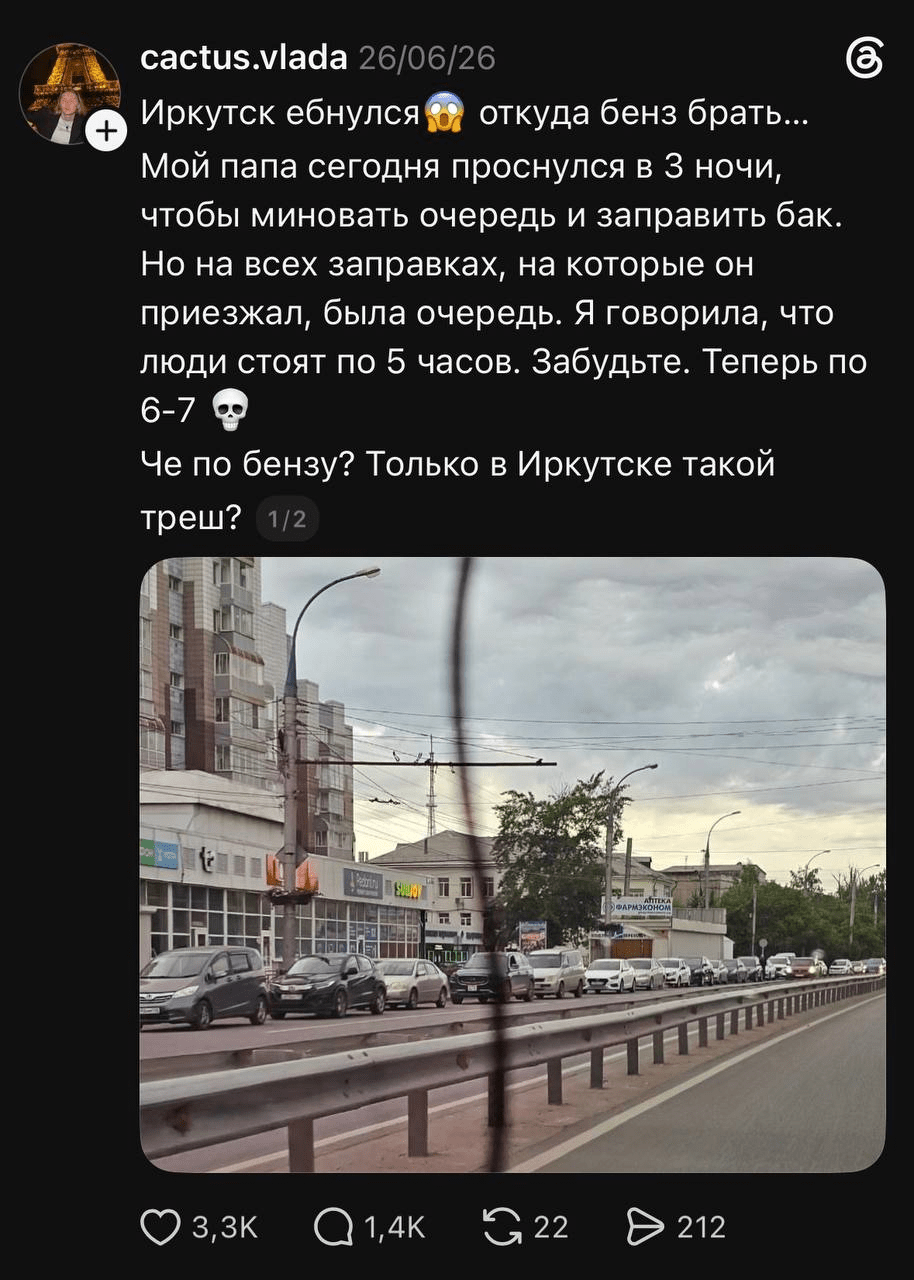
Irkutsk has completely lost it. Where are we even supposed to get gas now? My dad woke up at 3 a.m. today to beat the lines and fill up the tank. But every gas station he went to already had a queue. I said people were waiting for 5 hours. Forget that. Now it's 6–7 hours. What's going on with the gas? Is this only happening in Irkutsk, or what?
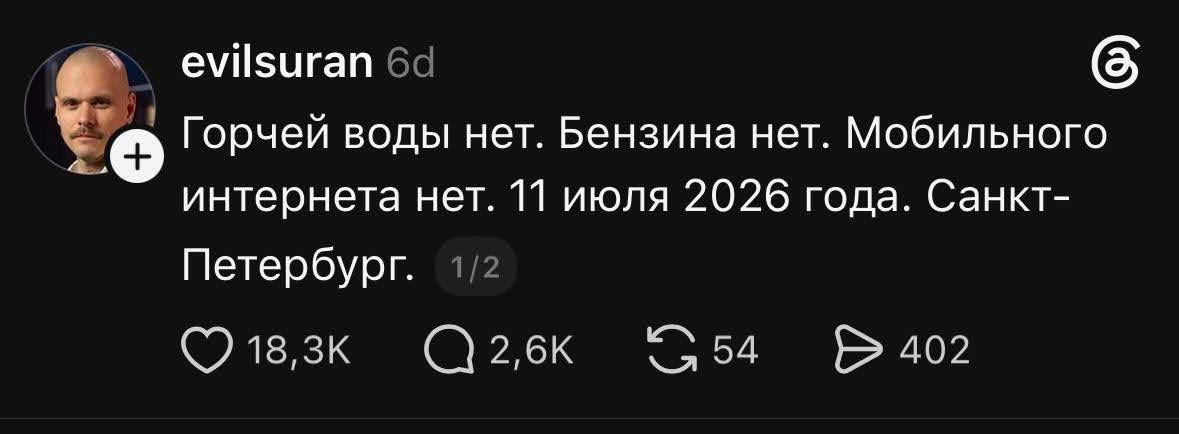
Putin's implicit deal with Russians
When Putin came to power at the end of the 1990s, Russia was emerging from a decade marked by economic turmoil, rising crime, and political instability. For many Russians, the collapse of the Soviet Union had brought not only new freedoms but also uncertainty and a sharp decline in living standards.
Putin's answer was what political scientists often describe as an implicit social contract. In exchange for greater state control and limited political freedoms, the Kremlin promised stability, security, and a return to normal life. More than four years into the full-scale invasion, that balance is becoming increasingly difficult to maintain. Fuel shortages, airport disruptions, internet restrictions, and growing pressure on Russia's economy are bringing the consequences of the war closer to ordinary Russians than ever.
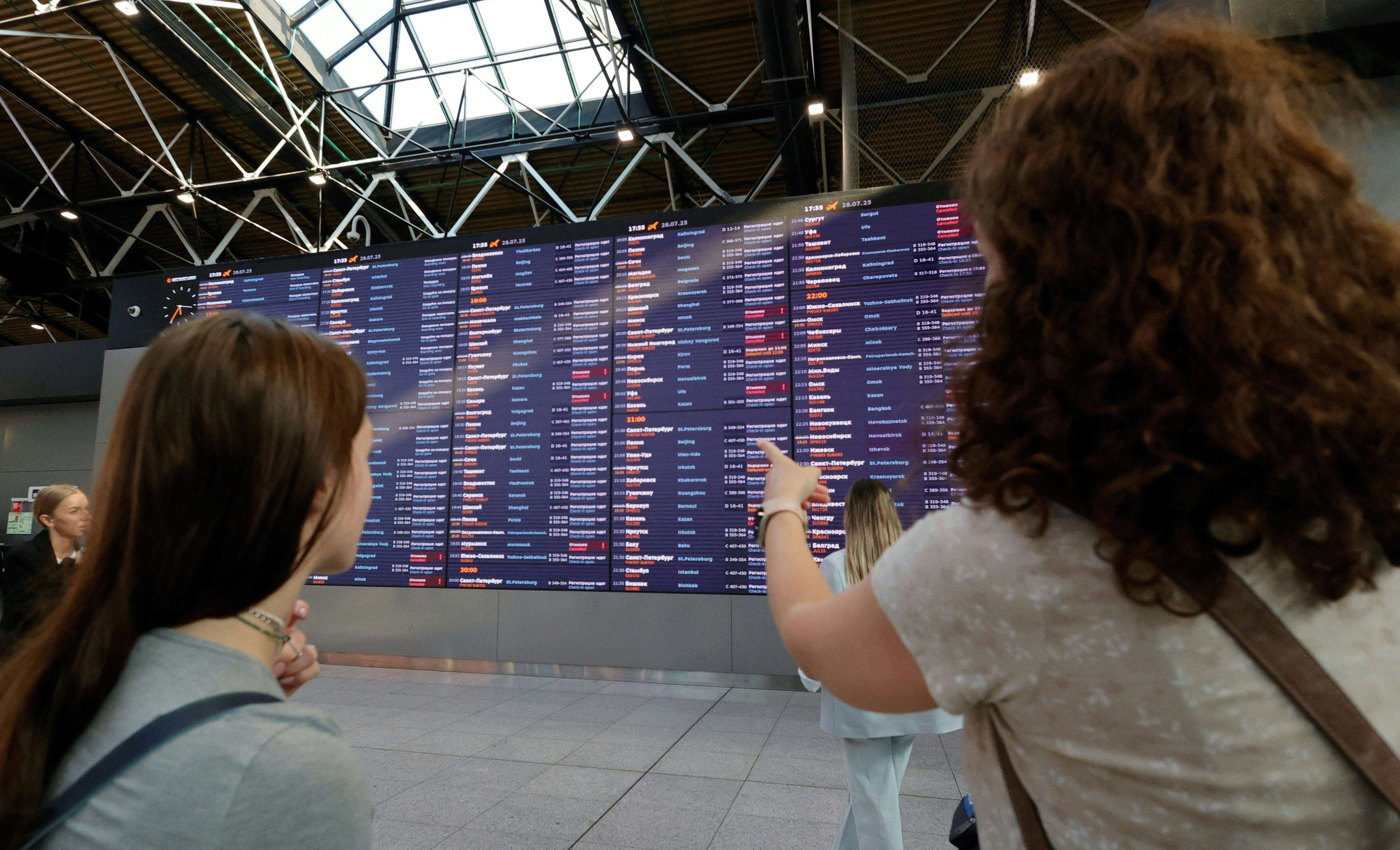
One of the clearest signs that Russia’s war is beginning to affect daily life inside Russia is the growing disruption to air travel. Since the summer of 2023, Russian authorities have repeatedly activated the so-called "Carpet" plan—a security protocol that temporarily suspends airport operations when Ukrainian drones are detected nearby. As Ukraine has expanded its long-range drone campaign, flight delays and cancellations have become increasingly common, particularly in Moscow. One of the largest disruptions occurred on June 18, 2026, when a massive Ukrainian drone attack forced Moscow airports to cancel at least 527 flights. Similar restrictions have repeatedly affected airports in southern Russia, including Sochi, as authorities temporarily closed airspace in response to drone threats.
Can Russian polls be trusted?
Russian polls shouldn’t be taken at face value. VCIOM is state-run, which raises questions about its independence. Even polls conducted by organizations generally regarded as independent, such as the Levada Center, come with limitations. Not everyone in Russia is ready to express politically sensitive views openly, even in anonymous surveys.
Yet even if respondents self-censor, changes over time can still be meaningful, as analysts often focus less on the absolute numbers than on whether they are rising or falling.
It’s hard to predict if the decline will continue. But one thing is already changing: the Kremlin’s image of powerful and unaffected Russia is becoming harder to sustain. The closer the war comes to people inside Russia, the harder it becomes to pretend that Russia could wage war abroad without paying a significant price at home.
FAQ
Approval vs trust: What do these ratings actually measure?
The two ratings sound similar, but they measure different things. An approval rating is about how people evaluate a leader's performance. It asks a simple question: Do you approve of the way this person is doing their job? A trust rating is broader. It asks whether people trust that leader overall, regardless of how they feel about specific decisions. That is why the two numbers don't always match. For example, someone may think a president handled one issue well but still does not trust them personally. Or they may trust a leader's intentions while believing they made the wrong decision on a particular issue.
Discuss this article:

-111f0e5095e02c02446ffed57bfb0ab1.jpeg "Photo of Roman Kohanets")