- Category
- World
Russian Stock Market Plummets to Three-Year Low After 17-Week Decline
 Prefer U24 Media on Google
- Authors

-72b63a4e0c8c475ad81fe3eed3f63729.jpeg "Photo of Cyril Barabaltchouk")
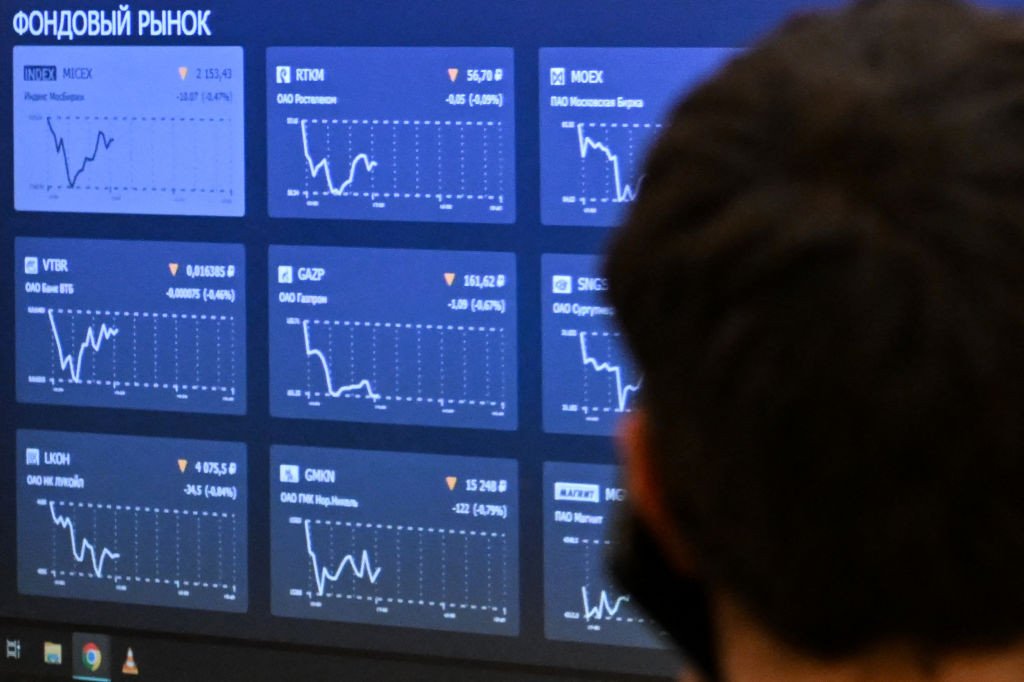
The Russian stock market has extended its decline for a 17th consecutive week, reaching its lowest point in more than three years, The Moscow Times reported on July 7.
The Moscow Exchange Index dropped to 2,117.5 points, representing a 3.4% decline from the beginning of the week, a 16% decline since the start of summer, and a 40% decline from its peak in May 2024. Market analysts cited by the publication attribute the multi-month sell-off to lowering economic expectations driven by the ongoing invasion of Ukraine, inflation, and the probability of further interest rate hikes by the central bank.
We bring you stories from the ground. Your support keeps our team in the field.
Shares in several major state-backed and private enterprises have recorded significant drops, according to data compiled by The Moscow Times. Gazprom equity decreased by 3% on June 7 and 21% since early June, reaching a low of 91.45 rubles ($1.19) per share, a level not seen since October 2008 following the absence of a new supply contract with China.
VTB Bank shares dropped 7.2% from the start of the week due to investor concerns regarding potential banking sector instability, while the electronics retailer M.Video fell to its lowest share value since 2009 after reporting a net loss of 63 billion rubles ($821 million). The outlet also noted that Sberbank shares declined by 1.4%, Rosneft by 2.7%, and the gold mining company Polyus by 4.8%.
-5b9bb1d42a6ea3f8375dd1da8095f27a.jpg)
The market downturn accelerated following recent aerial strikes on energy infrastructure, including a Ukrainian attack on the Omsk refinery located beyond the Ural Mountains, The Moscow Times detailed. Gazprom Neft shares fell 8.3% after operations at its Moscow refinery were halted until at least 2027 due to a Ukrainian drone strike, with repairs estimated at $1 billion.
Long-range Ukrainian drone strikes targeting Russian energy infrastructure have caused direct financial losses and disrupted domestic industrial output. Attacks on major oil processing facilities, such as the Omsk and Moscow refineries, have forced extended operational halts.
These disruptions have reduced domestic fuel production, contributed to rising inflation, and driven down the stock market value of state-linked energy firms. The multi-year shutdown of key refining capacity strains the state budget and undermines the fuel stability required to support Russia’s manufacturing sectors.
-496d2603f5ac63a0e4aab3cf40f8d6a5.png)
Finam analyst Dmitry Lozovoy stated that the expanding geographic range of these drone strikes increases the risk of an industrial and energy deficit. Furthermore, BCS analyst Yulia Goldina indicated that “For a full-fledged turnaround, market participants want to see concrete steps toward resolving the conflict with Ukraine,” though official statements from the Kremlin and the Ministry of Foreign Affairs show no changes to current military plans.
This market downturn coincides with a sharp contraction in Russia’s capital investment, which fell by 14.3% year-on-year during the first quarter of 2026. The decline marks the most severe drop in 16 years, driven by tight monetary policy, falling corporate revenues, and high debt servicing costs.
Data showed corporate profits fell 26% during the quarter, causing over half of surveyed enterprises to pause long-term development projects. Furthermore, government budget investments decreased from 5.4 trillion rubles ($60 billion) to 5.2 trillion rubles ($57.8 billion) due to deficit pressures and the high cost of the war in Ukraine.
Discuss this article:



-c439b7bd9030ecf9d5a4287dc361ba31.jpg "Photo of Katherina Popilnichenko")