- Category
- War in Ukraine
Ukraine Strikes Russia’s Largest Omsk Oil Refinery for the First Time, 2,500 km From Ukraine
 Prefer U24 Media on Google
- Authors


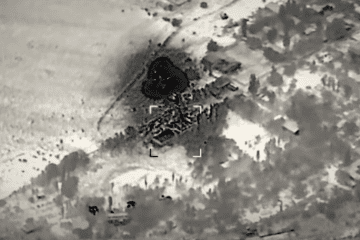
Ukraine’s long-range drones struck the Omsk Oil Refinery on July 6, marking the first known attack on Russia’s largest oil refinery. The facility processes more than 22 million tonnes of crude oil annually and accounts for roughly 10% of the country’s total refining capacity.
We bring you stories from the ground. Your support keeps our team in the field.
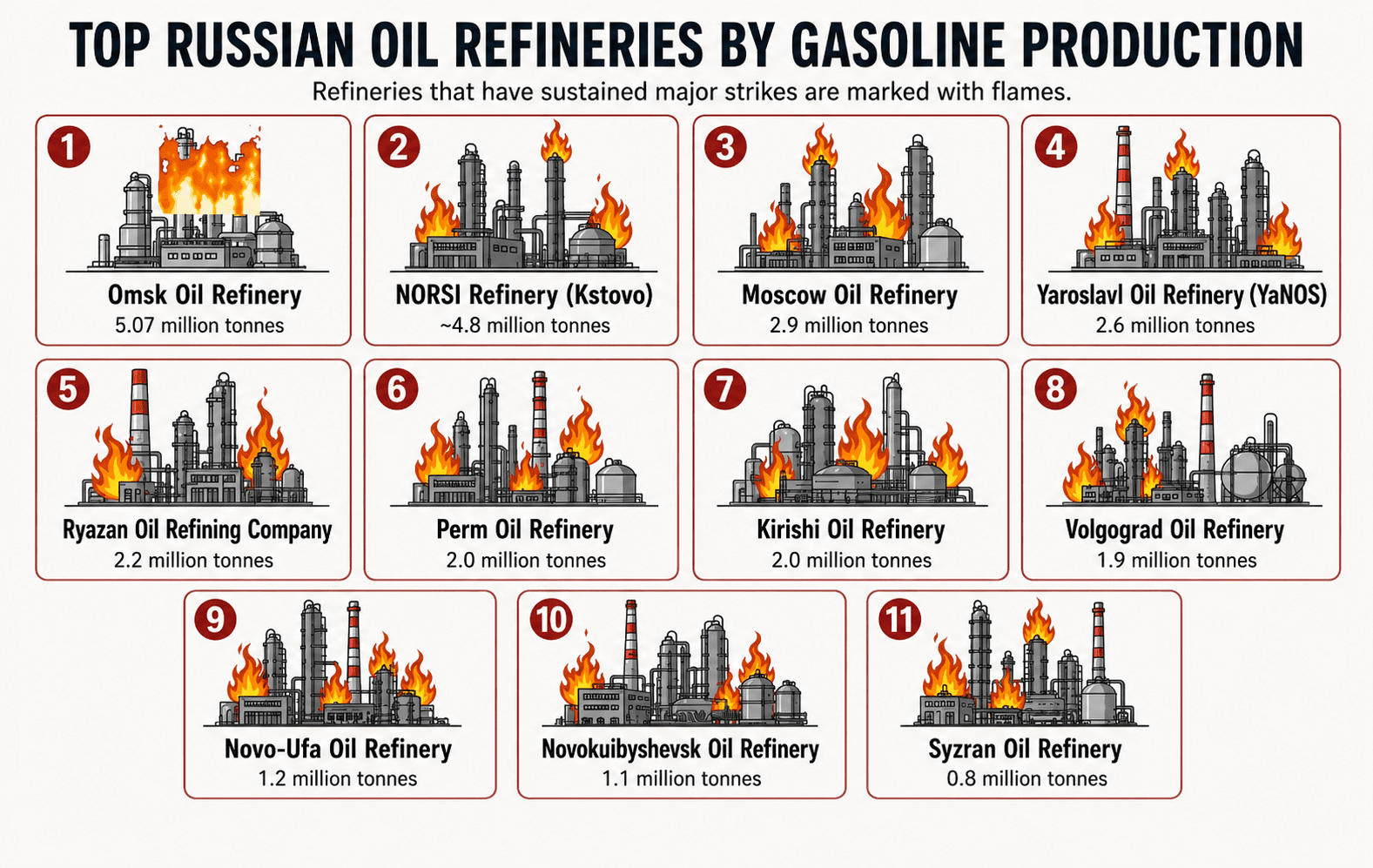
The General Staff of the Armed Forces of Ukraine and the Special Operations Forces (SSO) later confirmed the strike, describing the Omsk refinery as the last of Russia’s 11 largest gasoline-producing refineries to be successfully targeted by Ukrainian forces.
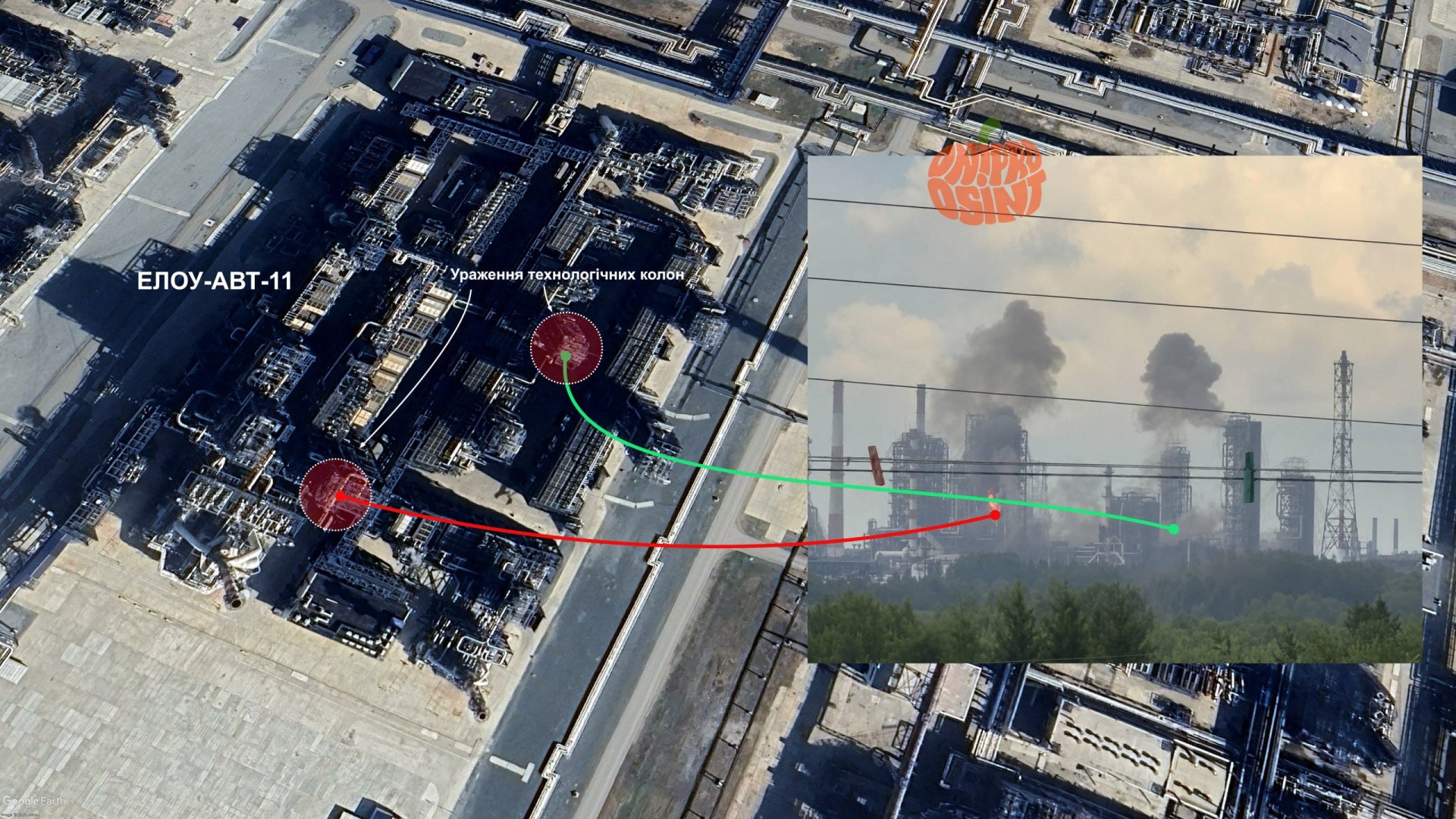
According to the military, Ukrainian drones hit the ELOU-AVT-11 primary crude oil processing unit, which has a design capacity of 8.4 million tonnes of crude oil per year. The SSO said the drones flew approximately 3,000 kilometers to reach the target.
The Omsk Refinery is burning. #Russia pic.twitter.com/uJrNdaBe8V
— NOELREPORTS 🇪🇺 🇺🇦 (@NOELreports) July 6, 2026
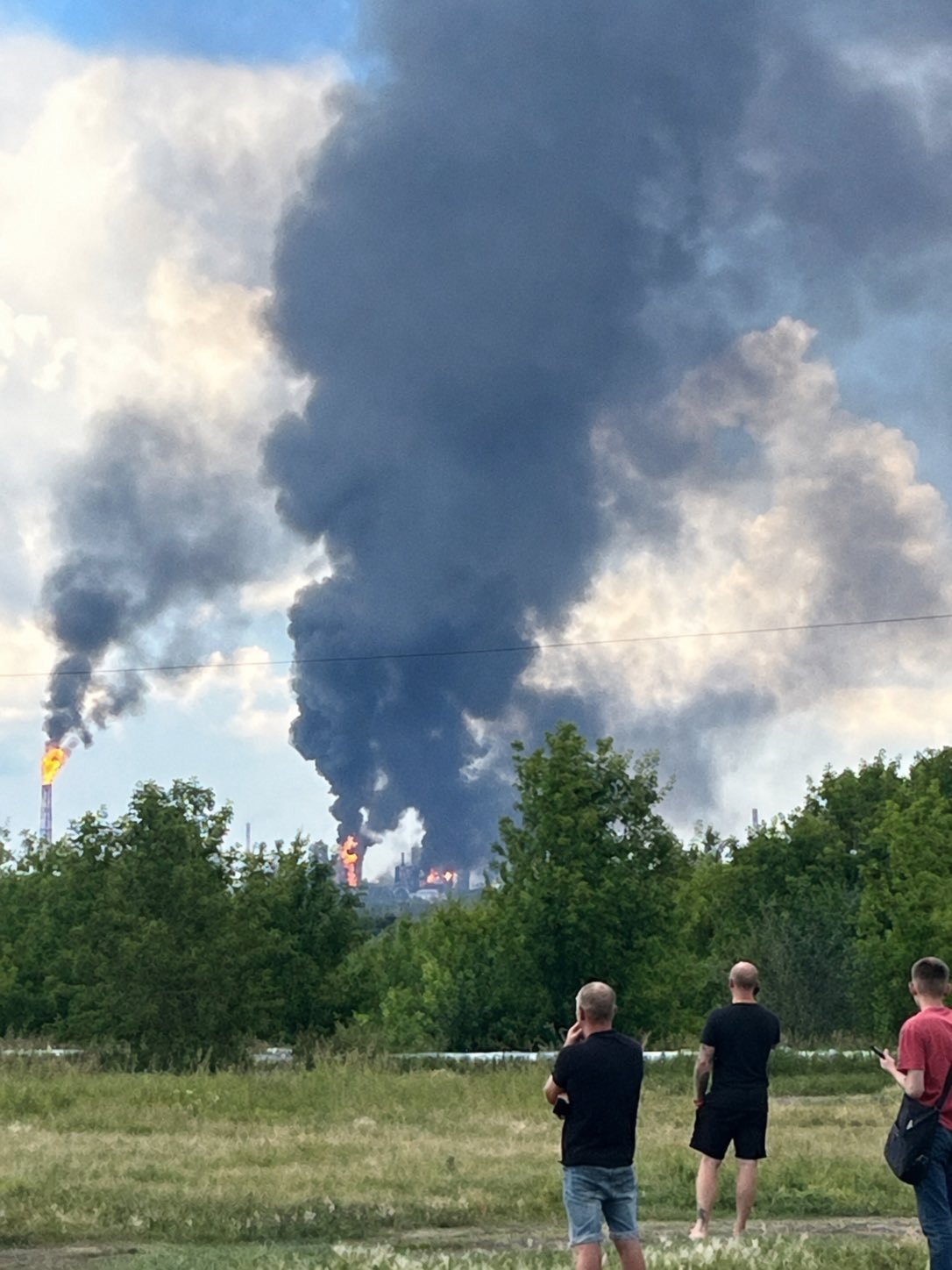
According to Exilenova+ and confirmed through geolocation analysis by ASTRA, multiple drones hit the refinery, triggering fires inside the industrial complex. Footage published by Exilenova+ showed several fires burning on the site.
Omsk region governor Vitaly Khotsenko confirmed that drones reached the northern industrial district of Omsk but did not explicitly identify the refinery.
According to Dnipro OSINT, upgraded FP-1 long-range drones struck the refinery’s ELOU-AVT-11 crude oil processing unit, hitting its technological columns. The installation has a processing capacity of 8.4 million tonnes of crude oil annually.
Owned by Gazprom Neft, the Omsk refinery processes more than 22 million tonnes of crude each year—roughly 10% of Russia’s total refining capacity. It is the country’s largest refinery and supplies more than half of the Siberian Federal District’s motor fuel demand, according to industry estimates.
Ukrainian long range strike drone on the approach to the Omsk oil refinery. 2500 km from the frontline. https://t.co/mjmIzrmvfD pic.twitter.com/yf0AWdYIdF
— Special Kherson Cat 🐈🇺🇦 (@bayraktar_1love) July 6, 2026
The facility produces gasoline, diesel fuel, aviation kerosene, and other petroleum products, including fuel used by the Russian military.
The refinery is also Russia’s only producer of catalytic cracking catalysts, key materials used in secondary oil refining at other domestic refineries.
Before July 6, the Omsk refinery had remained one of only two facilities among Russia’s ten largest refineries that had never been targeted by Ukrainian drones. The other is the Angarsk Petrochemical Company in Russia’s Irkutsk region.
Exilenova+ also reported that Russian Su-57 fighter jets were deployed over Omsk in an attempt to intercept the incoming drones but failed to shoot them down. The claim has not been independently verified.
The Su-57 is hunting Ukrainian drones in the sky over Omsk.
— Exilenova+ (@Exilenova_plus) July 6, 2026
This piece of metal crap only managed to shot down one drone. All others hit their target pic.twitter.com/vmxqWXvxEq
The attack came as Ukraine carried out a broader wave of long-range strikes against Russian energy and military infrastructure, including reported attacks on the Yaroslavl Oil Refinery, fuel terminals in Vysotsk and Ust-Luga, and military targets in temporarily occupied Crimea.
According to a recent Financial Times analysis, Ukrainian drones struck Russian oil refineries at least 194 times during the first half of 2026, reaching a record monthly pace in May and contributing to growing fuel supply disruptions across Russia.
Discuss this article:
-9a7b3a98ed5c506e0b77a6663f5727c5.png)

-c439b7bd9030ecf9d5a4287dc361ba31.jpg "Photo of Katherina Popilnichenko")
-72b63a4e0c8c475ad81fe3eed3f63729.jpeg "Photo of Cyril Barabaltchouk")