- Category
- War in Ukraine
Ukraine Sets One of Russia’s Largest Baltic Oil Terminals Ablaze in St. Petersburg
 Prefer U24 Media on Google
- Authors


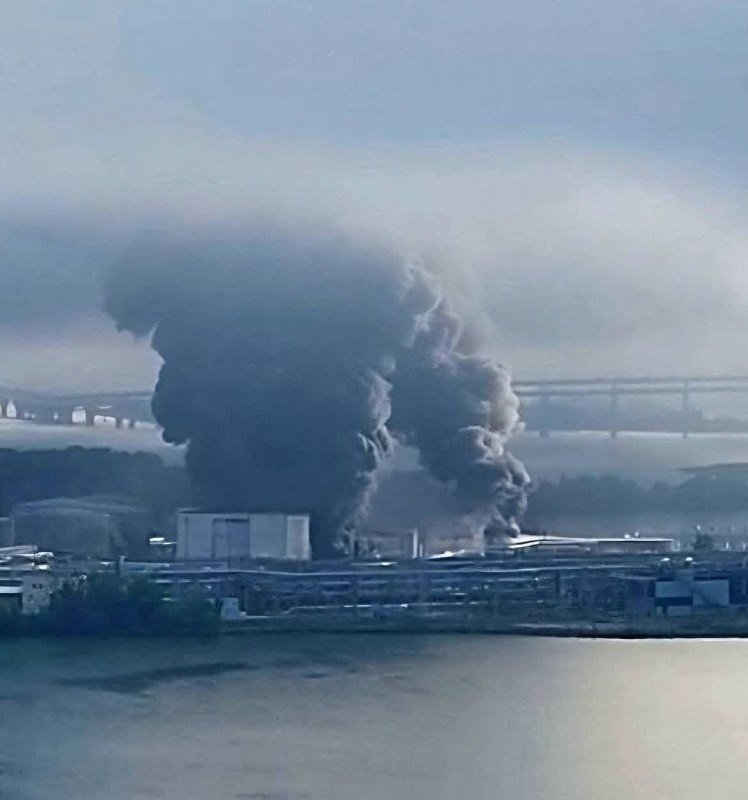
Ukraine struck Russia’s St. Petersburg Oil Terminal, a major Baltic Sea export hub, causing a large fire. The facility handles up to 12.5 million tons annually.
Ukraine’s Defense Forces struck the St. Petersburg Oil Terminal overnight on July 4, setting fire to port oil infrastructure that generates revenue for Russia’s war.
We bring you stories from the ground. Your support keeps our team in the field.
In a statement published on X, Ukrainian President Volodymyr Zelenskyy said Ukraine’s long-range strikes had reached targets near St. Petersburg, adding that Ukrainian forces also carried out “successful strikes on Kronstadt—an important military target.” He noted that the targets were located more than 850 kilometers from Ukraine’s state border.
Last night, our Ukrainian long-range sanctions against Russia over this war reached targets near St. Petersburg. Ukraine's Defense Forces struck port oil infrastructure that generates revenue for Russia's war, and there were also successful strikes on Kronstadt – an important… pic.twitter.com/bMHY3cL3rM
— Volodymyr Zelenskyy / Володимир Зеленський (@ZelenskyyUa) July 4, 2026
Serhii Sternenko, advisor to Ukraine’s Minister of Defense, said the attack targeted the St. Petersburg Oil Terminal, describing it as one of the largest oil terminals in the Baltic region. According to his statement, the facility contains 21 petroleum storage tanks and has an annual handling capacity of up to 12.5 million tons.
The strike on the oil terminal was also reported by the Russian outlet Astra, which published photos and videos showing a fire and thick black smoke rising from the facility. According to Astra, the attack took place overnight after authorities declared a drone threat across the region.
Сили оборони уразили нафтовий термінал у Санкт-Петербурзі (1-3). На місці атаки спалахнула масштабна пожежа.
— Serhii Sternenko (@sternenko) July 4, 2026
Петербурзький нафтовий термінал є одним із найбільших у Балтійському регіоні: на його території розташований 21 резервуар для зберігання нафтопродуктів, а пропускна… pic.twitter.com/AysrFbTZoD
Russian authorities have not officially confirmed that the oil terminal was hit or disclosed the cause of the explosions and fire. However, Leningrad region governor Alexander Drozdenko said air defenses were responding to a large-scale drone attack, claiming that 67 drones had been intercepted over the region overnight.
He also announced temporary restrictions on mobile internet services and said debris had fallen near the port of Vysotsk, another major Baltic port in the region.
OSINT analysts, including Exilenova+ and Astra, geolocated the fire to the territory of the St. Petersburg Oil Terminal, a major fuel transshipment complex located in the Fourth District of the Port of St. Petersburg on the Gulf of Finland. The facility receives petroleum products by pipeline, rail, and inland waterways before loading them onto seagoing tankers.
Confirmation regarding the St. Petersburg oil terminal. pic.twitter.com/gIwP6EYl6O
— Exilenova+ (@Exilenova_plus) July 4, 2026
The terminal occupies approximately 37 hectares and has an estimated annual throughput of between 10 and 12.5 million metric tons of petroleum products. Its storage infrastructure includes roughly 21 tanks with a combined capacity of nearly 400,000 cubic meters, making it one of Russia’s key oil export hubs on the Baltic Sea.
The reported strike follows previous Ukrainian long-range attacks on energy and military infrastructure in St. Petersburg. On June 3, Ukrainian drones targeted the same oil terminal, other port facilities, and the Russian Navy’s missile corvette Boykiy, which was undergoing scheduled repairs in a dry dock at the Kronstadt Naval Base.
The strike comes amid a 40-day operation approved by President Volodymyr Zelenskyy and carried out by the Security Service of Ukraine to increase pressure on Russia to end its war. The campaign targets Russia’s military, defense-industrial, logistics, and energy infrastructure.
Discuss this article:
-9a7b3a98ed5c506e0b77a6663f5727c5.png)


-72b63a4e0c8c475ad81fe3eed3f63729.jpeg "Photo of Cyril Barabaltchouk")