- Category
- Investigations
Russia Is Building a Massive Site for Missile Components Deep in Siberia, Far From NATO and Ukraine’s Strike Reach
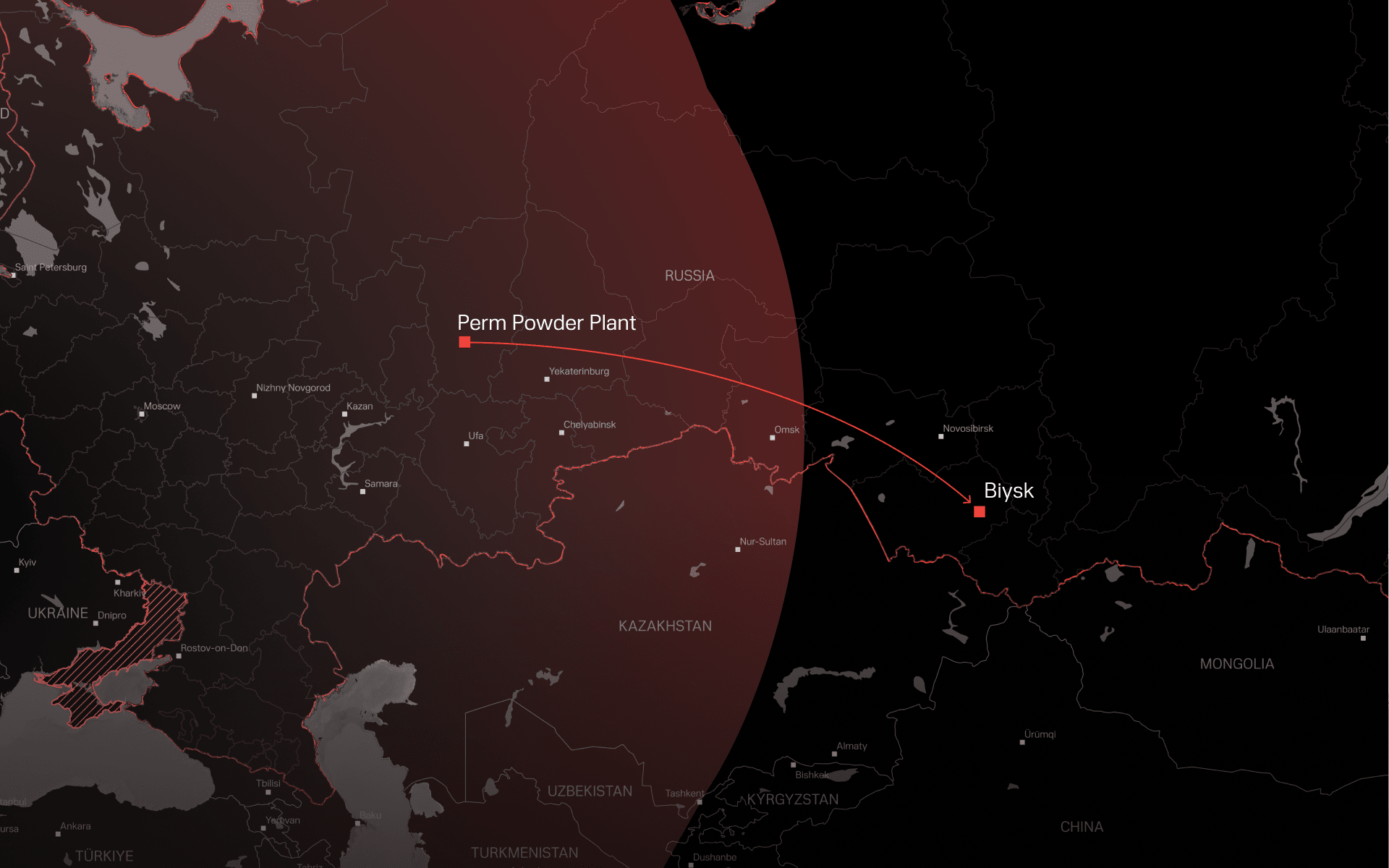
Exclusively acquired documentation by UNITED24 Media shows that Russia is constructing a huge, high-cost defense manufacturing and storage site far from NATO and Ukrainian strike reach to expand its missile-making capabilities.
 Prefer U24 Media on Google
- Authors

-605be766de04ba3d21b67fb76a76786a.jpg "Joseph Place")
Despite Russia’s deep and multifaceted economic problems, it is still investing huge sums in expanding its military-industrial complex with long-term intentions. This is evident in the investment in the new site of the Perm Powder Plant, which UNITED24 Media has identified through access to internal Russian government documentation. The documents include various agreements among the parties, supply contracts, budgets, roadmaps, protocols, site specifications, and invoices.
Perm Powder Plant (PPZ) is a crucial component of Russia’s military-industrial complex in the Perm Region, which is around 1,500 km from Ukraine. This new site requires millions of dollars, funded by a state bank, and demonstrates Russia’s commitment to maintaining itself as a state at war and expanding its military manufacturing capacities. The expansion will be located in Biysk, Altai Region, which is much further into Siberia and near East Kazakhstan, around 3,000 km from Ukraine. The relocation is partly likely due to concerns about Ukrainian drone strikes, but the site’s location and security measures could indicate Russia is considering a future conflict with other nations or NATO.
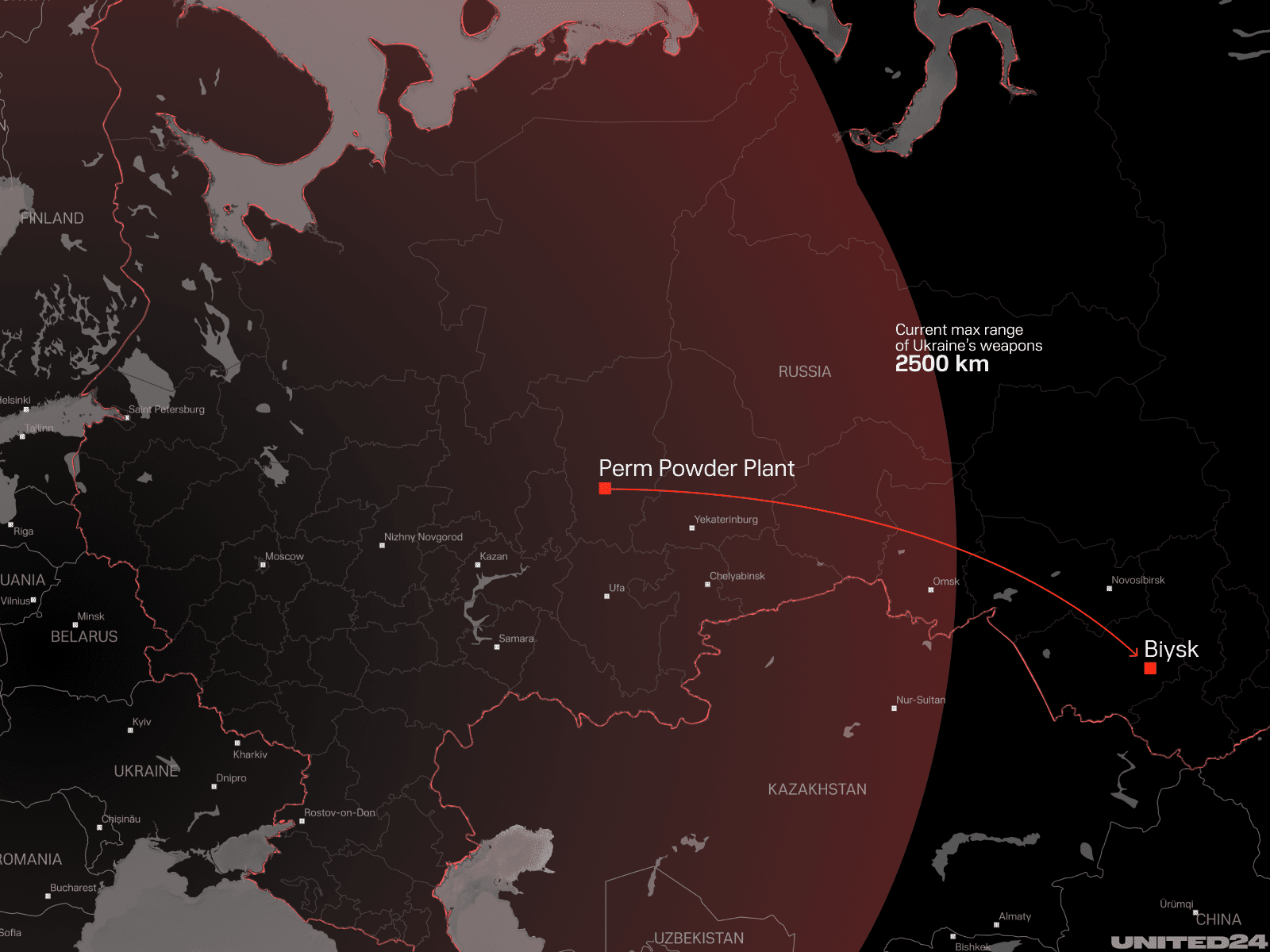
Russia’s new military site: size and cost
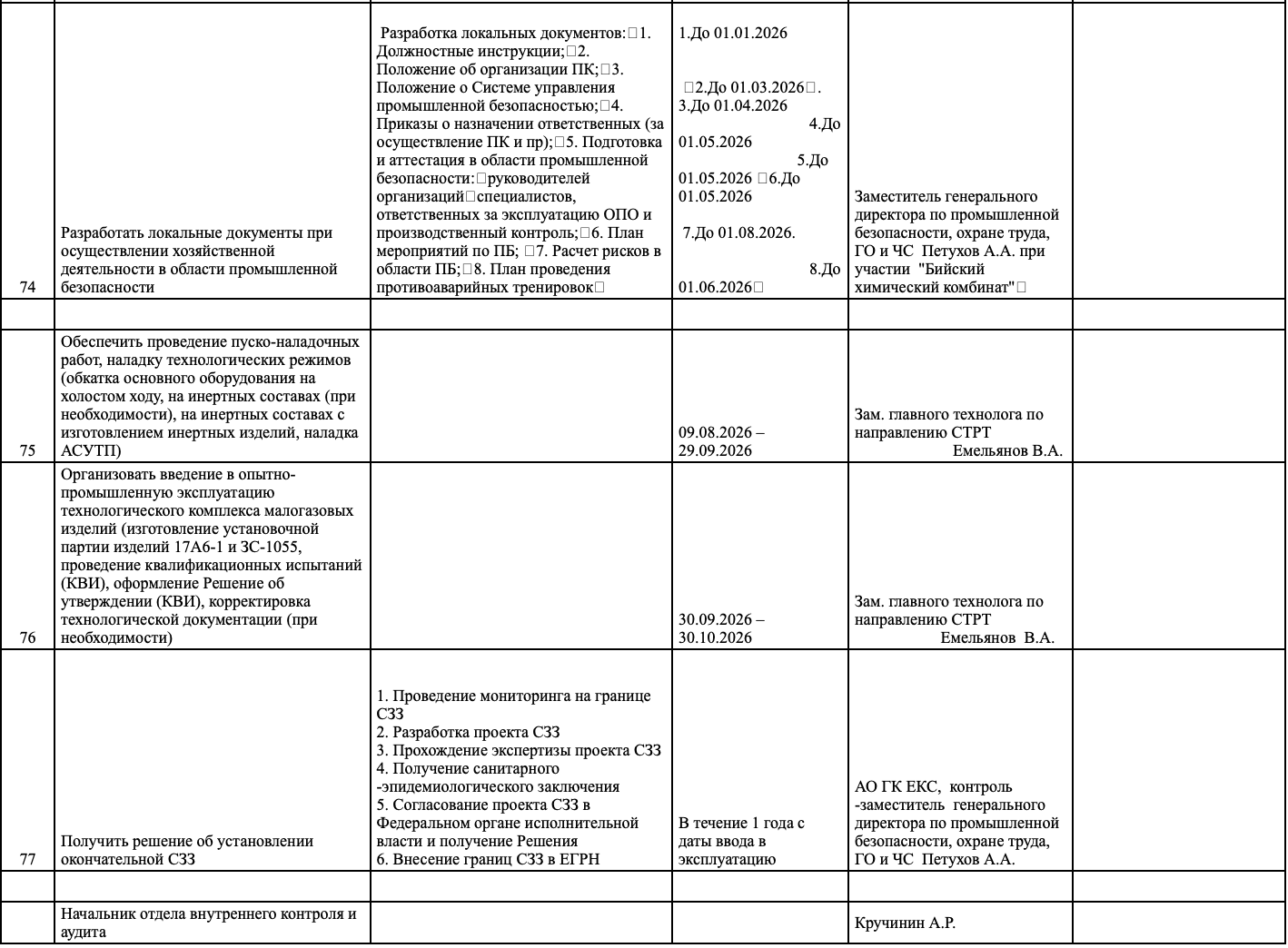
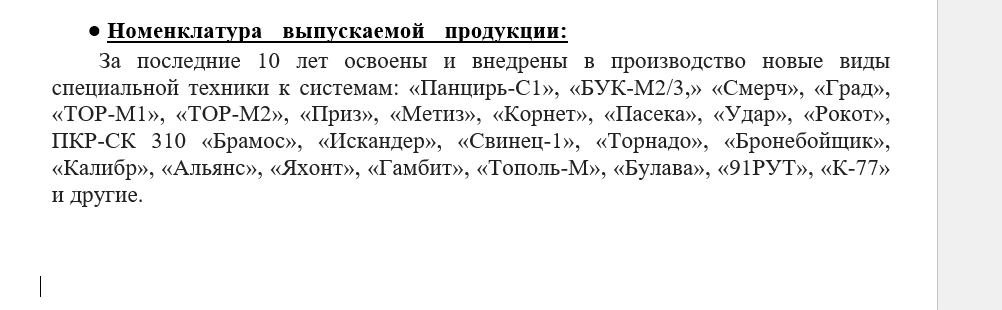
Perm Powder Plant (PPZ) is expanding operations by creating a massive military-industrial site in Biysk, Altai, to create “small-sized products based on standard solid-propellant compositions by pressure casting,” according to the documentation, likely in Pantsir, Buks, Smerch, and Grad missiles. What we can see is that this will mostly involve the creation of missile components, suggesting Russia is planning to increase its missile production capacity.
The project is entirely under Russian military state contracts and uses 100% domestic products, meaning Russia is investing huge sums of money in its military-industrial complex. The new site construction is being implemented with credit financing from the Russian state-owned bank PJSC Promsvyazbank. The documents include the construction contract costing RUB 50.87 billion, and the loan is RUB 32.85 billion, totaling RUB 65.3 billion (approximately $750 million).
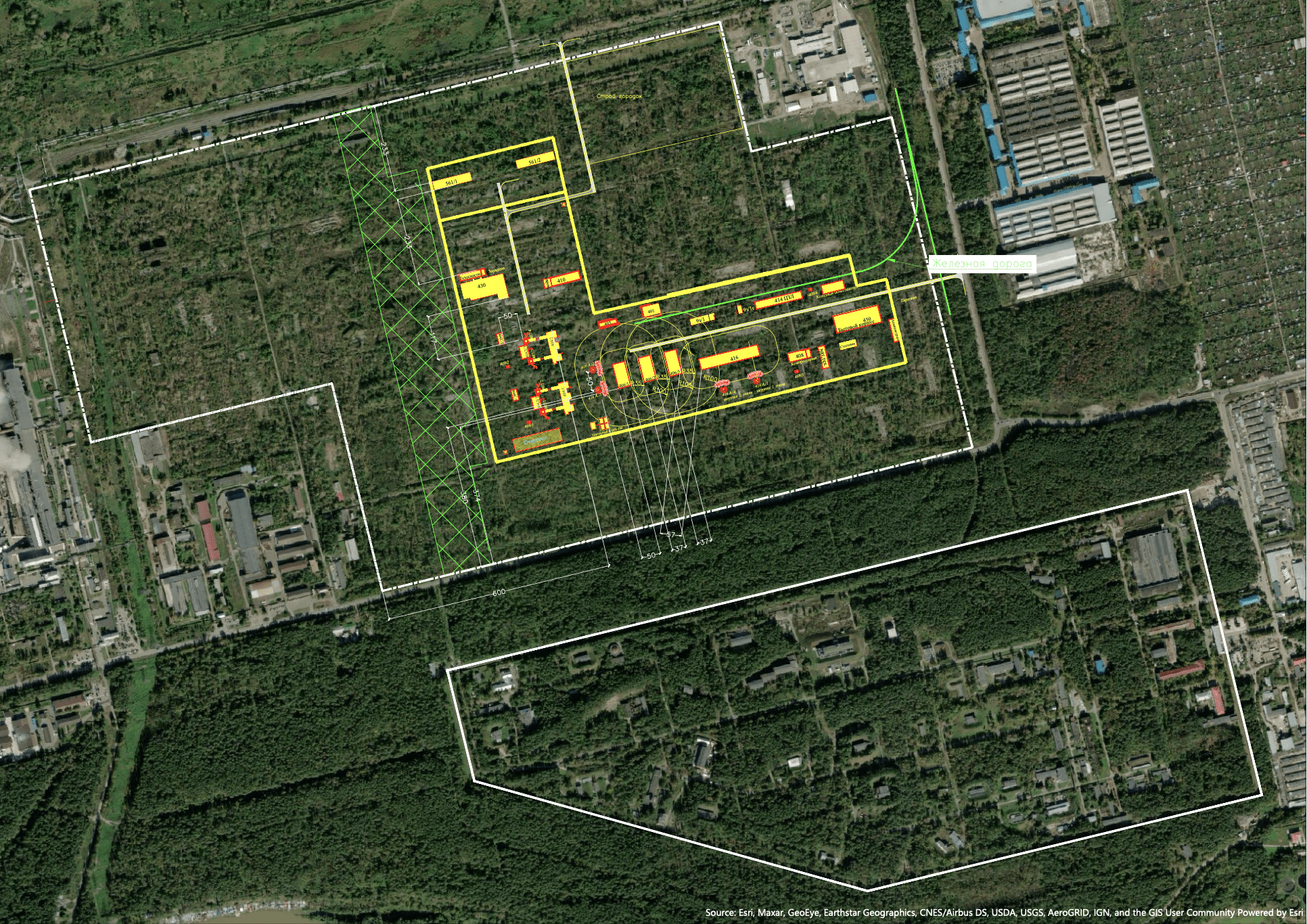
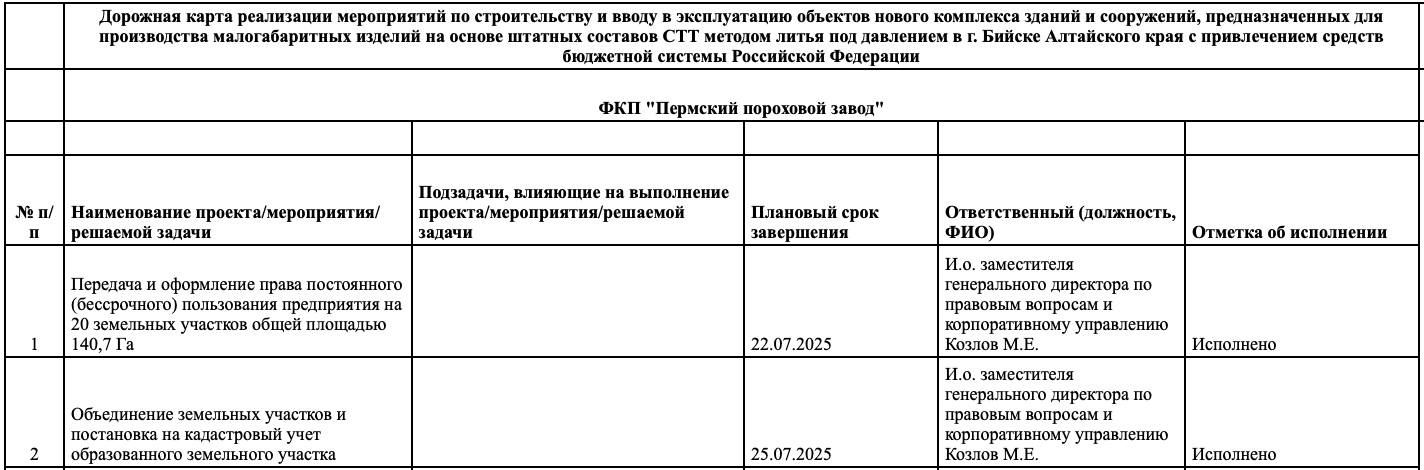
The scale of the site shows how seriously Russia wants to expand its capacities. The Biysk project began when PPZ obtained rights to use 20 land plots totaling 140.7 hectares on 22 July 2025. These plots were subsequently consolidated into one. Internal plans later reduced the fenced industrial complex itself to about 51 hectares, but that is still roughly 72 football pitches. Its main buildings are expected to occupy about 49,000 square metres. A total of 60 buildings are planned under the Biysk project, of which 38 are principal buildings. The planned area of the principal buildings alone is 48,742.8 m², which is equivalent to roughly 7 football fields. The location of the site can be found through the cadastral number and gives an idea of the size.
The project is being rapidly developed, suggesting that Russia plans to manufacture missile parts on a larger scale soon. The project roadmap starts on 22.07.2025 but extends to 10.2026. This concerns the permits and planning, and it is expected to reach full production capacity by November 2026. The short timeline for a seemingly large and complex project indicates how many resources are being allocated to develop the site.
What will Russia produce?
As the PPZ manufactures many explosive parts and is a crucial nexus in this chain, the new site is likely to be of this nature. The documents do not explain every product to be manufactured, but in the big picture, we can infer that they relate to missile parts. We can ascertain that some of the products are ignitions, as the codes 42A6, 98E6, and 9X342 are repeatedly used; according to Russian/Soviet designations, these are forms of ignitions and solid propellant charges.

The documents also state that Ammonium perchlorate—a powerful oxidizer and a major ingredient in many composite solid rocket propellants—is blended into a “working powder mixture.” This is a crucial chemical for missile manufacturing. This suggests that the new site will expand the weapons-related production already carried out at the Perm Powder Plant, including components used in missiles. Essentially, as the documents show, it is an expansion of the existing PPZ and will increase the output of explosive components for missiles and other ordnance.
To further corroborate this, one recurring designation is the military 17A6, which was purchased in 2018 by AO KBP (Instrument Design Bureau, Tula), and the documentation mentions that it is associated with Pantsir systems. The PPZ itself lists various systems it has contributed to, such as Pantsir, Buks, Smerch, and Grad missiles.
Why build deep in Siberia?
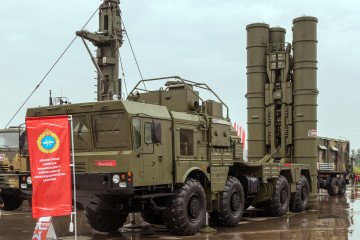
One of the most telling facts about this facility is how seriously they are taking security. In addition to security perimeters and checkpoints for all vehicles and human visitors, they are concerned with drone strikes. They list multiple buildings that require “protective enclosing structures from unmanned aerial vehicles”, as in they require drone protection. The document then mentions the requirement of Pantsir-M air defense systems. This explicitly shows that they are concerned about deep strikes even 3,000 km away from the European border.

At first glance, the site appears to have been chosen because of its proximity to several key facilities, including the Federal Research and Production Center Altai and the Biysk Oleum Plant. The nearby Biysk Flax Company and Biysk Flax Mill also manufacture materials used in the Perm Powder Plant’s production processes. While these infrastructure advantages were clearly important, the site’s considerable distance from Europe may also have influenced the decision.
The project is significant not only because of its location and scale, but also because of what the new facilities are designed to produce. The Perm Powder Plant has traditionally focused mainly on ballistic solid propellant, while the new site is designed specifically for composite propellant. This suggests that the expansion is not simply intended to increase output. It could also allow the plant to produce new types of propellant, either for new weapons or to meet growing demand for existing systems.
Ukraine’s deepest strikes have hit around 2,500 km inside Russia, like the Omsk oil refinery. Ukraine has hit the Perm Region, where the PPZ is located. However, this new site in Altai would mitigate the risk of drone strikes, currently, even if they are anticipating the threat. Russia clearly wants a military manufacturing site to be out of reach not only of Ukraine but also potentially any NATO member.
What does Russia's new site mean for Ukraine and Europe?
What is evident from these documents is that Russia is ramping up its production of military parts, particularly in this case, missile components, and shows no sign of ending its invasion of Ukraine. It has rapidly invested large sums to quickly develop a giant manufacturing site. If it anticipated an end to the war, Russia would not do this. This is especially evident given the huge array of economic problems it faces, such as a lack of faith in the economy by Russians, a growing budget deficit, loss of oil revenue, and the impact of sanctions, including those imposed by Ukraine via long-range sanctions.
-1986e637f098baf55fd48ad1c9d5e68f.jpg)
Russia is increasing its manufacturing capacity with the development of this site, and Ukraine and its partners must recognize this and the long-term approach Russia has to war. However, there is an alarming possibility that Russia is expecting both a longer war with Ukraine and potentially a conflict with NATO or Europe, which the CIA has even anticipated, by ensuring it can manufacture missile components out of reach and at a larger scale than it currently does, and is willing to spend a lot on this.
Discuss this article:
-4a56a6b482ec132402c16ef6fcabf9a2.png)



-206008aed5f329e86c52788e3e423f23.jpg "Photo of Oleksandr Moiseienko")