- Category
- War in Ukraine
No One Believes in the Russian Economy. Not Even Russians
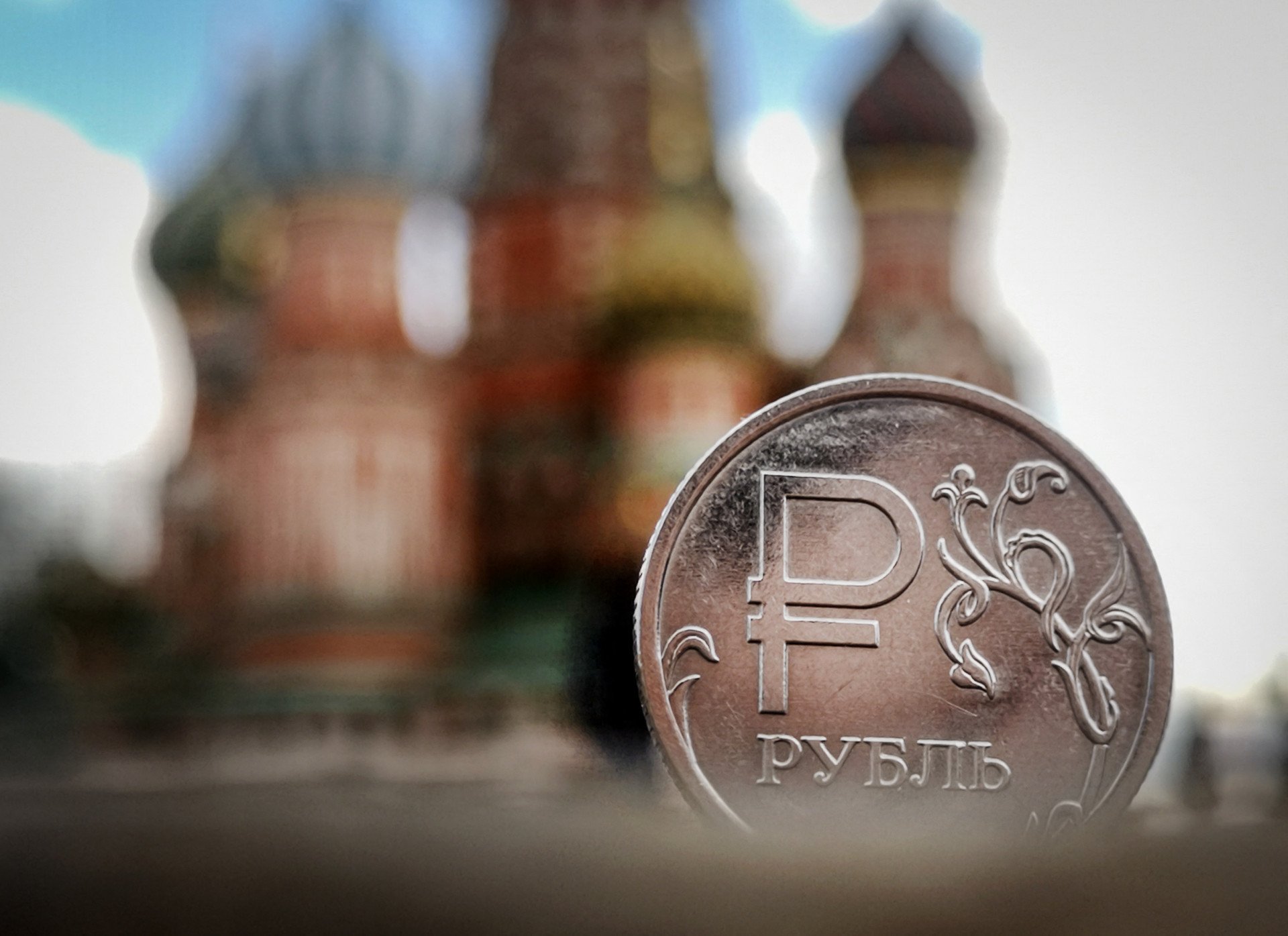
For years, the Moscow Exchange was the Kremlin’s best argument that sanctions had failed. Now it is becoming the strongest evidence that Russia’s wartime economy is beginning to fail.
 Prefer U24 Media on Google
- Authors

-29a1a43aba23f9bb779a1ac8b98d2121.jpeg "Photo of Illia Kabachynskyi")
The Moscow Exchange Index has entered one of its steepest declines, matching the first month of Russia’s full-scale invasion of Ukraine in February–March 2022.
On July 16, it fell 5.7%, dropping below the 2,000-point mark for the first time since October 2022. Earlier that day, trading opened 1,900 points below the level at which the index stood on February 24, 2022, the first day of Russia’s full-scale invasion of Ukraine. Looking further back, the index last traded at comparable levels in 2016, but at that time, it was on an upward trajectory rather than the downward spiral seen today.
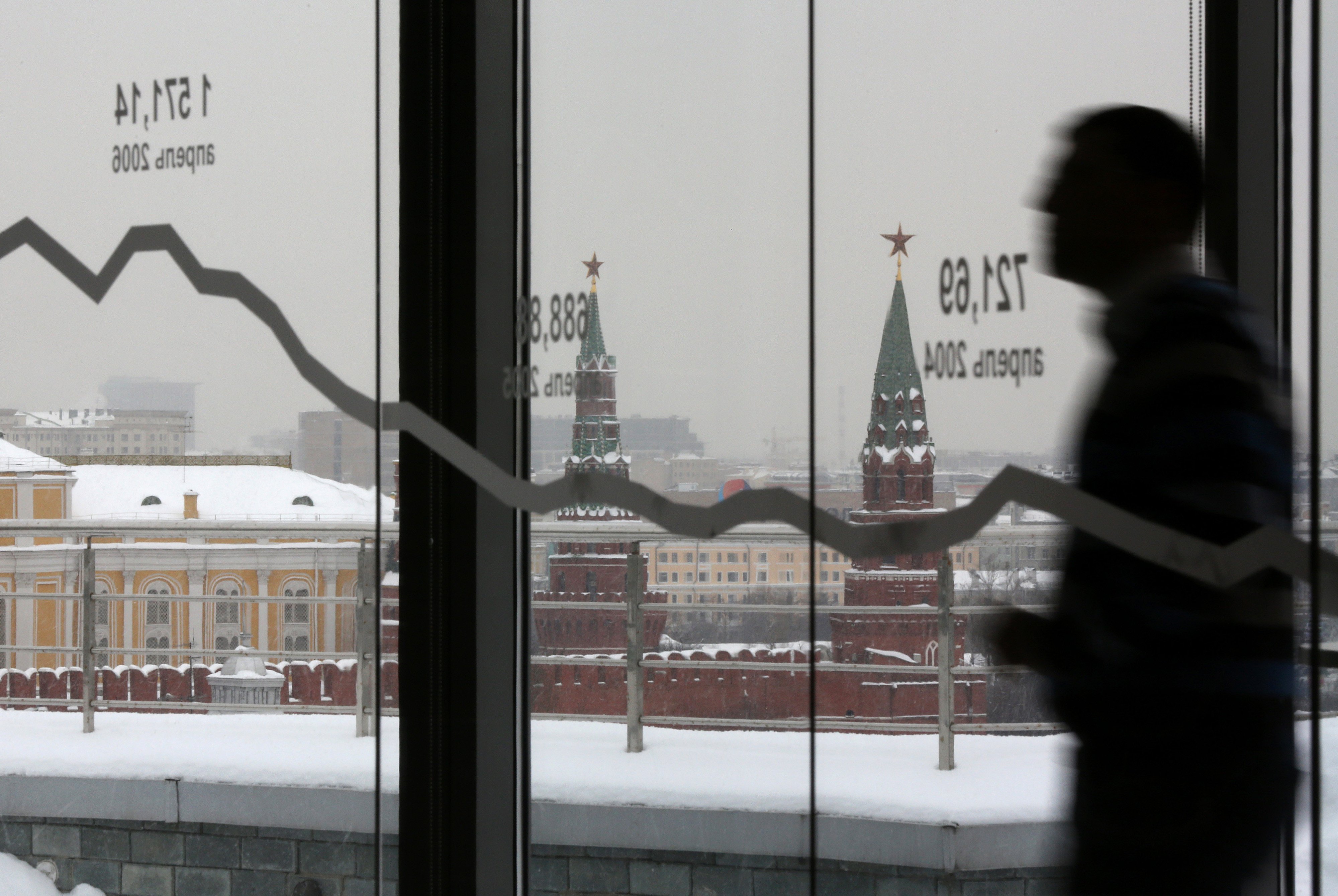
The decline has now continued for five consecutive months with no sign of slowing. There are numerous reasons behind the selloff, all reflecting the broader state of Russia’s economy and the waning confidence Russians have in it. Among them are inflation, the lack of dividend payouts, successful Ukrainian strikes on Russia’s oil refining sector, fuel shortages, a widening budget deficit, and capital flight.
The timeline of the Moscow Exchange Index decline
The Moscow Exchange Index reached its 2026 peak on March 9, at 2,904.39 points. That was slightly below the wartime record of roughly 3,400 points set in 2024 and far below the all-time high of more than 4,150 points reached in 2021. Since the spring of 2026, the index has been on a steady downward trend.
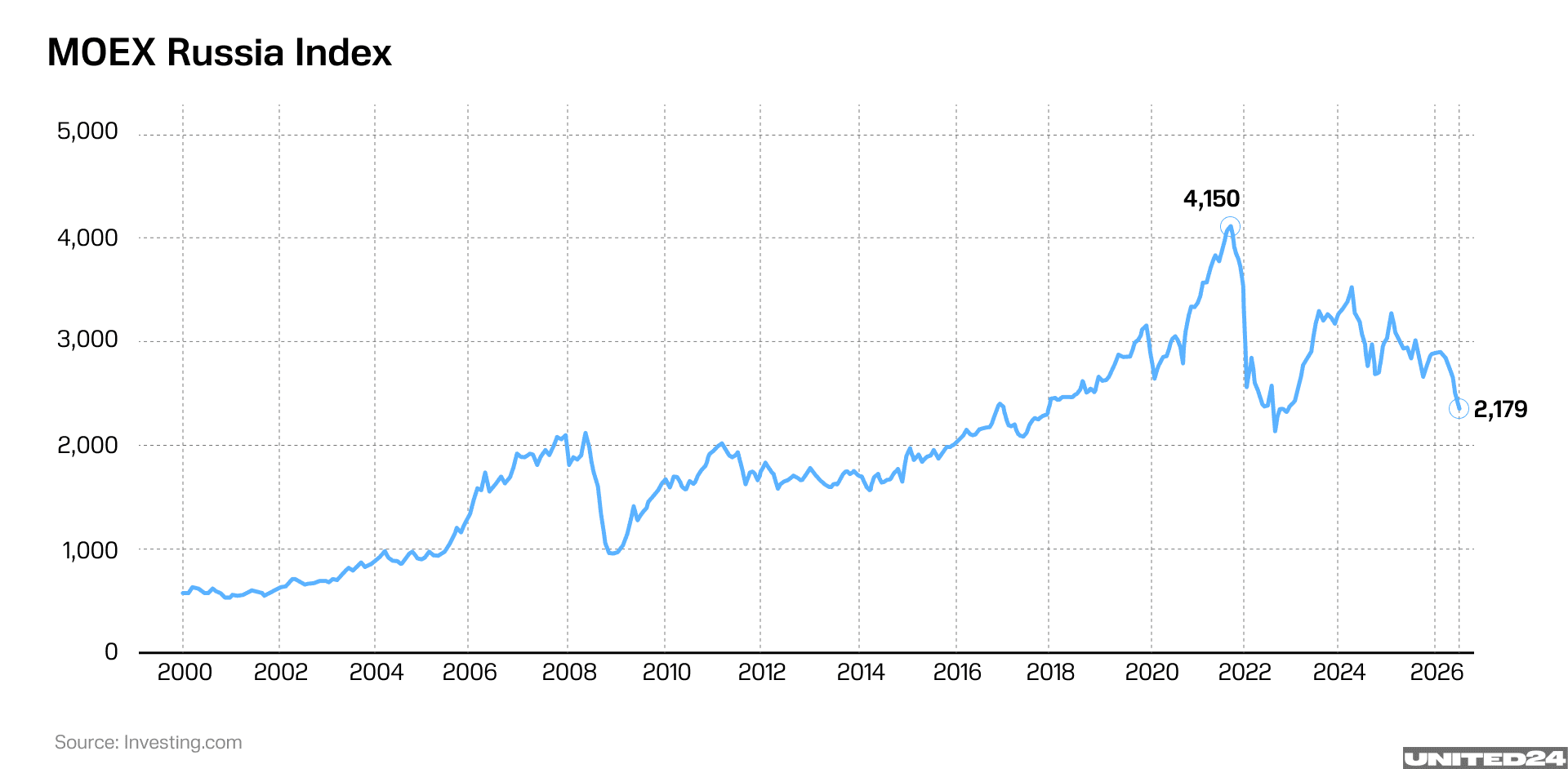
On July 7, the index hit its lowest level since late December 2022, falling below 2,130 points. Then, on July 16, it suffered a one-day collapse of 5.7%, breaking through the 2,000-point threshold and opening below 1,900 points. Those are levels the market had not seen since October 2022 and, in part, since the first days of the invasion in February of that year.
Since its March 2026 peak, the index has fallen by more than 31%. Since the beginning of the year, it has lost roughly 27% of its value. Compared with its 2021 peak, the decline now exceeds 55%.
Why the Moscow Exchange Index is crashing
It is important to make one point clear from the outset: all of the factors discussed below are secondary rather than fundamental. The primary cause of Russia’s economic troubles is the war that the Kremlin itself launched against Ukraine. Until Moscow is prepared to come to the negotiating table, the situation is unlikely to improve.
The immediate trigger for July’s market plunge was the Russian Central Bank’s decision to cut its key interest rate by less than markets had expected. Investors interpreted this as a signal that the regulator itself is concerned about accelerating inflation, rising government spending, and the risk of additional sanctions targeting Russia’s oil sector. The central bank’s official forecast puts inflation at 4.5–5.5% by the end of 2026, while identifying the budget deficit and worsening global economic prospects as the main risks to price stability.
Another factor weighing on the market is the lack of dividend payments. Gazprom will not pay dividends to shareholders for the fourth consecutive year. Many other companies have taken a similar approach, either canceling dividend payments altogether or reducing them well below shareholder expectations. As a result, investors are losing the returns they had anticipated.
Ukraine’s long-range strikes on Russia’s oil refining industry are also directly affecting the share prices of oil companies, which make up a significant portion of the Moscow Exchange Index. As of early July, the attacks had put 42.7% of Russia’s total installed refining capacity out of operation. Fuel production in June was down 25% year over year, while current output is estimated to be about 20% below domestic demand. Since the beginning of 2026, Ukrainian drones have attacked Russian oil refineries at least 194 times. All 11 of the country’s largest refineries have been struck in one way or another, and the attacks continue.
-5b9bb1d42a6ea3f8375dd1da8095f27a.jpg)
Notably, it is no longer foreign investors leading the outflow of capital from Russia—they largely exited in 2022—but Russians themselves. Bloomberg estimates that tens of billions of dollars may have left the country since the start of 2026. Russian billionaires have been moving funds to the UAE, Türkiye, and Monaco amid concerns that the Kremlin could seize private assets to finance military spending. Some of that capital has been transferred to overseas bank accounts, while the rest has flowed into gold, cryptocurrencies, or international investment funds.
The stock market is sending the same message: investors are positioning not for a recovery but for another stage of economic pressure, expecting corporate profits to decline and the risk of bankruptcies to rise, prompting widespread selling of Russian equities.
What comes next for Russia’s economy
At present, the Kremlin and Russia’s financial authorities have few meaningful tools left to influence the country’s economy. At the same time, disagreements have emerged between the Bank of Russia and the Kremlin over the direction of economic policy and the appropriate key interest rate. The economy has effectively become trapped in a situation where every available policy choice carries negative consequences.
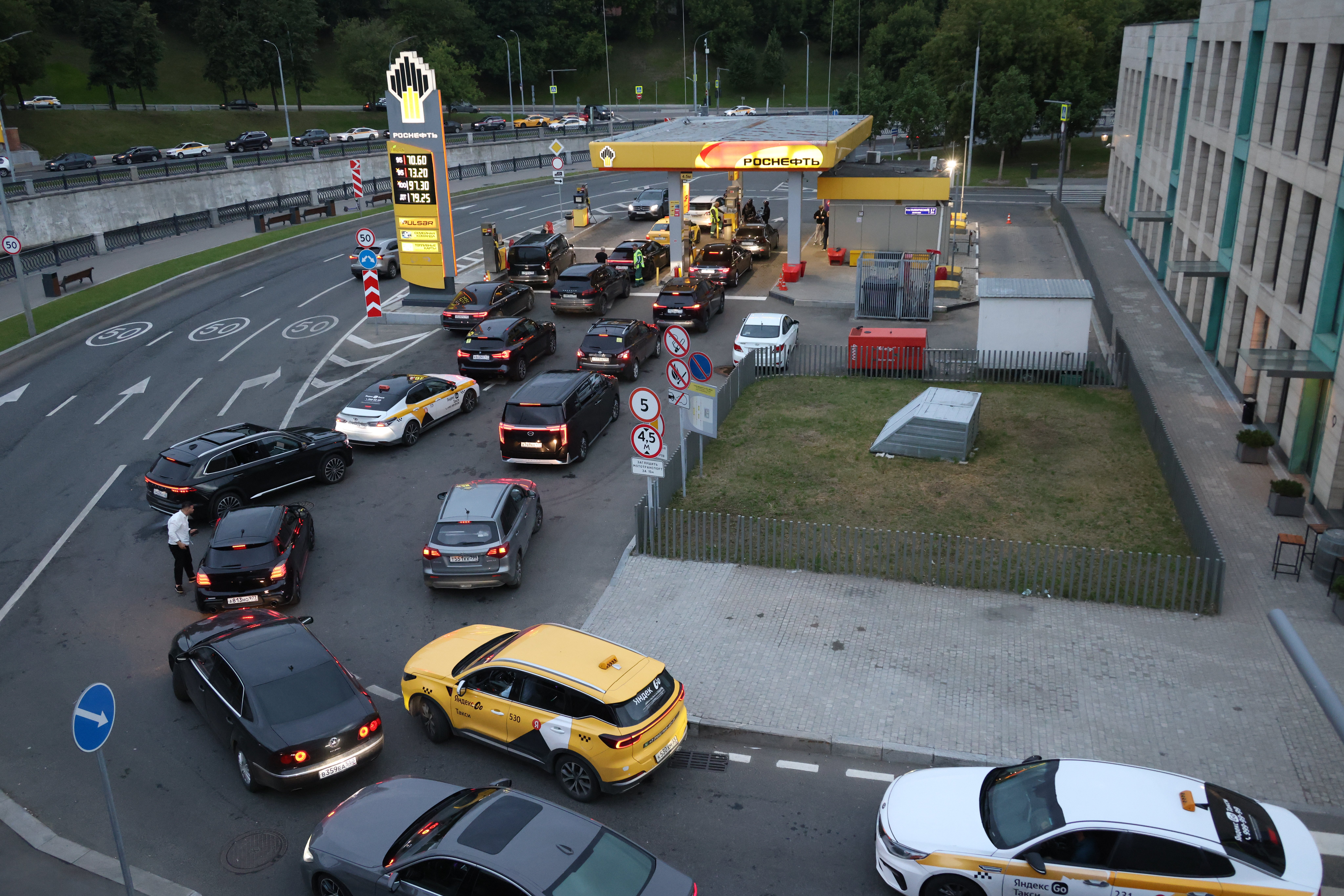
Russia is squeezed between economic sanctions imposed by the United States and Europe and what could be described as the “long-range sanctions” of Ukraine’s drones. These strikes now affect virtually every aspect of life in Russia, from gasoline availability at filling stations to declining industrial output and a disrupted tourism season.
Russia is spending tens of billions of dollars on the war with no realistic prospect of returning that money to the economy. Watching Ukrainian drones destroy Russian tanks and warships, one can quite literally say that Moscow is burning its money.
The Kremlin also lacks the financial resources needed to stimulate the economy. At the same time, tightening domestic controls is increasingly hurting businesses.
Internet disruptions have become so widespread that even basic services such as ride-hailing and food delivery often struggle to function, making any discussion of significant capital investment or innovation increasingly detached from reality. An end to the war could provide a way out of this economic deadlock—a step for which Ukraine has repeatedly stated it is ready.
Discuss this article:
-4a56a6b482ec132402c16ef6fcabf9a2.png)