- Category
- War in Ukraine
Ukraine Has Struck at Least Six Major Russian Missile Production Plants Since March
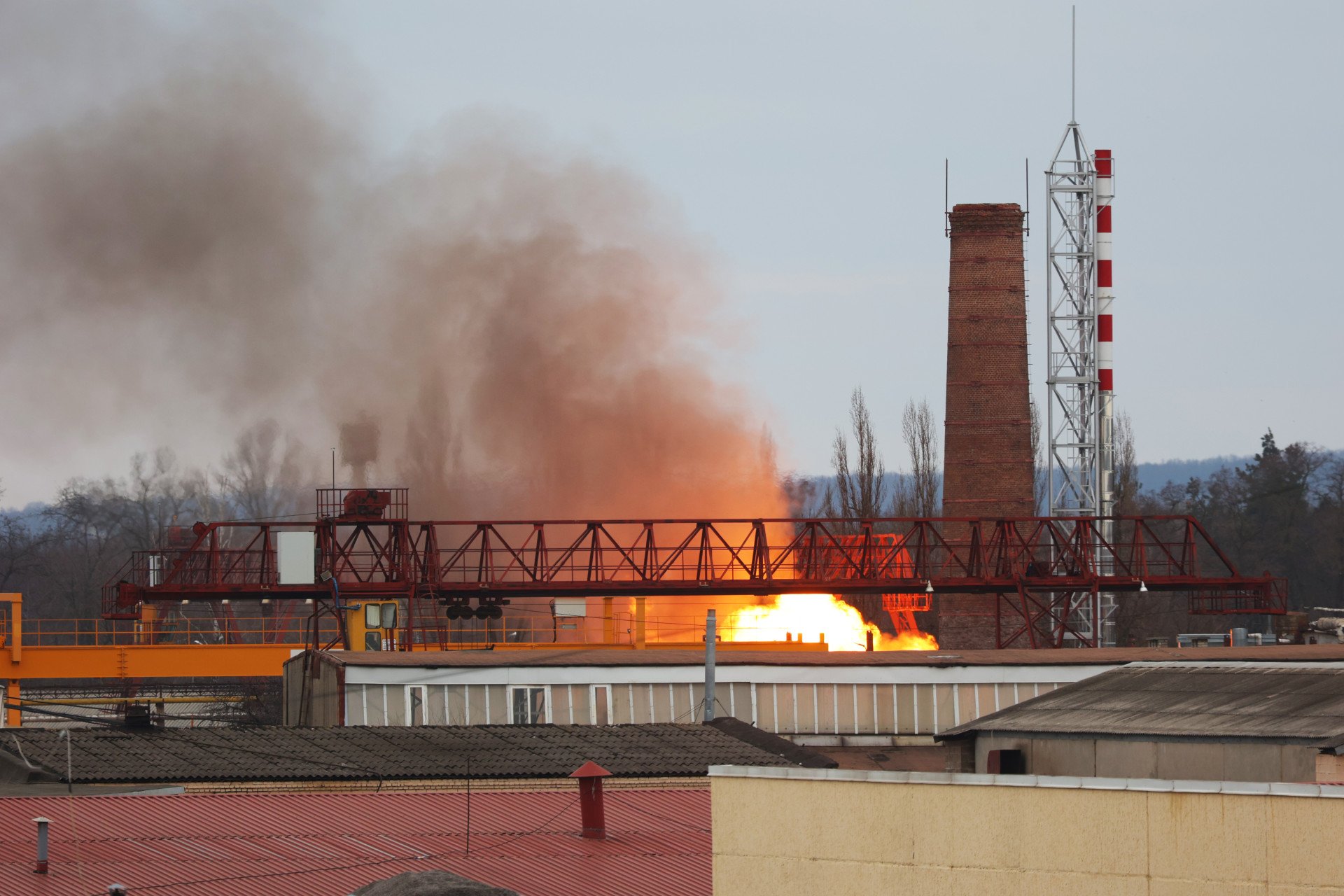
Unable to fully shield its skies from Russian ballistic missiles, Ukraine has begun a systematic campaign to destroy the capabilities that make those missiles possible.
 Prefer U24 Media on Google
- Authors

-29a1a43aba23f9bb779a1ac8b98d2121.jpeg "Photo of Illia Kabachynskyi")
Over the past 10 days alone, three Russian facilities involved in producing the Iskander-M tactical ballistic missile system have come under attack. Combined with strikes on other electronics manufacturers over the past five months, a clear pattern has emerged: dismantling the supply chain that supports Russia’s missile production.
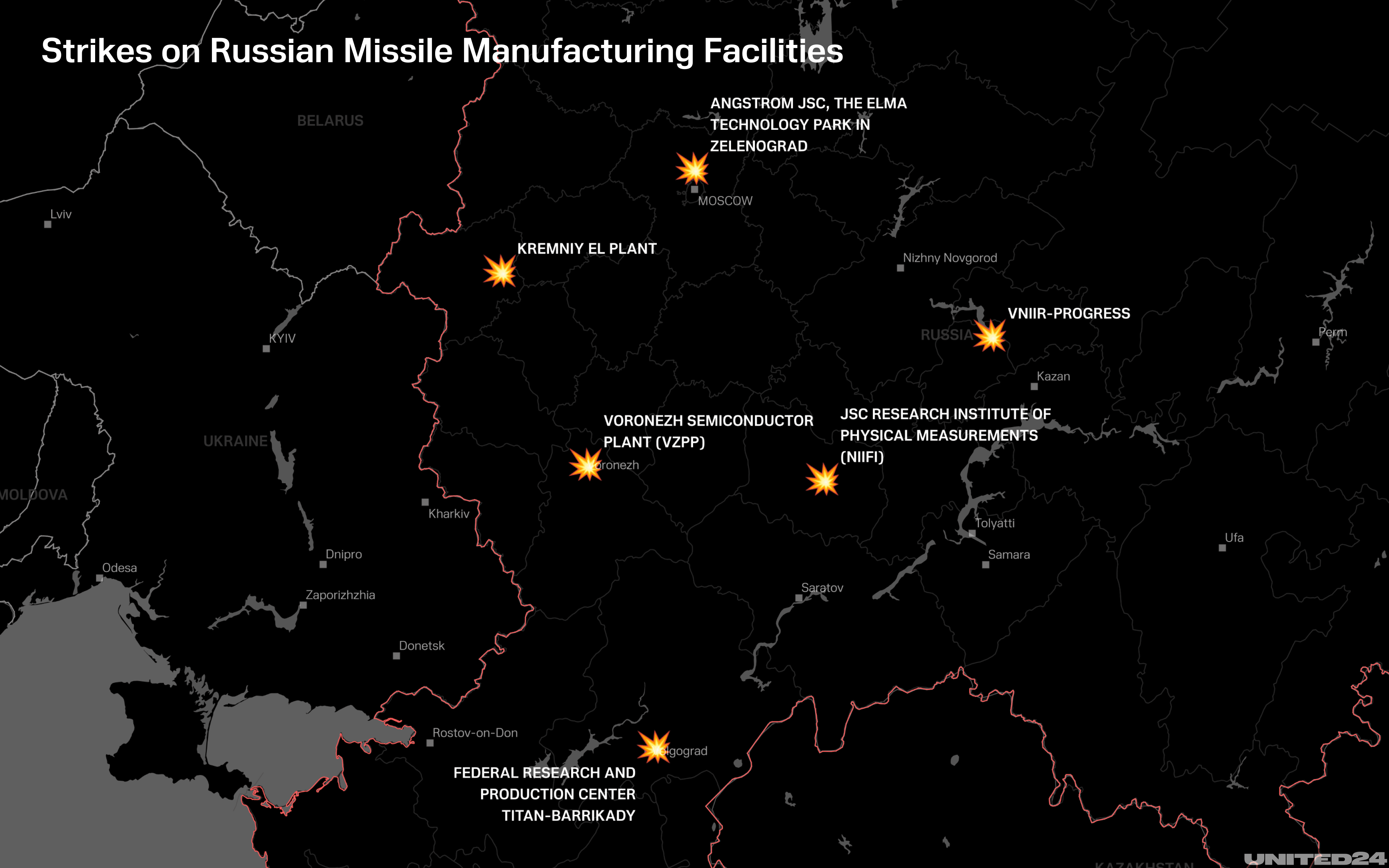
Strikes on Russian missile manufacturing facilities
This spring, Ukraine began implementing a new strategy: targeting the factories that manufacture electronic components for Russian missiles.
In early March, Storm Shadow missiles struck the Kremniy EL plant in Bryansk, where components for Russian missiles were produced.
In mid-May, another strike hit Zelenograd in Russia’s Moscow region, home to a significant share of the country’s defense research and manufacturing base.
Then, on June 12, Ukraine struck VNIIR-Progress in Cheboksary, a facility that manufactures CRPA antennas used in Shahed drones, Iskander missiles, and guided aerial bombs (KABs). This is a critical component because it enables these weapons to maintain navigation even in the presence of electronic warfare interference.
Each of these strikes followed the same logic: rather than trying to intercept every missile already in flight, reduce the number of missiles that can be launched—and degrade their effectiveness. This is especially important when it comes to ballistic weapons. Ukraine does not have enough interceptor missiles for its Patriot air defense systems to counter Russian Iskander and other ballistic missiles.
Three Russian factories in ten days
In the past two weeks, Ukrainian strikes have focused on facilities that form part of the production chain for one specific weapons system: the Iskander-M.
On June 22, missiles struck the Voronezh Semiconductor Plant (VZPP), which manufactures semiconductor modules, microchips, and power electronics. It produces processor arrays for the Zarya-61M onboard computers used in the 9M727 cruise missiles of the Iskander-K system, as well as components for the Pantsir-S1 air defense system. Without components from this facility, the missile cannot determine where it is supposed to fly.
On June 27, Ukraine targeted the Federal Research and Production Center Titan-Barrikady in Volgograd. This full-cycle enterprise designs and manufactures self-propelled launchers and transport-loader vehicles for the Iskander-M system. It is Russia’s only producer of launch vehicles for this missile complex.
On July 1, another strike hit JSC Research Institute of Physical Measurements (NIIFI) in Russia’s Penza region, the developer of pressure sensors, accelerometers, and other microelectronics for missile and space systems. The institute’s products are used not only in Iskander missiles but also in Kh-101 and Kalibr cruise missiles, as well as systems installed on Su-34 and Su-35 aircraft.
The logic behind these Ukrainian strikes is to disrupt the supply chain for assembling Iskander-M missiles and, at a minimum, slow the production process itself. The fewer missiles Russia can produce, the less frequently it will be able to attack Ukrainian cities. During just the first eight days of July, Russia launched three separate ballistic missile attacks on Kyiv alone, firing more than 50 ballistic missiles in total.
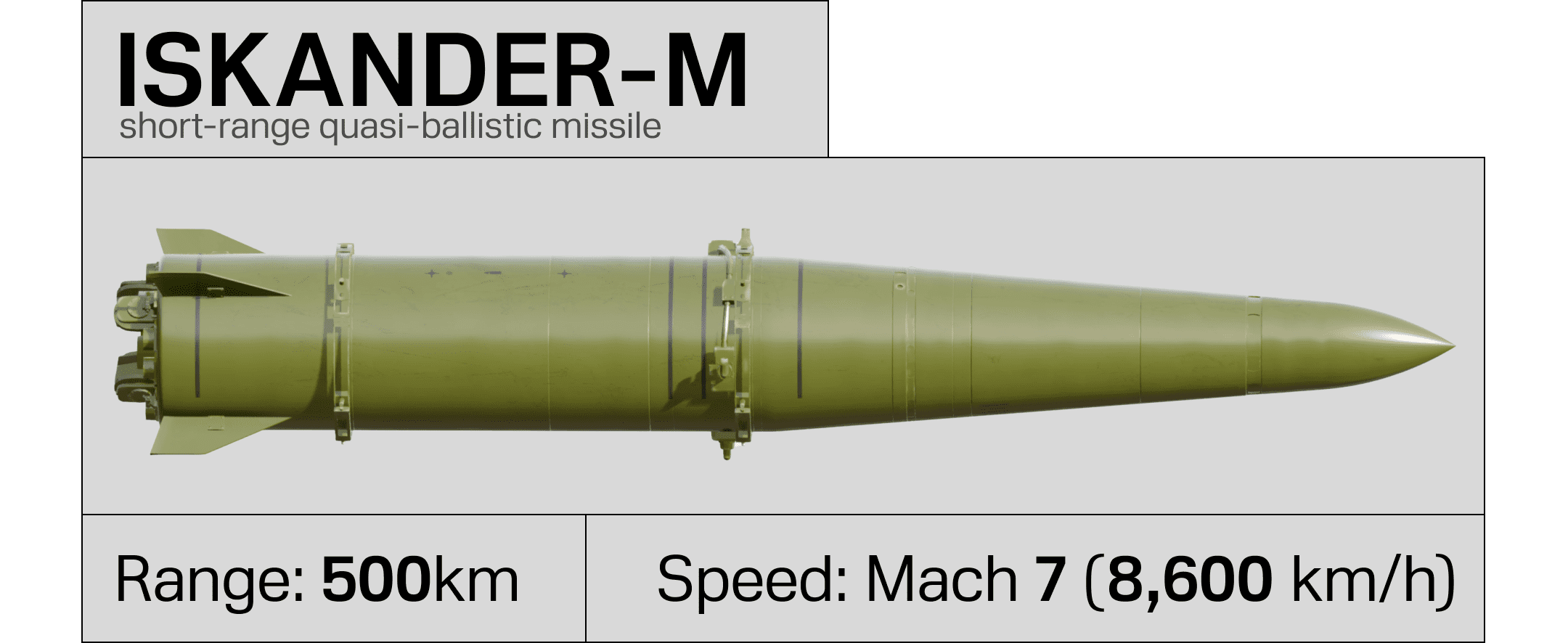
Russia cannot replace all three of these production capabilities simultaneously. Each facility represents years of accumulated manufacturing expertise and highly specialized equipment that cannot be restored quickly. This is especially true of Titan-Barrikady: losing the country’s only manufacturer of Iskander launch vehicles means that even an existing stockpile of missiles gradually loses its value without new platforms from which to launch them.
Russia can’t easily rebuild its missile industry
Russia also continues to struggle to import electronic components due to international sanctions. While the Kremlin has managed to obtain some parts through gray-market supply chains, Russian weapons still contain components manufactured in the United States, Europe, and Asia. That is why sanctions pressure must continue—and become even more stringent.
At the same time, it is important to understand that none of these strikes alone will stop Russian missile attacks tomorrow. Their impact accumulates gradually, much as it did with Russia’s fuel crisis. A sustained campaign against oil refineries over several months eventually led to gasoline shortages in 15 Russian regions before spreading nationwide, including to Moscow itself.
-5b9bb1d42a6ea3f8375dd1da8095f27a.jpg)
The main conclusion from the past five months is that Ukraine has shifted from isolated operations to a systematic campaign against the industrial base of Russia’s missile program. To do so, it is employing both domestically developed weapons—such as Flamingo missiles—and weapons supplied by its allies. Once again, this demonstrates that effective cooperation between Ukraine and Europe delivers tangible results. And the more such strikes occur, the fewer headlines there will be about Iskander missiles evading interception over Ukraine.
Discuss this article:



-c439b7bd9030ecf9d5a4287dc361ba31.jpg "Photo of Katherina Popilnichenko")