- Category
- Latest news
Bigger Than Abrams, Deadlier Than Leopard—and Never Built: The Story of Russia’s T-95

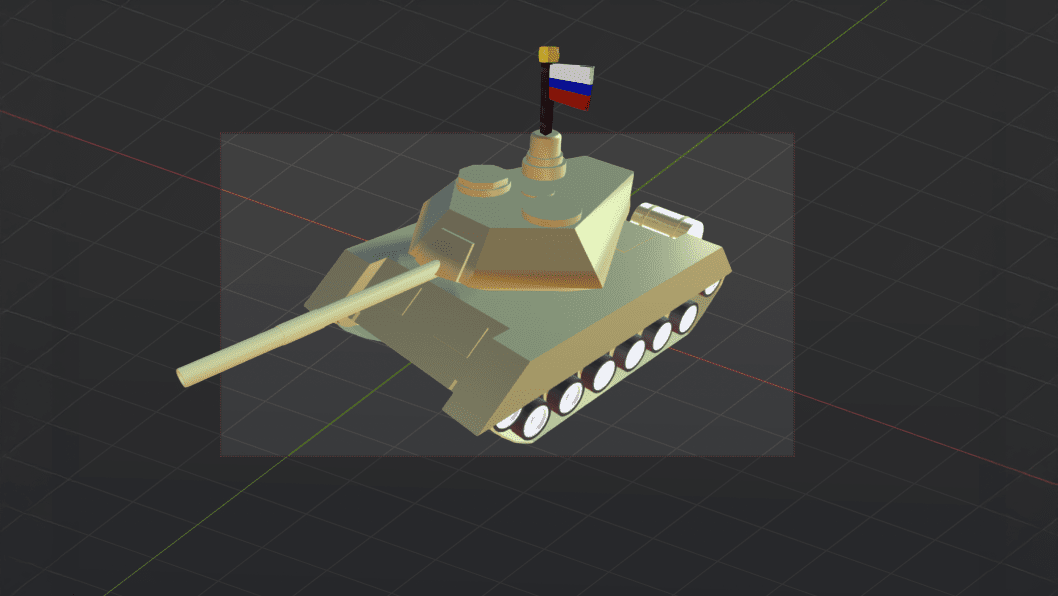
New 3D renders have offered the most detailed look to date at Russia’s long-abandoned T-95 main battle tank prototype—a platform once touted by Moscow as a leap beyond Soviet-era armor but ultimately terminated before it ever rolled into service.
 Prefer U24 Media on Google
- Authors


The digital reconstructions, created by 3D artist Gustiiz3D, were built using what he described as “an authentic album of schematics that recently leaked online,” according to Defence Blog on December 8.
We bring you stories from the ground. Your support keeps our team in the field.
The files, which began circulating on Western platforms in recent weeks, appear to confirm long-rumored design elements of the vehicle, also known by its development designation: Object 195.
This thing feels like an albatross around my neck, I'll never rest easy without finishing it at least once, while I'm not the first to model such vehicle, the ones out there are quite inaccurate. This will be the most accurate non-official model of Object 195 (if completed). https://t.co/6sKsYFF0RO pic.twitter.com/xFJJATkkte
— gustiiz31 (@gustiiz31) December 7, 2025
A tank built to extreme parameters
The T-95 was envisioned as a 58-ton, next-generation breakthrough tank armed with a 152mm main gun—an oversized cannon compared with the 120mm and 125mm weapons standard on NATO and Russian platforms—as well as an additional 30mm automatic cannon for close engagement.
The blueprints suggest the tank would have carried a crew of three, but in a remarkably unconventional configuration: all personnel were to be seated in an armored capsule located at the very front of the hull, physically separated from the tank’s ammunition and fuel stores.
🇷🇺 Object 195, my beloved pic.twitter.com/6gwLKSqZDM
— Le Chocolat (@LeChocolat11) November 30, 2025
Defense analysts have long speculated about whether Russia could successfully adopt capsule-crew architecture, and the renders now provide visual confirmation of that layout—a concept later echoed in the still-unfielded T-14 Armata.
Armor package built for a war, Russia not ready to pay for
According to the leaked schematics, Object 195 was planned to feature multilayer composite armor, the “Drozd-2” active protection system, and “Relikt,” a next-generation explosive reactive armor suite designed to defeat modern ATGMs and top-attack munitions.
In theory, the package would have represented one of the most advanced protection systems of its era—on paper at least.
Patent RU 2421674 C1 pic.twitter.com/qckbWQvkrn
— gustiiz31 (@gustiiz31) July 13, 2025
Canceled before it could compete
Moscow officially terminated the program in 2008, citing cost and complexity. The platform was reportedly too expensive, too complicated to sustain within existing logistics networks, and too ahead of Russia’s industrial capacity in the early 2000s.
The Kremlin shifted to a more “cost-effective” alternative: the T-14 Armata—effectively a simplified spiritual successor built under the Object 148 program.
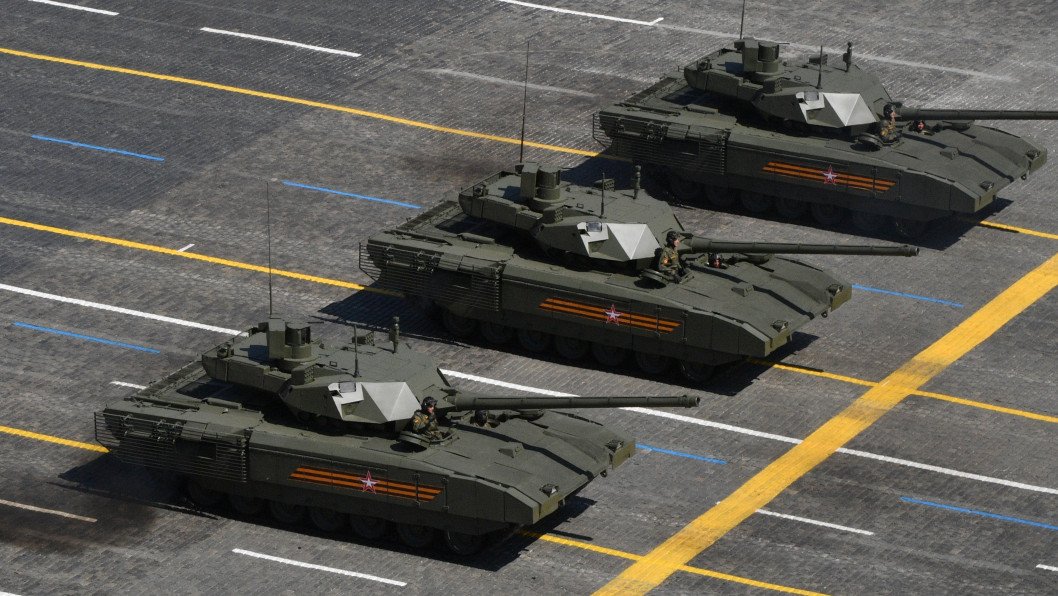
Yet more than a decade later, the story remains familiar. The Armata has appeared in parades, promotional footage, and defense expos, but not in sustained combat deployments.
Russian outlets and open-source defense observers have suggested the T-14 faces the same challenges that doomed the T-95—unresolved mechanical faults, funding shortfalls, and incompatibility with the aging infrastructure of the Russian Army.
From “super tank” to exhibit piece
The newly released renders don’t resurrect the program, but they do pull back the curtain on a machine that Russia once claimed would redefine armored warfare. Instead, the T-95 has become another case study in Moscow’s track record of announcing revolutionary platforms that fail to make it past the prototype stage.
Earlier, reports emerged that after more than three years into Russia’s full-scale invasion of Ukraine, the T-14 Armata—Moscow’s most advanced main battle tank—has yet to see meaningful combat deployment.
Despite being touted as a next-generation platform, the Armata remains absent from the battlefield, raising questions about its operational viability and Russia’s capacity to produce it at scale.
Discuss this article: