- Category
- Latest news
Can Challenger 3 Become Britain’s Last Tank? Former Army Officer Warns UK May Be Backing an Obsolete Design
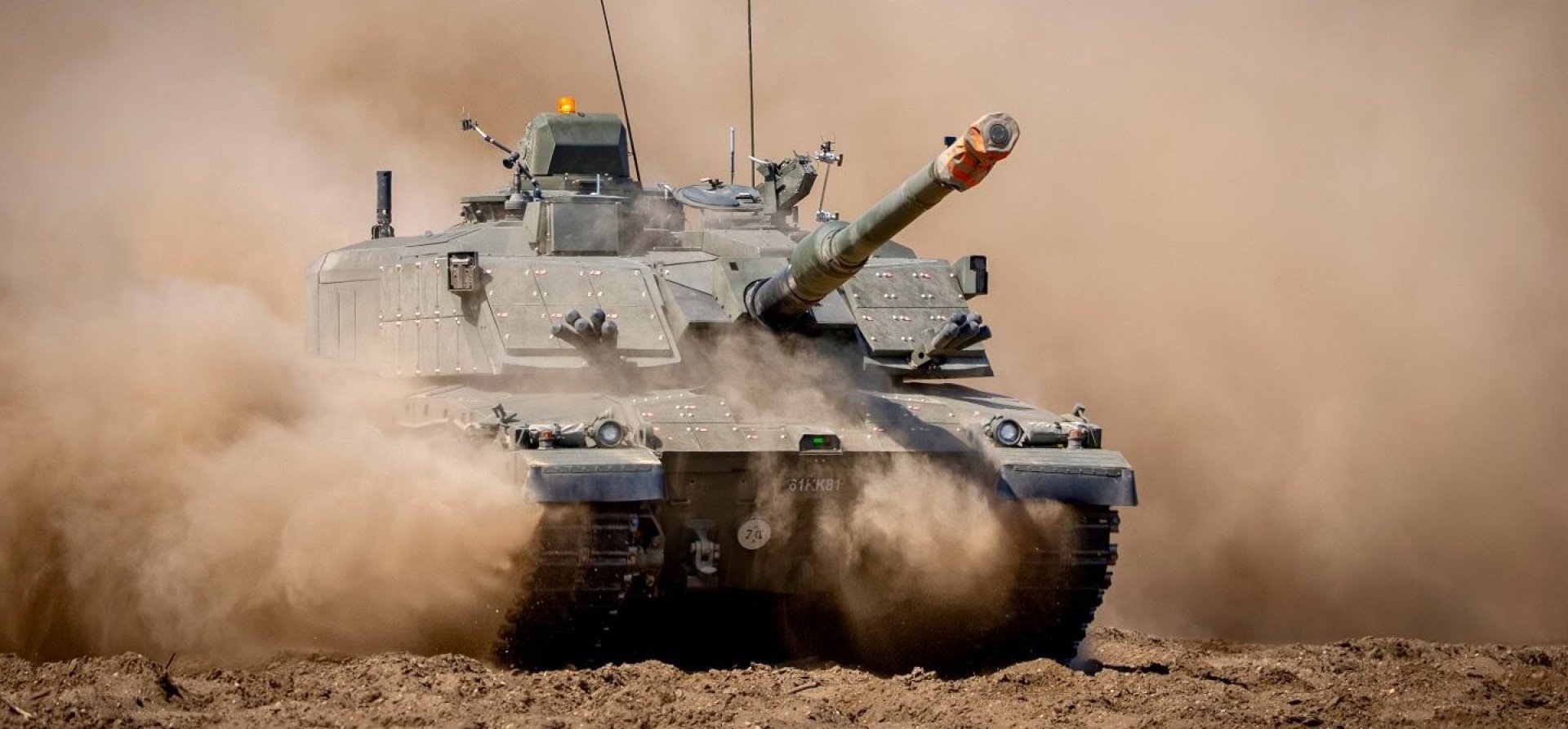
A former British Army officer has questioned whether the UK’s next-generation Challenger 3 tank represents the future—or the end—of the country’s tank-building tradition. Lt. Col. (Ret.) Stuart Crawford argues that the new British main battle tank, while technically advanced, may be the “last iteration of an obsolete design philosophy.”
 Prefer U24 Media on Google
- Authors


The Challenger 3 (CR3), developed by Rheinmetall BAE Systems Land (RBSL), is Britain’s next main battle tank, expected to enter service between 2027 and 2030, according to UK Defence Journal on October 11.
Prototypes are currently being tested at the Armoured Trials and Development Unit in Dorset, following their debut at the Defence and Security Equipment International trade fair in London.
Challenger 3 "P Series" prototype spotted recently out and about on Bovington Training Area. Some spicy new additions to the LFP and racked out with plenty of trials kit! pic.twitter.com/uhCCBM2WII
— Telford Tank Man (@Tankman94) October 7, 2025
Although the CR3 introduces major upgrades—including new armor, active protection systems, and advanced fire controls—Crawford warns that the British Army’s limited order of just 148 tanks, with only 60 active protection systems (APS) to be shared across the fleet, could prove risky given battlefield lessons from Ukraine.
He also points out that the Challenger 3 retains the same 1,200 hp engine as the Challenger 2. At nearly 80 tonnes in combat configuration, concerns remain over its mobility and whether existing British recovery and bridging systems can support it.
Challenger 3 completed test firings this week! 😍
— Challenger Tank In Ukraine🇬🇧🇺🇦 (@ChallengerInUA) April 29, 2024
pic.twitter.com/ztVXXVa5gS
A “capable stopgap”—or the end of an era?
While the Challenger 3 will likely perform well in trials, Crawford suggests it may represent the final evolution of a tank concept past its prime.
Western designs such as the Leopard 2, M1A2 Abrams, and CR3 share similar flaws, he notes—they are “too large, too heavy, too costly, and increasingly vulnerable.”
On modern battlefields dominated by precision drones and top-attack munitions, even the most sophisticated tanks can be destroyed by weapons costing a fraction of their value.
“Ukraine has shown that mass and redundancy matter,” Crawford argues, noting that Western armies operate too few tanks to absorb combat losses or mechanical failures.
He adds that the traditional focus on firepower, mobility, and protection has remained largely unchanged for a century—despite new multi-directional threats from above and below.
“The threat spectrum has become spherical,” he writes, emphasizing that crew survivability must now drive future designs.
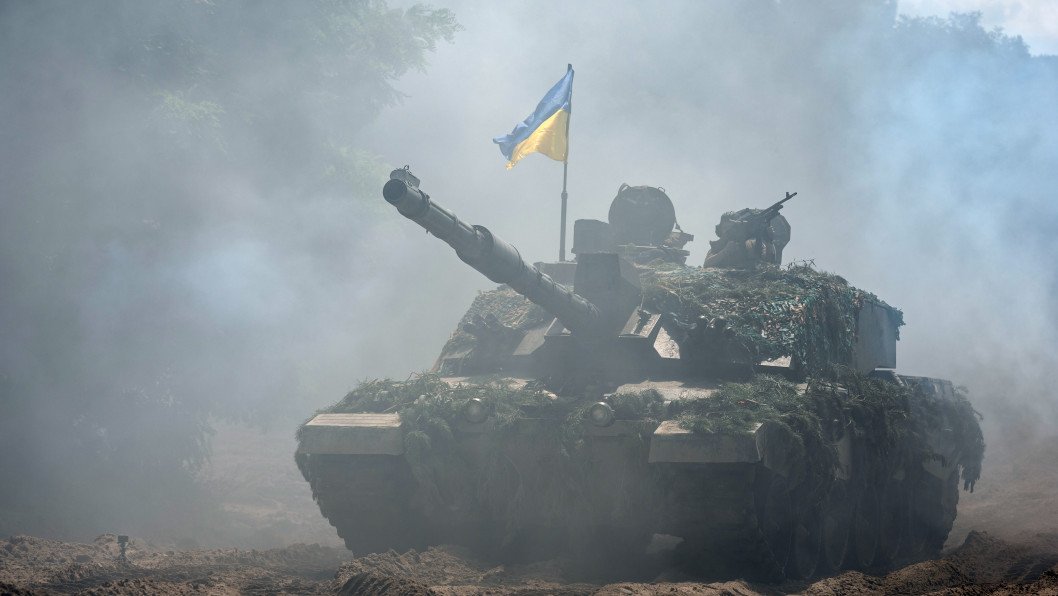
Rethinking the tank: smaller, smarter, and survivable
Crawford believes the next generation of tanks should move toward lighter, more agile platforms—in the 45–50 tonne range—with remote turrets, protected crew capsules, and integrated counter-drone defenses.
Such designs could restore affordability and scalability while maintaining battlefield effectiveness.
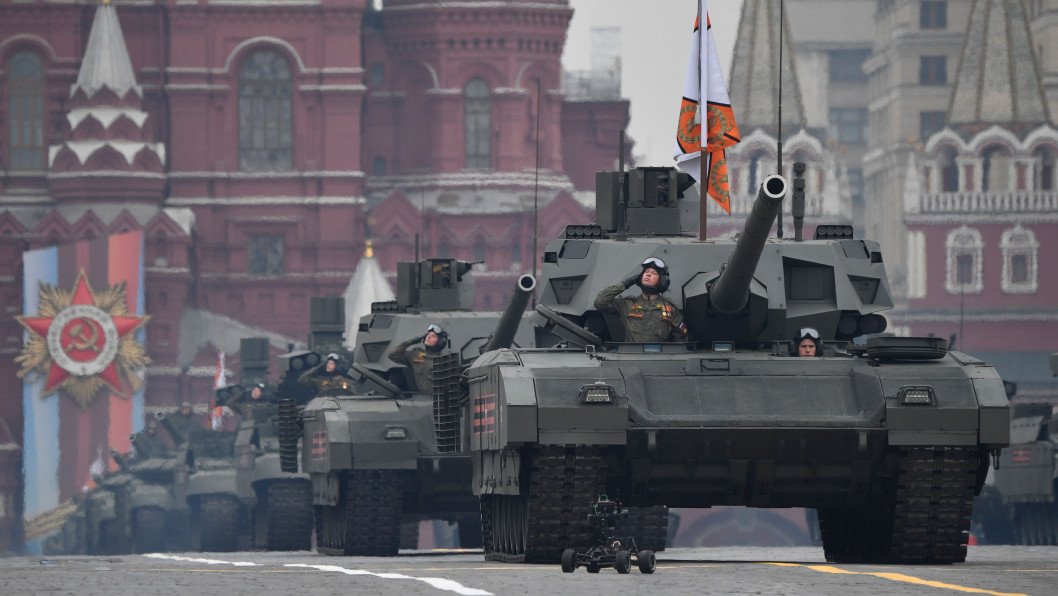
He points to Russia’s T-14 Armata as an example of a new approach, where crews are enclosed in an armored capsule within the hull, reducing profile and risk. Western programs, he argues, should follow suit.
What comes after Challenger 3?
As NATO nations rethink their armored doctrines, the UK faces a strategic crossroads. Some experts argue that Britain should abandon tank production entirely, while others advocate for a smaller, cheaper design to rebuild credible mass.
Europe may hold the key. Germany and France’s Main Ground Combat System (MGCS) program aims to replace the Leopard 2 and Leclerc tanks by the 2040s, though progress remains slow.
The UK’s most lethal tank – Challenger 3 - has been undertaking live firing for the first time in Germany.
— Challenger Tank In Ukraine🇬🇧🇺🇦 (@ChallengerInUA) May 26, 2024
Let's see her in action!😍 pic.twitter.com/eedXfRDoYF
More immediately, the Marine Armoured Tank of Europe (MARTE) project—led by Germany and joined by ten EU countries and Norway—seeks to deliver a 60–65 tonne tank with a 130mm gun, remote turret, and three-person crew.
Crawford suggests the UK should consider joining MARTE, contributing expertise in optics, protection systems, and powertrains while preserving domestic industrial capacity.
Technical upgrades and modernization efforts
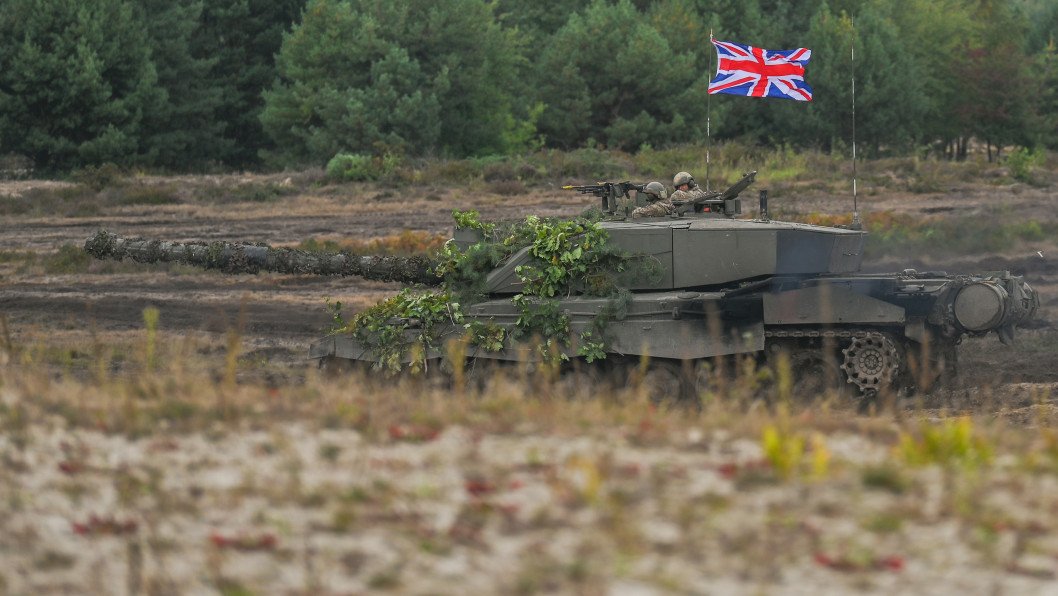
Despite his criticism, Crawford acknowledges that Challenger 3 introduces real technological progress. According to Army Recognition, its modular armor combines composite protection with Rafael’s Trophy APS, forming a dual defense against top-attack and tandem-charge threats.
The Rheinmetall L55A1 smoothbore gun fires programmable 120mm rounds at ranges beyond 5,000 meters, backed by digital fire-control systems, electro-optical sensors, and a panoramic commander’s sight.
A fully digitized crew interface enables automated tracking and network integration, while its third-generation hydrogas suspension enhances cross-country stability.
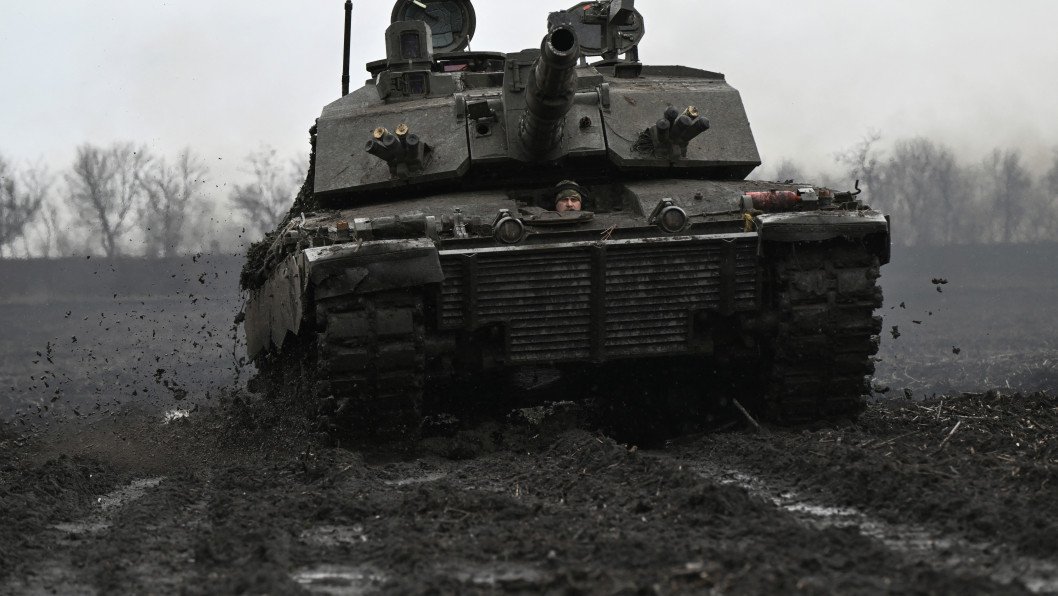
The tank’s open electronic architecture allows future AI tools and NATO C4ISR compatibility, ensuring relevance into the 2040s. Eight prototypes are now undergoing trials, with full operational capability planned by 2030 under a $1 billion modernization contract.
The Challenger 3 may well be the most advanced tank Britain has ever fielded—but in Crawford’s view, it could also be the last of its kind.
“Challenger 3 may be a capable stopgap,” Crawford concludes, “but Britain must look beyond it. The future lies in European collaboration—or perhaps beyond the tank entirely.”
Some asked for the full vid of Challenger 3 with the new addons so here it is. https://t.co/tqMmapPkhO pic.twitter.com/RG3WJb6eSo
— Volke (@Volke__) June 19, 2025
(Editor’s Note: This article reflects the author’s opinion, not that of UNITED24 Media or the UK Defence Journal.)
Earlier, reports emerged that Russia’s defense industry aims to manufacture, upgrade, or overhaul 1,118 T-90M and T-90M2 main battle tanks between 2027 and 2029.
The plans are part of a broader long-term projection from Uralvagonzavod, Russia’s primary tank manufacturer, covering activities from 2026 through 2036.
Discuss this article:


-c439b7bd9030ecf9d5a4287dc361ba31.jpg "Photo of Katherina Popilnichenko")