- Category
- Latest news
Iran’s Shahed Drones Ditch Gasoline for a Quiet Upgrade—Electric Power
 Prefer U24 Media on Google
- Authors


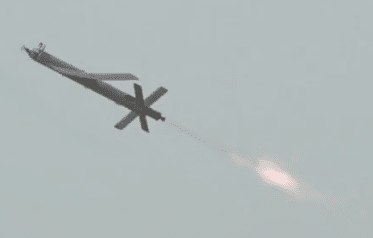
Iran has introduced a modified version of its Shahed-101 loitering munition featuring an electric propulsion system and a nose-mounted propeller.
The design marks a departure from previous drones in the Shahed family, which typically use gasoline piston engines with rear-mounted pusher propellers.
We bring you stories from the ground. Your support keeps our team in the field.
The updated configuration was identified by Middle East security analyst Mohammed al-Basha on March 10, who analyzed footage and imagery of the drone shared online. Al-Basha noted that the drone’s appearance and the sound of its propulsion system indicate the use of an electric motor rather than a conventional internal-combustion engine.
The analyst reported that the drone uses a tractor-propeller configuration mounted at the front of the airframe, pulling the aircraft through the air instead of pushing it from the rear as in earlier Shahed designs.
Iran unveiled a new variant of the Shahed-101 drone. It appears to use a front propeller instead of the usual rear pusher gasoline piston engine seen on other Shahed drones. From its sound and external layout, it seems to be powered by an electric motor. The airframe has a fixed… pic.twitter.com/f4m8EcdDLa
— Basha باشا (@BashaReport) March 10, 2026
According to the report, the drone retains a fixed-wing airframe with an X-shaped tail stabilizer used to maintain flight stability. The aircraft also appears to use a rocket booster mounted at the rear of the fuselage to assist during launch.
Such boosters are commonly employed by loitering munitions and cruise drones launched from ground rails or mobile platforms, providing initial acceleration before the aircraft transitions to powered flight using its primary propulsion system.
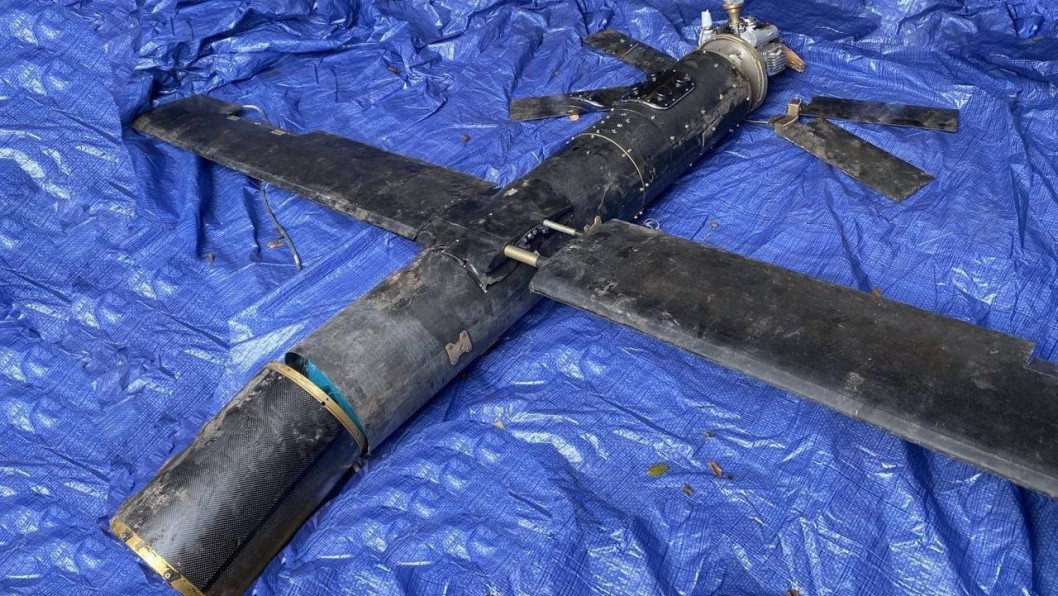
According to Ukrainian specialists who previously examined Shahed-101 debris recovered in Ukraine, the drone had not yet been localized for production in Russia and consisted entirely of Iranian-manufactured components.
Investigators reported that the warhead assembly, including fuzes, batteries, flight computer, and control modules, carried Iranian markings.
According to available assessments, the Shahed-101 is capable of striking targets at distances of up to about 800 kilometers, though some estimates place its operational range closer to 600–700 kilometers. The drone can reportedly reach altitudes of around 3,000 meters and cruise at approximately 120 km/h.
The munition carries a cylindrical warhead weighing roughly 8 kilograms and designed for combined shaped-charge and fragmentation effects.
Iranian-designed Shahed drones have been widely used by Russia during its full-scale war against Ukraine. Ukrainian forces have regularly intercepted variants such as the Shahed-136, while smaller models including the Shahed-101 have also been recovered after strikes or interceptions across multiple regions of Ukraine.
Earlier, Ukrainian President Volodymyr Zelenskyy announced that Ukraine will send military experts to Gulf countries to help counter Iranian-designed Shahed drones. The teams are expected to advise local forces on counter-drone tactics and share operational experience gained during years of defending Ukraine against large-scale drone attacks.
Discuss this article:
-4a56a6b482ec132402c16ef6fcabf9a2.png)


-c439b7bd9030ecf9d5a4287dc361ba31.jpg "Photo of Katherina Popilnichenko")