- Category
- Latest news
New Russian “Sarma” MLRS Aims at HIMARS’ Role—But Production, Accuracy and Cost Are Questionable
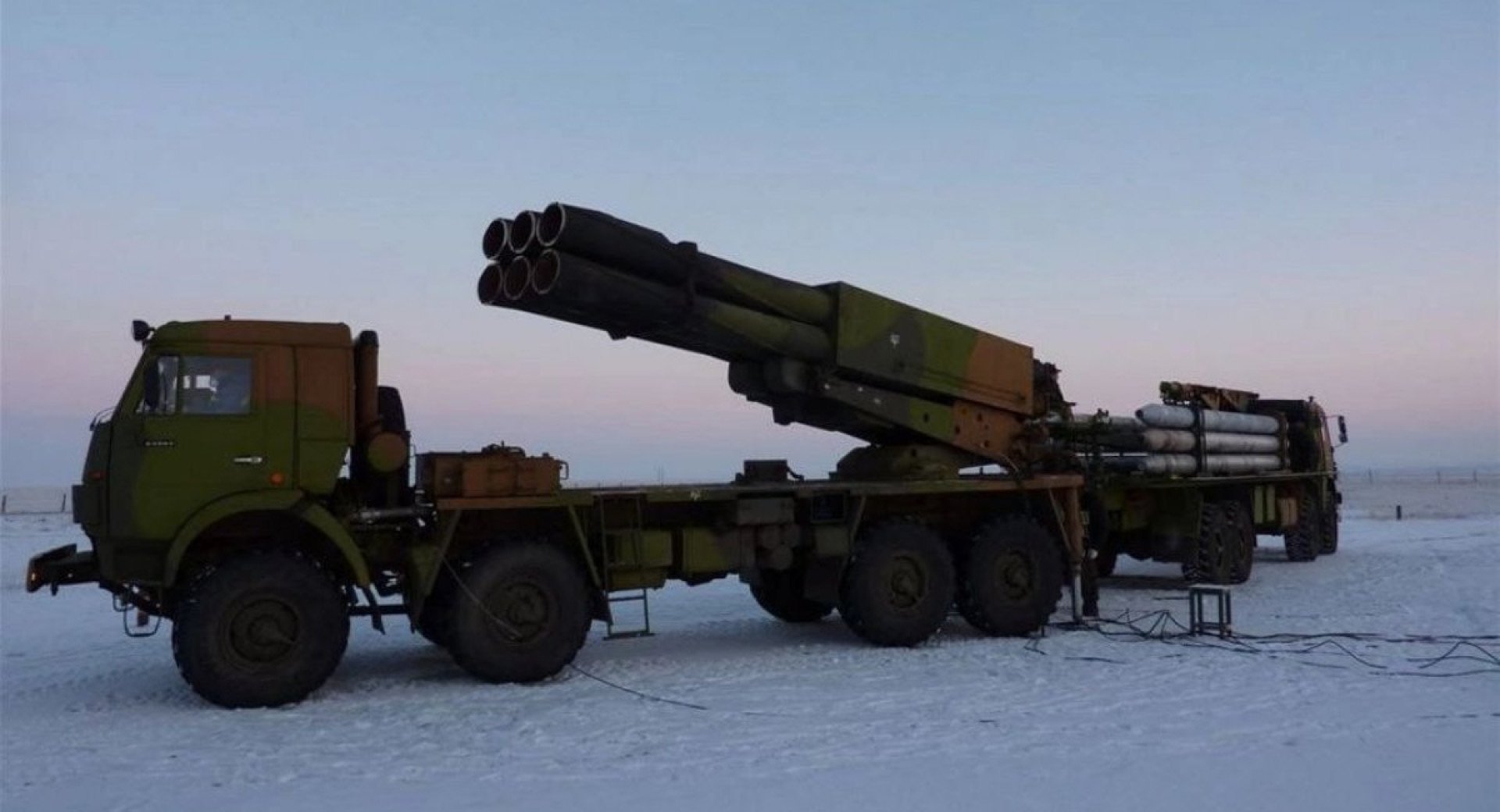
Russian defense planners have quietly ordered two divisions of a new 300-mm mobile precision rocket system dubbed “Sarma,” reviving earlier work on the shelved “Kama” project, procurement documents reviewed by Ukrainain defense media outlet Militarnyi show.
 Prefer U24 Media on Google
- Authors


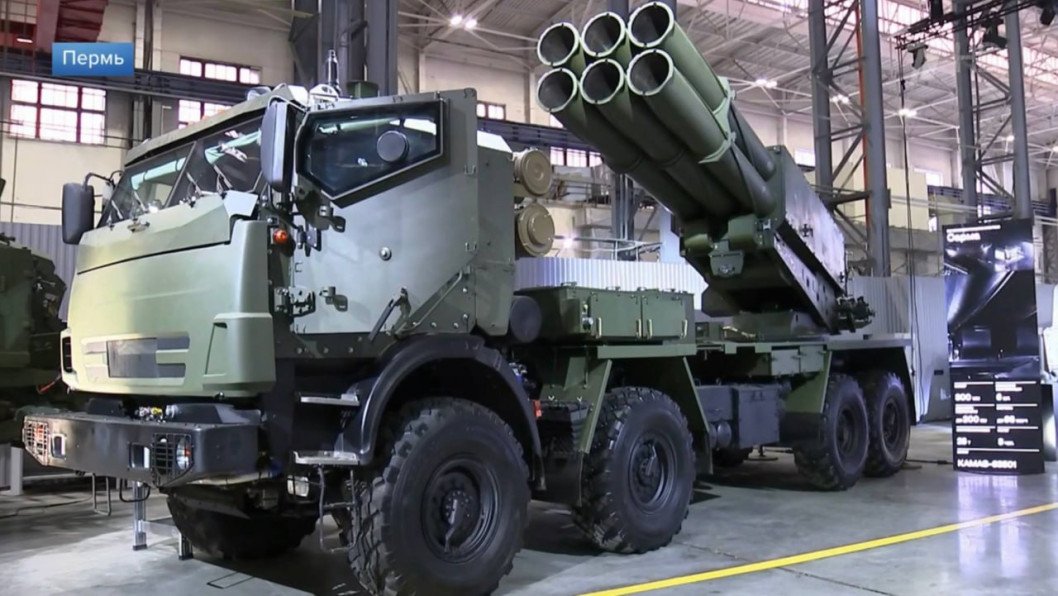
The 2024 contract covers 12 launch vehicles and 12 transport-reload (TZM) vehicles; each launcher sits on a four-axle KAMAZ-63501 chassis and carries a shortened six-tube pod rather than the heavier, longer arrays used on older 300-mm platforms, Militarnyi notes on October 30.
The paperwork—and related reporting by Militarnyi—offers the most complete public view yet of Sarma’s initial procurement, the ammunition types ordered to support it, and several parallel development lines for new 300-mm munitions and seekers.
A new ruSSian 300mm MLRS SARMA on the KamAZ-63501 chassis. pic.twitter.com/3FokrIrxtw
— 𝔗𝔥𝔢 𝕯𝔢𝔞𝔡 𝕯𝔦𝔰𝔱𝔯𝔦𝔠𝔱△ 🇬🇪🇺🇦🇺🇲🇬🇷 (@TheDeadDistrict) September 20, 2025
Money, kit, and numbers
The Russian Defense Ministry ordered two divisions (12 launchers + 12 TZMs). Per-piece prices in the documents: 155 million rubles (~$1.9 million) per launcher; 64 million rubles ($800,000) per TZM. Militarnyi notes these unit costs are slightly higher than parallel buys of the heavy-chassis Tornado-S systems.
Launcher configuration: six 300-mm tubes on a 4-axle KAMAZ-63501 with armored cab—a markedly lighter package compared with the 33-ton Tornado-S. Russian state media and factory sources said Sarma’s curb weight is nearly 10 tons less than Tornado-S.
Launch of 9M544 Guided Rockets from the Tornado-S 9K515 MLRS at the location of the Ukrainian Armed Forces in the Kursk region. pic.twitter.com/Gv6BGSjb7J
— OSINTWarfare (@OSINTWarfare) August 10, 2024
Ammunition mix—old, new, expensive
Militarnyi’s procurement record catalogs a significant mix of 300-mm rockets ordered in 2024–25. Key entries:
9M543—conventional/high-explosive single-warhead rockets (576 rounds ordered);
9M543L—guided 300-mm rockets (600 rounds);
9M549—cluster warhead rocket (1,112 rounds)—the already known, combat-used cassette round;
9M557 and 9M558—small batches (166 rounds each) of newer, poorly documented 300-mm rockets. Unit prices for these newer types are ~32m and ~45m rubles, respectively — roughly double prior models, implying more sophisticated guidance, seekers, or electronics.
Range claims and the precision pivot
Russian outlets and factory statements claim Sarma rockets can reach up to 200 km. Militarnyi cautions that such range figures depend completely on the specific rocket variant used.
The system’s six-tube fit and lighter chassis signal a doctrinal shift: with guided munitions, Sarma is meant to operate more as a mobile precision fires carrier than a saturation salvo-MLRS.
In plain terms: fewer tubes but better accuracy and lower tactical footprint—an analogue to the operational logic that made HIMARS effective on the battlefield.
Costs and combat realities
Militarnyi’s files show the new guided rockets are much costlier than legacy unguided rounds (the 9M543/9M549 family was bought at prices near $250,000 each in prior procurements).
The higher cost per round for 9M557/9M558 suggests integration of expensive guidance kits, seekers, or advanced control surfaces—and raises questions about mass sustainment in a high-consumption wartime environment.
The reporting links Sarma to a portfolio of ongoing 300-mm and cross-service munition projects:
A winged 300-mm guided rocket being developed by SPLAV—intended to extend range and precision; prototype work and tests were scheduled in 2024-25;
A cross-service guided munition, UMPB D-30, resembling a glide bomb with a blast power on par with a 250-kg aerial bomb; developers targeted prototype build and trials in 2025;
A 300-mm rocket with a passive radar-seeker for striking emitters such as air-defense radars—work started in 2024 with experimental deadlines into 2025–26;
Continued R&D on rockets that carry a small reconnaissance/attack UAV (a concept similar to the 9M534 family, which releases a small drone during flight).
Operational caveats and open questions
Militarnyi’s documents and analysis underline multiple uncertainties: limited initial orders (two divisions only), only partial combat provenance for the new guided rounds, and questions about mass production, cost-per-effect, and battlefield reliability.
Russia’s wartime record with large 300-mm programs shows mixed accuracy and limited operational use in some cases—a reminder that hype and prototype buys do not always translate to decisive capability at scale.
Russian officials and domestic media have framed Sarma as a direct answer to the battlefield effect of Western long-range systems. As journalist Alexander Yan summarized to Militarnyi, “Influenced by the firepower of American HIMARS missile systems and their impact on the front lines, the Russian Ministry of Defense initiated its own project for a mobile high-precision missile system.”
Earlier, the Russian company Shvabe, part of the state conglomerate Rostec, presented a new mobile laser system claimed to be capable of shooting down drones.
The demonstration, however, was marked by an unusual lack of transparency—the laser’s name was not disclosed, and the system itself was covered with camouflage netting during presentation.
Discuss this article:
-331a1b401e9a9c0419b8a2db83317979.png)