- Category
- Latest news
Russia Mounts Thermobaric Rockets on Ground Drone in Bid to Replace TOS-1A Crews
 Prefer U24 Media on Google
- Authors


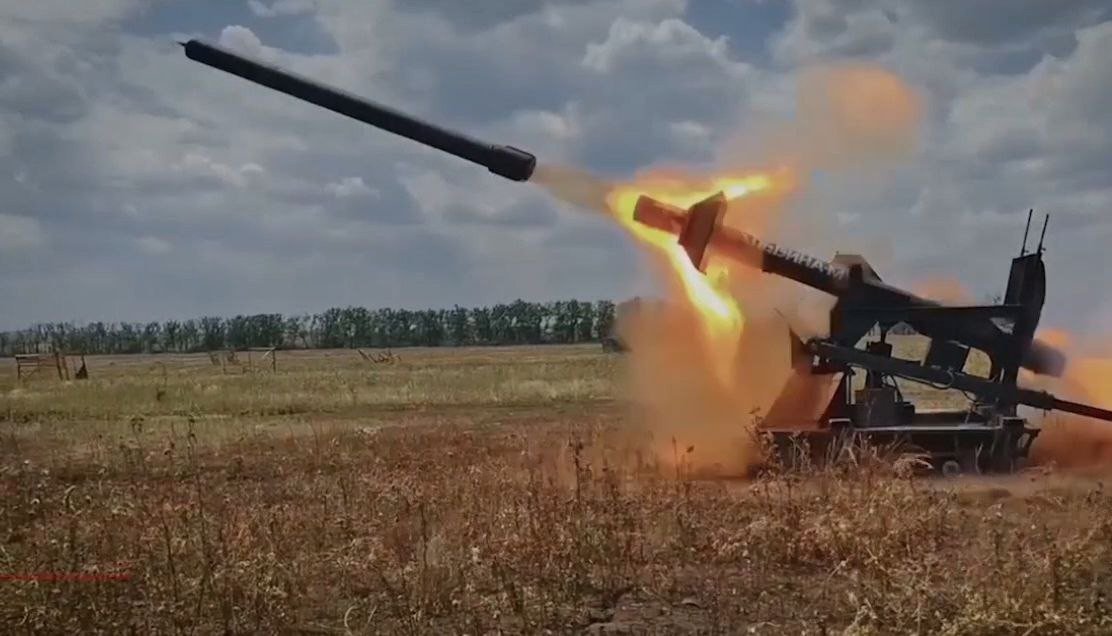
Russian engineers have integrated 220-millimeter launch tubes from the TOS-1A “Solntsepyok” heavy flamethrower system into a ground-based unmanned platform, according to footage circulated by the Ukrainian Telegram channel Vodogray and reported by Ukrainian defense outlet Militarnyi on January 19.
The experimental system, dubbed “Malvina-M” by the Russian side, is designed to fire thermobaric rockets, using standard munitions originally developed for the TOS-1A.
We bring you stories from the ground. Your support keeps our team in the field.
Test footage shows the platform launching MO.1.01.04M thermobaric rockets, which rely on volumetric detonation to generate intense blast and overpressure effects.
Rather than mounting the launchers on a heavy tracked chassis similar to a tank, the concept places the rocket tubes on a simple support frame attached to an unmanned ground vehicle. This approach significantly reduces cost and logistical burden compared with deploying a full-scale armored TOS-1A vehicle.
Standard thermobaric rockets used by the TOS-1A have a range of roughly six kilometers, a limitation that places conventional crews within reach of counterfire and drone strikes.
In December, Ukrainian drone unit Lasar’s Group destroyed a Russian TOS-1A system that was attempting to maneuver under the cover of darkness, underscoring the vulnerability of crewed platforms operating near the front line.
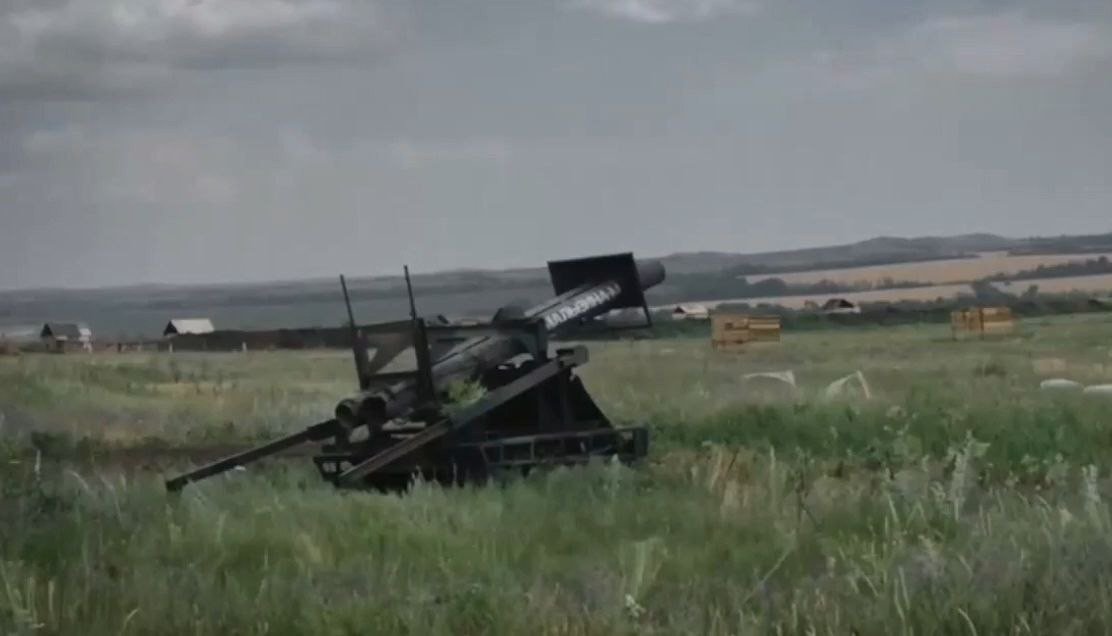
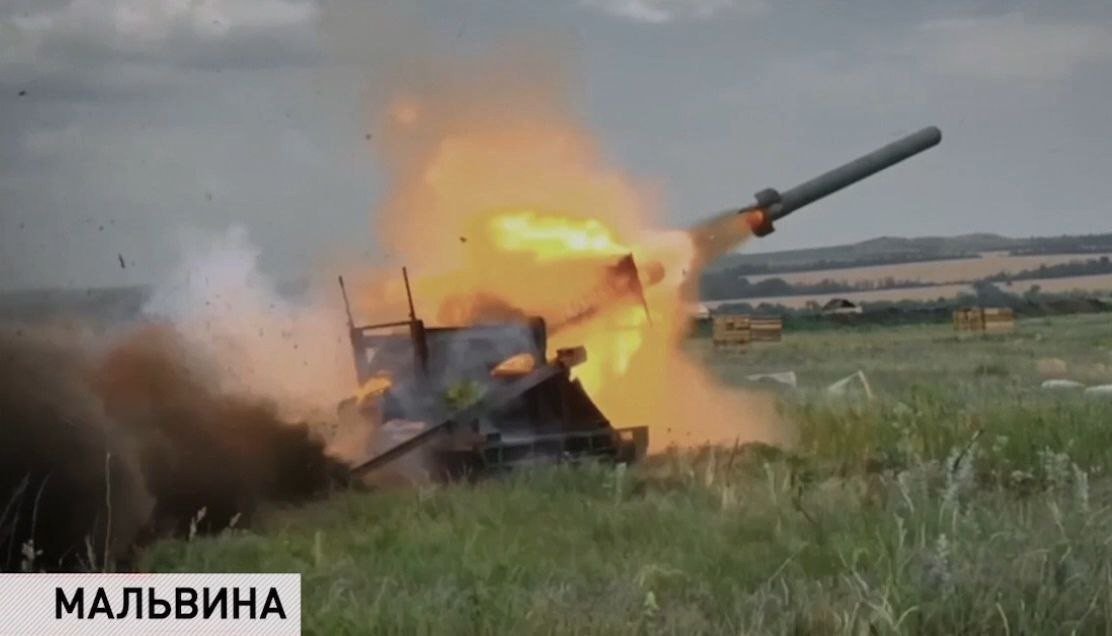
By contrast, a smaller unmanned launcher is harder to detect and can fire from concealed or camouflaged positions, potentially reducing exposure to Ukrainian drones and precision strikes.
However, the design also comes with major trade-offs. The unmanned chassis reportedly has limited aiming capability, and the absence of a full targeting and fire-control system significantly reduces accuracy. Without precise guidance, the effectiveness of thermobaric rockets—already reliant on area effects—drops sharply.
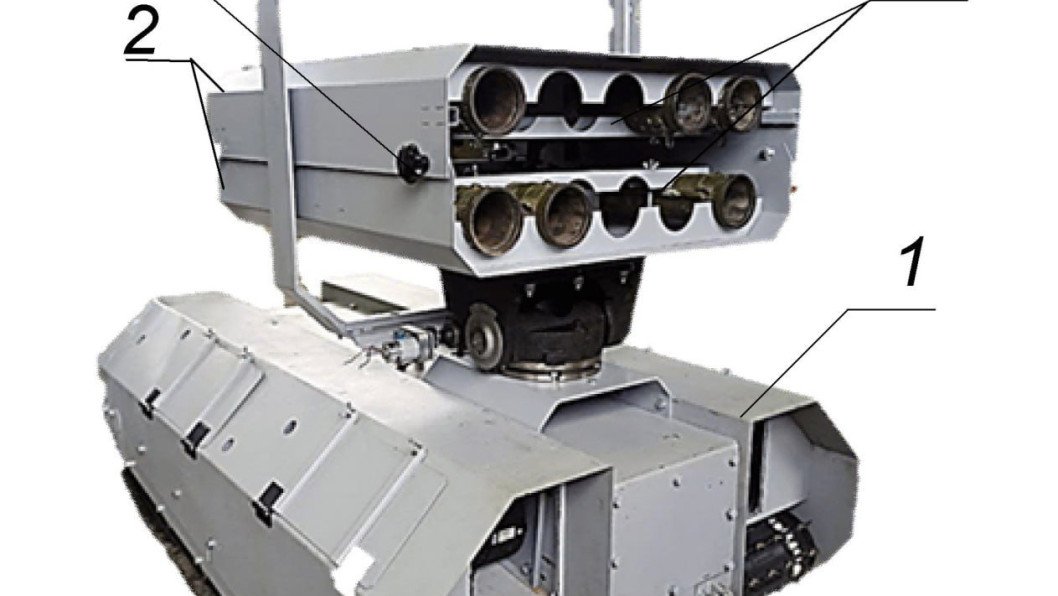
As a result, Malvina-M appears to represent an effort to cheapen the use of heavy flamethrower systems and reduce risks to personnel, while accepting serious limitations in precision, control, and battlefield flexibility.
Earlier, reports emerged that Russian forces reportedly began dismantling thermobaric rockets originally designed for the TOS-1 heavy flamethrower system to extract explosive material for use in attack drones.
Discuss this article: